Date: May 3, 2026 (around 2:15 pm).
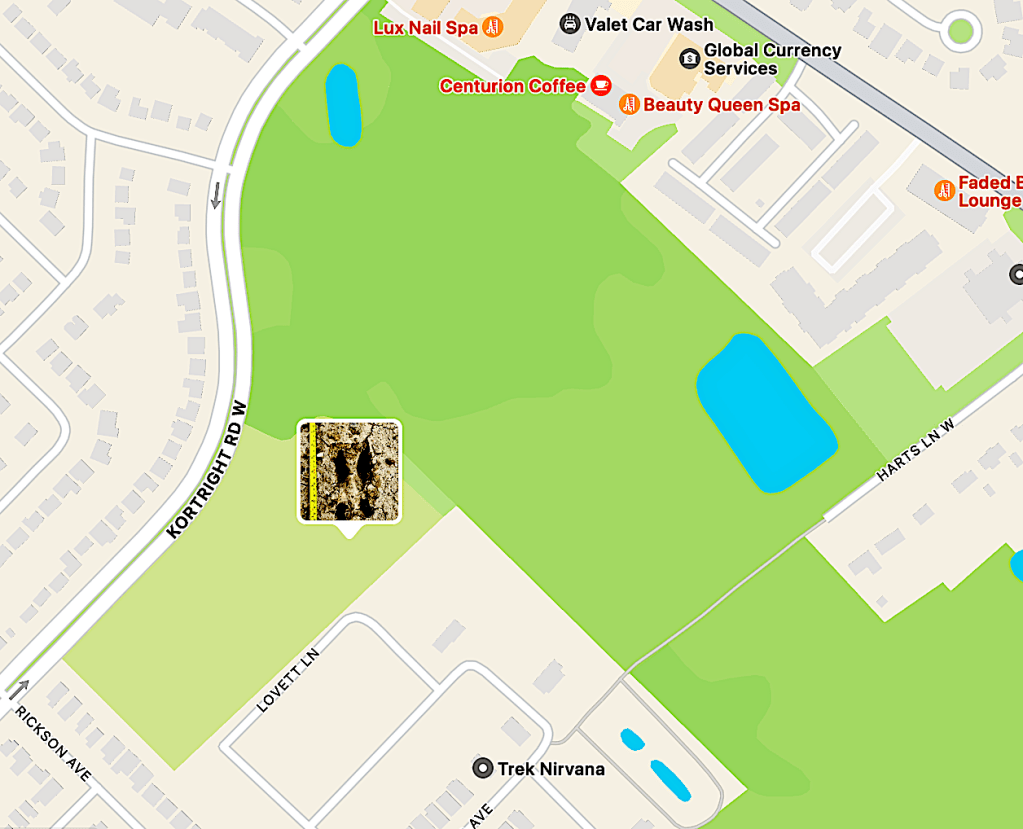
Place: A muddy field adjacent to a new housing development in southern Guelph. The map and photograph below show a large pool of standing water where most of the tracks were found.
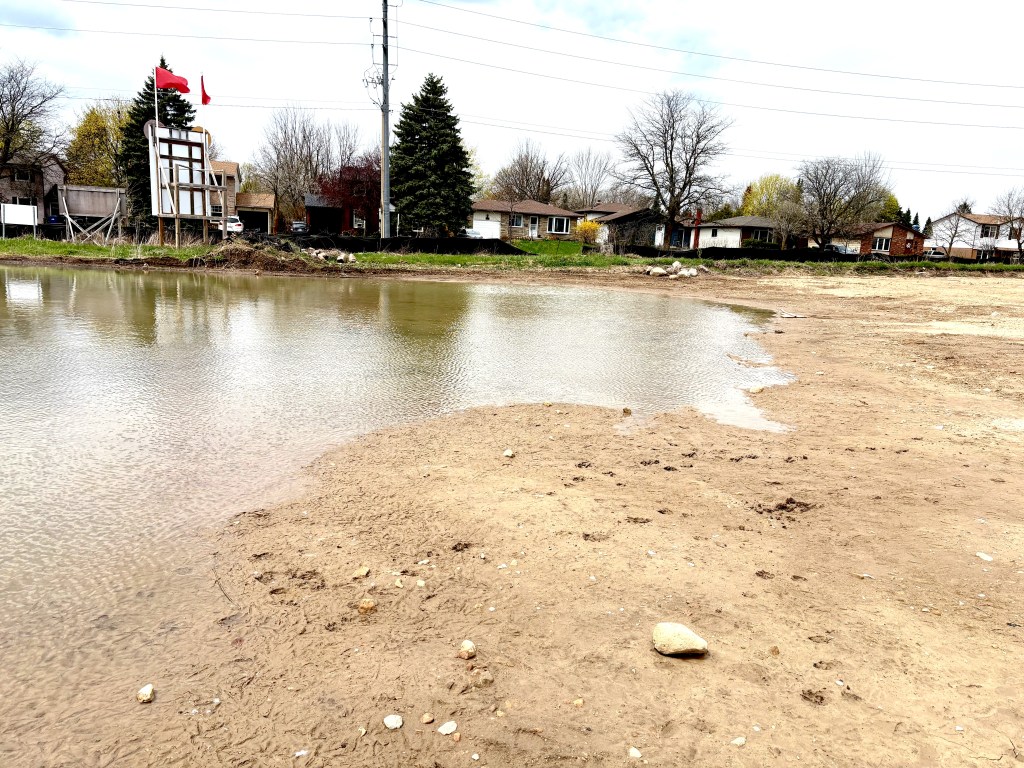
Weather conditions: We had rain about 24 hours earlier, but sun and wind were rapidly drying the ground. The temperature was about 14 C.
Introduction: This location is a two-minute drive from my house in the south end of Guelph, just off Kortright Rd. W. My day had been very busy, and I wanted a short walk to unwind. I was not anticipating the number of tracks and observations I would find. Even though I have seen most of these tracks before, I think it is important to keep looking closely at the familiar. Each time we look, we see more. In a tracking presentation I was listening to, a well-known tracker recommended getting to know the common animals really well. That way, when we encounter a new or unusual track, it will really stand out. I try to always see the extraordinary in the ordinary.
Observations:
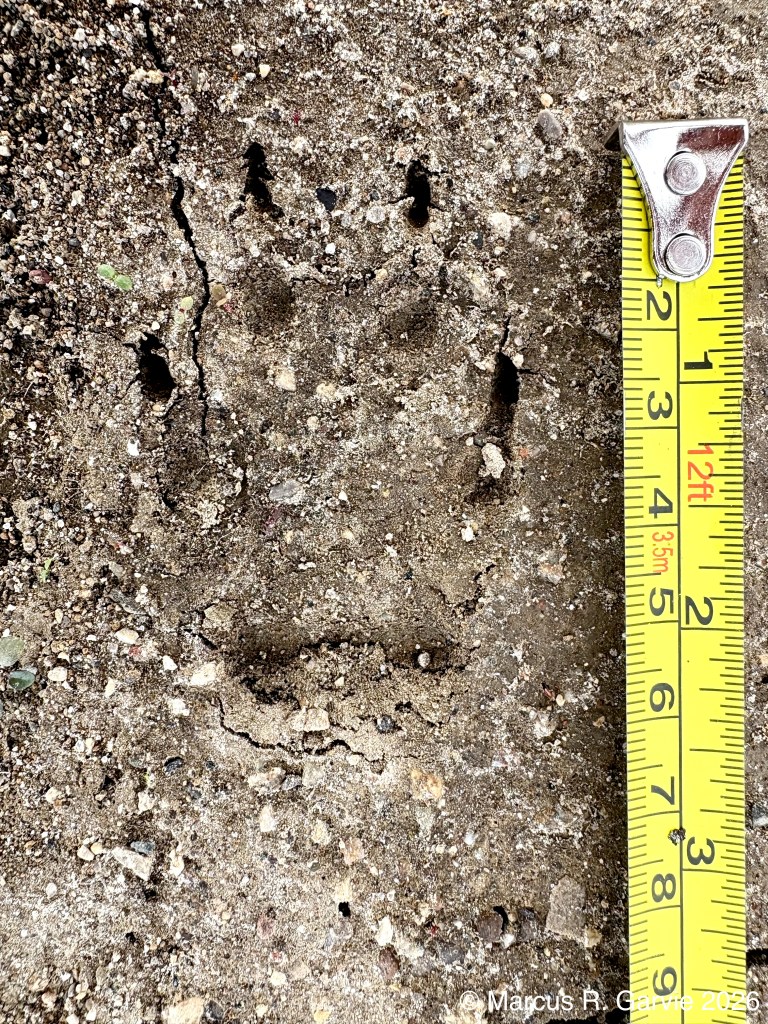
My first observation was a single red fox track. Notice the large amount of negative space in the track, caused by fur, and the long, chevron-shaped palm pad. After comparing this track with the track prints in [1], I think this is a front track.
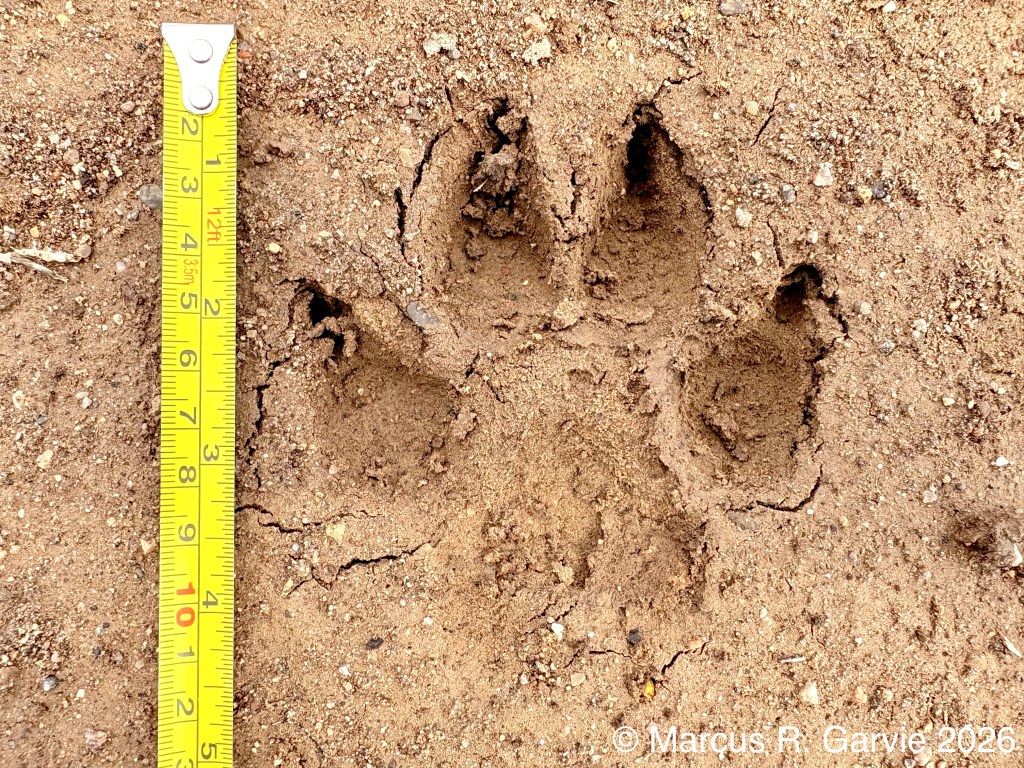
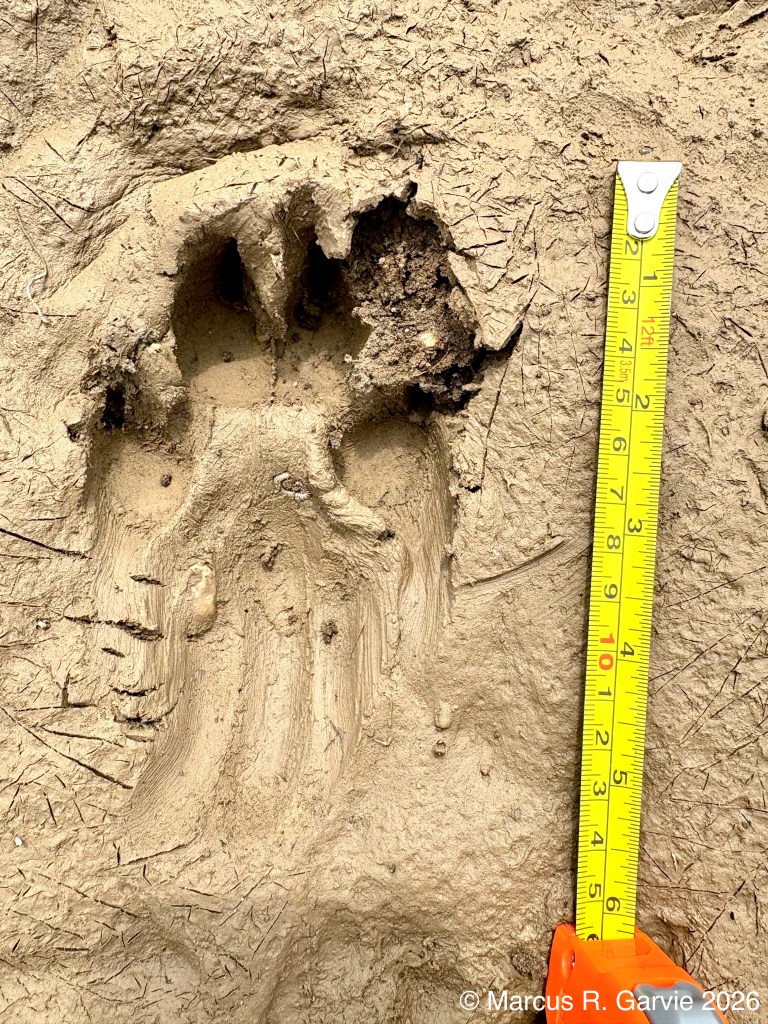
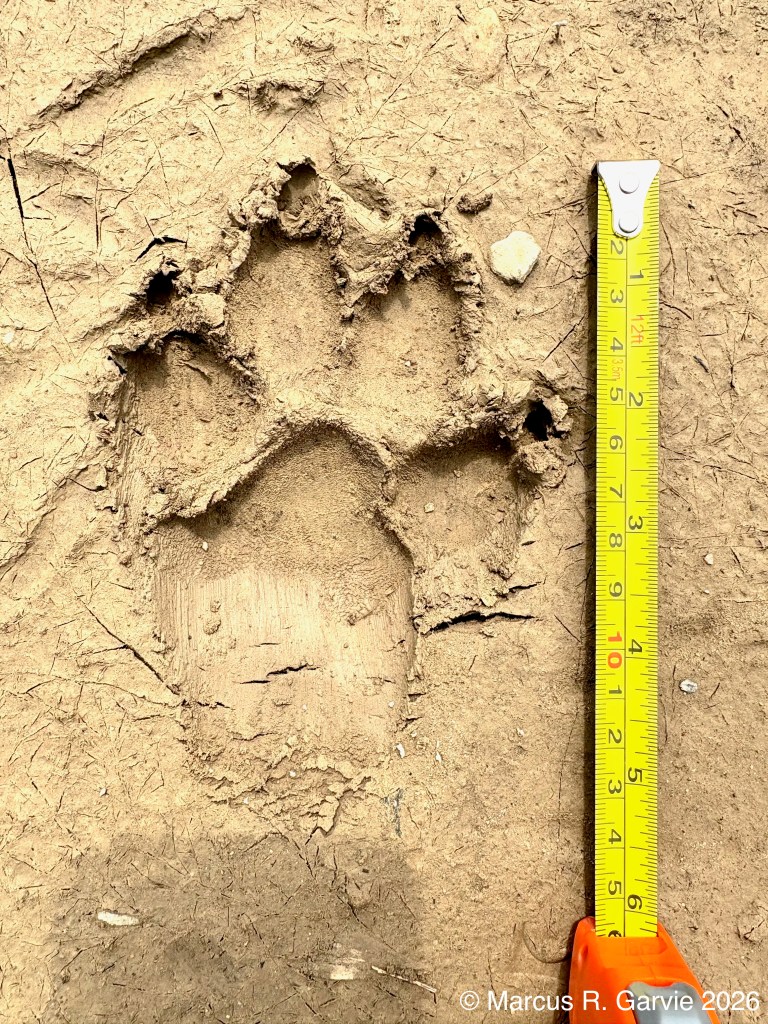
My next observations were of a domestic dog. Notice the splay of the toes in the first photo and the large, blunt claws. I included two additional photos because it was interesting to see that the animal slipped in the soft mud near the water’s edge.
My next observations were of Killdeer tracks. I knew these birds were nearby because I could hear their shrill cries. Experience had taught me that the open, rocky ground in this area was preferred nesting habitat for Killdeer. I have photographed this bird’s tracks before, but some of the tracks I saw here were especially clear.
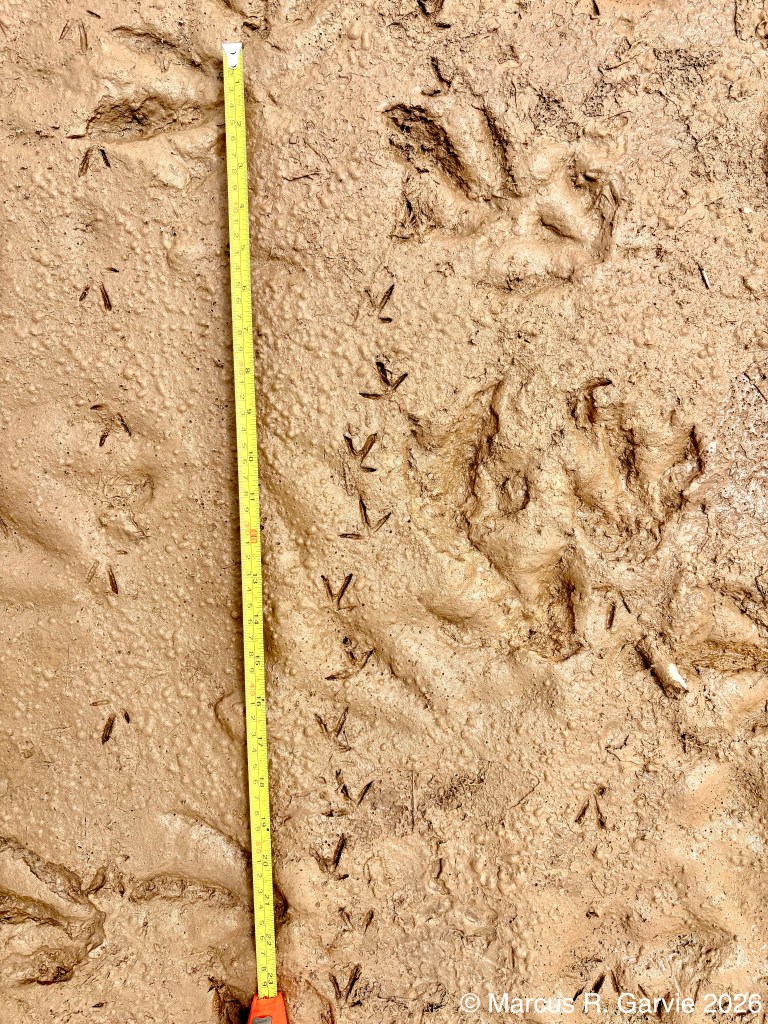
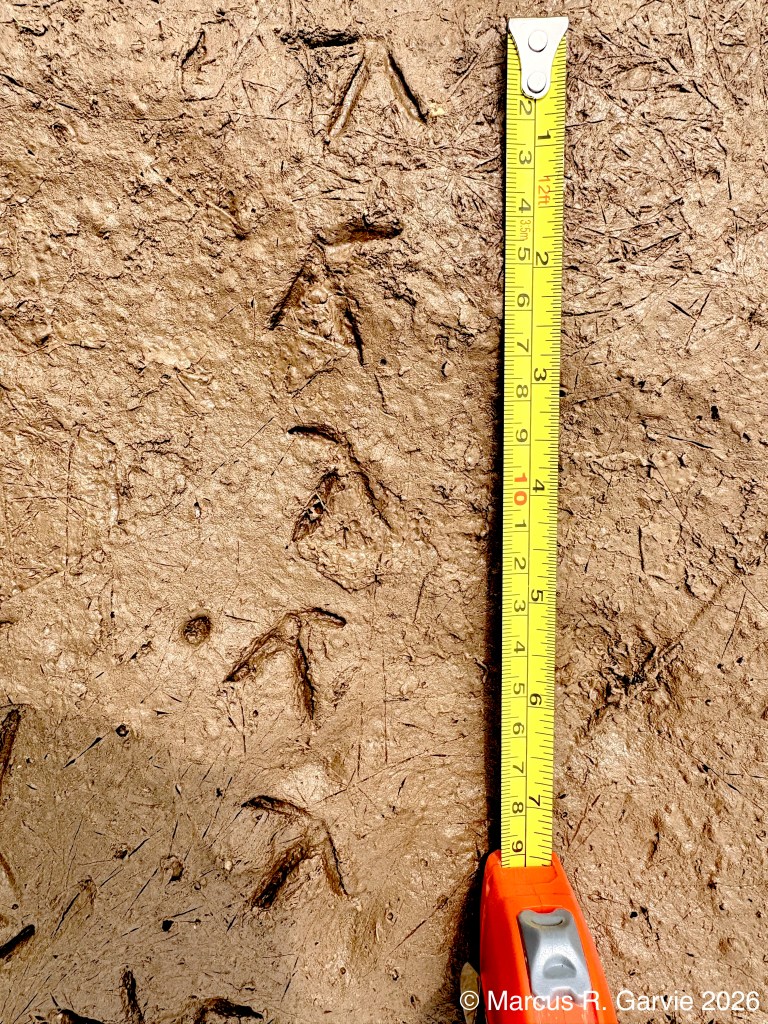
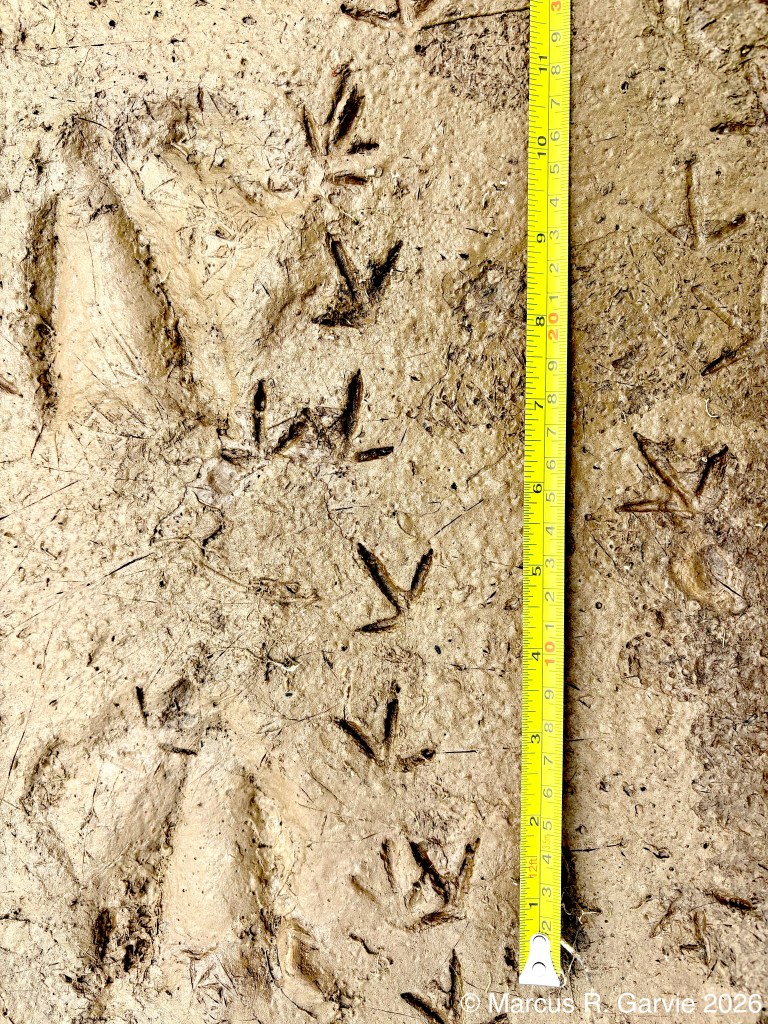
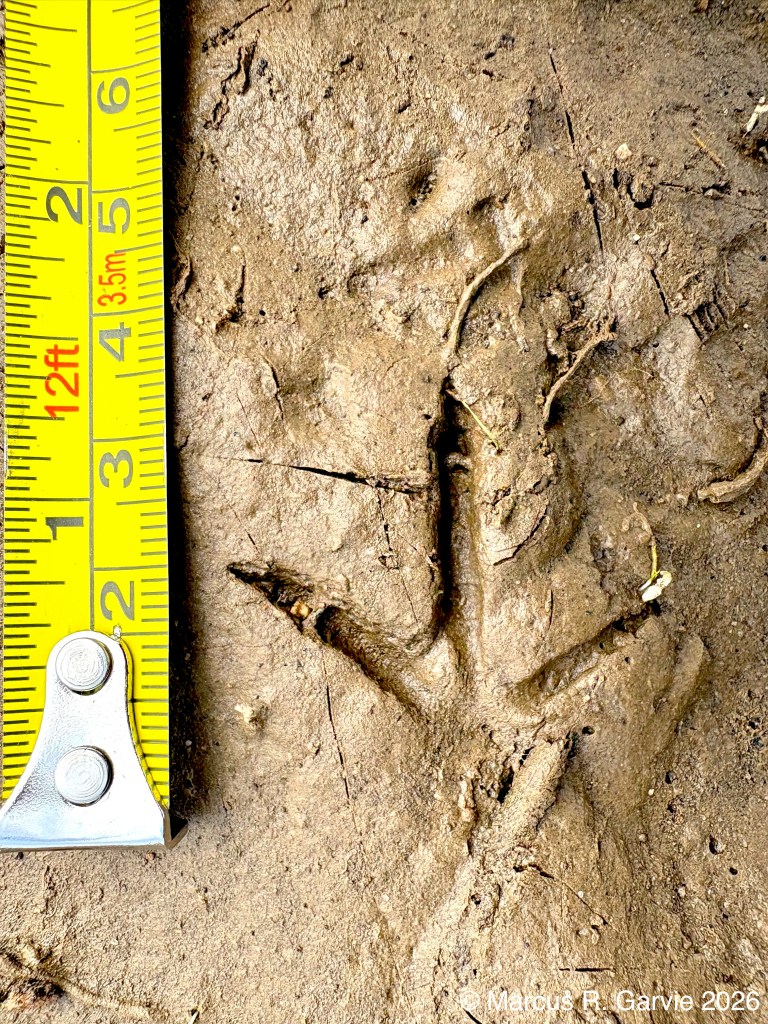
In addition to toe 1 not registering, the last photo clearly shows the webbing between toes 3 and 4, as well as the claw marks. I also noticed from the walking trail that toe 3 points inward and that the tracks are almost in a straight line. See the description on page 110 of [2].
When I walked closer to a rocky, slightly more protected area, a Killdeer came toward me, calling loudly in alarm and puffing itself up to try to drive me away. This was interesting behaviour. In previous encounters with Killdeer, I have seen them feign an injured wing in an attempt to lead me away from the nest. In this case, however, I was too close to the nest, and the Killdeer was willing to risk herself to protect her eggs. I took my photograph and then slowly crept away to avoid disturbing the bird any further. I knew the eggs had to be close by, but I did not see them until I inspected the photo after I got home.
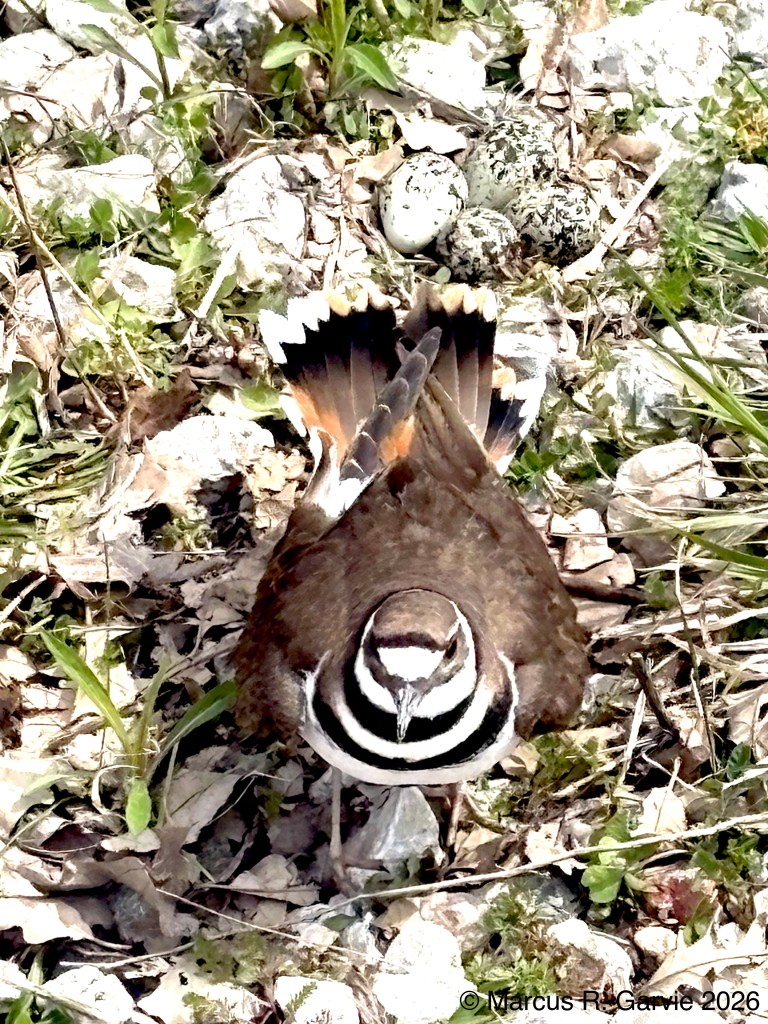
Killdeer nests are simple shallow scrapes on the ground, sometimes lined with small stones or bits of grass. The eggs are usually laid from mid-March into summer, with a typical clutch of four to six buff-to-beige eggs marked with brown and black speckles. Both parents incubate the eggs, with the male typically taking the night shift, see https://en.wikipedia.org/wiki/Killdeer.
I was keen to find tracks from more bird species. There were abundant Canada Goose tracks, but I had described those in detail in a recent blog post. I did find the tracks of another bird, which I initially thought were from a gull:
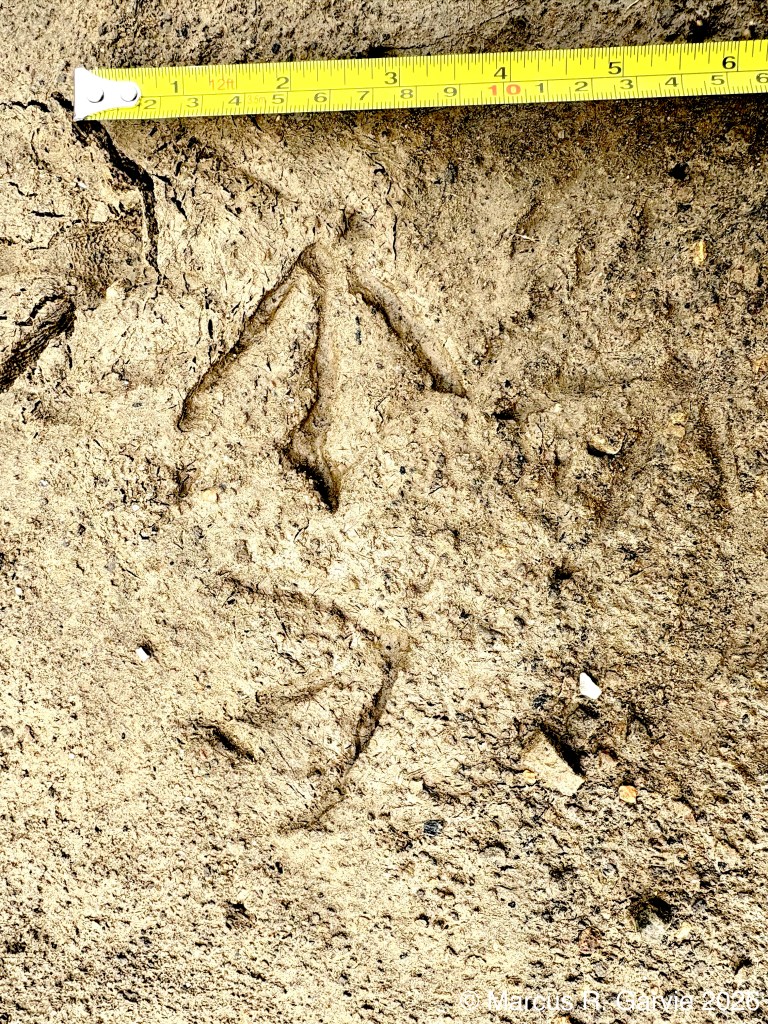
If you look closely, you can see the faint outline of webbing in the top track. This track measures about 2 1/2 in by 2 1/2 in, which is consistent with Mallard duck (see page 149 of [2]). However, the identification is a little puzzling. According to page 20 of [2], in webbed feet toes 2 and 4 usually point inward toward toe 3, whereas the outer toes in the top track look almost straight. That said, I think I can see this feature more clearly in the lower track.
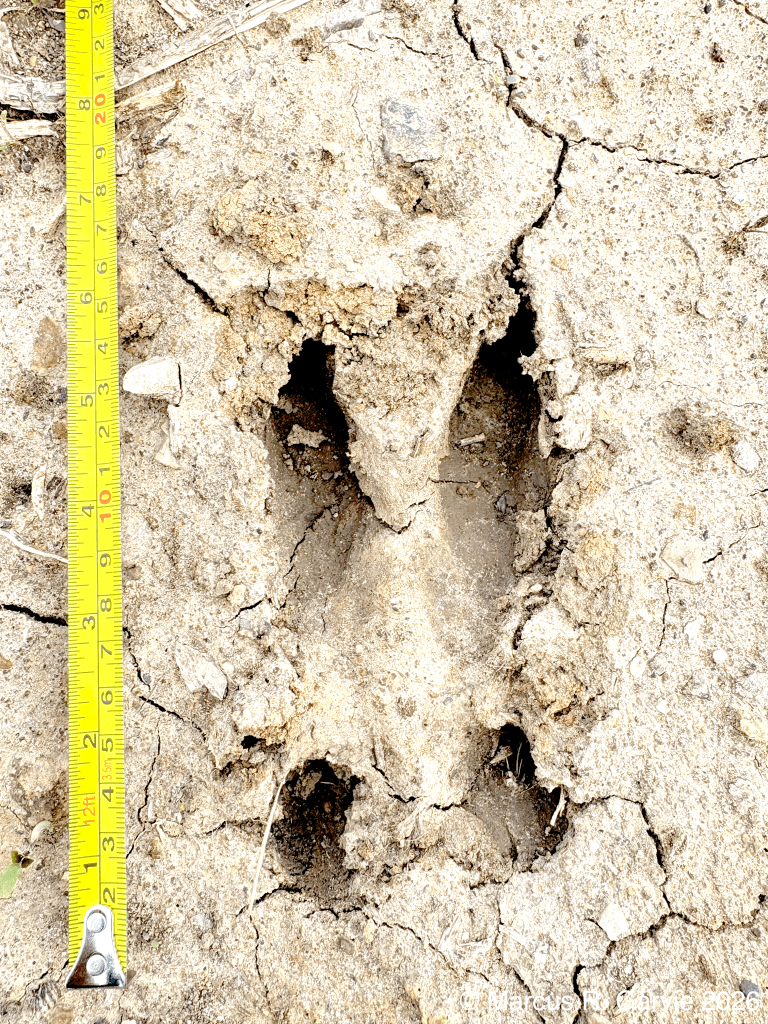
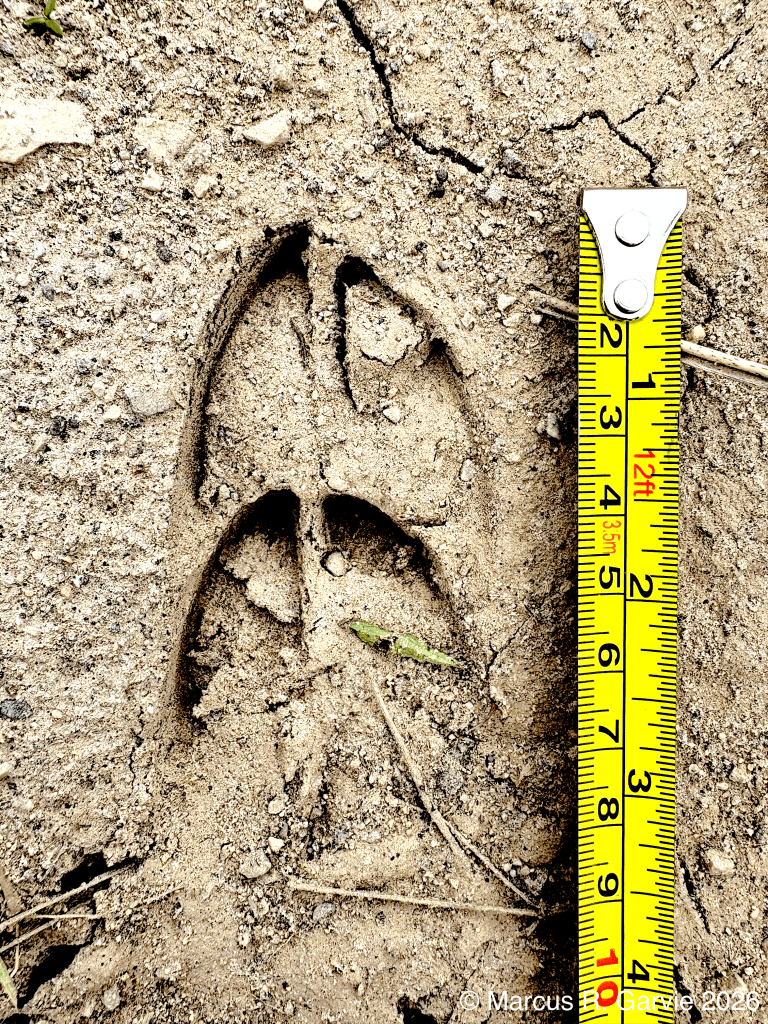
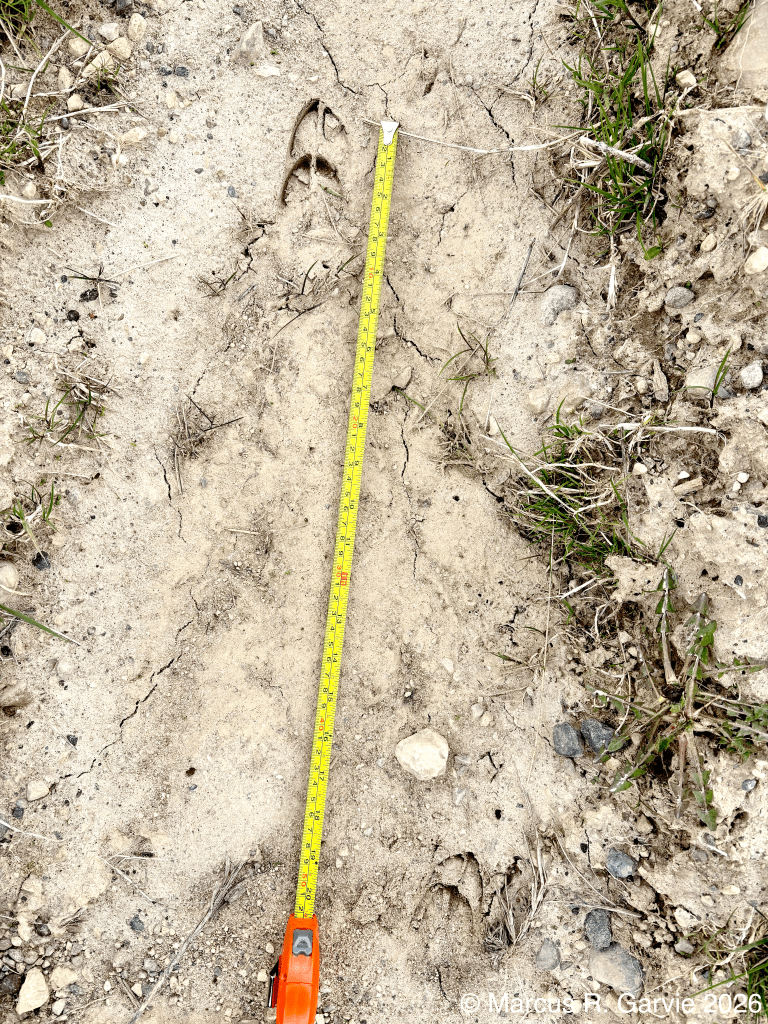
Nearby were some great White-tailed Deer tracks. In the first photo, the dew claws are showing because of the soft mud. Since the dew claws are parallel with the cleaves of the foot, I think this is likely a hind foot; when the dew claws show in a front foot, they tend to stick out more to the sides. In the second and third photos, we can see that the deer is using a slight understep: the hind foot lands last, partially covering the top of the front track in each case. The stride here is about 18 inches, which is within the range for a walk (see page 532 of [1]).
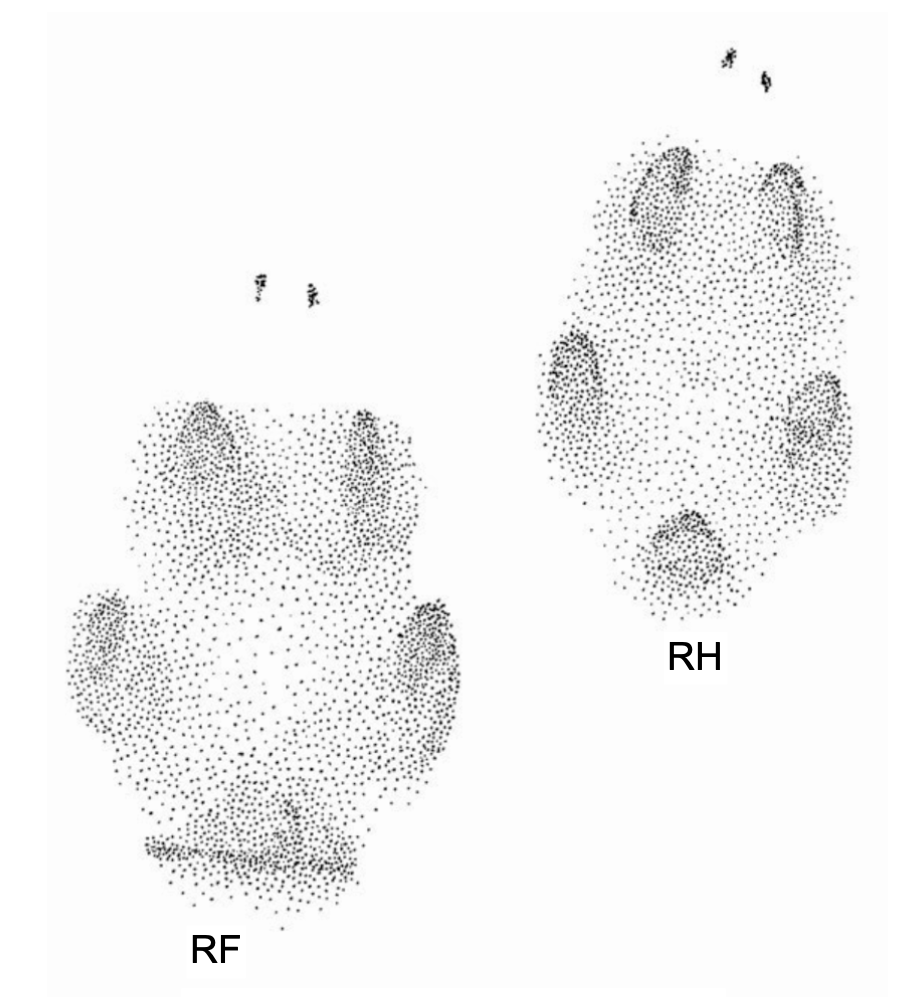
My next observation was of a Woodchuck. I was excited to find these tracks because they can be difficult to find. I have included my best photos alongside the track prints from [1].
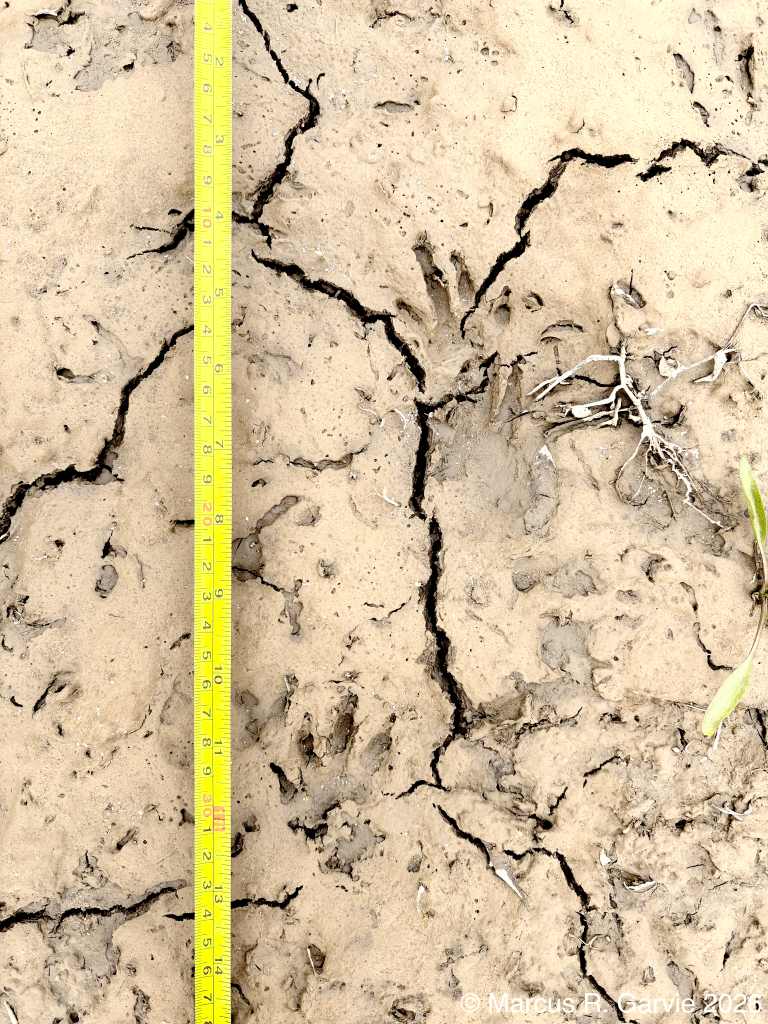
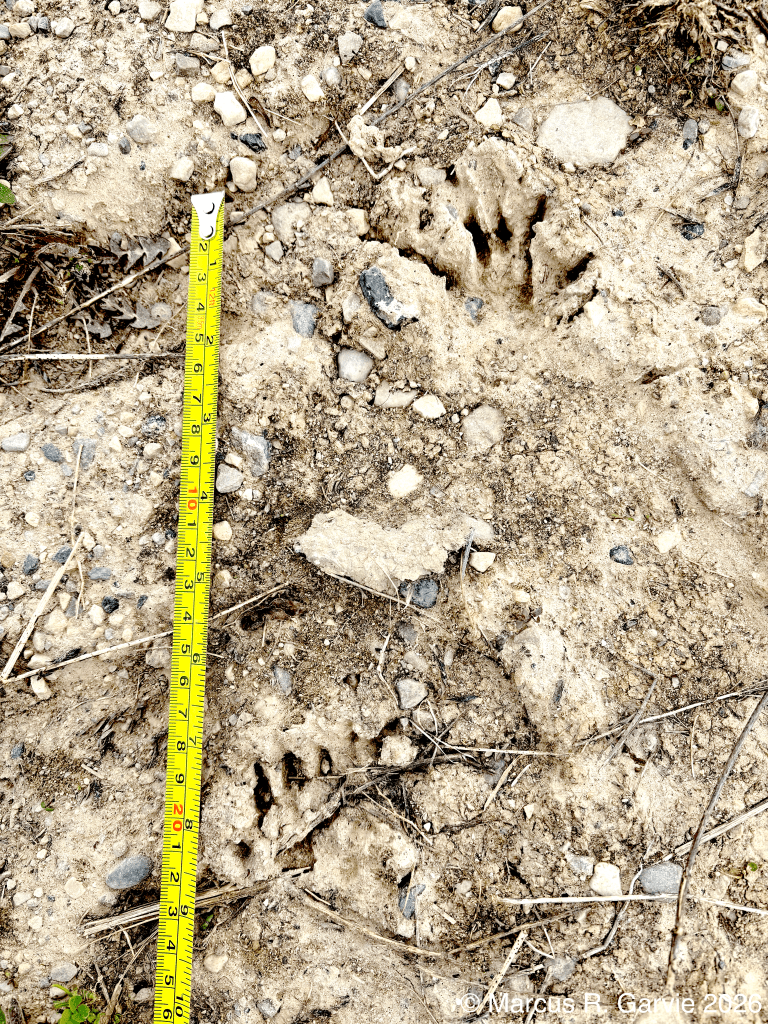
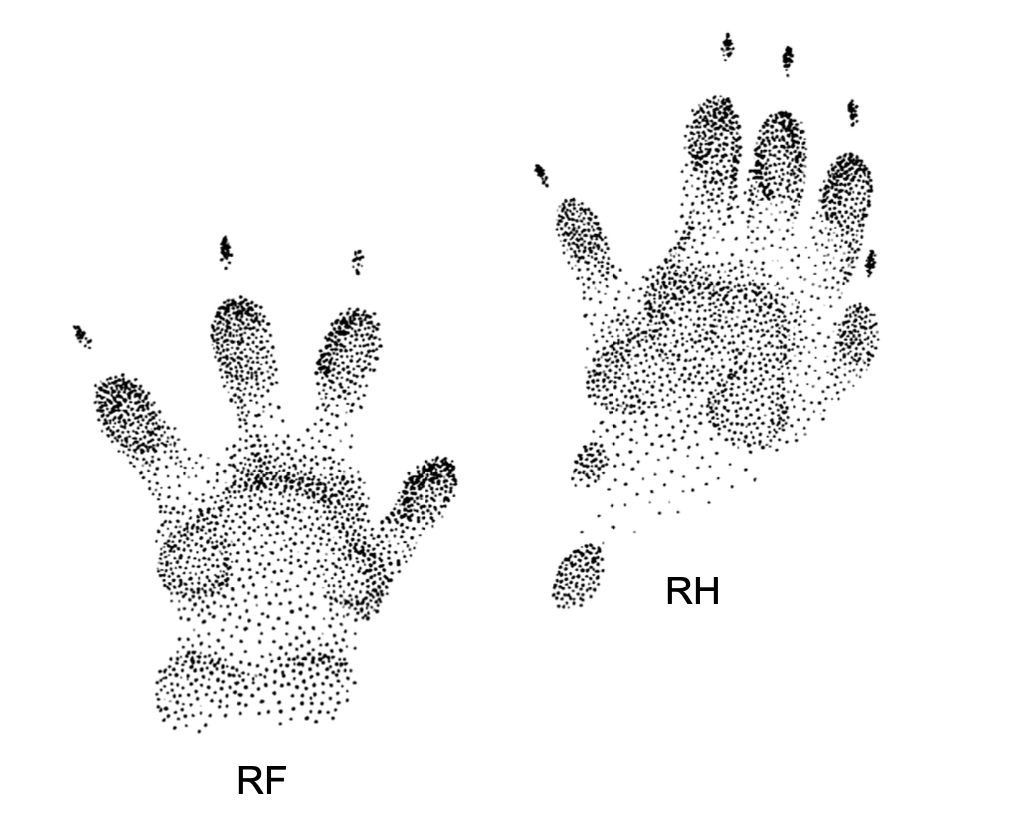
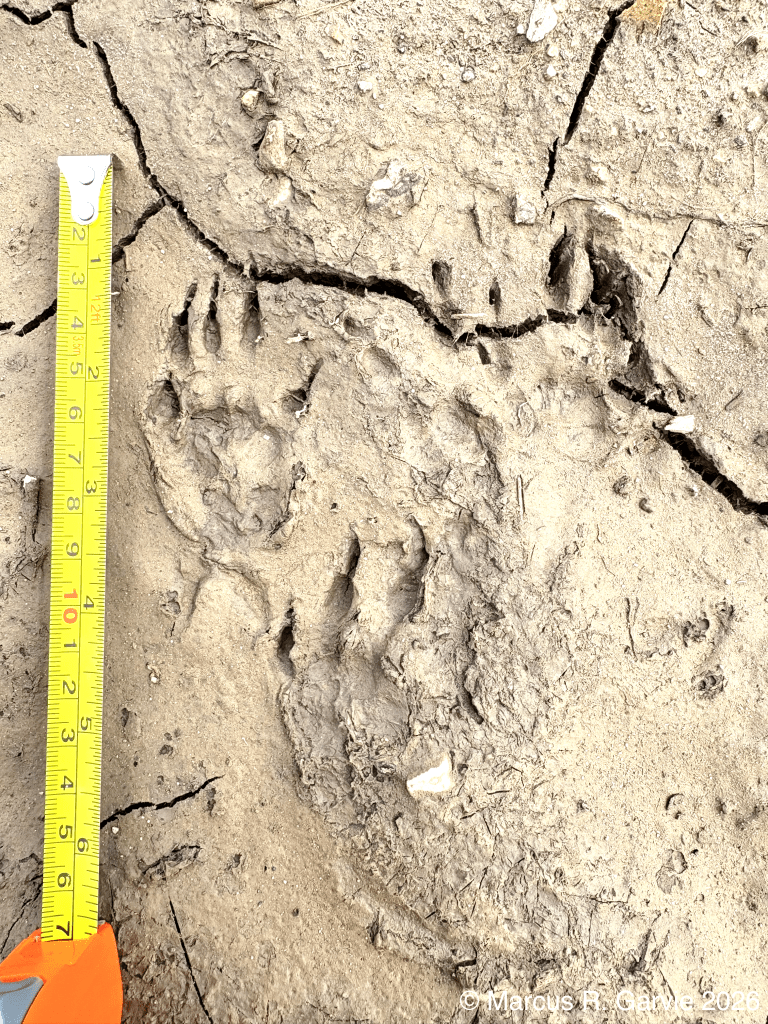
There are four toes on the front tracks and five toes on the hinds. The hind tracks show the typical 1-3-1 toe arrangement seen in rodents. Woodchucks are members of the squirrel family and are part of the group often called ground squirrels, which helps explain why their tracks can look like oversized squirrel tracks. Notice the large claws, used for digging. The characteristic I now look for in these tracks is that the toes of both the front and hind feet are very asymmetrical and often curve toward the inside of the trail.
My final observation was of a Red Squirrel. I have had trouble in the past distinguishing the tracks of this species from those of the Eastern Grey Squirrel. In this case, the features that clued me in to Red Squirrel were the relatively longer toes connected to the palm pad, and the blockier pads at the back of the front feet compared with Grey Squirrel. The trail width is also more in line with Red Squirrel; see page 622 of [1]. I have included my photo alongside the track prints for this species given in [1].
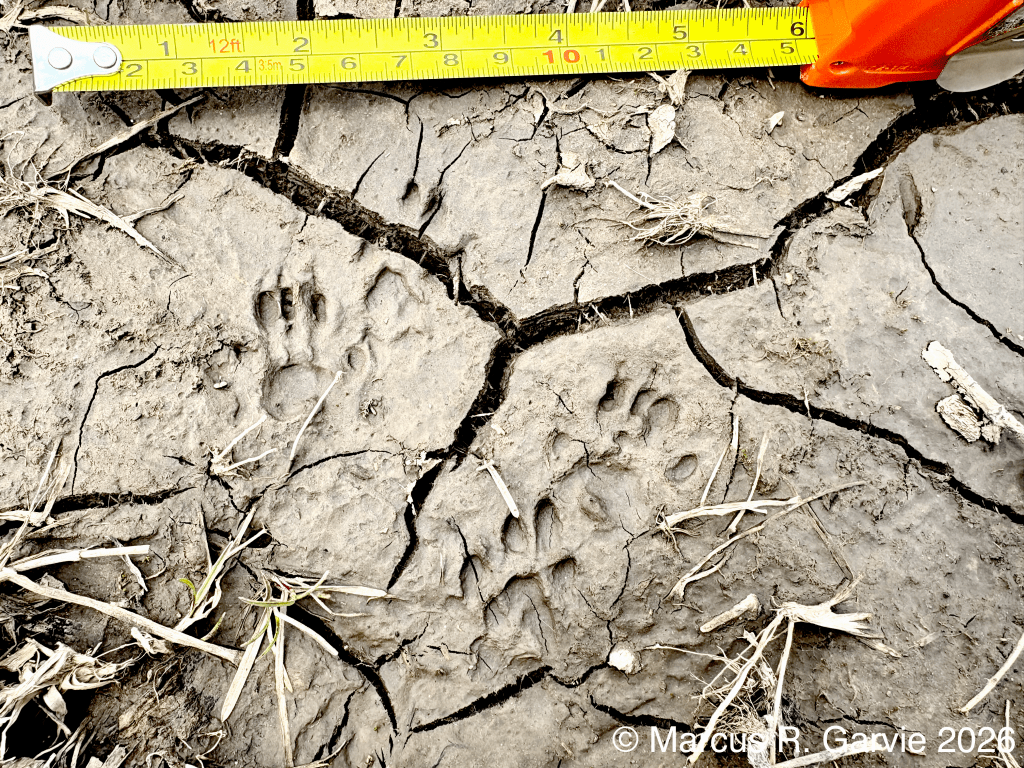
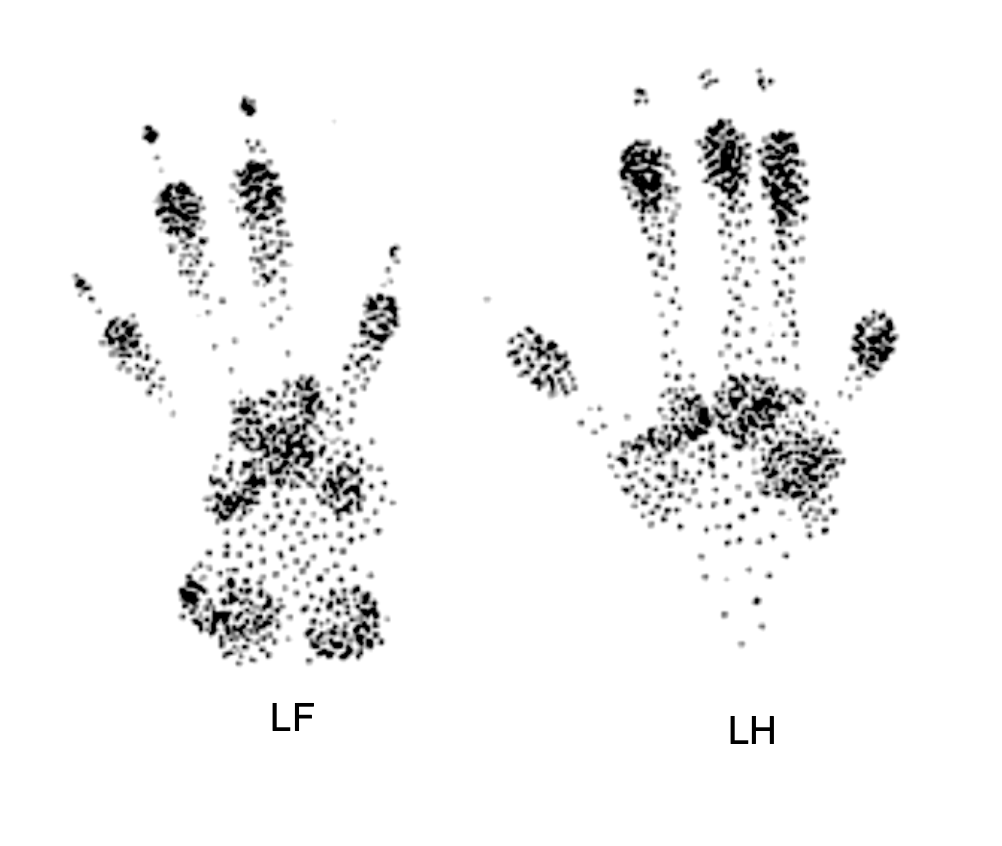
Final comments:
Each time I look at the tracks of even a common species, I learn something new. My continued observations and descriptions help reinforce this knowledge even further. Also, having to describe things I already know well is good practice for when I need to explain this material to people who may be learning it for the first time.
 Field Notes of a Tracker
Leave a comment