
Date: July 16, 2026 (1:45pm – 2 pm).
Weather: hot
Place: at a building site in Southern Guelph (Ontario, Canada) off Kortright Rd W.
Latitude: 43° 31′ 0.522″ N
Longitude: 80° 12′ 57.282″ W
Reference:
– [1] ‘Tracks & Sign of Reptiles & Amphibians: A Guide to North American Species’, Filip Tkaczyk, Stackpole Books (1st Ed.), 2025
– [2] ‘Ontario Nature Guide’, Krista Kagume, Lone Pine Publishing (1st Ed.), 2008
Context:
The air quality was very poor – the Air Quality Health Index (AQHI) was 10+, indicating a very high risk – but I was fed up with being cooped up indoors, so I decided to make a quick visit to the building site near my home to look for tracks. The fine mud surrounding its standing pools of water had produced some excellent tracks and sign in the past.
Observations:
I immediately recognized the tracks as those of a frog or toad, having seen similar tracks several times along a river while visiting my dad in Texas. Frogs and toads are usually quite light, so conditions must be just right for their tracks to register clearly. Before showing the tracks I found, I will briefly review the typical features of frog and toad tracks.
The tracks of frogs and toads look quite similar. Here is an illustration of the feet of a toad, re-drawn from [1]:

According to [1]:
Tubercles are rounded projections of skin on the undersides of a frog’s or toad’s feet that provide additional grip. Subarticular tubercles occur beneath the joints of the toes. On the front foot, the palmar tubercle is the larger pad in the central palm area, while the thenar tubercle is the smaller pad on the inner side of the palm. On the hind foot, the inner and outer metatarsal tubercles are located near the base of the foot; the inner tubercle is generally larger and more conspicuous. In clear tracks, these tubercles may appear as small, rounded impressions and can help distinguish the front feet from the hind feet.
The front feet of frogs and toads are generally small and hand-like, with four slender, spreading toes, and look like the letter ‘K’. The hind feet are much larger and more elongated, with five long, widely splayed toes, reflecting their role in jumping and swimming. Webbing varies by species: it is usually more extensive in aquatic frogs and reduced or absent in many terrestrial toads.
I took a break from writing this blog post to go for a swim with my family in the Eramosa River. It was very fortuitous that I saw an American toad. Here are some photos showing the front and hind feet.
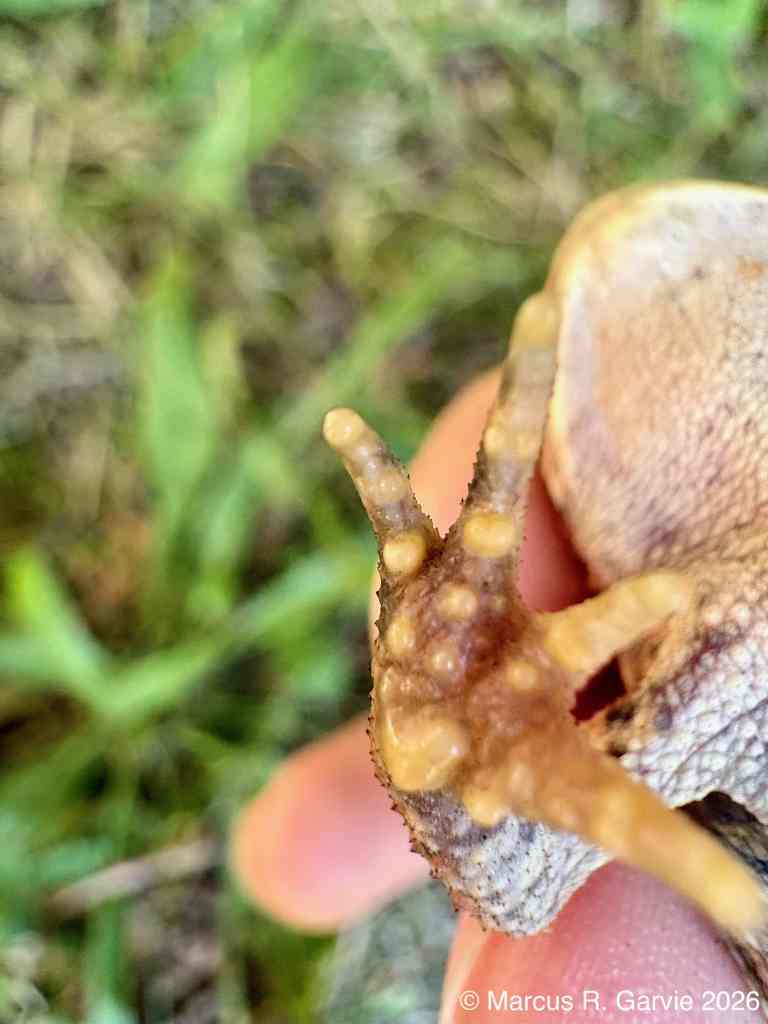
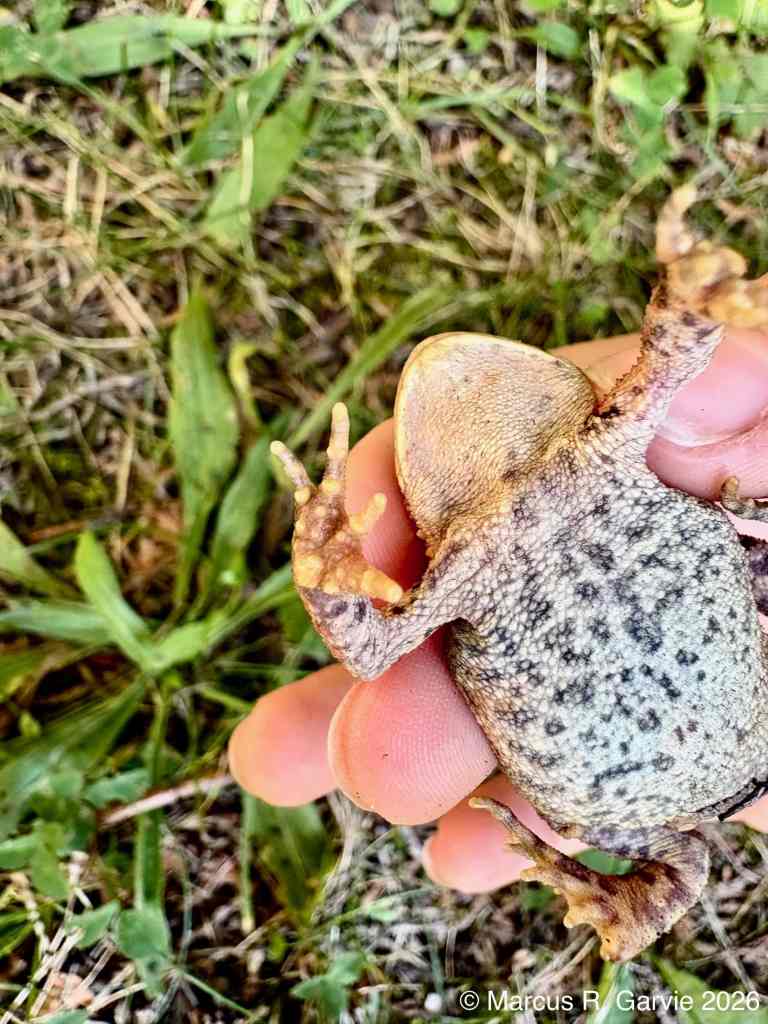
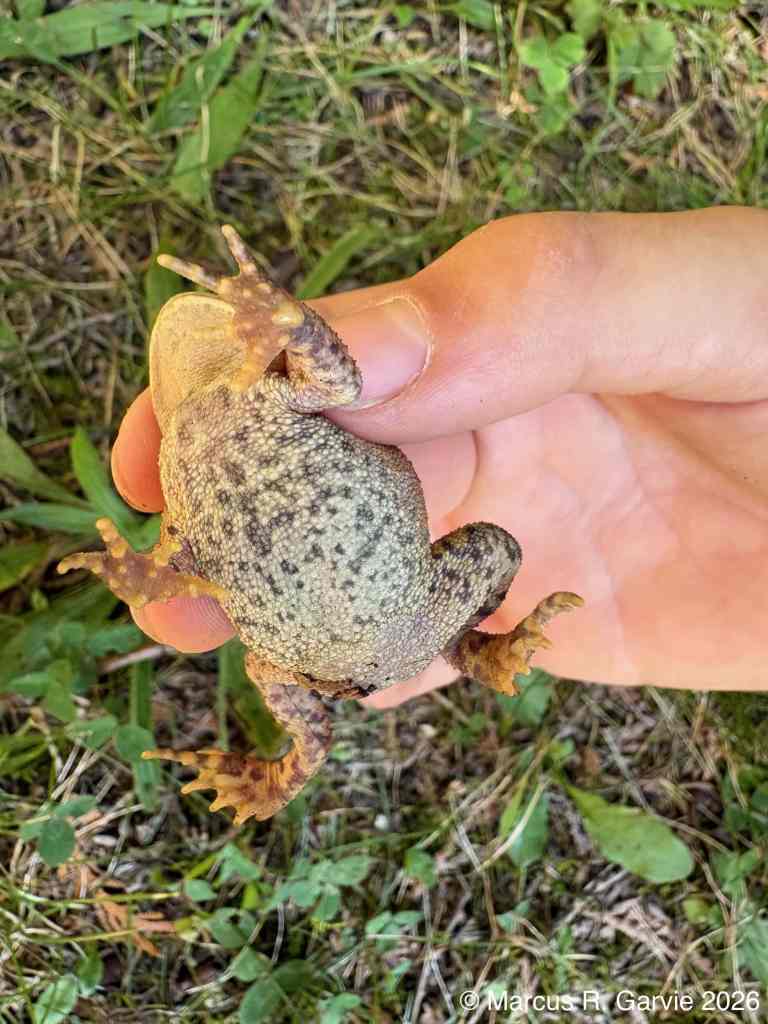
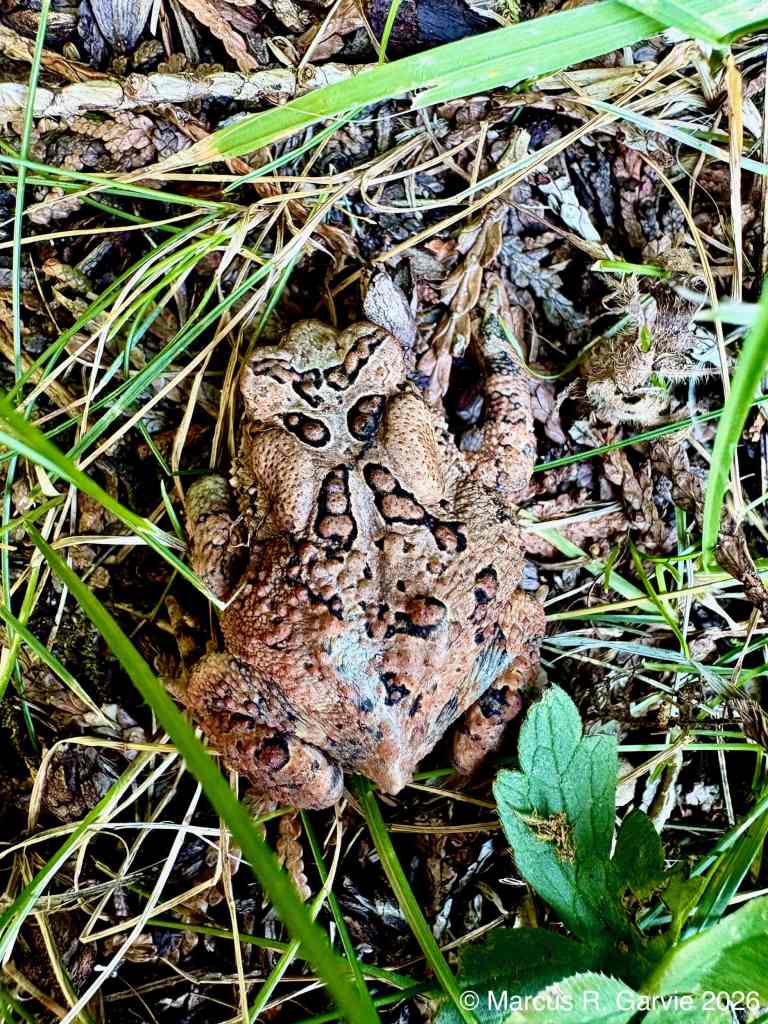
We can clearly see the four-toed front feet and the five-toed hind feet. The outermost, fifth toe of each hind foot is quite small, and the hind feet show no webbing. The tubercles are also clearly visible on the front feet.
Here are perfect American Toad tracks from [1], page 25:

Here is a typical pattern of a hopping frog, re-drawn from [1]: The hopping stride is simply the distance between groups of four tracks.

Here is a typical walking pattern showing how we measure stride, redrawn from [1] for a different species. The stride is the distance from the tip of one foot impression to the tip of the next impression of that same foot.

Let’s look at the tracks I found. I will start with the single observation I found of the toad ot frog hopping:

We can see that the hopping stride is about 6 inches. I then found more tracks where the toad or frog was walking:
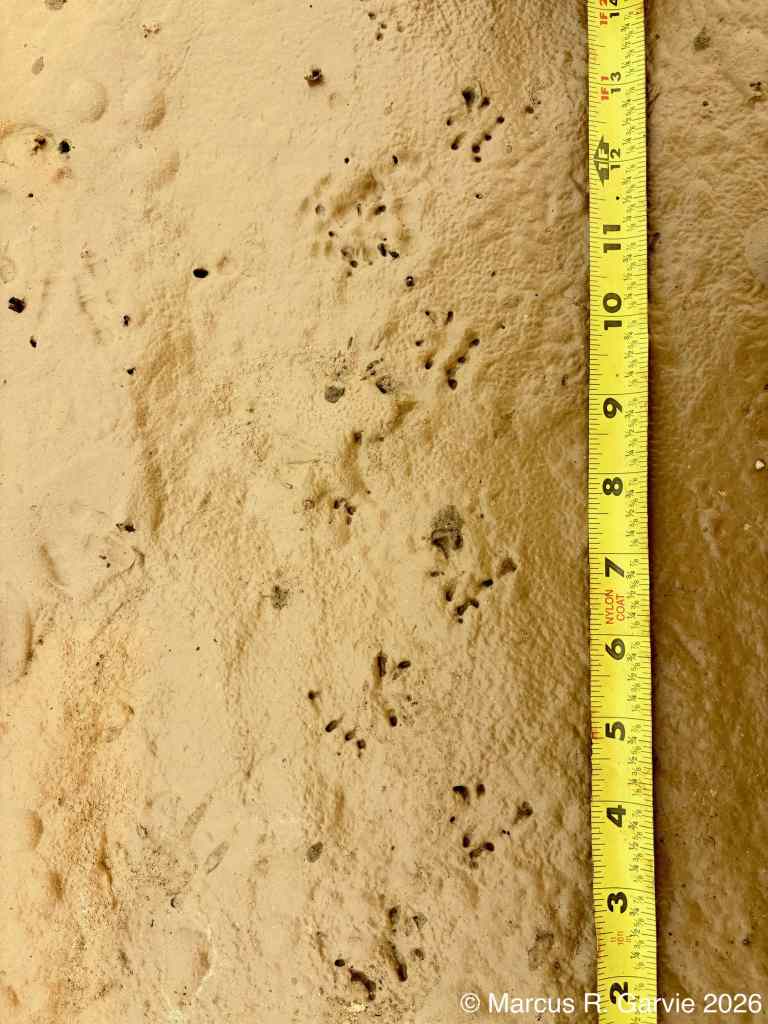
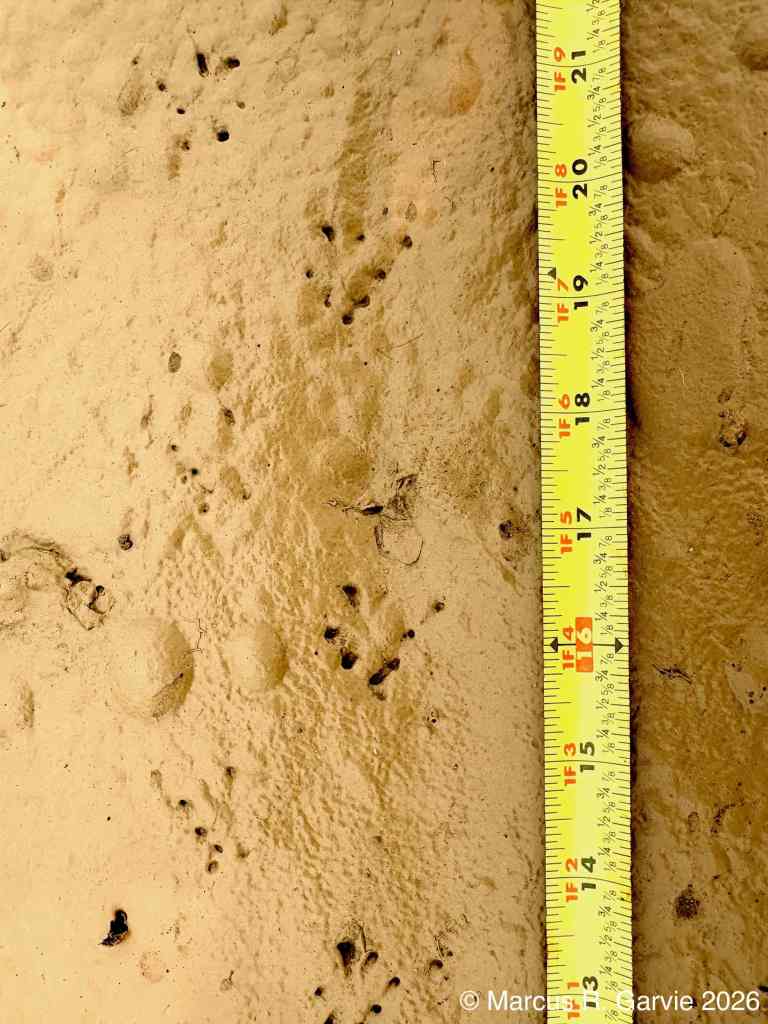
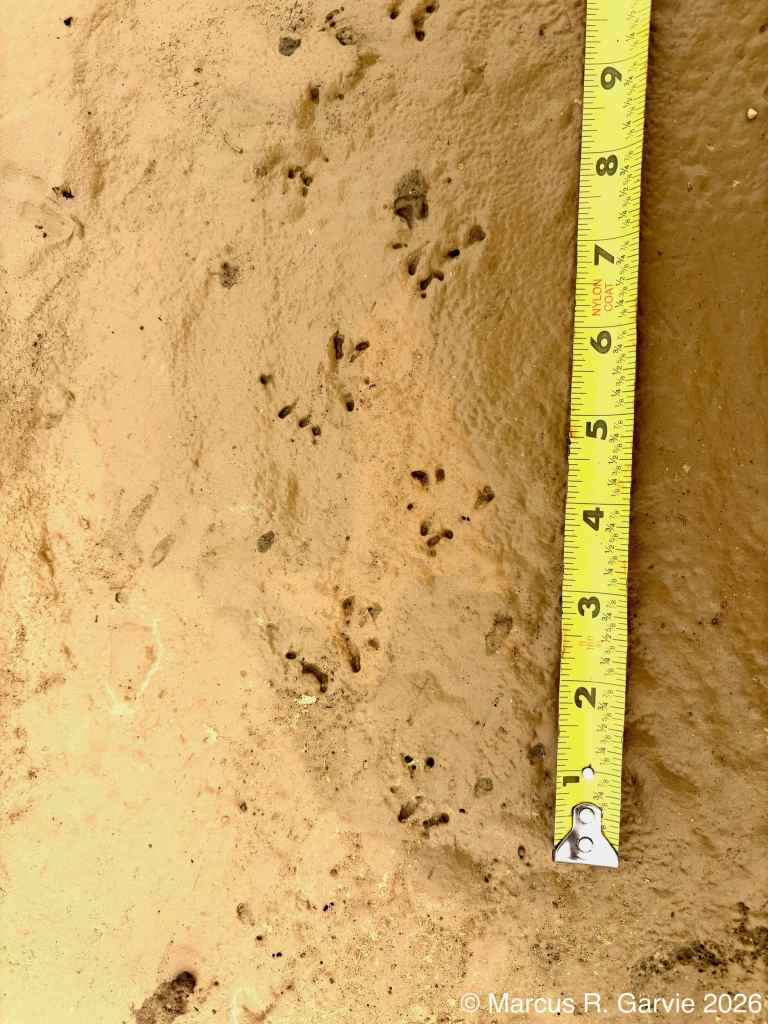

If you look closely you can clearly see the front feet impressions (inward facing ‘K’ shapes), and below them, the claw marks of the hind feet. The pictures are orientated so the direction of travel is bottom-to-top. It is hard to estimate the size of the hind feet, but for the front feet we have the approximate measurements:
front feet length: 3/4 in
front feet width: 7/8 in
And I also estimated the walking stride to be about 3 1/4 inches.
These tracks look very similar to the American Toad tracks shown on page 123 of [1]. The measurements of the front tracks fall within the expected range for both the American Toad and the Green Frog, two species that are very common in Guelph. The hopping stride is at the lower end of the range for a Green Frog. The deciding factor for me is gait: American Toads frequently both hop and walk, whereas frogs walk much less commonly (see page 71 of [1]). My best guess, therefore, is that these tracks were made by an American Toad.
Finally, I also found tracks in which the hind claw marks were visible, but very little else:
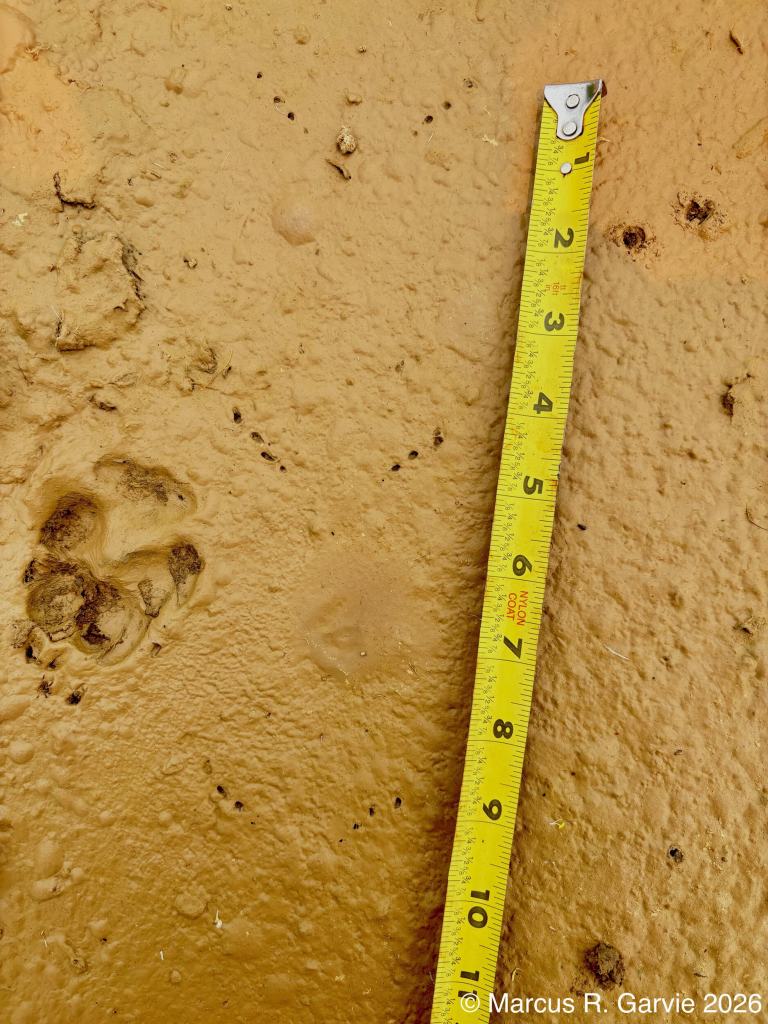
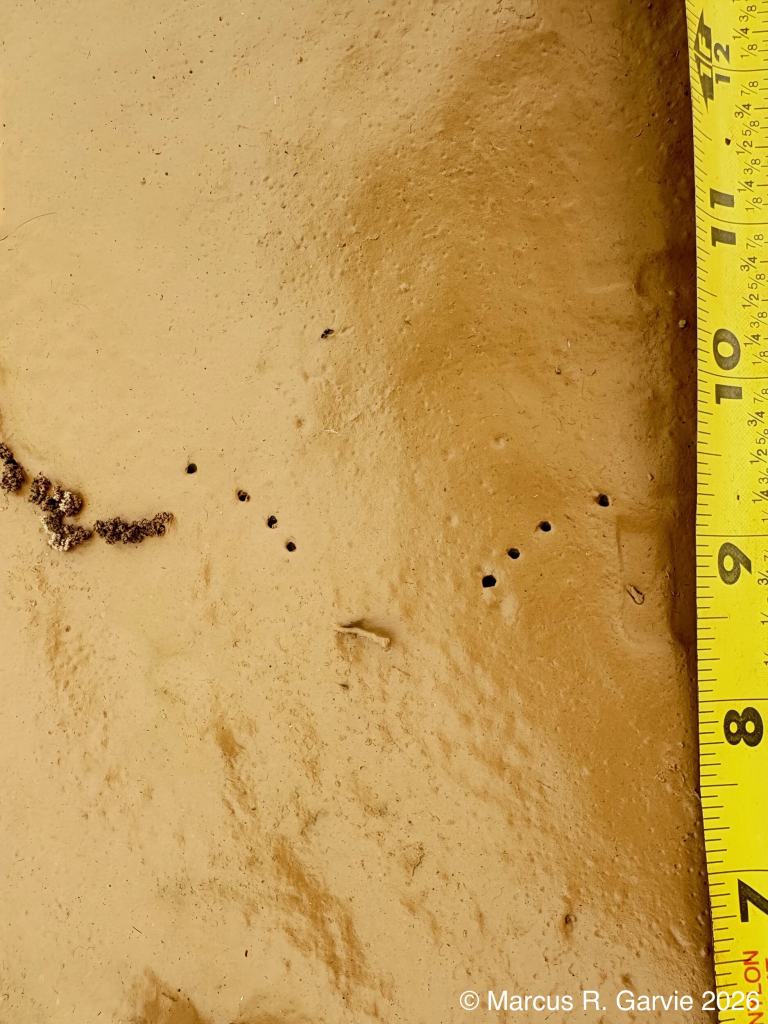
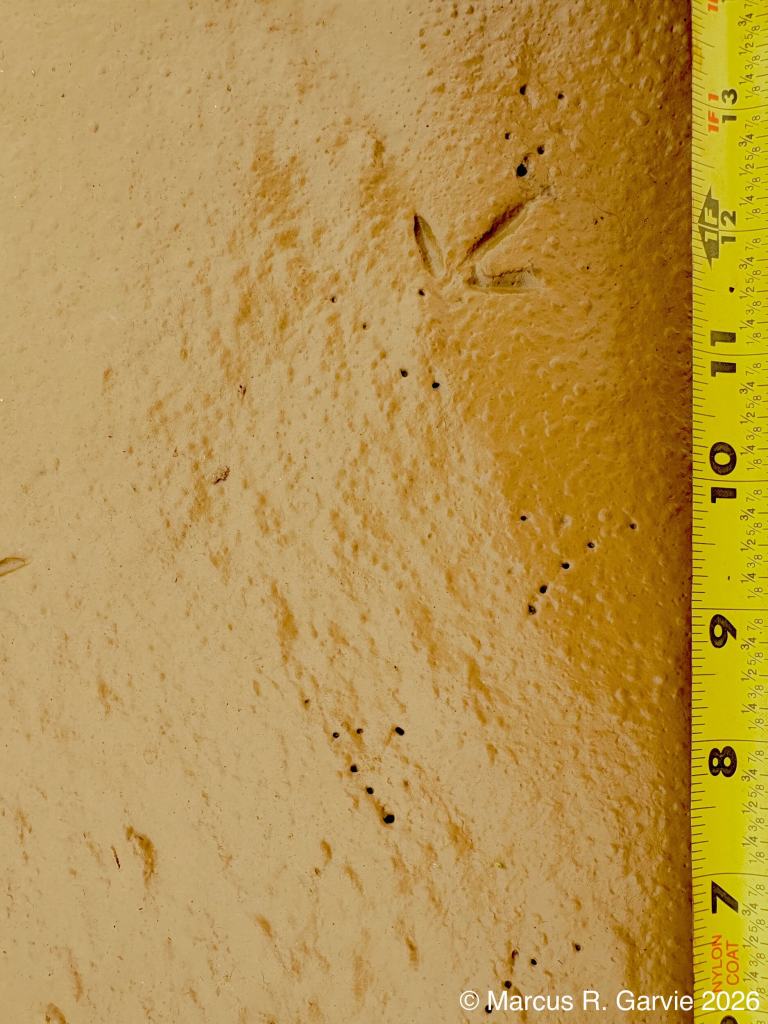
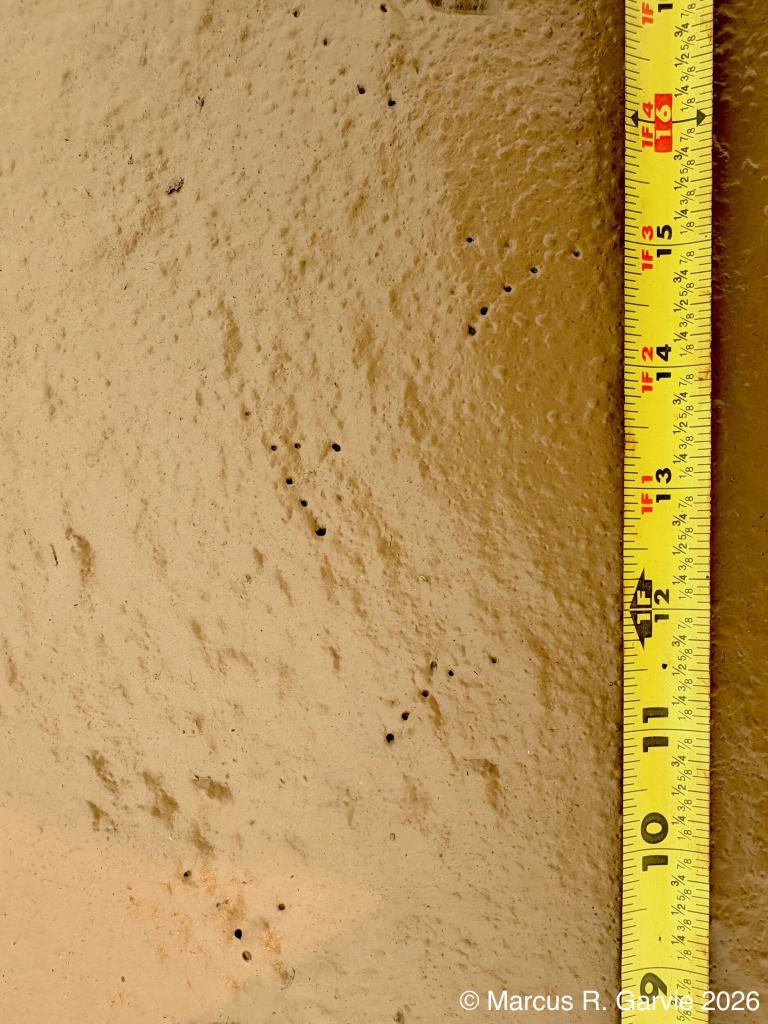
It’s worth reviewing a little bit of the biology of the American Toad. The following is from page 112 of [2] (image cleaned up using AI):

Final thoughts:
It was a rare treat to find these tracks, as I don’t often come across the tracks of reptiles or amphibians. I’ll be paying closer attention from now on to the more subtle track patterns left in fine silt.
Leave a Reply