Date: Feb 18, 2024
Place: Arboretum, University of Guelph, Guelph ON.
Time: 3:30 pm – 4:50 pm.
Discussion: went for a quick tracking walk in the University of Guelph’s Arboretum. I haven’t done very many tracking posts recently because I found them too time-consuming. I’m going to try and do more posts, but maybe with less detail. There was recent snow on the ground and the temperature was around -1 C. I wanted to find some examples of different gaits – particularly of Canids. I wasn’t paying too much attention to species, although I think I did recognize coyote, dog, and fox.
Main references:
‘The Tracker’s Field Guide: A Comprehensive Manual for Animal Tracking’, James C. Lowery, Second Edit., A Falcon Guide
‘Mammal Tracks & Sign: A Guide to North American Species’, Mark Elbroch and Eleanor Marks, First Edit., Stackpole Books
Photos and quick thoughts: I found some Canid tracks that were quite complicated. I attempted to use the gaits shown on page 53 and page 60 (see illustrations below)
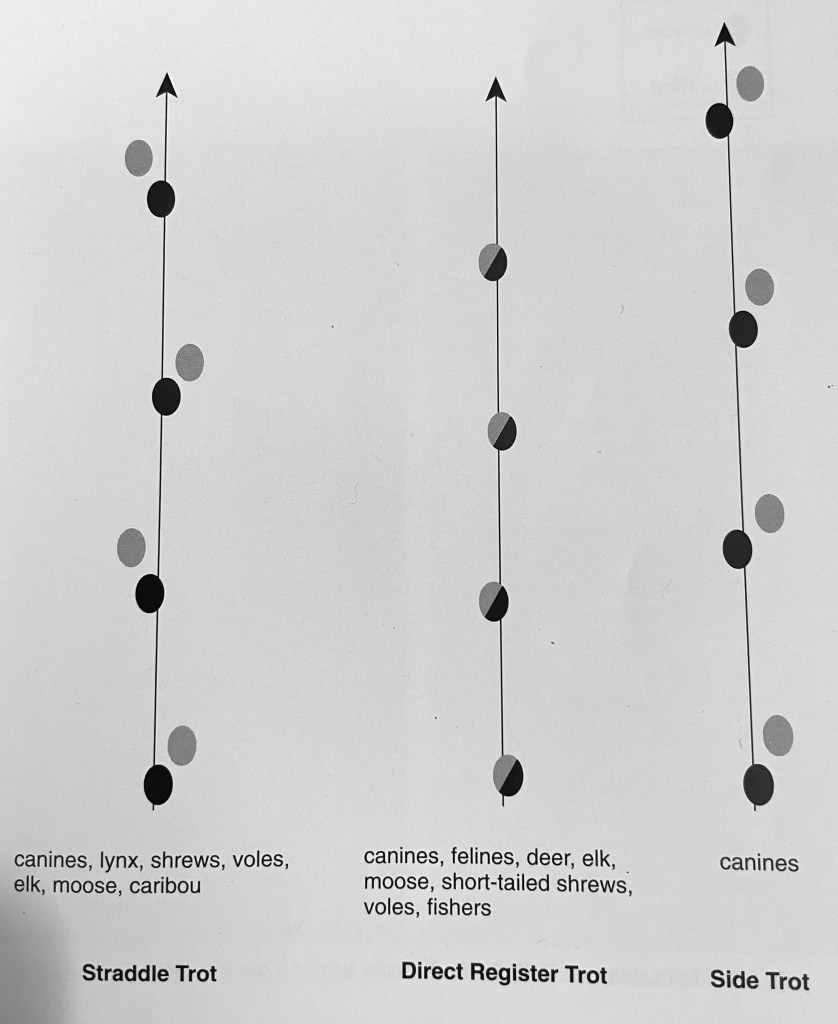
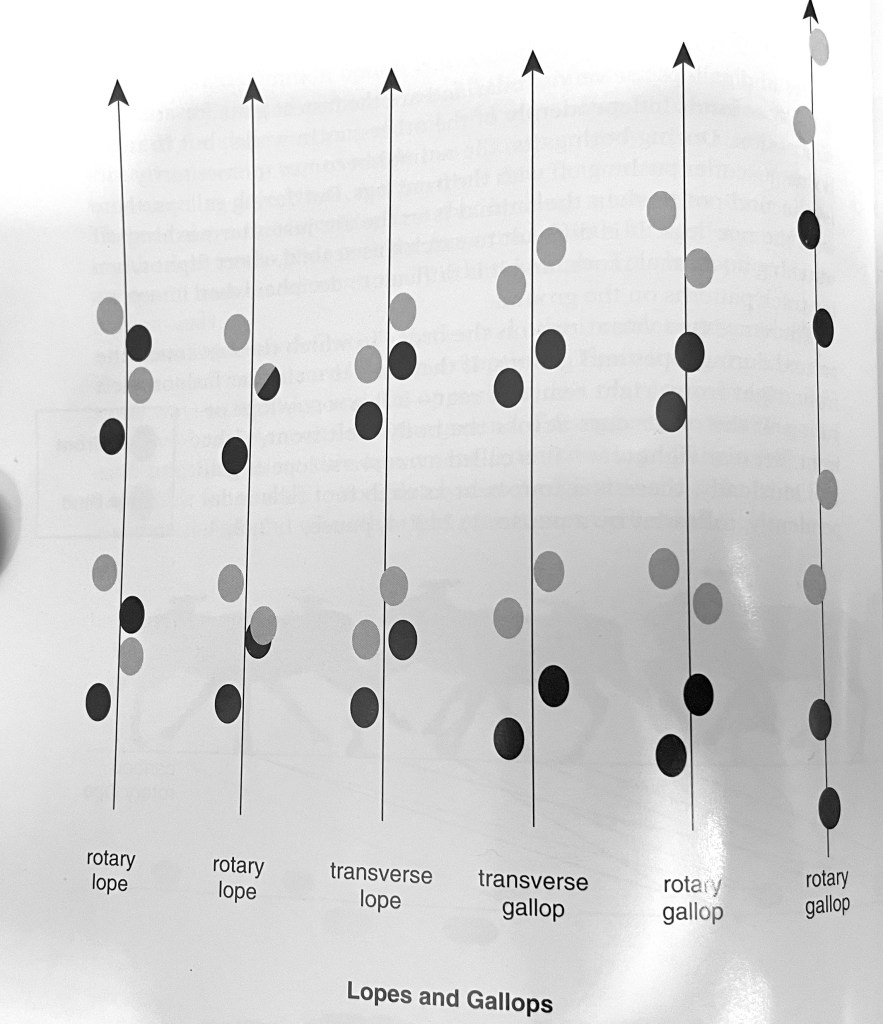
and the basic gaits on pages 71 – 73 of Elbroch. The first set of Canid tracks I display below illustrates the confusion I have been having. I can’t figure out which tracks are a group of 4. Does this represent a rotary gallop? A transverse gallop? There is a repeating pattern, but I can’t figure out from the diagrams in Elbroch what they represent:
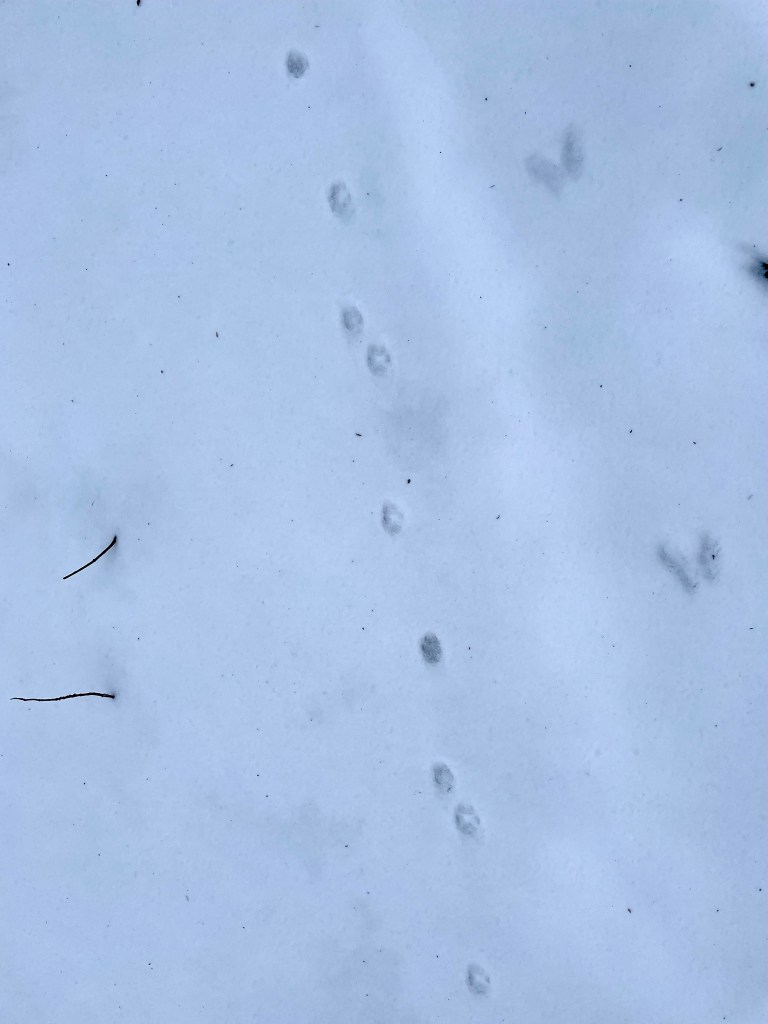
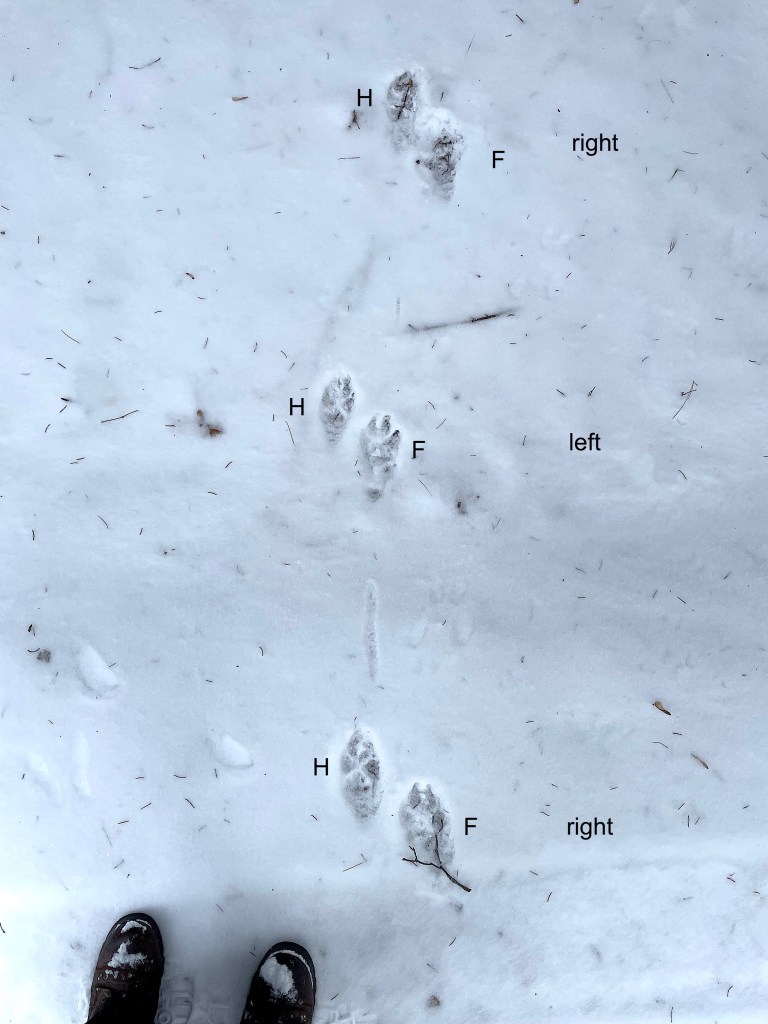
The next set of Canid tracks is much easier as I’ve seen this one quite often. The gait is a side trot and I’ve indicated which tracks are which:
The next set of Canid tracks shows a related gait pattern. I am less confident about which tracks are which, but I’m pretty sure this is a straddle trot:
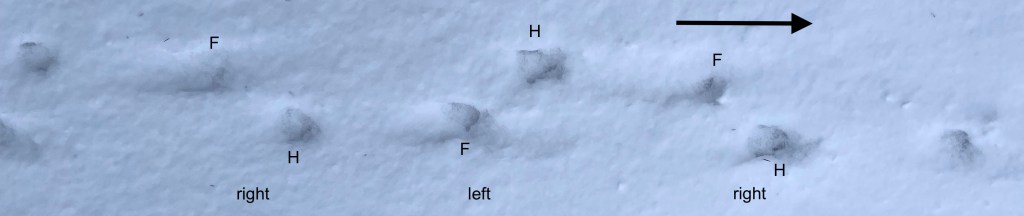
I guess this pattern could be interpreted as a rotary gallop, but I don’t think so. What makes it confusing is that I can’t reliably see which tracks are bigger (front tracks) and which are smaller (hind).
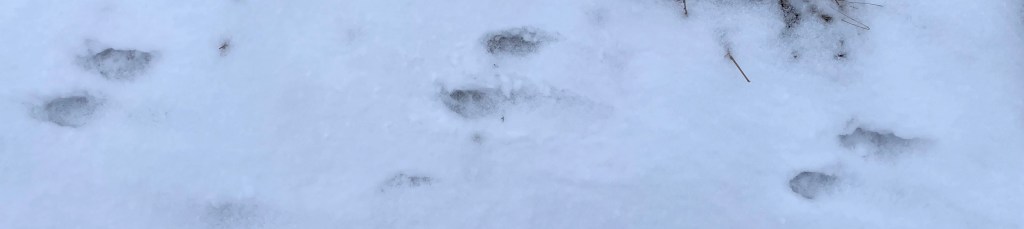
Here is another example of a side trot – I’ll let people decide for themselves which tracks are which:
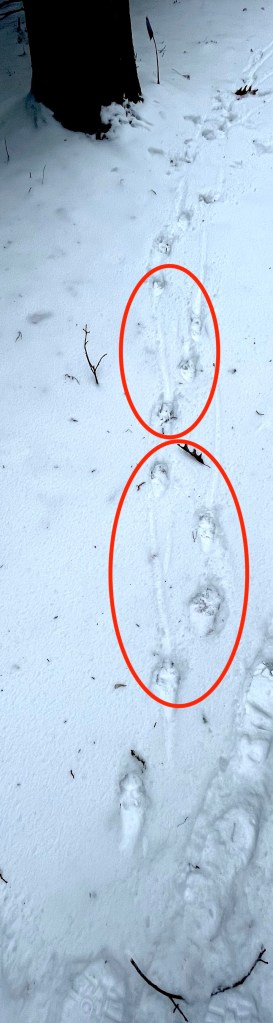
Does the next set of Canid tracks represent a rotary gallop? I’ve circled the tracks in a set of 4, but I realize I could be way off here (there don’t seem to be any gaps between sets of 4 tracks which makes this hard to interpret). Maybe the 4 tracks are in a line like I’ve seen skunks do?:
Here is a similar one that totally confuses me:
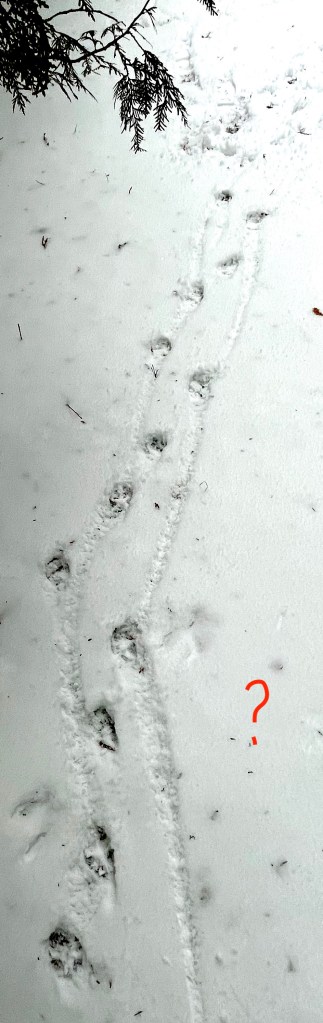
It’s interesting because the drag lines show where some of the feet go. And another!
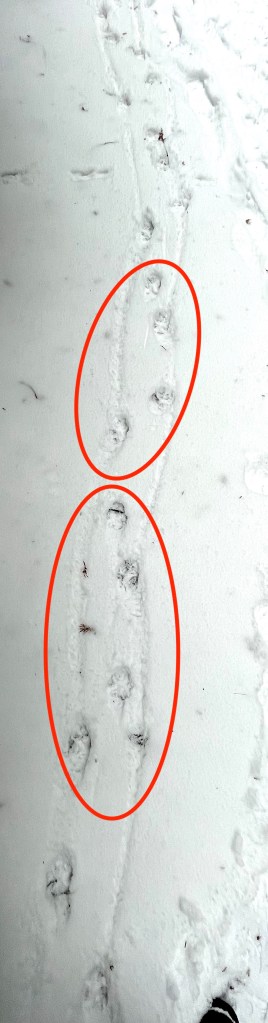
If the circles are correct then I guess this represents a rotary gallop.
Does the next set of tracks represent a transverse lope?
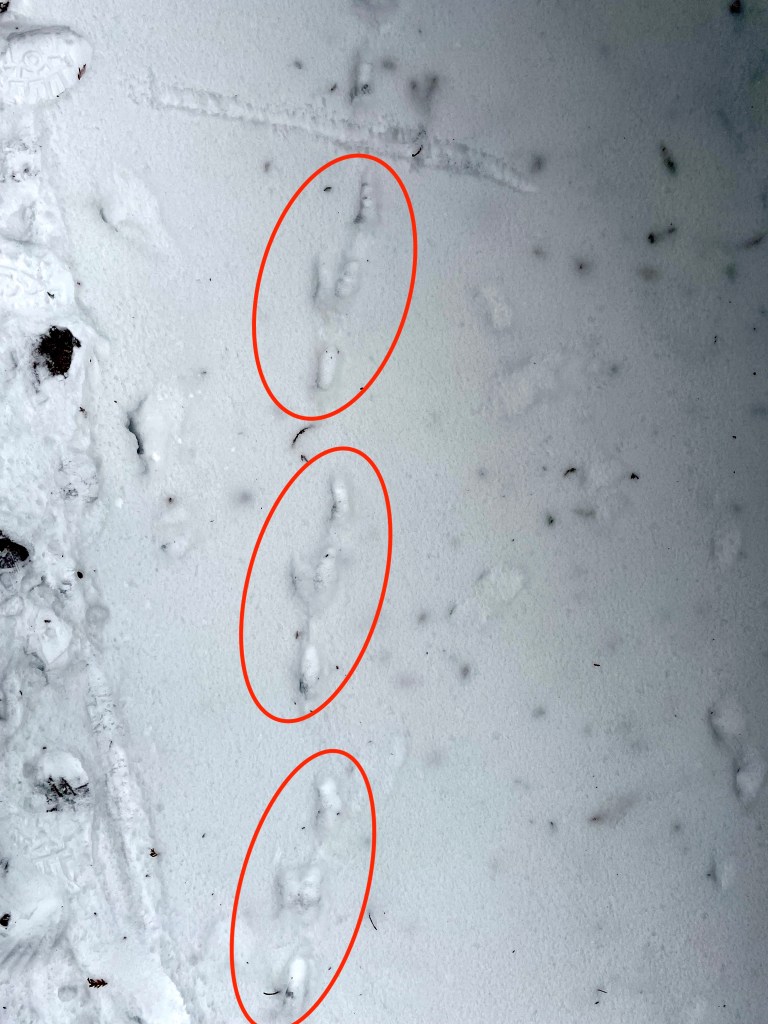
Now for a couple of different track sets. The four pictures below are definitely for a red squirrel because I saw it running away from me:
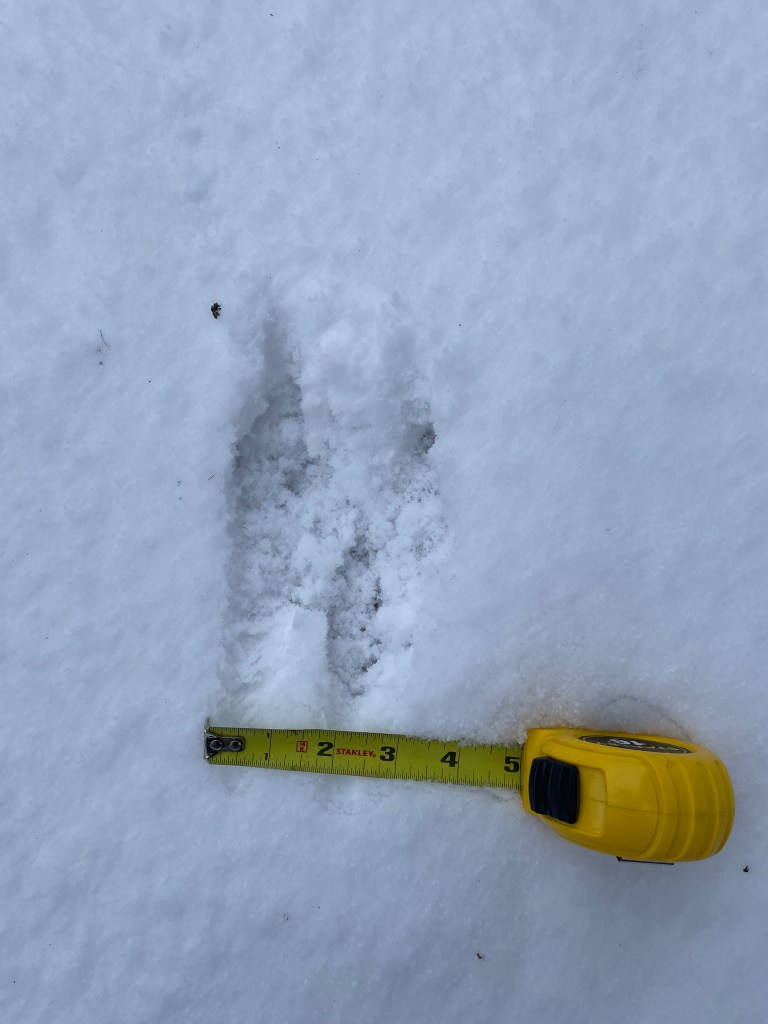
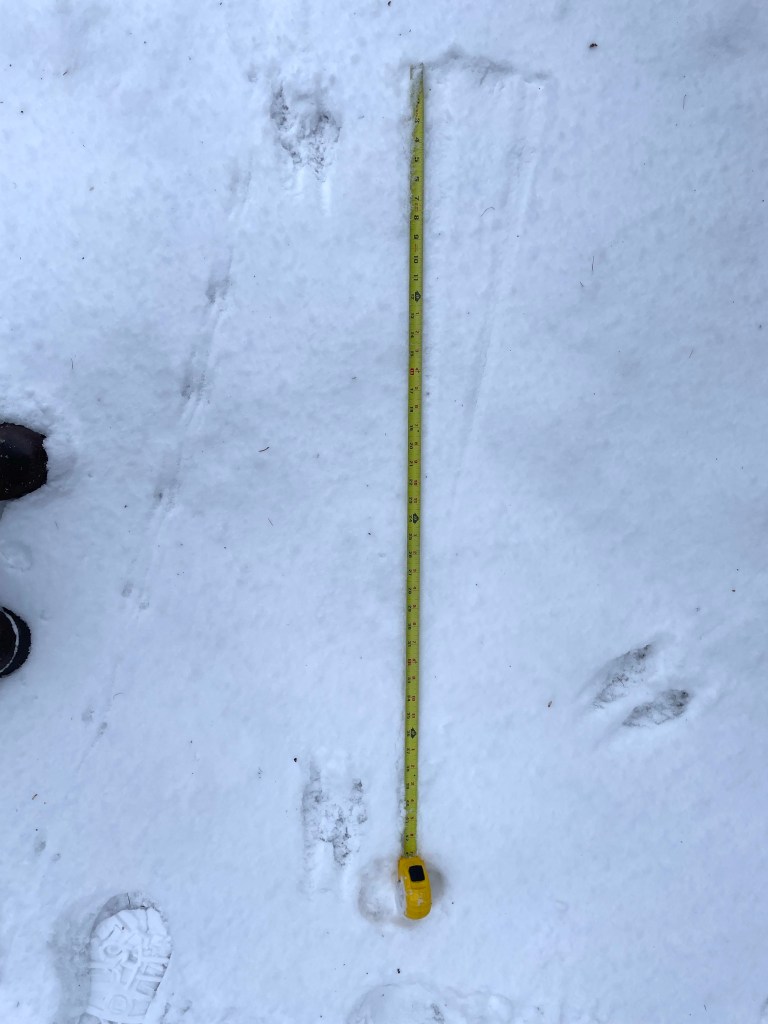
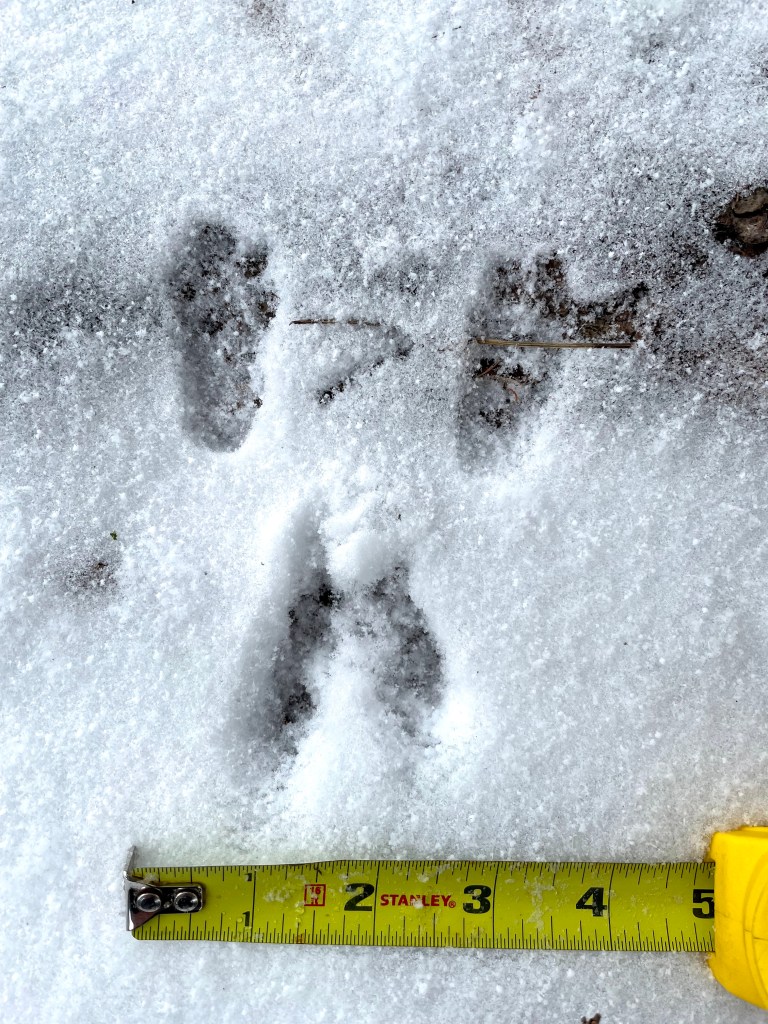
It’s interesting that the stride length here (about 38 inches) is outside the usual range for a red squirrel (Lowery), but I did scare it.
The next two pictures I think are consistent with mouse tracks, and show a bound with a tail drag:
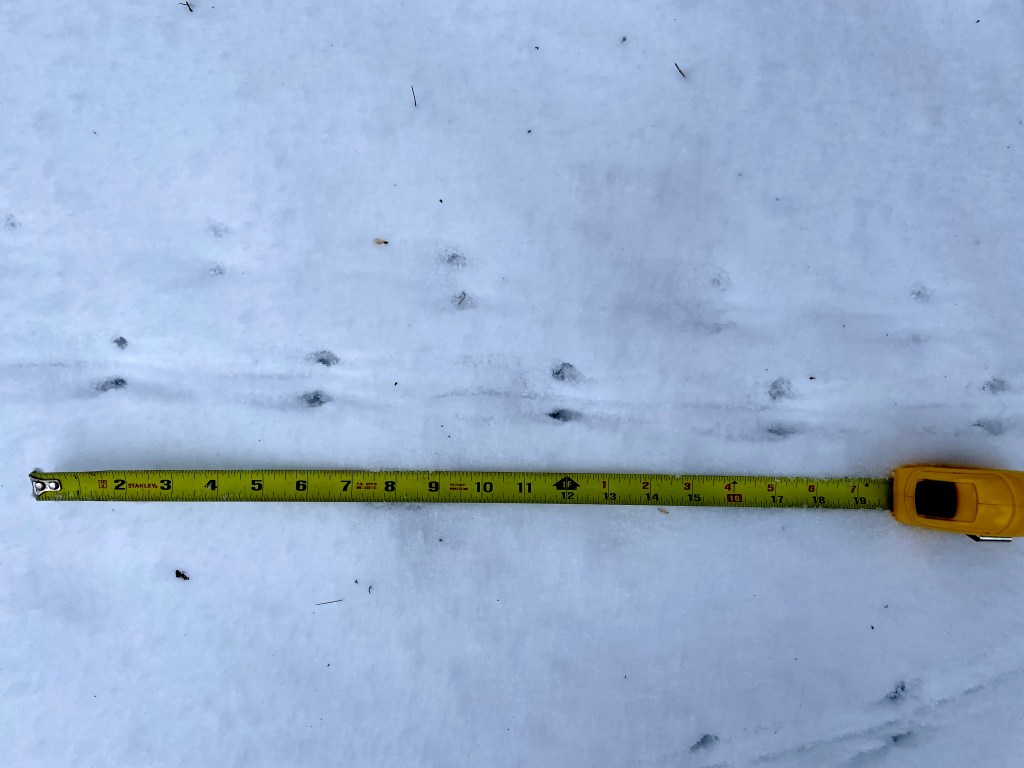
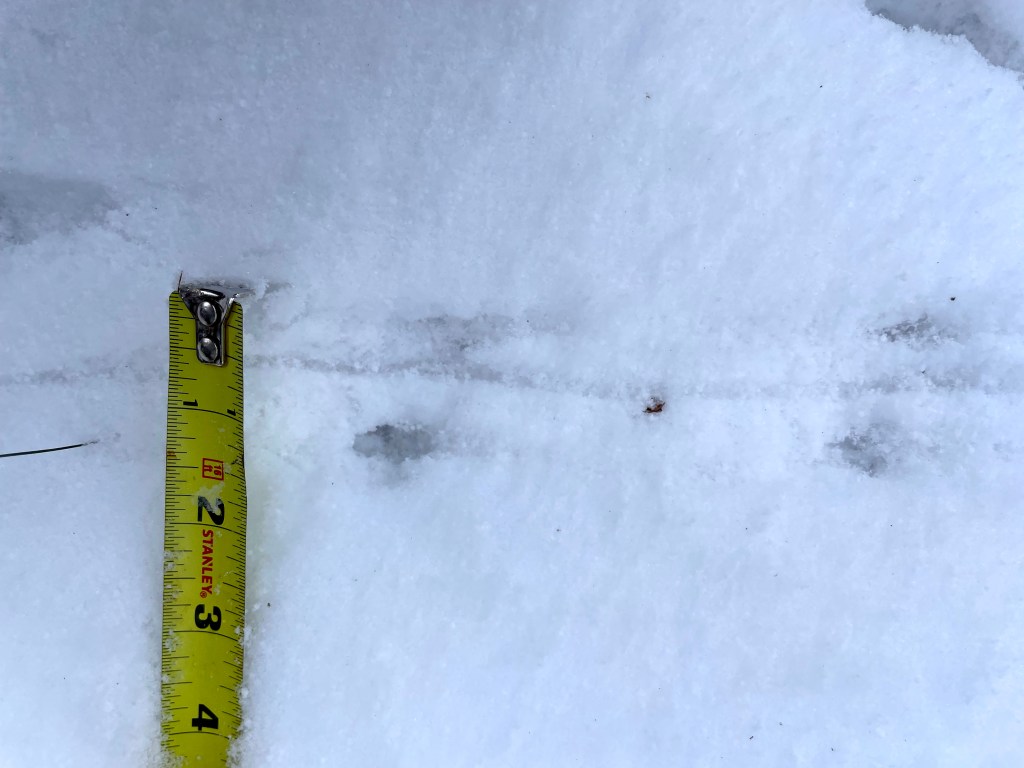
Are the hind and front feet landing side by side?
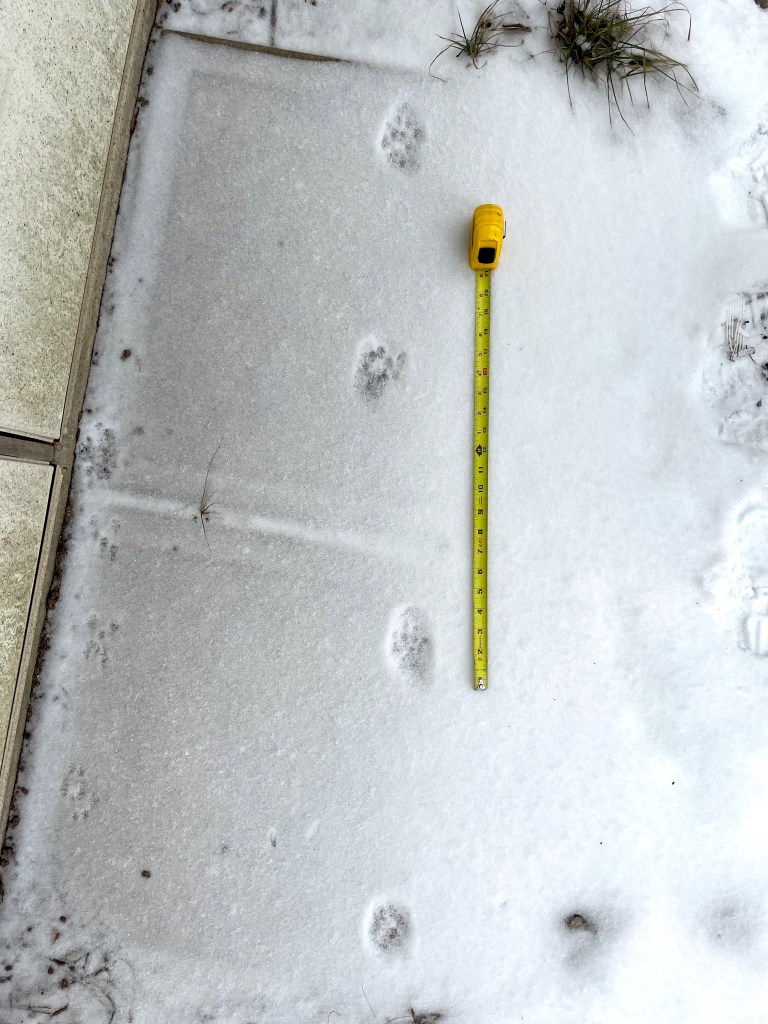
The final picture is of something different – very large Maine Coon cat tracks (I know this because we frequently see this cat). Direct register walk. This wasn’t in the Arboretum, but in our yard at the southern end of Guelph:
Final thoughts: this was a somewhat frustrating tracking trip. I had hoped to figure out the gaits better. I think in future I should initially focus on clearer sets of Canid tracks so that I can at least consistently differentiate between front and hind tracks. And maybe avoid confusing sets of tracks where I can’t clearly see where a group of 4 tracks ends and the next set begins.


 Field Notes of a Tracker
Leave a reply to marcusgarvie Cancel reply