Date: January 23, 2023
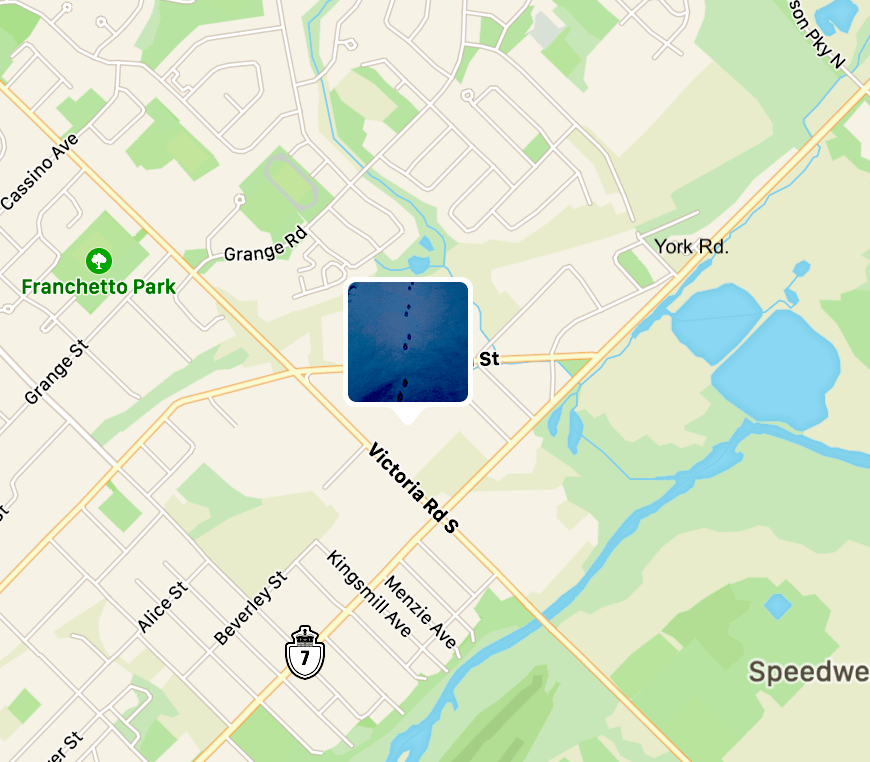
Place: Victoria Rd., Guelph On. In the car park of factory.
Time: 9:30am (approx.)
Main references:
‘The Tracker’s Field Guide: A Comprehensive Manual for Animal Tracking’, James C. Lowery, Second Edit., A Falcon Guide
‘Mammal Tracks & Sign: A Guide to North American Species’, Mark Elbroch and Eleanor Marks, First Edit., Stackpole Books
Weather: Overcast, approx. -5 C. There was a fresh layer of maybe 1cm of snow on the ground.
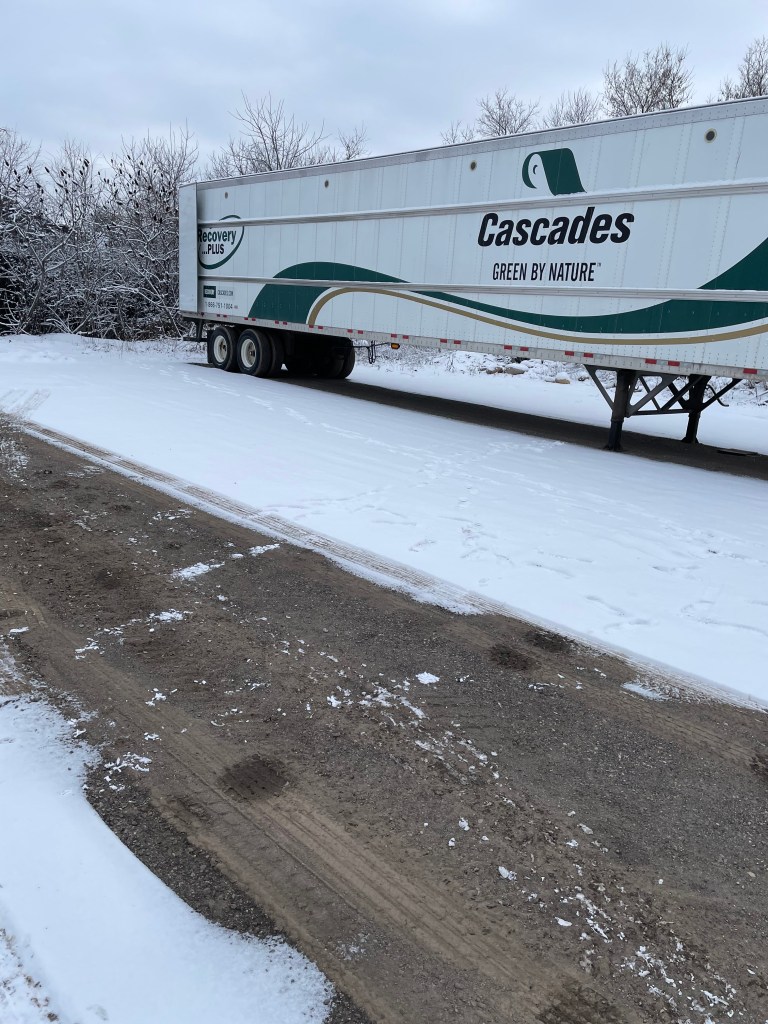
Location: I was driving back home after taking my son to school when I happened to glance left on Victoria Rd. into the car park of some industrial building and saw a red fox clearly visible against the white of the snow. I had to first take my wife to an appointment but returned within about 20 mins. I easily found the tracks, which went under a truck container:
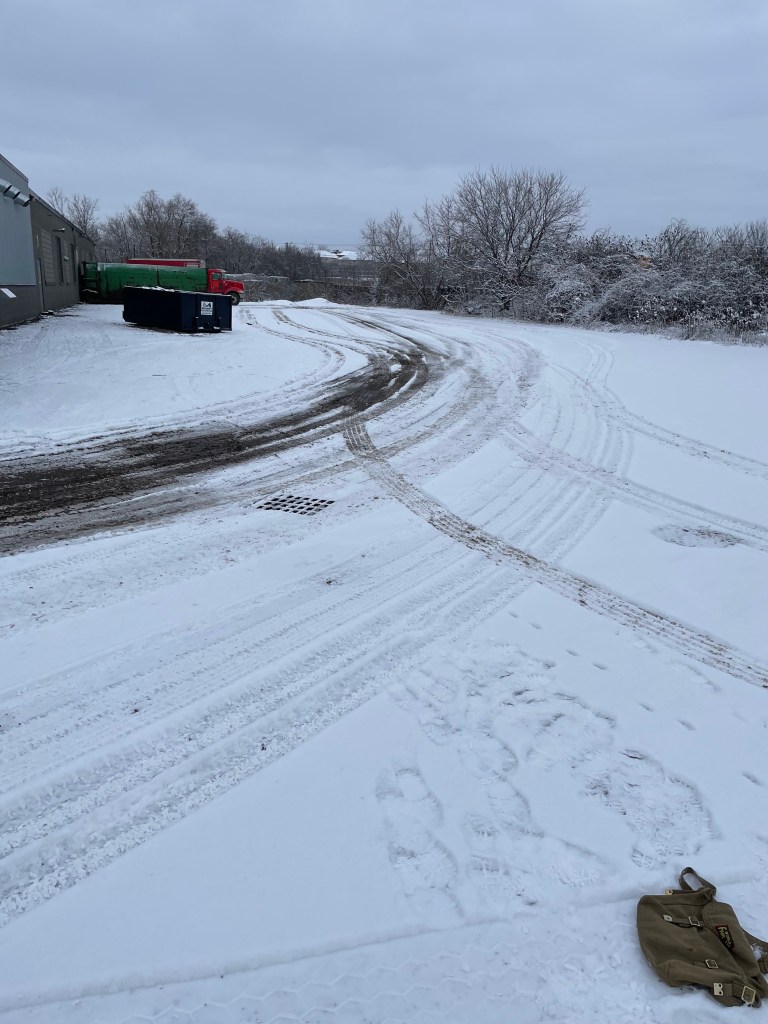
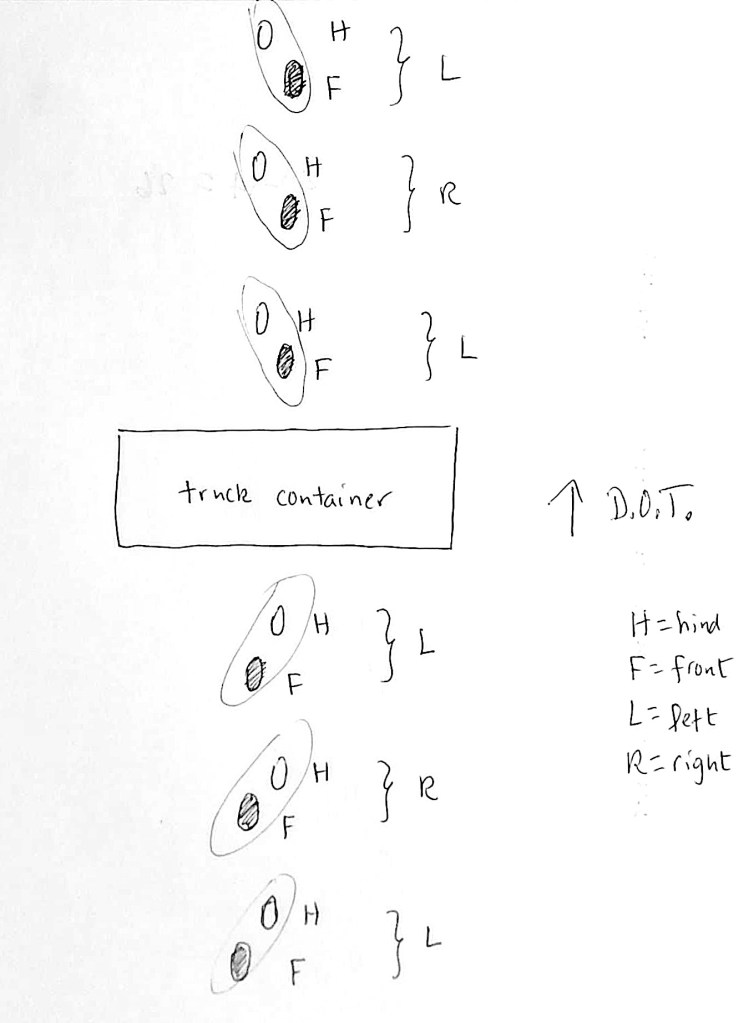
Discussion: I started by initially making a quick sketch in my notebook of the tracks, that show stride and trail width:
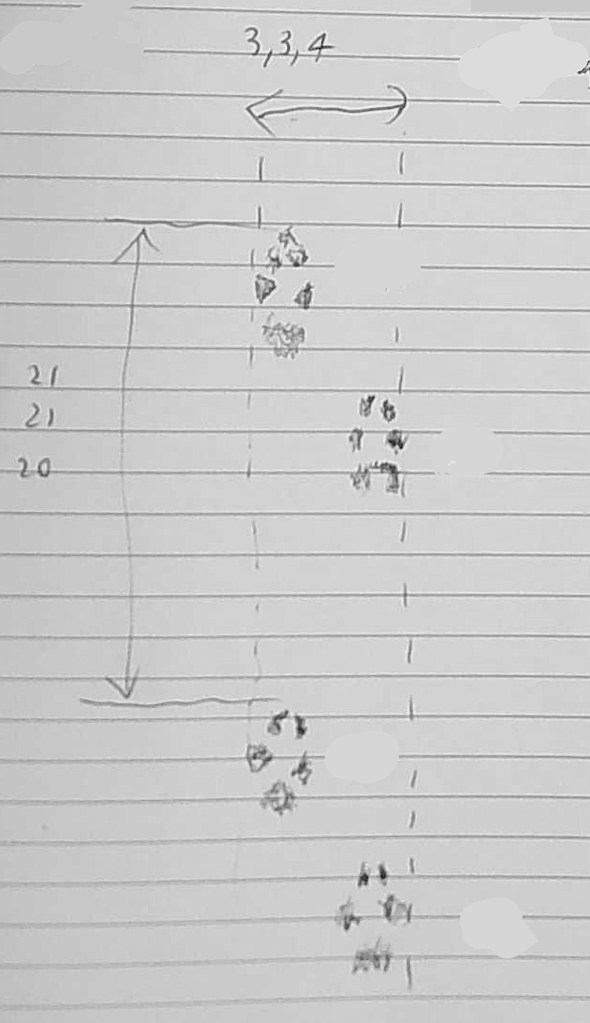
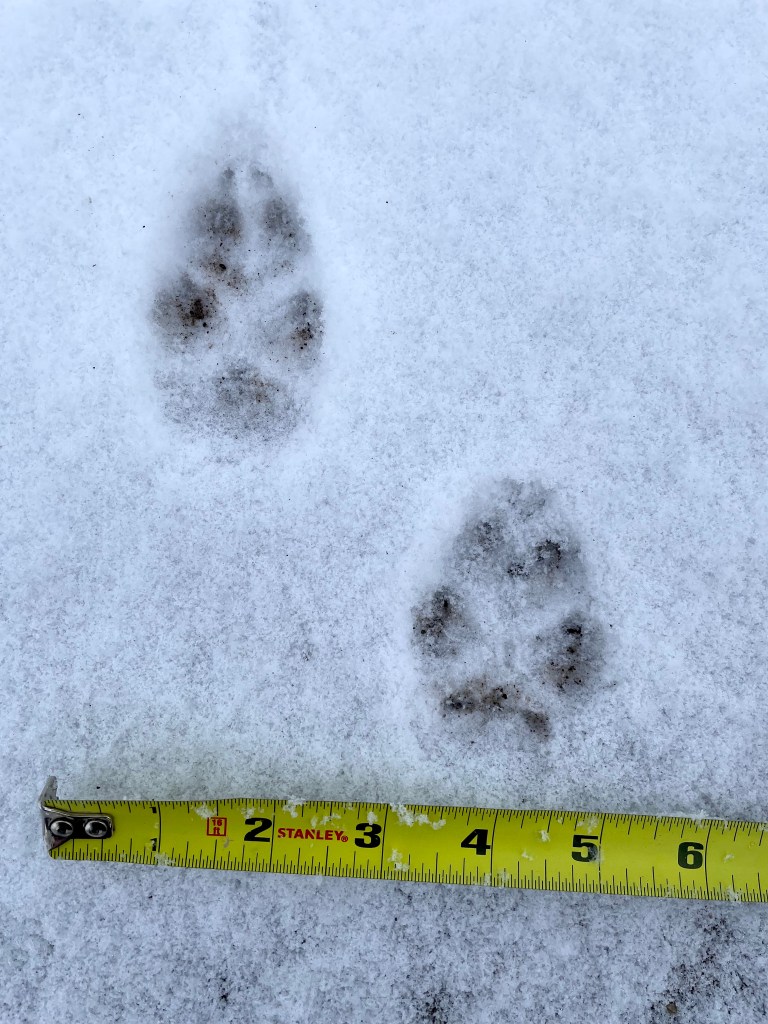
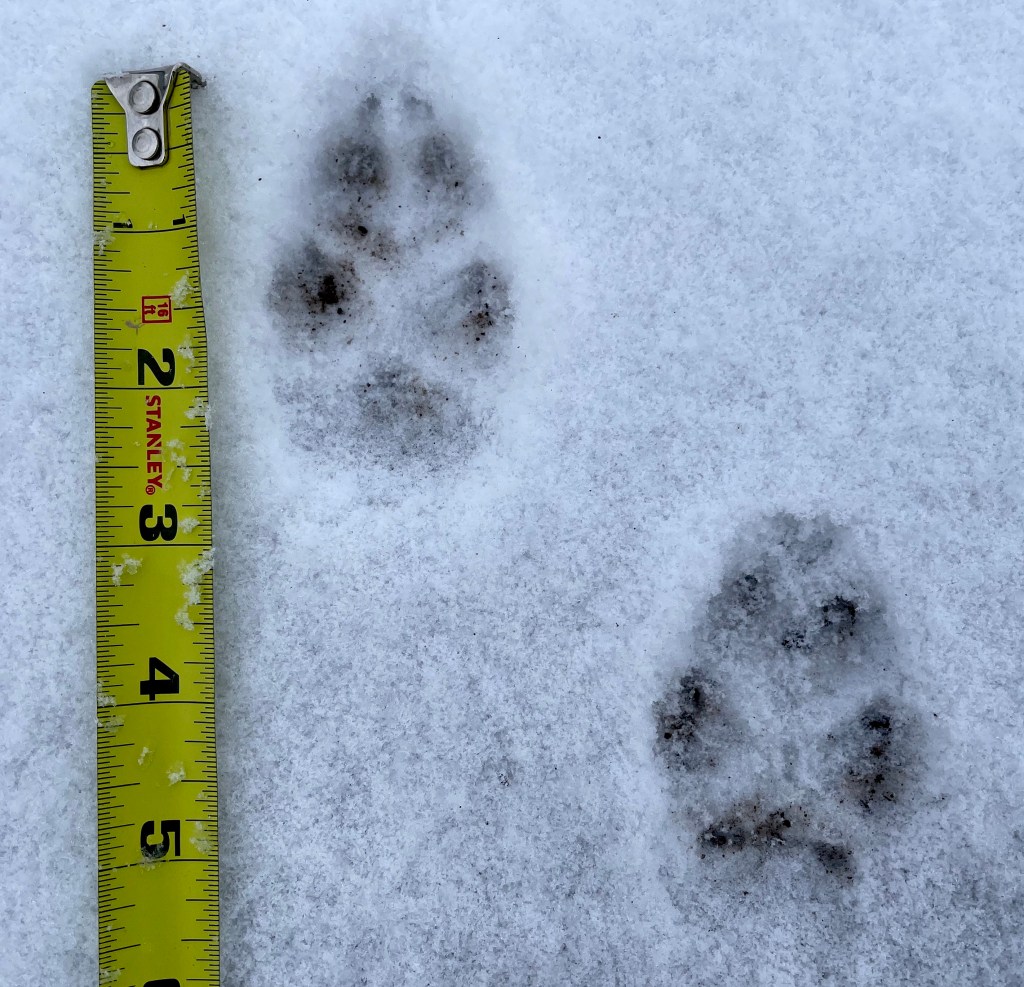
The tracks were in groups of two. In each pair, it was obvious that the first track was a front foot as it was bigger. I also took several measurements of the front (F) and hind (H) tracks:
- F width: 1 7/8, 1 7/8 inches
- F length: 2 1/2, 2 1/4, 2 1/2 inches
- H width: 1 1/2, 1 1/2 inches
- H length: 2 1/2, 2 1/2, 2 1/2 inches
- Trail width: 3, 3, 4 inches
- Stride: 21, 21 20 inches
Let’s compare these measurements with those given by Lowery:
- F width: 1 1/2 – 2 1/16 inches
- F length: 1 1/2 – 2 5/16 inches
- H width: 1 1/4 – 1 7/8 inches
- H length: 1 7/16 – 2 5/8 inches
- Trail width: 2 – 5 inches
- Stride: 8 3/4 – 15 1/8 inches
My measurements are within the ranges given by Lowery, except for the stride, which is way out, and the front length, which is just outside the range. Lowery says 95% of measurements of stride fall within this range. But according to Elbroch, a Red Fox doing a side trot has the measurements:
- Stride: 14 – 22 3/4 inches
consistent with my measurements.
Here are some photos:
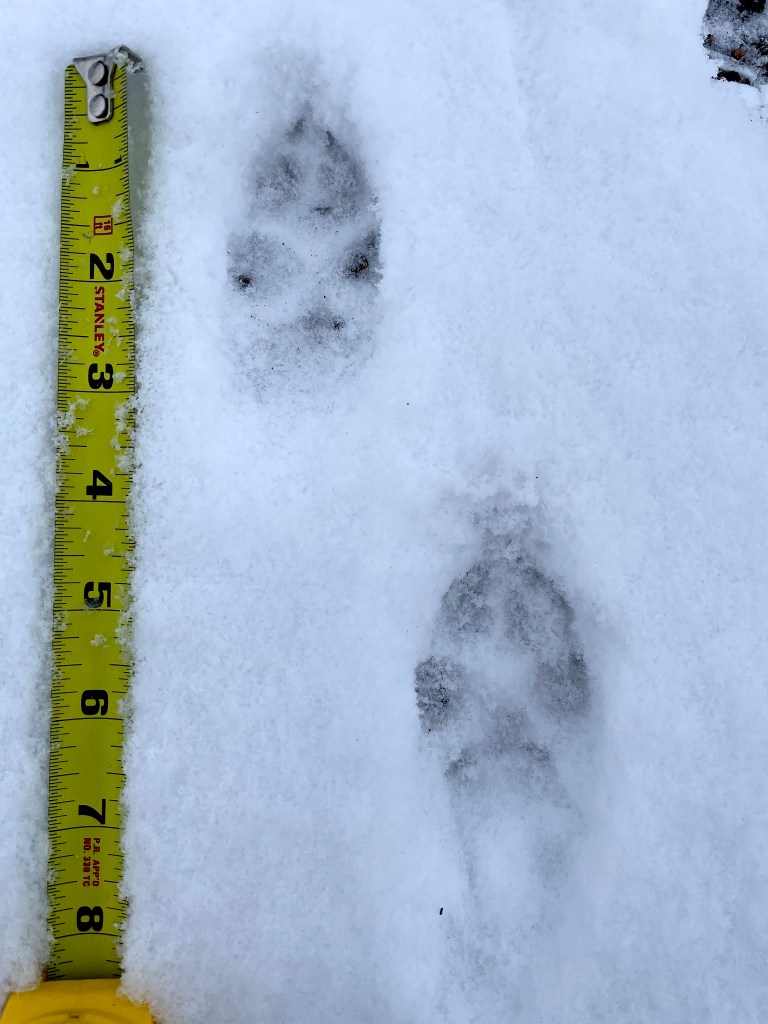
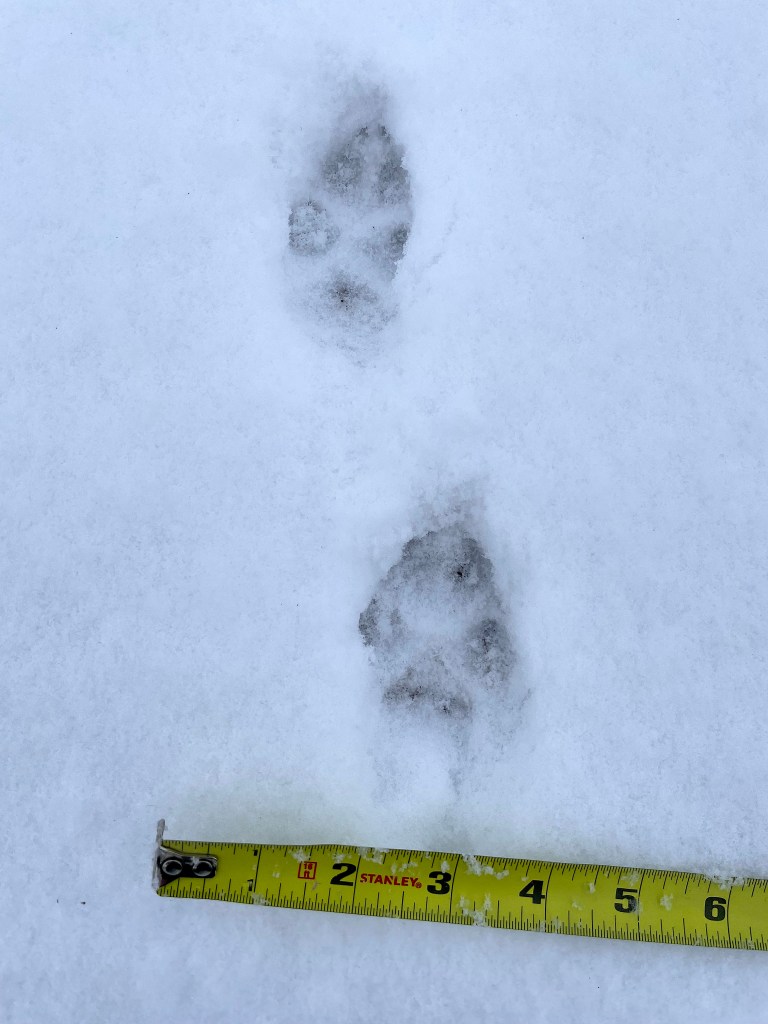
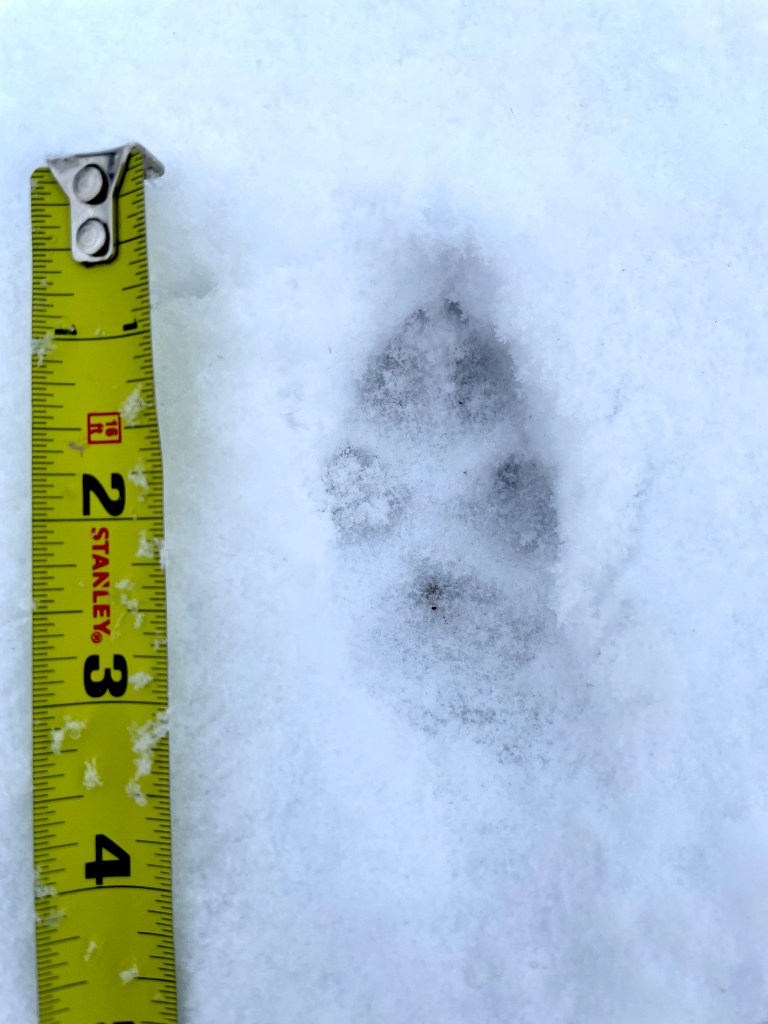
The next thing I wanted to do was investigate the gait. The tracks start at the southern end of the car park, go under the container, and then head north, with the following basic pattern:
Before showing some pictures of the gait, which is a side trot, there was some transitional gait patterns initially as the fox passed under the container, which appears to be a bit of a side trot and a bit of a direct register trot:
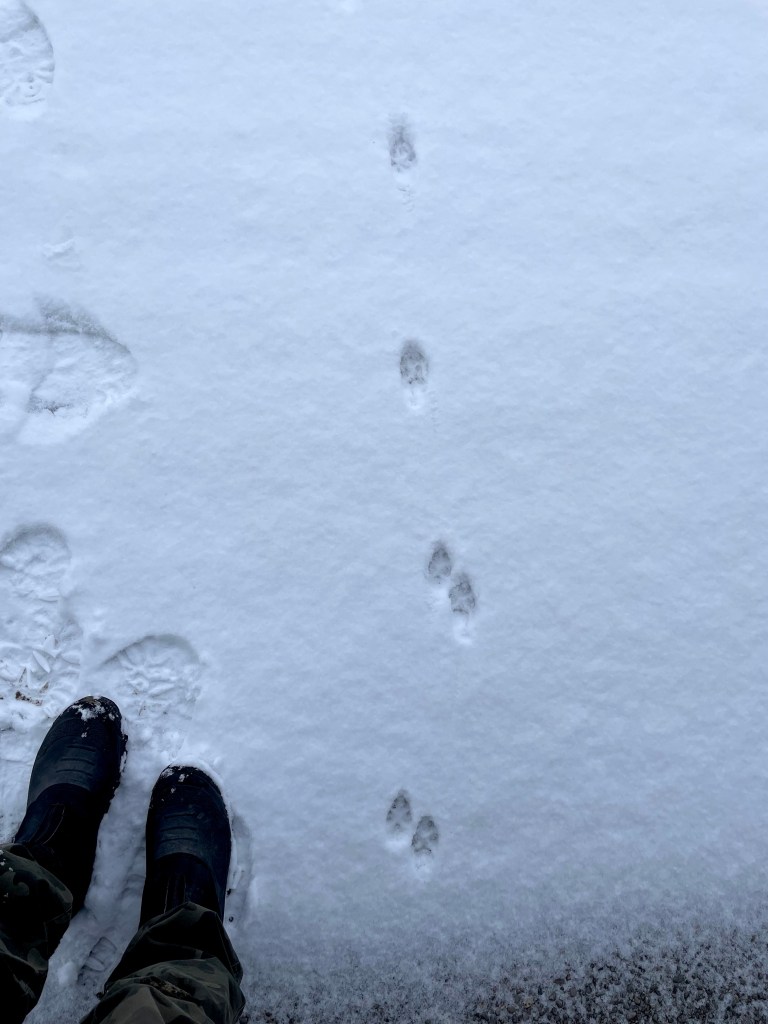
Here is a photo of the side trot below the container:
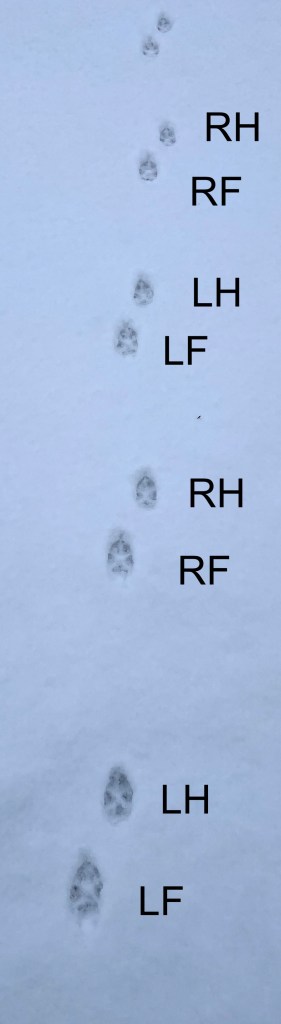
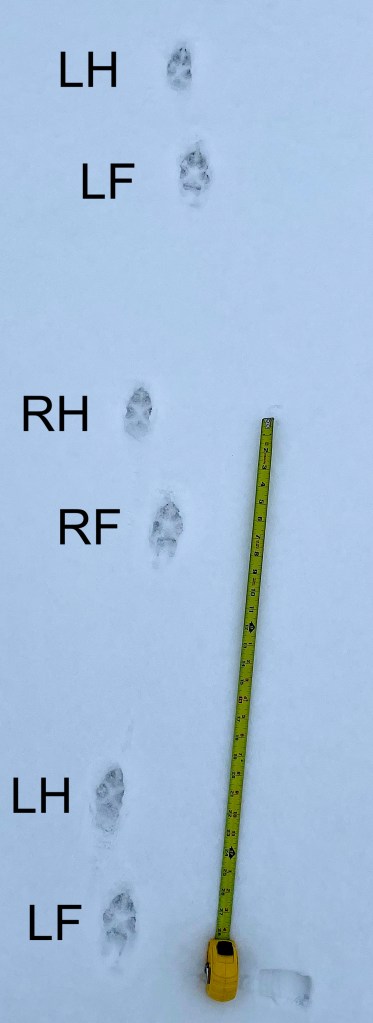
Alexis helped me understand which track corresponds to which foot. It was obvious to me in each group of two tracks that the lower track was a front foot because it was the larger of the two. But I didn’t know which tracks were lefts and which were rights. If one draws an imaginary line down the middle of the tracks however, the ‘lefts’ are a little to the left of the ‘rights’ ! Now, once the tracks reach the north end of the container the angle of each pair of tracks changes:
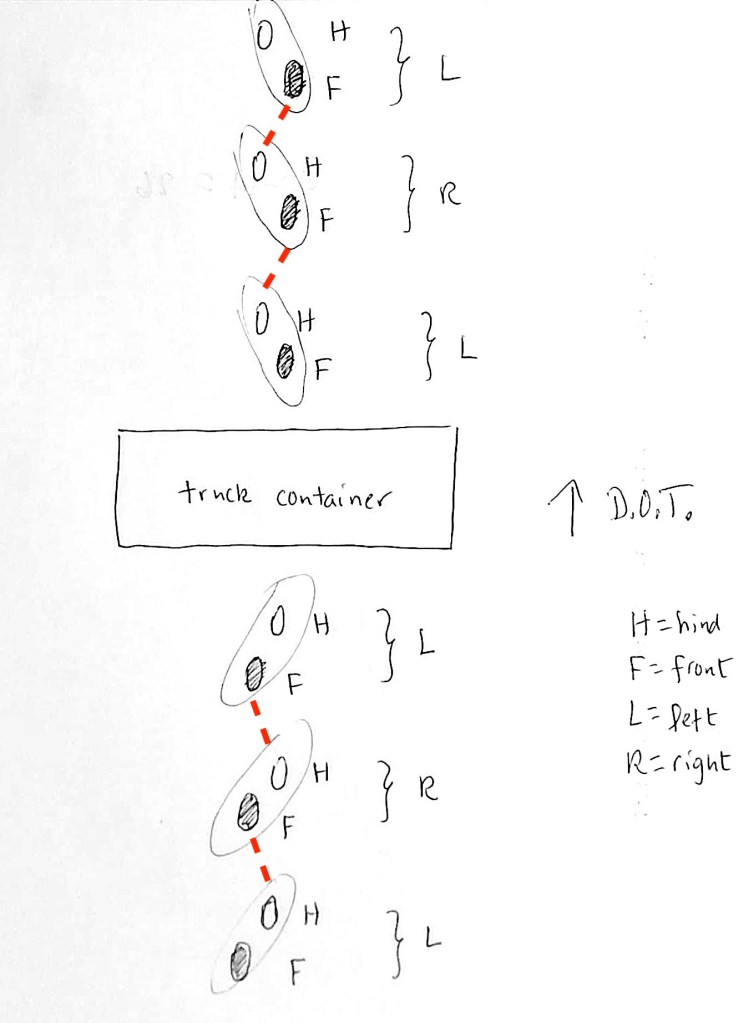
I also wanted to understand a little more concerning the side trot gait. According to Lowery, with this gait, we can identify the feet on opposite sides of the body touching the ground simultaneously, indicated by the red dotted lines in the drawing below:
Final thoughts: I realize I have a long way to go before I can match up the track patterns that I see with what I can visualize the animal doing. I have been assured that will come in time, especially if I start looking at videos of different gait patterns. For example, I do not understand why the angle of the pairs of ‘lefts’ and ‘rights’ changed. From what Elbroch says, a canid doing a side trot points its backside to one side. So maybe the angle of the pairs of tracks depends on whether the animal points its backside right or left.

 Field Notes of a Tracker
Leave a reply to ALASTAIR Strachan Cancel reply