Date: June 11, 2022
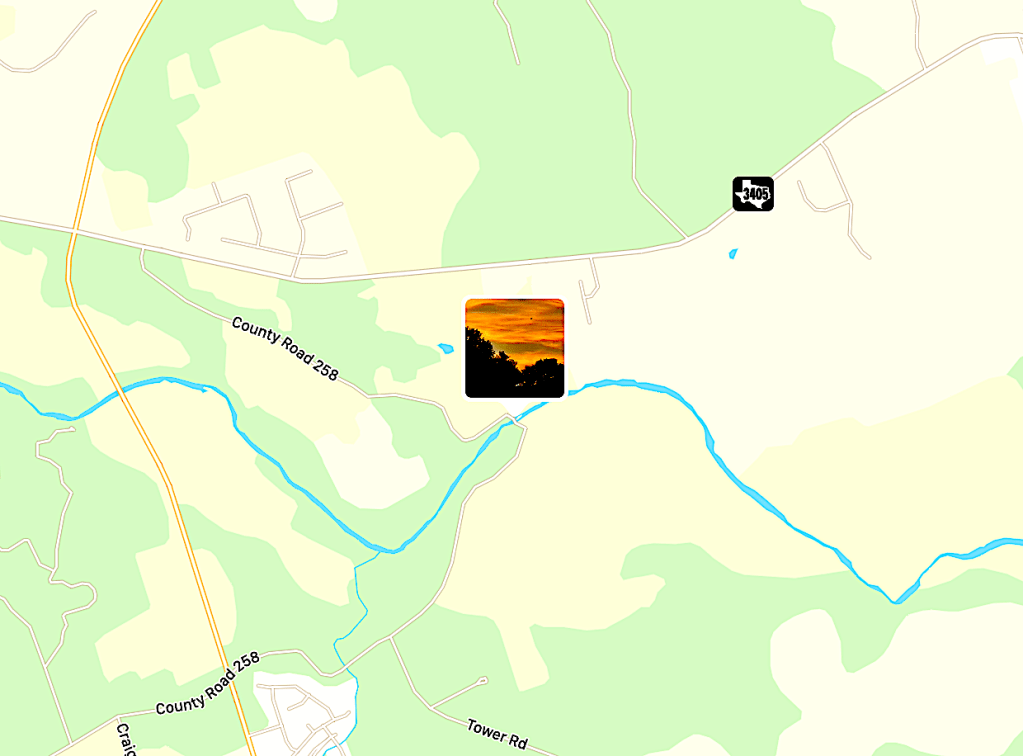
Place: San Gabriel River (North Fork), near Liberty Hill, Williamson County (near Austin, Texas). Just northwest of Leander.
Time: 6:30pm – 8:30pm
Main references:
‘The Tracker’s Field Guide: A Comprehensive Manual for Animal Tracking’, James C. Lowery, Second Edit., Falcon Guide
‘Bird Tracks & Sign: A Guide to North American Species’, Mark Elbroch and Eleanor Marks, First Edit., Stackpole Books
‘Animal Tracks’, Olaus J. Murie and Mark Elbroch, Third Edit., Peterson Field Guides, Houghton Mifflin Company
‘Scats and Tracks of North America’, James C. Halfpenny, Falcon Guides
Weather: 38 C, sunny, very humid. Last rained approx. one and a half weeks ago.
Geology: limestone and gravel wash. Lower Cretaceous period (Albion stage).
Some additional observations: Great Blue Heron, smaller Heron, sunfish, Water Moccasin (Cottonmouth), many grasshoppers, Killdeer, Fire Ants, various wasps, Cardinal, hummingbirds, Chickadees.
Dominant vegetation: Ashe Juniper, Scrub Oak, tall grasses
Description of the area: medium sized river that is mostly dried up revealing a flat limestone bed. Sand and gravel washes. A map is shown below.
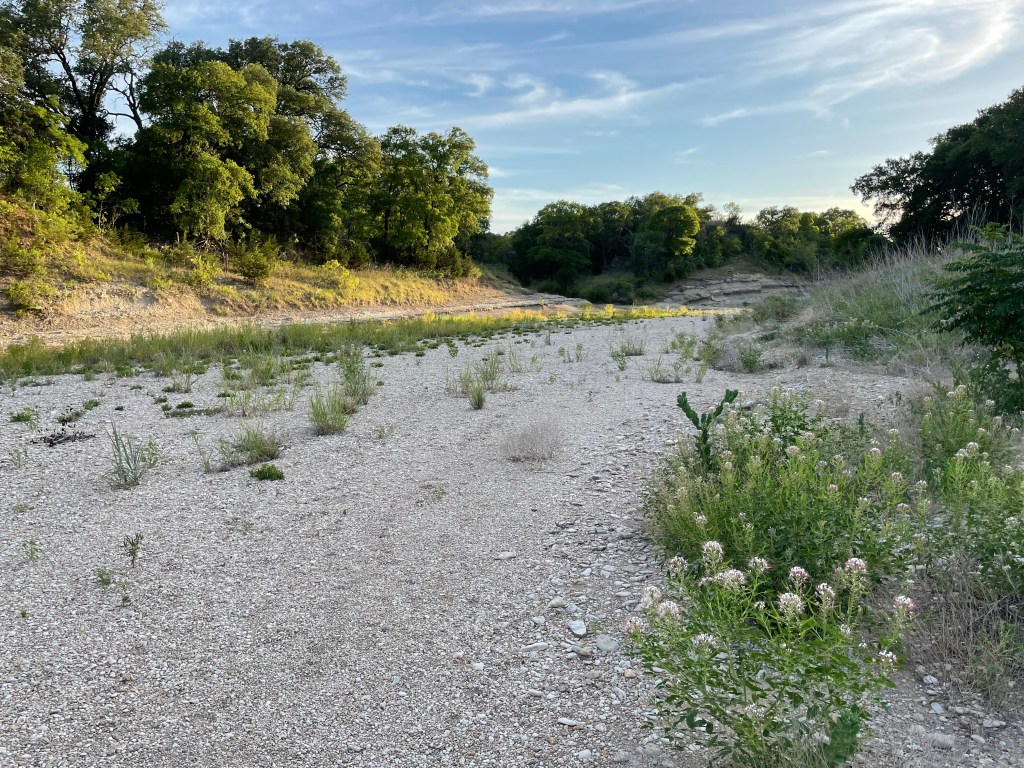
Mostly, there were gravel washes that were difficult to track in, as shown below:
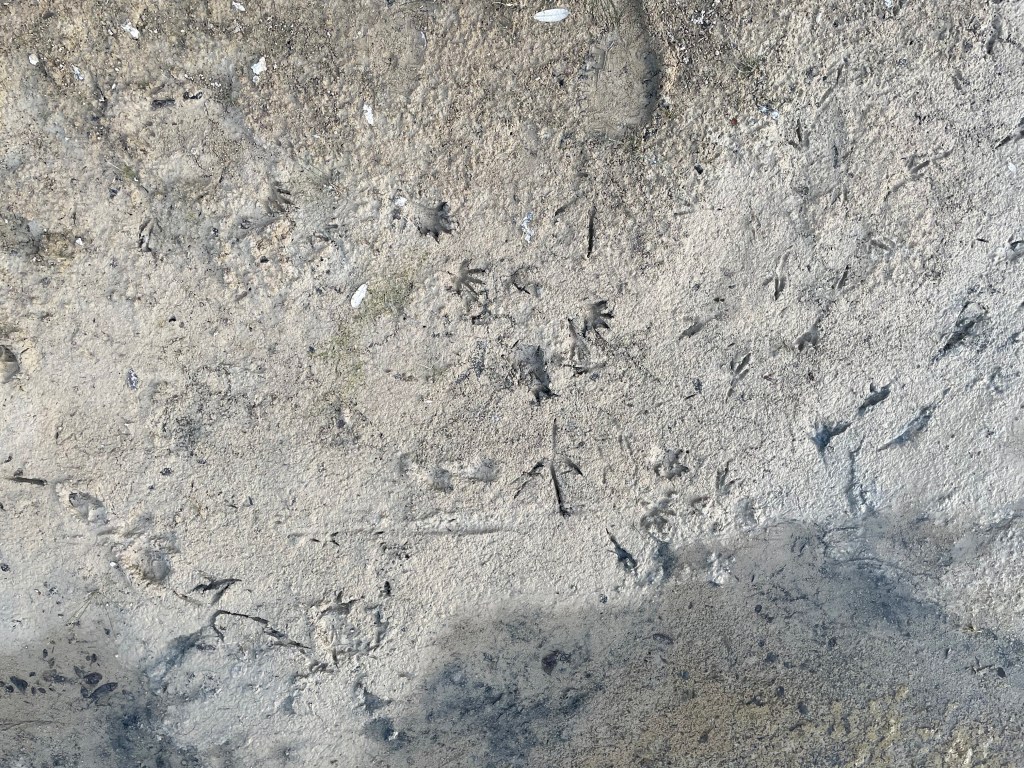
However, there were some areas with a fine silt/mud that were ideal for showing tracking, shown below:
Great Blue Heron
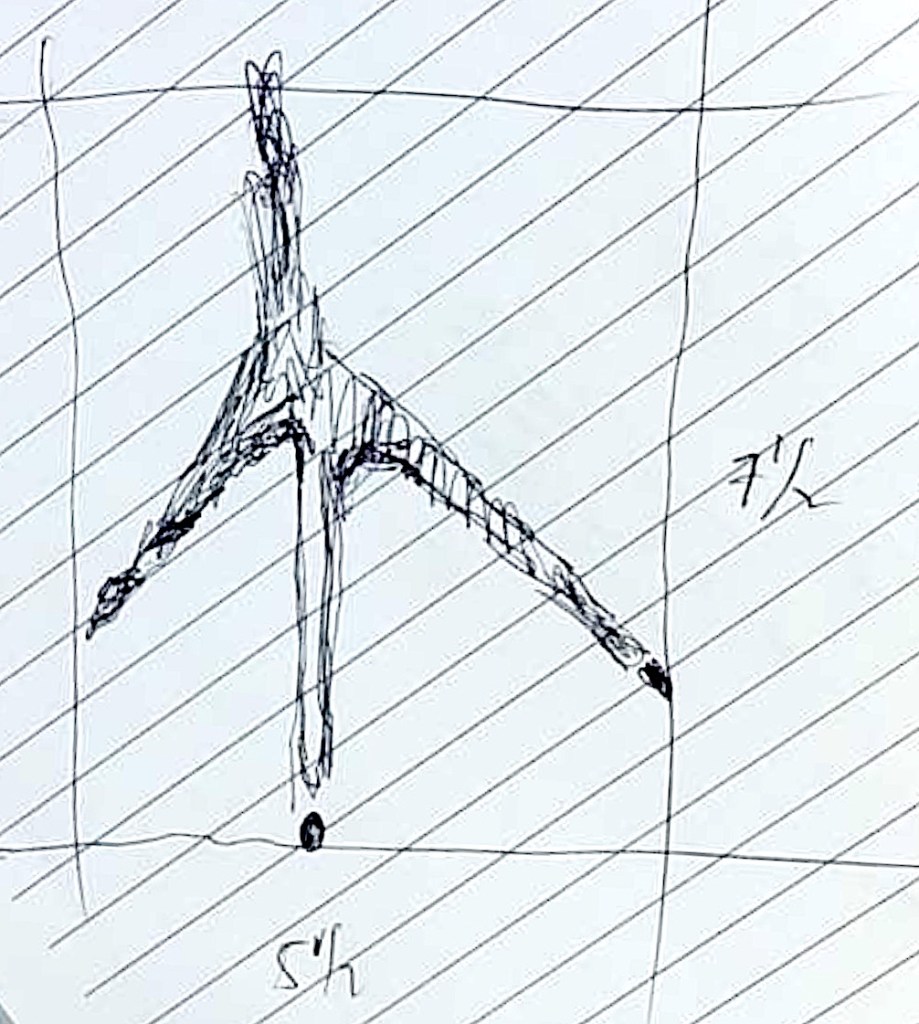
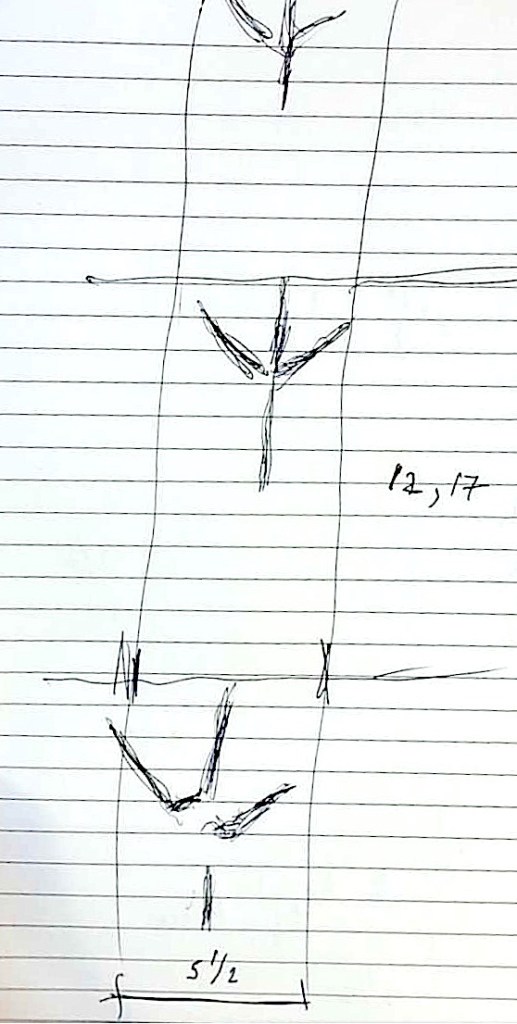
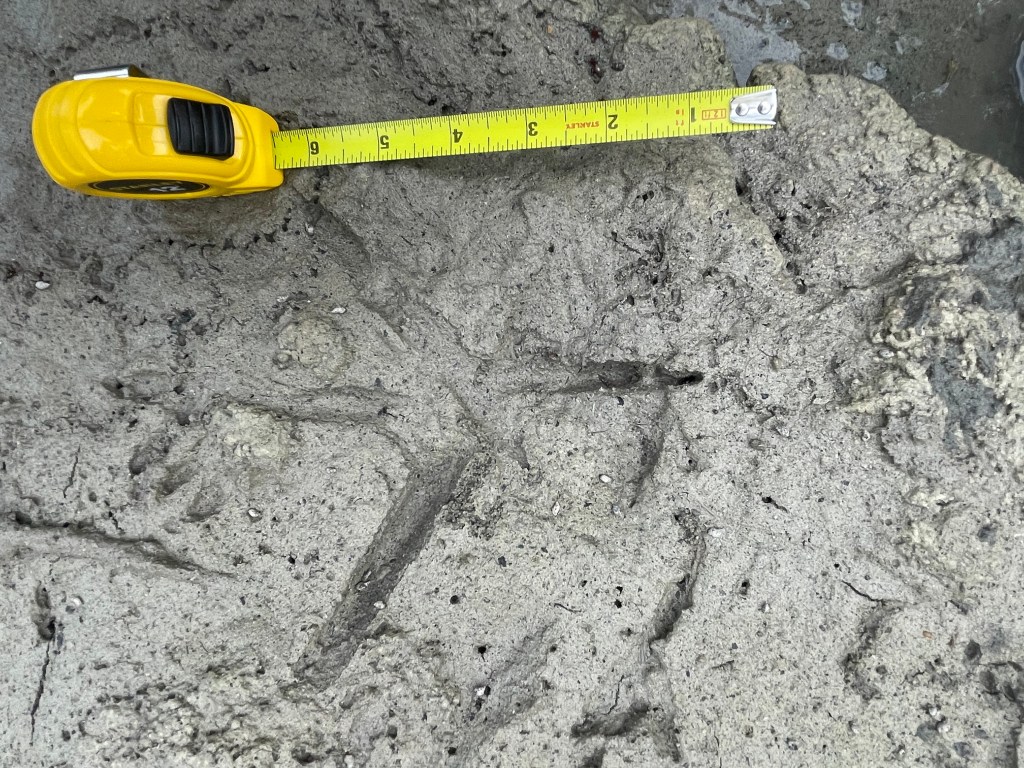
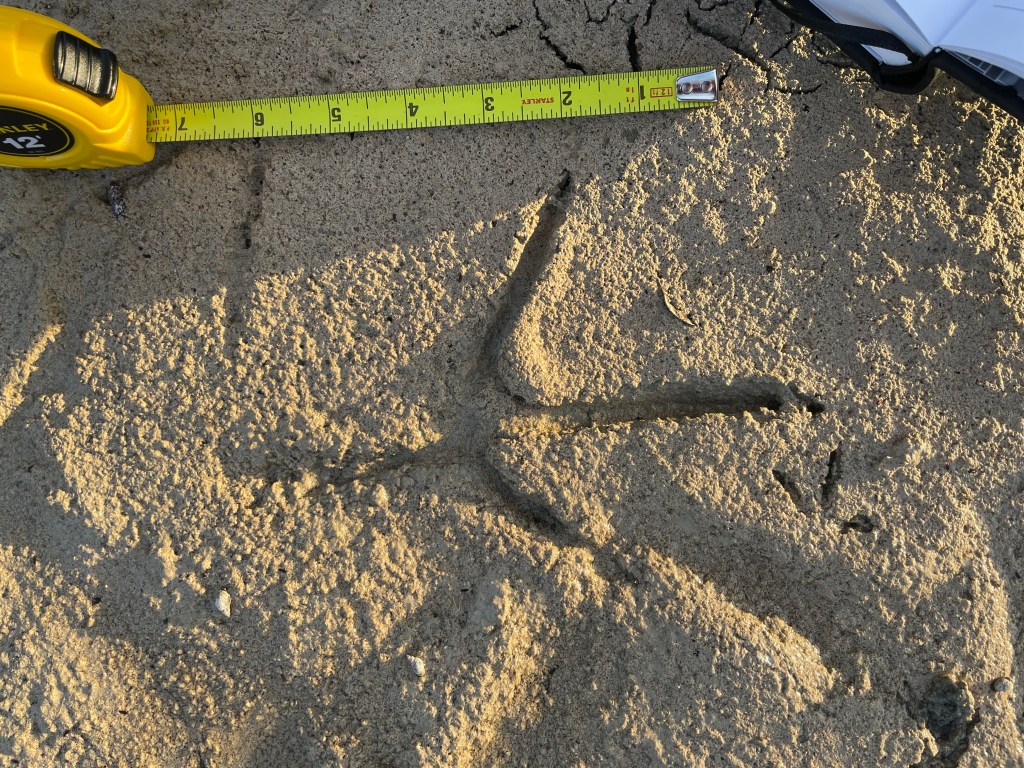
I found numerous tracks of a large bird. This looked like the tracks of the Great Blue Heron, which was consistent with the measurements in Elbroch:
- Length: 6 1/2 – 8 1/2 in
- Stride: 10 – 18 1/2 in
- Note: webbing between toes 3 and 4
My sketches are shown below:
And a series of tracks:
I also took some photos:
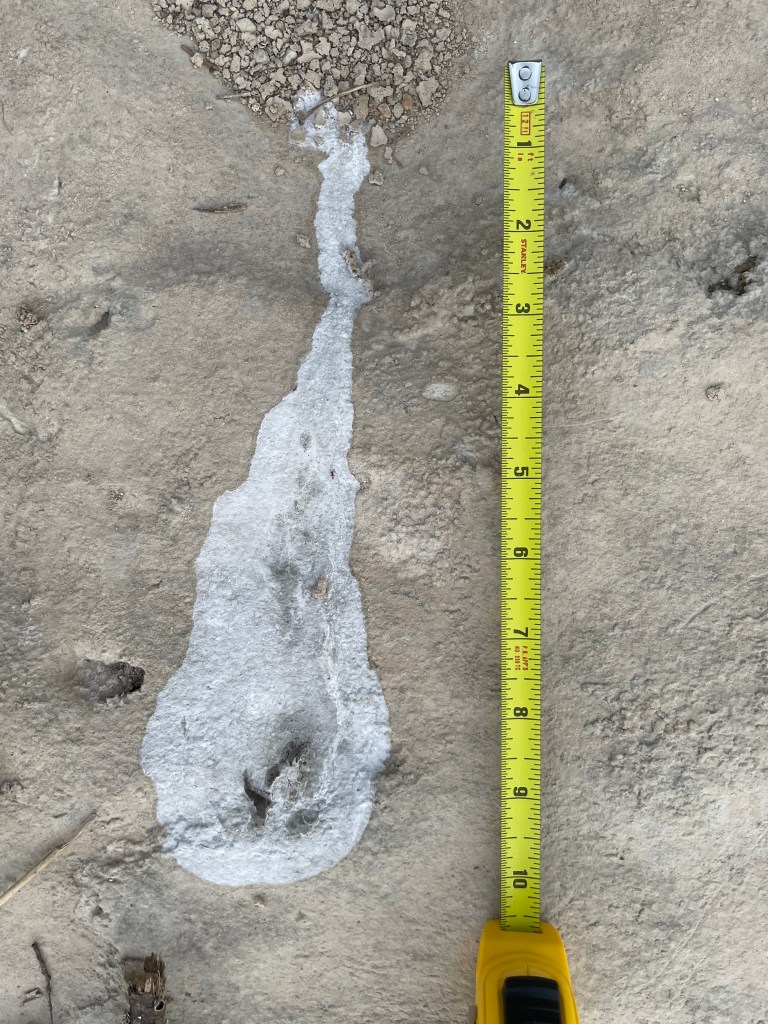
I also saw what I assume is the splat for a Great Blue Heron (because of the size, and also because of the similarity with the photo on page 192 of Elbroch):
Smaller Heron:
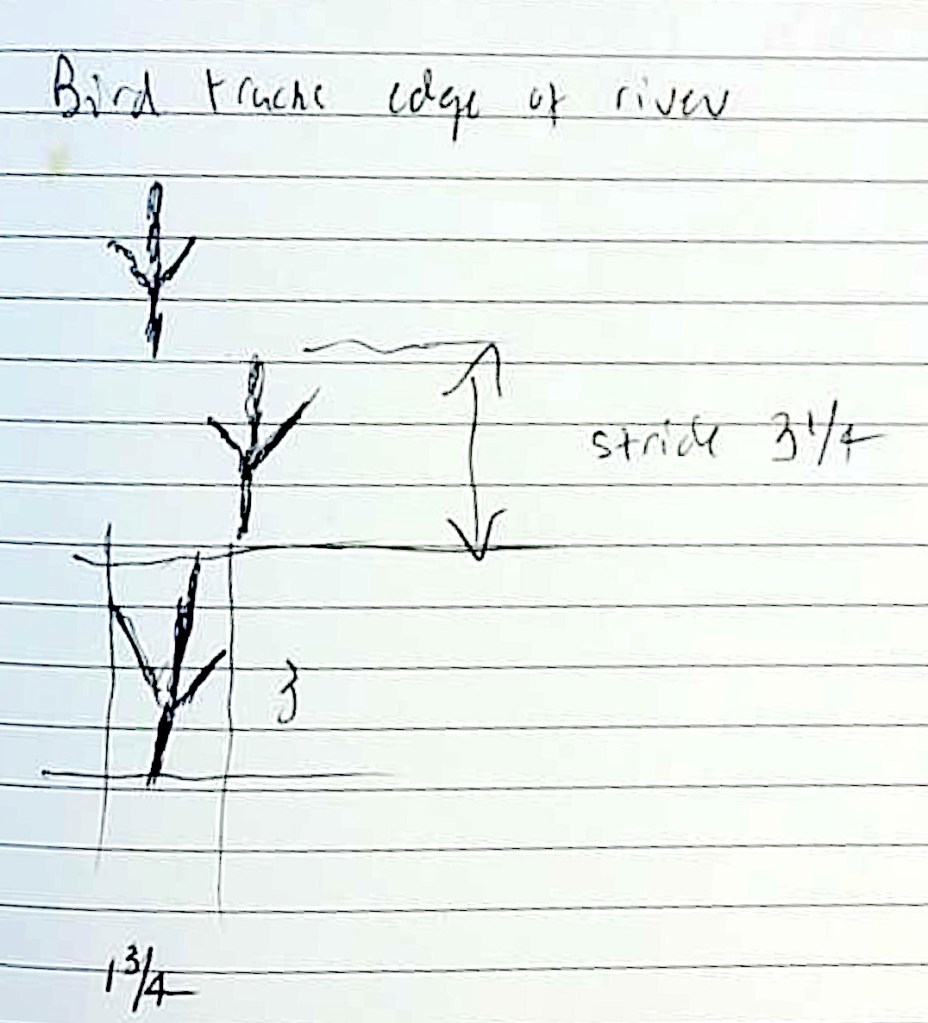
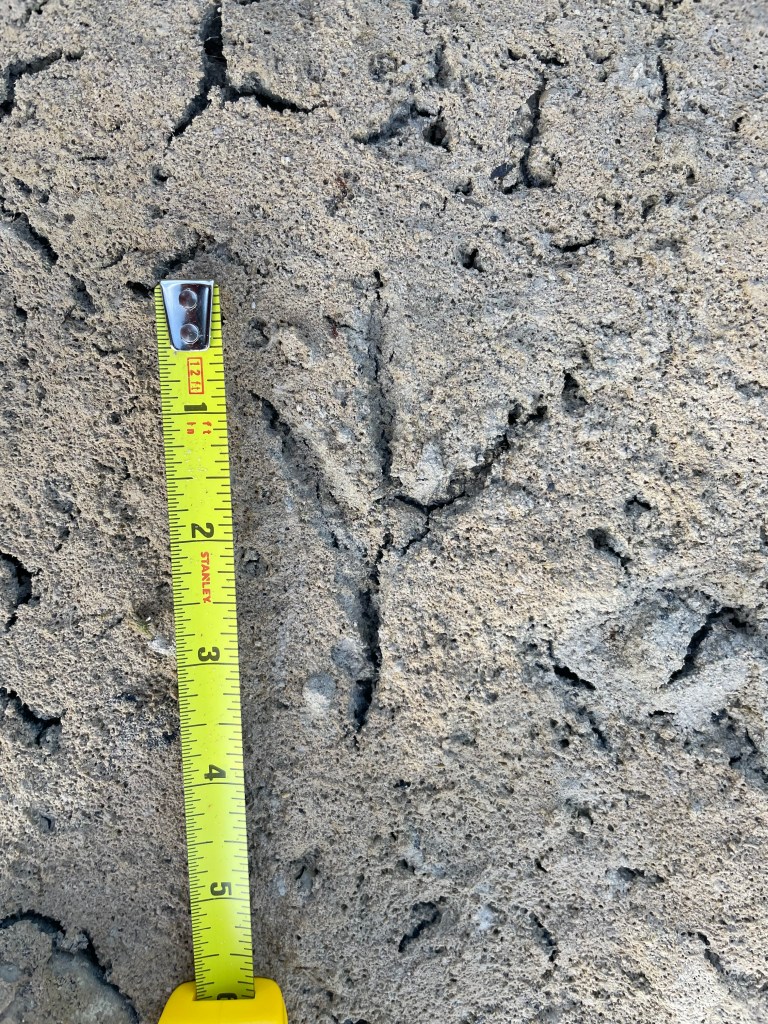
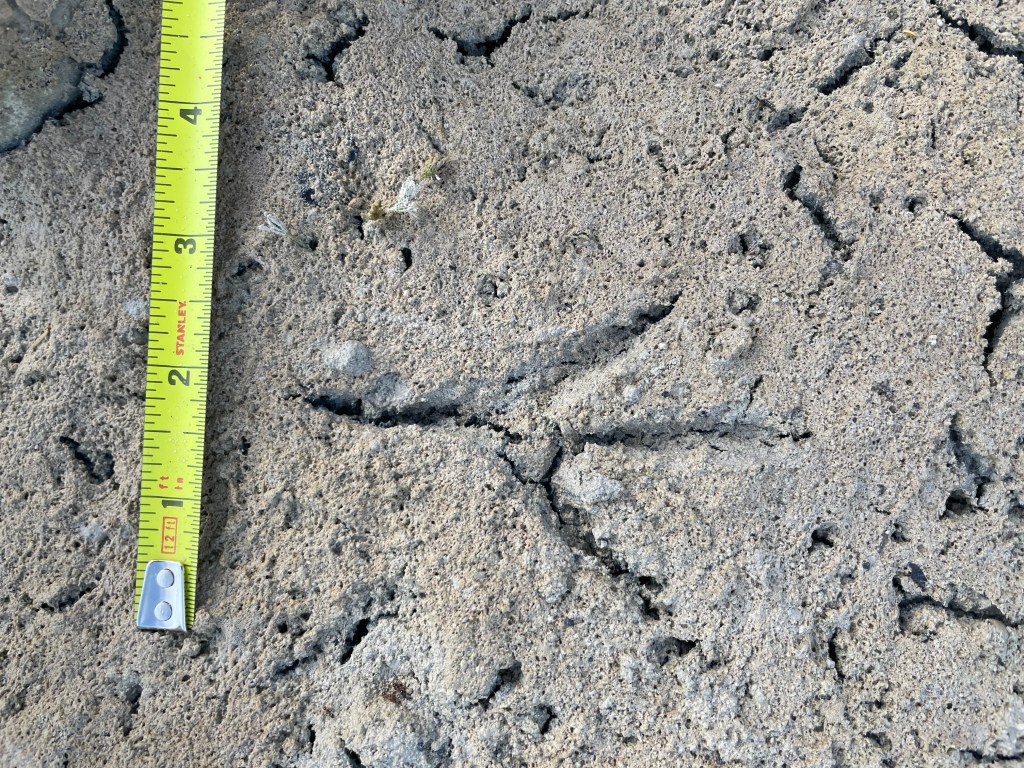
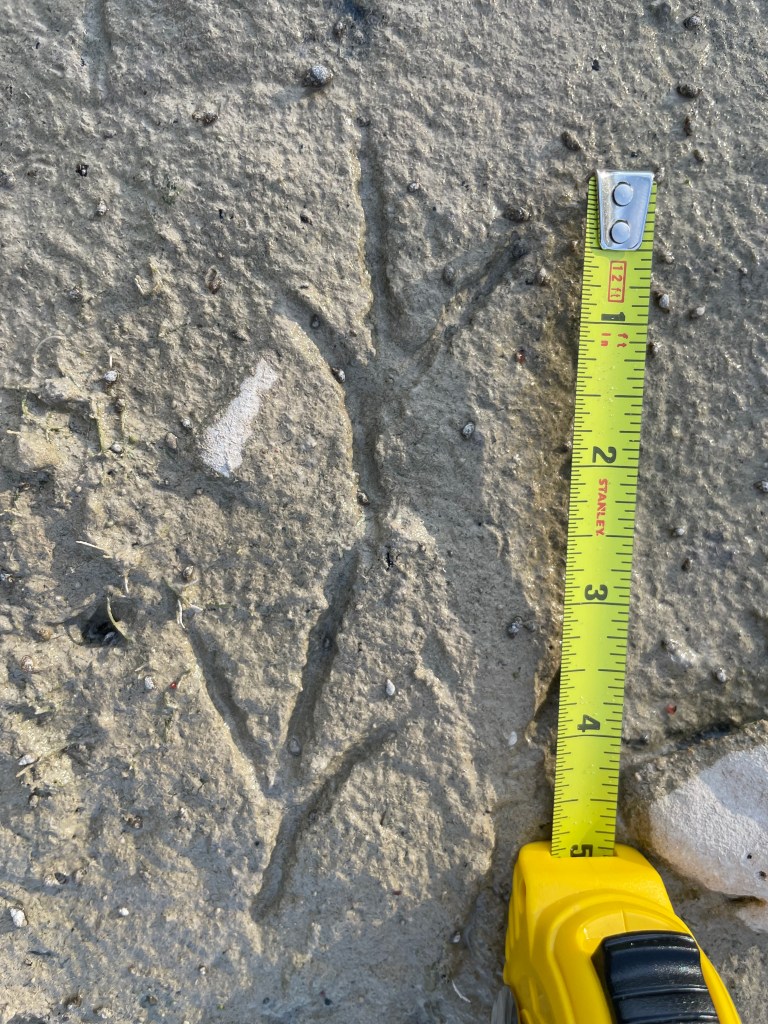
There were also the tracks of a smaller heron, possibly the Green Heron, because it is resident in this area of Texas, and my measurements were approximately consistent with those in Elbroch:
- Length: 3 1/8 – 3 3/4 in
- Stride: 3 1/2 – 9 in
- Note: webbing between toes 3 and 4
My sketch below:
And some photos:
Killdeer:
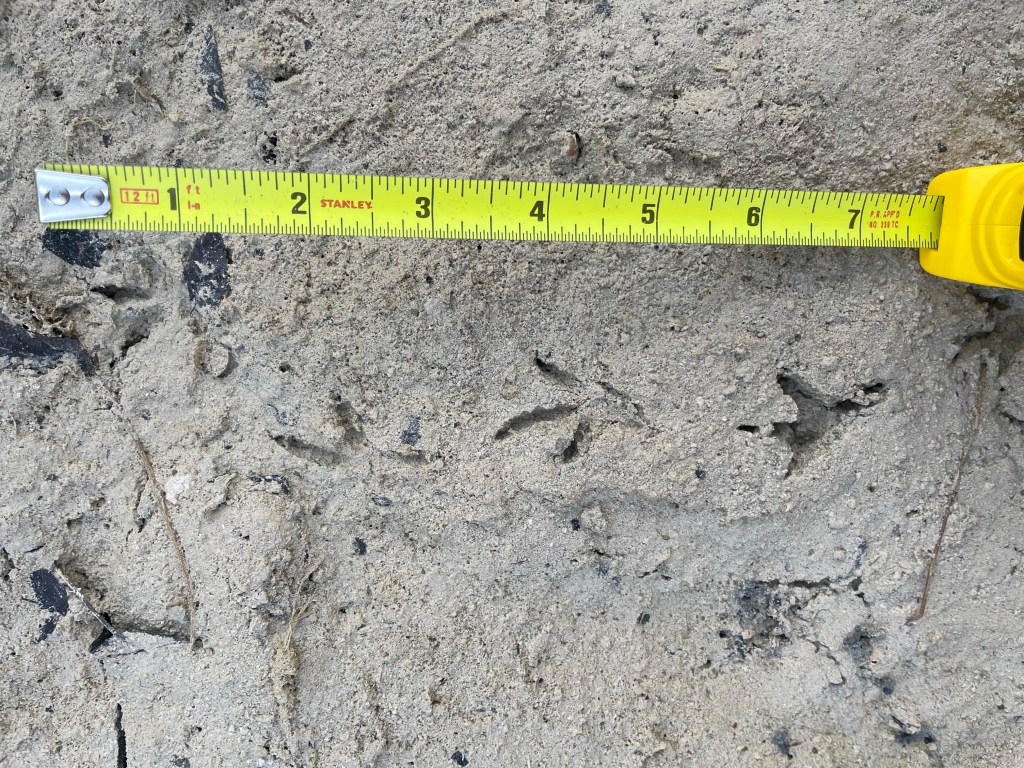
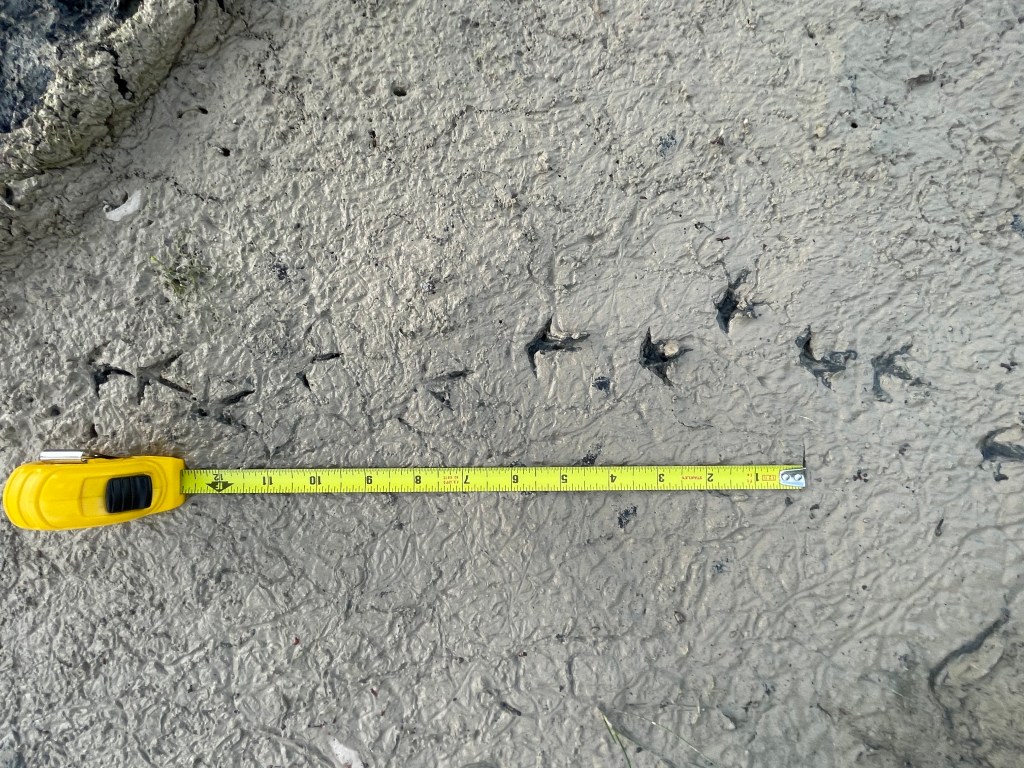
My best guess is that the tracks in the following pictures are Killdeer because I heard and saw Killdeer and the measurements are consistent with those in Elbroch:
- Length: 1 – 1 3/16 in
- Stride: 2 – 7 in
- Notes: toe 1 absent, webbing between toes 3 and 4
Frog:
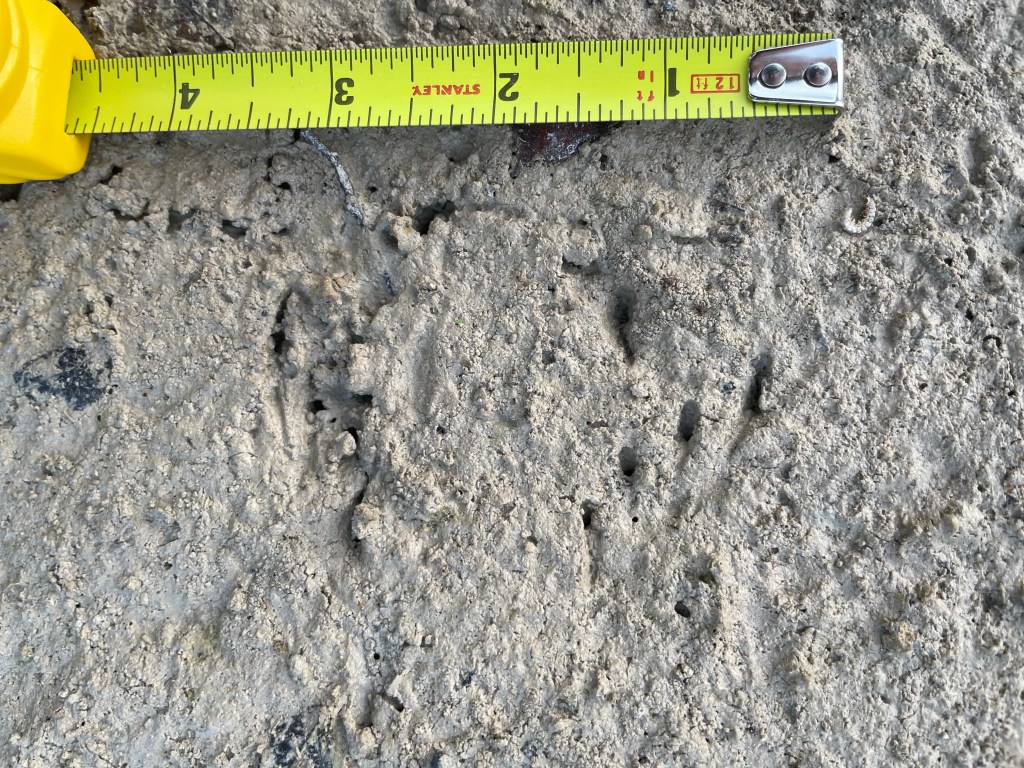
It was with some excitement that I found what I believe to be the tracks of a frog, possibly Leopard Frog. I had wanted to see these tracks for some time. I also found a second set of tracks indicating that the frog jumped some 23 1/2 inches. My sketch is below:
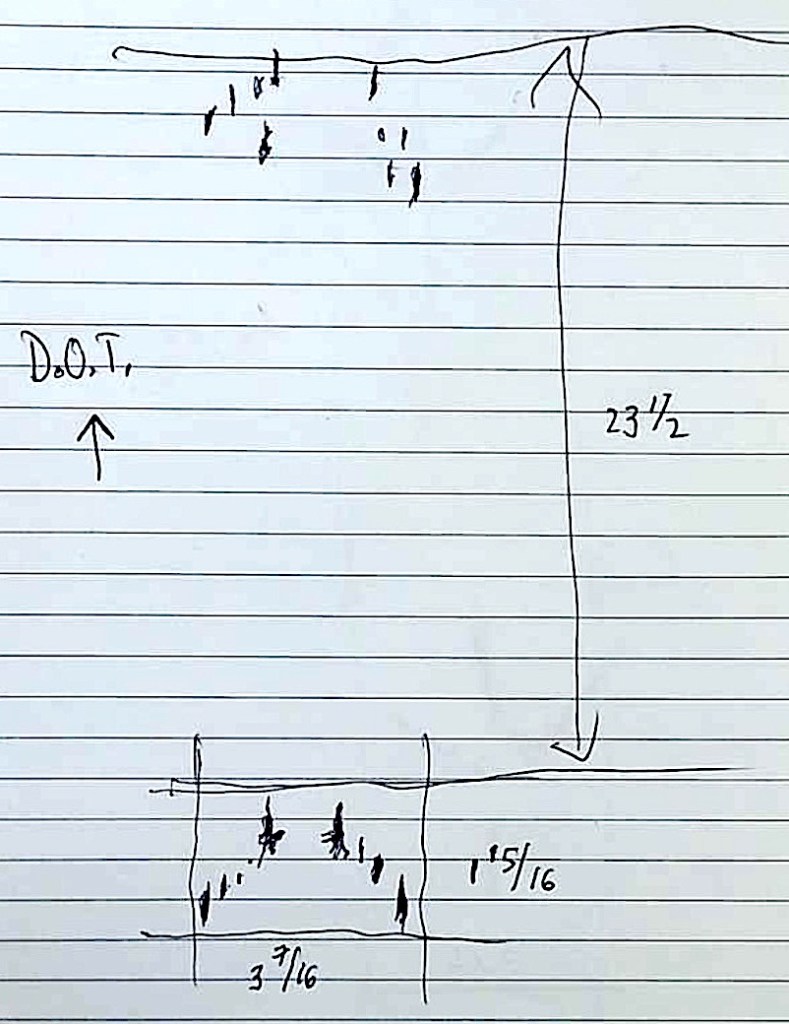
According to Halfpenny the “full bound or hopping stride” is about 20 inches, or easily 3 feet when in a hurry. This frog has 4 toes on the front foot and 5 on the back. Webbing is only on the hind feet. Page 349 illustration b of Olaus there is a very similar picture, of the same scale, where they say “about the size of a Leopard Frog”. However in my picture, the front feet are a little behind the back feet. A picture is given below:
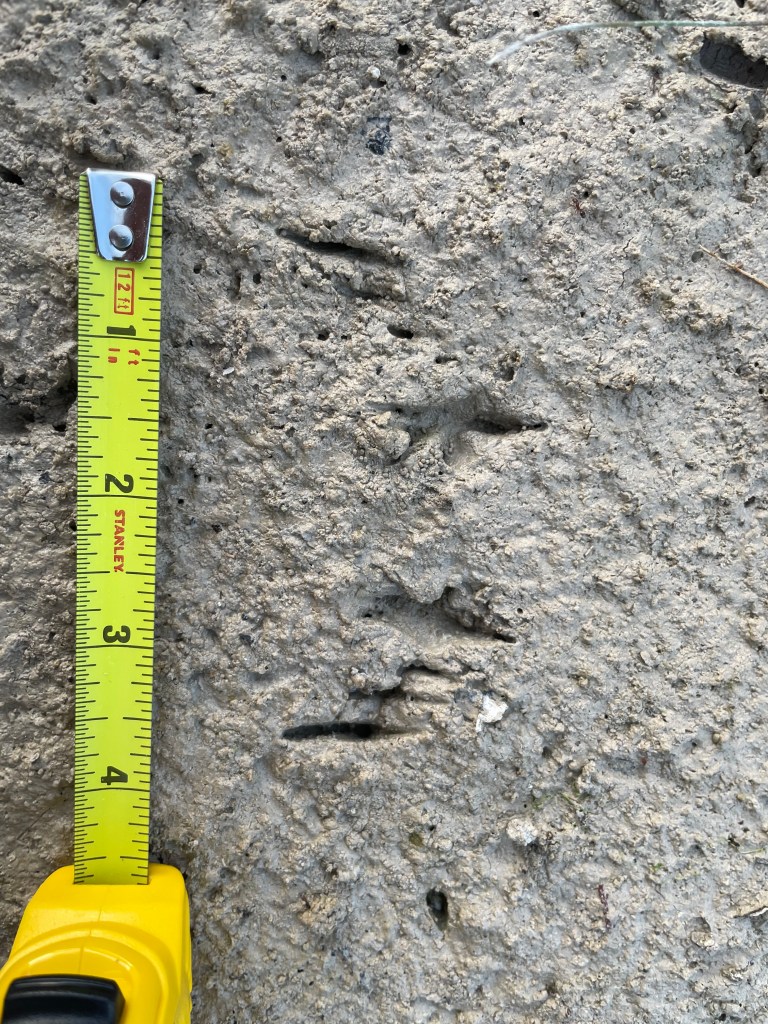
I think the direction of travel (DOT) in this picture is right-to-left. The hind feet on the outside clearly shows webbing. Here is a separate set of frog tracks:
Crow:
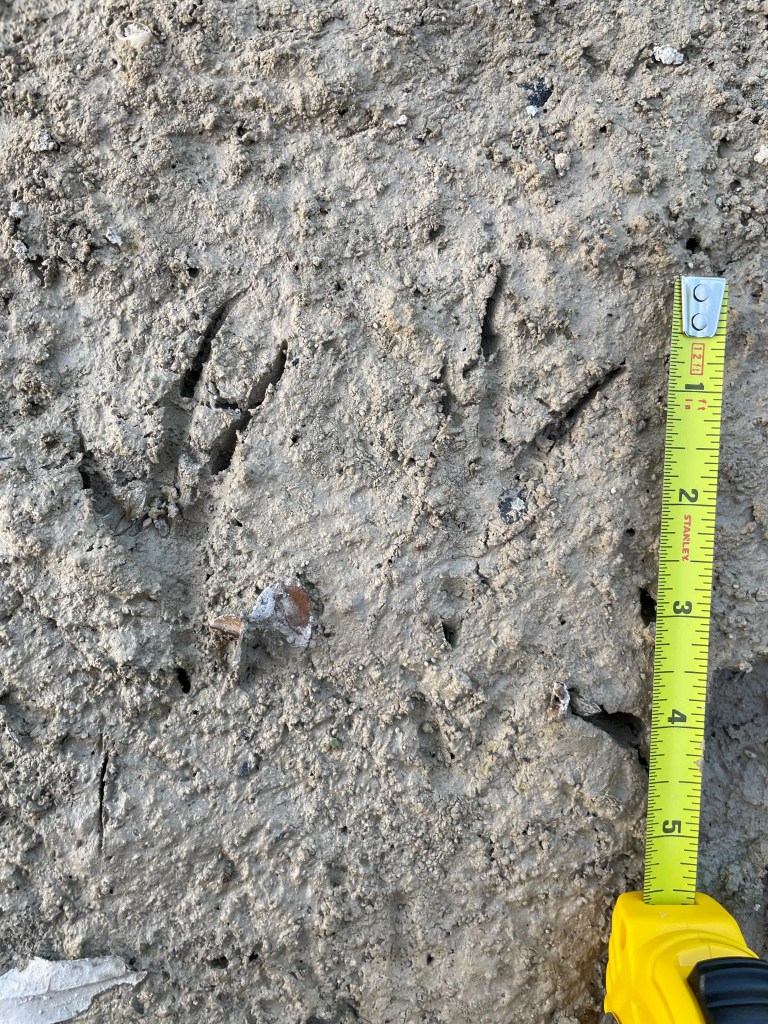
These tracks initially confused me. But then I realized that the soft mud was allowing the claws to show, and also toes 2 and 3 were closer than toes 3 and 4 (which is a feature of crows).
Raccoon:
Raccoon tracks were everywhere:
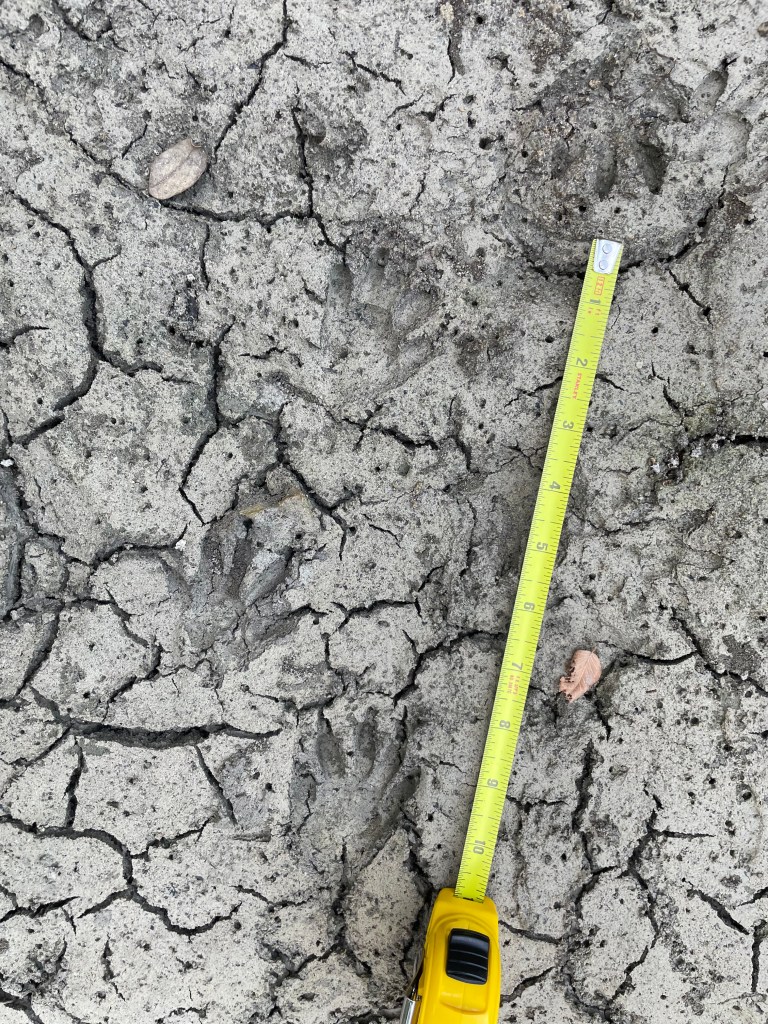
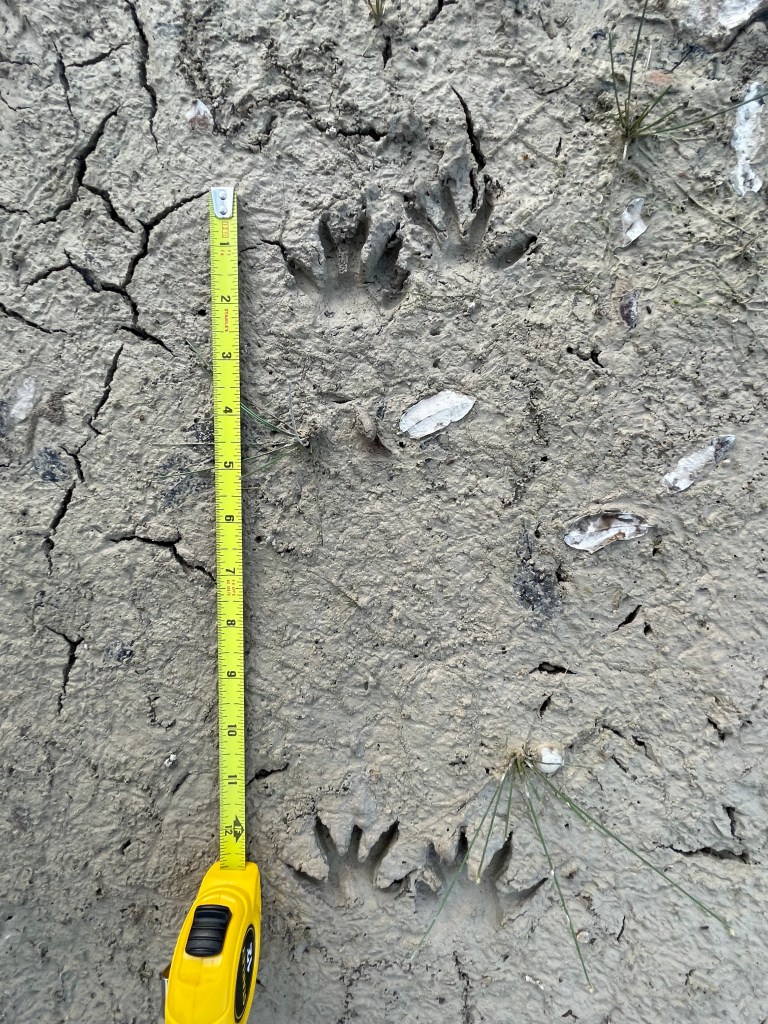
It is interesting how different the tracks can look depending on the substrate.
Coyote:
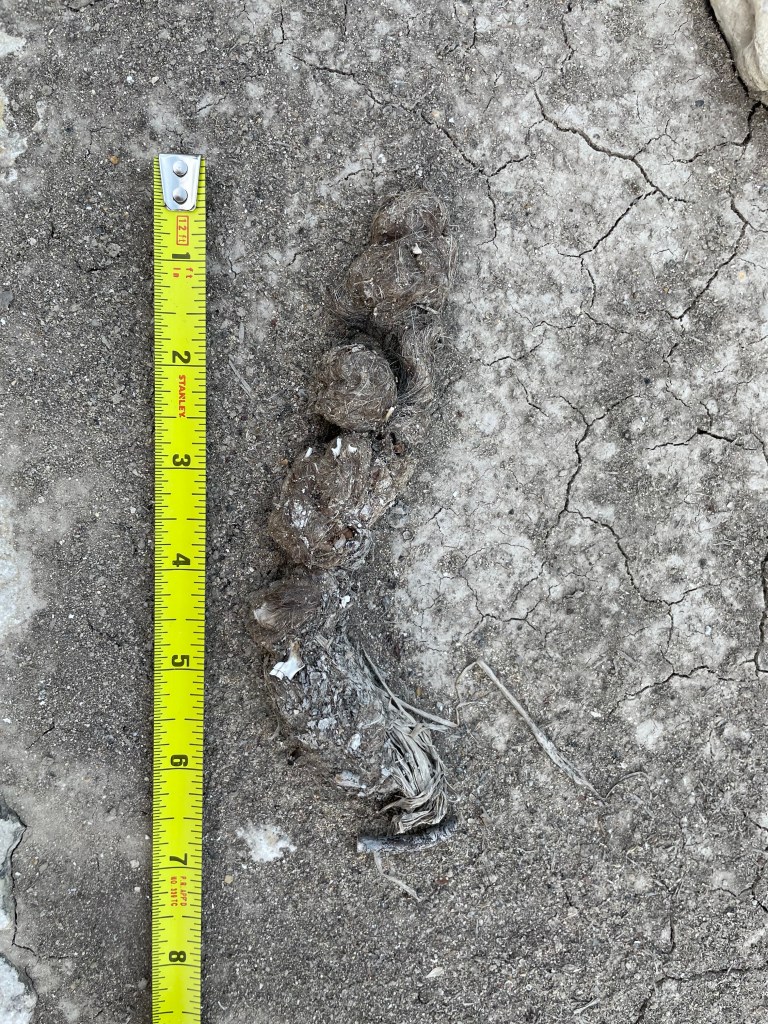
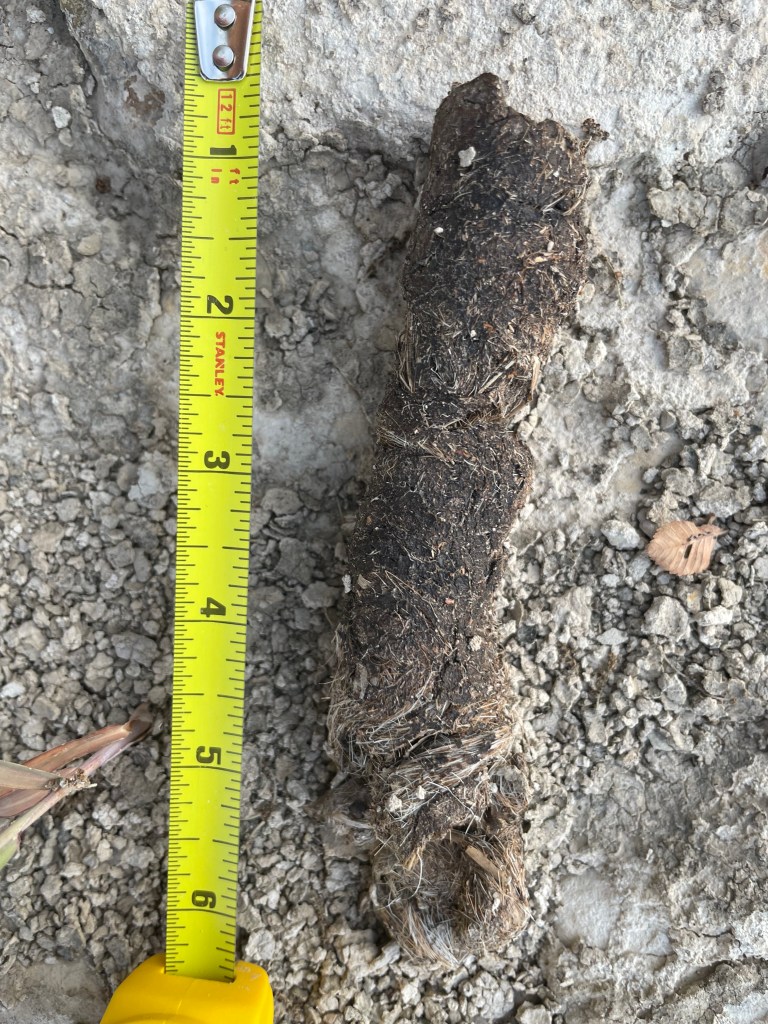
What I assume was coyote scat was everywhere. The hair in these scats was clearly visible. It is interesting that the size of these scats was considerably bigger than the corresponding scats I have seen here in Canada. Is this because the Texas coyotes are bigger, or because their diet is different?
Miscellaneous tracks:
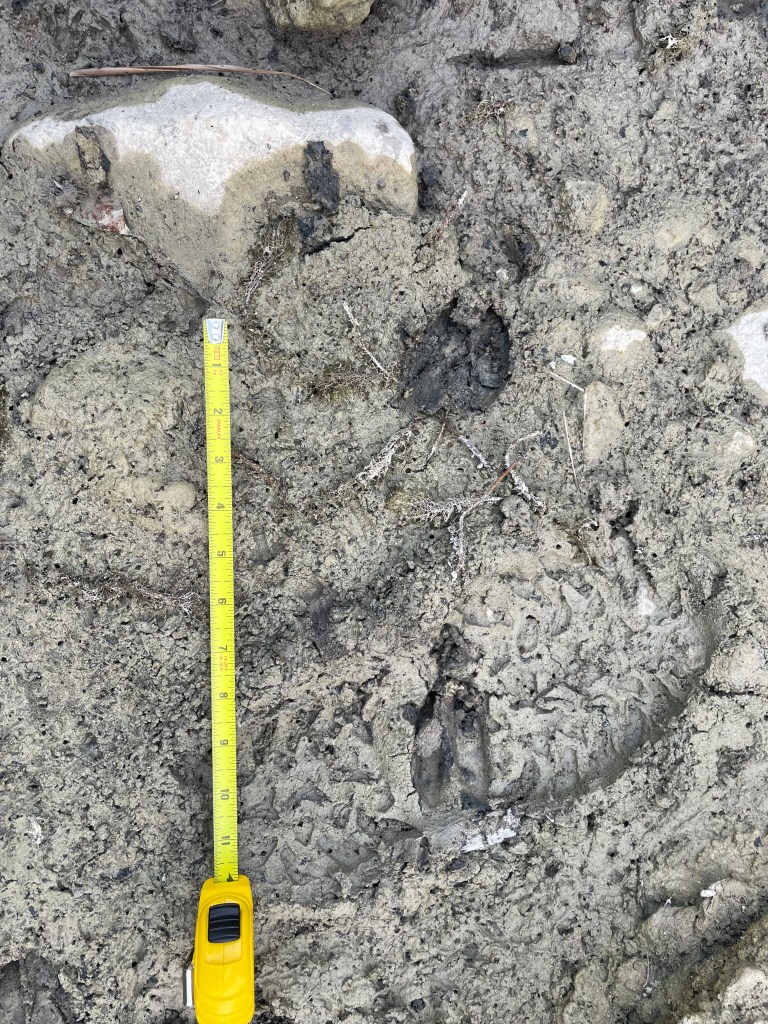
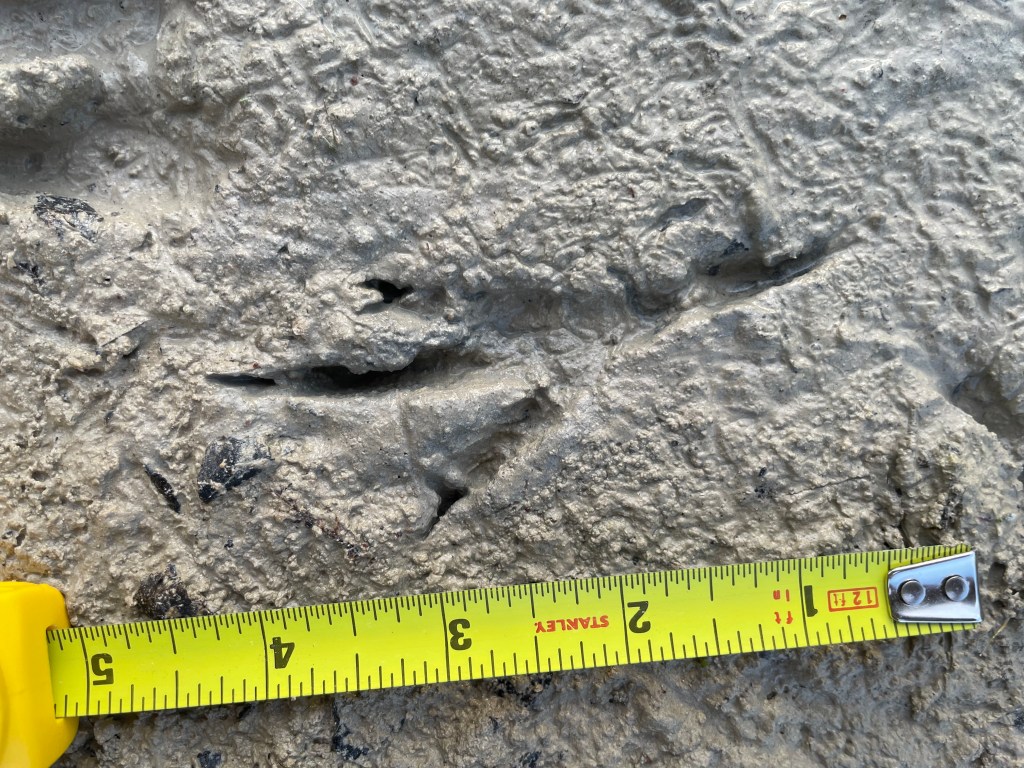
The next track is a mystery to me:
Sunfish:
It was nice to see the Sunfish making there nests:
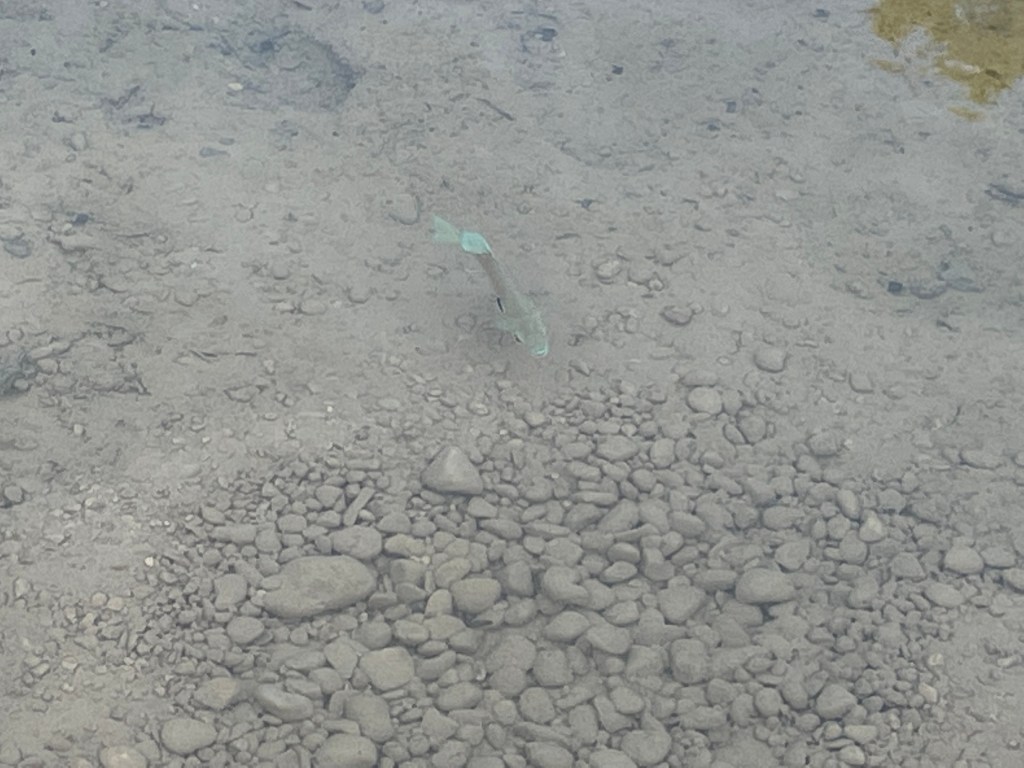
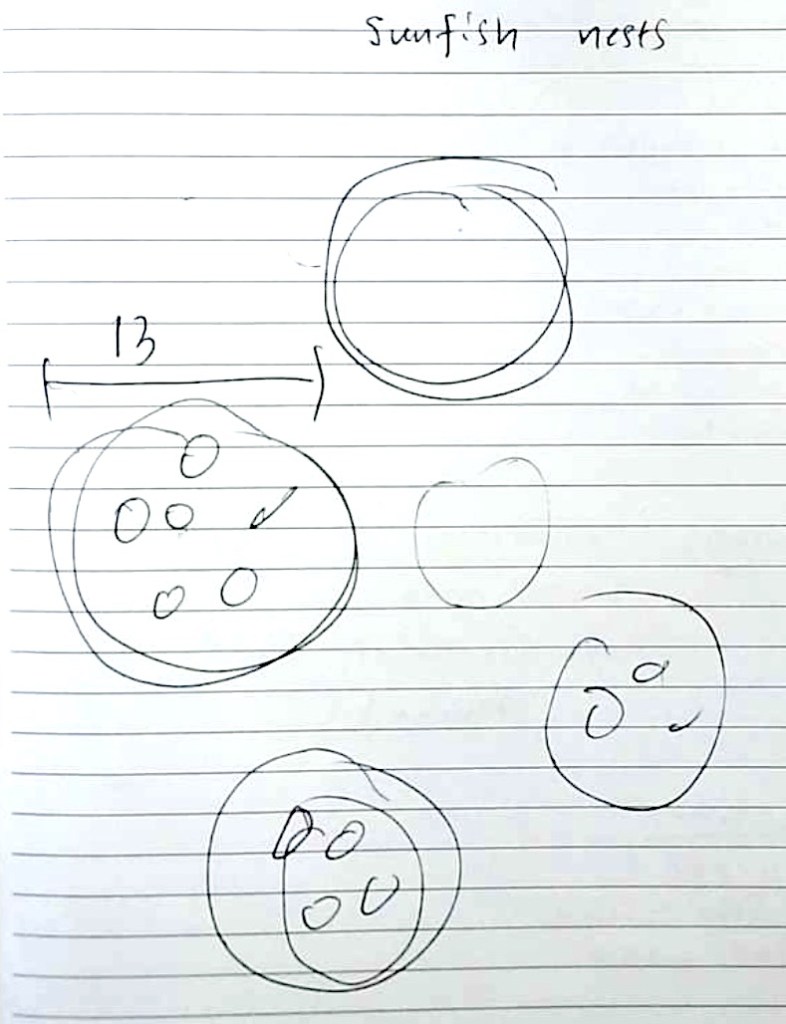
There were often many such nests in the river. For the approximate scale, see thew drawing below:
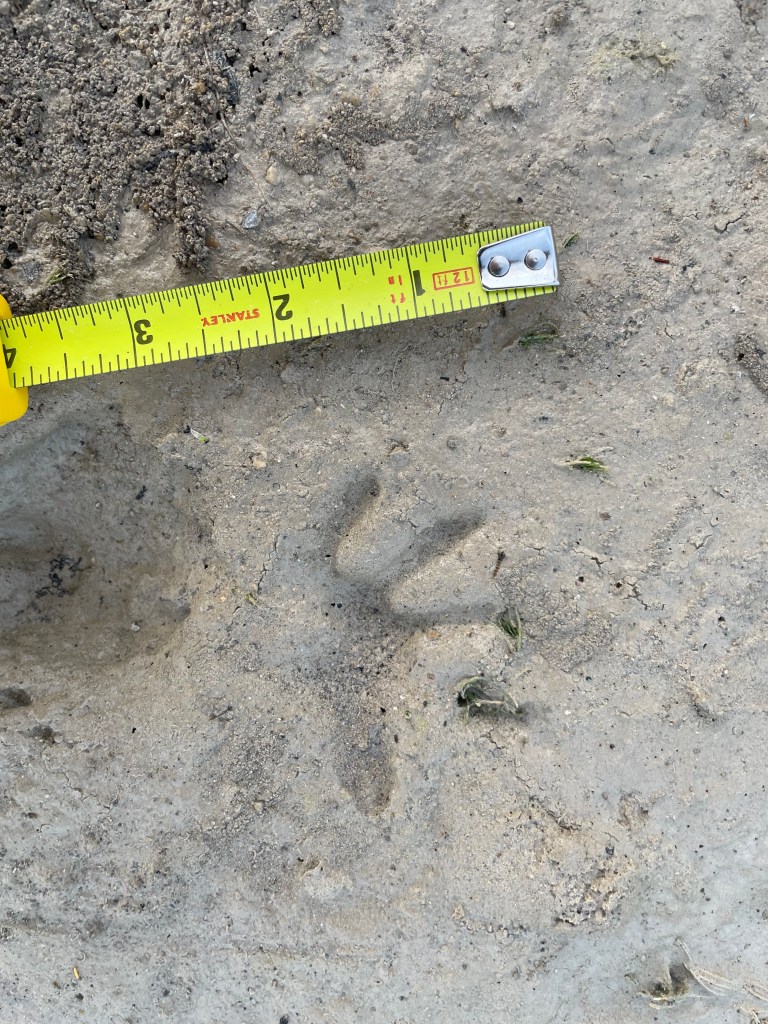
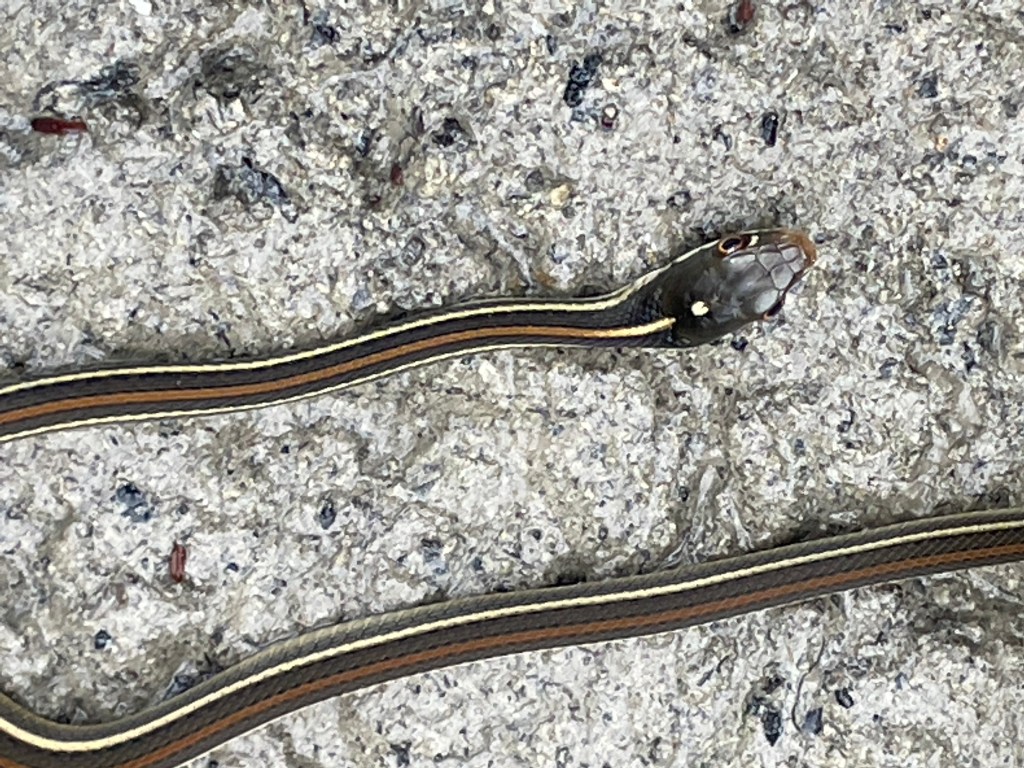
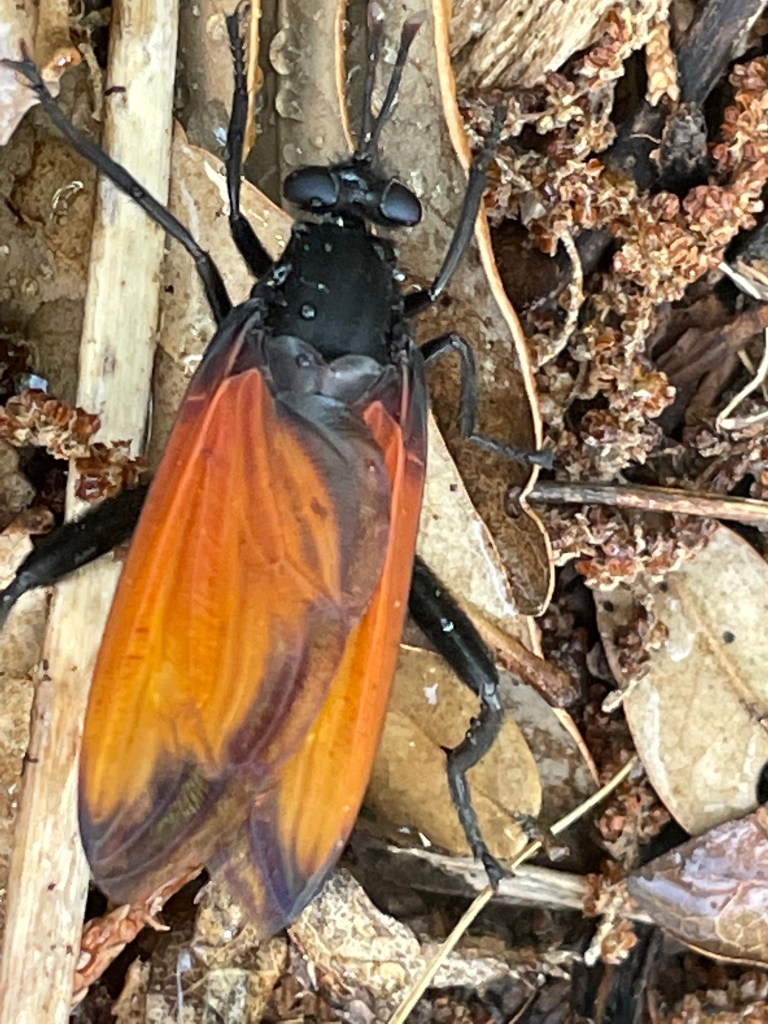
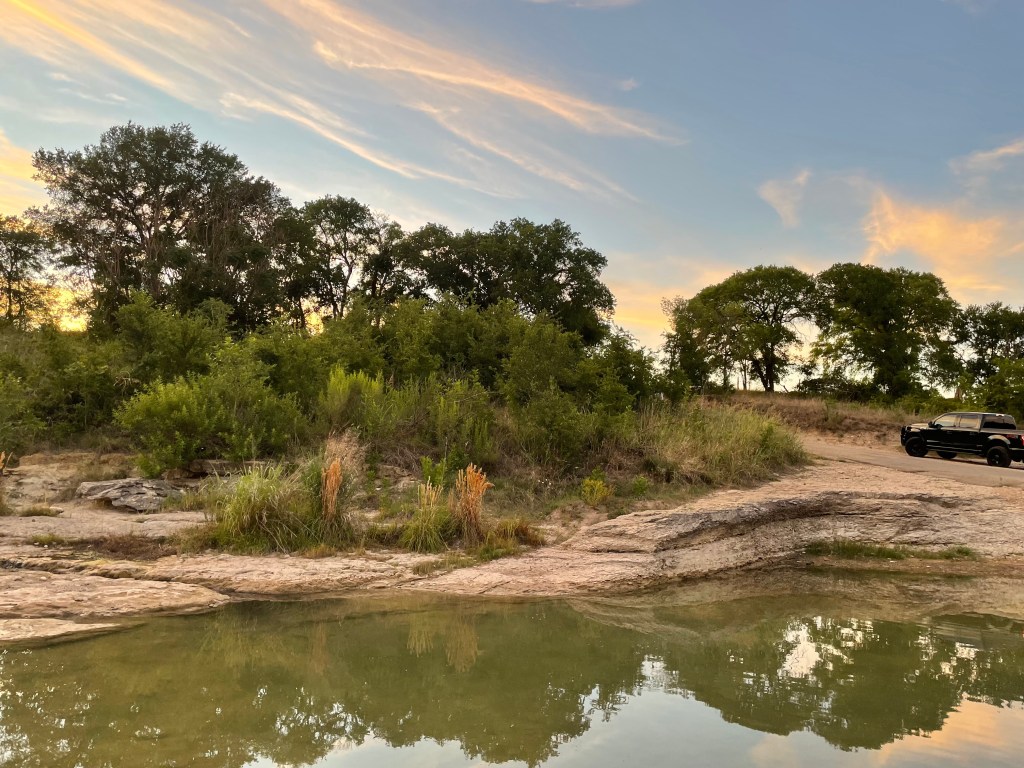
Some miscellaneous photos:
Reflections:
It was exciting tracking in a new habitat. As most of the river banks were gravel wash it was challenging to find areas that registered tracks well. The heat and humidity were also tough. I was tracking while keeping up with my family who were hiking the river, so I had to collect observations and do sketches quickly.


 Field Notes of a Tracker
Leave a reply to marcusgarvie Cancel reply