Date: March 28 – 29, 2026
Places: Krug Forest, more properly the Kinghurst Forest Nature Reserve, a protected old-growth maple-beech forest near Chatsworth in Grey County, donated by the Krug family and valued as a rare remnant of Ontario’s pre-settlement woodland, see
https://ontarionature.org/programs/nature-reserves/kinghurst-forest/?utm_source=chatgpt.com
We also visited a forest near Durham (close to Orchardville).
References:
– [1] ‘Mammal Tracks & Sign: A Guide to North American Species’, Mark Elbroch, Stackpole Books (1st Ed.), 2003
– [2] ‘Bird Tracks & Sign’, Mark Elbroch and Eleanor Marks, Stackpole Books (1st Ed.), 2001
Context:
This was the final weekend of the 2025/26 Tracking Apprenticeship Program through Earth Tracks, run by Alexis Burnett; see
https://www.earthtracks.ca/apprenticeships/.
Traditionally, a “mock” evaluation is held over the two days, in the same spirit as the official Track and Sign Certifications, see
https://trackercertification.com/.
Normally, about 56 field questions are asked, but Alexis asked 70.
I have not documented all of the track and sign observations here, only some of the ones I wanted to discuss. Some of these observations were also not part of the 70 questions, but were things I noticed along the way.
Observations:
We started out on Alexis’s property, a several-acre parcel surrounded by farmers’ fields. Alexis has chickens, so I thought it would be fun to document their tracks and scat. Curiously, I could not find any good online sources with clear photos and descriptions of chicken tracks. (Not even in [2].)
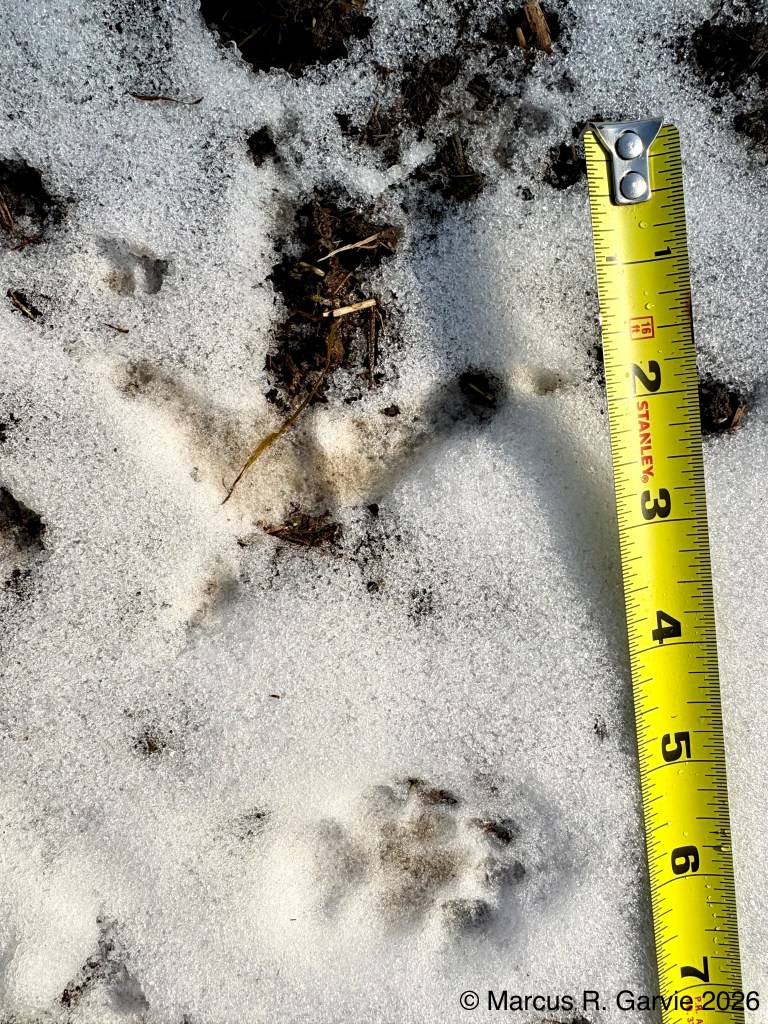
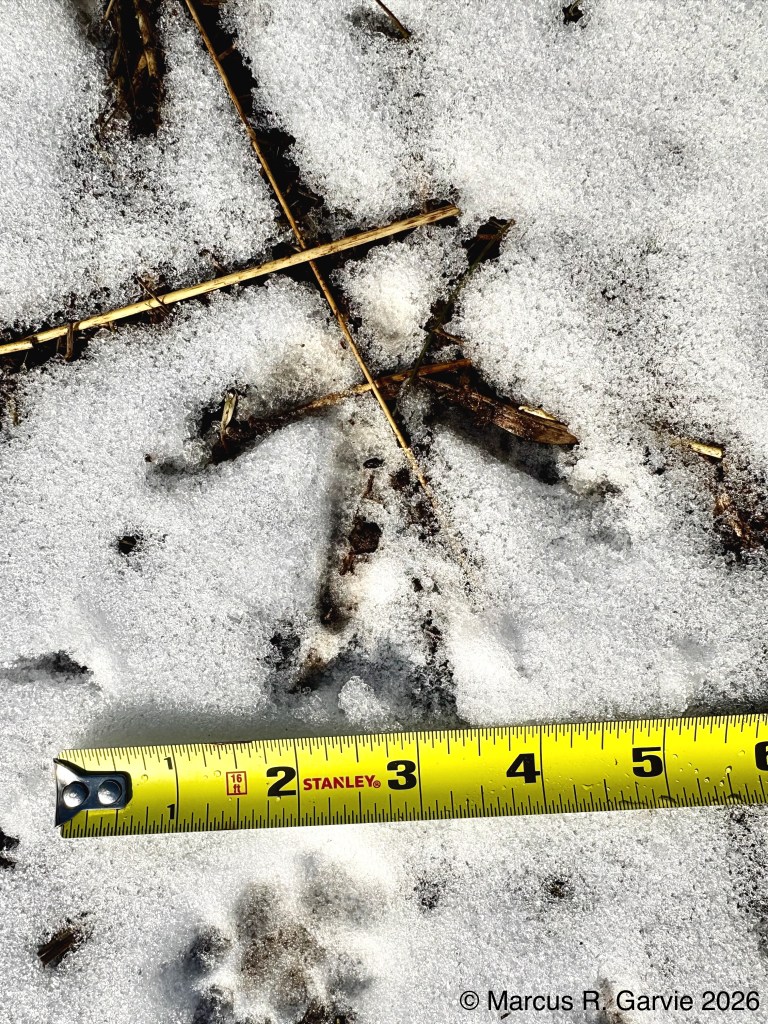
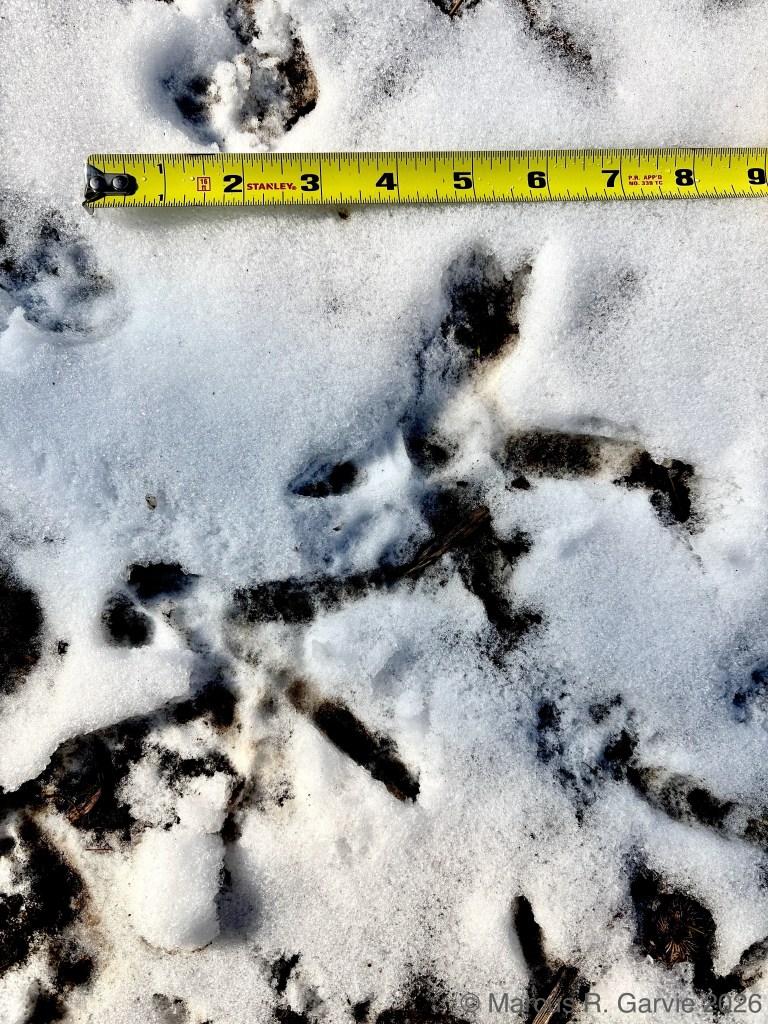
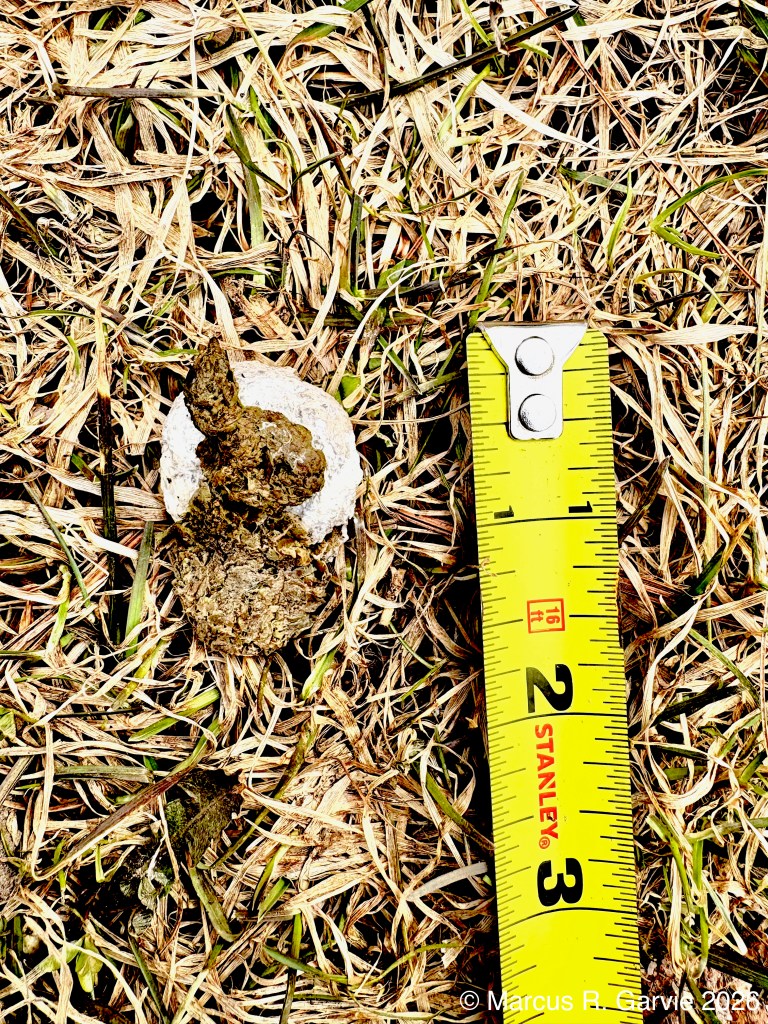
The tracks look superficially like wild turkey tracks, but toes 1 and 3 seem to curve inward, and the toes are not as long as in a turkey track. The digital pads are bulbous, and the hallux (toe 1) is quite long. Claw marks are prominent. The tracks measure up to 5 inches long and 4- 5 inches wide. Alexis also has roosters, so these may be from them. The scat reminds me of cupcake-shaped Mourning Dove scat, but much larger.
In case you were wondering, the other tracks are from a Striped Skunk! They were everywhere, and some of the tracks are very clear. Even though I have documented these tracks a few times, I can’t help showing them again. They are one of my favourite tracks:
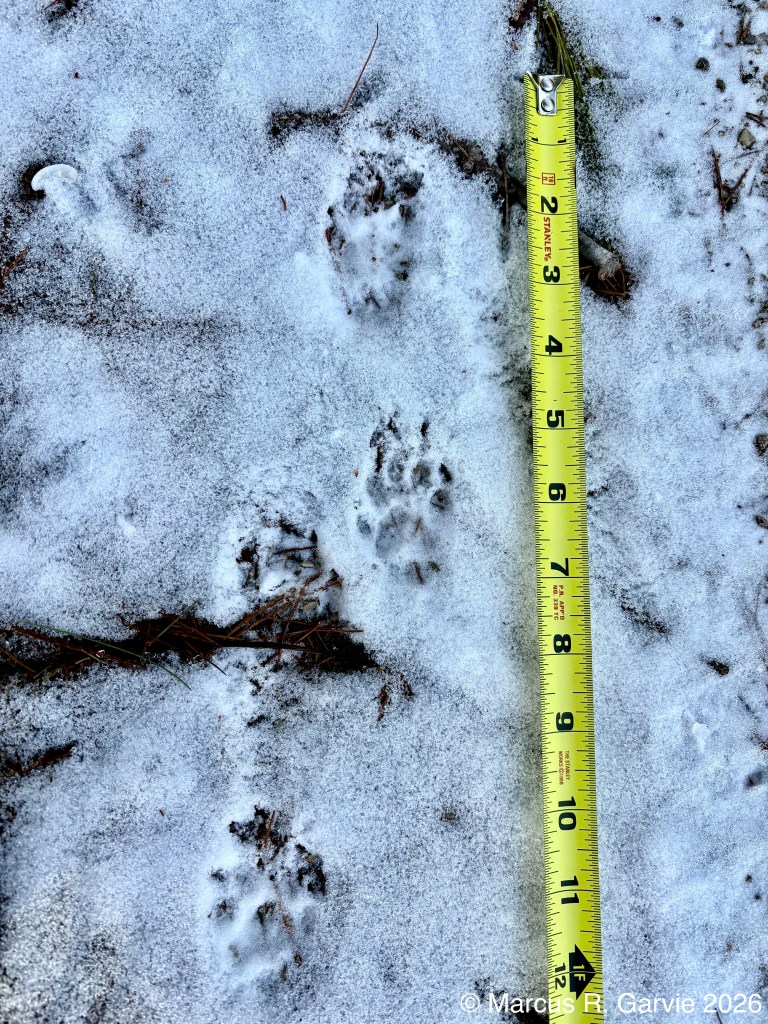
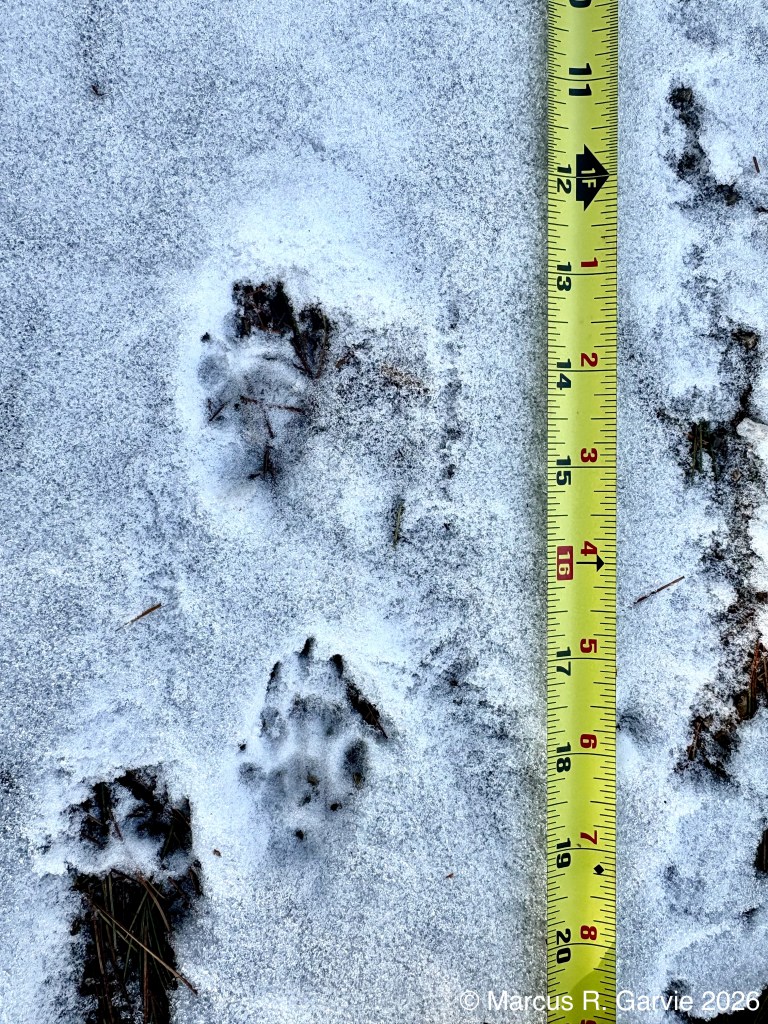
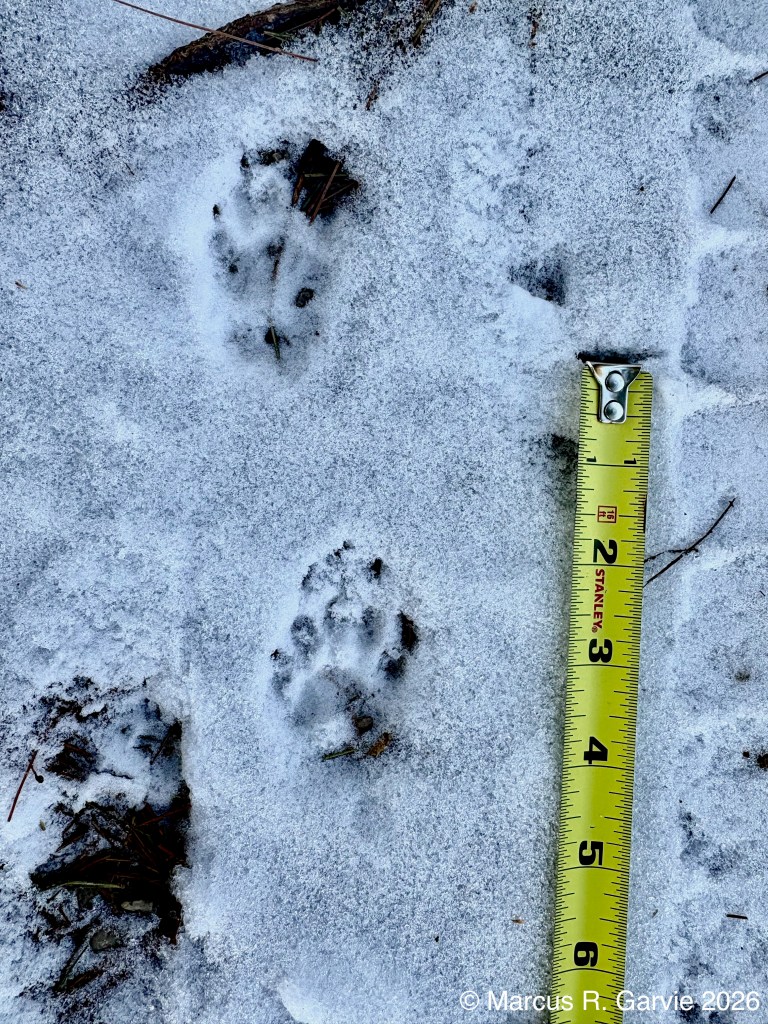
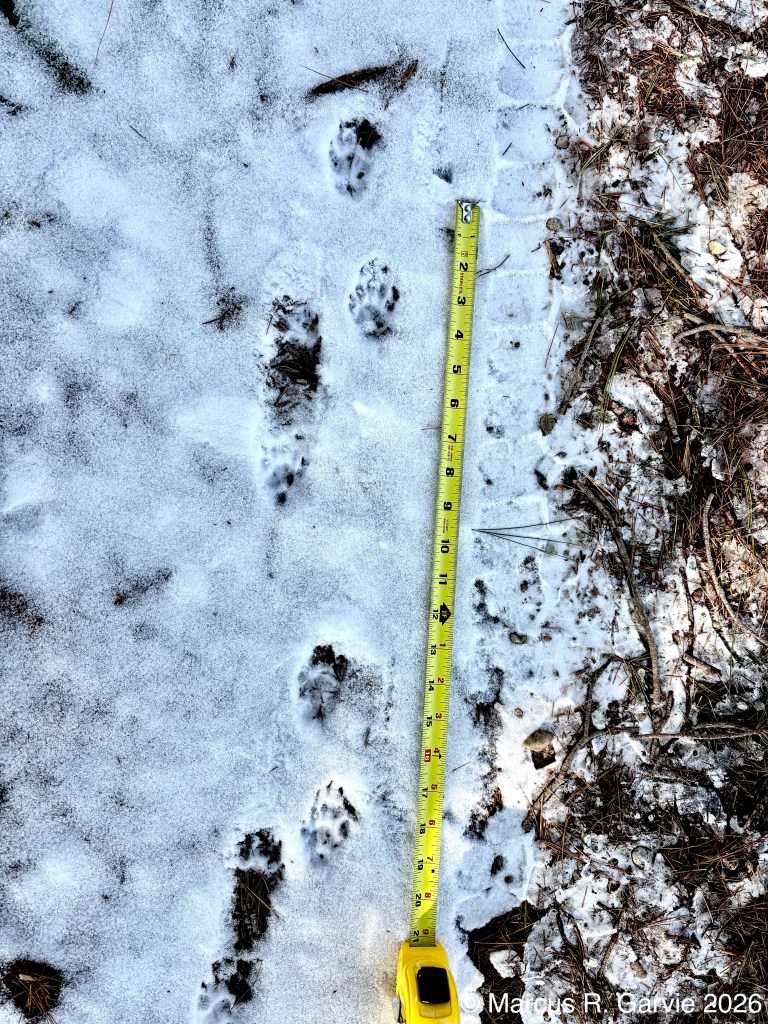
The gait in these tracks is a transverse lope. The front tracks are easily distinguished from the hind tracks by the long claw marks extending ahead of the toes.
The next set of tracks I incorrectly identified as Red Squirrel. They are actually beautiful examples of Eastern Chipmunk:
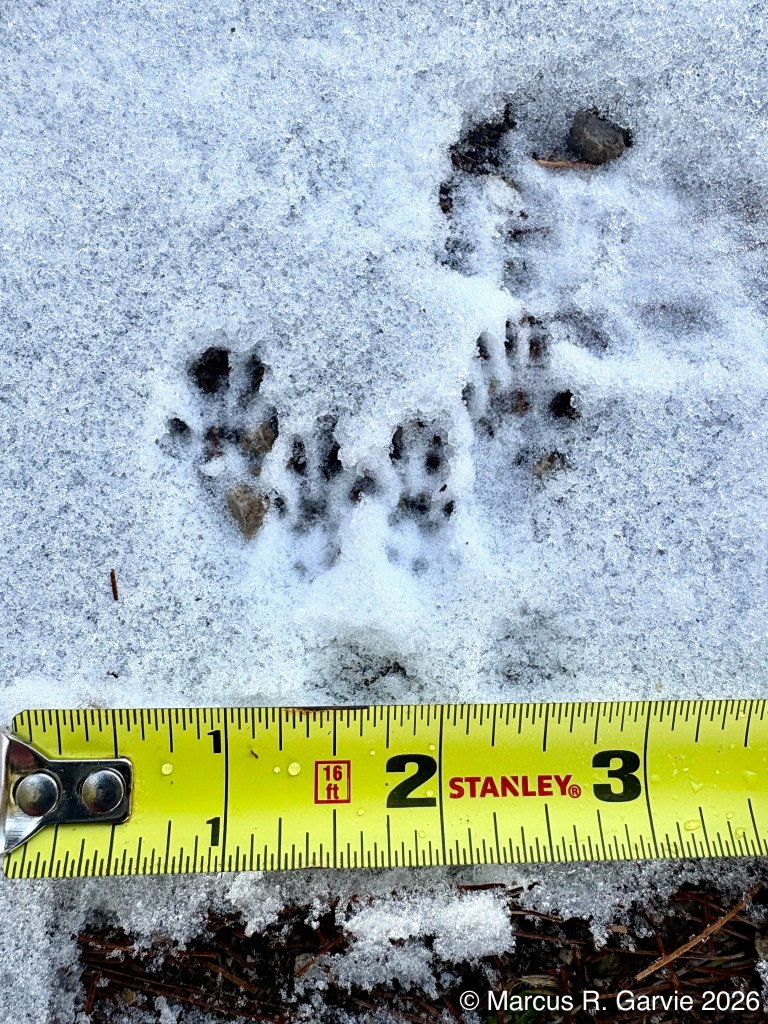
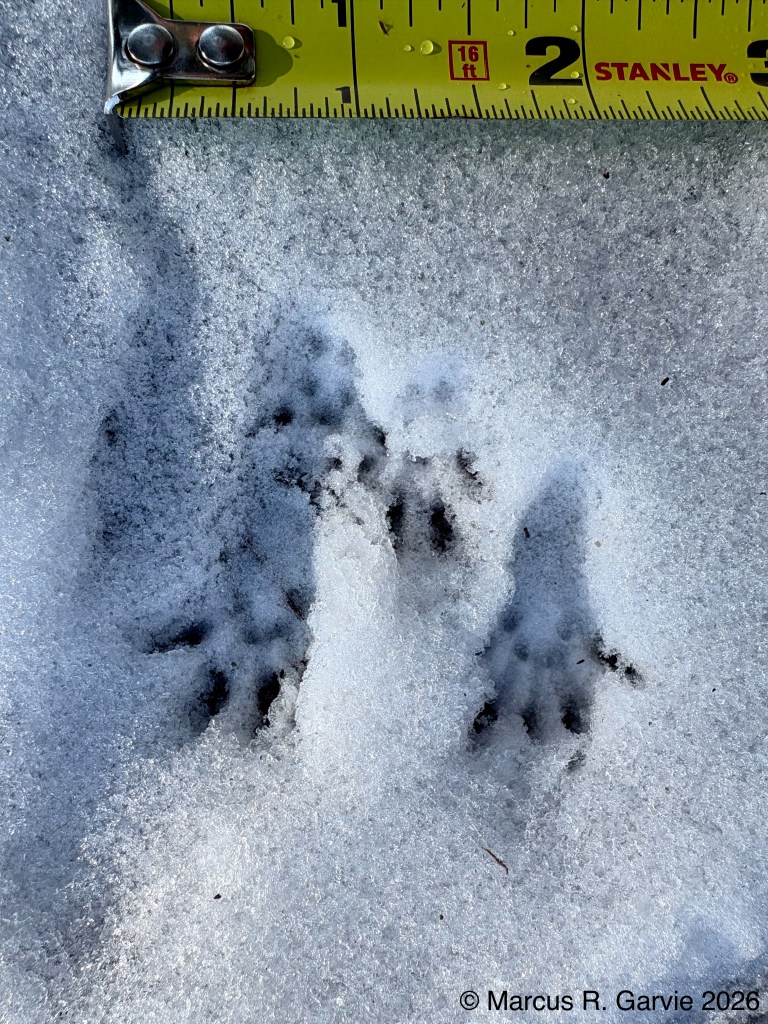
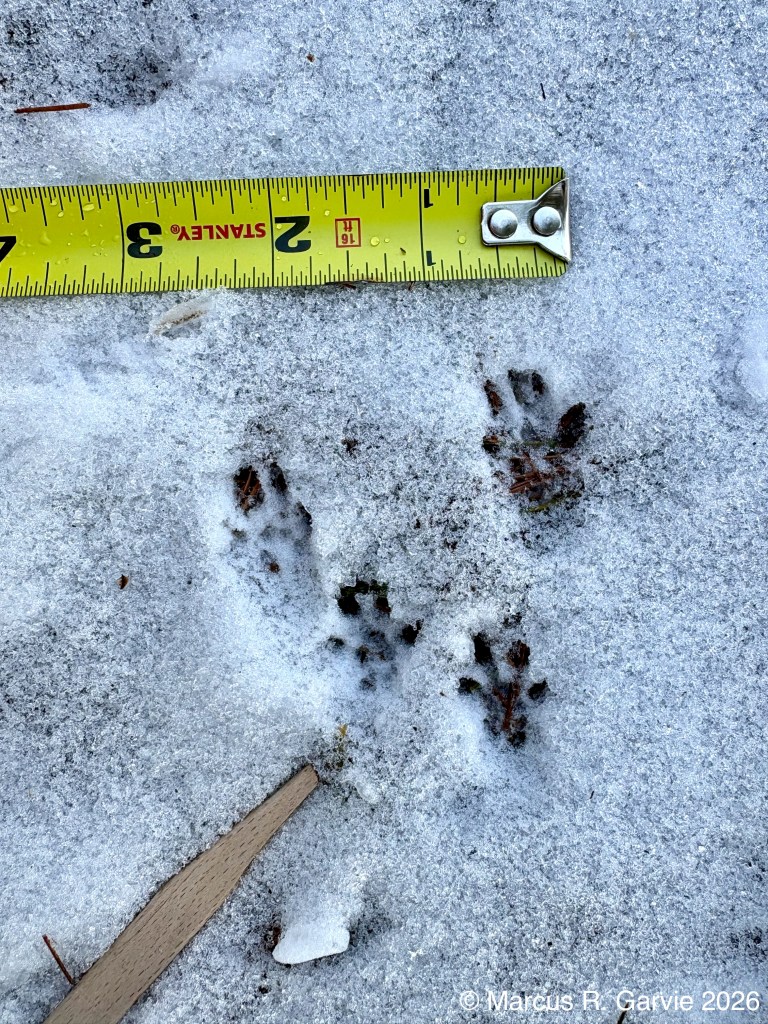
I made the following rough measurements:
Trail width: 2 3/8 in
Group length: 2 1/2 in
Front length: 3/4 in
Front width: 5/8 in
Hind length: (1 1/8 in) – probably an over-estimate
Hind width: 5/8 in
These measurements strongly support identification as Eastern Chipmunk rather than Red Squirrel. Overall, the tracks are simply too delicate for squirrel. Another thing I noticed, after looking carefully at the pictures in [1], is that the heel portion of the front feet in Red Squirrel appears much longer in proportion to the toes than what we see in chipmunk tracks. Also, groups of four tracks may be more compact, and the front feet may be less offset in a chipmunk than in a squirrel. I need to study this further.
Also on Alexis’s property were some bird tracks, possibly from an American Goldfinch, based on the size of the tracks and the way toes 1 and 3 point slightly into the trail (which is typical for finch species). See [2].
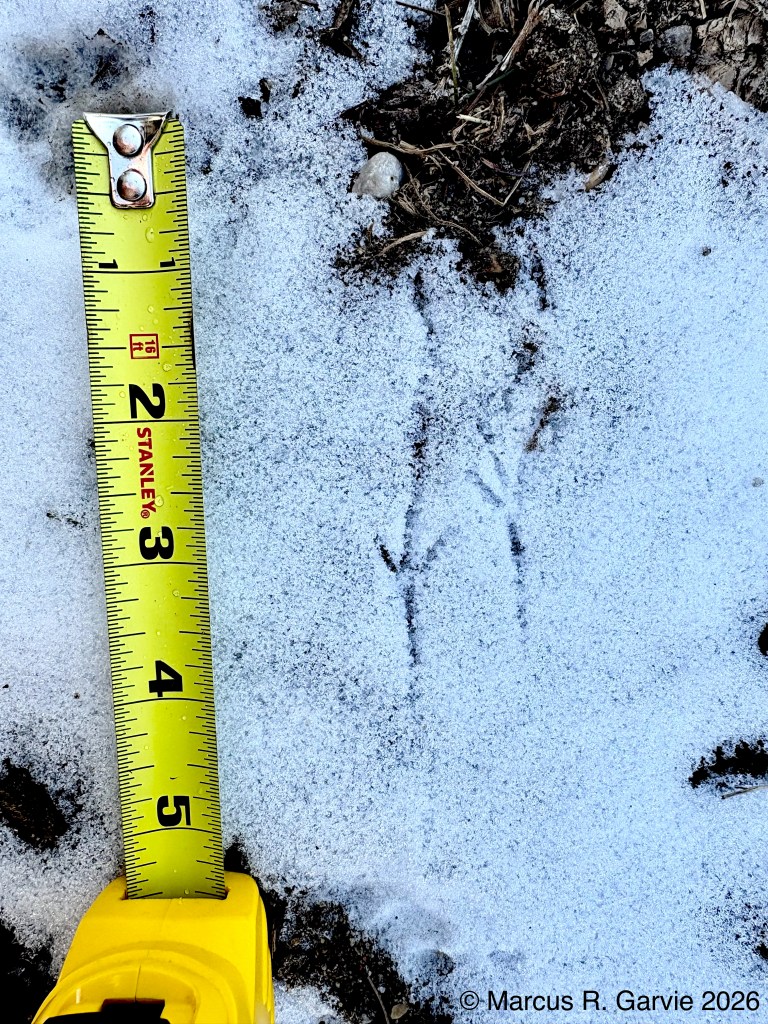
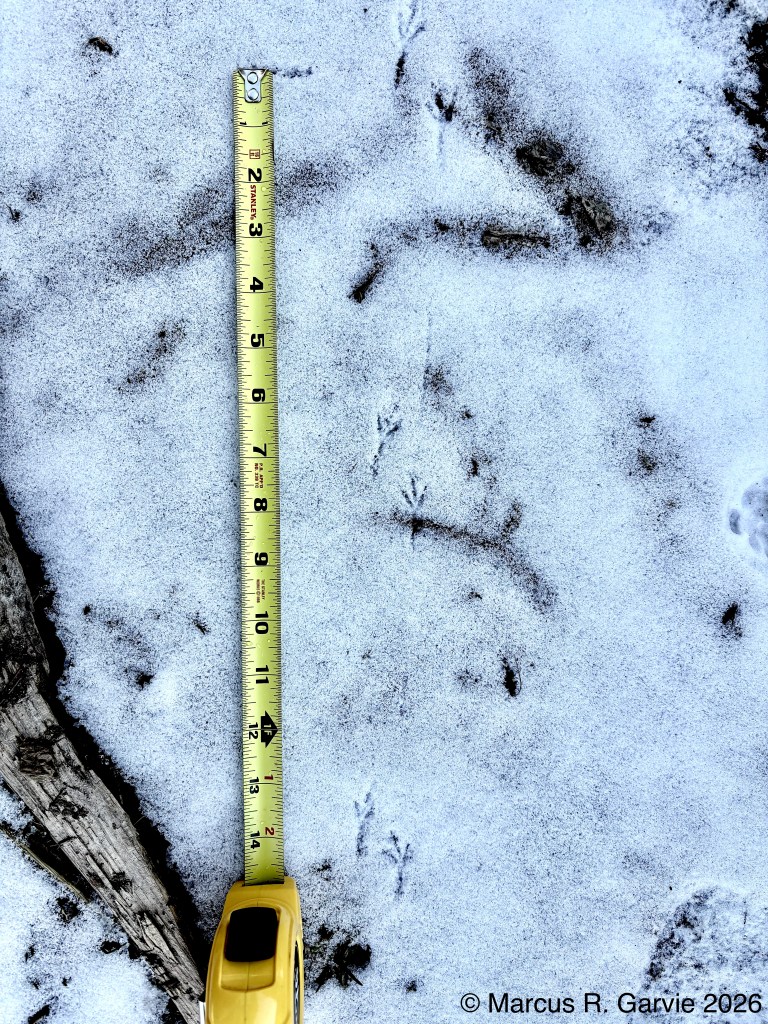
In the second photo, the bird is moving with a skip, a gait in which it advances in a manner somewhat like a child on a hobby-horse.
In Krug Forest Alexis showed us some beech trees with bark of an unusual texture and colour, as shown below:
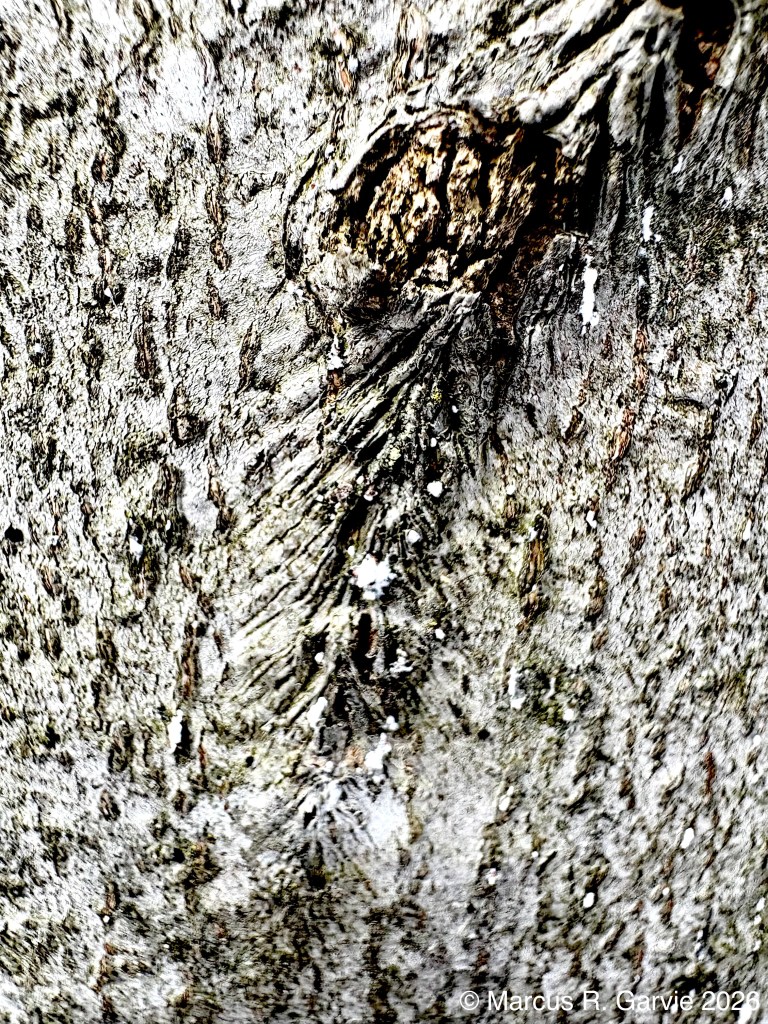
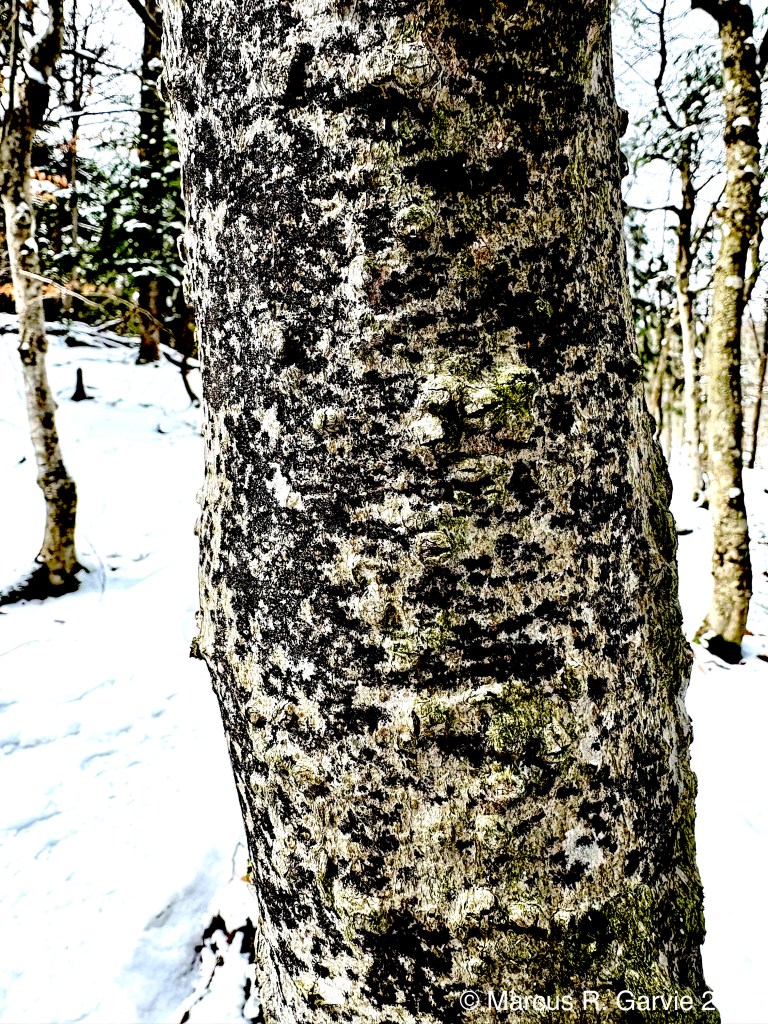
This is an example of what is called Beech Bark disease. Beech bark disease is a fatal forest condition caused by a two-step interaction between an invasive scale insect (Cryptococcus fagisuga) and a genus of fungus (Neonectria). The insect punctures the bark, allowing fungus to enter, creating cankers that girdle and kill trees. It affects American beech, appearing as white, woolly spots on the bark, see
https://www.ontario.ca/page/beech-bark-disease
I think that, in the photos above, the black coloration is the fungus and the white is the scale insect.
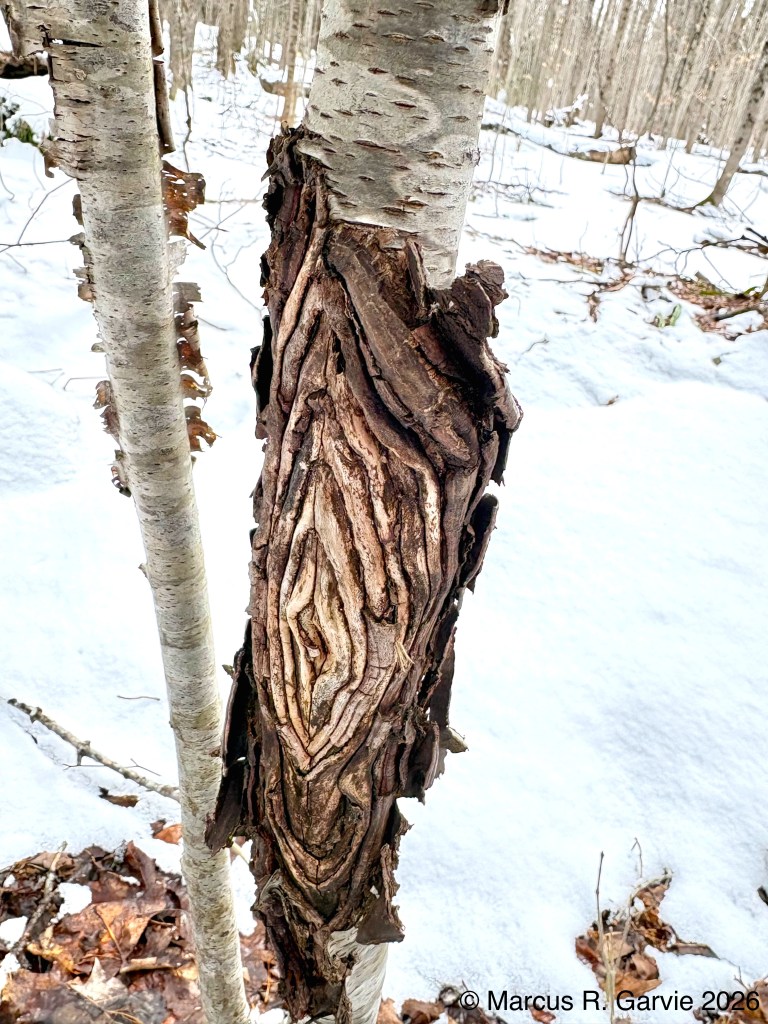
We found another disease of trees, possibly Neonectria ditissima, a fungal pathogen causing canker of deciduous hardwoods, see https://www.umass.edu/agriculture-food-environment/landscape/fact-sheets/target-canker-of-hardwoods. The canker displayed a very distinctive bull’s-eye pattern on cherry trees:
In the same grove of trees as the Beech Bark disease were claw marks from a bear, probably a cub, that had climbed the beech tree to eat the nuts.
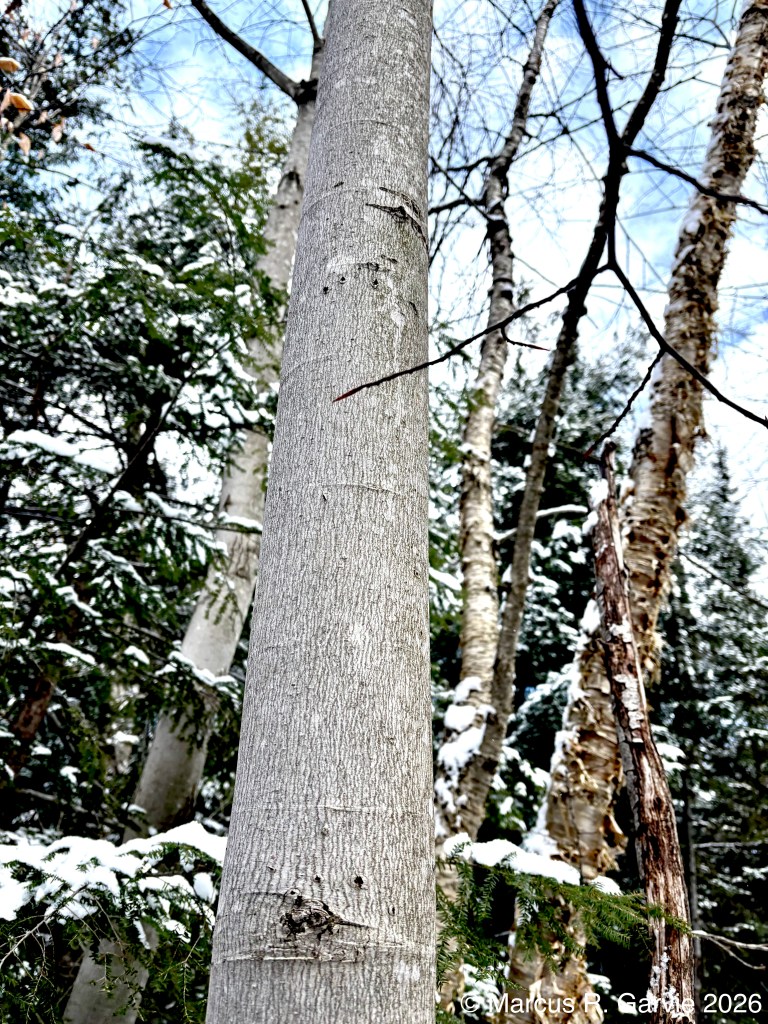
If you look carefully, particularly higher up the tree, you can see the equally spaced claw marks.
The next observations are Canada Goose tracks on a frozen pond in the forest. In a couple of spots, we could see the ‘skid’ marks in the snow where the geese had landed (I didn’t take any photos of that, but I have documented this sign in earlier blogs). What is interesting about the photos below is that you can see where the geese sat down to rest in the snow.
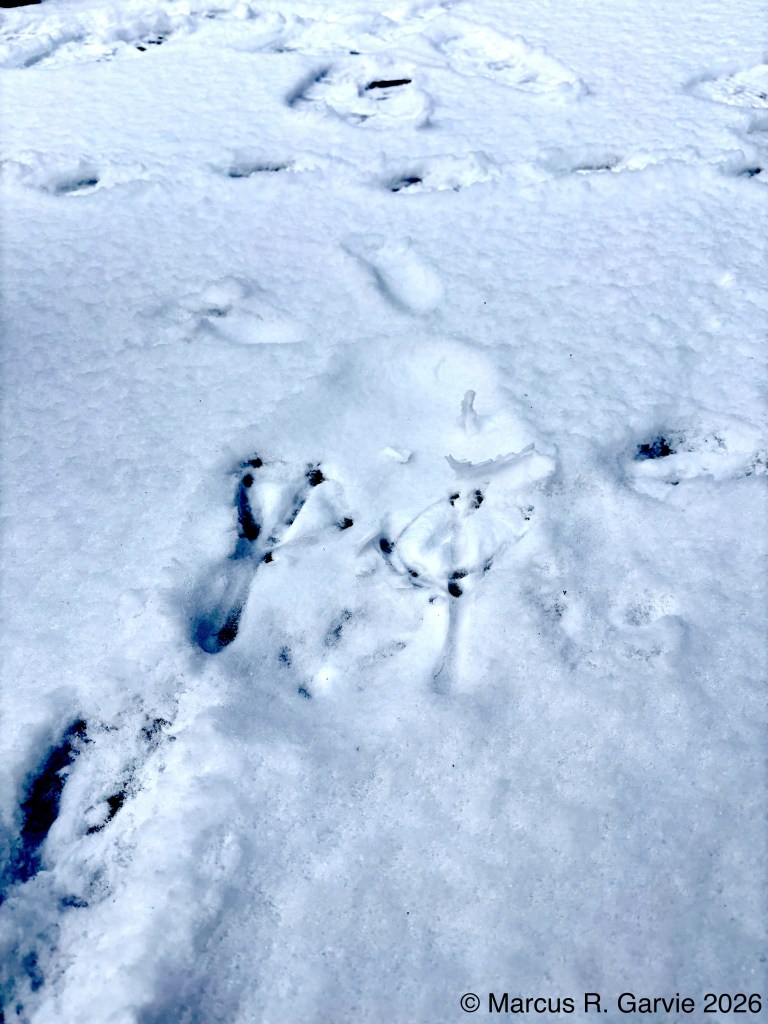
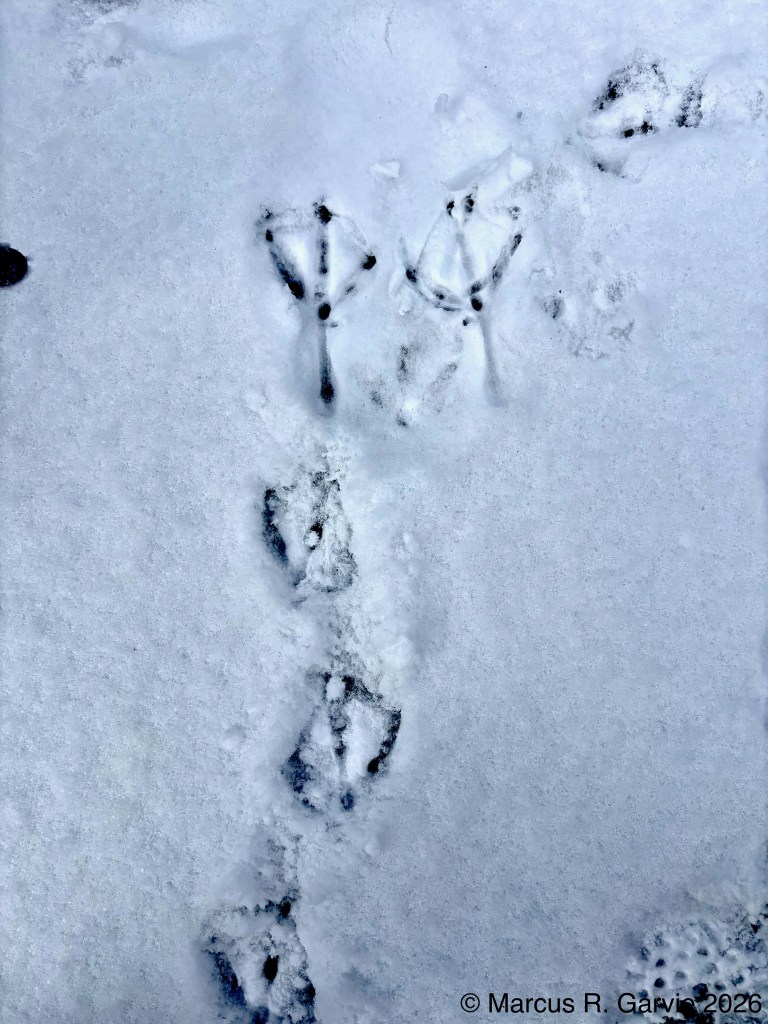
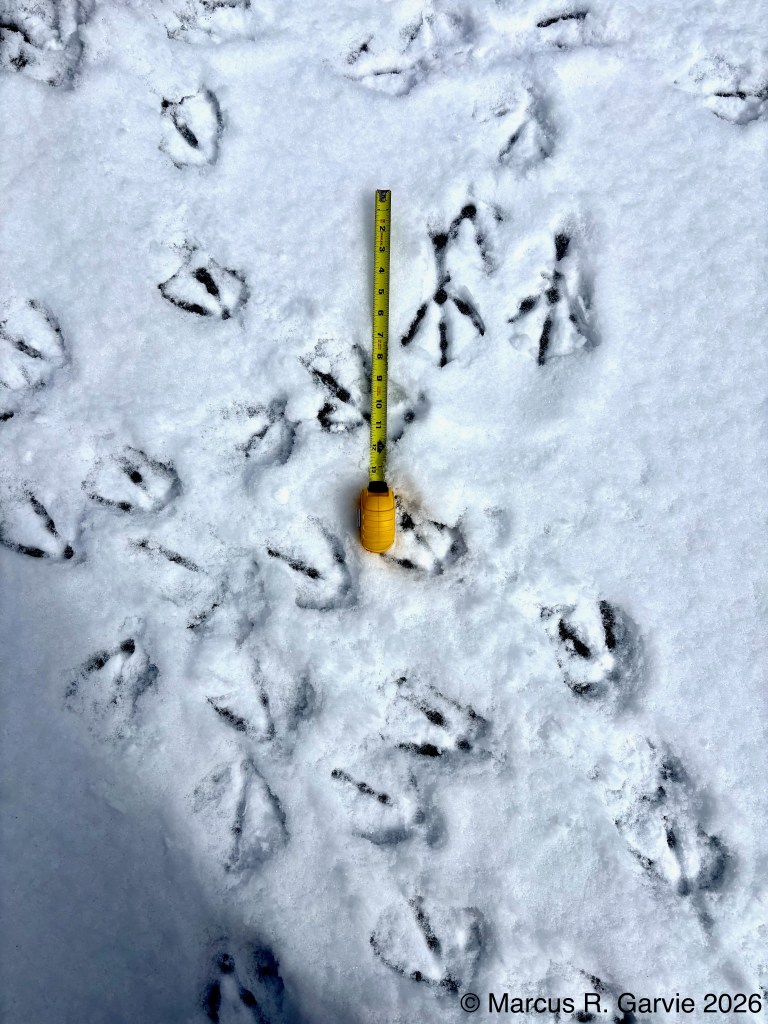
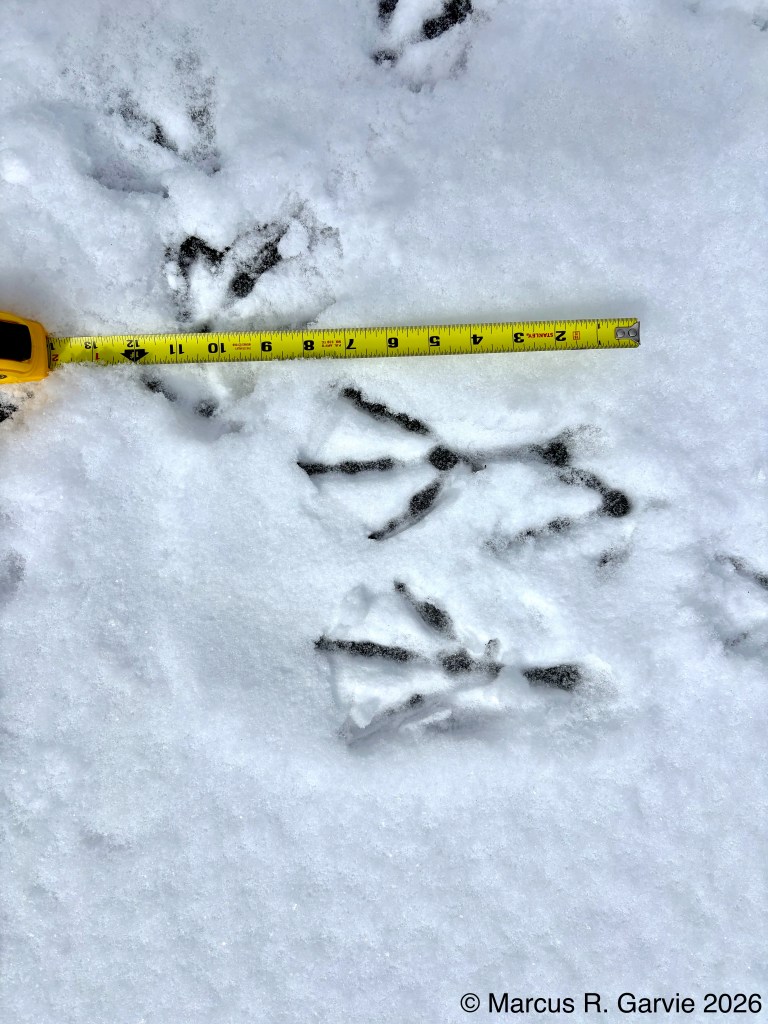
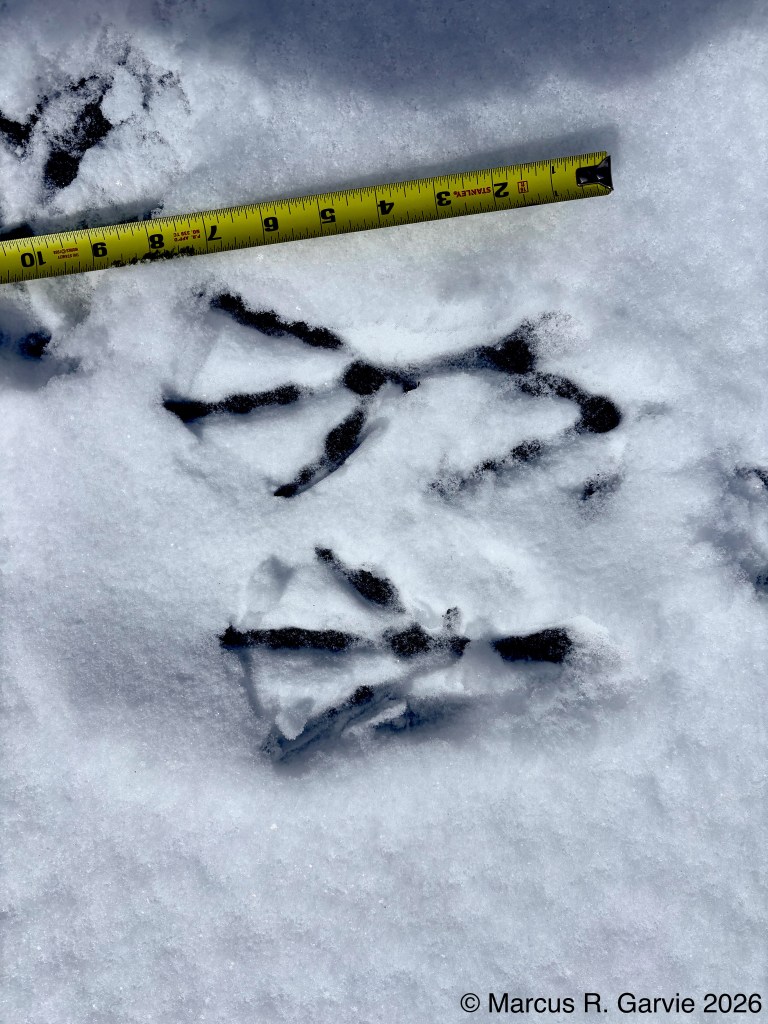
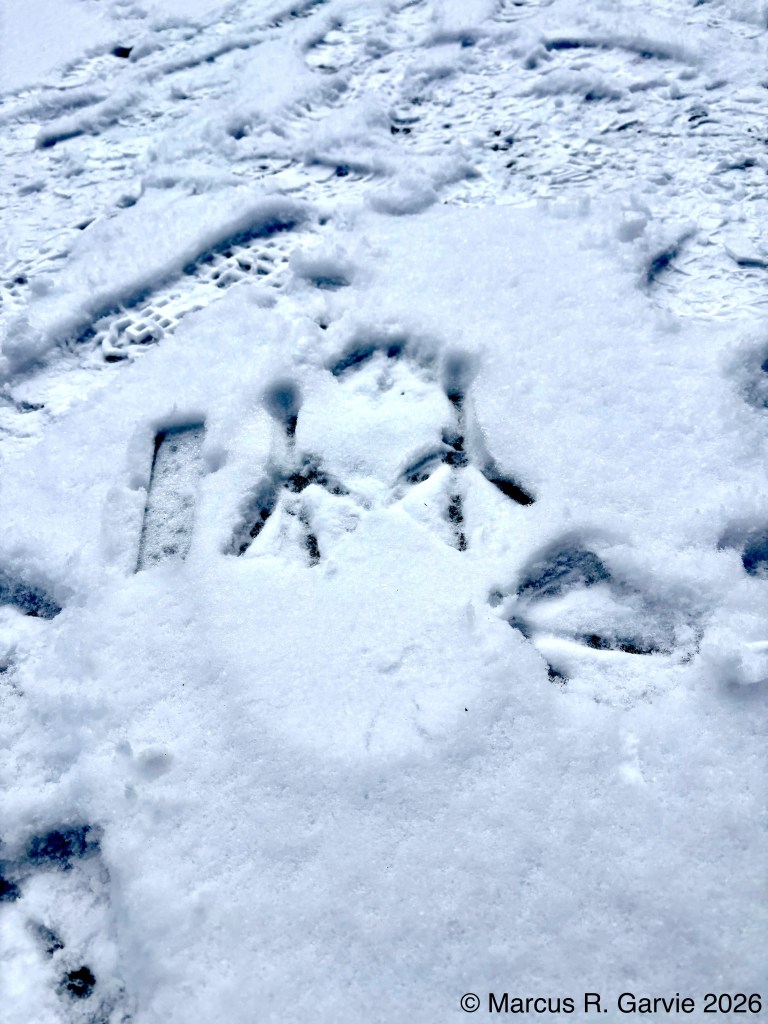
There is the round body imprint, and the mark of the bone that connects the toes to the ‘heel’, called the ‘tarsometatarsus’:
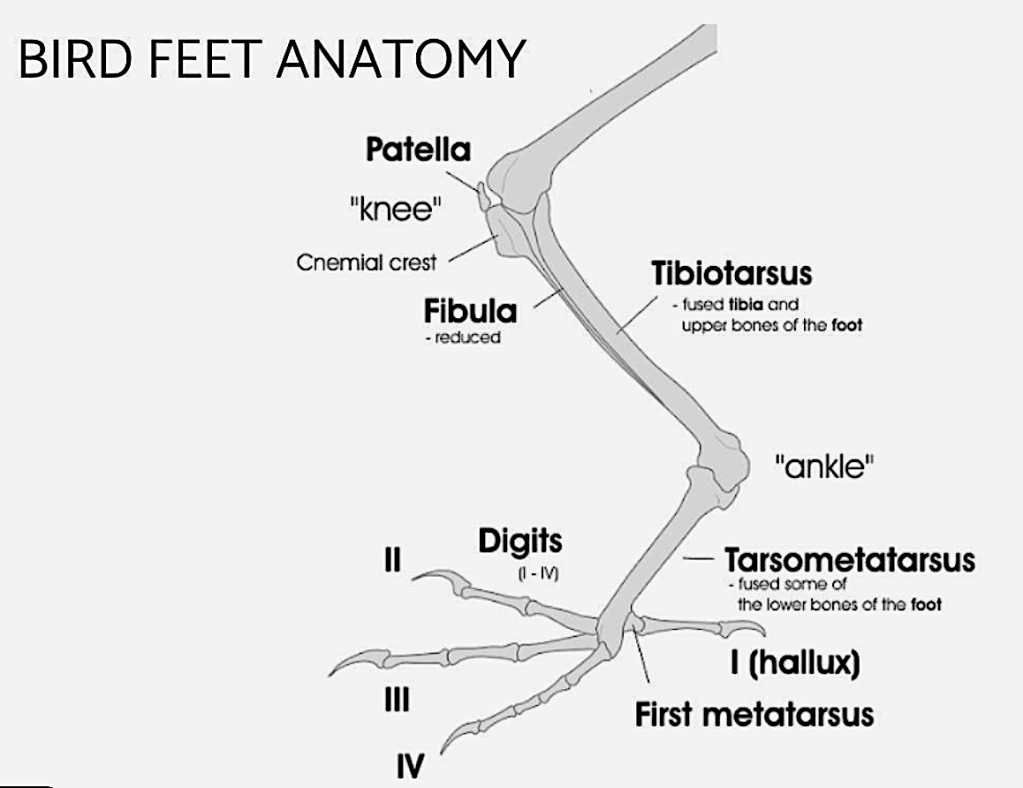
This photo is from the article at
https://www.animalwised.com/types-of-bird-feet-3475.html?utm_source=chatgpt.com
which also has a very informative description of the different classifications of bird feet (far more than described in [2]).
And while we are on the subject of Canada Goose bones, here are some photos of the hip socket bones (1st two photos) and breastbones (3rd photo) of geese we found, presumably dumped by hunters:
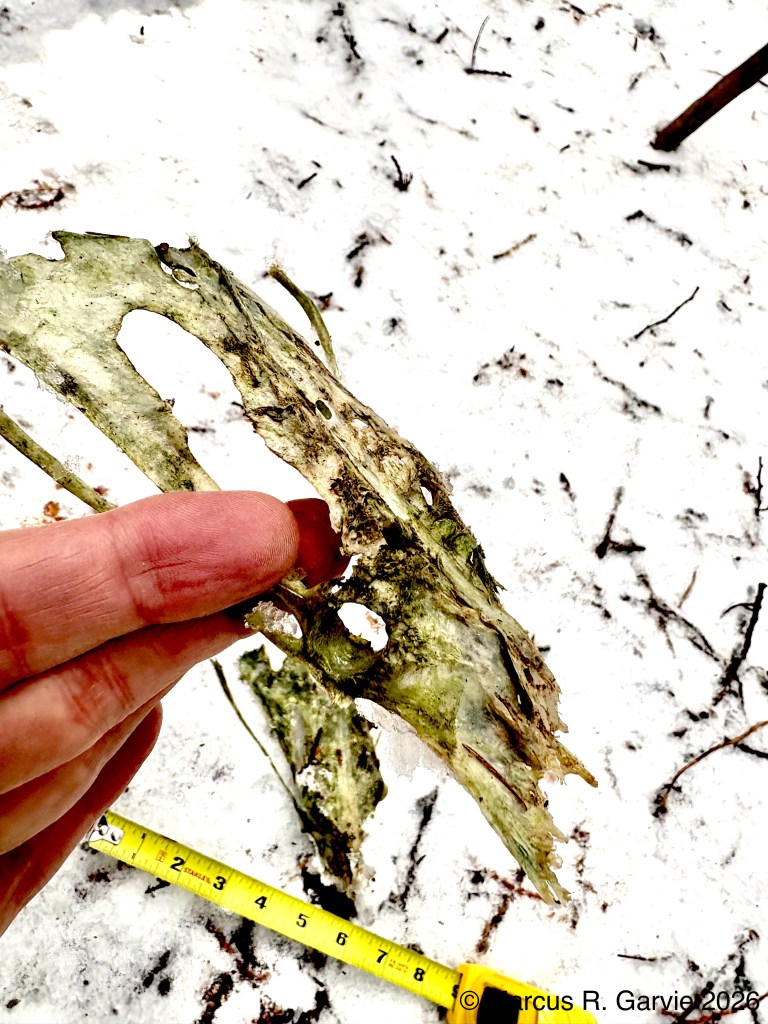
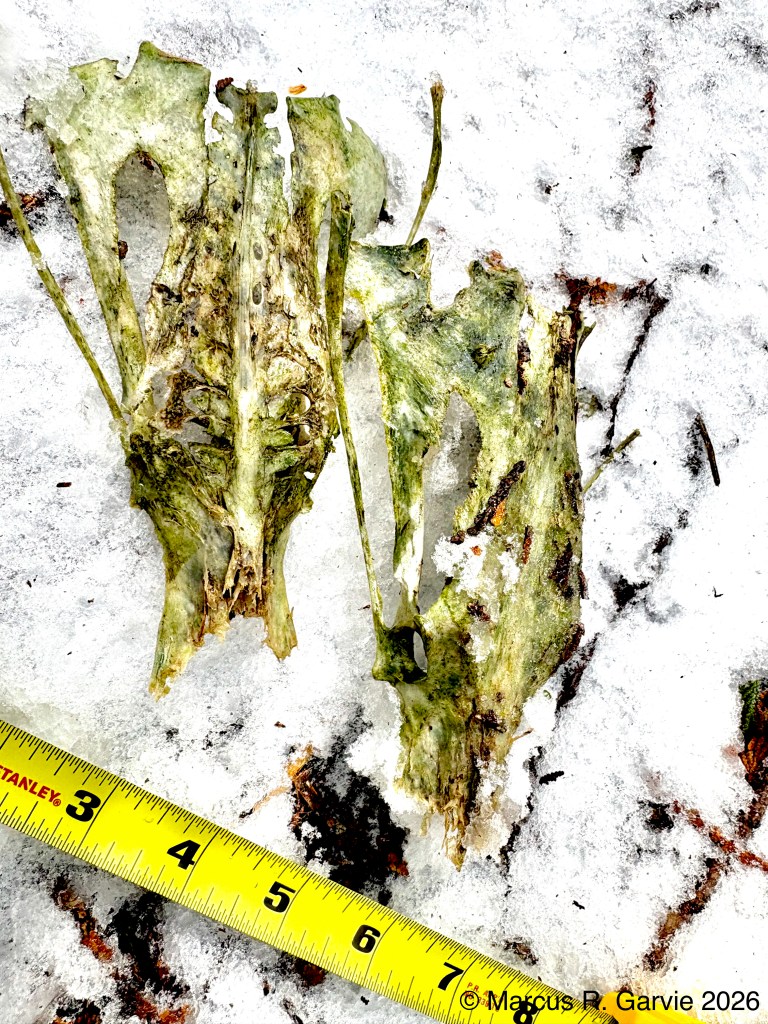
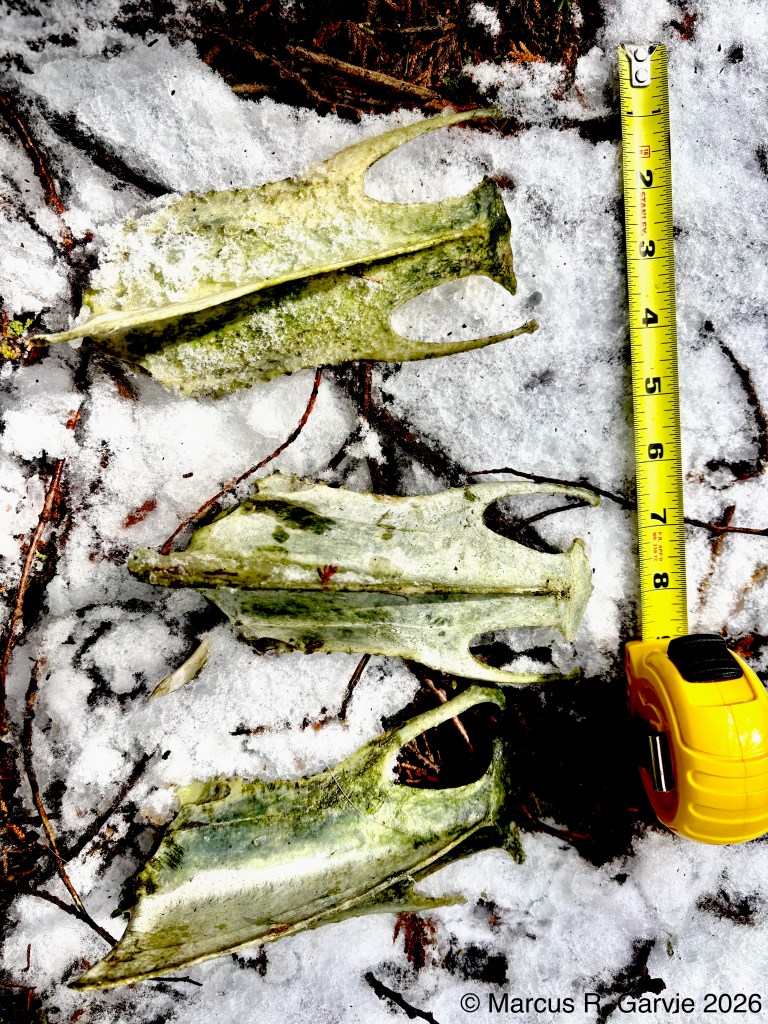
The hip socket is part of the pelvis or pelvic girdle of the goose, while the breastbone is the sternum. When I need to know more, I will study the article linked at https://www.pheasant.com/wp-content/uploads/2024/06/avian-skeletal-system-robert-porter.pdf.
We also saw some nice examples of deer cambium-feeding sign (also called incisor scrapes) on willow trees in a wet meadow.
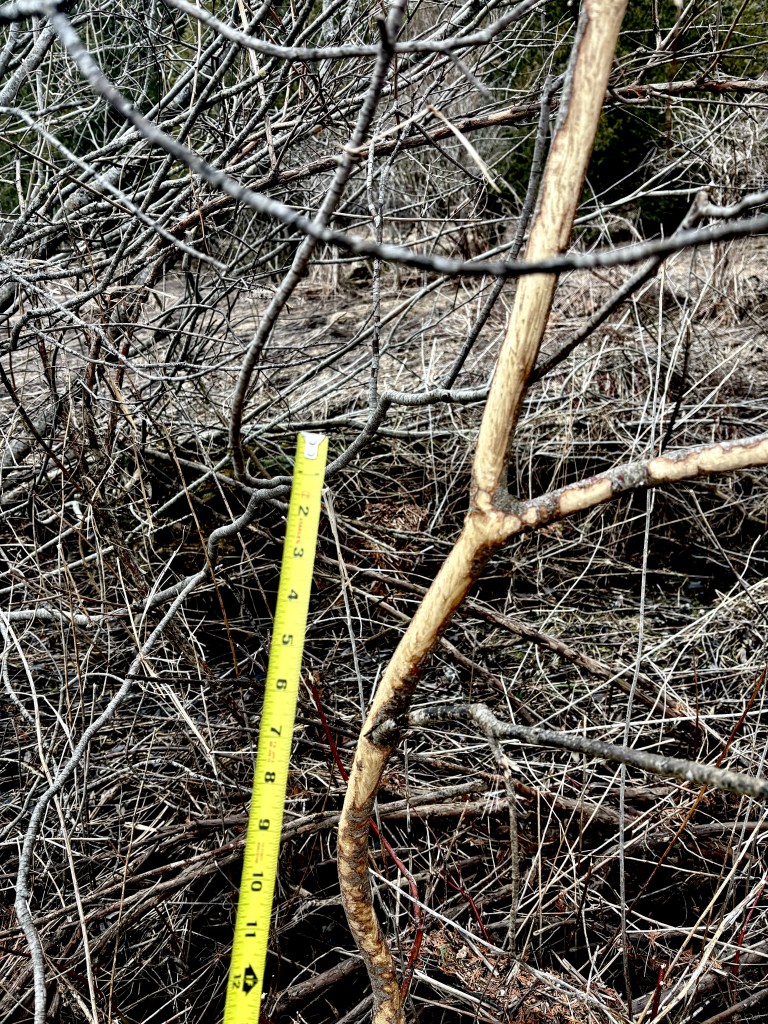
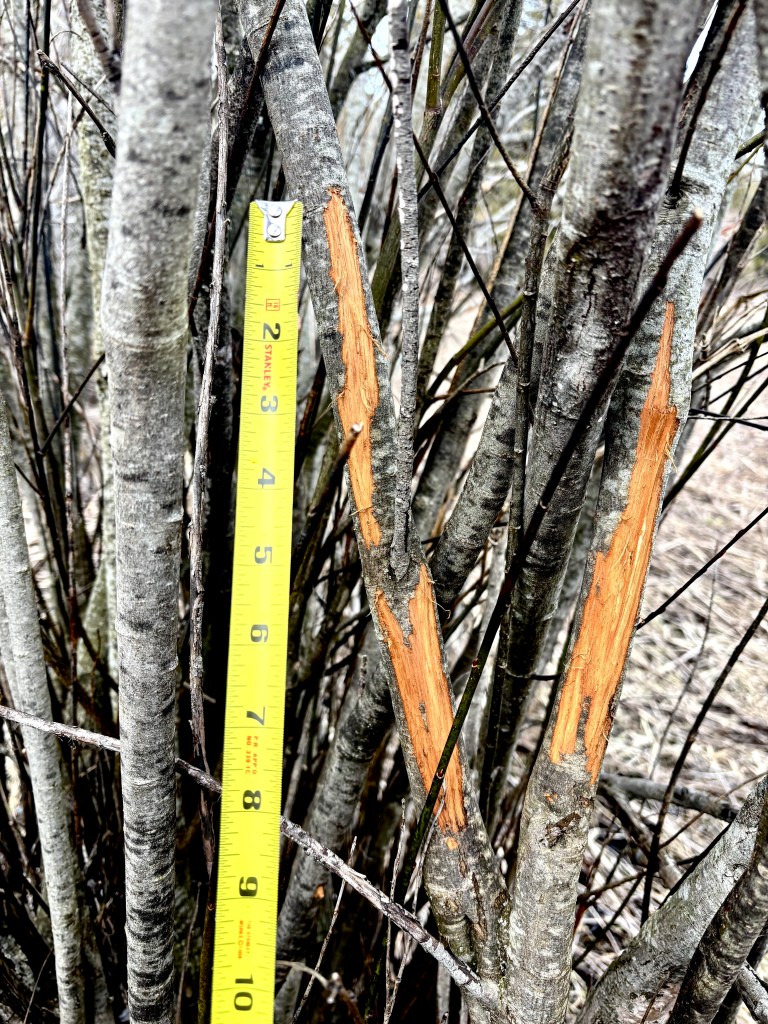
I see this kind of deer sign much less often than antler rubs. Notice how clean it looks by comparison, and that there are no strips of bark lower down on the trunk. According to [1], buck antler rubs are between 10 and 45 inches off the ground. Do these measurements also apply to incisor scrapes?
Beside the incisor scrapes was yet another (Willow) gall that I have not seen before:
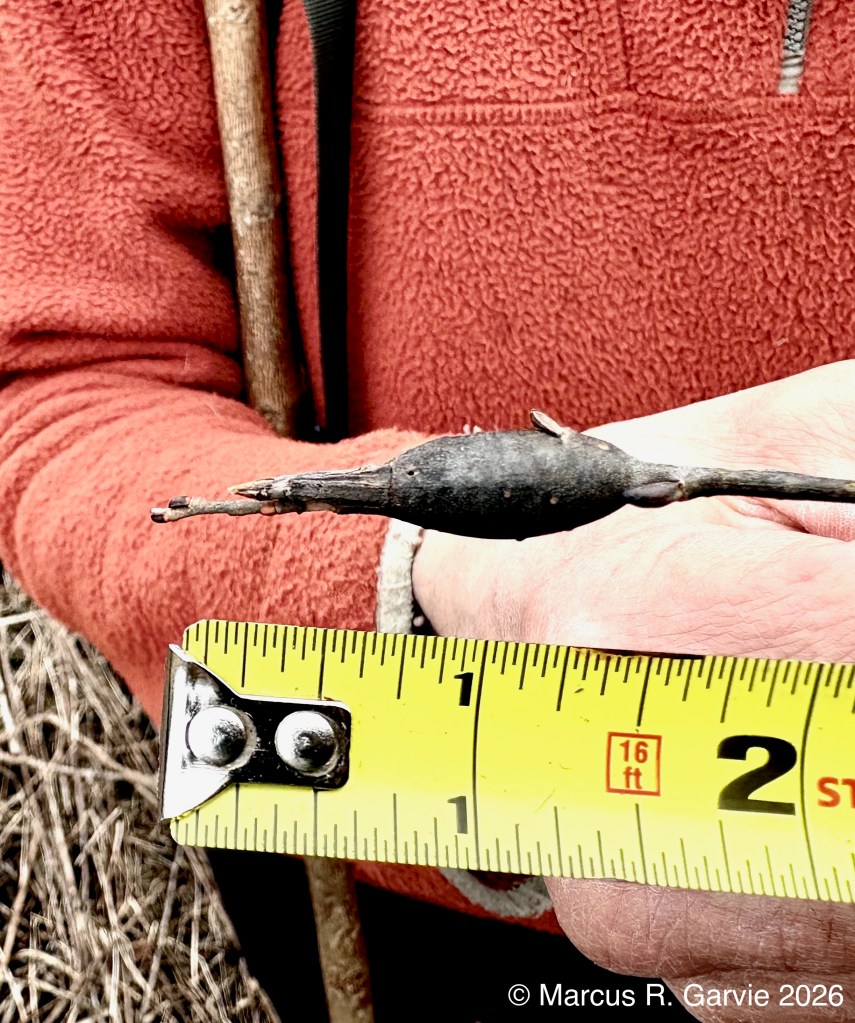
I tried finding this species online, but this is difficult because there are hundreds of species of insects that form galls on willows (Salix spp.). It may be the midge Rabdophaga degeeri (Diptera: Cecidomyiidae), shown at
https://tomminyman.fi/old_jmeg_homepage/IOWgallinducers.htm?utm_source=chatgpt.com
For the next sign, I guessed that it was from a mole, but I was confused because it was in a wetland area right next to a flowing stream. I had only seen mole mounds on lawns in the UK. Apparently, though, this fits the Star-nosed Mole, which prefers wet, poorly drained areas and marshes.
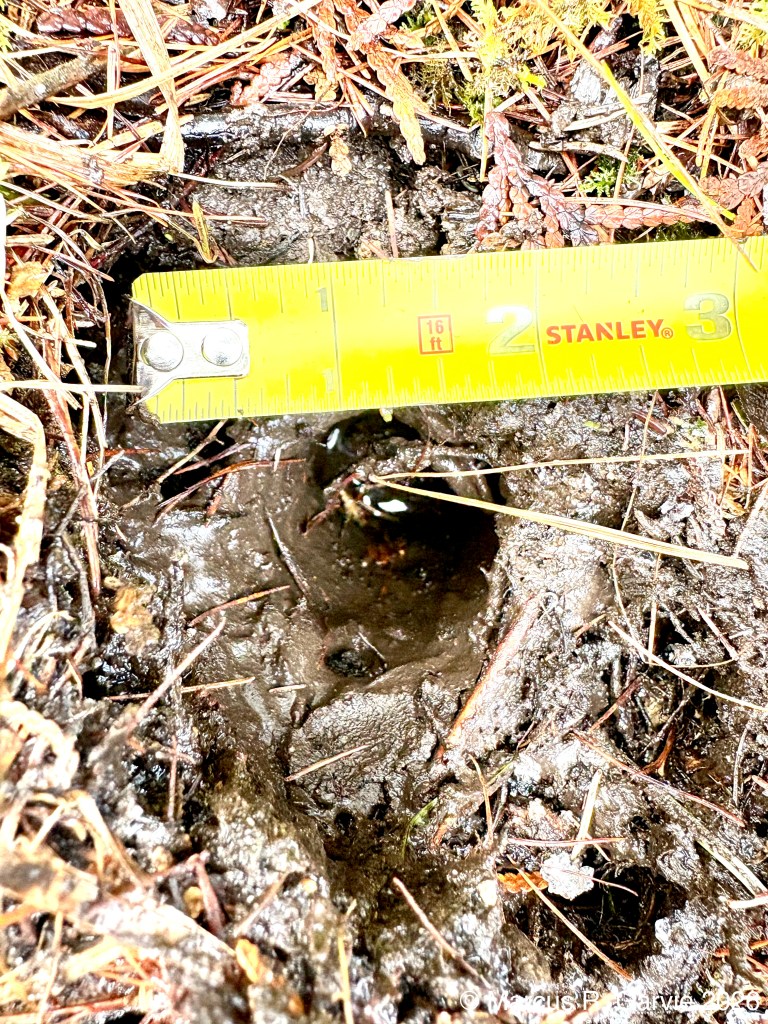
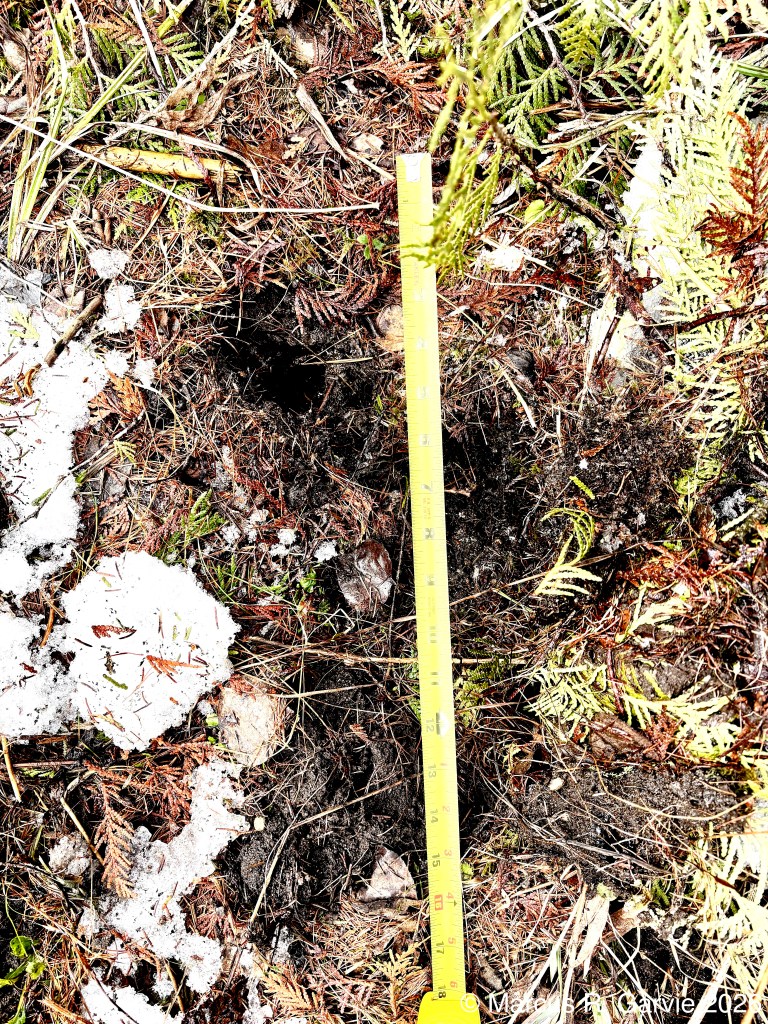
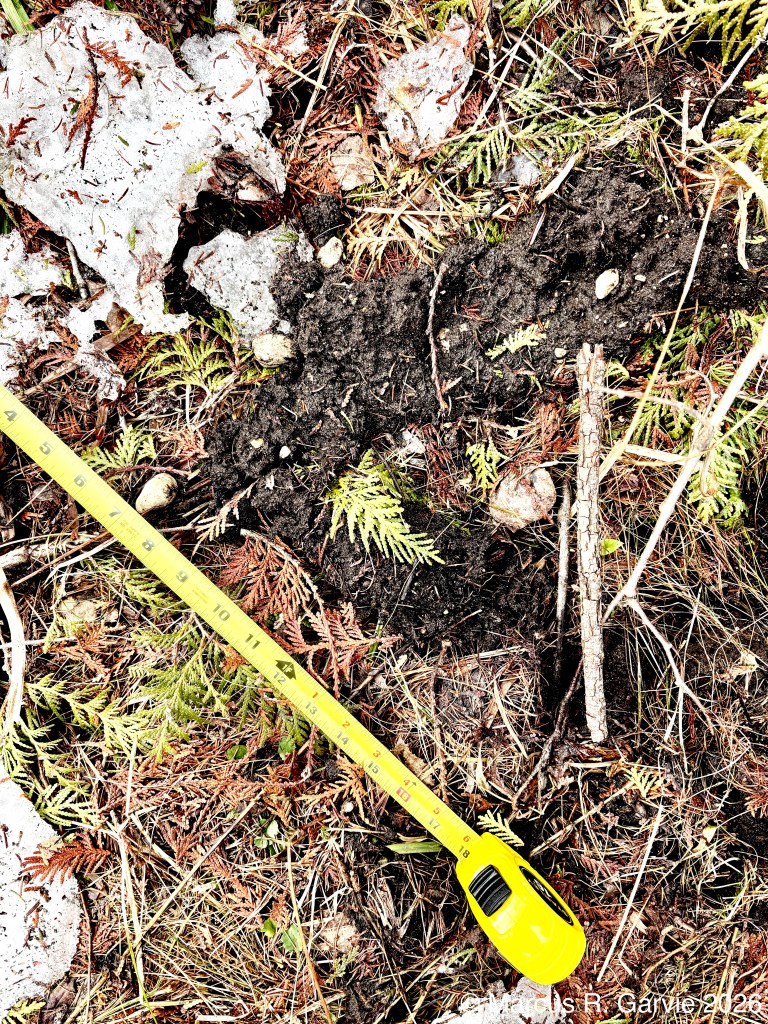
See Wikipedia (https://en.wikipedia.org/wiki/Star-nosed_mole) for more information.
Finally, on the way back, we entered an area that had recently been cleared. The wood inside some of the cut trees was crumbly where Carpenter ants had made galleries:
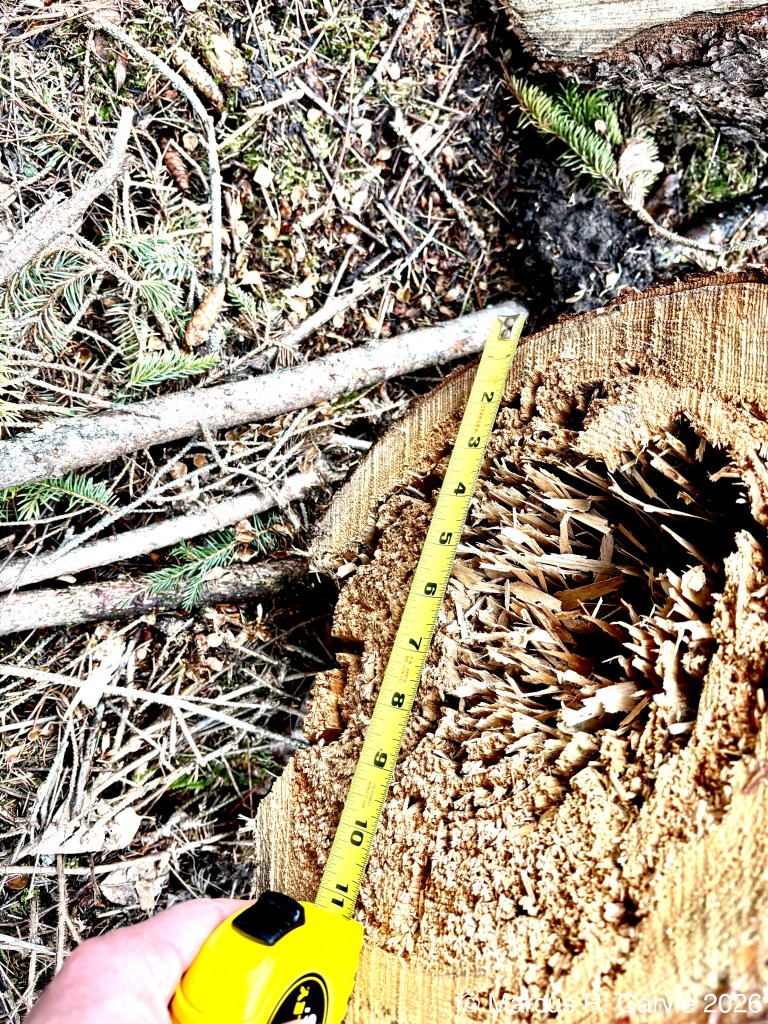
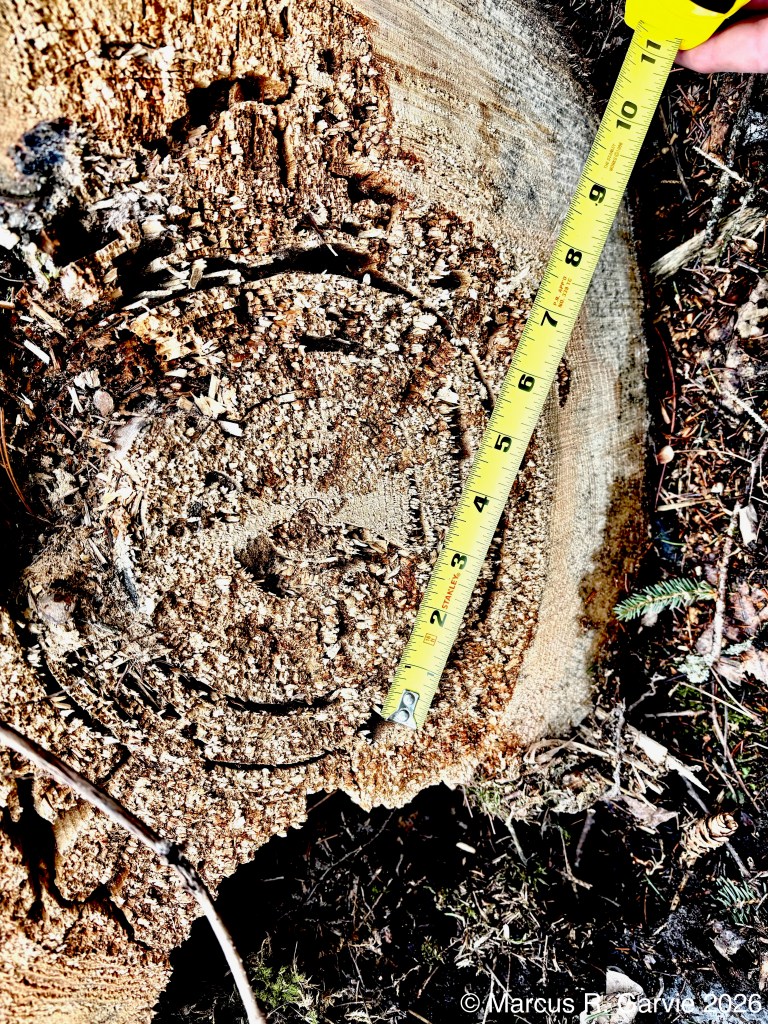
I neglected to check what tree species this was. However, carpenter ants (Camponotus spp.) do not usually target one particular tree species. Rather, they do not eat wood, but excavate smooth galleries in dead, rotting, or moisture-damaged wood, including standing trees, hollow trees, dead limbs, stumps, and logs. Their parent nest is often in damp, decayed wood, commonly in cavities of hardwoods but sometimes in softwoods, and they may also infest live, dead, or fallen trees wherever there is sufficient rot and moisture. Unlike Formica ants, carpenter ants do not build soil mounds. See
https://ohioline.osu.edu/factsheet/HYG-2063?utm_source=chatgpt.com.
 Field Notes of a Tracker
Leave a comment