Date: March 15, 2025
Place: Guelph, ON.
References:
– [1] ‘Mammal Tracks & Sign: A Guide to North American Species’, Mark Elbroch, Stackpole Books (1st Ed.), 2003
– [2] ‘Tracks & Sign of Insects and Other Invertebrates’, Charley Eiseman and Noah Charney, Stackpole Books (1st Ed.), 2010
Quick record of observations:
With the recent mild weather, I was excited to get out tracking along the Speed River. This particular tracking trip yielded some interesting (unsolved) questions and some great mink tracks.
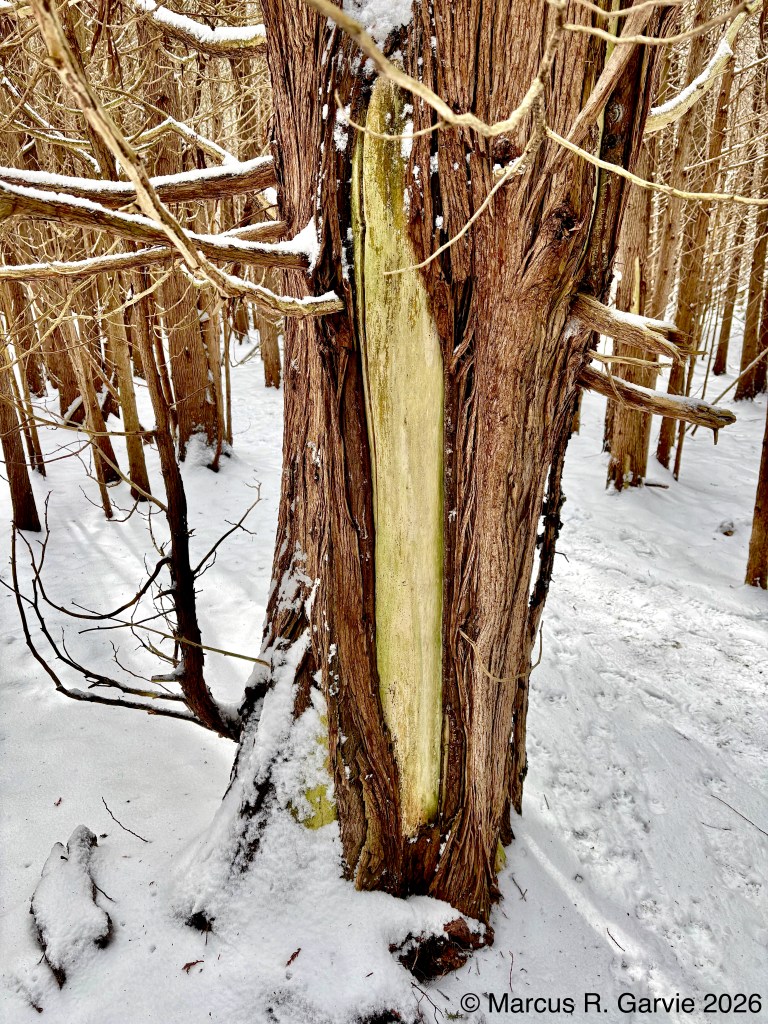
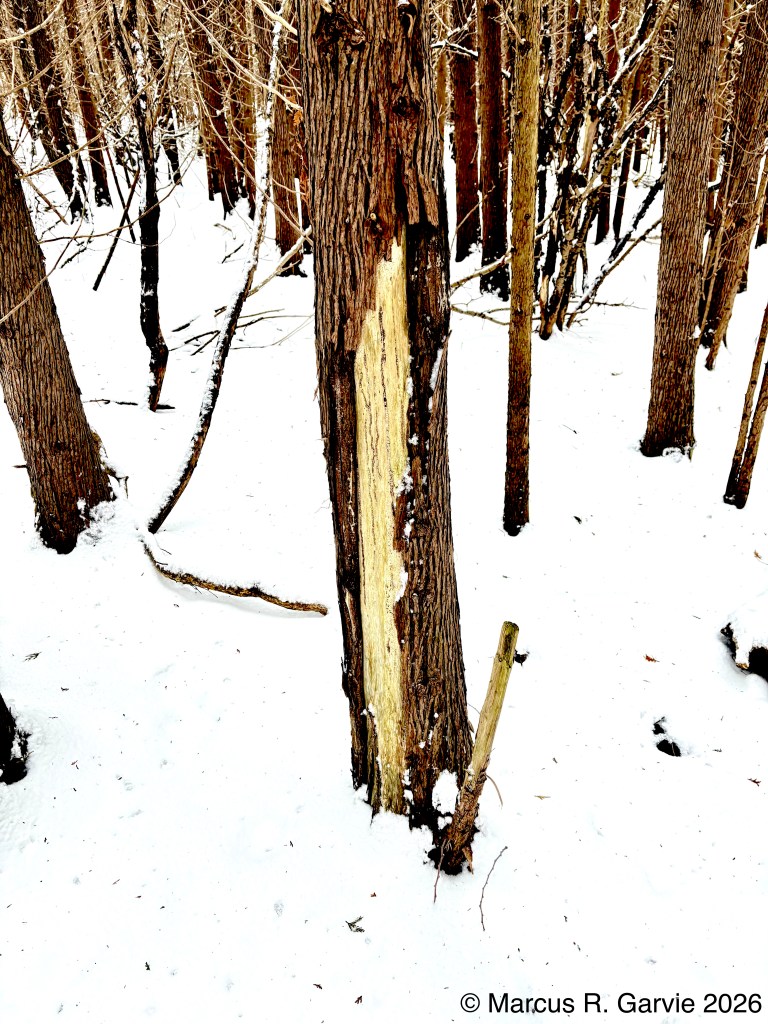
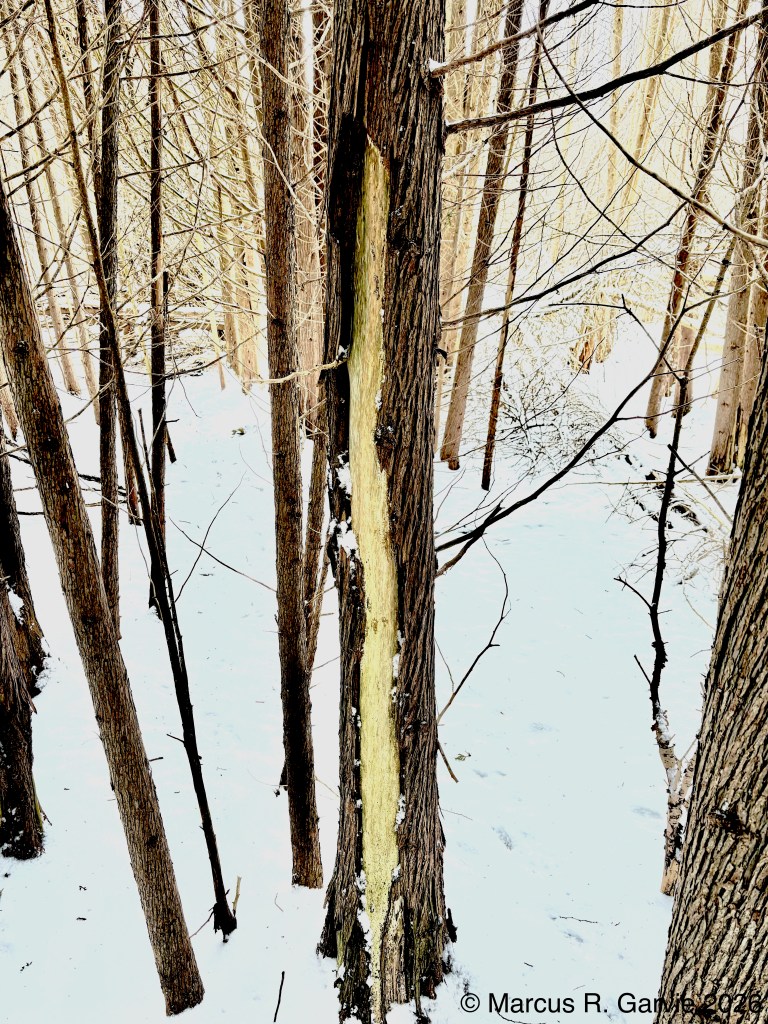
En route to the river’s edge, I passed through a dense cedar forest. Numerous trees showed damage over large sections of bark. What could have caused this? The damage looks somewhat like the bark stripping bears make when feeding on cambium, but we do not have bears in Guelph. Alexis Burnett (Earth Tracks) asked how close I was to the water, suggesting that the damage might instead be due to flooding.
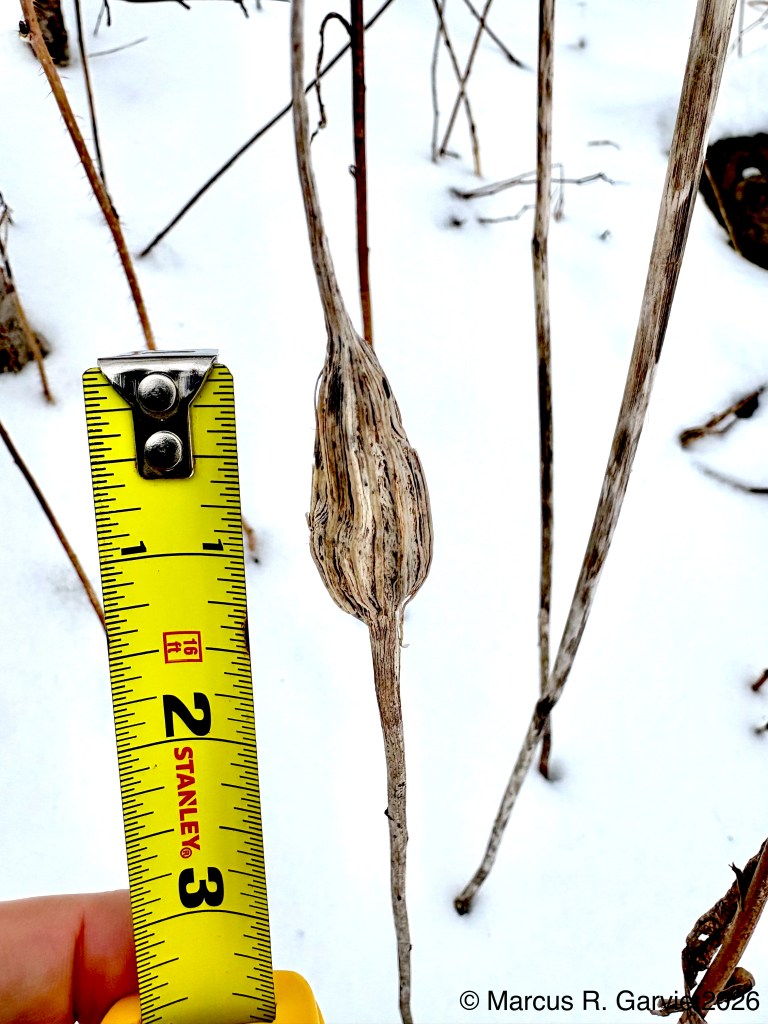
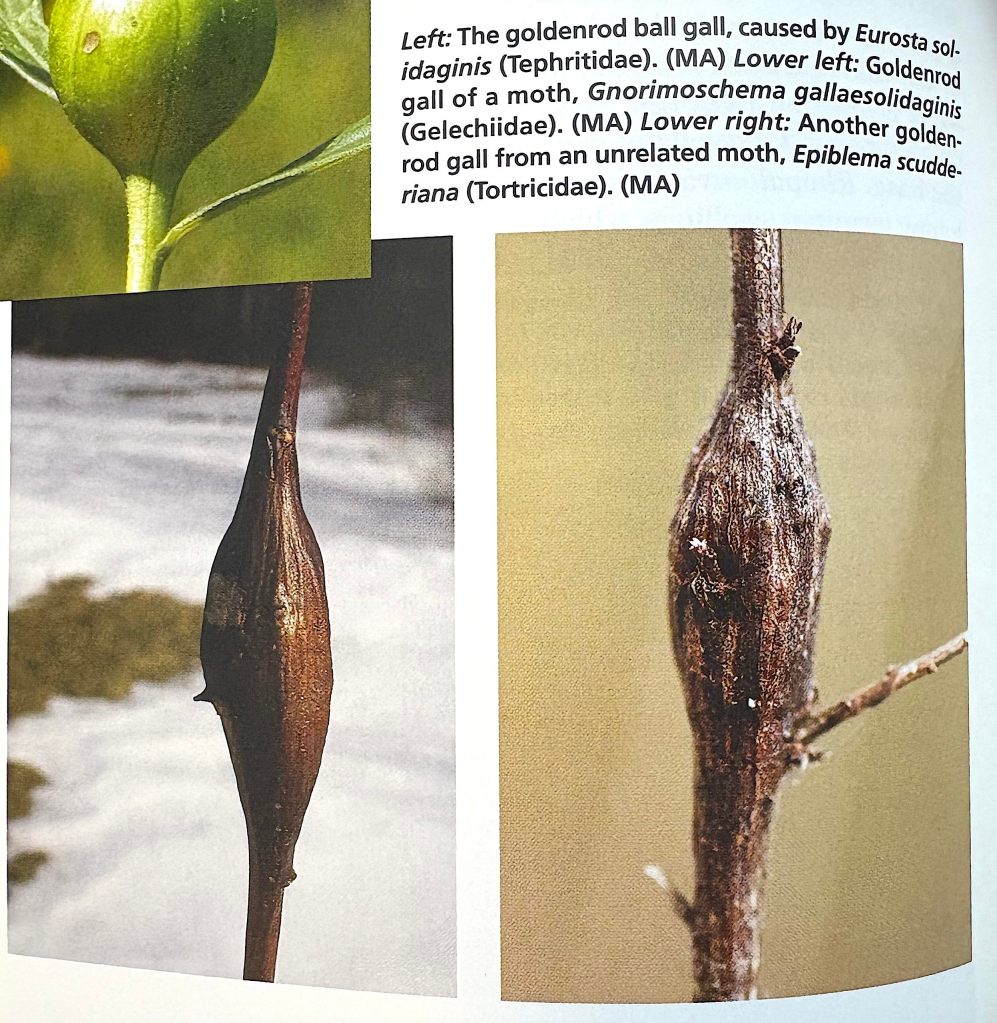
I came to an open area where a stream creates a wet patch of ground before emptying into the Speed River, and there I found a goldenrod gall. I had been looking for the Goldenrod Elliptical Gall for some time, but I was confused because it was supposed to be smooth, whereas the one I found was rough or ribbed. According to [2, p. 398], the one with the rough “skin” is Epiblema scudderiana. The smooth one has an even more unpronounceable name; see below.
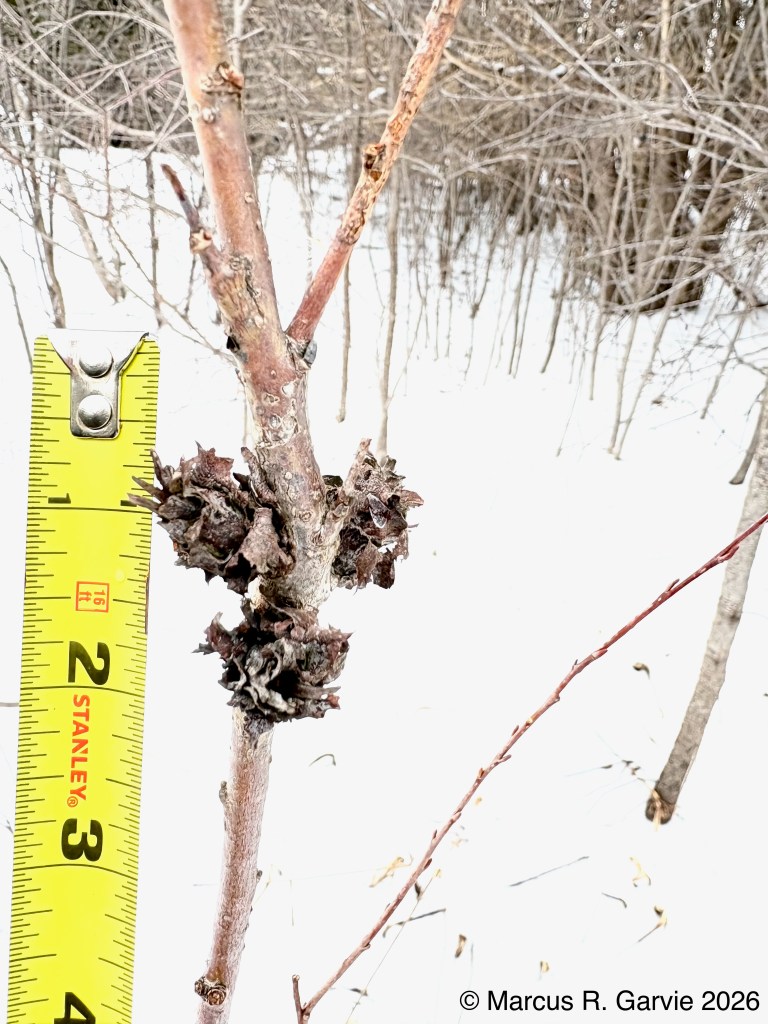
I found what I can only assume is another gall, and I could not find anything in books or online that looked similar. Finally, someone in the Facebook group CyberTracker Specialist Evaluation Study Buddies suggested that it might be a Willow Rosette Gall Midge, see https://www.inaturalist.org/taxa/83458-Rabdophaga-salicisbrassicoides?fbclid=IwY2xjawQuKaZleHRuA2FlbQIxMABicmlkETFHaVMxeHZ4aW9ZczQ1YW9Pc3J0YwZhcHBfaWQQMjIyMDM5MTc4ODIwMDg5MgABHpX7HafDcoApbZU9ZZckCl5gLQpic5EOXSJK-pLIie3JP7pcc47btcVMeL8f_aem_ZRDc-LAQGkwBcmeEQCpYnQ
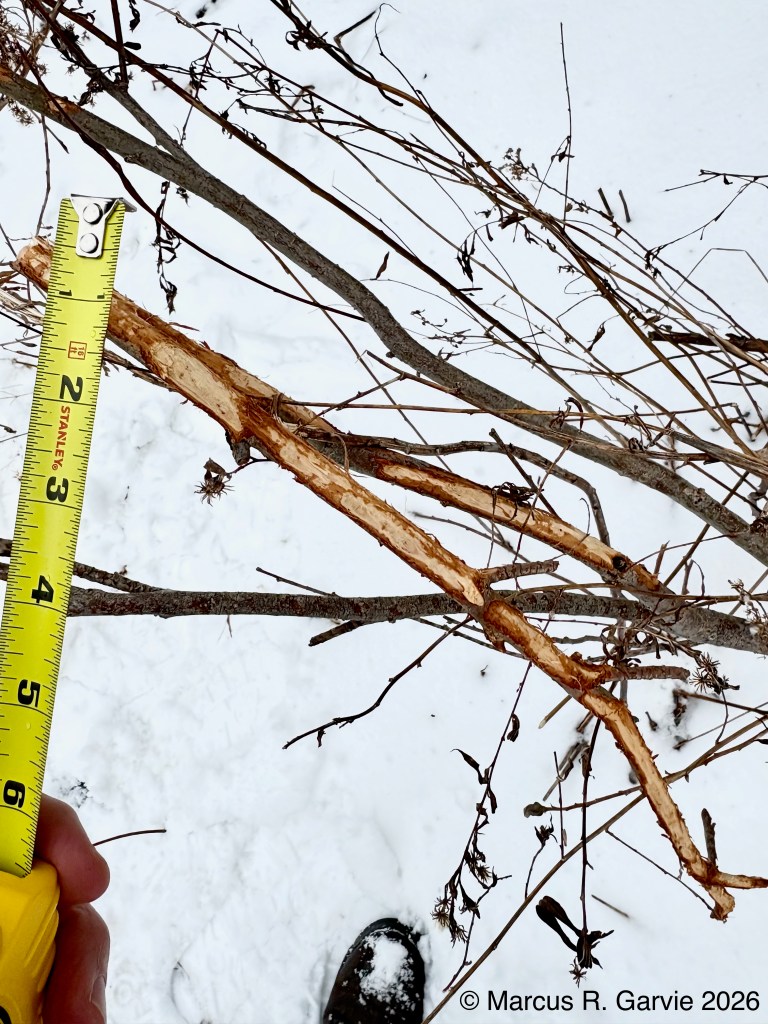
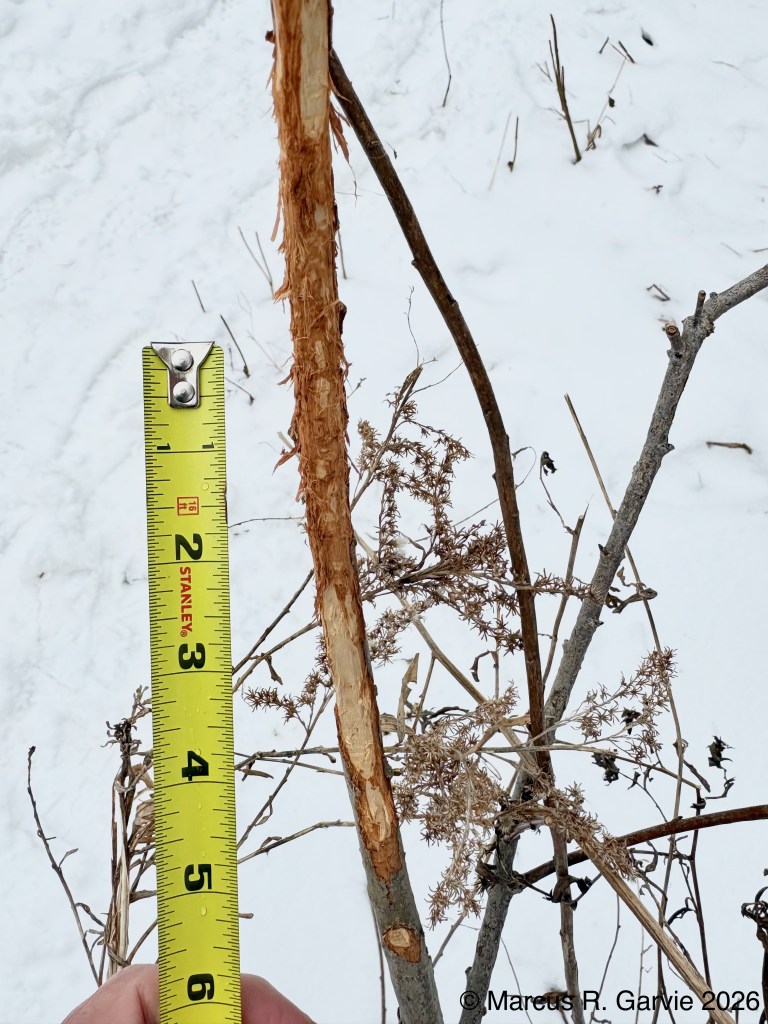
At the same location, I also found a small shrub whose branch bark had been browsed. This was somewhat puzzling because the bite marks extended deeper than the cambium layer. That type of feeding is usually associated with lagomorphs (rabbits and hares), but in this case, the sign was too high off the ground for them to have reached.
Nearby was a beautiful bird’s nest, which I think was likely made by an American Goldfinch:
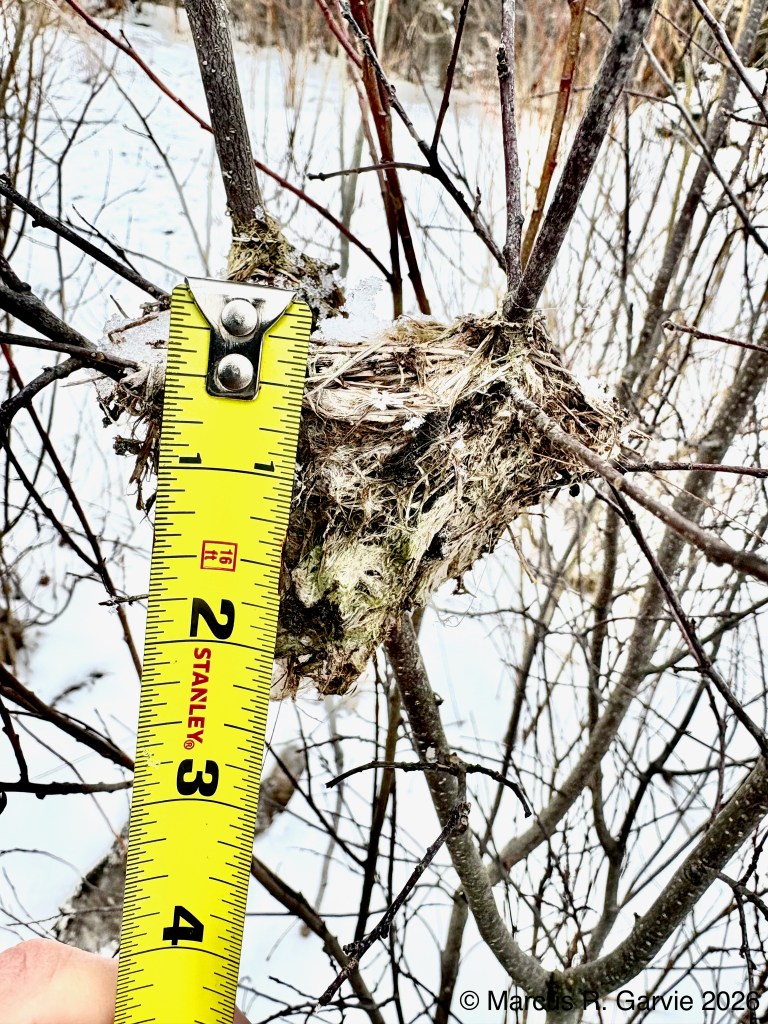
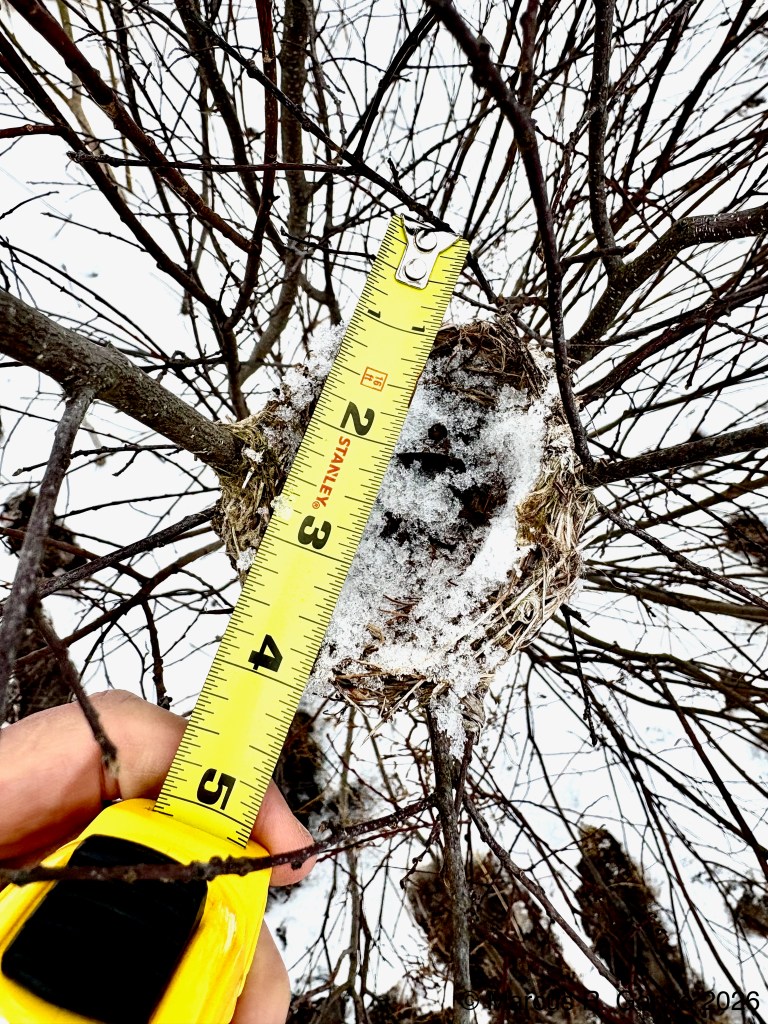
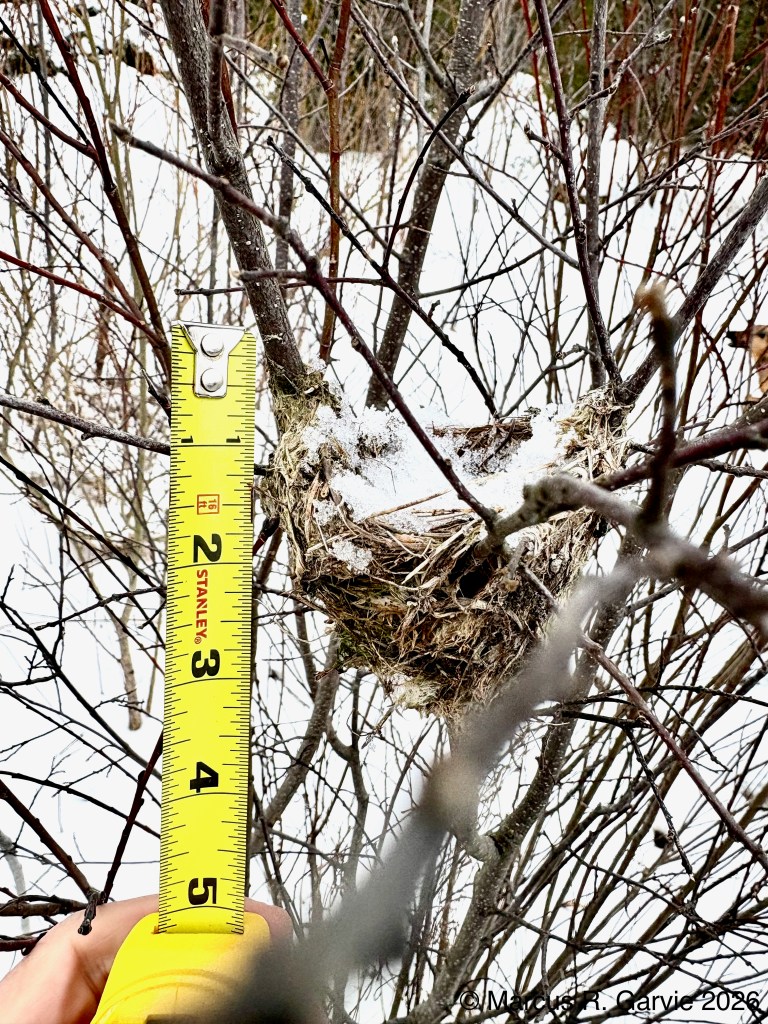
American Goldfinch nests are small (approx. 3 inches in diameter), compact open cups of plant fibers, spider silk, and plant down (thistle or milkweed), usually 4–10 ft up in shrubs or tree forks and woven tightly enough to be watertight.
When I finally reached the river’s edge, I saw the clear tracks of a larger member of the weasel family doing a 2 x 2 bound. The measurements are consistent with mink. I was reminded of something I was told at a recent Track & Sign certification in Parry Sound: “Mink sink and marten float.” These tracks show lots of detail because (a) mink are relatively heavy compared to their feet size, and (b) compared with fisher and marten, they have relatively little fur on their feet. Further support for this identification comes from the fact that we do not have marten or fisher in Guelph, and mink spend much of their time in or near water.
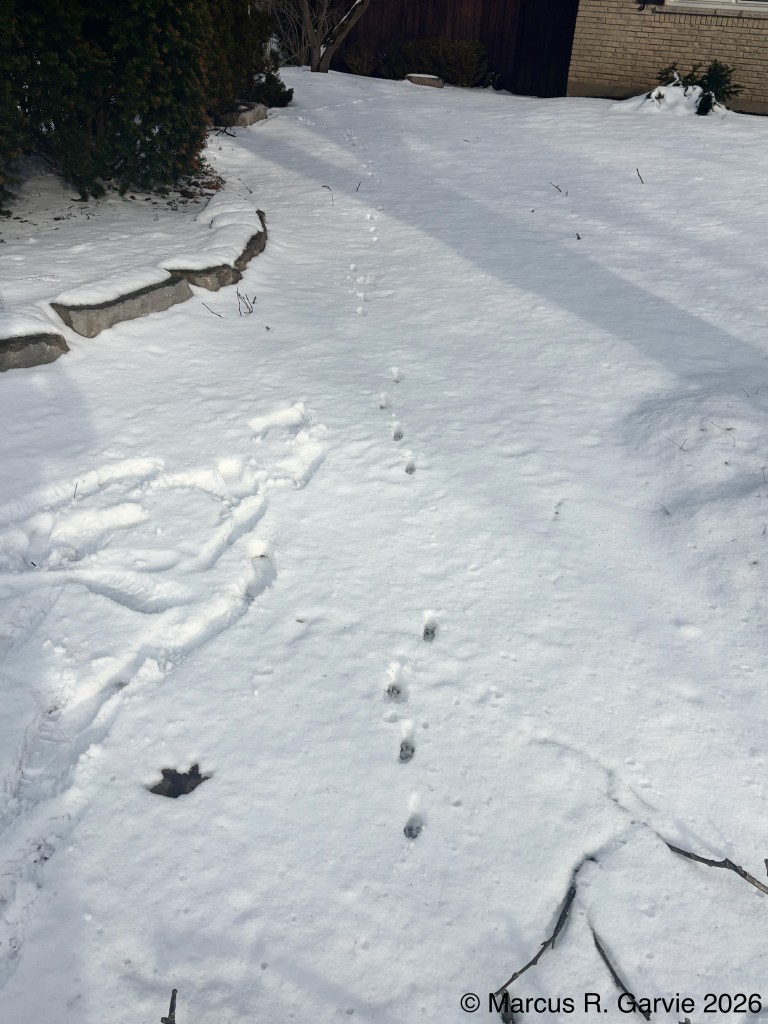
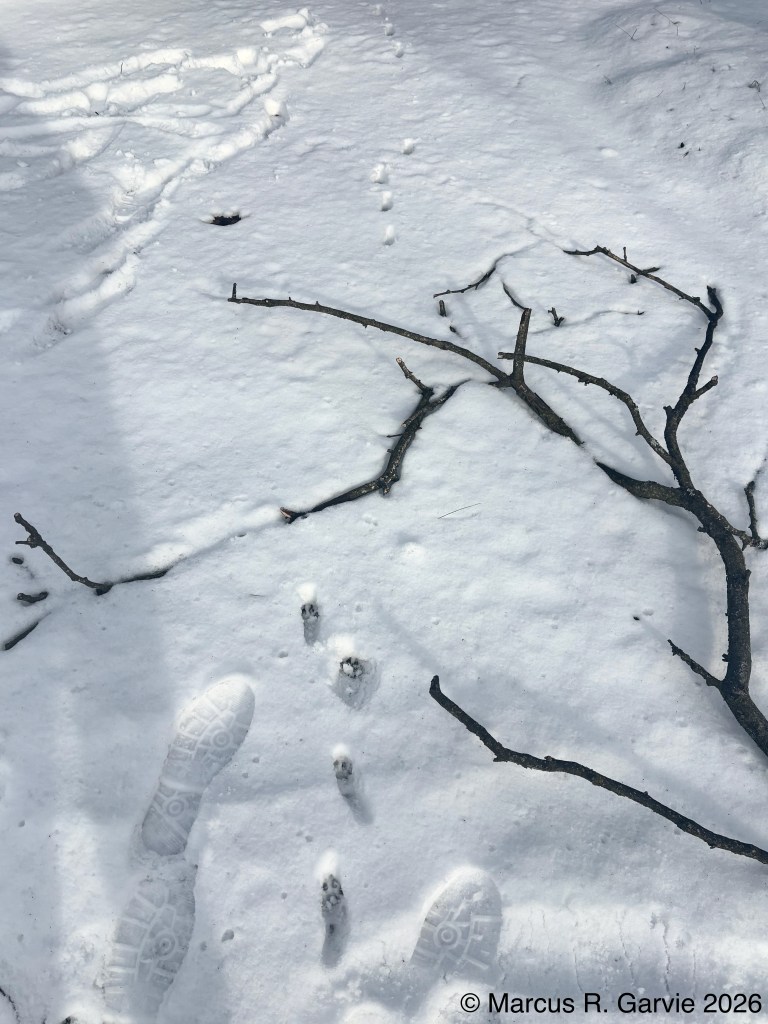
Once I reached home, my final observation was of my cat, Ash, galloping through the snow. I have often seen the tracks of domestic dogs in this gait, but not those of a cat.
 Field Notes of a Tracker
Leave a comment