Date: January 24, 2026
Place: The Thames River edge, located in southwestern Ontario, Canada, near the town of Woodstock.
Weather: fairly fresh deep snow, cold
References:
– [1] ‘Mammal Tracks & Sign: A Guide to North American Species’, Mark Elbroch, Stackpole Books (1st Edit), 2003
Observations:
It was late afternoon when I started hiking through the deep snow along the edge of the Thames River. The path followed the riverbank, and with temperatures around −10 °C, I soon found myself walking on mostly undisturbed snow. Because the snowfall was fresh, I initially saw very few tracks, just the bounding patterns of gray squirrels.
Near the river edge, I came across a pile of snail shells next to a small hole in the snow. According to the iNaturalist app, these are likely Brown-lipped or White-lipped land snails. Here are two photos of what I saw.
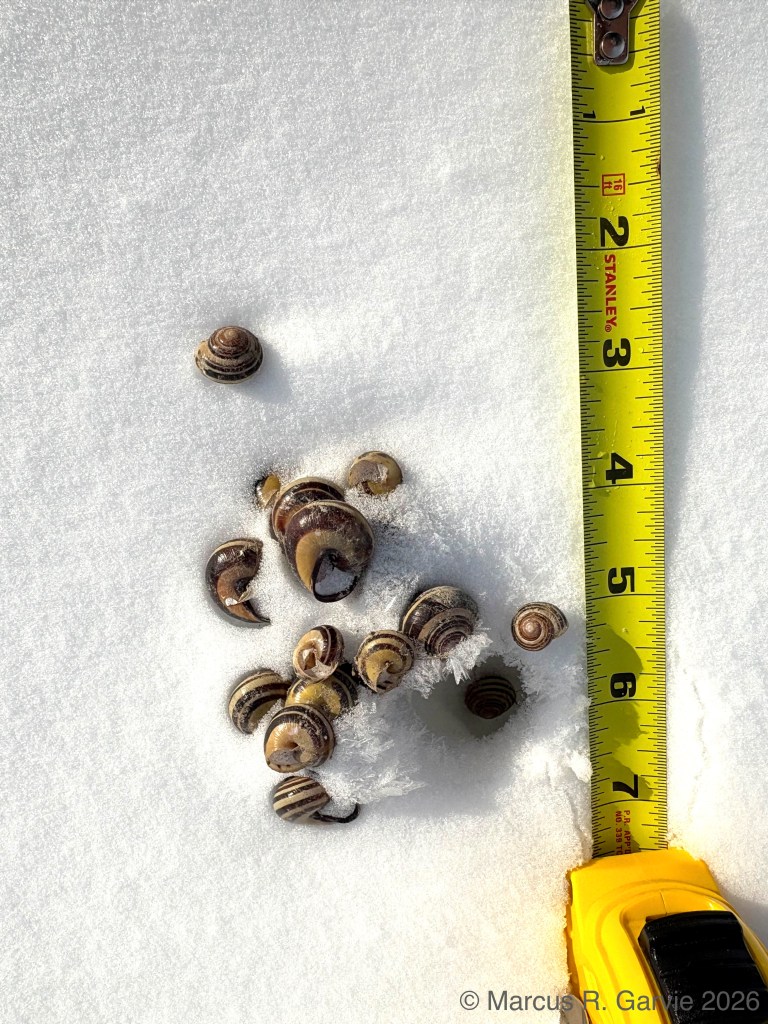
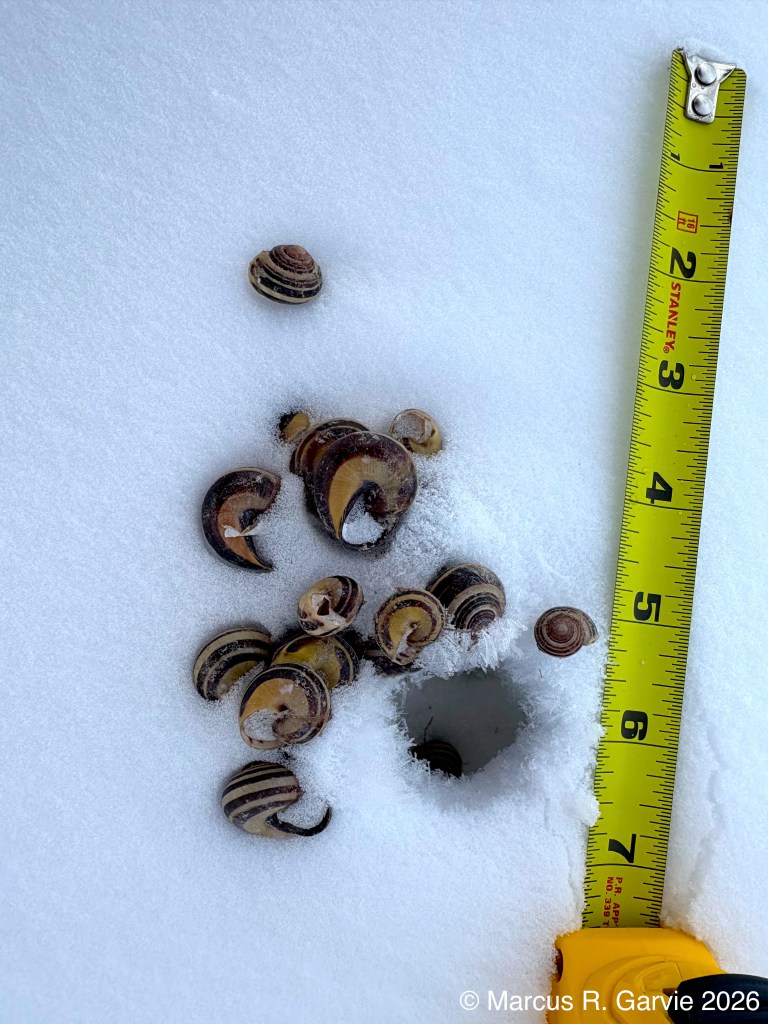
The diameter of the (inner) hole was about the size of my pinky, which is approximately half an inch. I know that this is consistent with a shrew. Indeed, I found a scientific paper that appears to describe what I found. See
https://www.jstor.org/stable/2454817?utm_source=chatgpt.com&seq=1
In this paper, the author investigated mysterious heaps of empty snail shells found on snow near small burrow openings. Through field trapping and direct observation, he determined that short-tailed shrews (Blarina brevicauda) were dragging live snails out of the ground, consuming them, and then leaving the empty shells piled beside their burrow entrances.
I followed the trail into a forested area with numerous trails of smaller mammals in the snow. I was particularly impressed with the trail of a mouse, where impressions of the long tail and body are clearly visible.
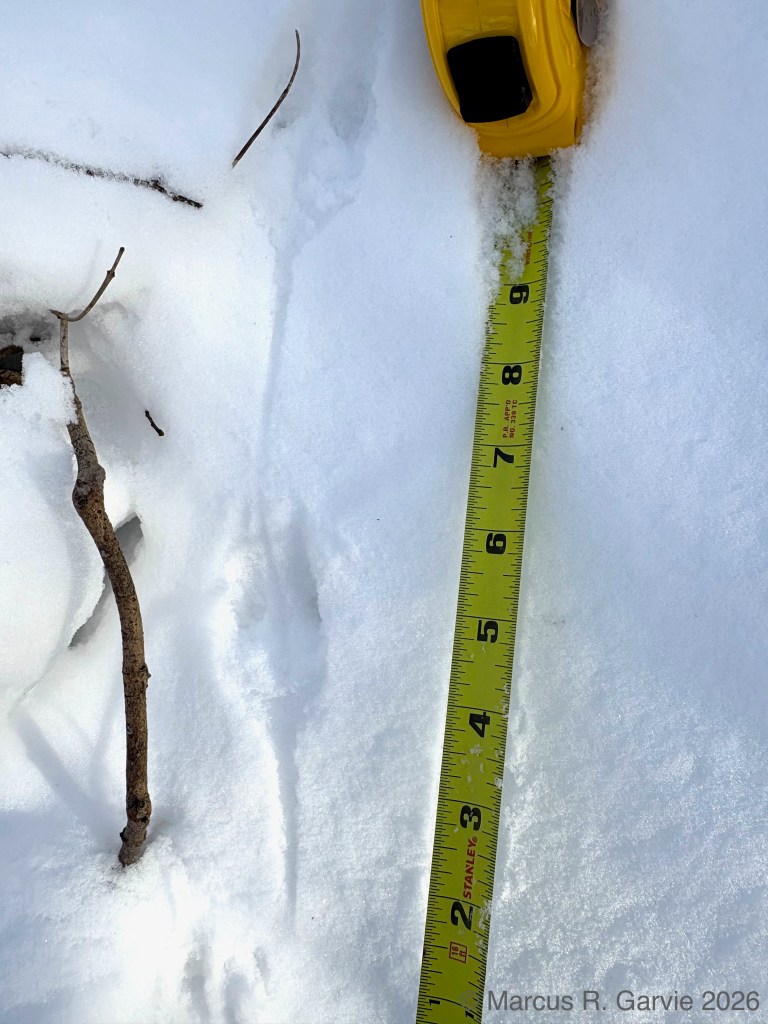
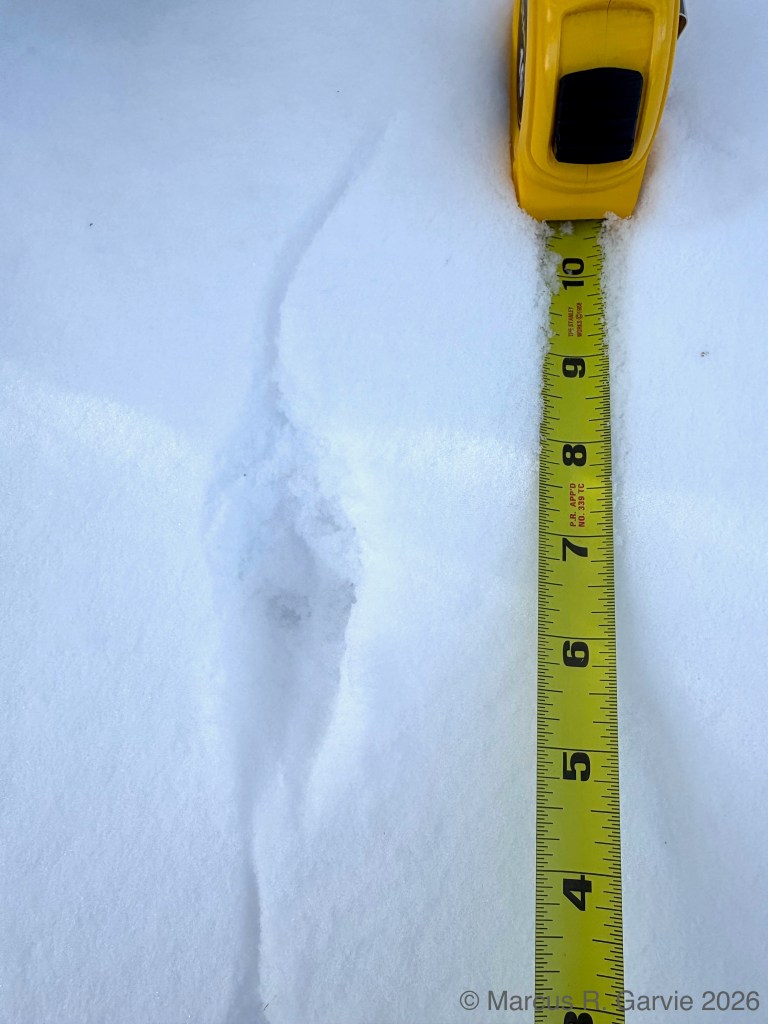
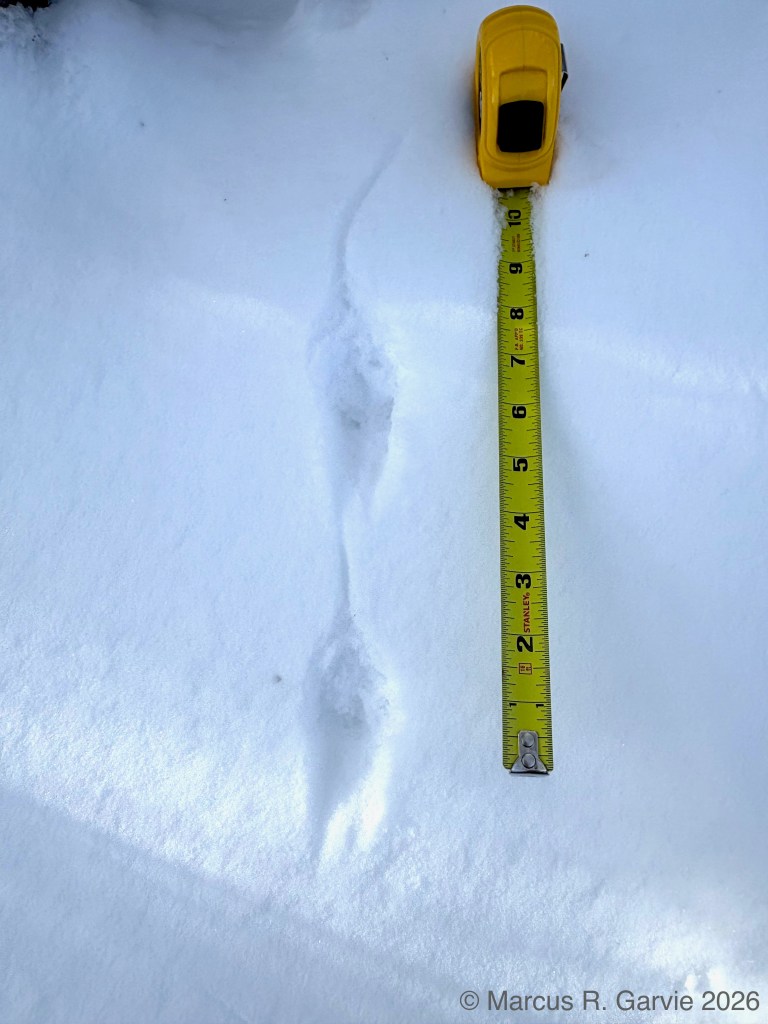
There were also many trails of bounding mice displaying more typical trail patterns:
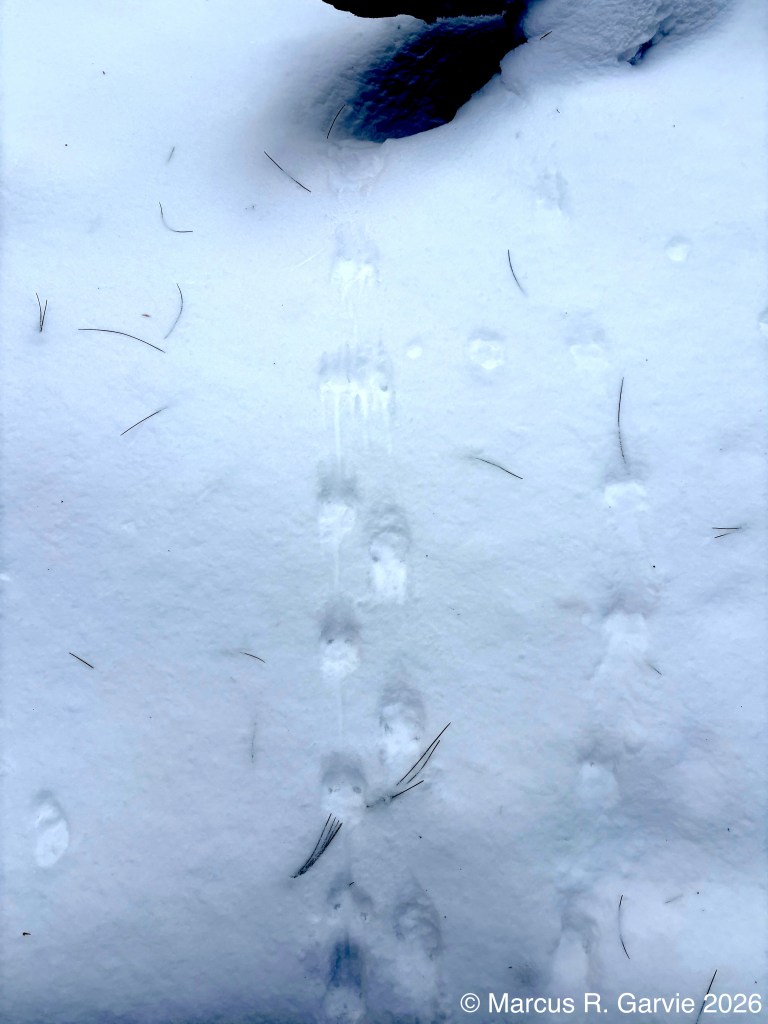
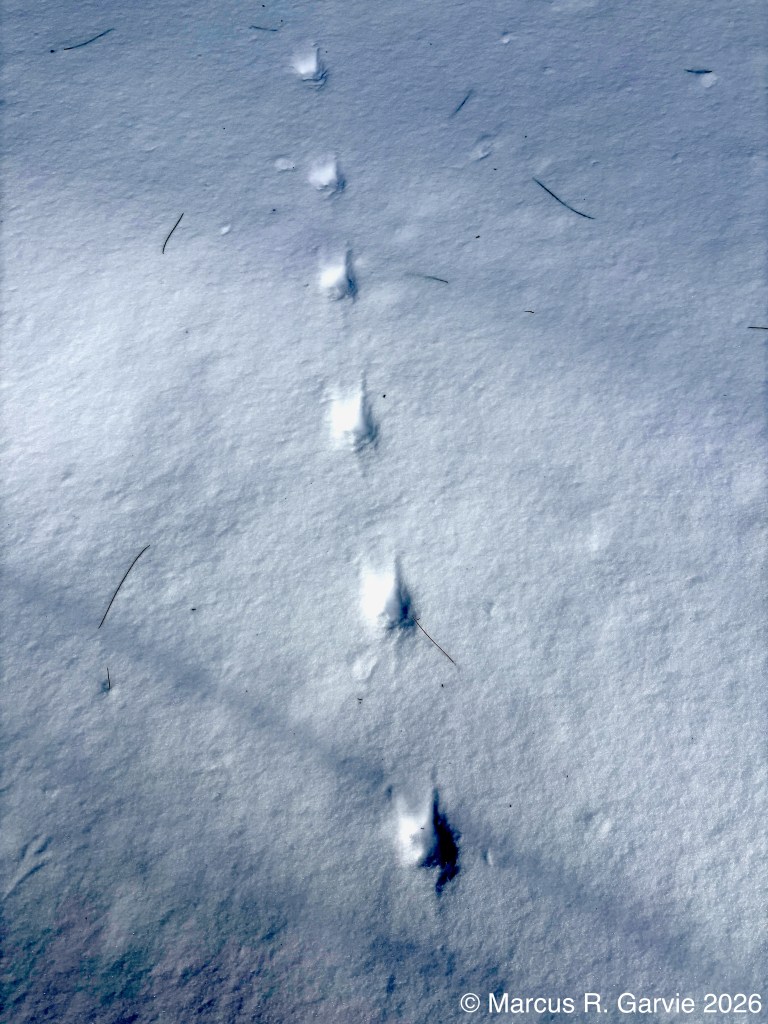
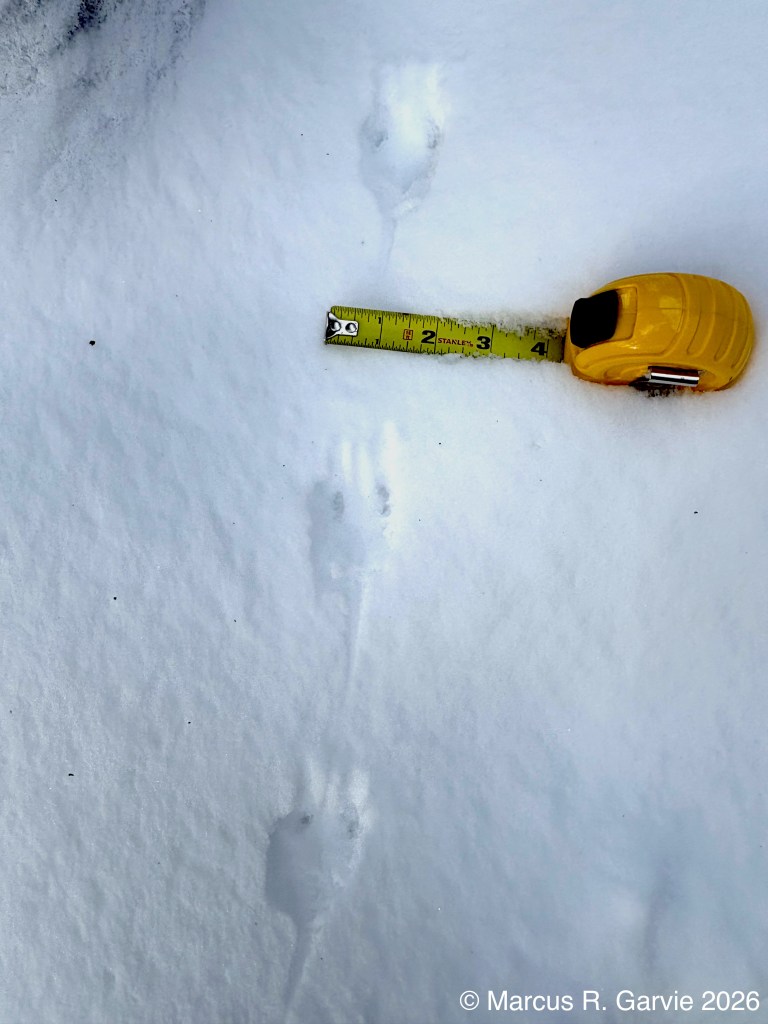
The trail width and the presence of tail impressions again suggest a mouse rather than a vole or shrew. In the last photo, we can see numerous trails, presumably where the mouse repeatedly left and returned to its den beneath a hollow tree.
One of the trails was noticeably narrower than the others. The trail width was about one inch. Could this have been made by a Short-tailed Shrew?
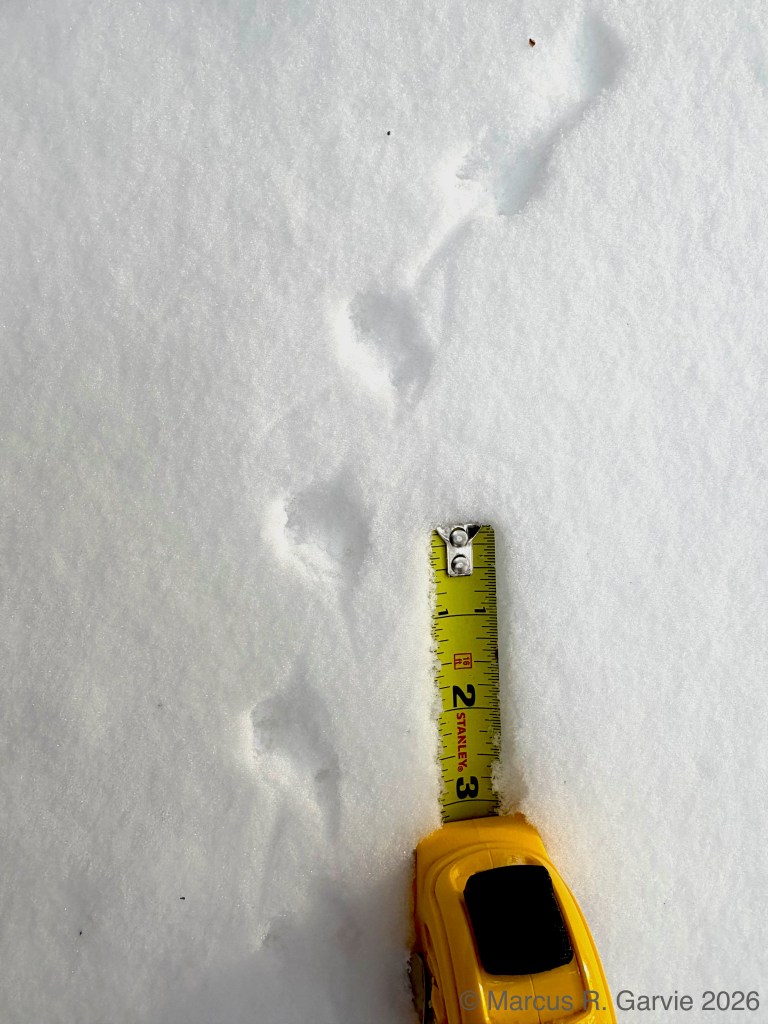
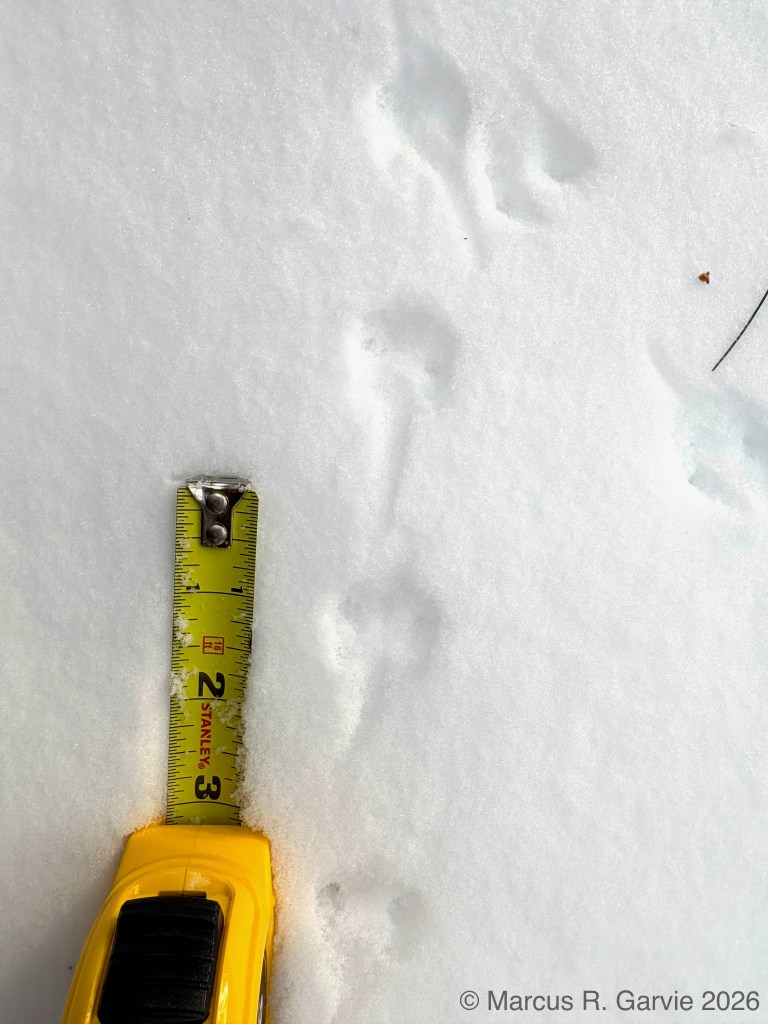
Perhaps this was simply a smaller mouse, as according to [1], in deeper snow Short-tailed Shrews tend to travel in a direct-register trot but may also use a 2 × 2 lope.
I was really hoping to observe the trail of one of the smaller weasels, and luckily, I was successful near a corrugated metal culvert pipe that allows a stream to flow into the lake.
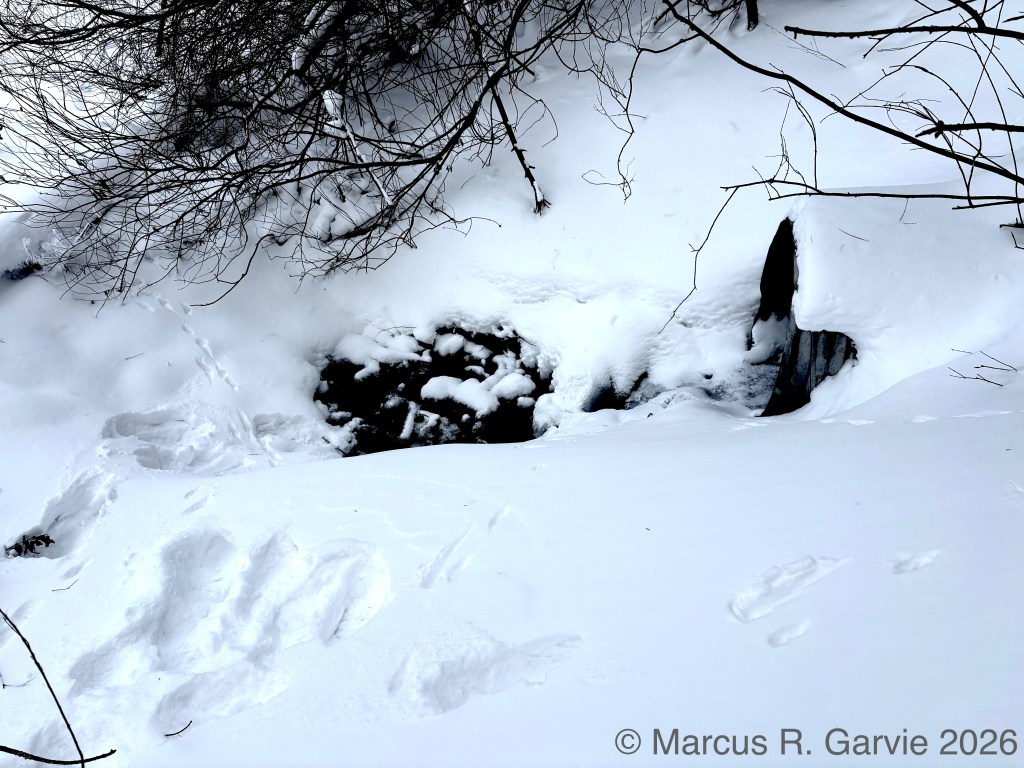
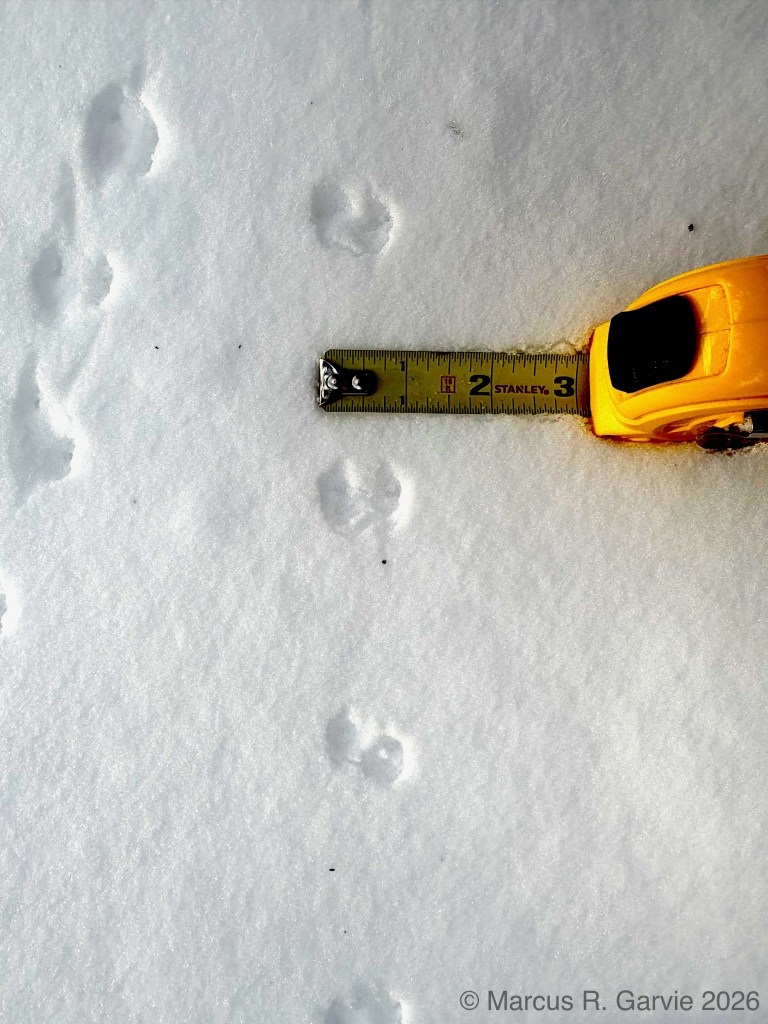
Here are some trails where the weasel is doing a 2 x 2 lope – the baseline gait for weasels in deep snow.
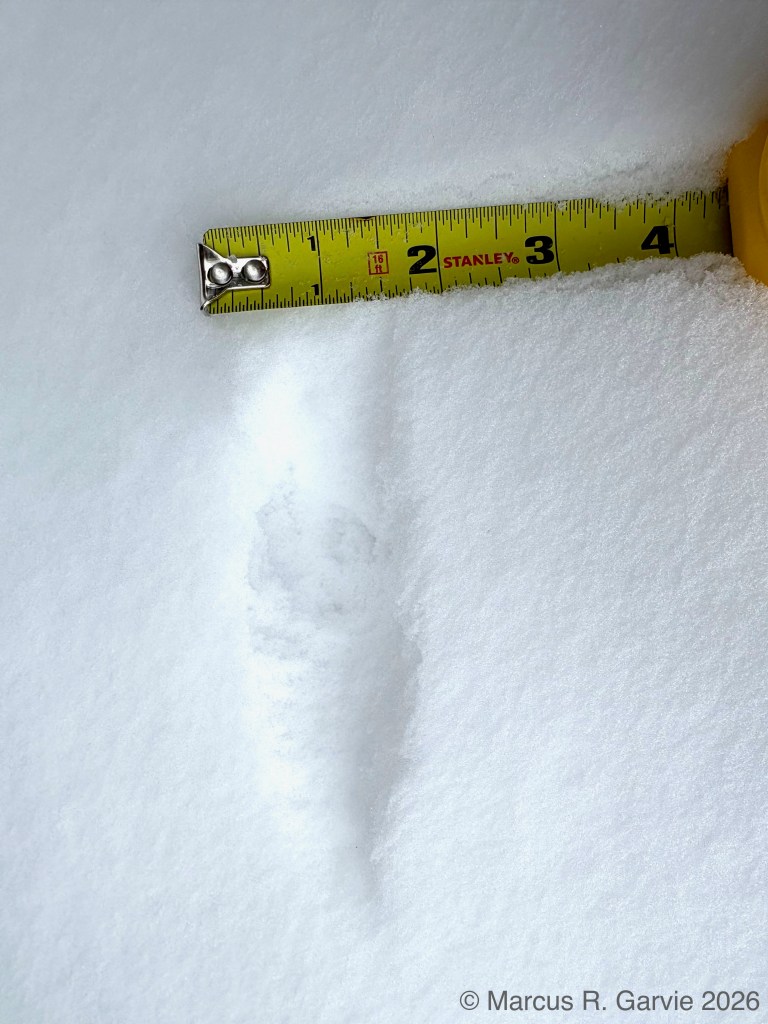
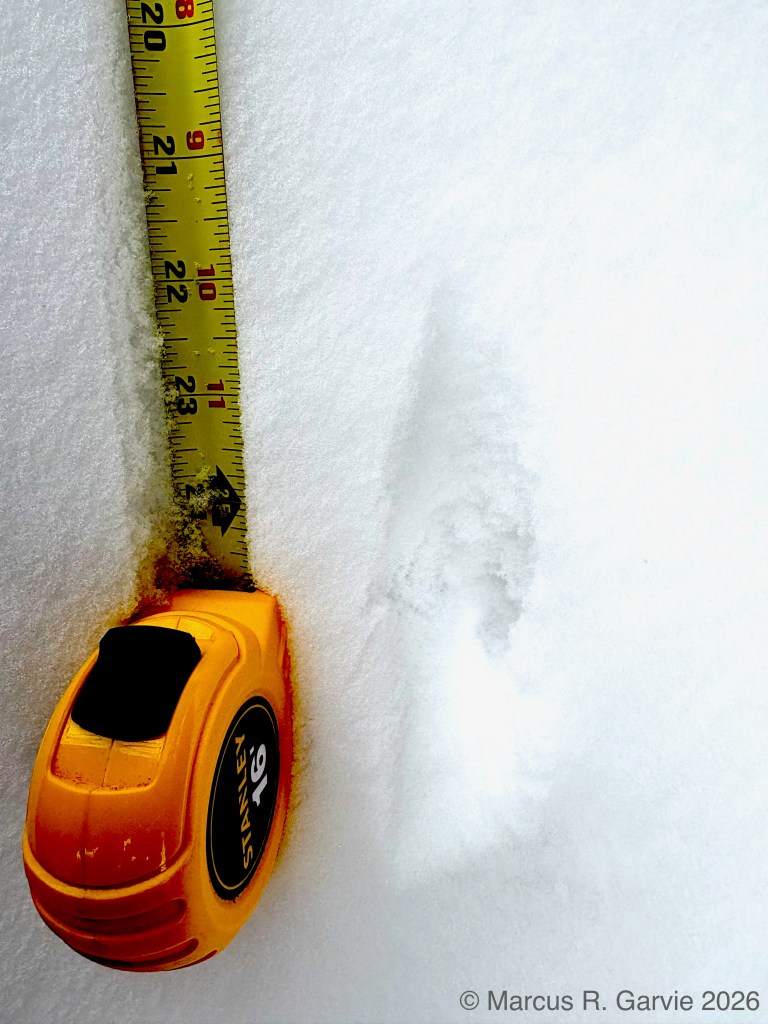
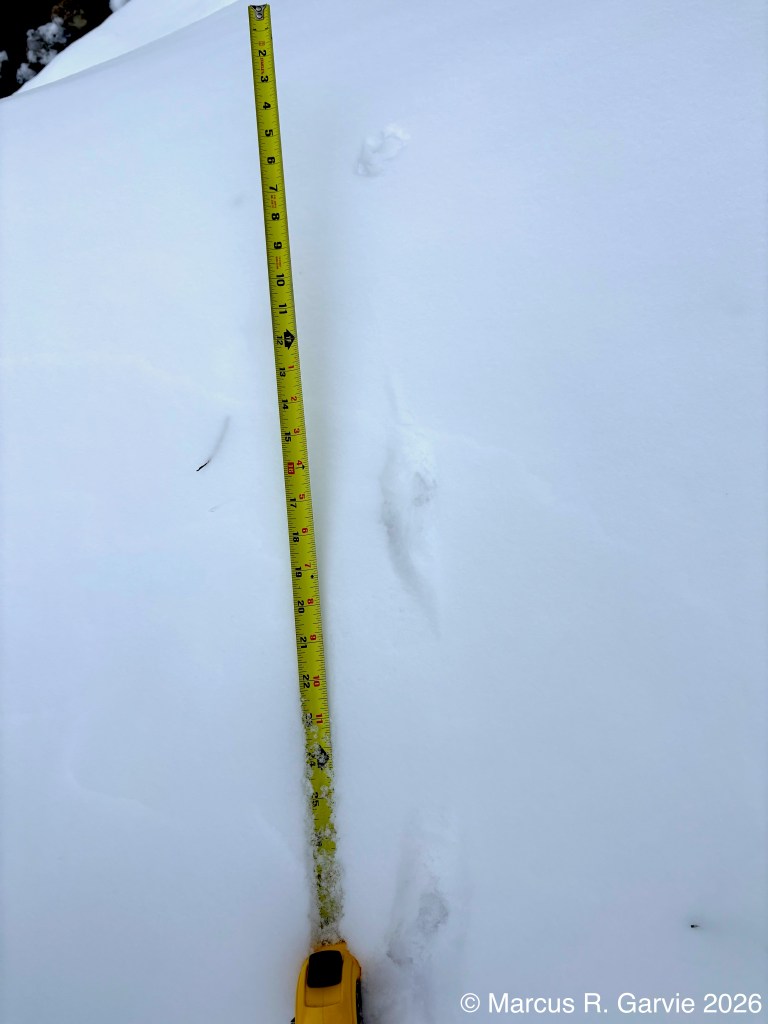
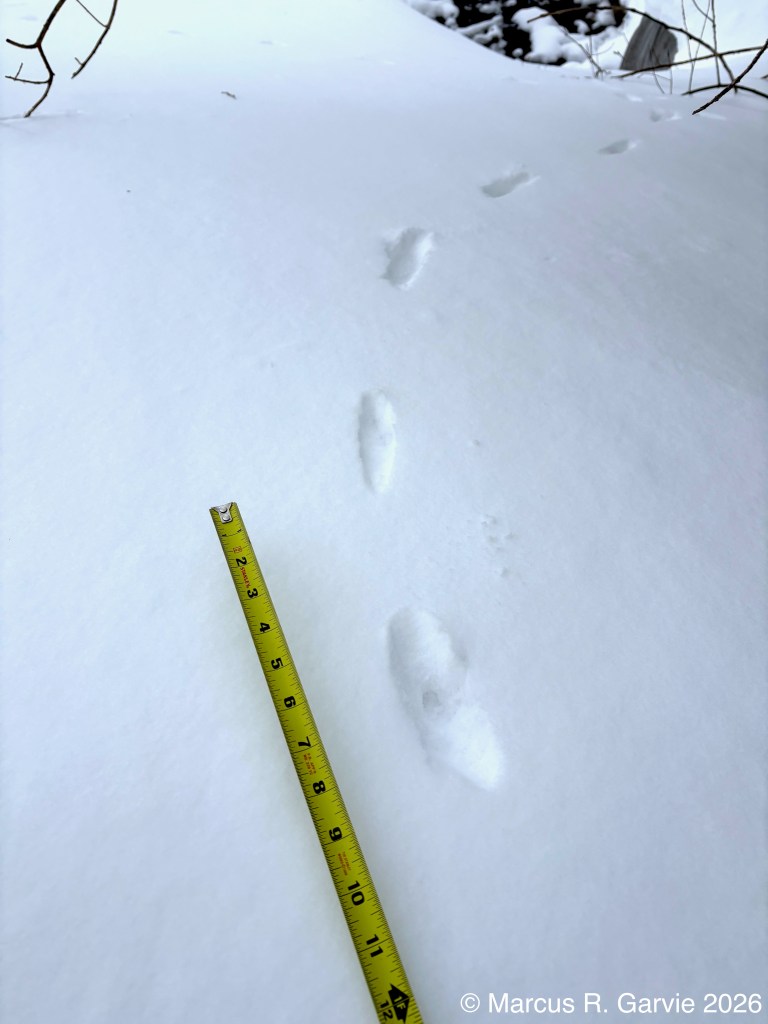
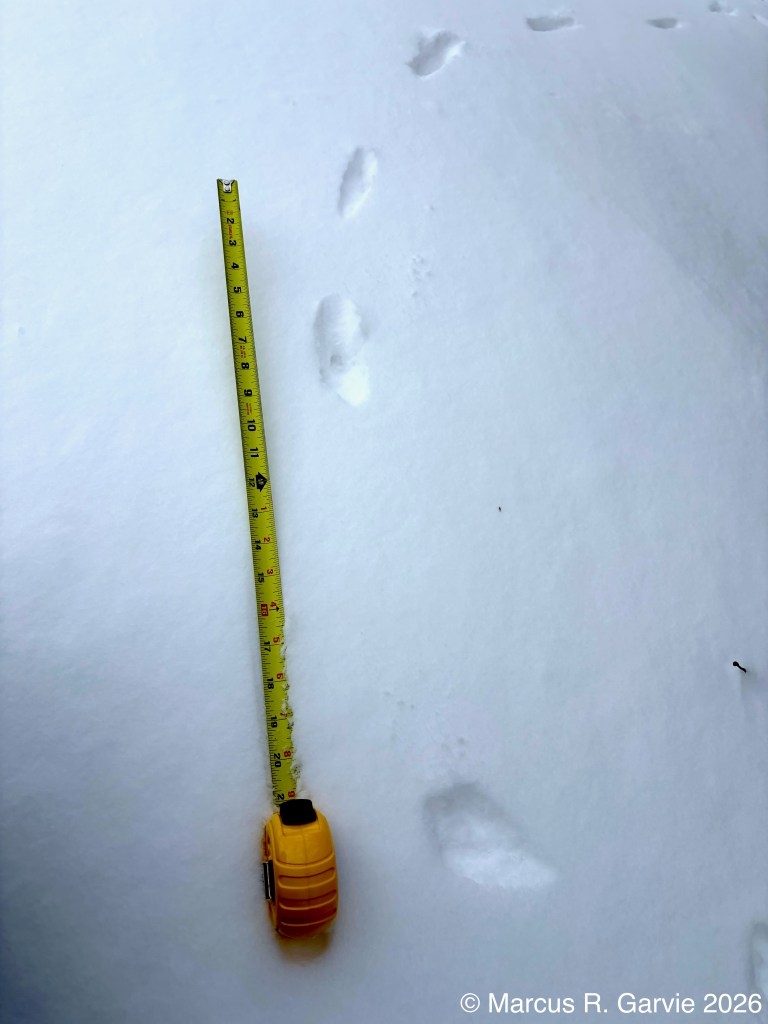
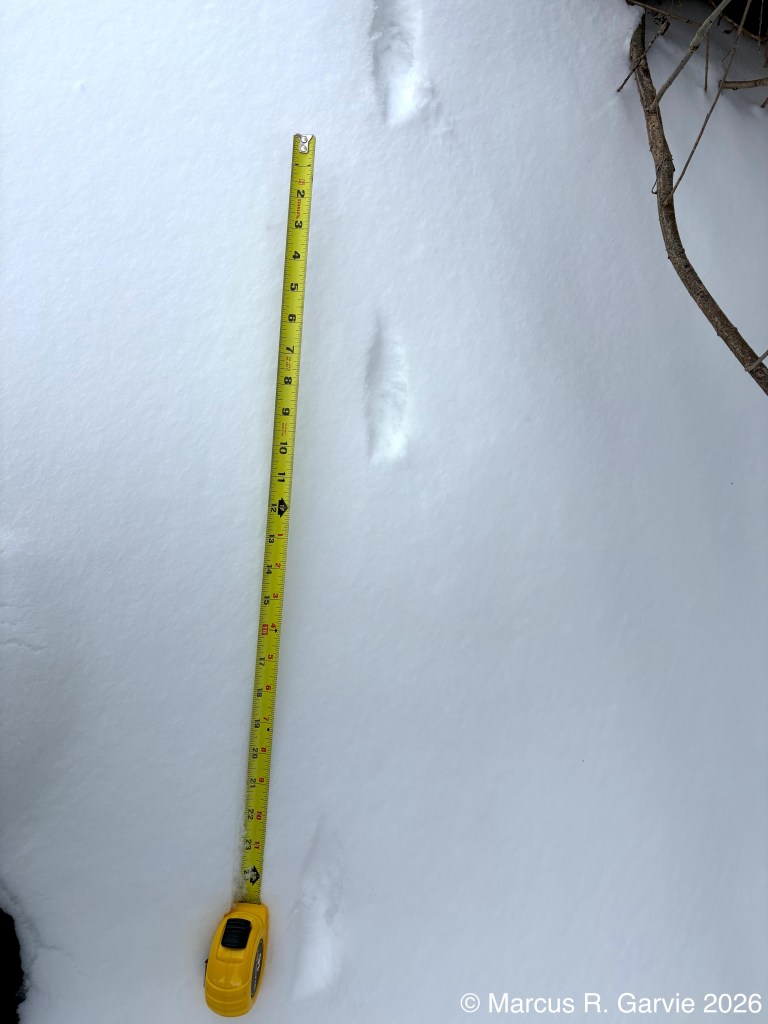
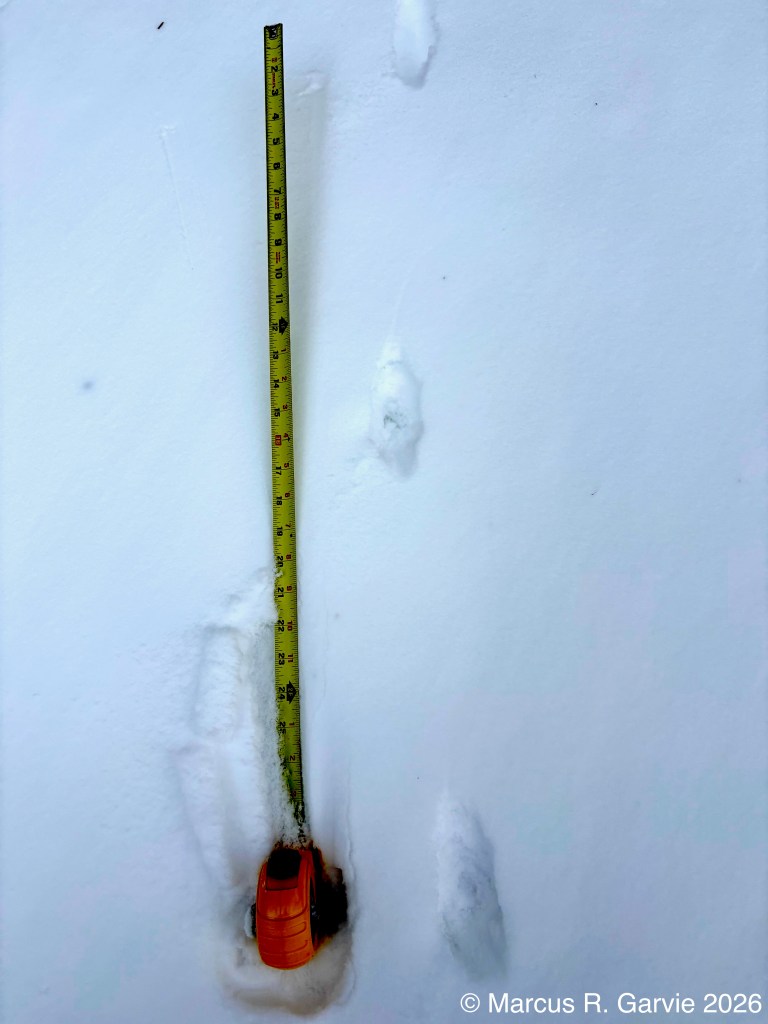
From these tracks, I made the following measurements in inches:
Trail width: 1 1/2, 1 1/4, 1 1/4, 1 3/4, 1 3/4
Stride: 12 1/2, 6 1/2, 11, 11
Based on the measurements in [1], these tracks seem more consistent with the Short-tailed Weasel (also known as the Ermine). The other possibility is a Long-tailed Weasel. At one point, on a steeper section of the bank leading down to the stream exiting the pipe, I could see where the weasel changed its gait to a bound, presumably to gain better traction.
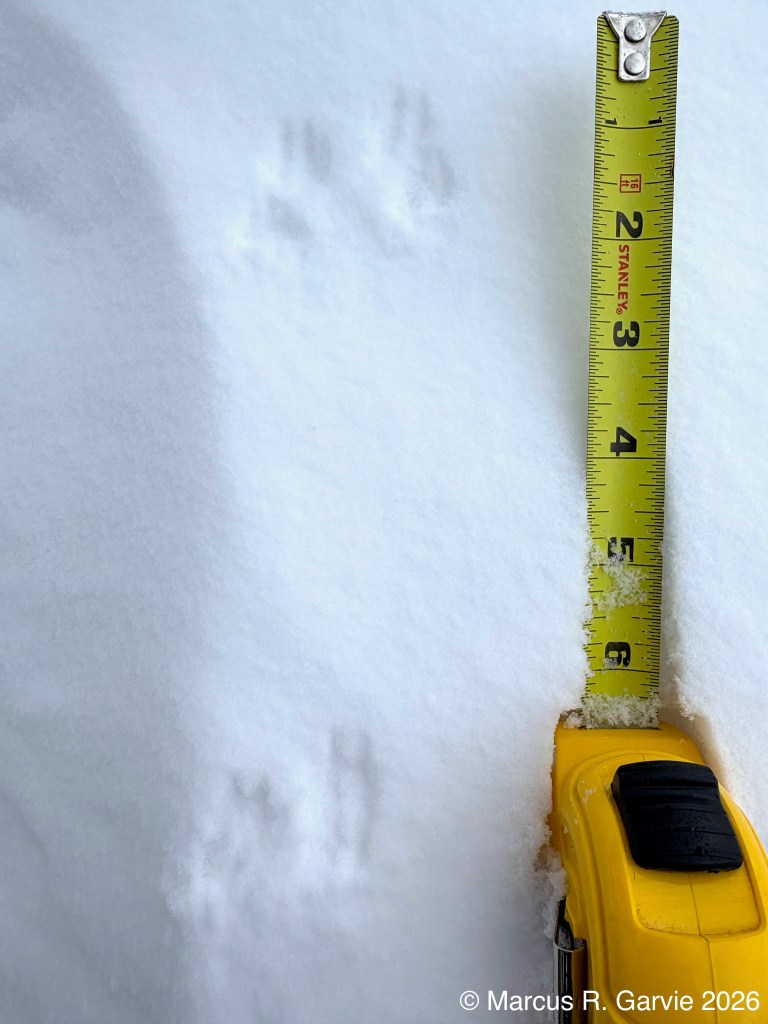
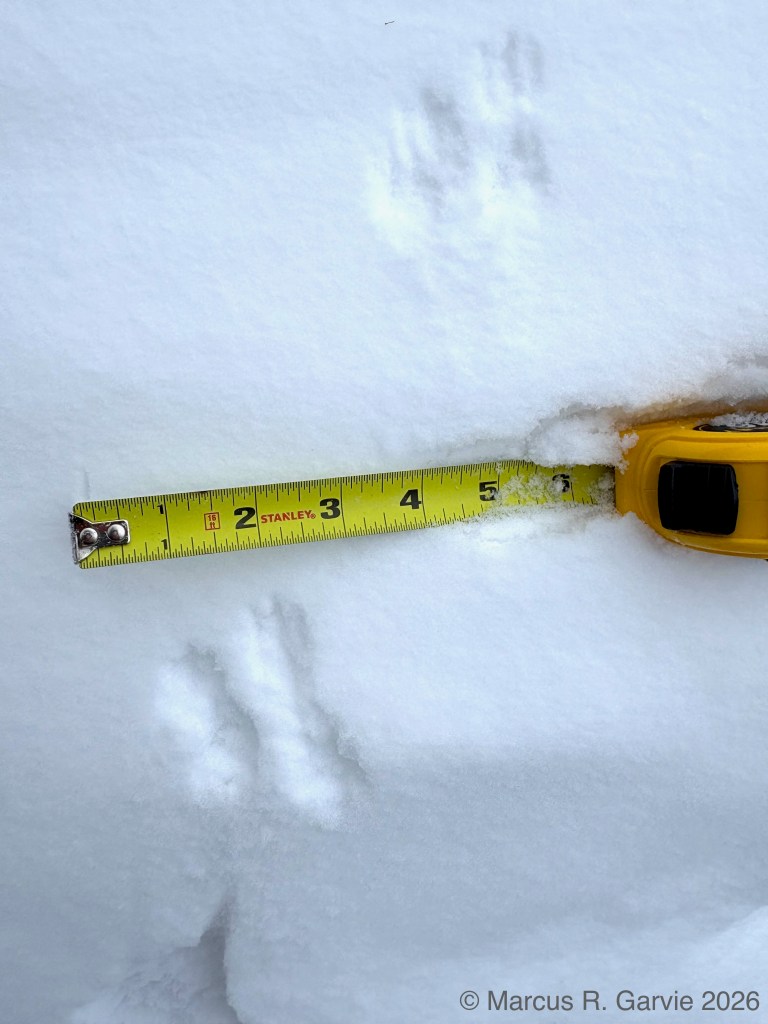
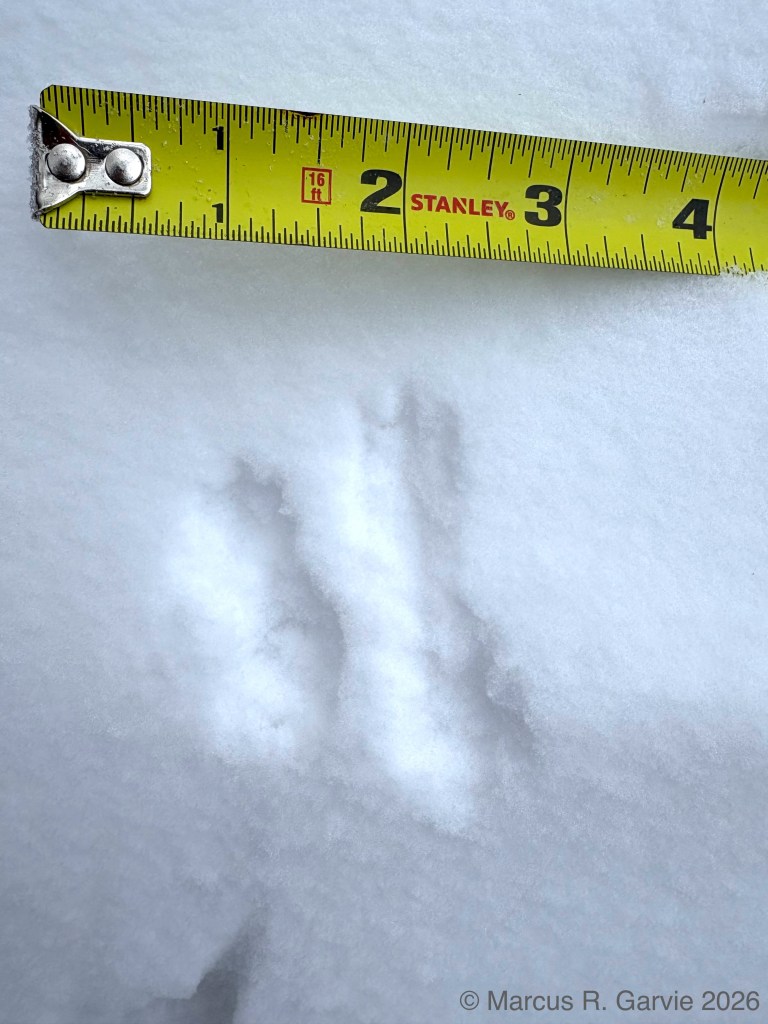
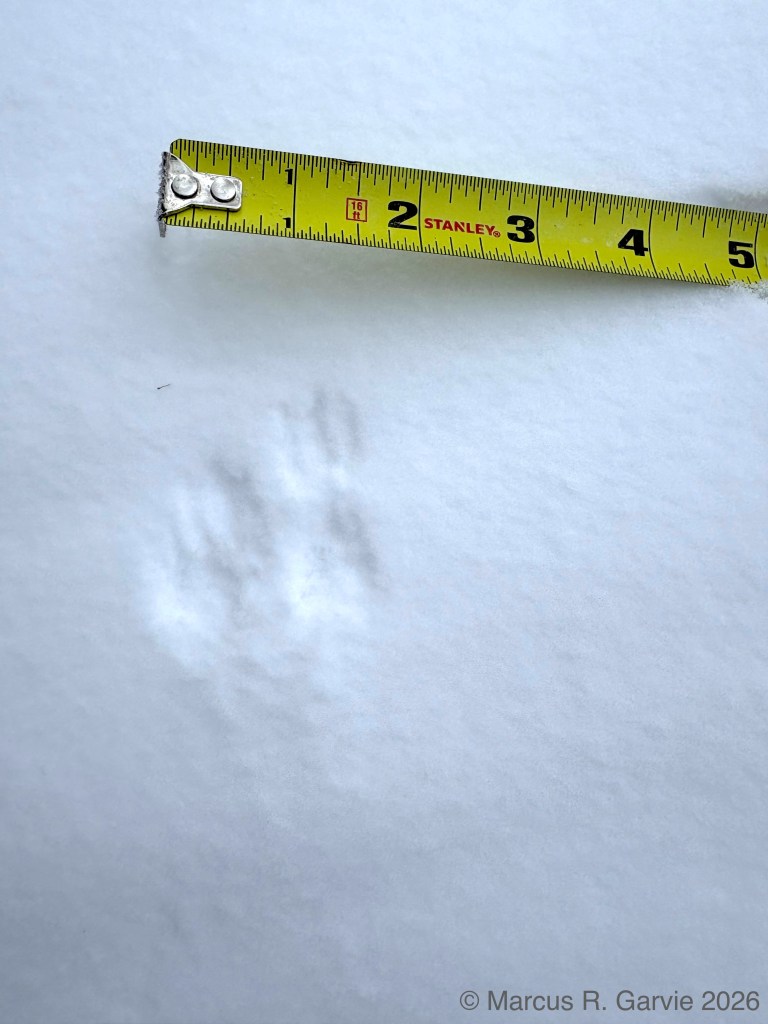
My estimates of the group lengths are 2 1/4, 2 3/8, and 2 inches. Again, comparing these with the measurements in [1], they strongly suggest a Short-tailed Weasel.
Postscript:
After discussing with Byron Murray how to distinguish vole trails from mouse trails, I realize I may need to be more tentative about the animal that made the second series of “mouse” trails shown above. In [1] (p. 328) it states, “Medium to large vole species almost always travel in a direct register trot, speeding up into hops, lopes, and bounds when exposed or threatened.” However, on page 330 of [1] there is a photograph of a bounding Meadow Vole with a tail drag that looks very similar to my photos. How did Elbroch know? My guess is that unless one actually sees the animal, or has additional evidence, identification can only be made with a degree of confidence, not certainty.
 Field Notes of a Tracker
Leave a comment