Date: January 7, 2026
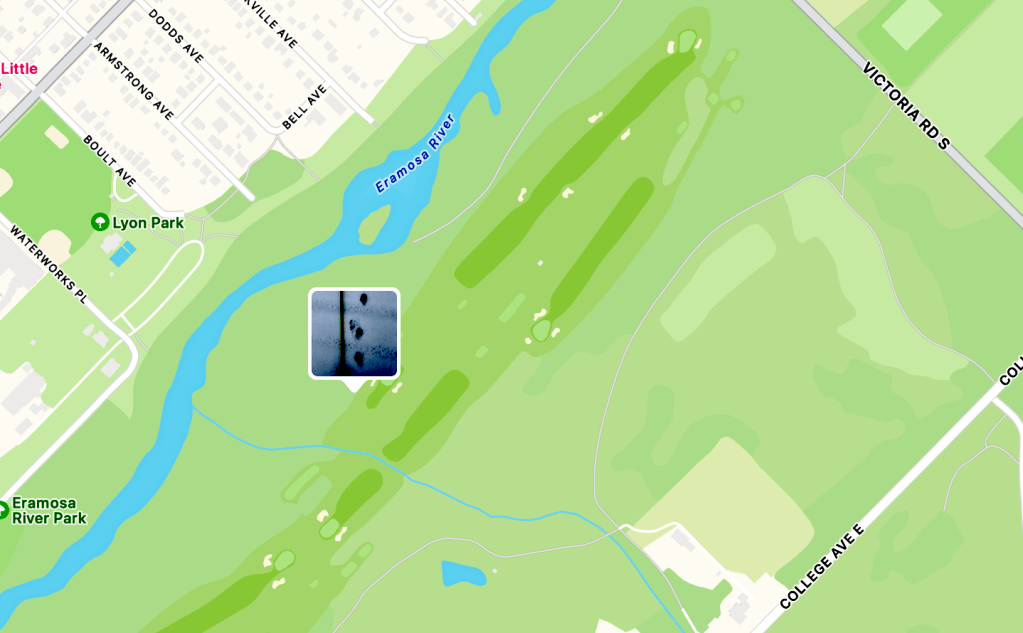
Place: The Cutten Club golf course, Guelph ON.
Weather: 4 C. Several inches of snow from a couple of days ago that was very soft and slushy.
References:
– [1] ‘Mammal Tracks & Sign: A Guide to North American Species’, Mark Elbroch, Stackpole Books (2nd Edit), 2019
– [2] ‘The Tracker’s Field Guide: A Comprehensive Manual for Animal Tracking’, James Lowery, A Falcon Guide (2nd Edit), 2013
– [3] ‘Bird Tracks & Sign: A Guide to North American Species’, Stackpole Books, Mark Elbroch, 2001.
Discussion:
Several years ago, I discovered amazing tracks on a golf course, where Canada Geese had landed in the snow, leaving long skid marks. I decided to see if I could find that again. I started walking around the edge of the golf course, as it is usually the transition areas where most animal tracks are found. Apart from numerous signs of Gray Squirrels searching for and digging up nuts, there were few tracks found.
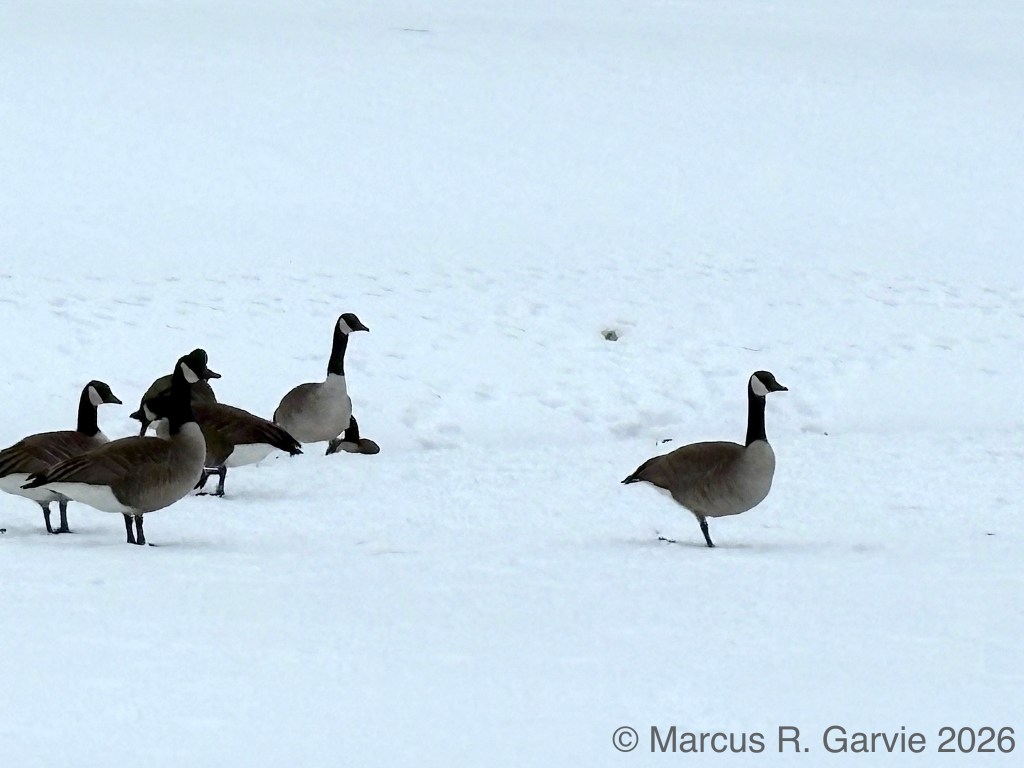
In the distance, I could see Canada geese on the snow where a stream cuts across the golf course, so I headed to investigate.
Observations:
I very quickly found numerous trails of geese walking in various directions.
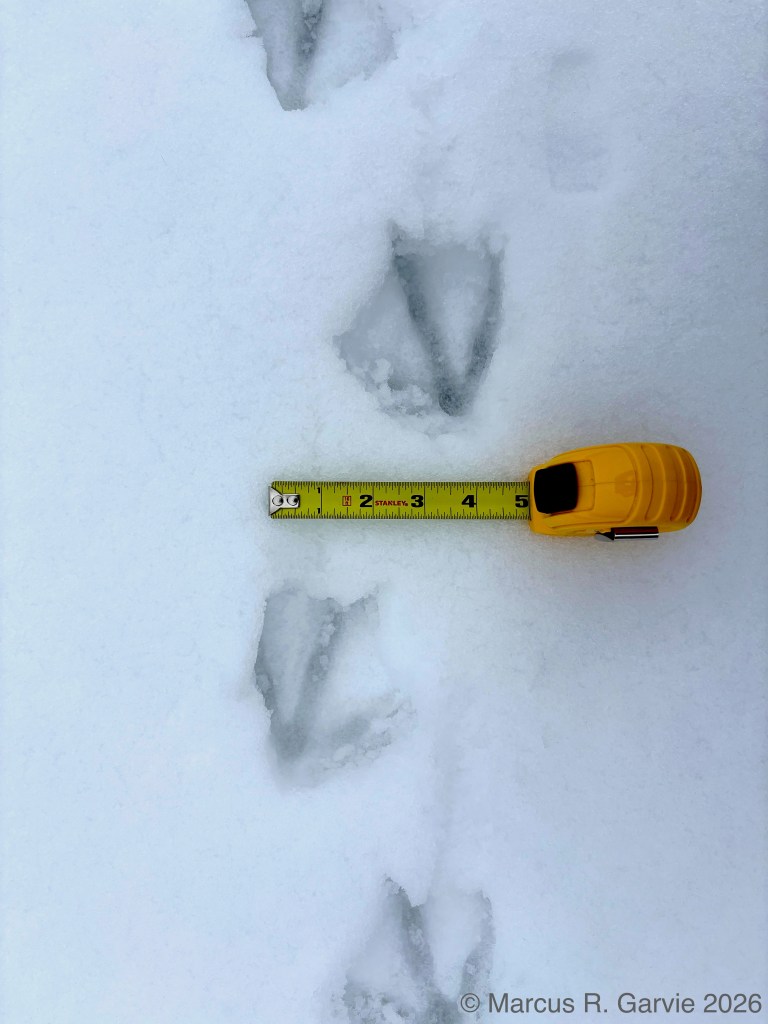

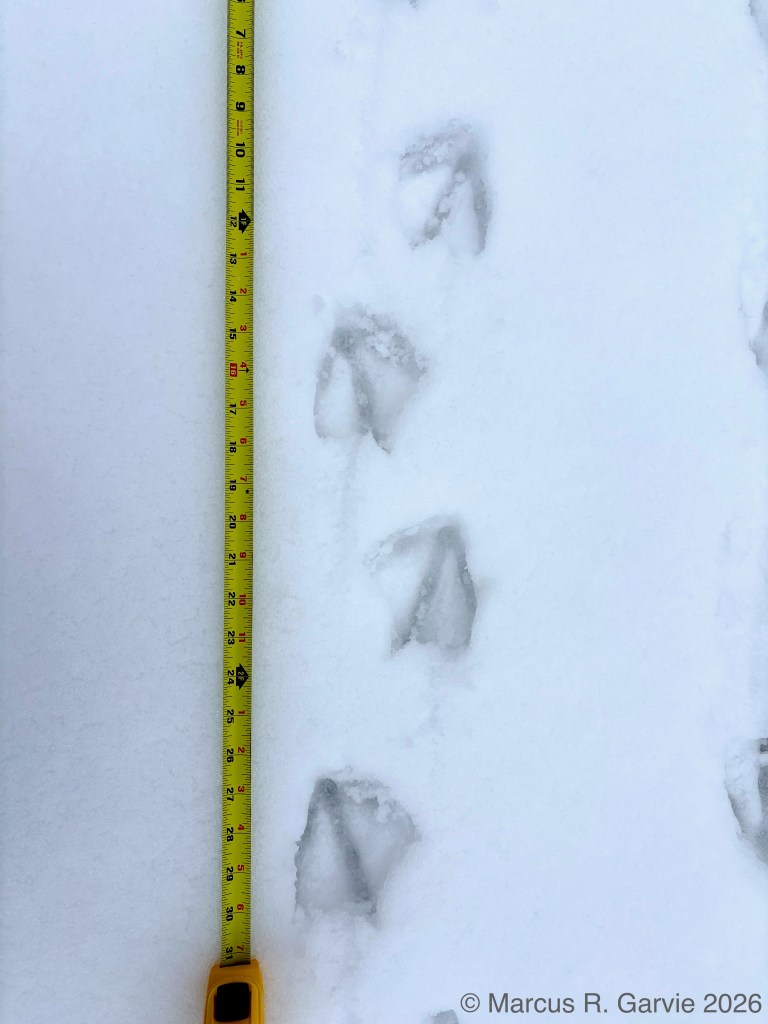
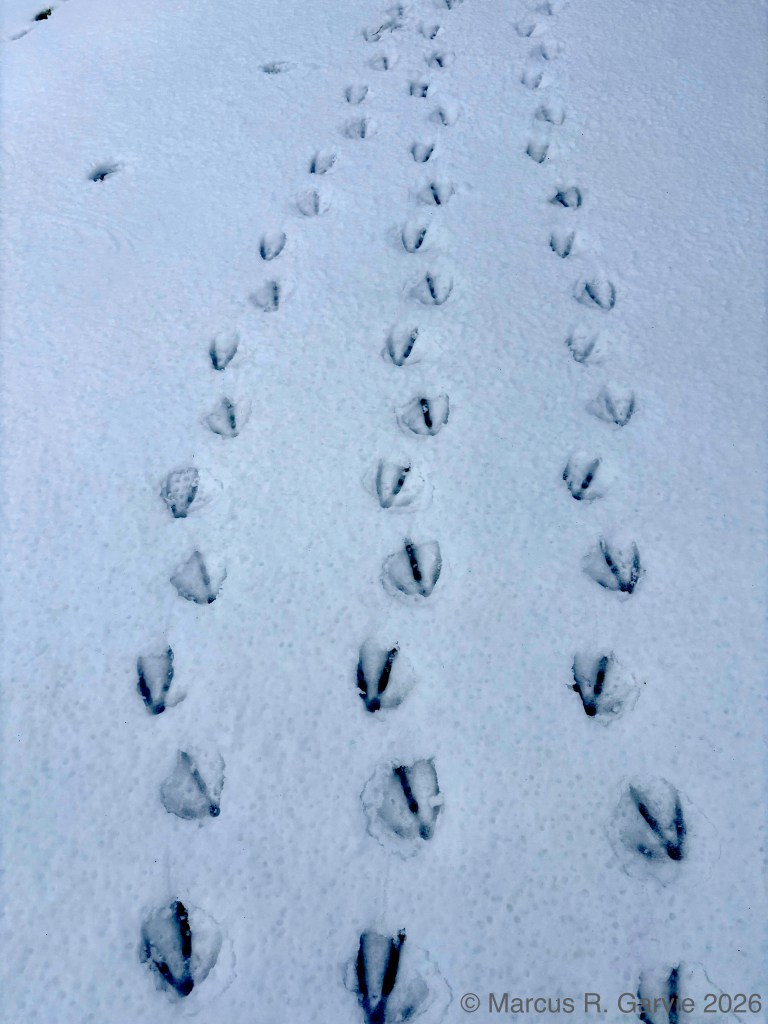
My measurements are consistent with those in [3], although maybe on the small side:
Track length: 3 3/4 in
Track width: 3 1/4 in
Stride: 7 in
Notice how the metatarsal pad registers lightly, and toe 1 doesn’t register. I was then excited to backtrack some of the goose trails and find their landing spots:
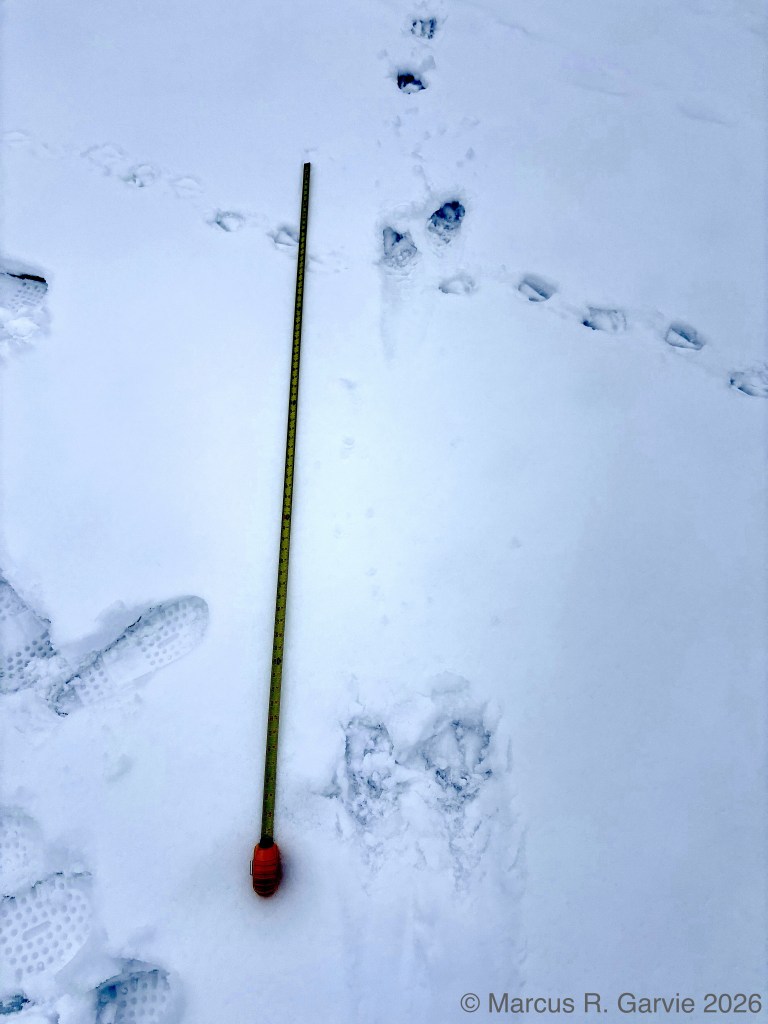
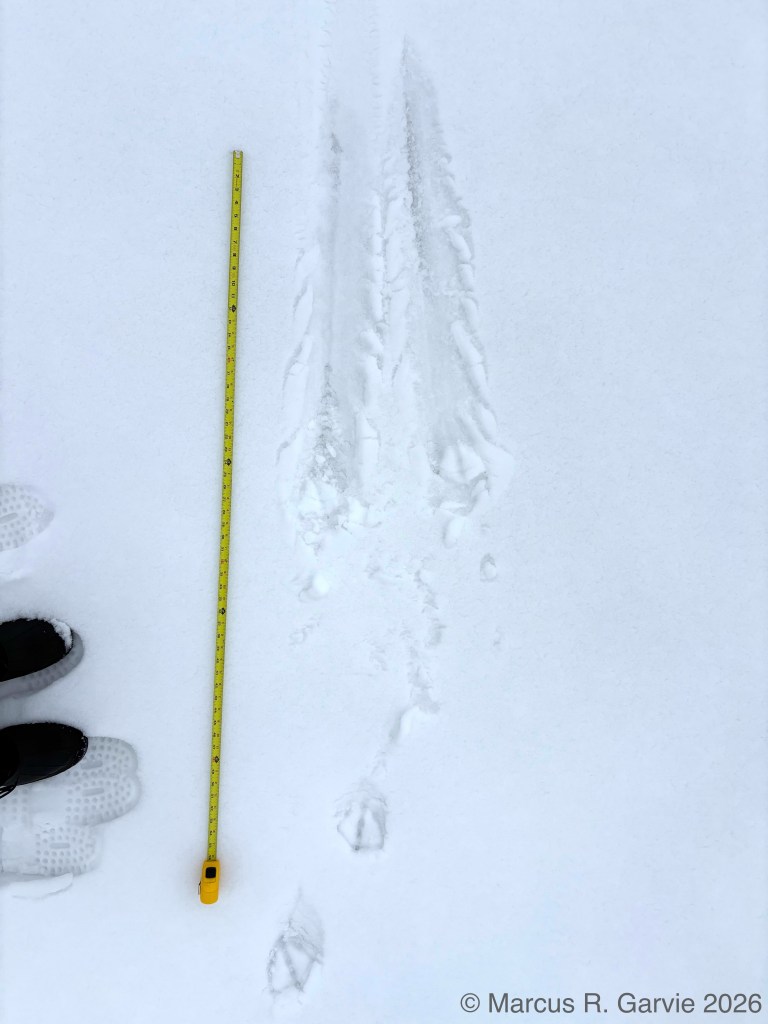
In the first picture, the direction of travel is from bottom to top, while in the second picture it is reversed. On a small slope, I then found remarkably clear wing imprints where a goose attempted to land, skidded, and then took off again. There were no prints immediately before or after this pattern, but some 20–30 feet ahead were what were presumably the landing tracks of this bird.
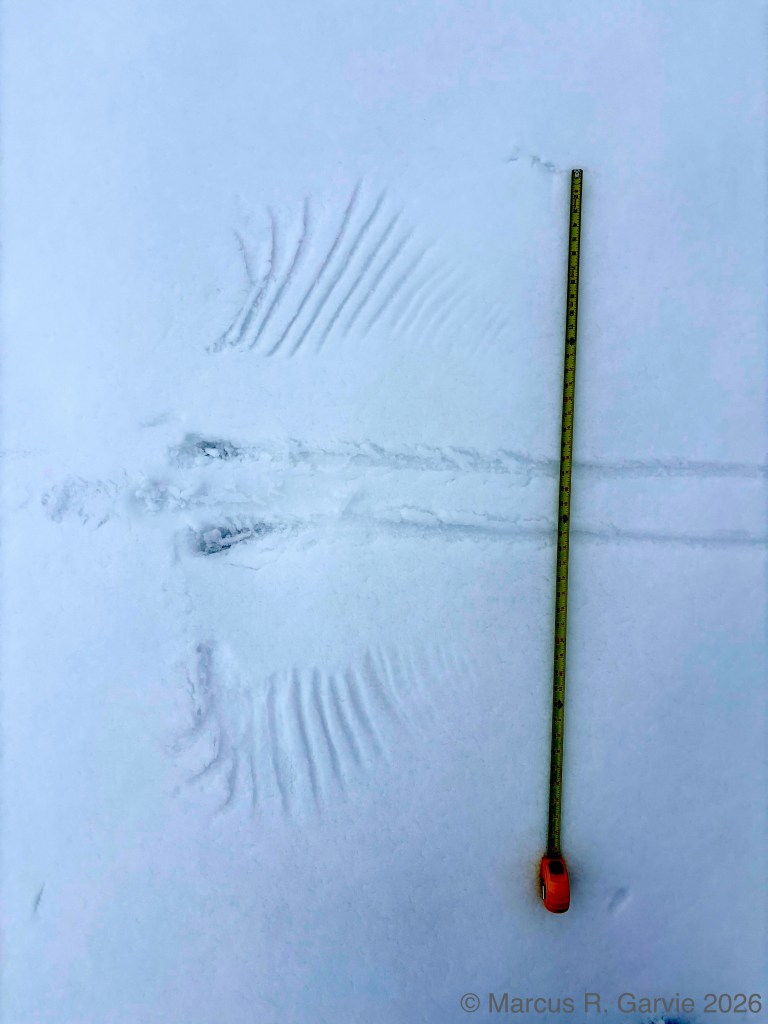
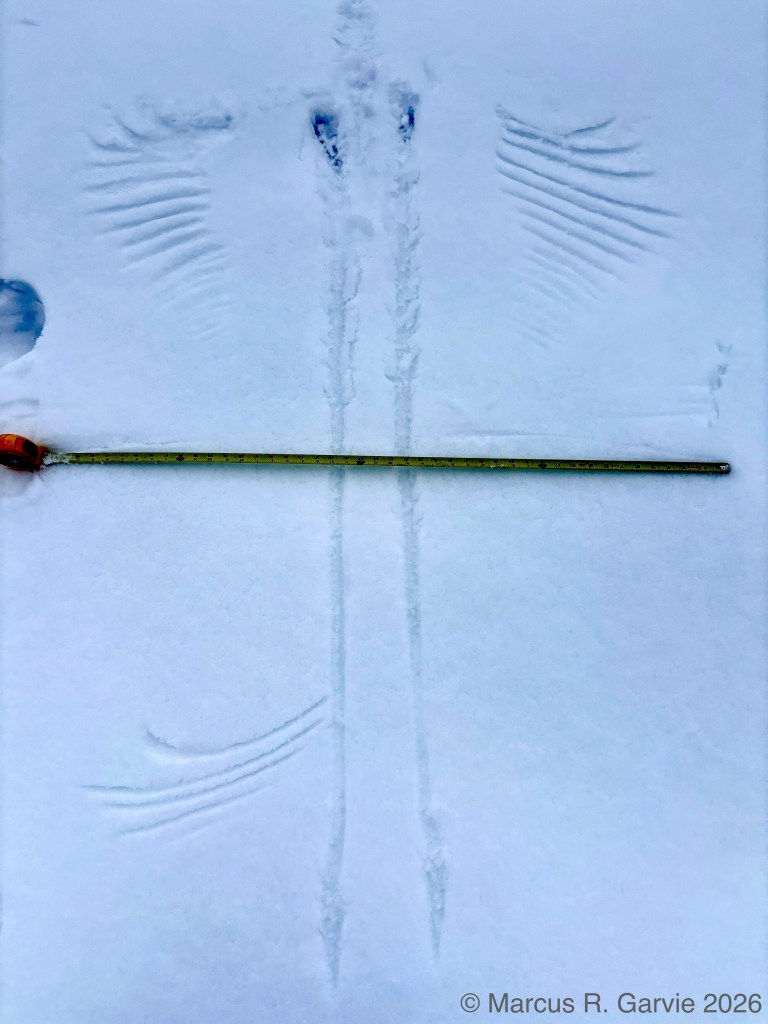
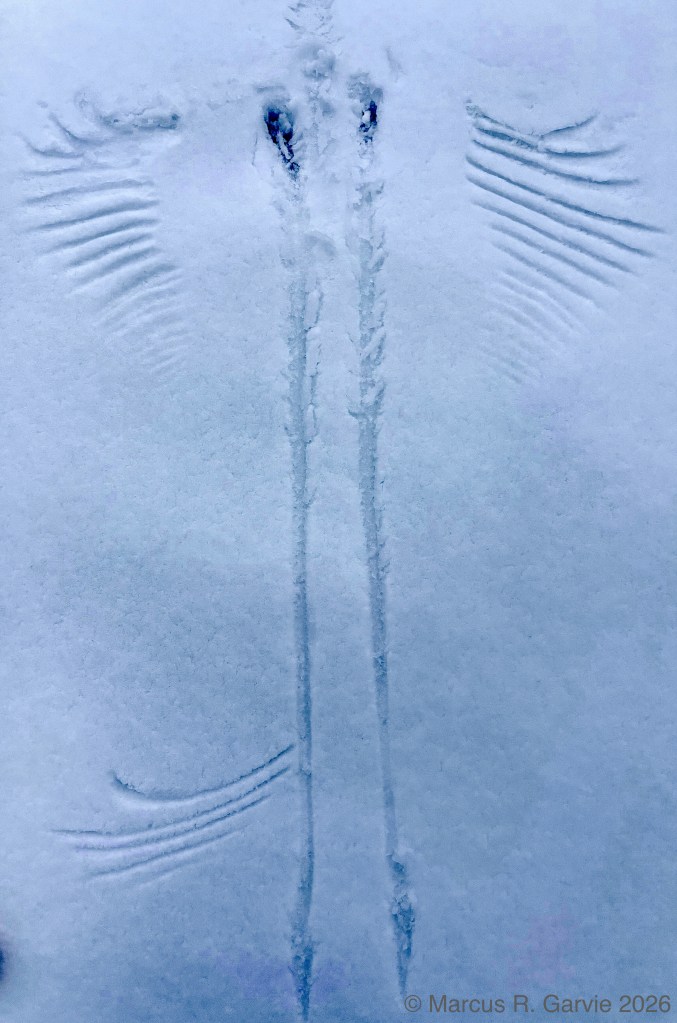
I measured the wing prints as about 42 inches wide. The actual wingspan of this bird is 50.0-66.9 inches, see
https://www.allaboutbirds.org/guide/Canada_Goose/id?utm_source=chatgpt.com
This makes sense, because as the bird takes flight its wings would be bent (concave), so the full wingspan would not be recorded in the snow.
Finally, I found a raccoon trail crossing the narrowest part of the golf course (about 200 m), running from a buckthorn thicket to the heavily wooded area along the Eramosa River. For much of this route the raccoon used its usual 2 × 2 (overstep) walk, but in several sections it shifted into a rotary lope. This gait is not mentioned for raccoon in [1] or [2], and my interpretation is that the animal was moving more anxiously while crossing this exposed area.
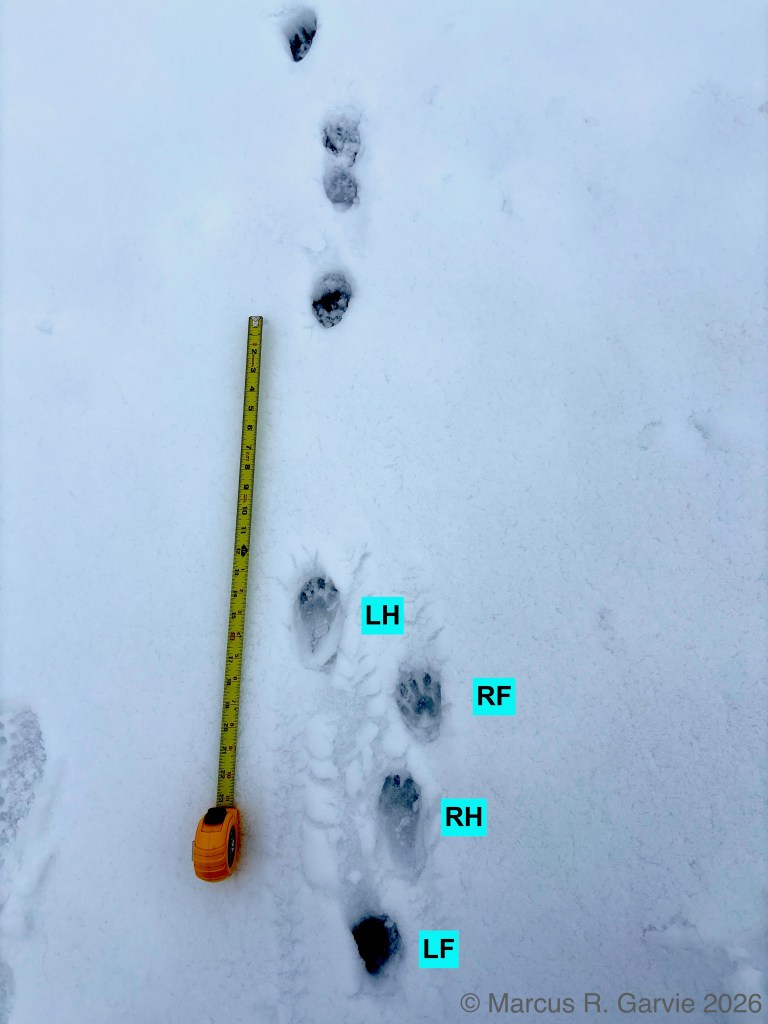
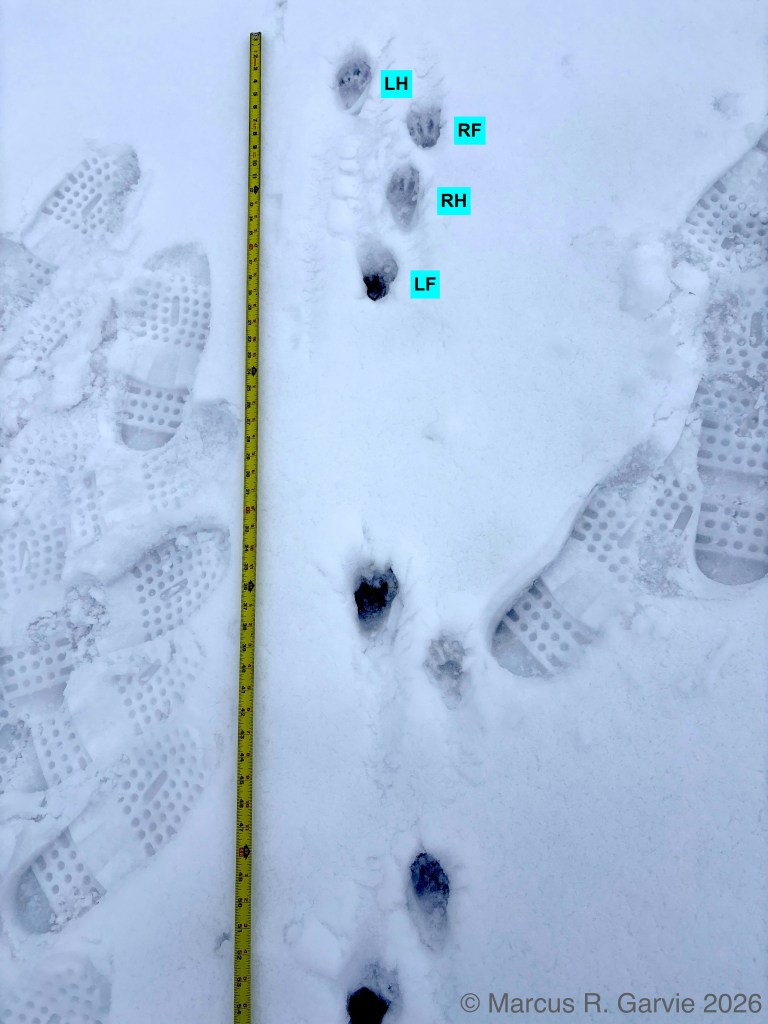
Some of the tracks in the lope showed what I initially took to be nail scrapes at the leading edge of the prints, but on closer inspection, these appeared to be fissures, which I suspect are a form of pressure release in the substrate. However, I have not been able to find this pattern described in Tom Brown’s The Science and Art of Tracking.
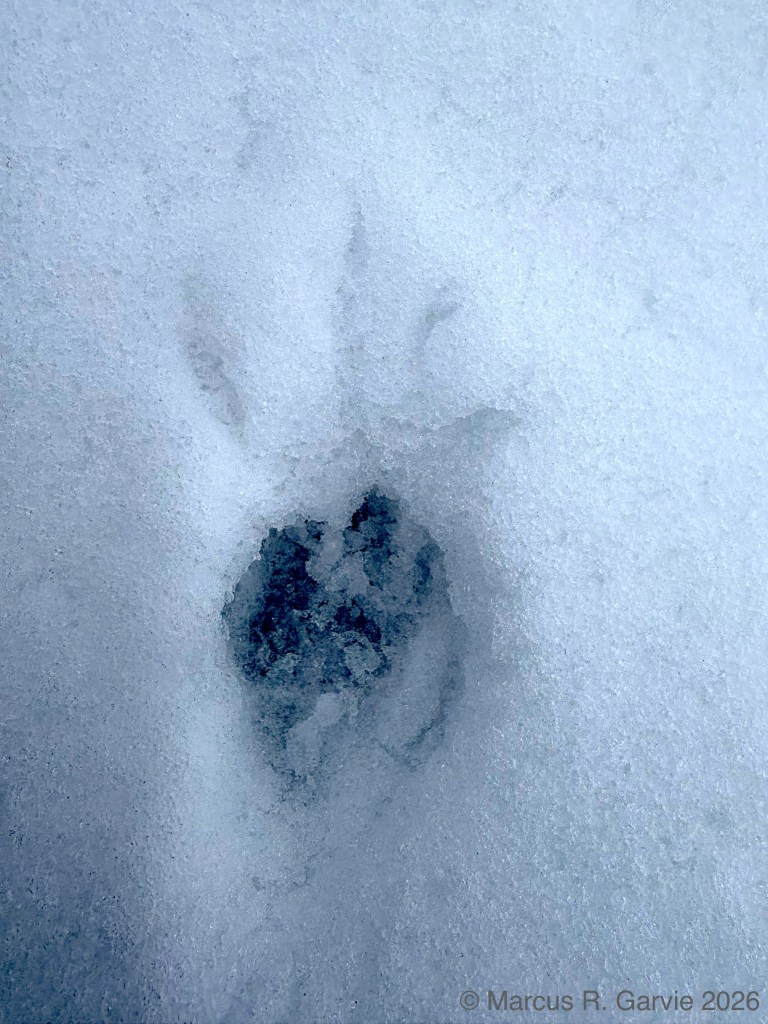

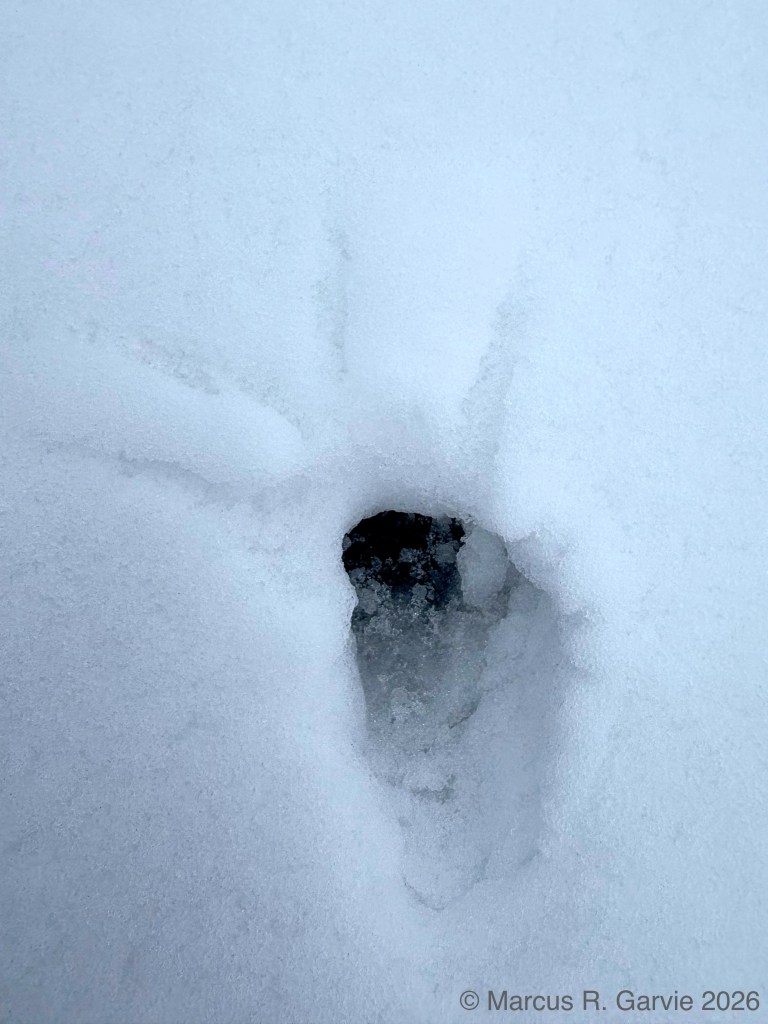
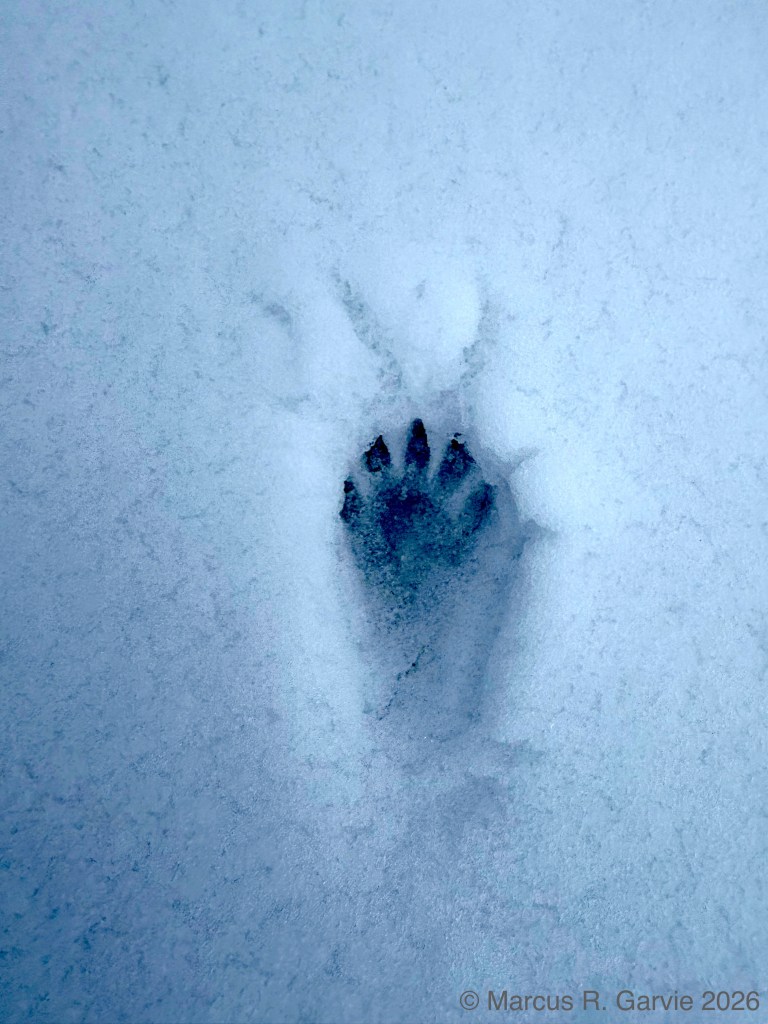
I texted Byron Murray about the goose wing prints, and he came immediately to see them. I had to leave to pick my son up from school, but Byron followed the raccoon trail and actually found the animal in a hollow tree – you could just see the tail and some of the fur (photo not included).
 Field Notes of a Tracker
Leave a comment