Date: January 5, 2026
Place: University of Guelph Arboretum, Guelph ON.
Weather: fresh snow, temperature below zero.
References:
– [1] ‘Field Guide to Tracking Animals in Snow’, Louise R. Forrest, Stackpole Books, 1988
Discussion:
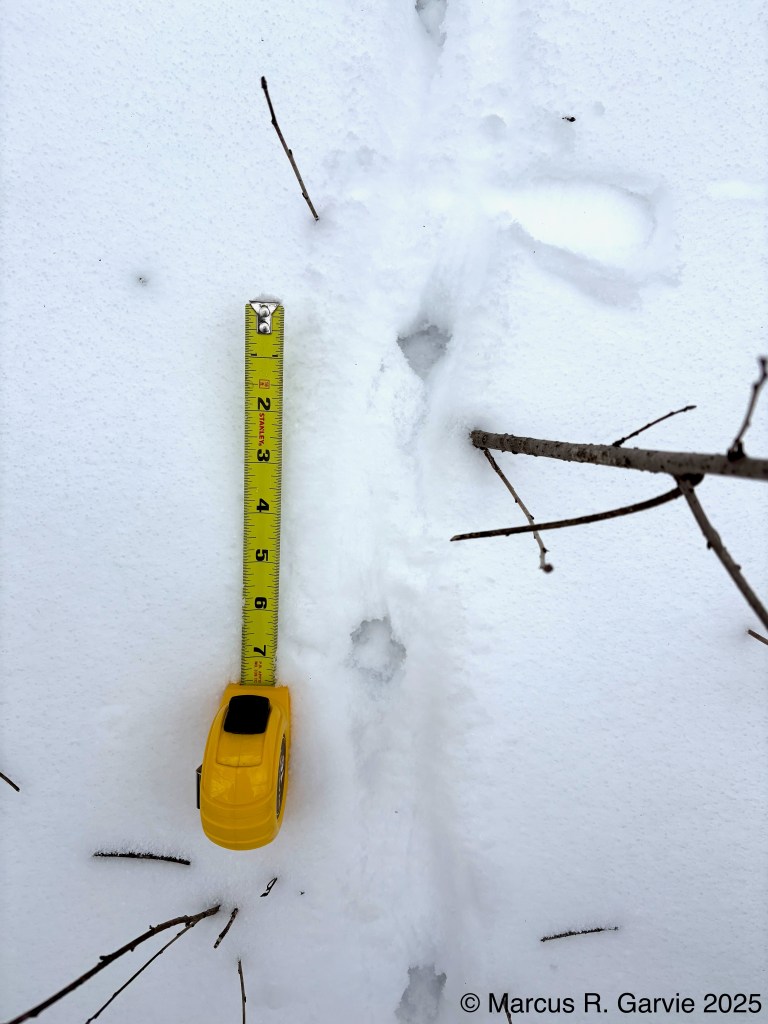
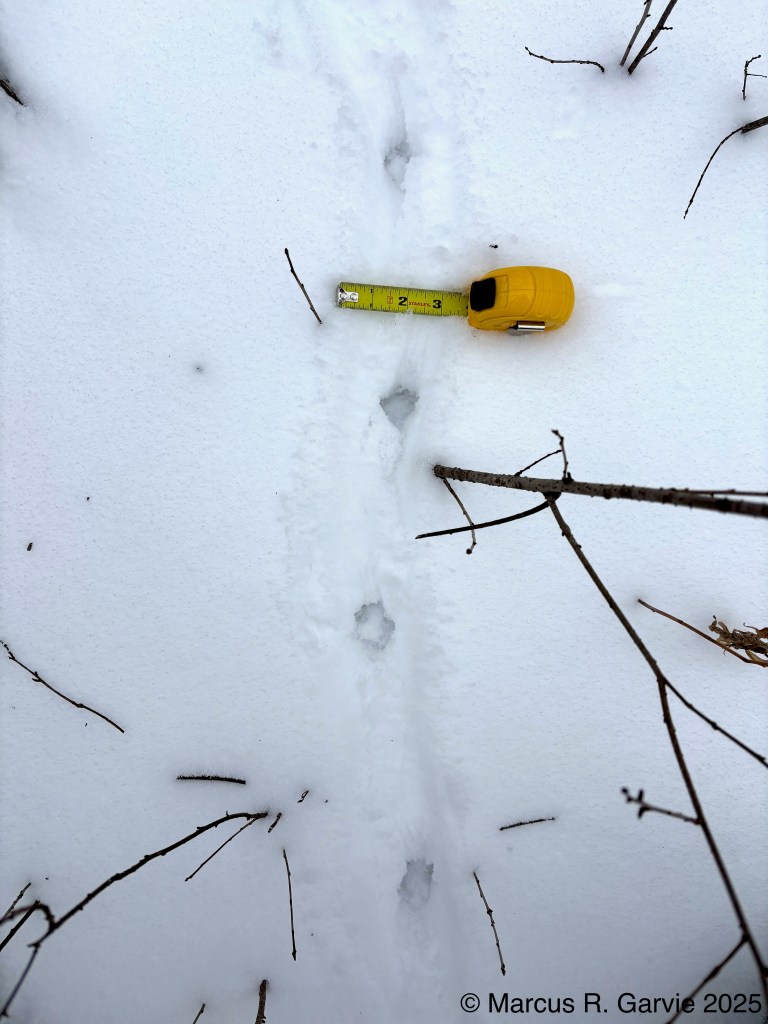
I went to the University Arboretum looking for additional squirrel gait variations and came across an unusual trail. The pattern suggested a wide-bodied mammal, such as a skunk, with drag marks and a relatively narrow trail width. However, the individual tracks were oddly shaped—almost like a gull’s foot—and track details were difficult to see because of the deep snow.
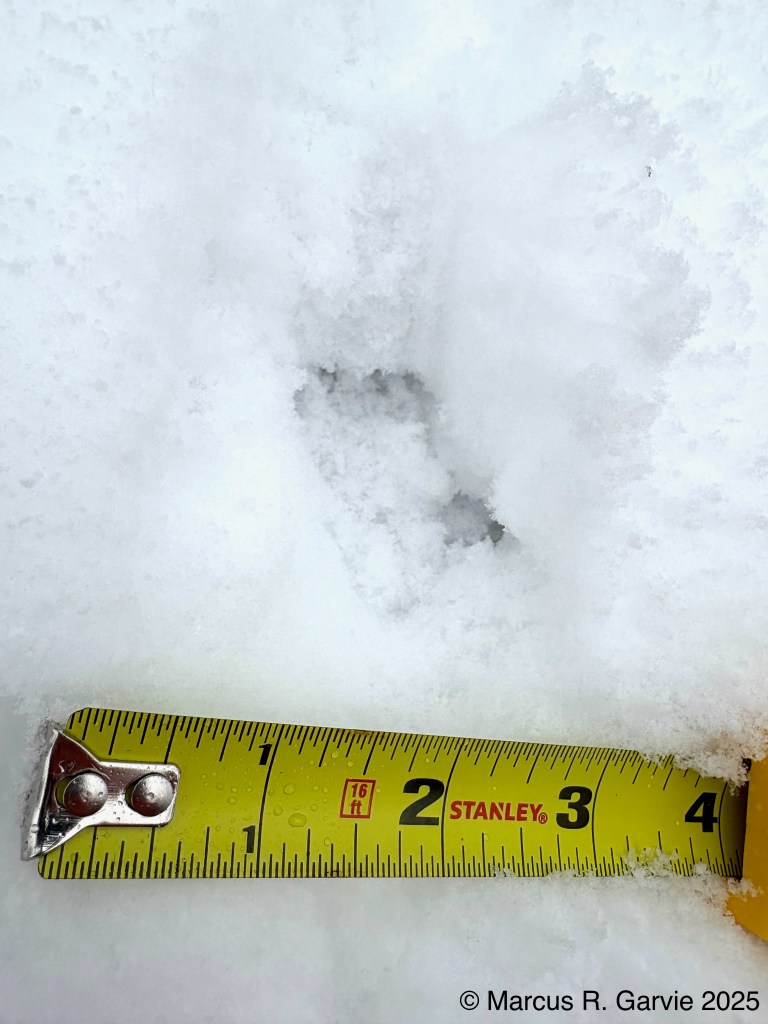
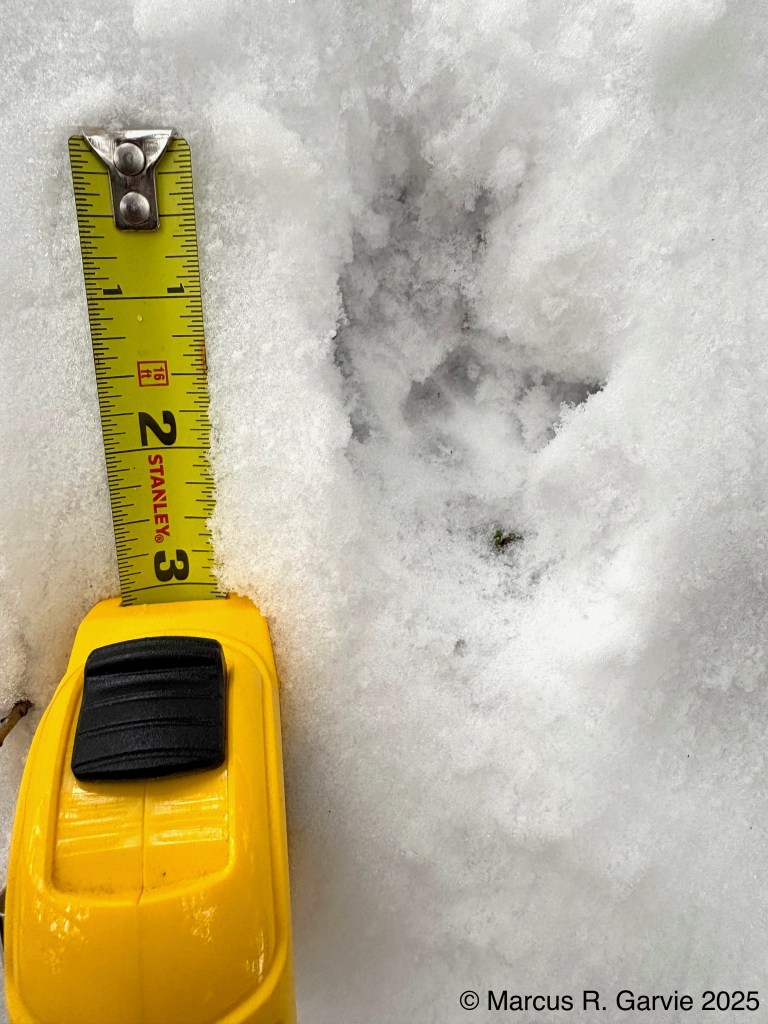
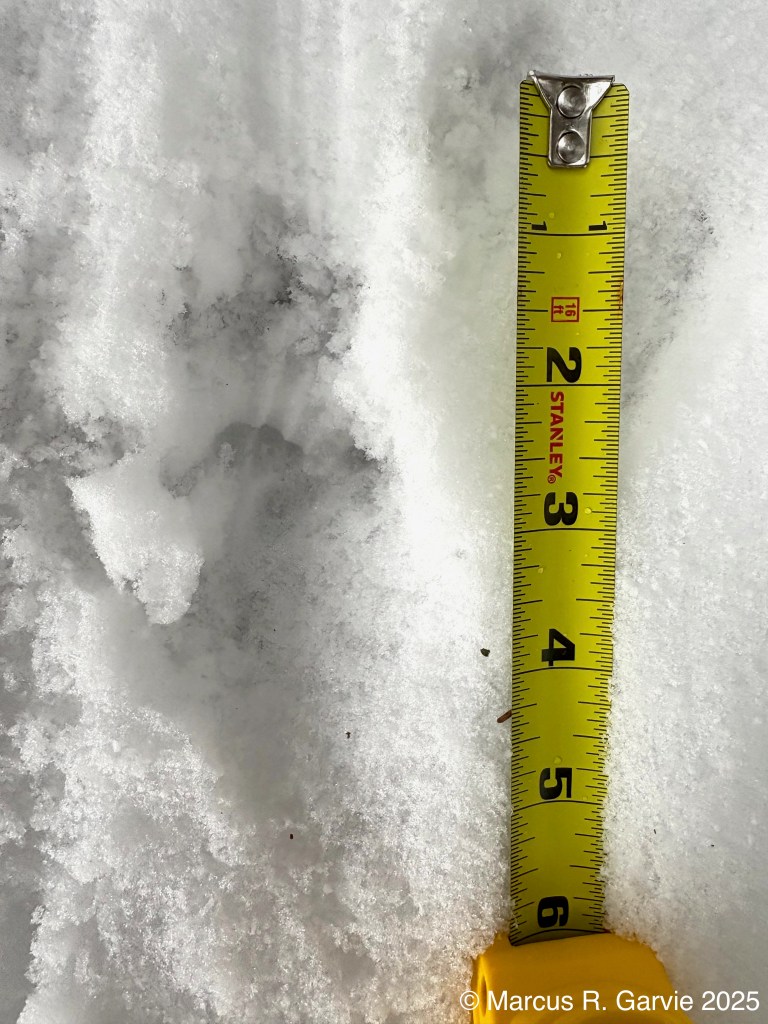
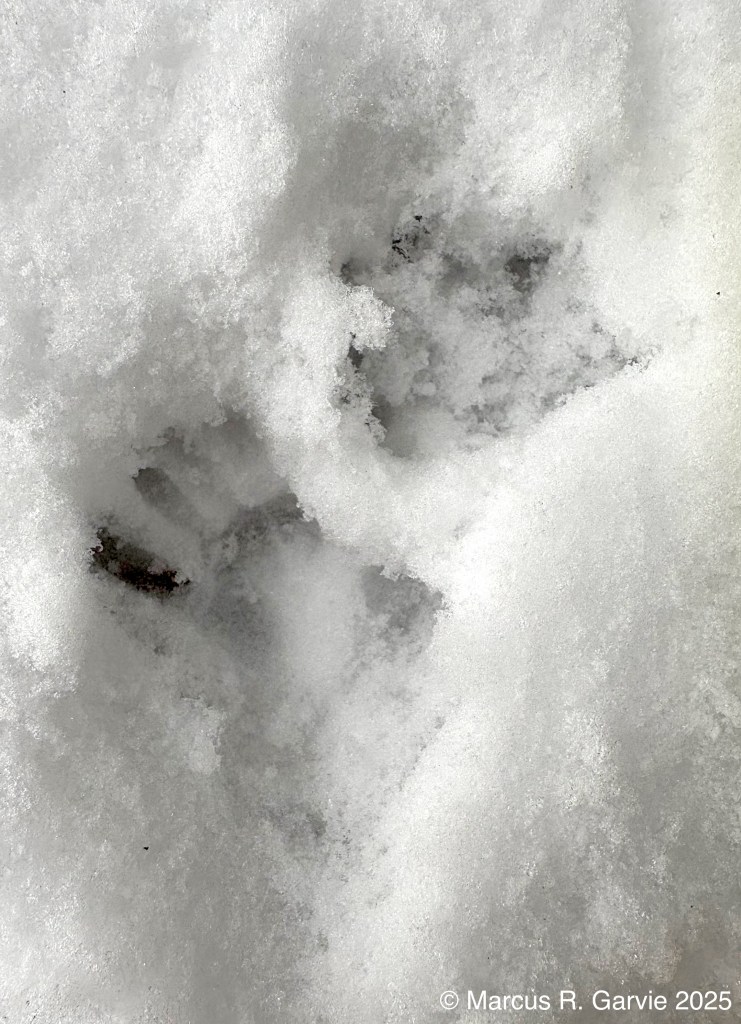
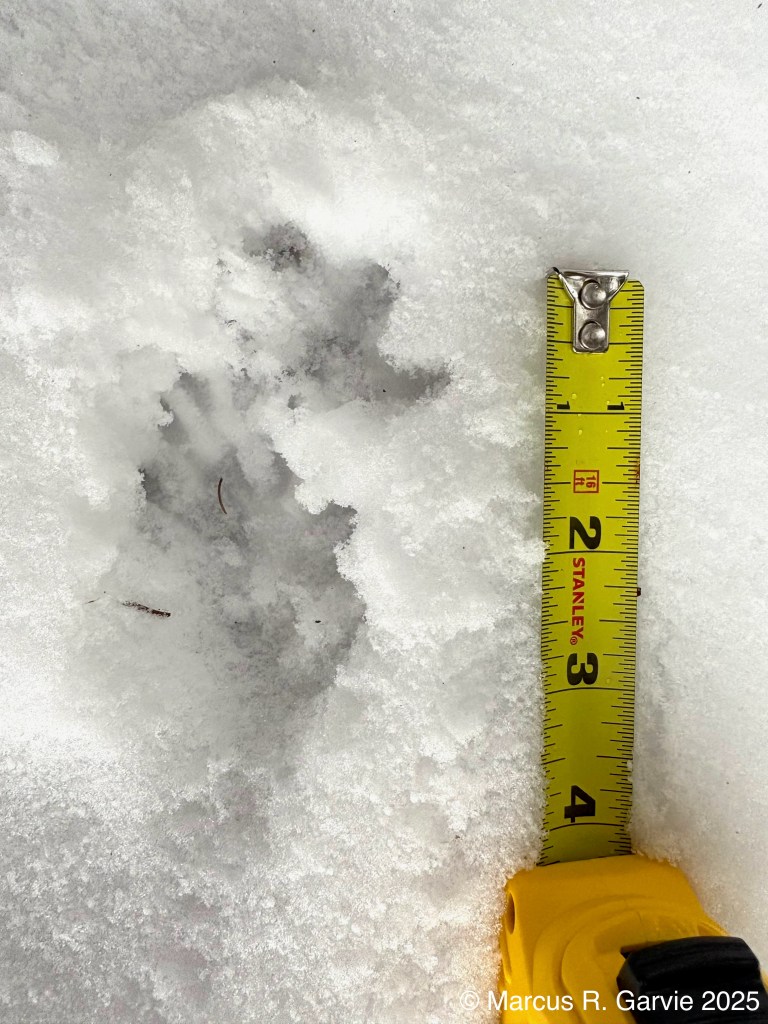
On closer examination, I noticed that each track was actually a double print. Looking more carefully still, I could see toe holes pointing alternately left and right within each double print, and I realized the trail belonged to an opossum. I had never seen opossum tracks in snow before, although I had previously observed very clear tracks along a river in the United States.
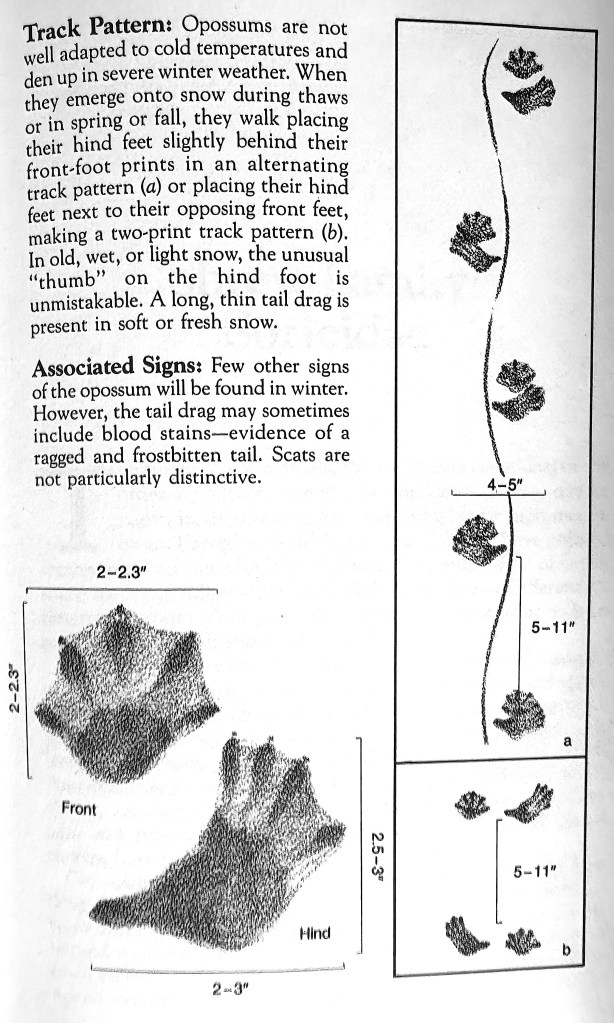
The attached summary below is from [1] and shows the observed pattern of tracks very nicely:
Observations
These are some approximate measurements I made:
Front length: 1 1/2 in
Front width: 1 1/2 in
Hind length: 1 3/4 in
Hind width: 1 3/4 in
Stride: 7 1/2 in, 6 in, 6 1/2 in
Trail width: 4 in, 3 1/2 in
These are mostly consistent with the measurements given in [1], but it was difficult to be precise because of the lack of detail in the snow. The track sizes do seem on the small side, so maybe this was a smaller female (opossums exhibit sexual dimorphism as males tend to be larger than females, see https://animaldiversity.org/accounts/Didelphis_virginiana/?utm_source=chatgpt.com.)
Here are my photos of the trails:
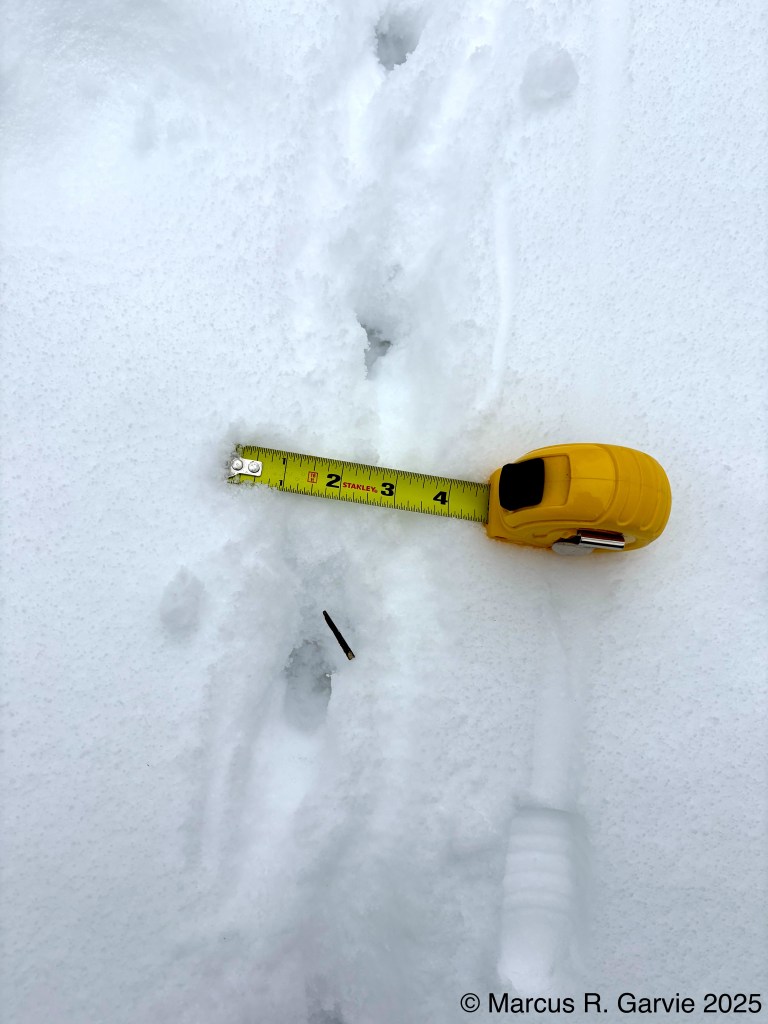
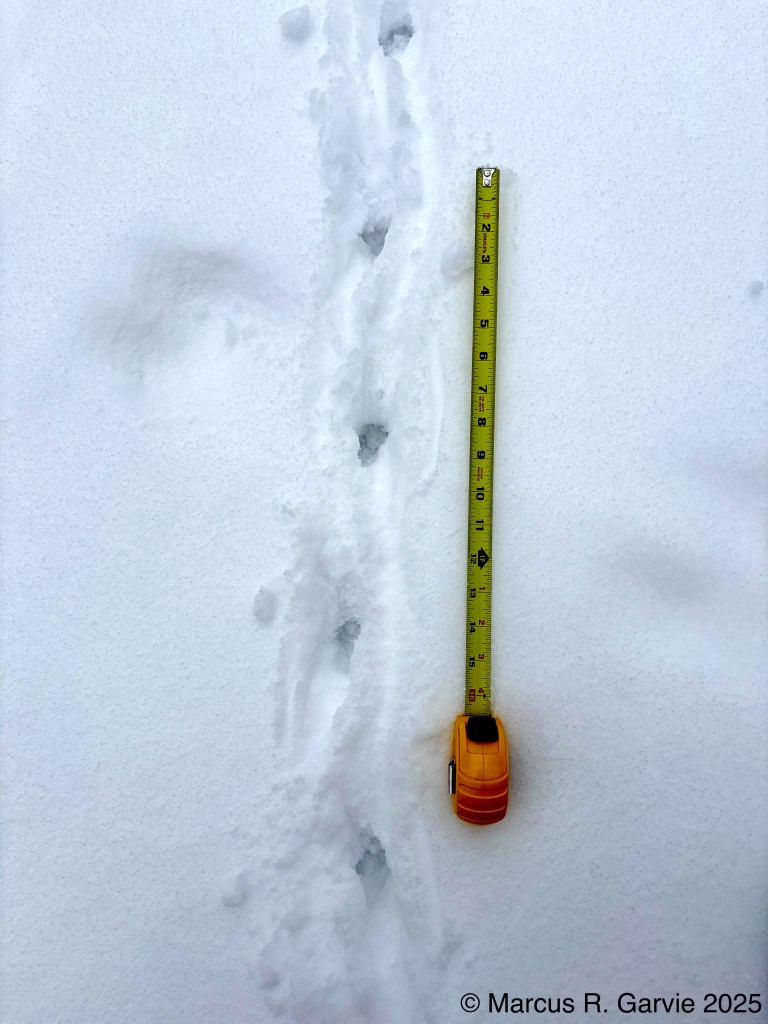
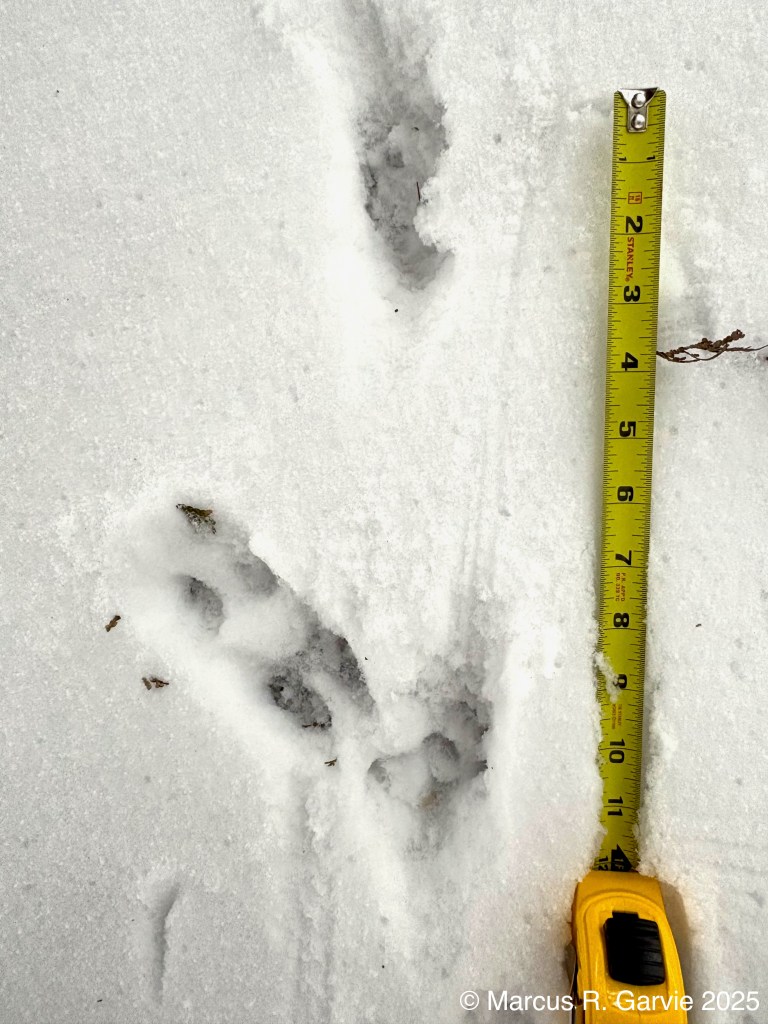
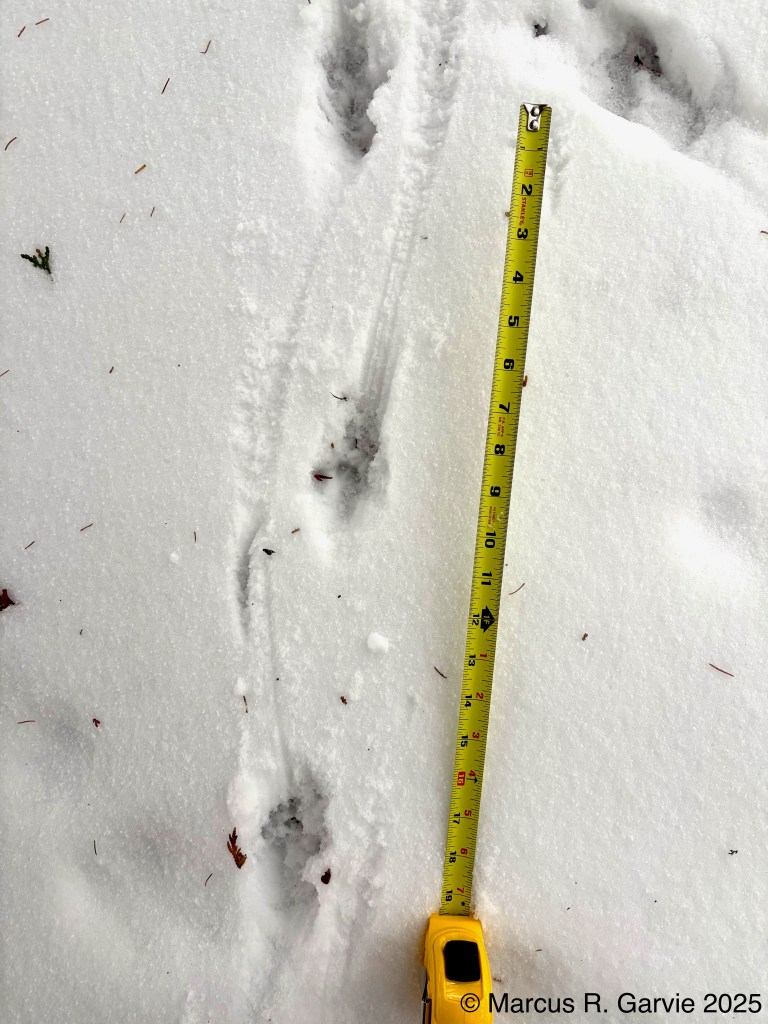
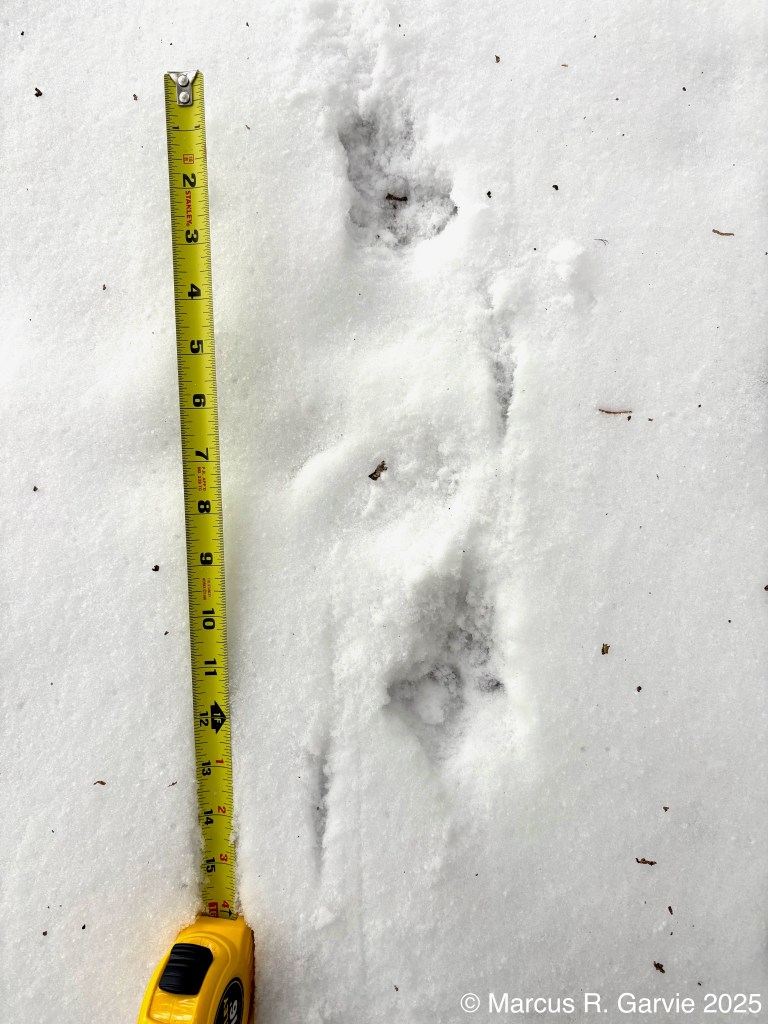
And here are my photos for individual double tracks:
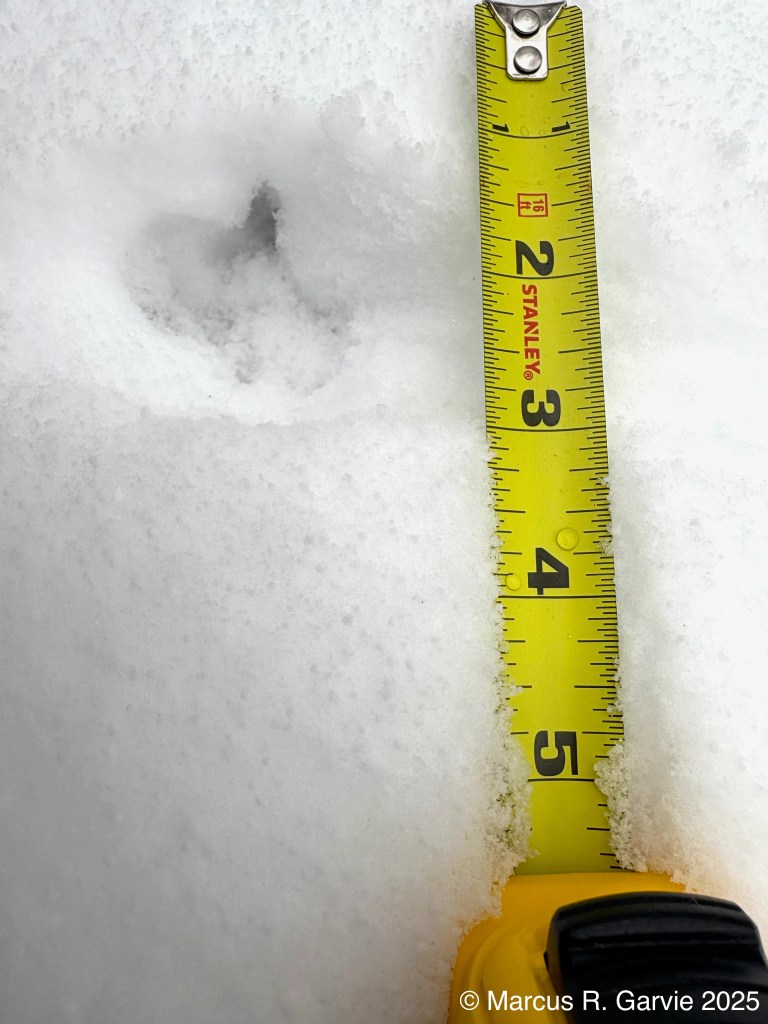
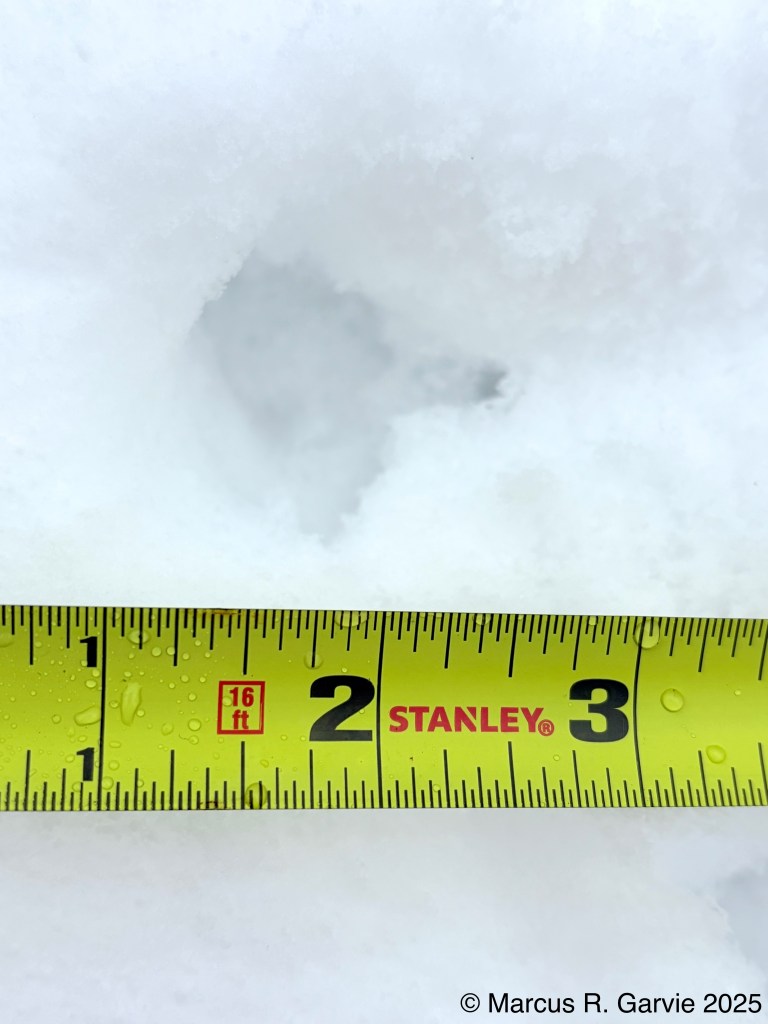
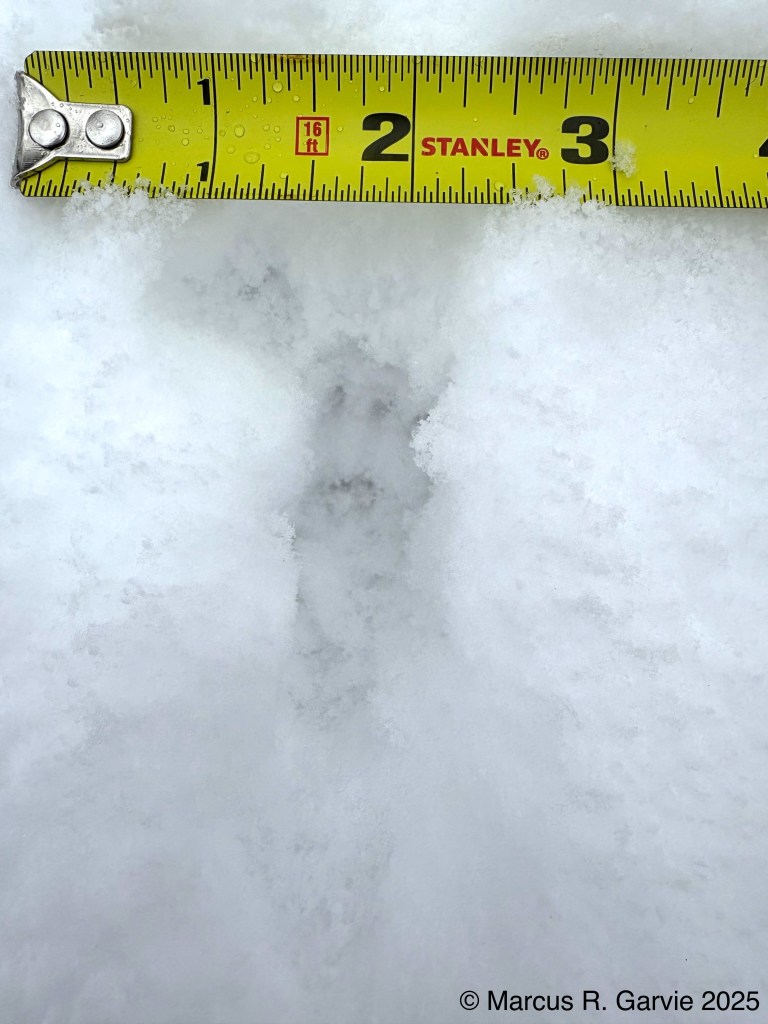
Final thoughts:
I would have liked to find the animal itself. I followed the opossum’s trail for nearly a kilometre through the University Arboretum. The track began near the Taylor Nature Center, wound along the Victoria Woods Trail, crossed the pond, and then looped back. The following day I found a fresh trail beneath the pines along Victoria Road near the bird feeders. I saw no obvious feeding sign. I assume the opossum found shelter during the day. Given the recent stretch of very cold weather, I also wonder what condition it was in, as opossums are poorly adapted to our winters.
According to [1], the Virginia opossum is omnivorous, feeding on small animals, carrion, and human refuse. It is a capable climber, solitary, and primarily nocturnal.
 Field Notes of a Tracker
Leave a comment