Date: December 30, 2025
Place: South end of Guelph (residential) and the University of Guelph Arboretum.
Weather: fresh snow, temperature below zero.
References:
– [1] ‘The Tracker’s Field Guide: A Comprehensive Manual for Animal Tracking’, James Lowery, A Falcon Guide (2nd Edit), 2013
Discussion:
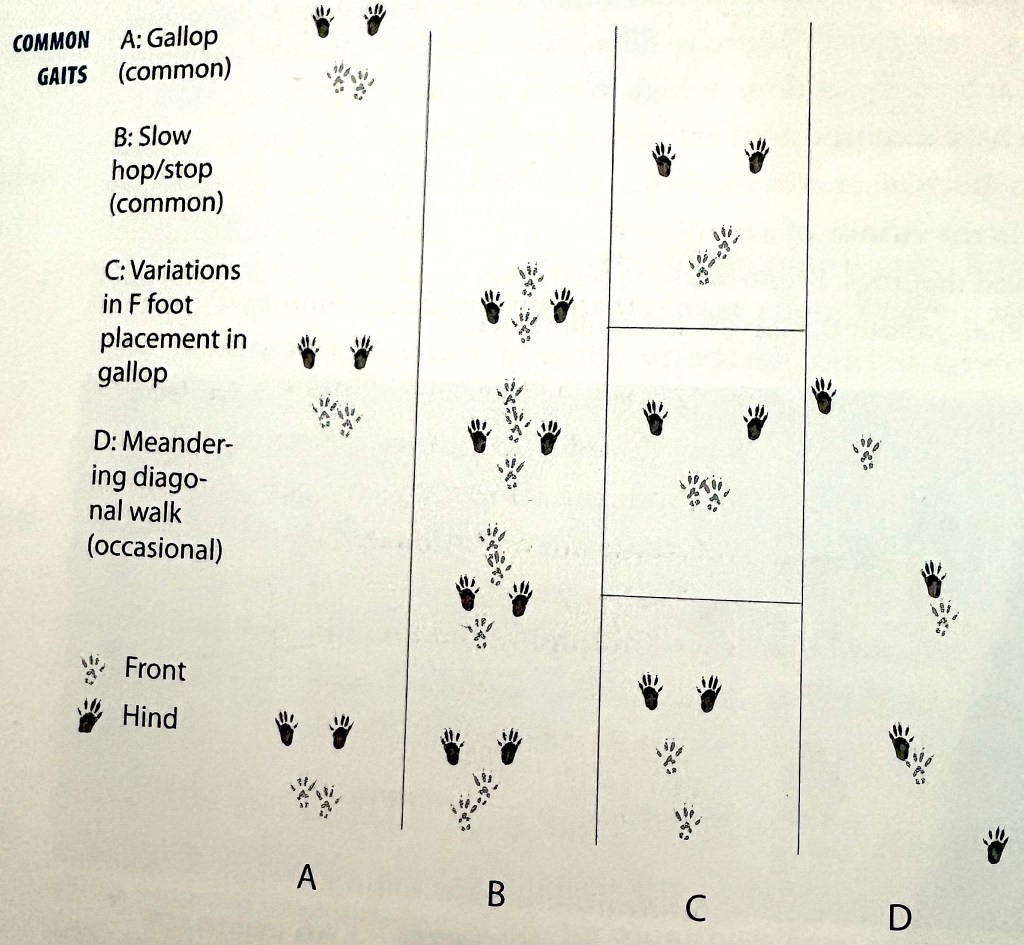
Some tracker friends of mine reported seeing Red Squirrel tracks made by hopping rather than the usual “W-shaped” bound. The author of [1] describes several bound variations for squirrels, which prompted me to look for these patterns in the field and assess how common they are. The bound variations for Gray Squirrels reproduced from [1] are shown below:
and also those for Red Squirrels:
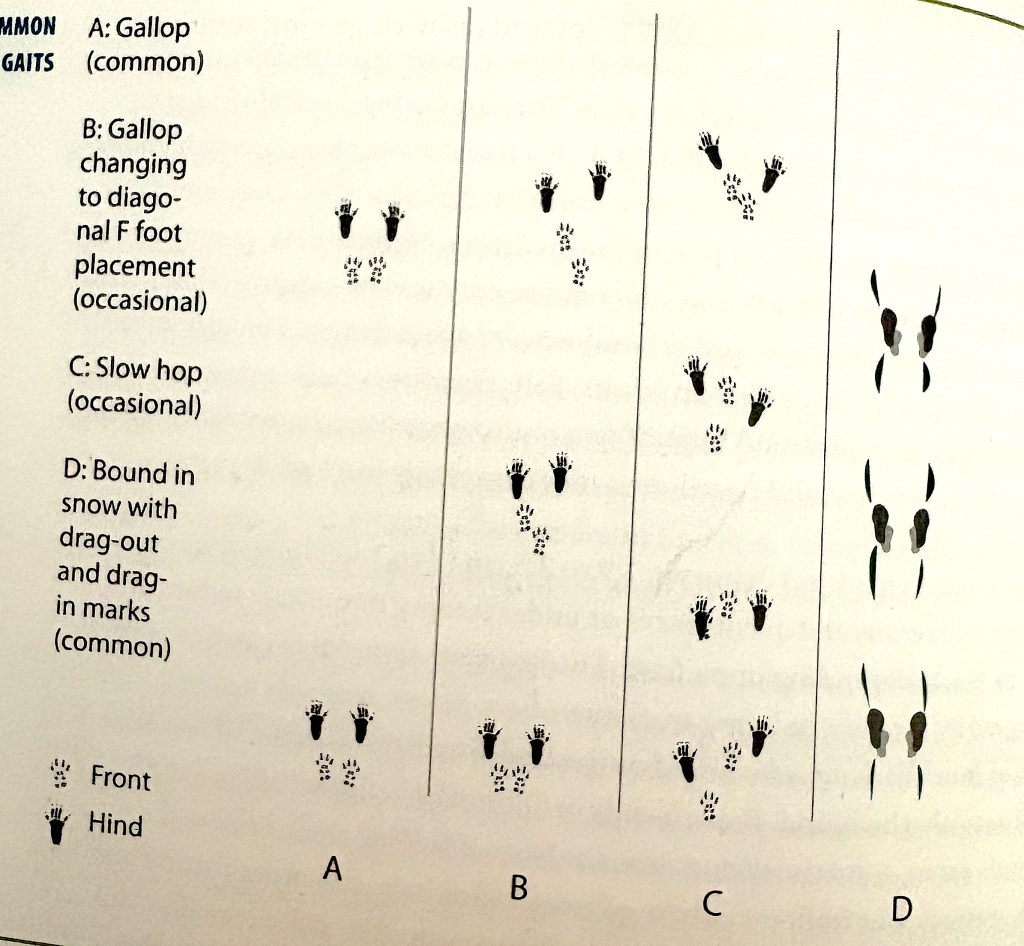
Lowery seems to have forgotten to include a hop! (I am classifying a hop as a gait where both front feet are ahead of the hind feet.)
Now, because squirrels can do a ‘staggered- bound’ (e.g., the bottom example in case C above), it’s a good idea to review the differences between Eastern Cottontail tracks and squirrel tracks. The staggered pattern looks more like a letter ‘J’ or ‘Y’ to me:
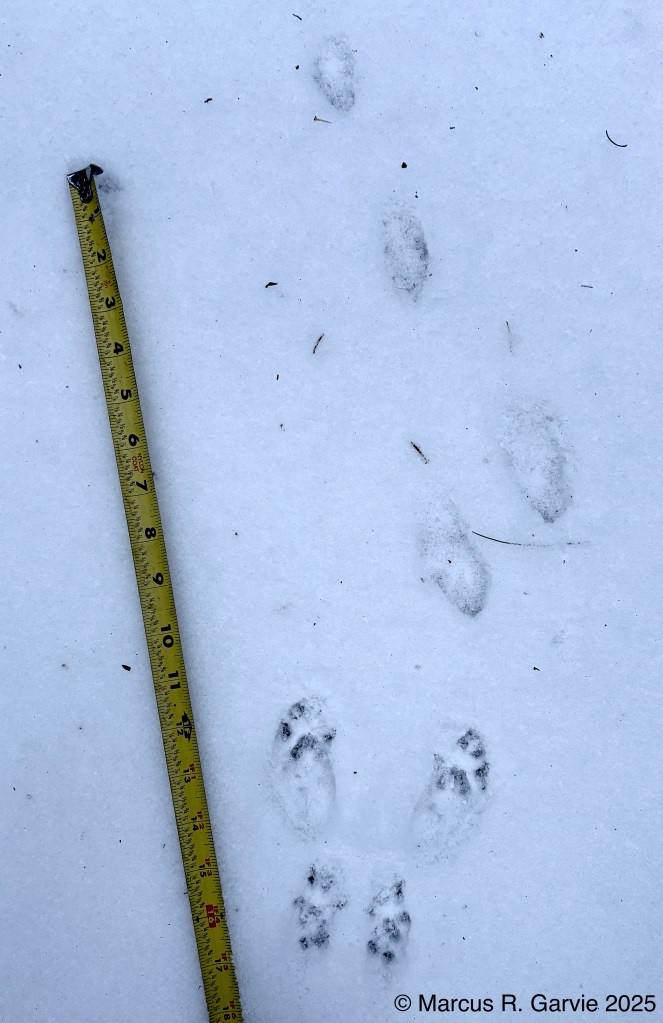
Because the trail width is about 4 ¼ inches, this probably rules out Red Squirrel (although I don’t know for sure, as the trail widths of both species overlap). Note also the blurred edges of the cottontail tracks, caused by the fur on the feet.
In the following examples, I refer to the classic cottontail bound as a Y-bound and the classic squirrel bound as a W-bound. The average trail widths for Red and Gray Squirrels (see [1]) are 3 5/8 inches and 4 5/16 inches, respectively, which usually allows me to distinguish between the two species. However, as a fellow tracker recently pointed out, trail width alone should not be relied upon, since the measurements can overlap.
Y-bound patterns:
Here are some Y-bound patterns for Red Squirrels.
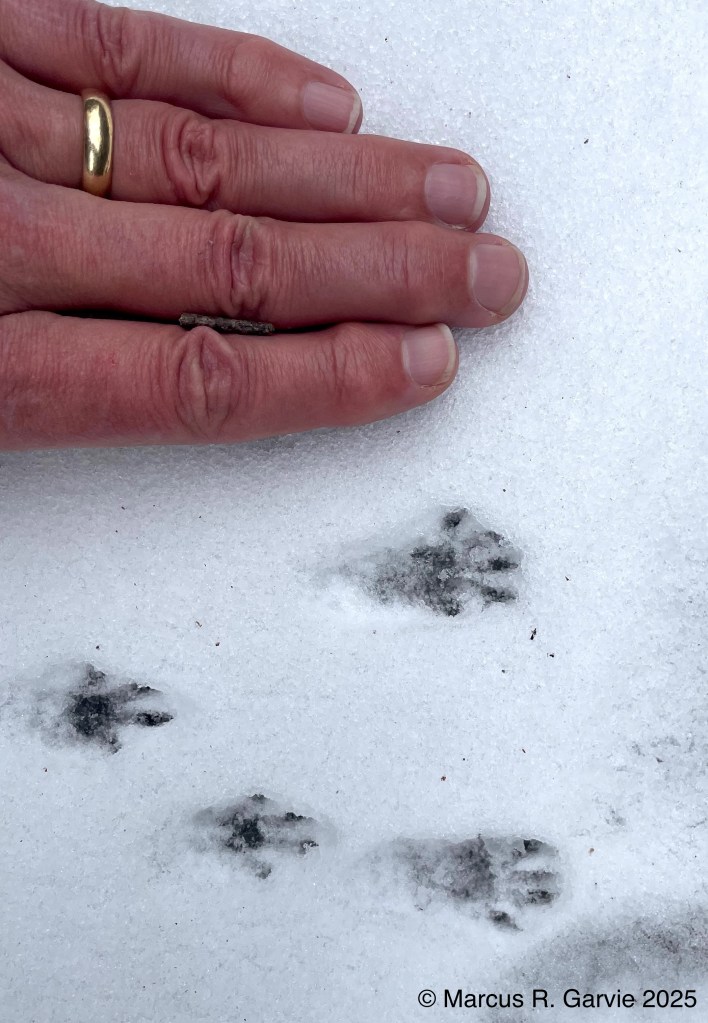
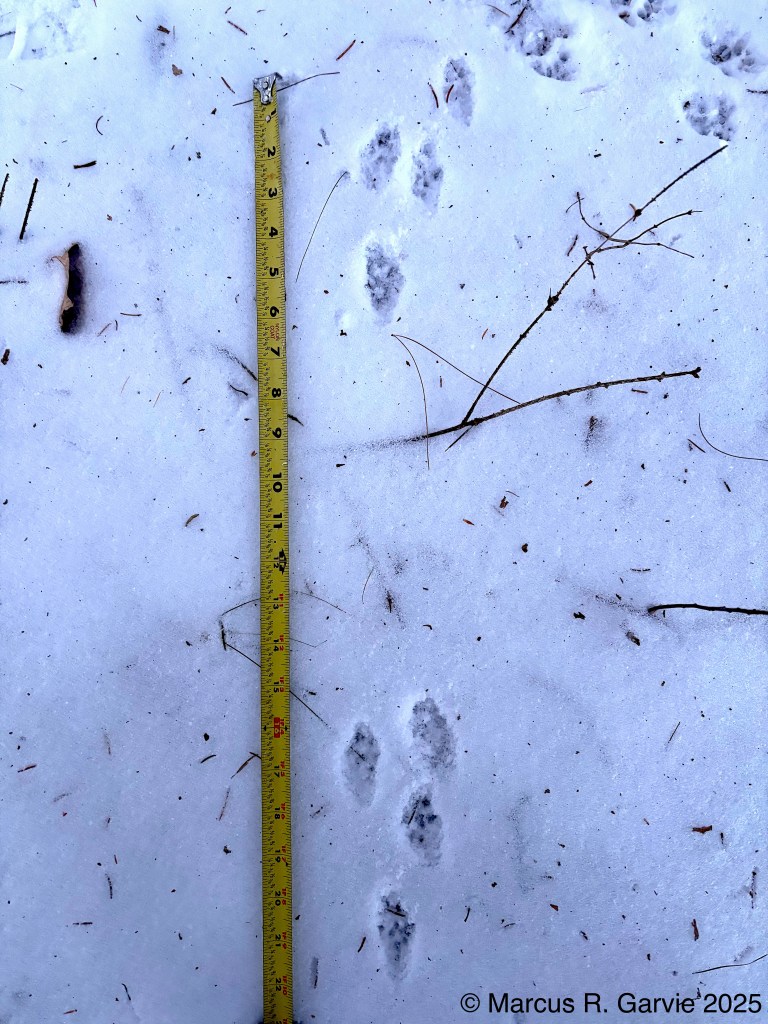
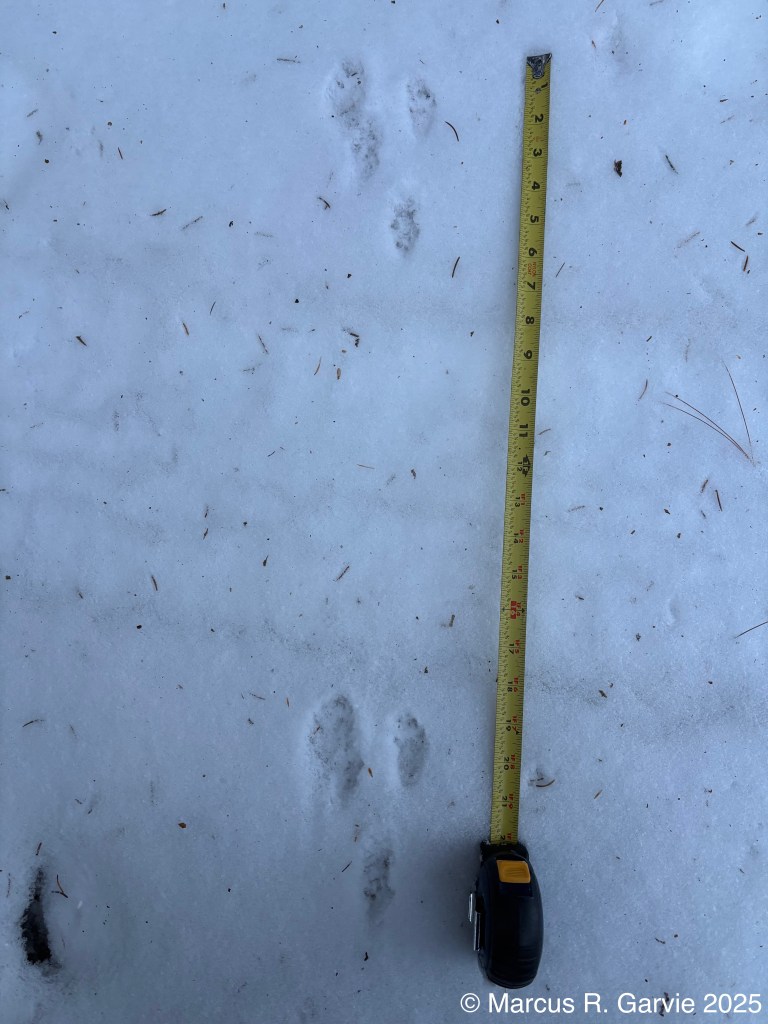
2 x 2 (or nearly):
In some of the tracks for Gray Squirrel the front and hind feet are either on top of each other or along an (almost) horizontal line.
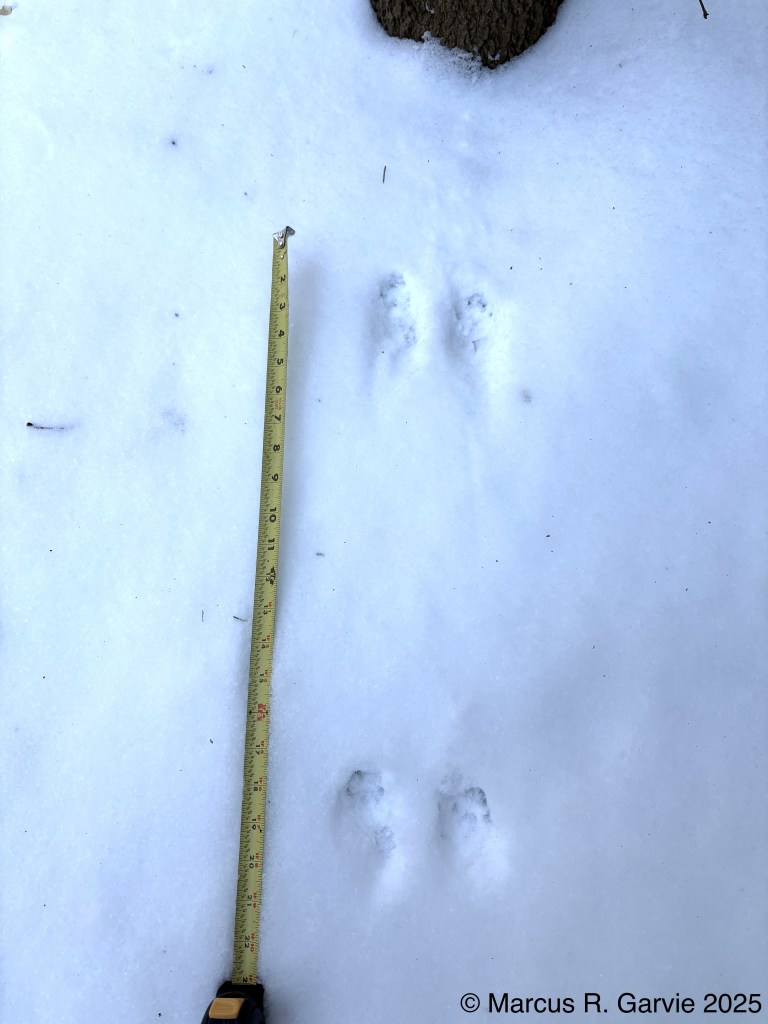
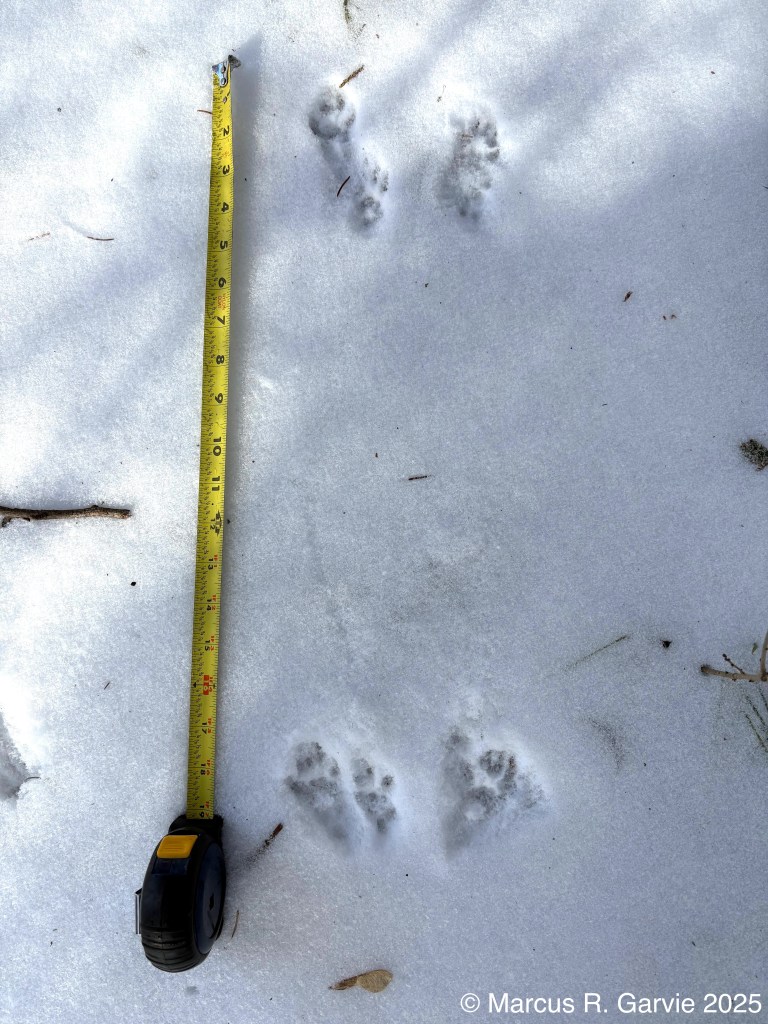
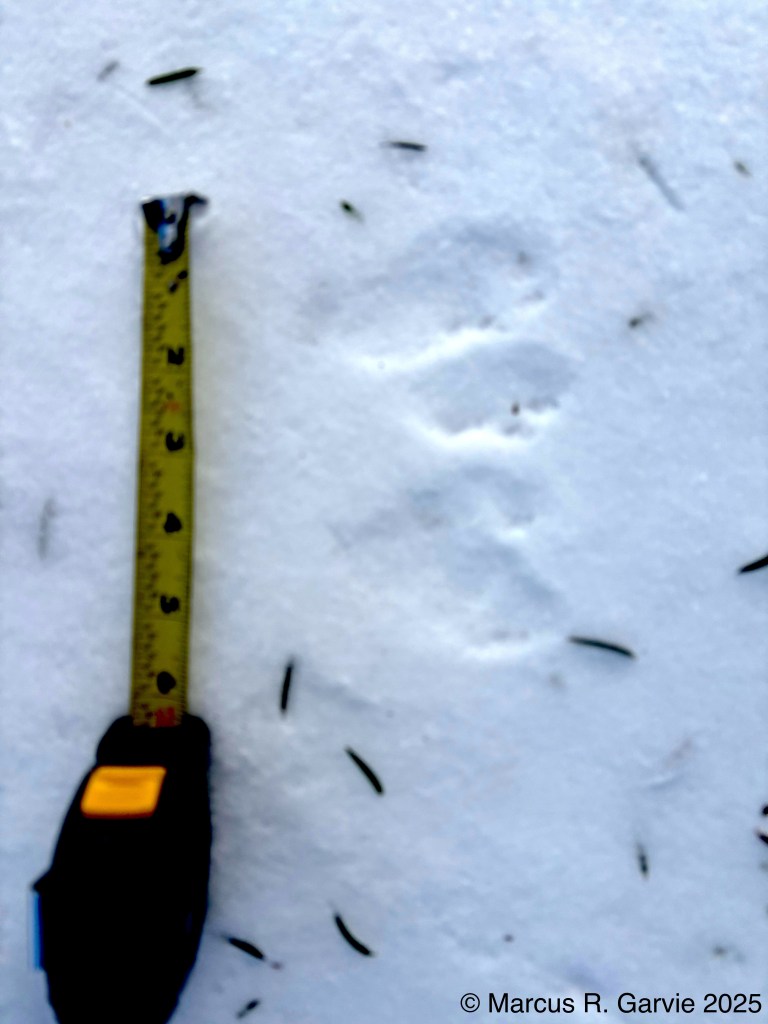
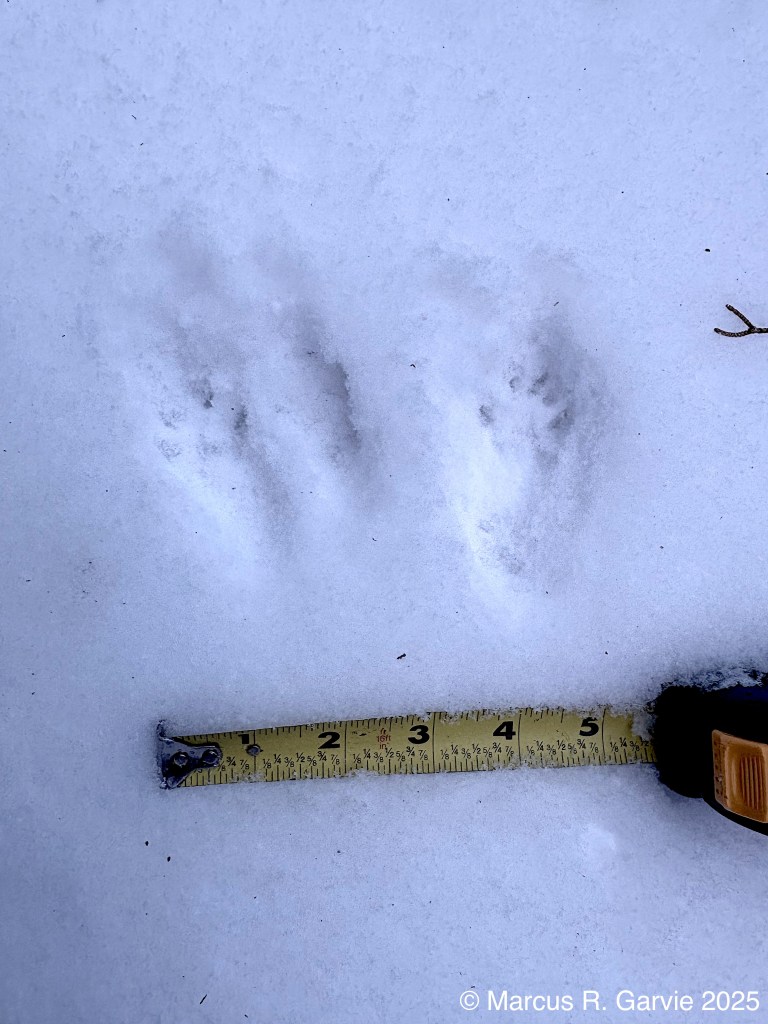
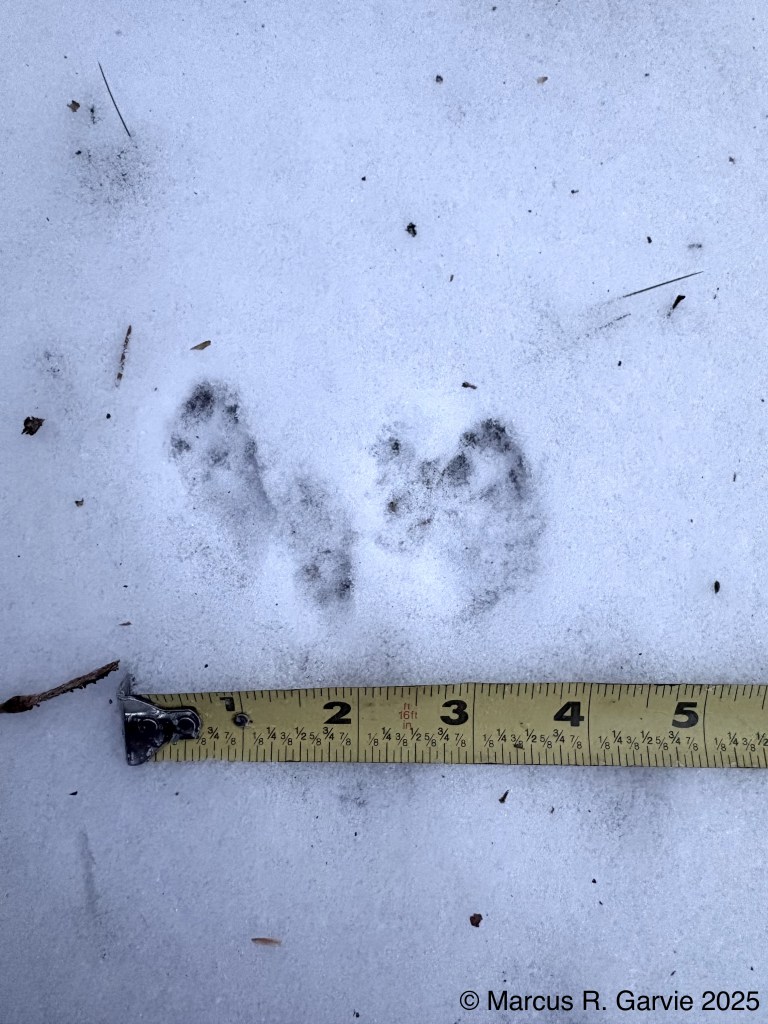
Hopping gait:
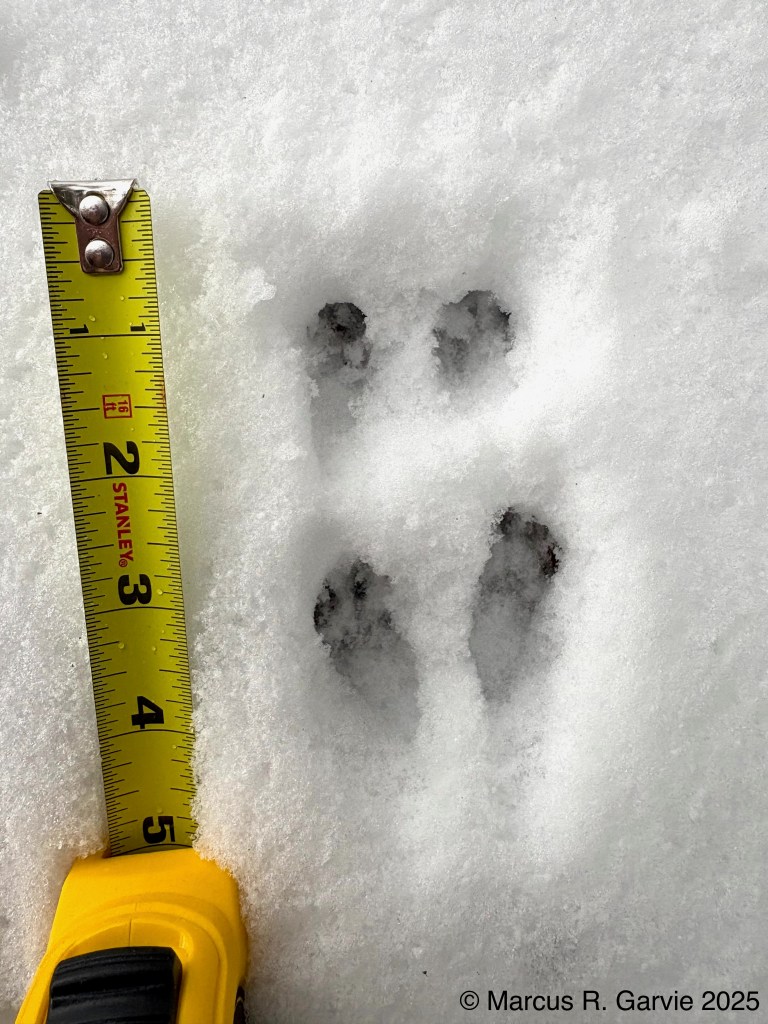
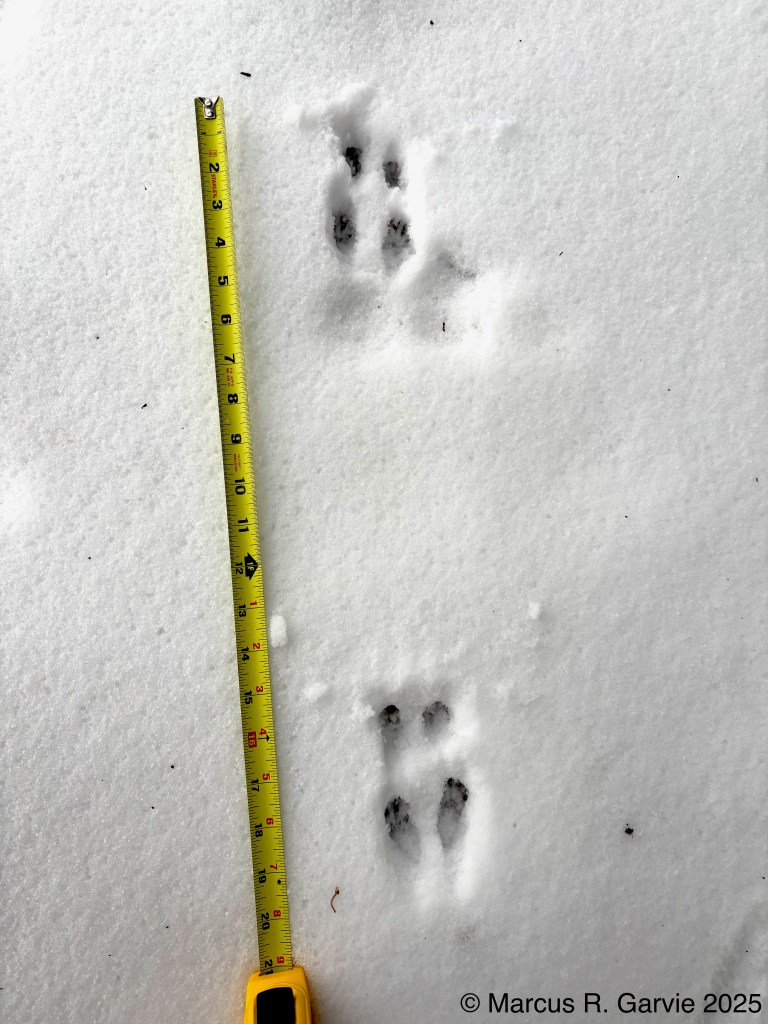
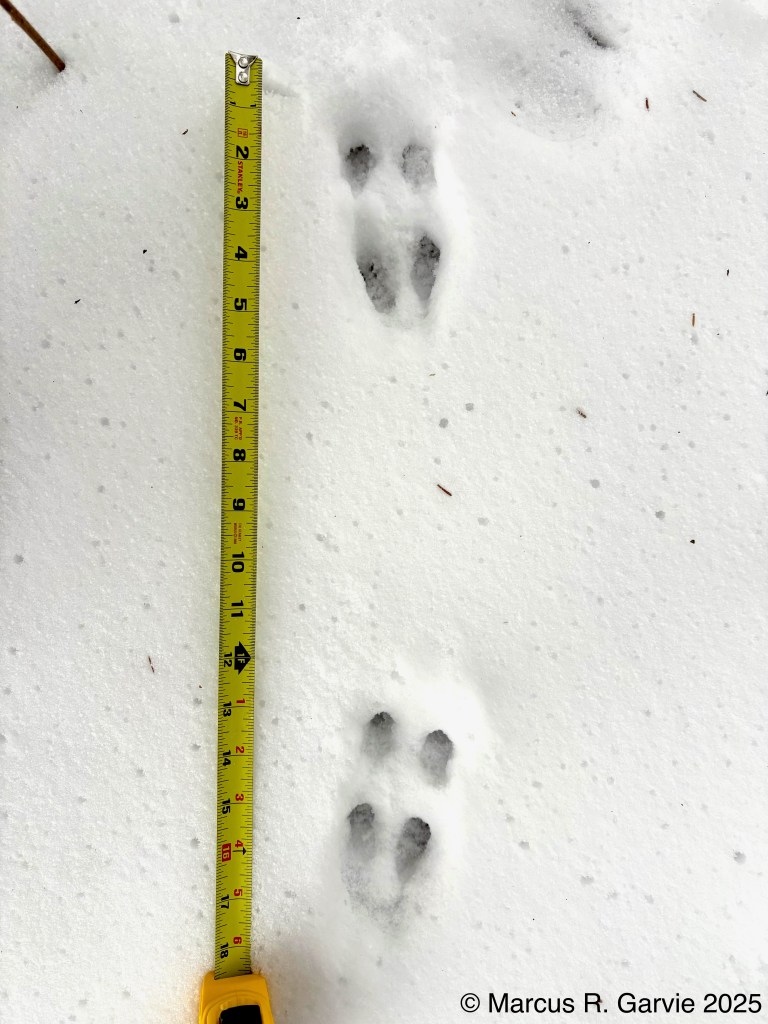
In a hop, the front feet are ahead of the hind feet. Here are what I think are some Gray Squirrels hopping:
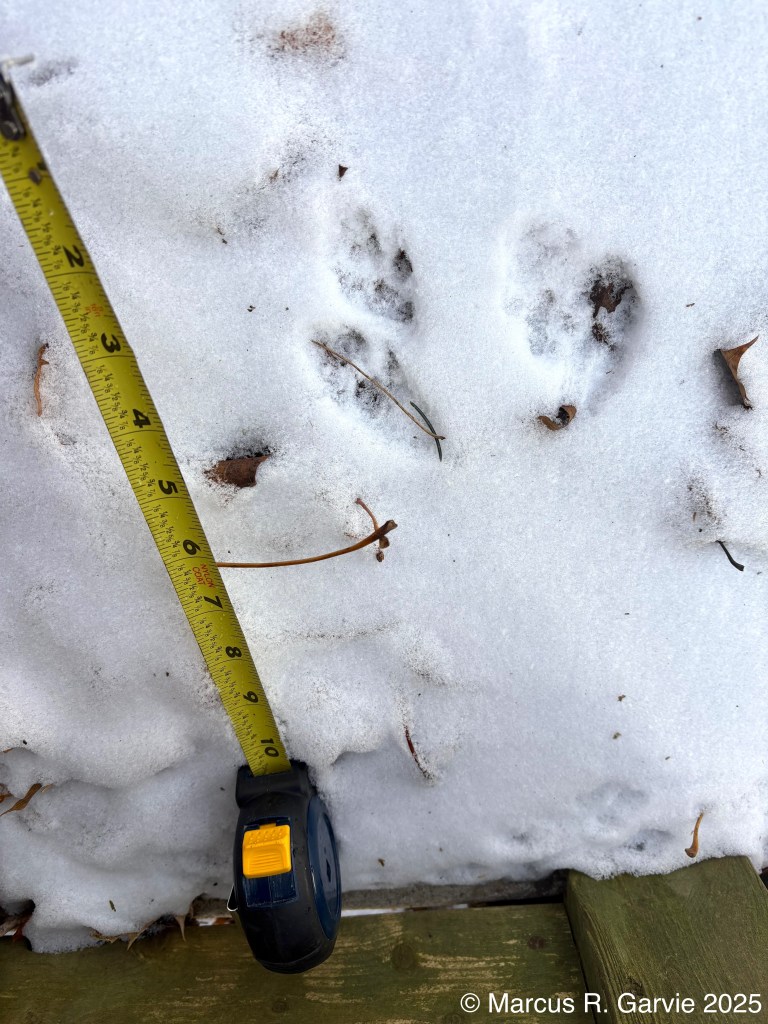
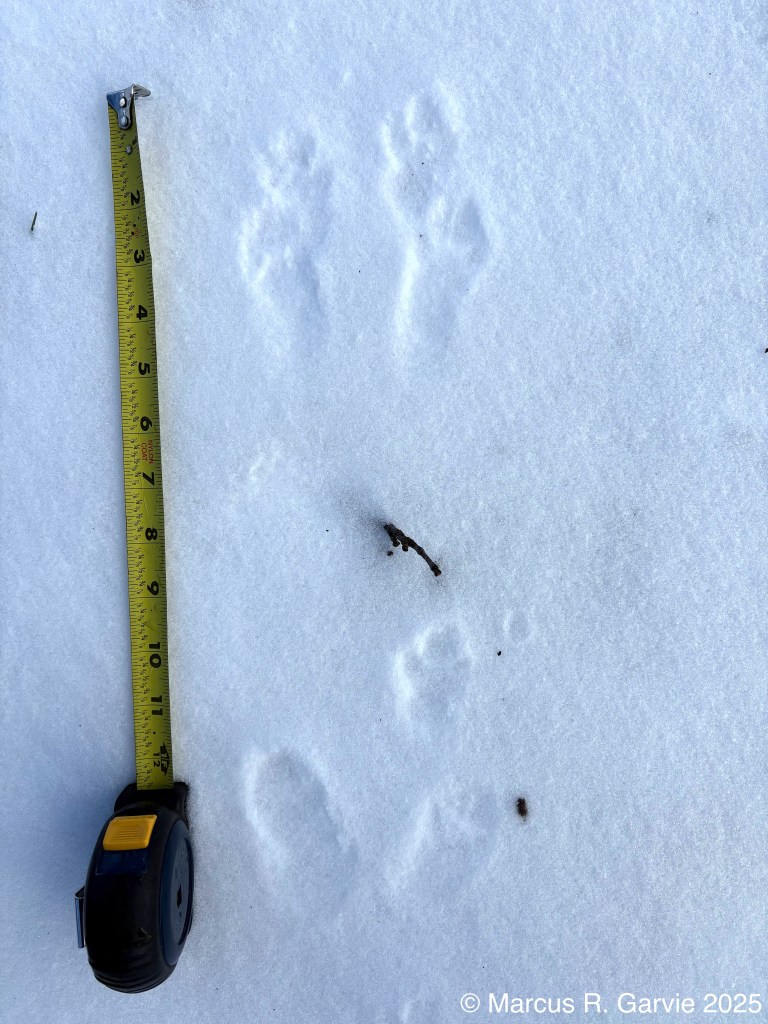
And here are some Red Squirrels hopping:
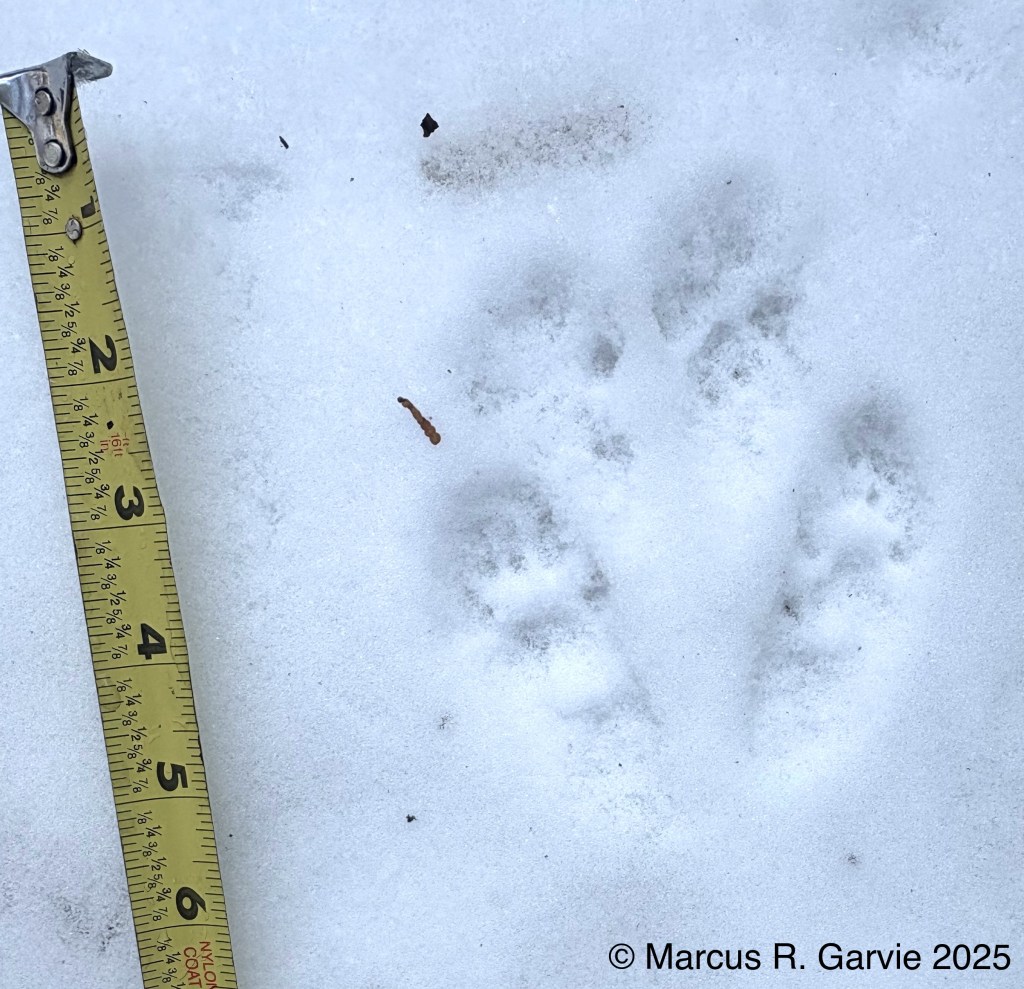
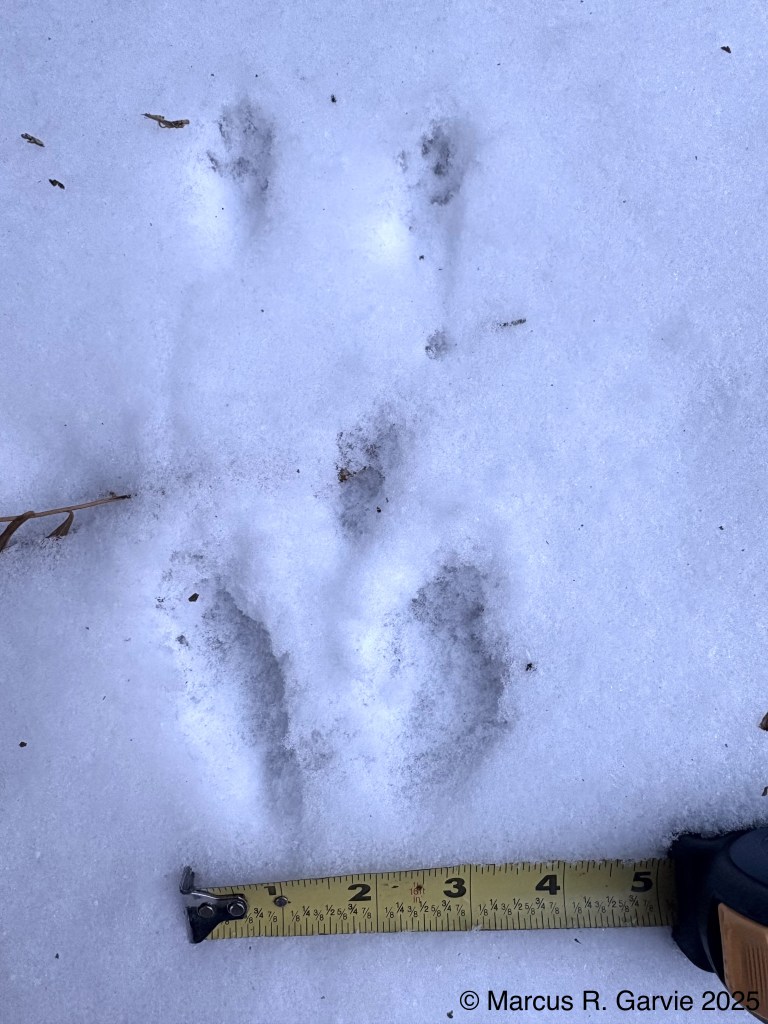
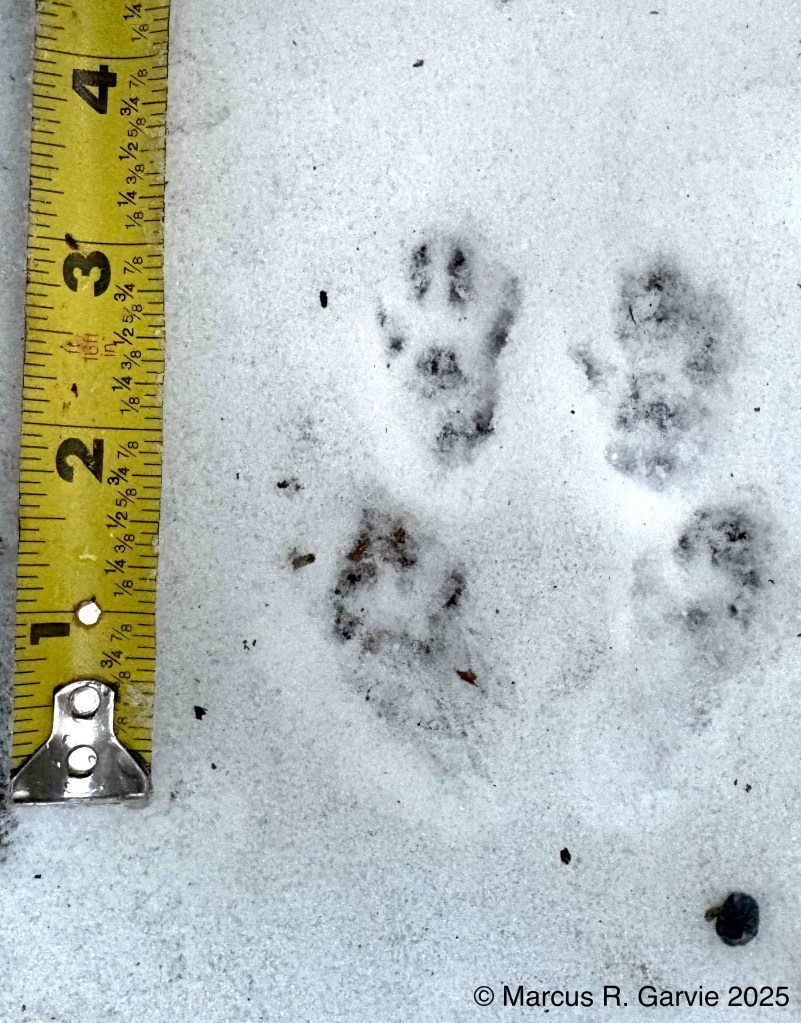
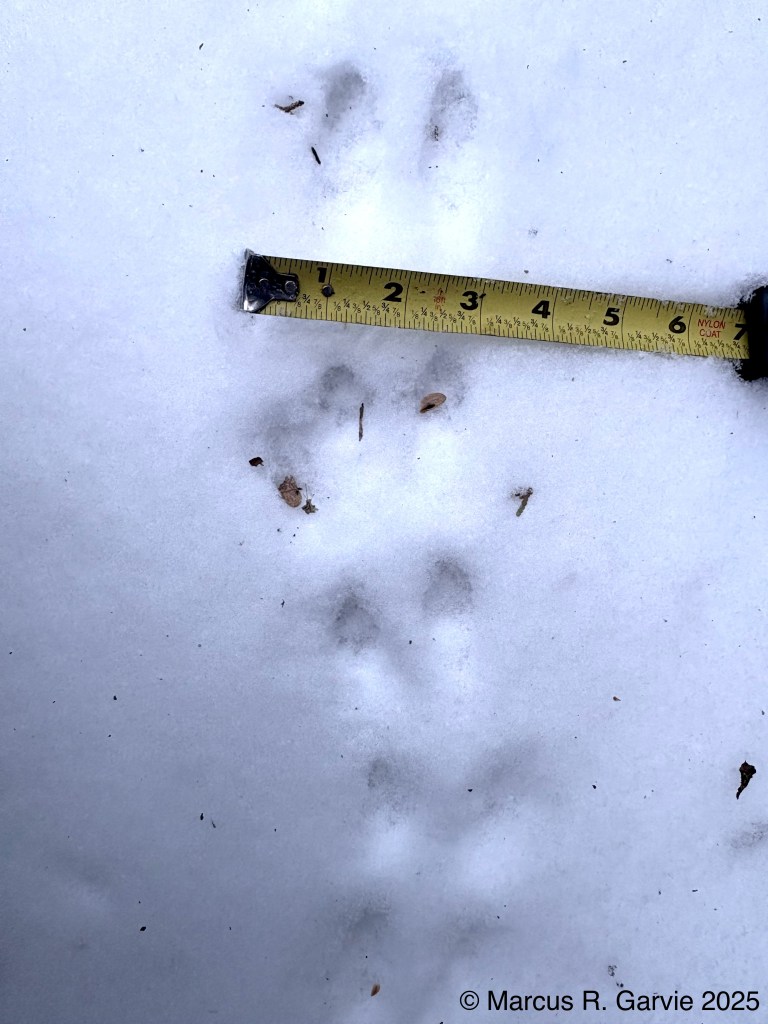
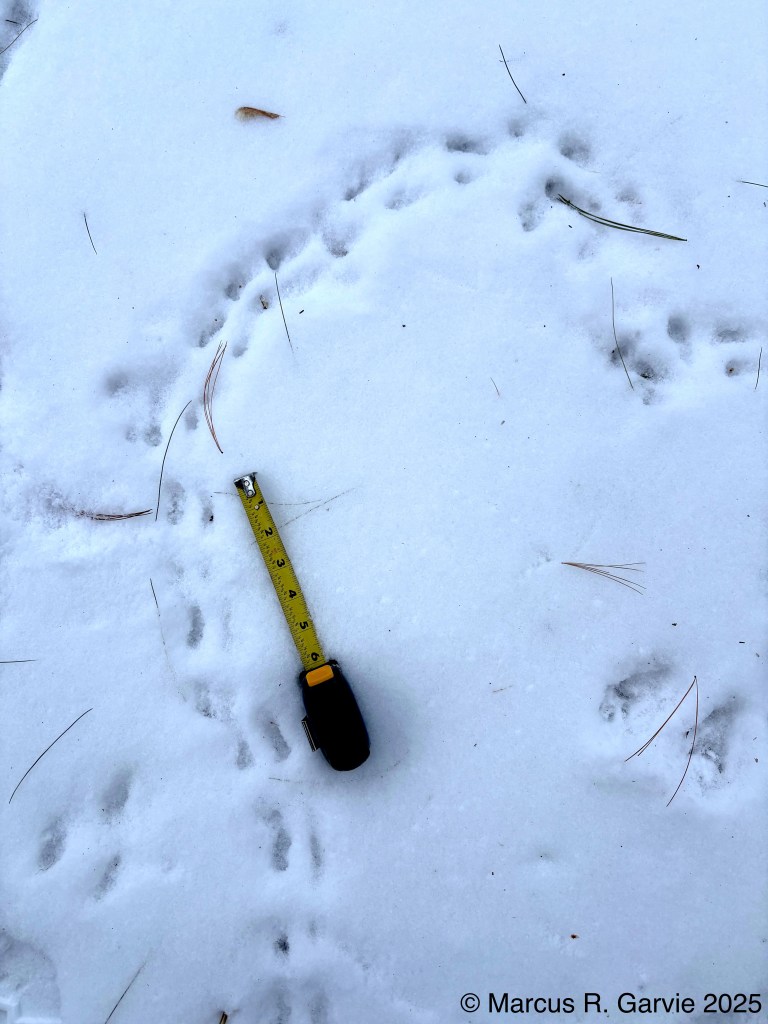
In the last two photos, the pattern looks a little different. Is this still a hop?
And here are some Red Squirrels hopping:
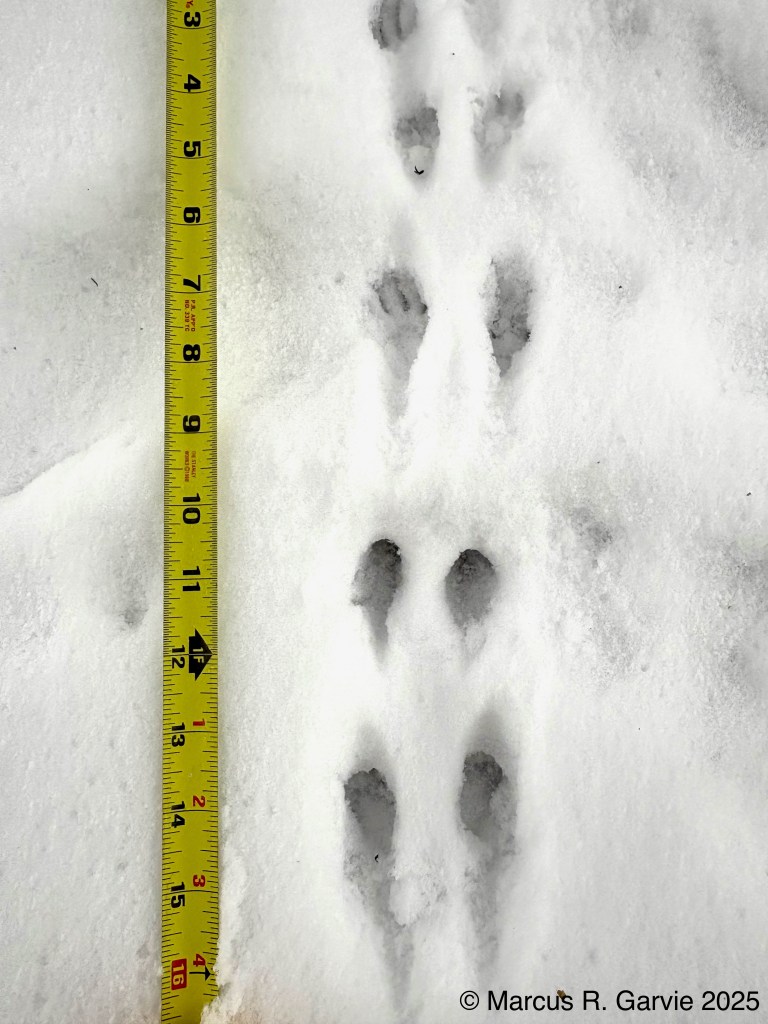
Final thoughts and questions:
I was amazed at how often Gray and Red Squirrels do non-standard gaits. I didn’t see any Y-bounds for Gray Squirrels or 2 x 2 gaits for Red Squirrels (or am I seeing a Red Squirrel do a 2 x 2 gait in the last two photos above?). And I didn’t observe any squirrels walking. I will add them here when I find them.
These different gaits naturally raise the question of when a squirrel uses each one. It seems reasonable that as speed increases, the front feet land progressively farther behind the hind feet. Hopping appears to be a very slow gait, perhaps used as the animal comes to a stop at a destination. As for a squirrel using a Y-bound instead of a W-bound, my guess is that this represents an intermediate speed gait between the W-bound and the 2 × 2 gait. My summary of these gaits and their relative speeds is illustrated below.
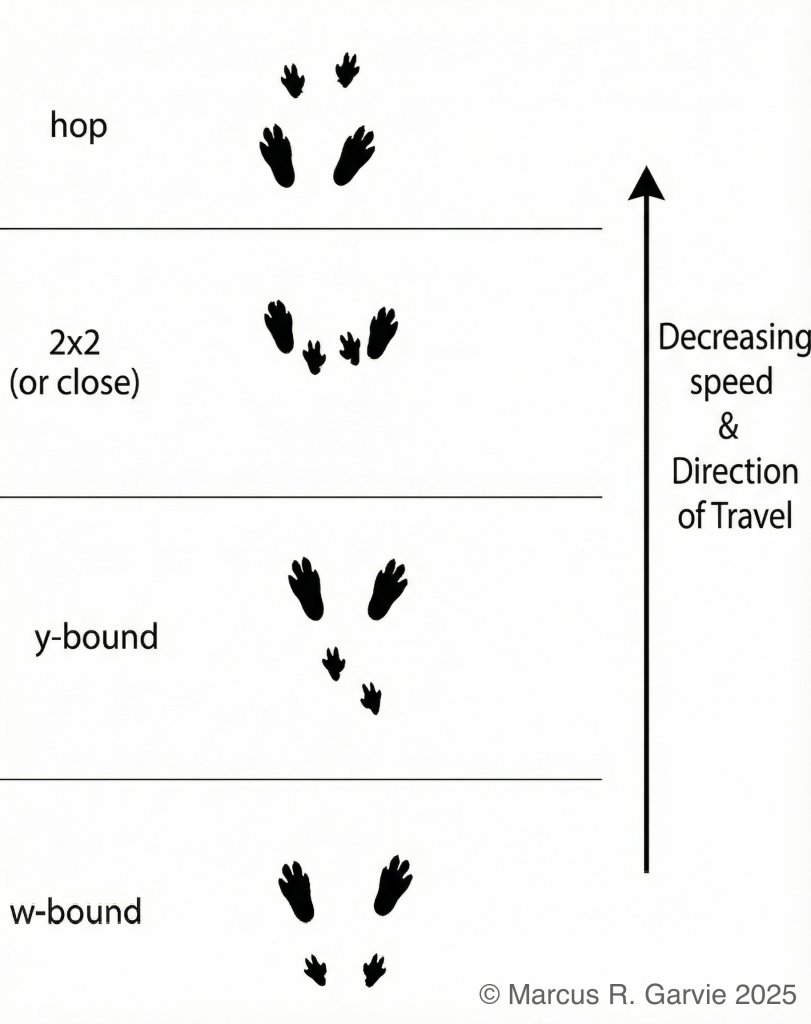
I have not included a walk here, which I’m assuming would be the slowest gait of all.
Postscript:
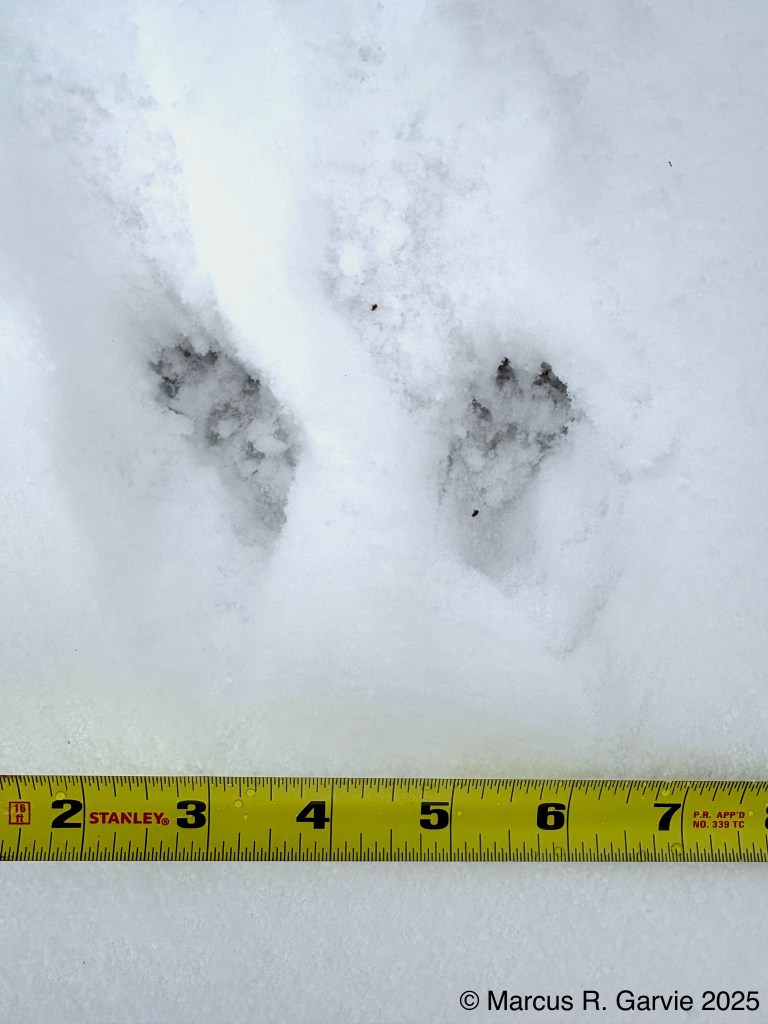
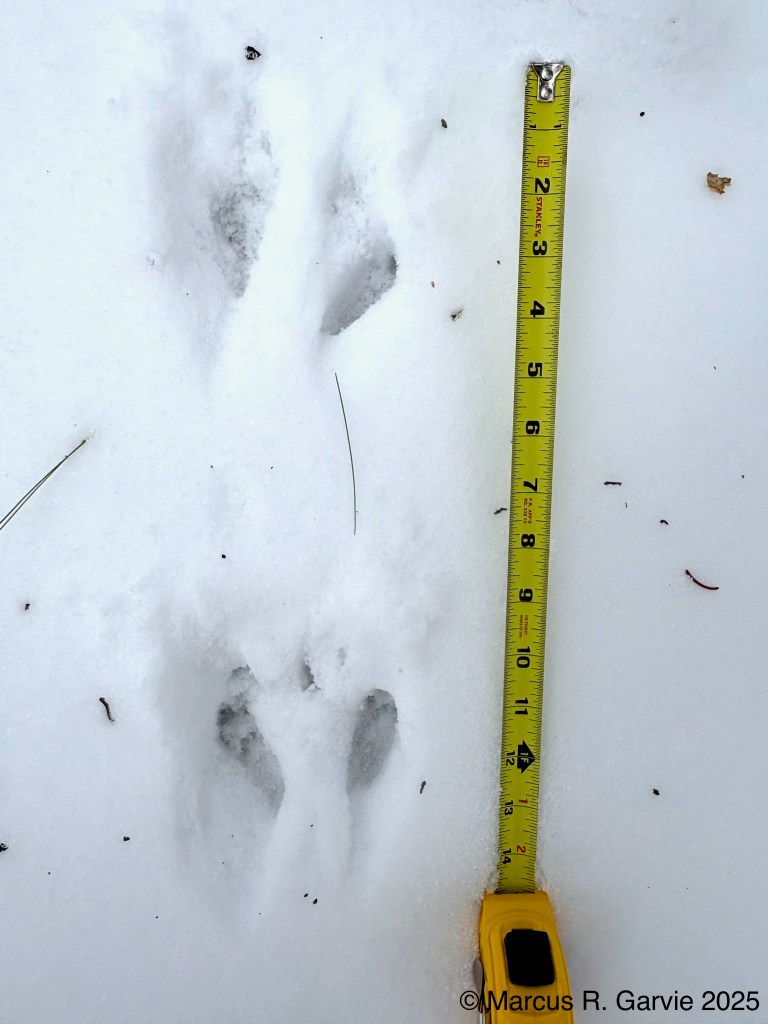
I went back to the University Arboretum when the snow was much deeper. The majority of Gray Squirrel tracks were in a 2 x 2 pattern. This suggests that the substrate also affects the gait the squirrel uses. Perhaps it uses less energy in deep snow for the hind feet to land where the front feet have already compacted the snow? Here are two examples:
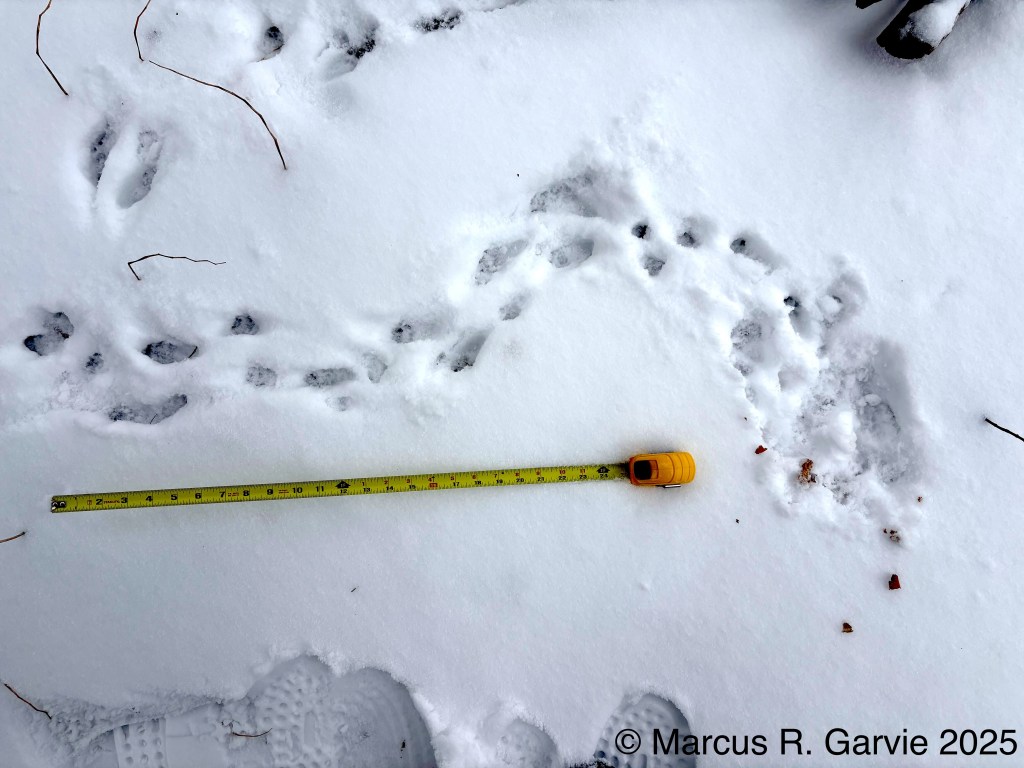
I also finally found a place where a (Red Squirrel?) transitioned into a walk as it came to a stop to feed on a nut.
 Field Notes of a Tracker
Leave a comment