
Place: Guelph, ON, along the Eramosa River.
Dates: Eggs – Sept. 2024, tracks and turtle sighting – Fall 2025.
Aim: collect together some sighting of the common snapping turtle, their eggs, and tracks. Learn more about these turtles.
References:
- ‘Tracks & Sign of Reptiles & Amphibians: A guide to North American Species’, Filip Tkaczyk, Stackpole Books, 2015
- Scats and Tracks of North America, James C. Halfpenny, Falcon Guides, 2008
- http://ontarioturtle.ca
- https://ontarionature.org/programs/community-science/reptile-amphibian-atlas/snapping-turtle
- https://en.wikipedia.org/wiki/Common_snapping_turtle
As this post focusses on the snapping turtle I give a summary of this species below:
Common snapping turtles: The common snapping turtle (Chelydra serpentina) is a large, freshwater turtle widely distributed across Canada, typically inhabiting slow-moving rivers, ponds, and marshes with soft bottoms and dense vegetation. It spends most of its time underwater, rarely basking. It has a rugged appearance, with a large head, powerful hooked jaws, long muscular tail, and a dark, ridged carapace that can reach 50 cm in length and weigh up to 16 kg or more. The greatly reduced plastrons form a cross of bones across the midsection of the abdomen. The carapace is the upper, domed part of a turtle’s shell that covers and protects its back, formed by the fusion of the turtle’s ribs, vertebrae, and dermal bone. The plastron is the lower, flat portion of the shell that covers and protects the turtle’s underside (belly). Together, the carapace and plastron are joined along the sides by bony bridges, forming a rigid protective casing around most of the turtle’s body. Snapping turtles are omnivorous, feeding on fish, amphibians, invertebrates, carrion, and aquatic plants. They overwinter buried in mud and become active in spring, when mating occurs. Females nest in late May or June, laying 25 – 80 round eggs in sandy or gravelly soils; the eggs hatch from late August to September. The sex of the eggs is believed to be determined by the temperature. This species plays an important ecological role as both predator and scavenger, helping maintain aquatic ecosystem balance, and individuals can live for several decades, often 30–50 years in the wild.
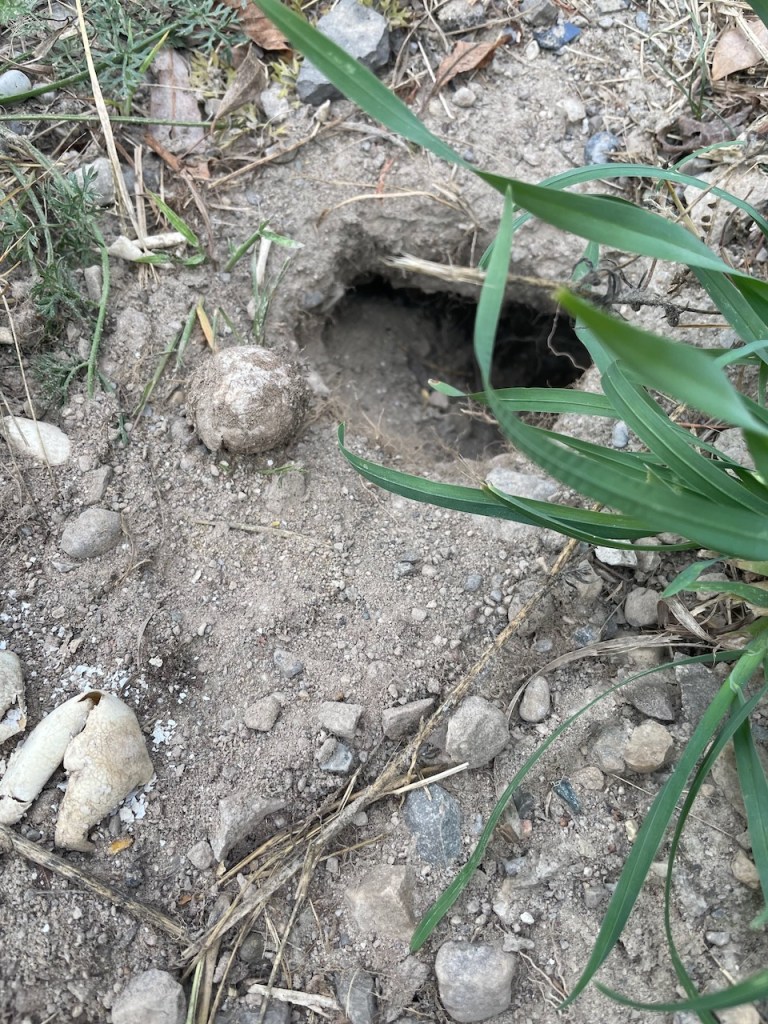
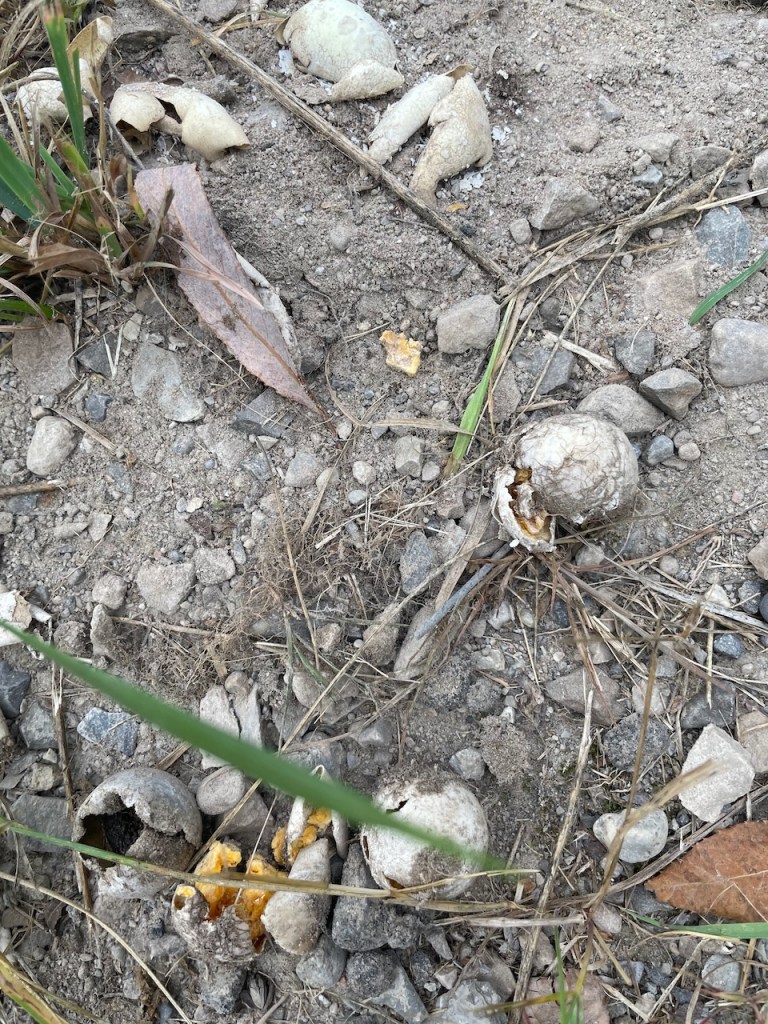
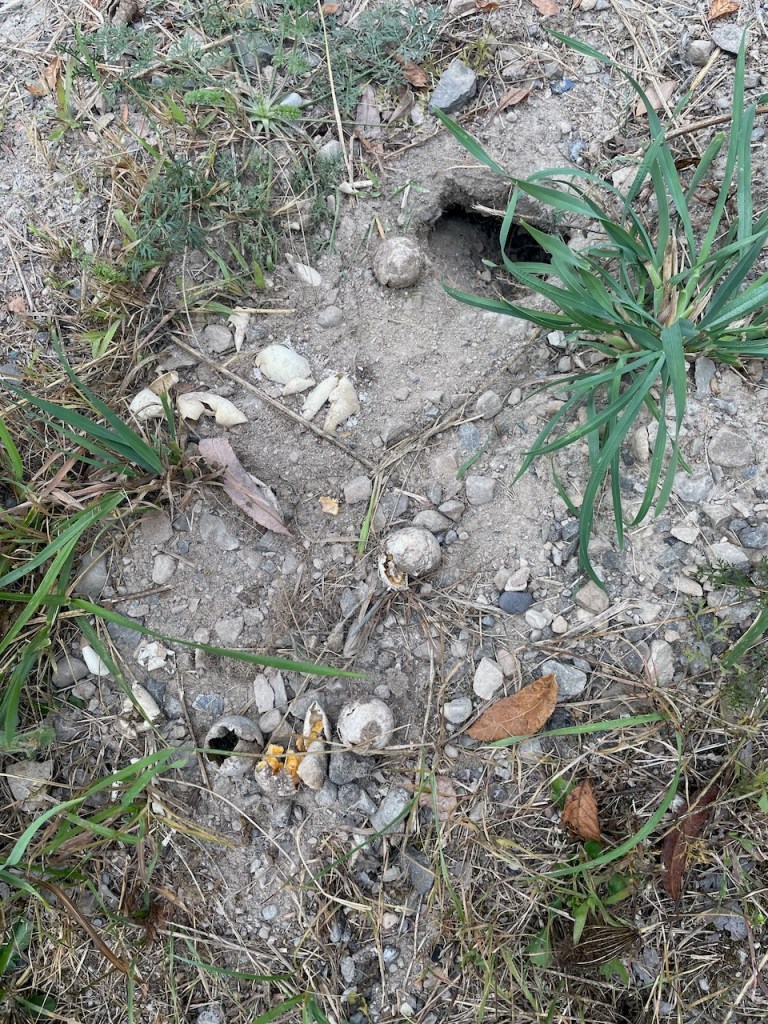
Discussion: Last Fall I saw some snapping turtle nests that had been dug up by a predator. These were on the edge of the Eramosa River (maybe 20 feet from the water) in sandy soil. The snapping turtle is Ontario’s largest freshwater turtle. Snapping turtles lay round eggs, whereas other Ontario turtle species lay oval-shaped eggs. The typical predators that may dig up a turtle nest include crows, American mink, skunks, foxes, and raccoons.
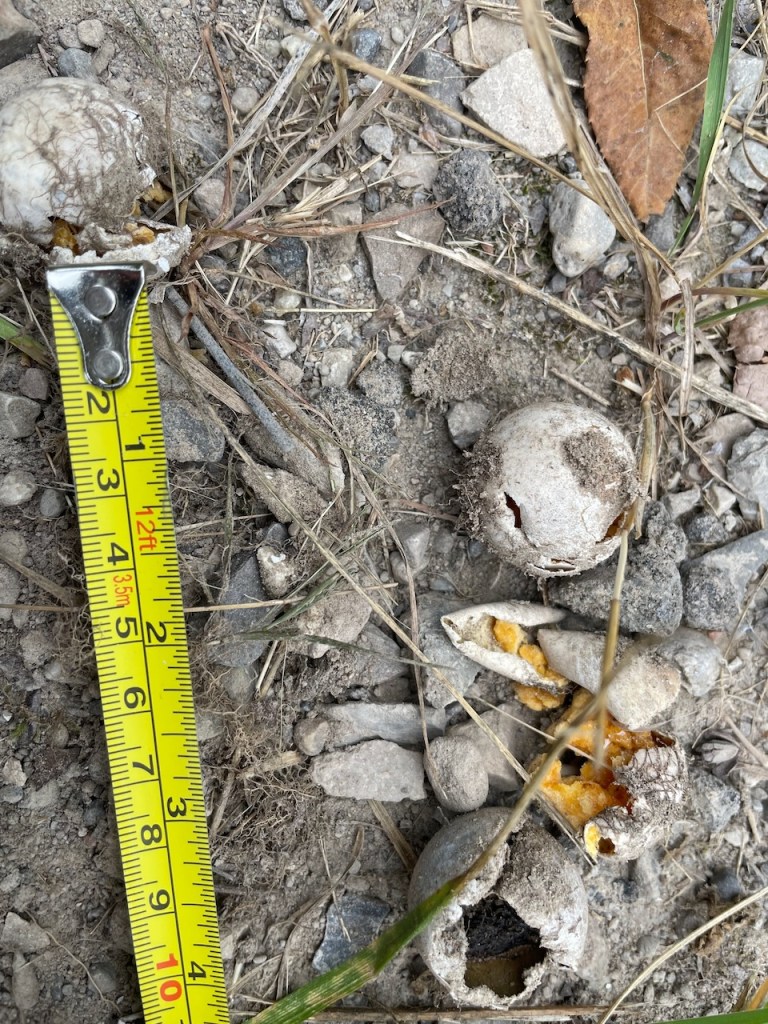
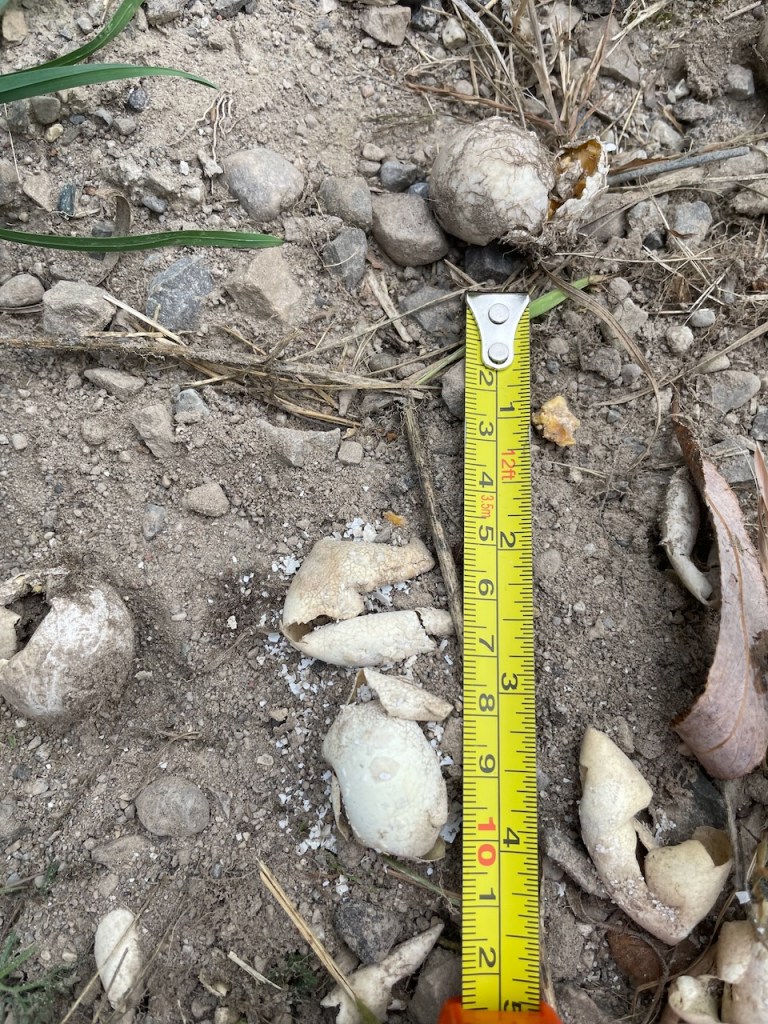
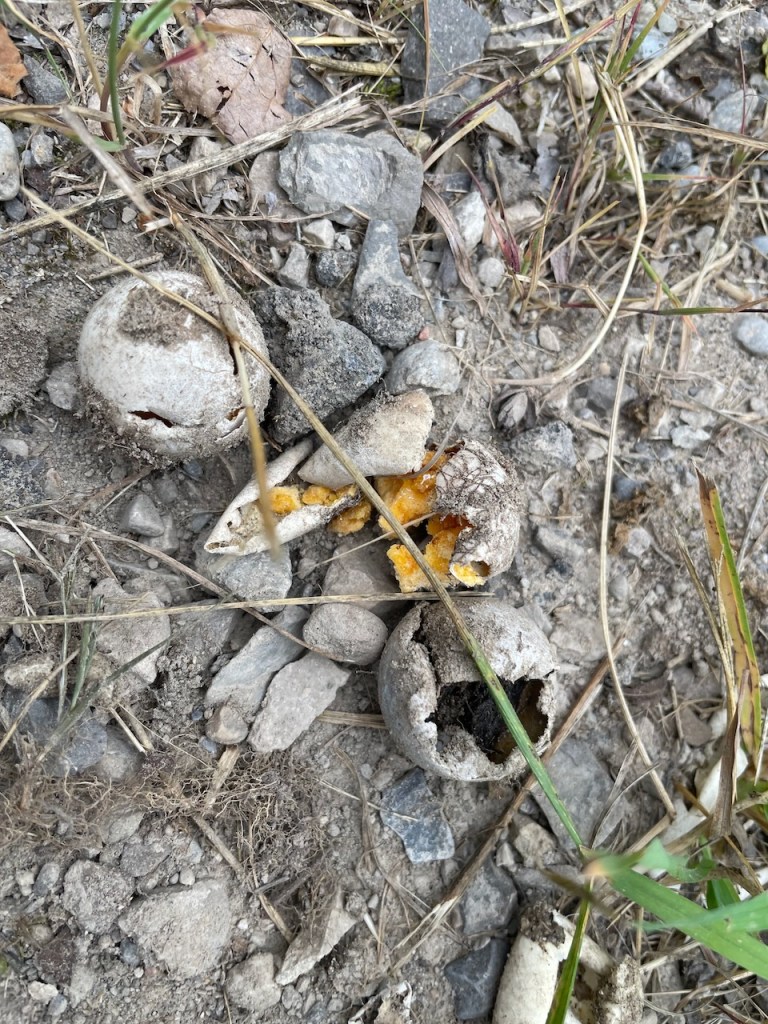
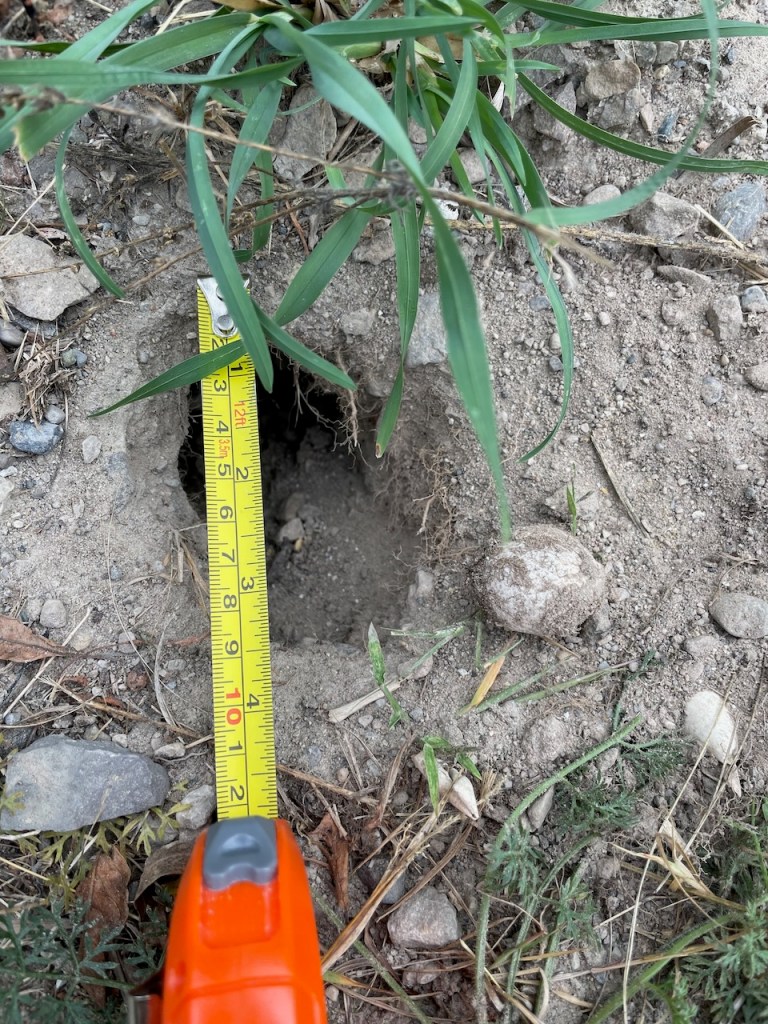
While out tracking beaver with Byron Murray near the Barber Scout Camp (733 Stone Rd E, Guelph) I saw what appeared to be turtle tracks on the edge of a pond in the soft mud (the kids and staff of the Guelph Outdoor School call this pond the ‘Muskrat Pond’).
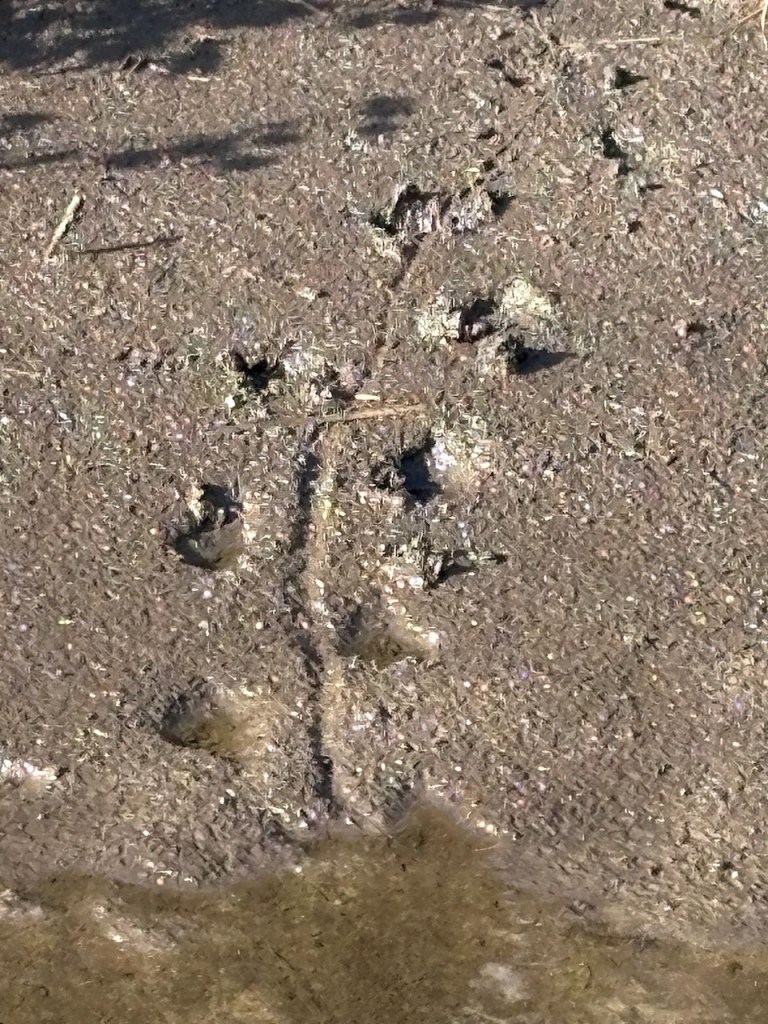
I could not take a picture with my tape ruler. I tried to get close but starting sinking in the mud and lost my boots for a while. I estimated the trail width to be about 6 inches or more. The trail pattern is consistent with that made by a snapping turtle (see Tkaczyk, pp. 333 – 335). The turtle is doing an understep walk (of course it’s impossible for a turtle to do an overstep walk!). The tail drag is very prominent, which is again typical for this turtle. According to Tkaczyk, “When this species walks, it usually carries its shell well above the ground on fully extended legs”. Again, this seems consistent with what I see – there is no apparent plastron drag. The snapping turtle has five toes on the front and hind feet, but generally only four toes register on the hind feet. According to Halfpenny, front prints toe in and hind prints may toe out. The pictures below are from Halfpenny.
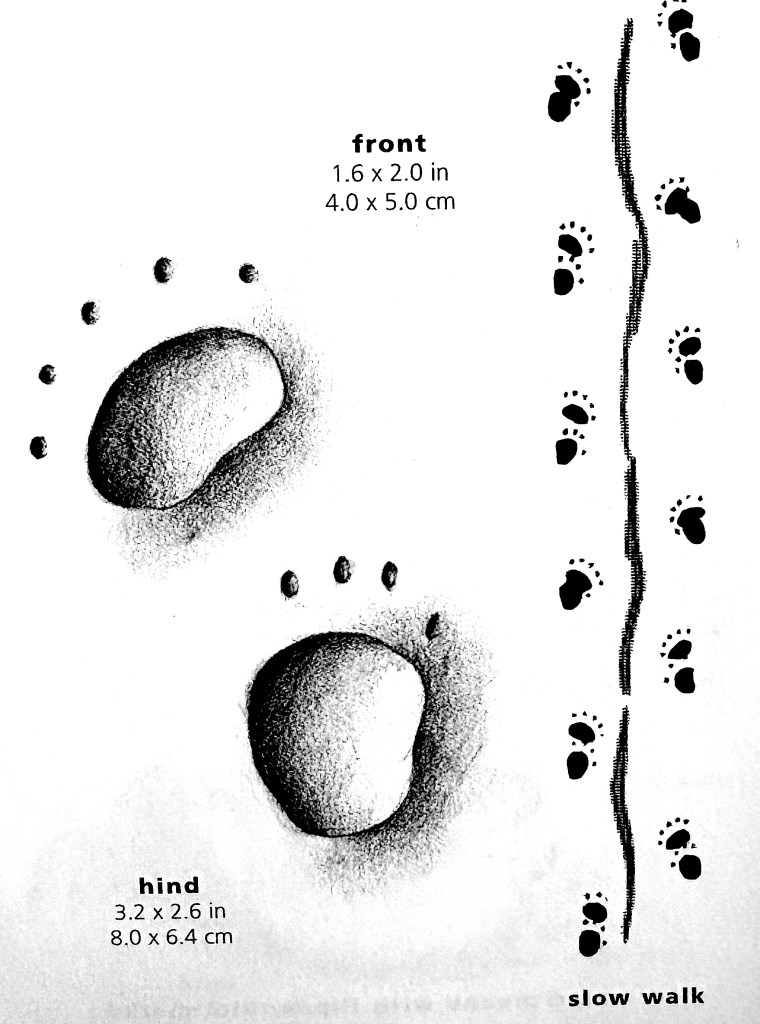
I don’t think there is enough detail in my photo to distinguish between front and hind tracks.
Was the turtle on its way to a hibernation spot? In Ontario, snapping turtles enter hibernation in aquatic habitats during the cold months, generally from October until the spring thaw. They choose sites with slow-moving or still water that provide a soft mud or silt substrate, such as ponds, marshes, lakes, or slow-flowing rivers. Typically, they settle near the shore in water deep enough to prevent freezing and with sufficient oxygen levels. During hibernation, snapping turtles bury themselves or rest beneath mud, leaf litter, or submerged debris, greatly reducing their activity and metabolic rate. According to Wikipedia – In northern climates where water freezes over, common snapping turtles employ a specialized method called extrapulmonary respiration, absorbing necessary oxygen from the water through membranes in their mouths and throats while hibernating in the mud for over six months. If this method proves insufficient, they switch to an anaerobic metabolic process, which burns stored sugars and fats without oxygen to survive the prolonged winter period.
On another tracking trip with Byron, while we were searching for beaver tracks, we came across a large snapping turtle walking across the soft mud at the edge of the Eramosa River, near the spot where a stream was emptying into it. The mud was too wet to register tracks, although the trail was visible. When the turtle became aware of us it stopped moving, and then dug down into the mud and disappeared!
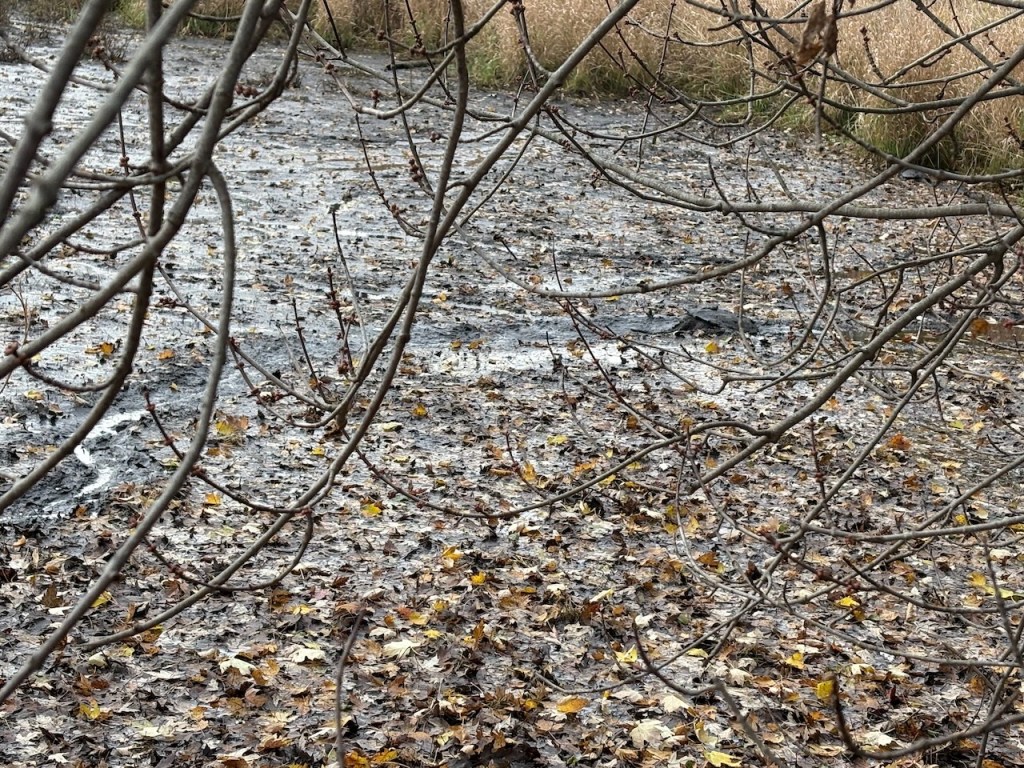
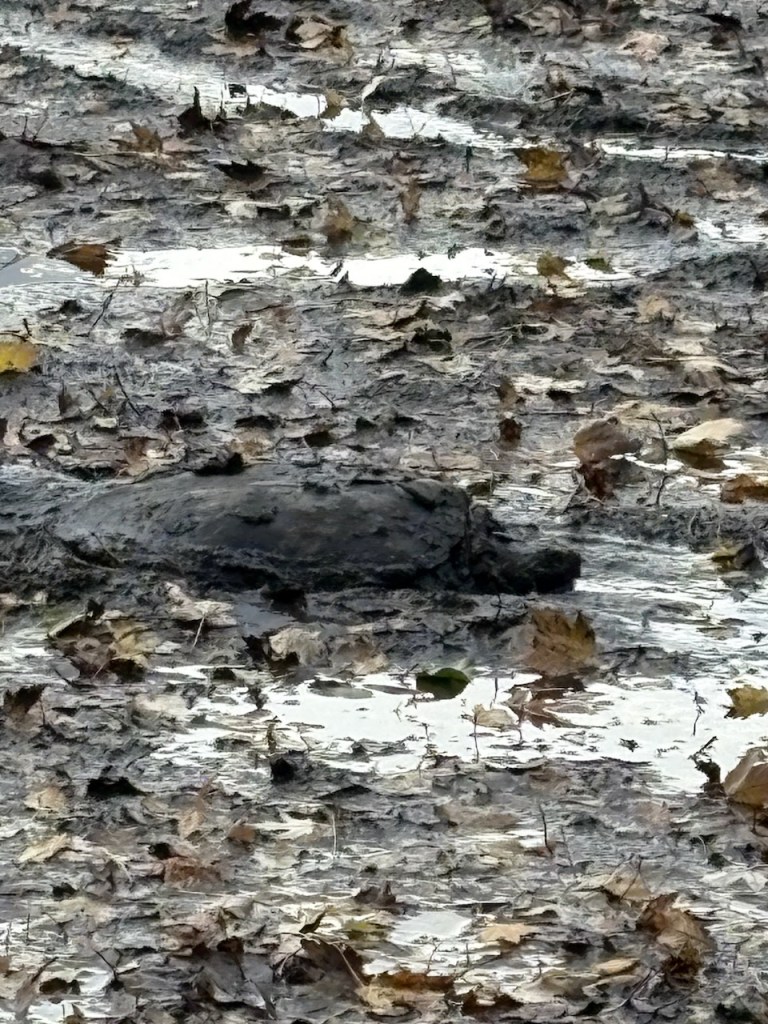
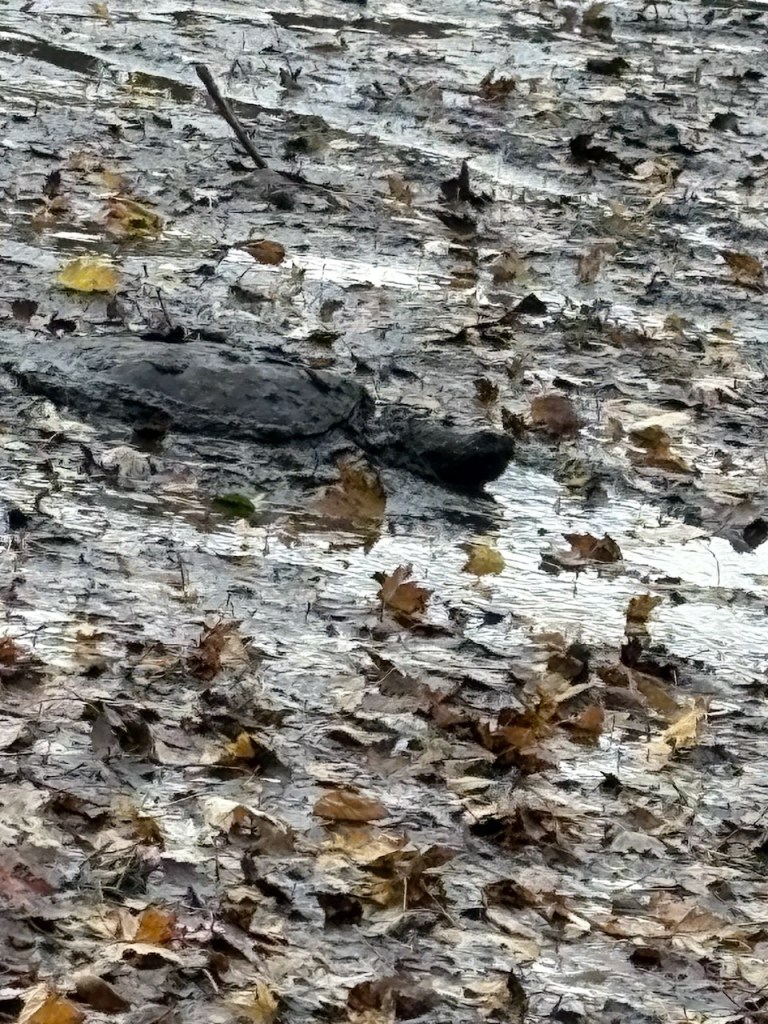
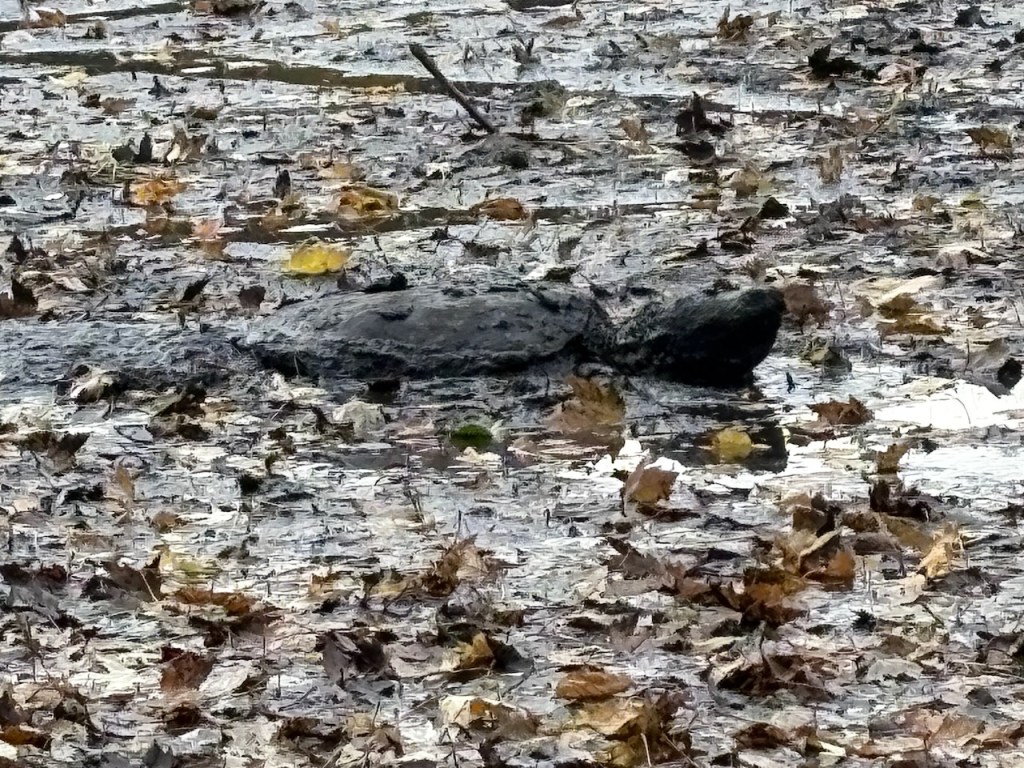
The first photo shows where this turtle had disappeared under the mud.
Final thoughts:
This was a fun species to research. I have often seen snapping turtles while swimming in the Eramosa River and was always a little wary about getting too close because of their fearsome reputation!

 Field Notes of a Tracker
Leave a comment