Date/time: Saturday Nov 1, 2025 (9am – 5pm)
Place: Mono Cliffs Provincial Park, see
https://www.google.com/maps/d/u/0/edit?mid=1Gtp4HcAuOwbZj1LotqMvWuksaMg&usp=sharing
Conditions: Unlike on my previous visit, the conditions this time were relatively mild, no snow, with temperatures around 4 to 9 °C.
References:
- “Scent Glands 101: Making Sense of Whitetails’ Scent Glands”
https://www.mossyoak.com/our-obsession/blogs/deer/scent-glands-101-making-sense-of-whitetails-scent-glands - “Porcupines: Bark-eating Beasties of the Northern Woods”
https://www.oriannesociety.org/uncategorized/porcupines-bark-eating-beasties-northern-woods/?v=f69b47f43ce4 - ‘Mammal Tracks & Sign: A Guide to North American Species’, Mark Elbroch and Eleanor Marks, First Edit., Stackpole Books
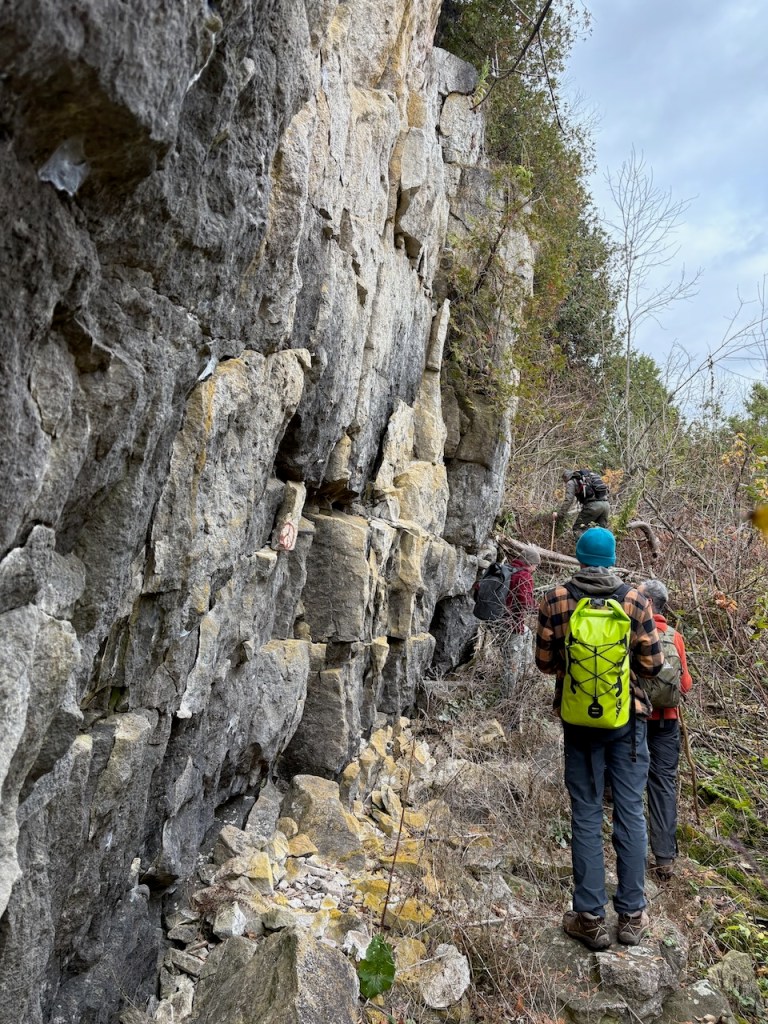
Intentions: Since it was now the rutting season for deer, our initial goal was to quietly trail them while watching for signs such as ground scrapes and tree rubs. Early in our walk, Byron startled a deer, so we followed in that direction toward the escarpment. Along the way, we came across numerous deer signs, as well as other tracks and scat.
Deer sign:
As it was Fall and it had rained recently the ground was covered in a thick matted layer of wet leaves.
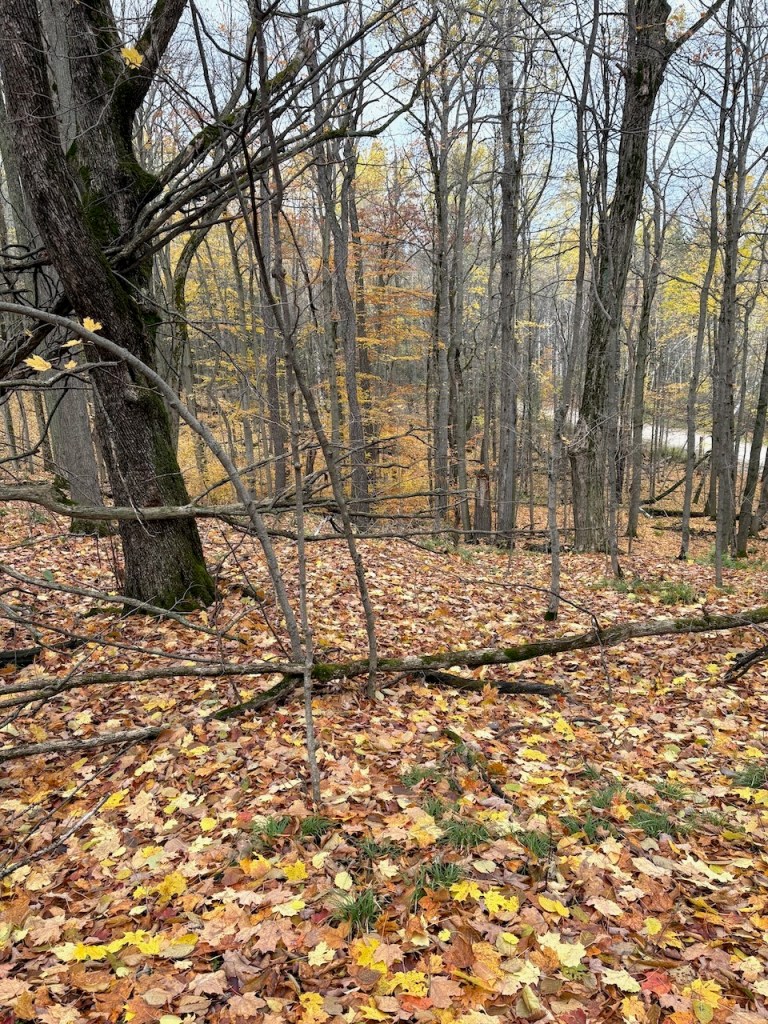
We set ourselves the task of trailing deer – following the deer tracks in the leaves, which is a challenging activity. Here are some pictures of tracks:
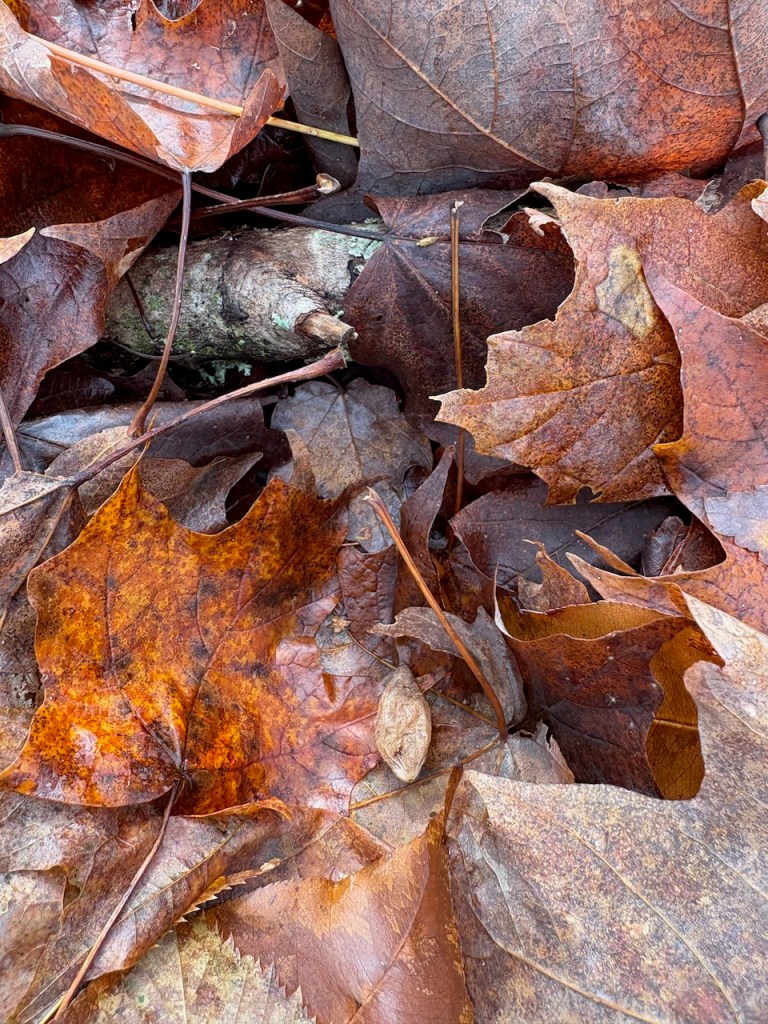
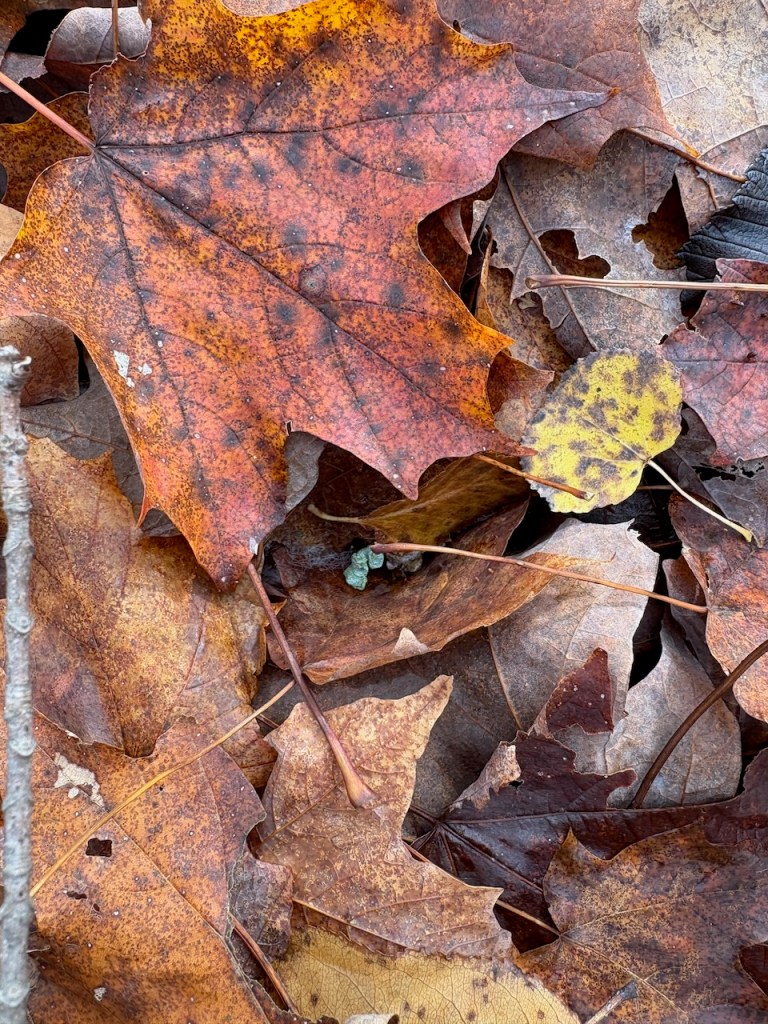
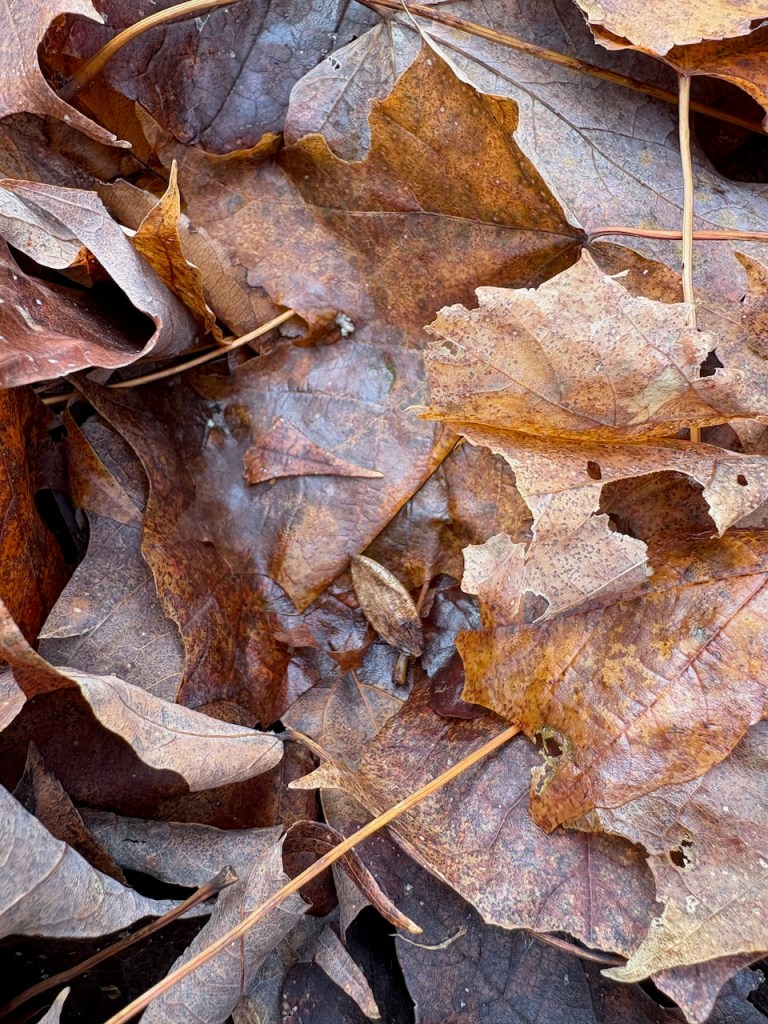
Often all one can see are subtle edges of a track edge on a leaf.
We also saw antler rubs on small trees everywhere:
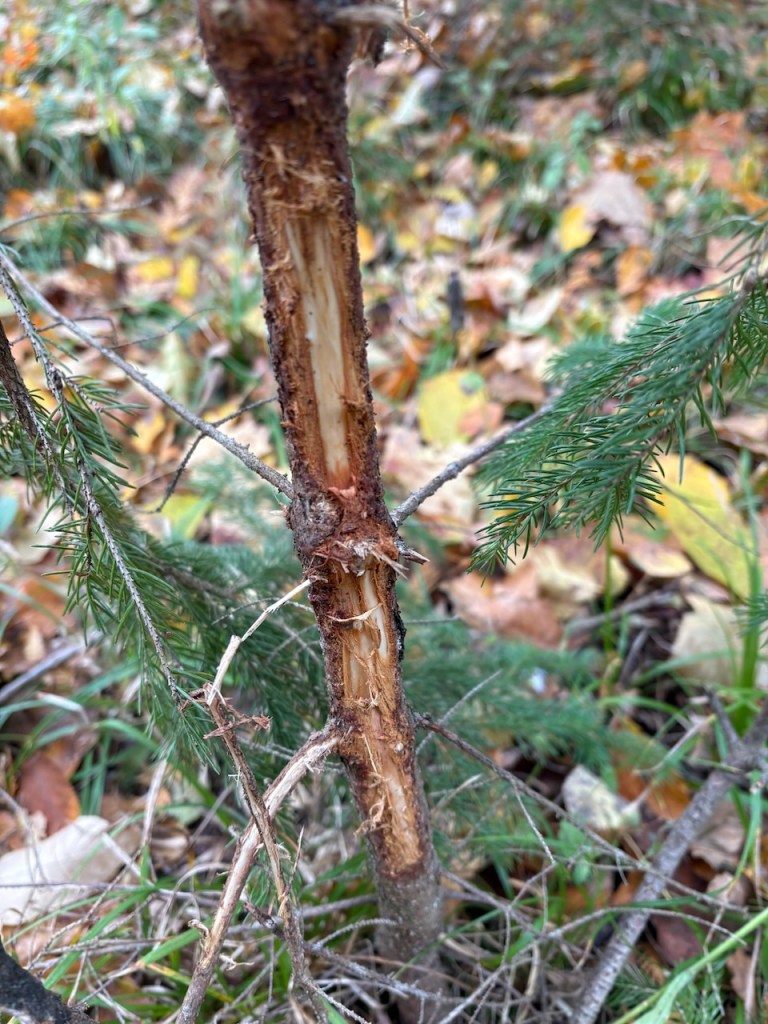
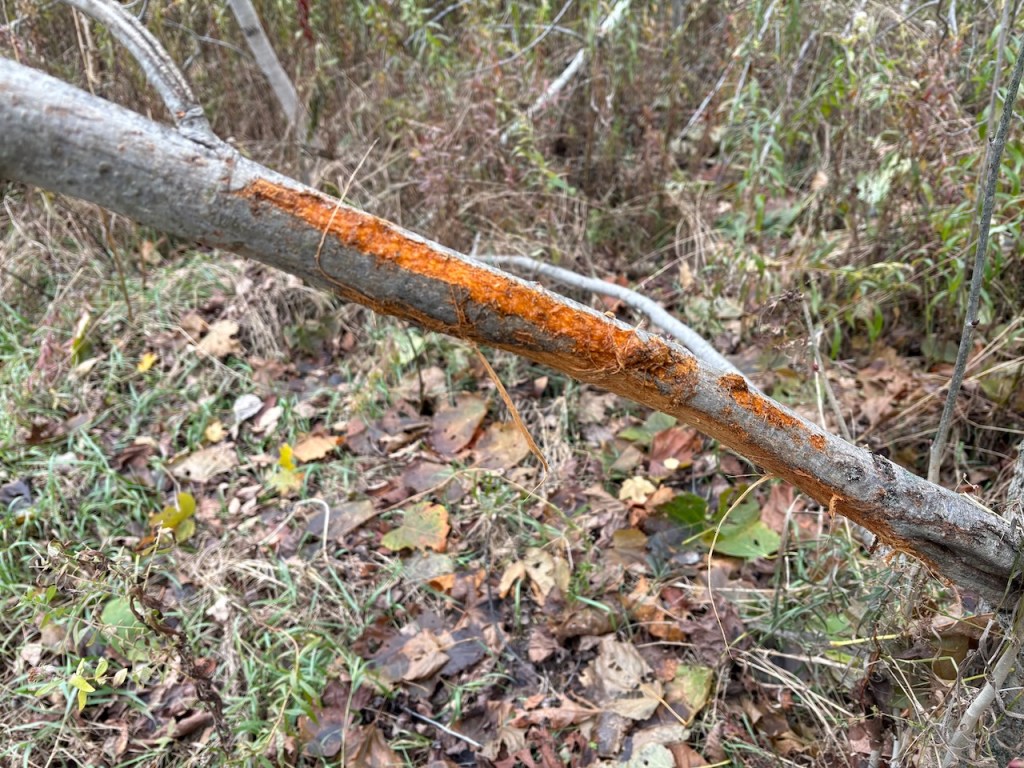
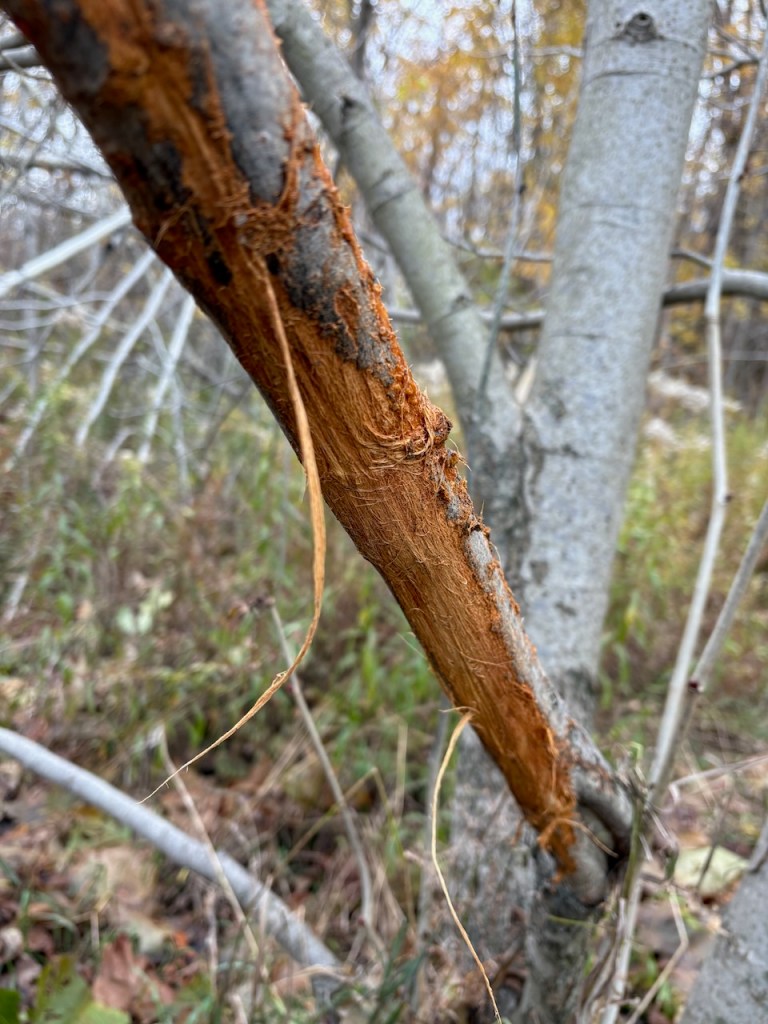
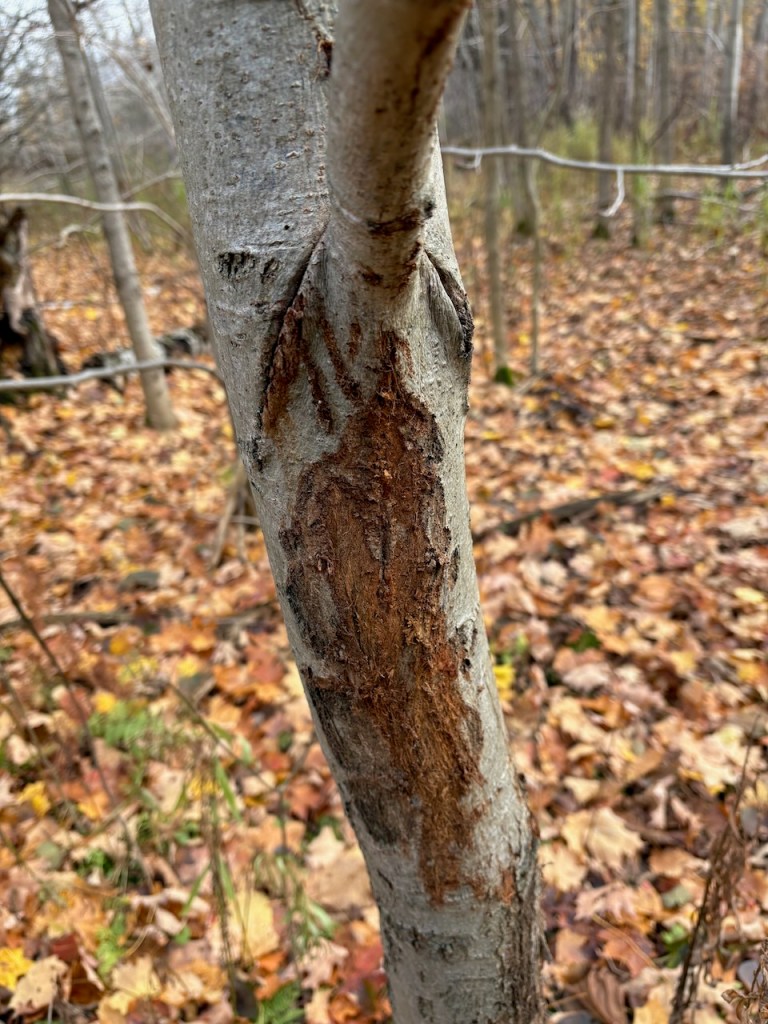
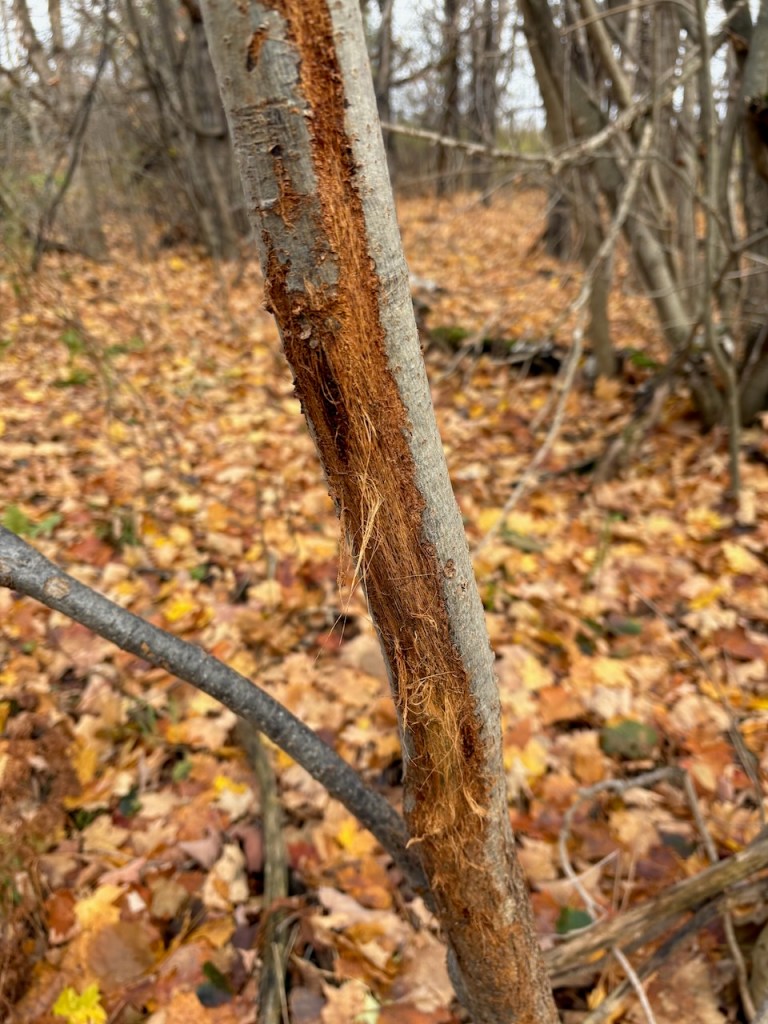
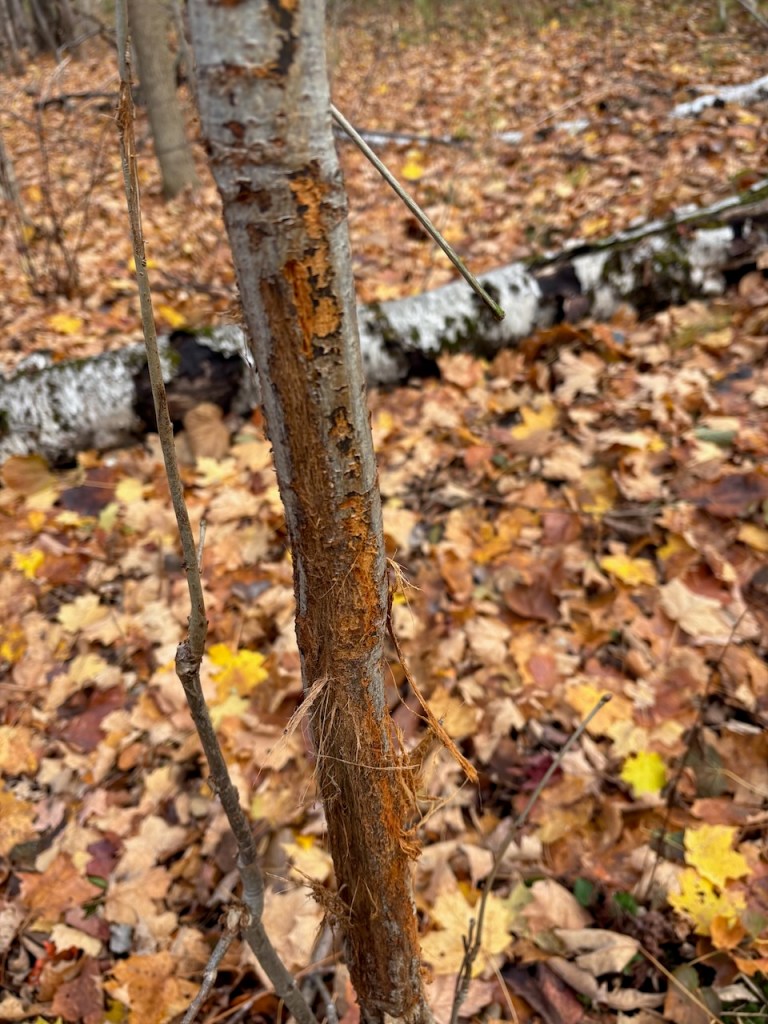
This sign appeared to be on small trees (1 – 4 inches in diameter) roughly between knee and chest height. The bark is scraped off in vertical streaks or patches, exposing smooth, light coloured wood beneath. The edges of the rubbed area often look shredded or frayed with fibres pulled upward or downward. The purpose is territorial and scent-marking. Apparently bucks rub to deposit scent from glands in the skin covering the bases of the antlers. According to the reference above “The forehead gland is situated between the deer’s eyes and the antler pedicles.”
Whitetail deer also have tarsal glands located on the inside of each hind leg, roughly at the joint that bends like a human ankle. In appearance its a dark, often stained tuft of hair (for a photo, see the reference above). The tarsal gland secretes a fatty, musky compound. Bucks urinate over these glands during the rut to broadcast dominance. Also, whitetail deer of all ages, urinate over their tarsals (rub-urinate) throughout the year. Deer also have four interdigital glands, one between the “toes” of each hoof, used to deposit scent on the ground. There are other glands too: at the eye’s inside corner, nasal glands, and salivary glands. The article on white-tailed deer makes an interesting point: while humans communicate primarily through cell phones and social media!, deer rely on scent to convey everything from age and sexual maturity to dominance, territory, and health.
We also found several areas of ground scrape by deer:
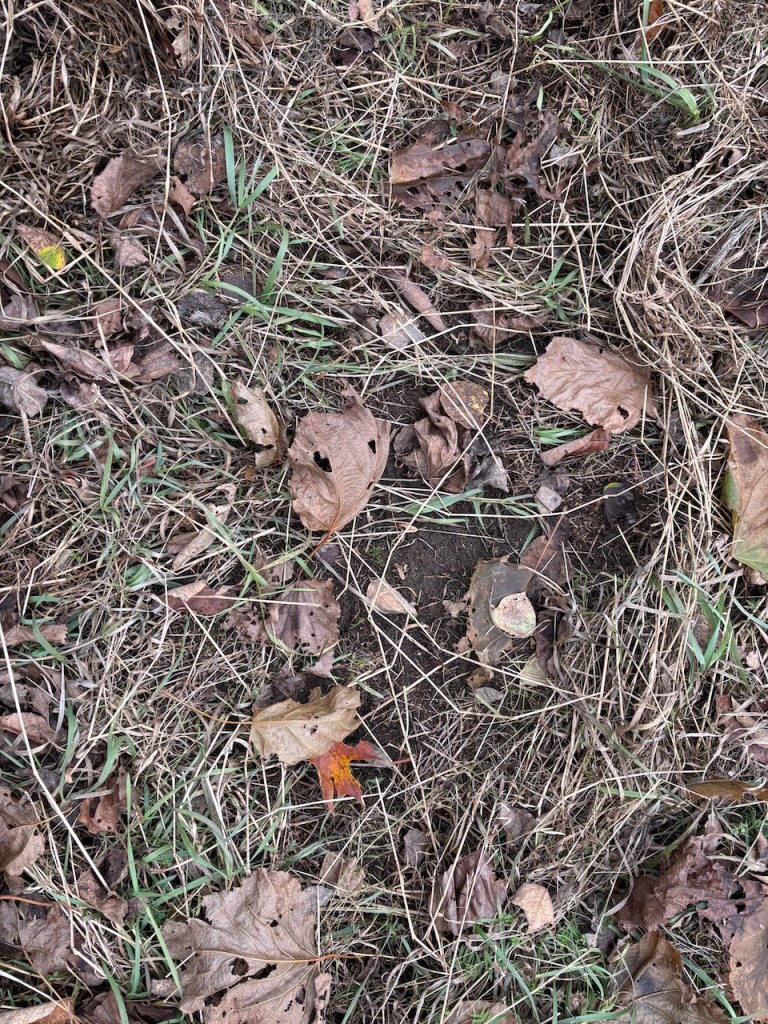
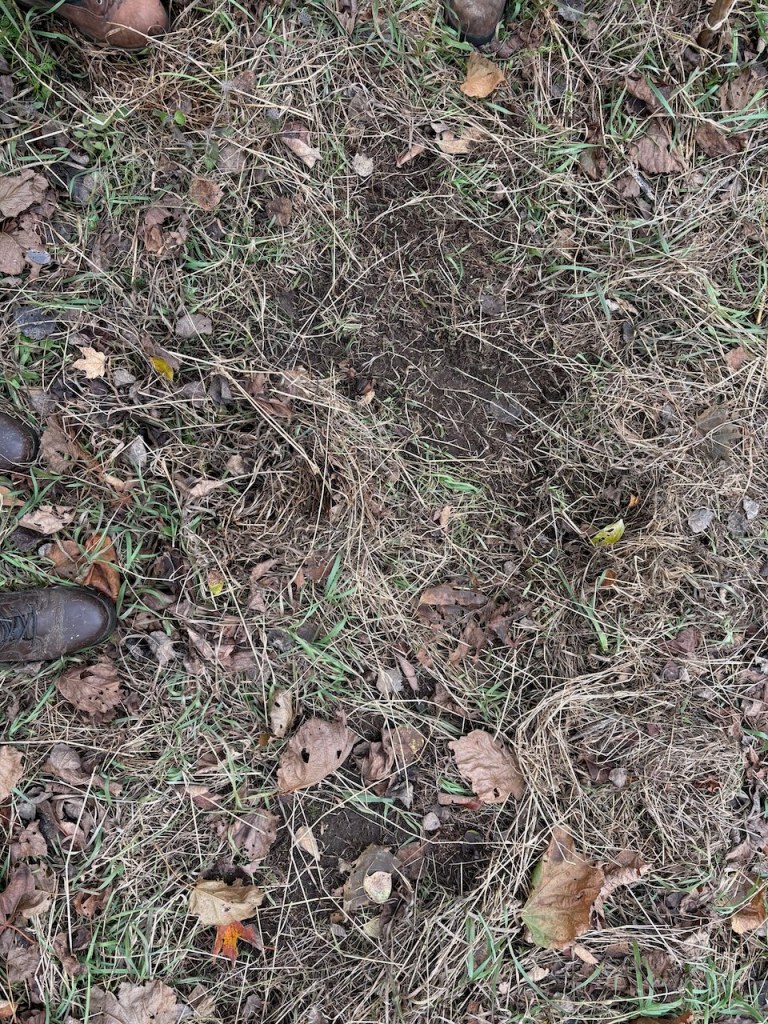
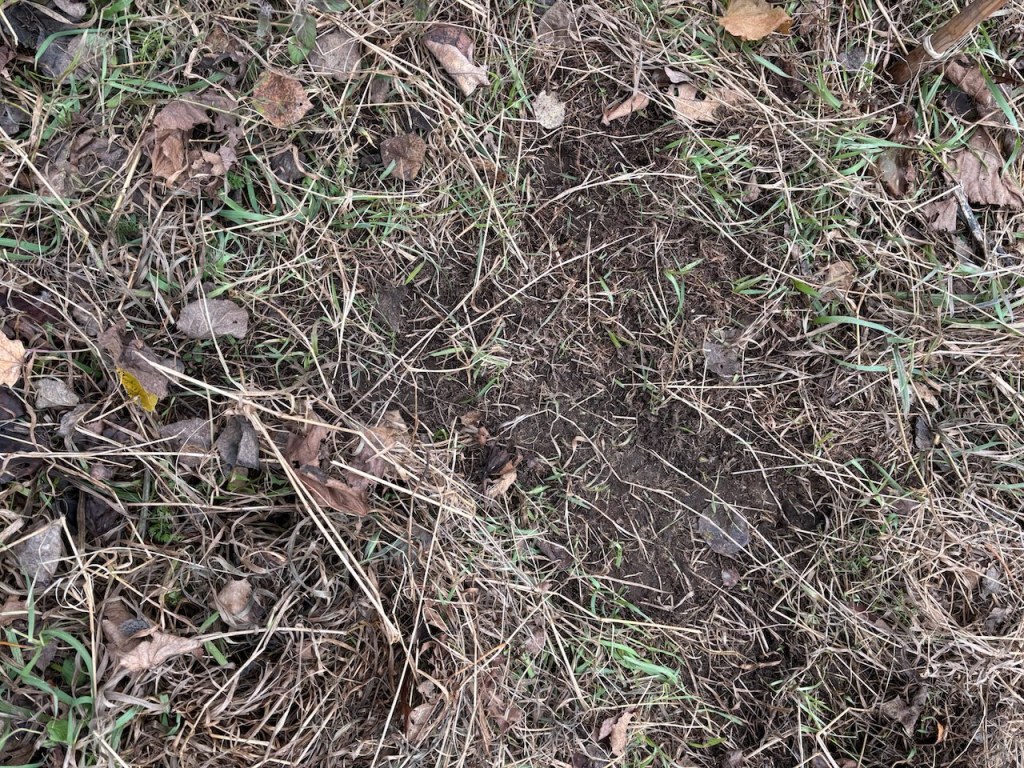
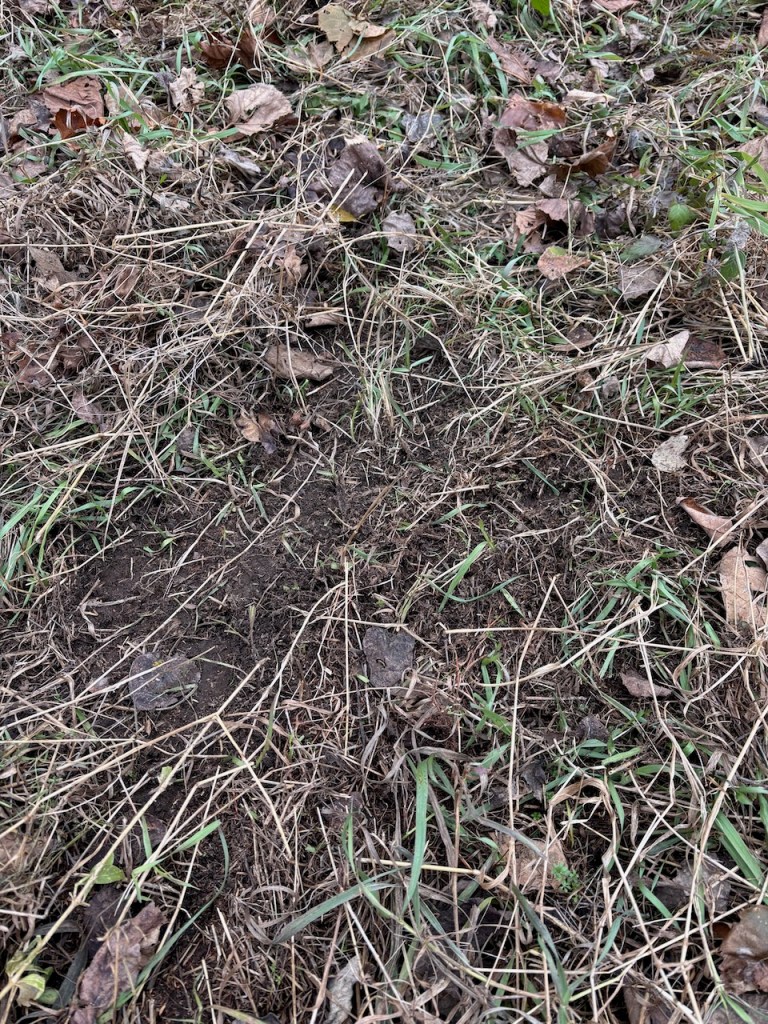
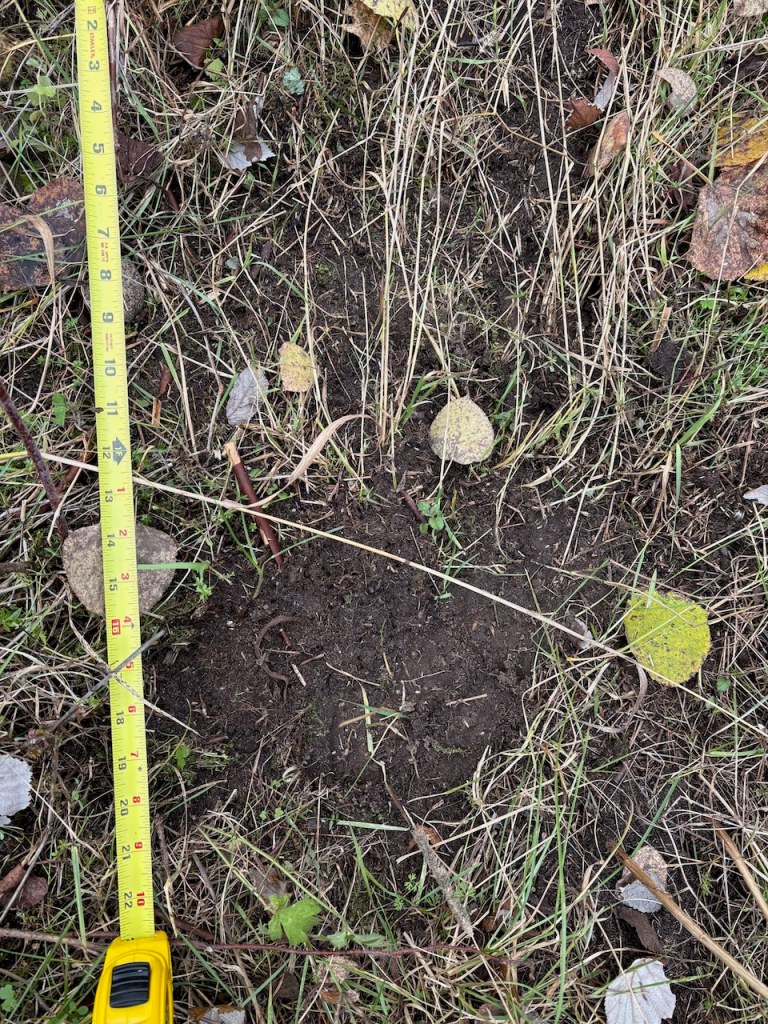
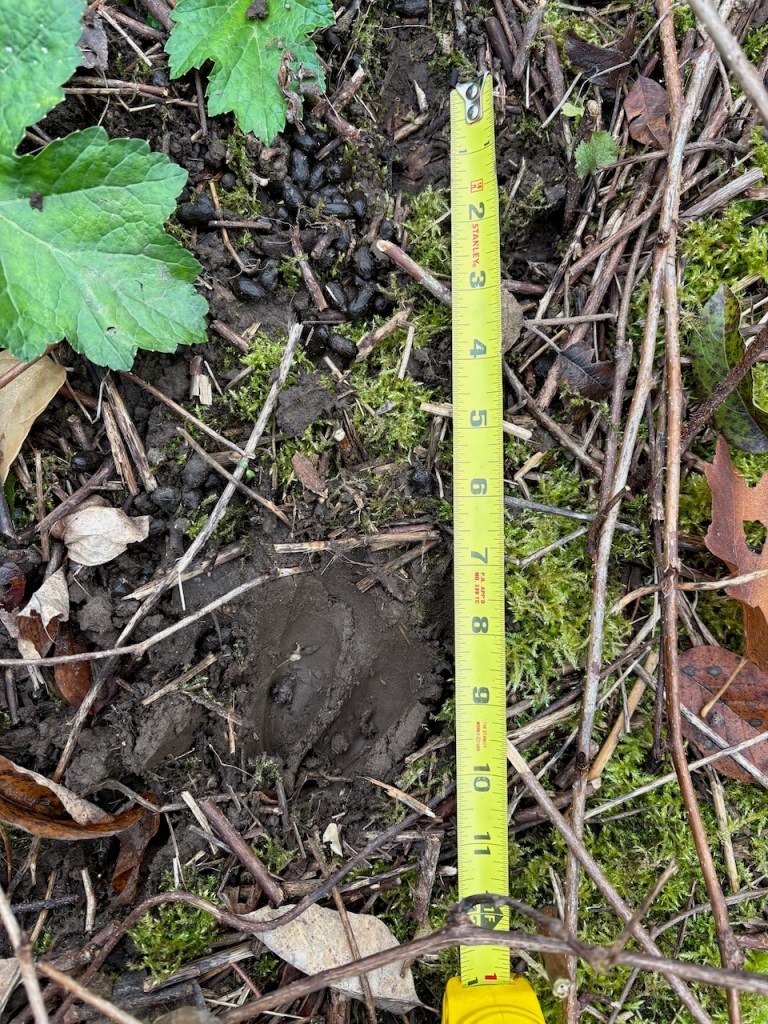
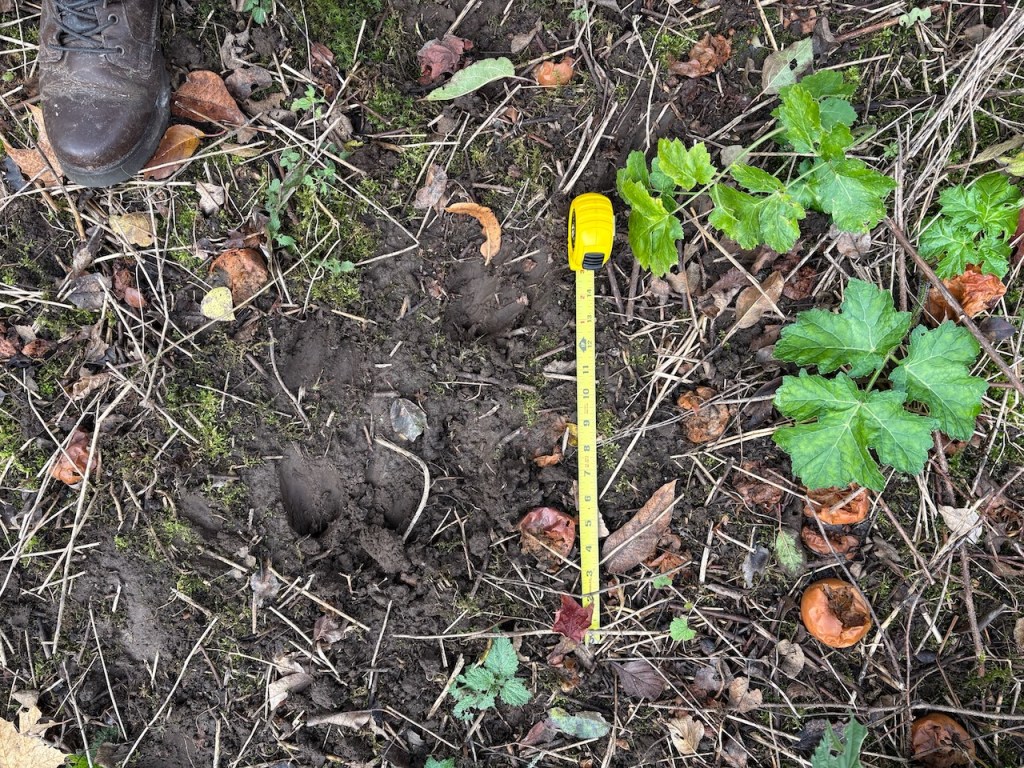
According to the above reference “Bucks may rub-urinate in a scrape, leaving a “calling card” for other deer. Does may rub-urinate in or near scrapes to communicate their readiness to breed.”
Alexis explained that he will look for a broken branch that he often finds above a scrape. I can’t recall if he said the buck breaks the branch with its’ antlers or teeth. Here is an example:
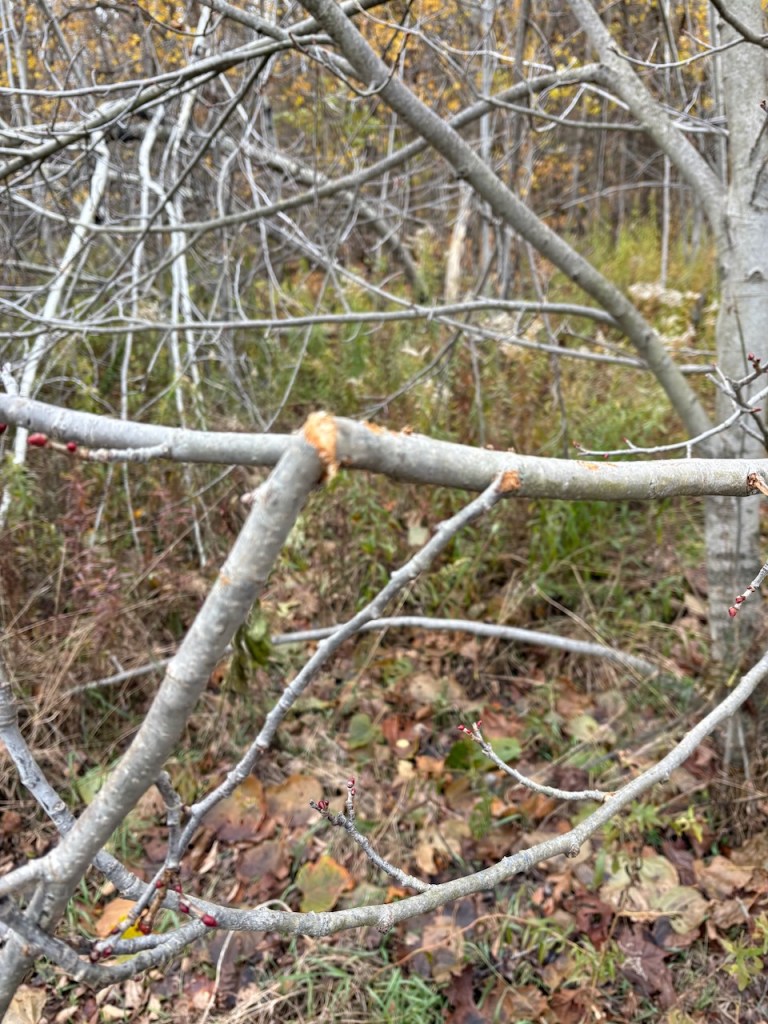
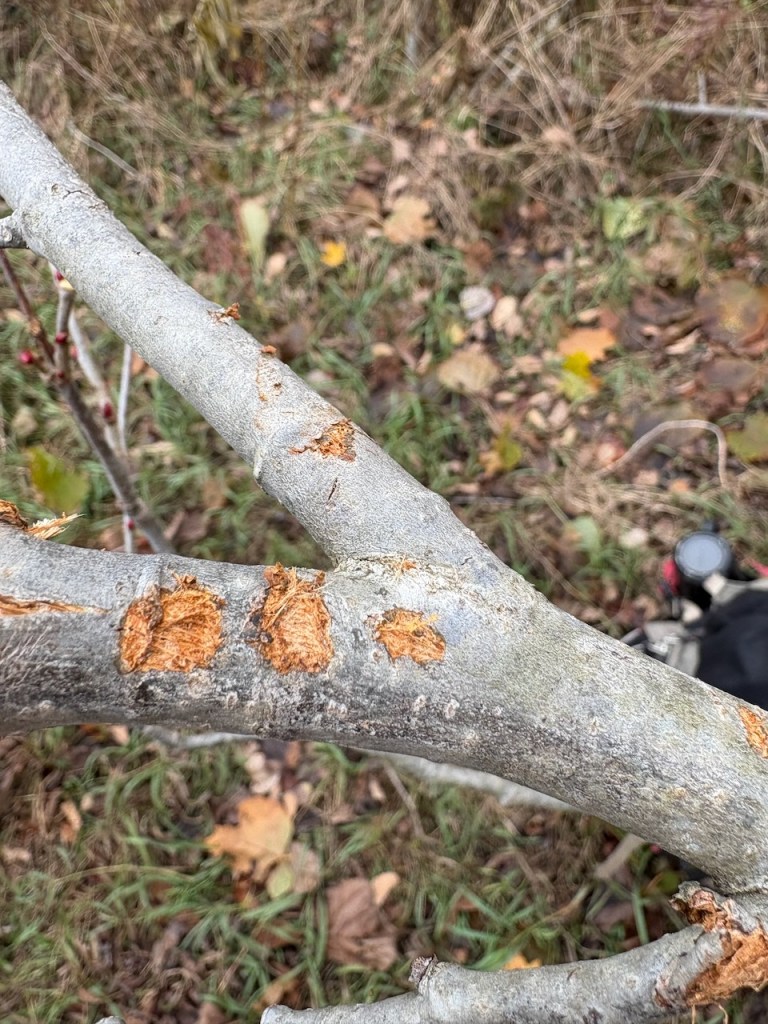
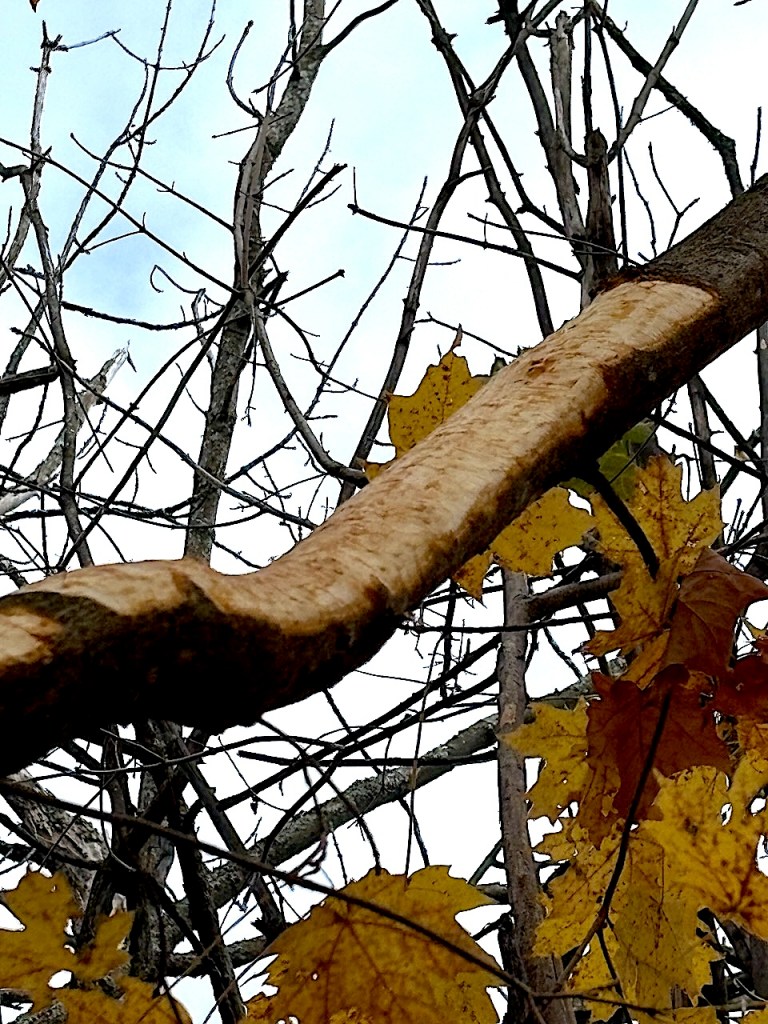
At the same location, we also found branches with chew marks. Unlike the ragged tears deer make when using their lower incisors against the upper dental pad to reach the cambium layer (since deer lack upper front teeth), the marks shown below appear to have been made by the molars, as they are located on the upper surface of the branch.
Other sign:
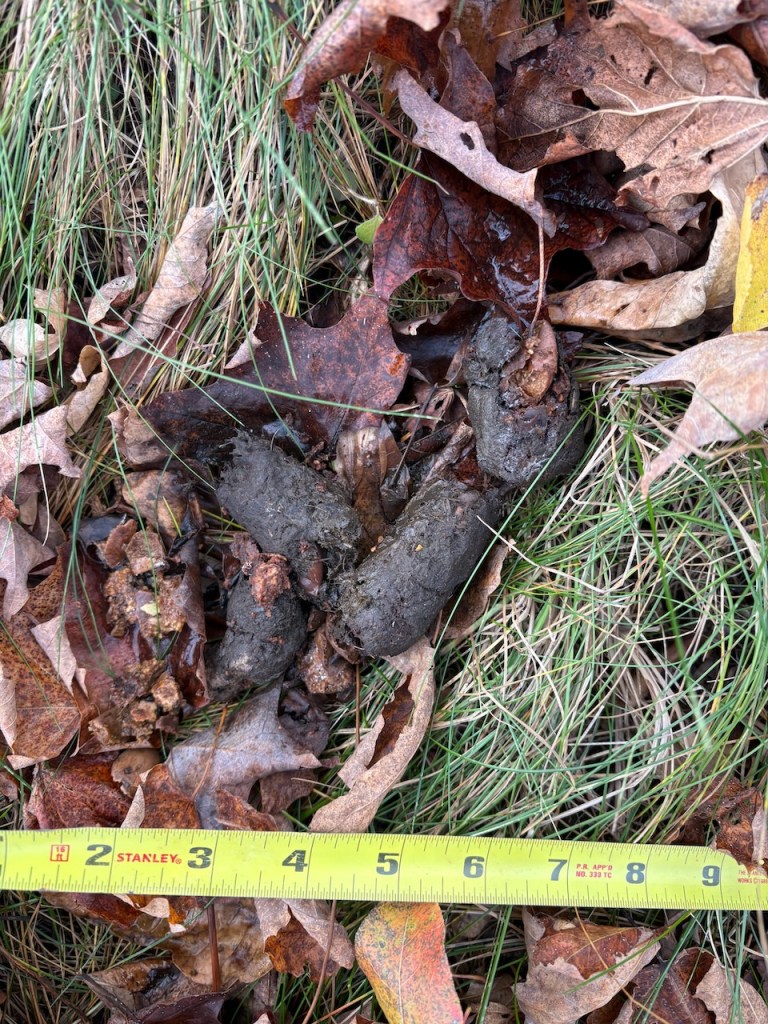
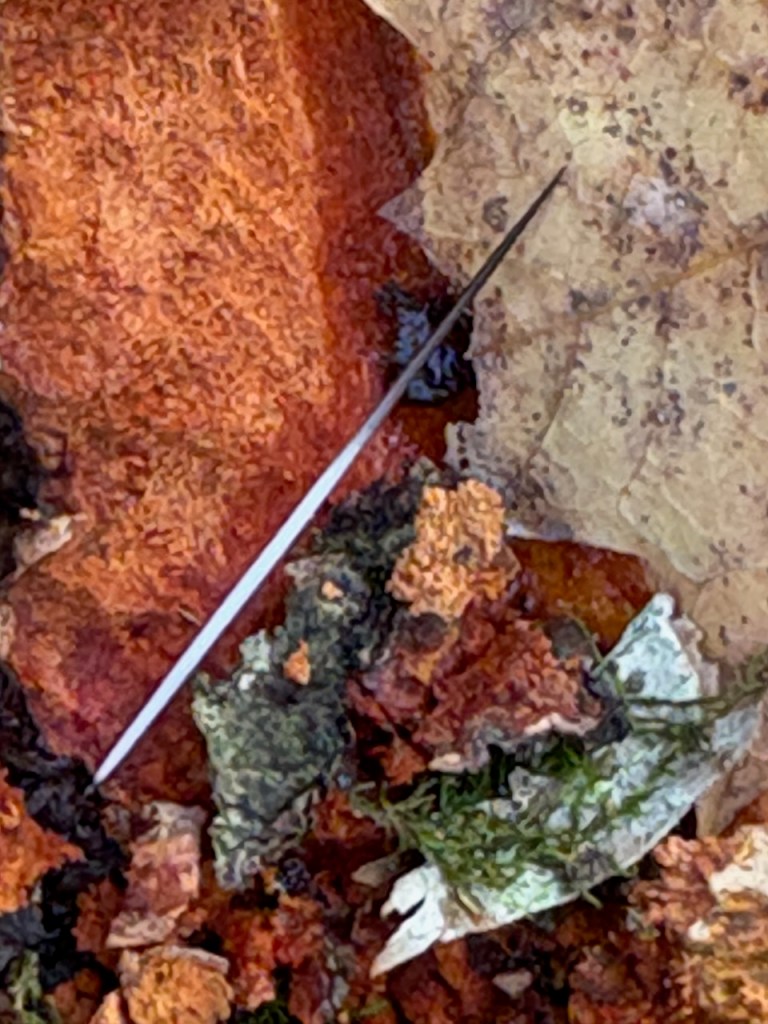
There were signs of many other animals as well. For example, we found coyote scat, easily identified by its shape, size, and the presence of hair. When I pulled the scat apart, I was amazed to discover a porcupine quill inside. Did the coyote kill the porcupine, or had it simply scavenged the carcass?
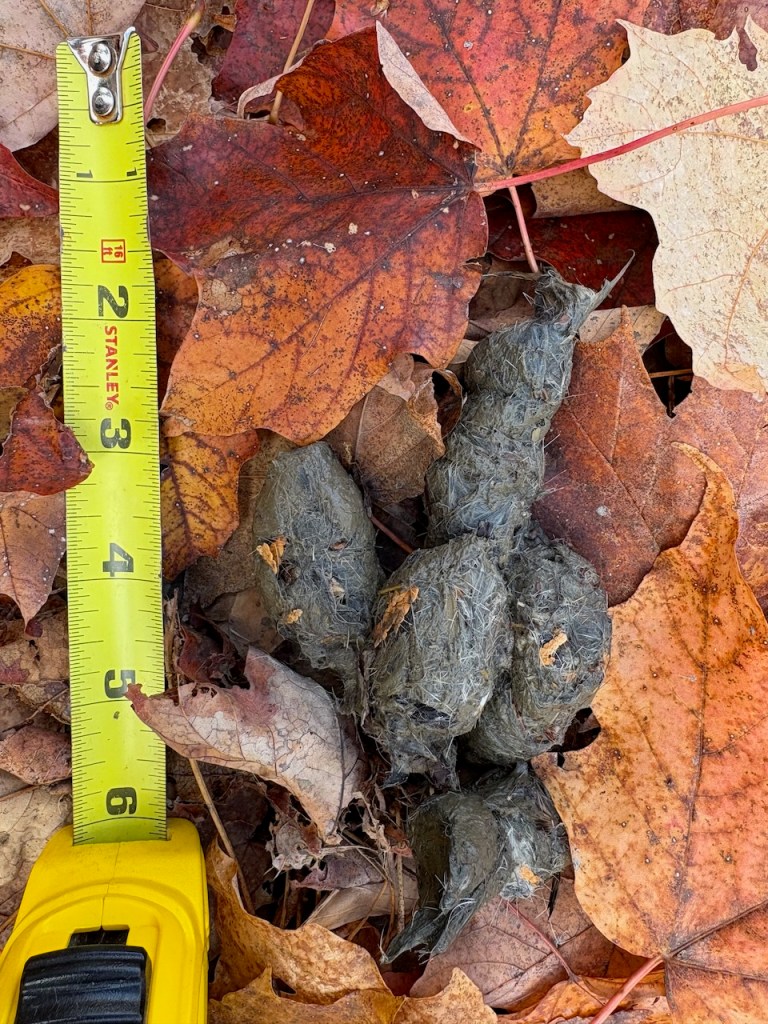
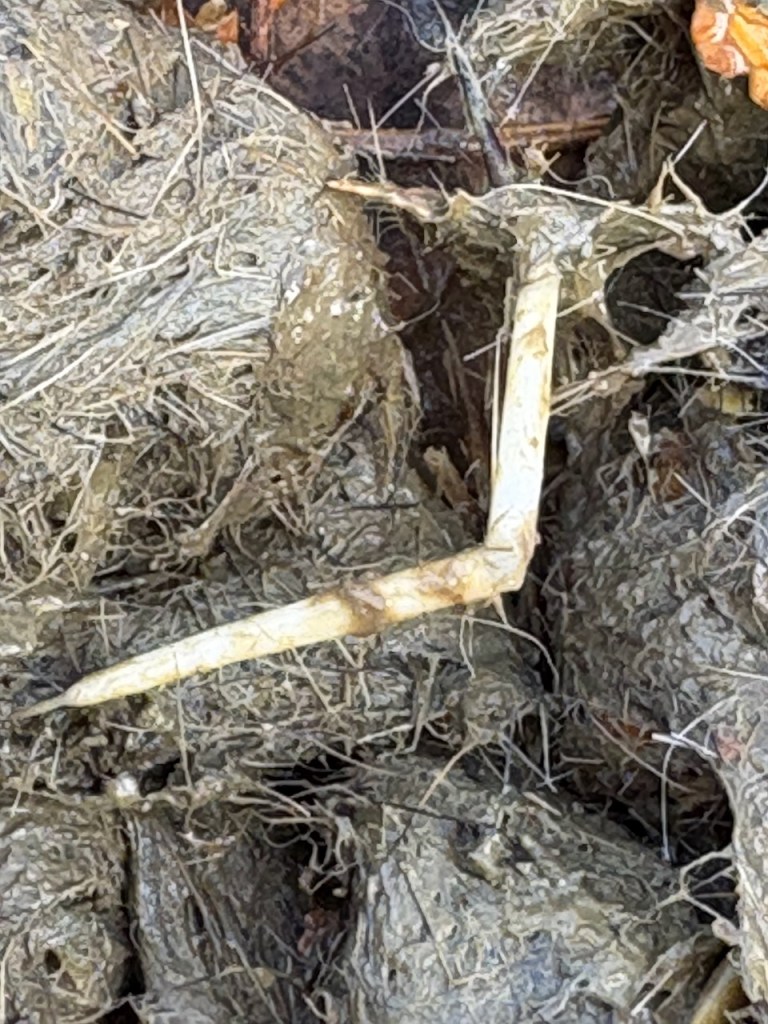
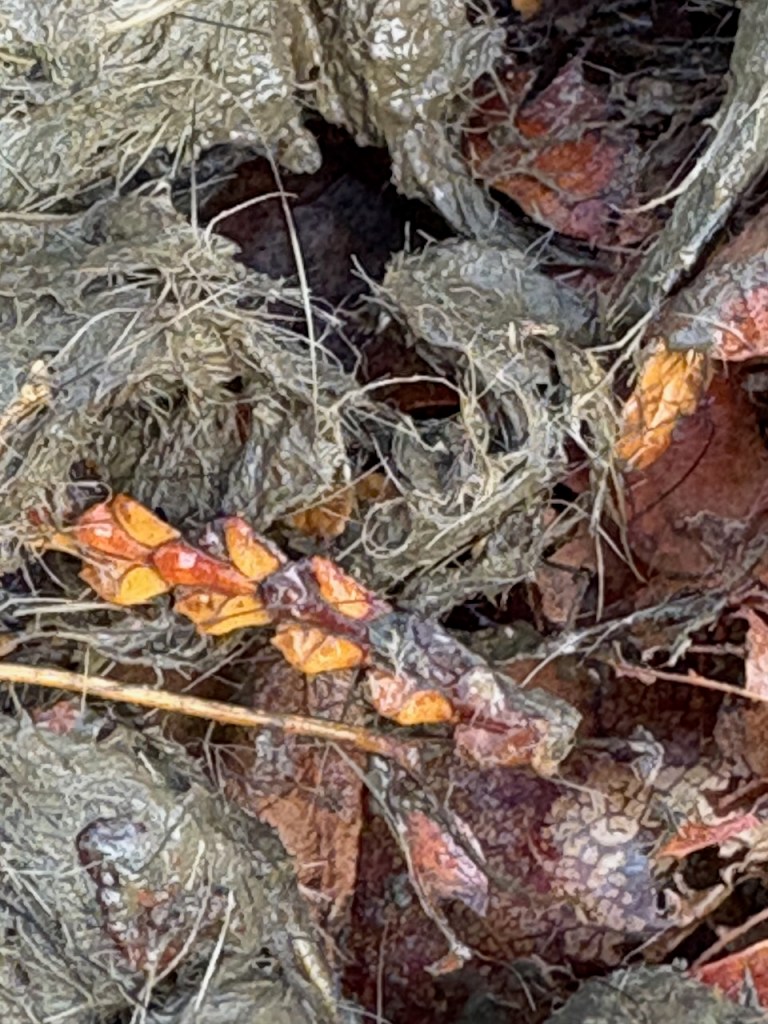
It was also interesting to see a small piece of cedar in the scat (last photo).
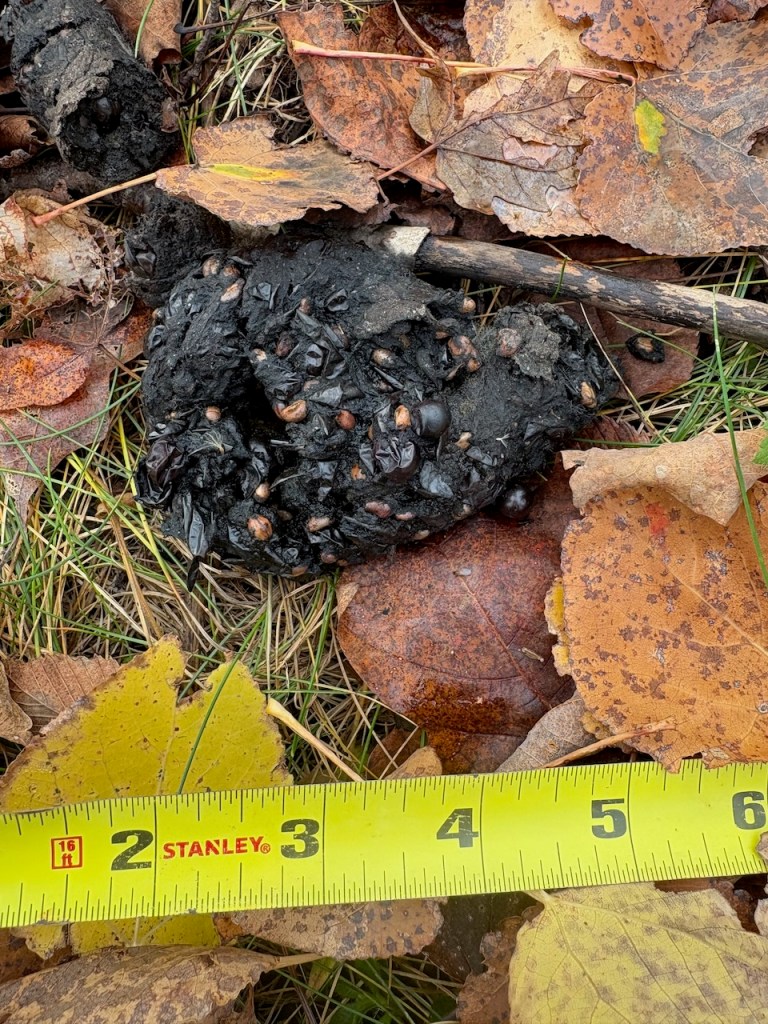
We also found some other interesting scat, for instance, what was likely raccoon scat containing grape seeds, and coyote scat with pieces of apple (there were many apple trees nearby with fallen fruit on the ground).
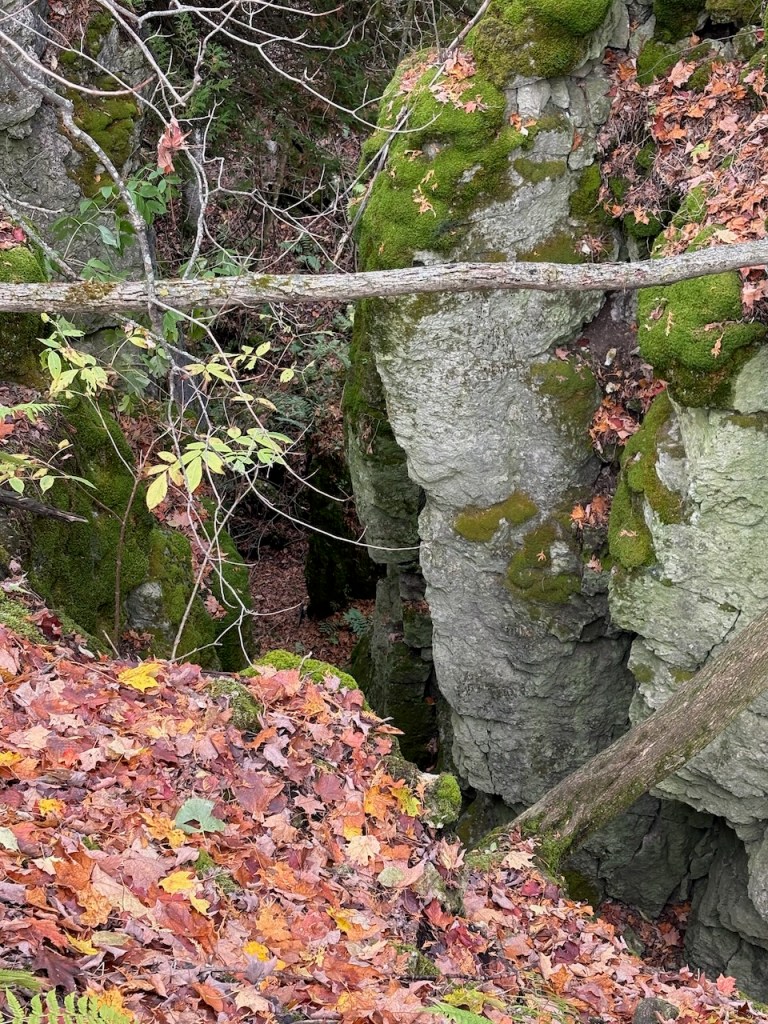
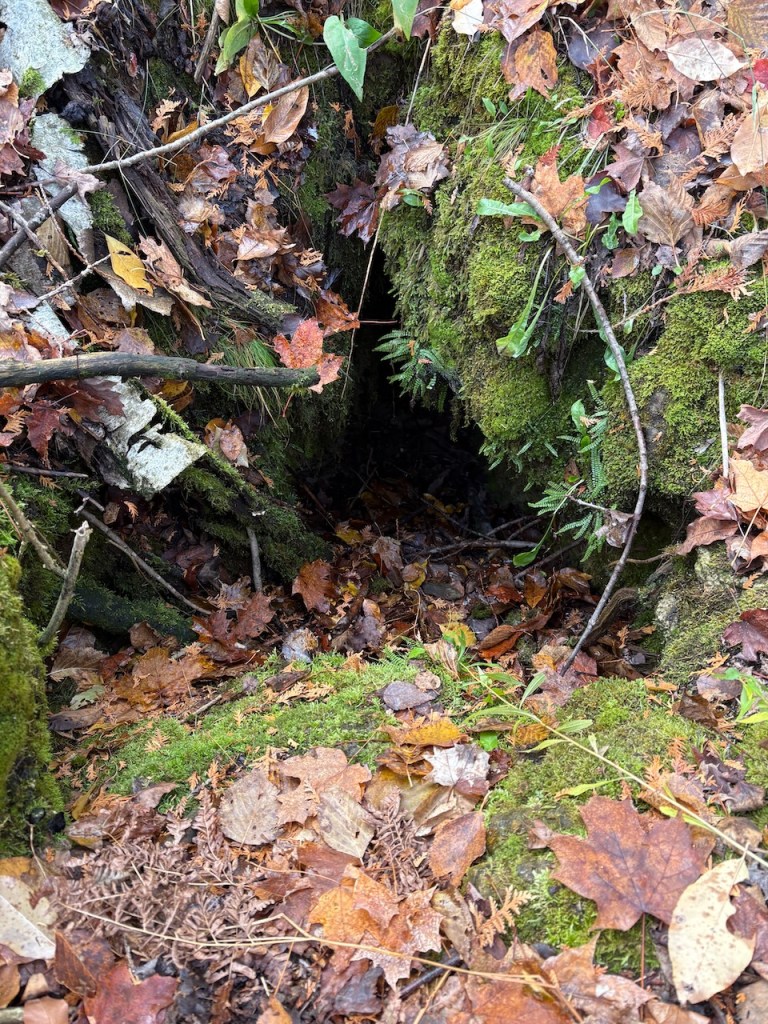
We also noticed porcupine chew marks in many places along the escarpment edge. Alexis pointed out that numerous trees – such as cedar – had deformed tops caused by porcupine feeding, which had affected their growth. According to the reference above “They eat just about any plant matter they can find, including bark, and are particularly fond of eating hemlock buds and branches.”
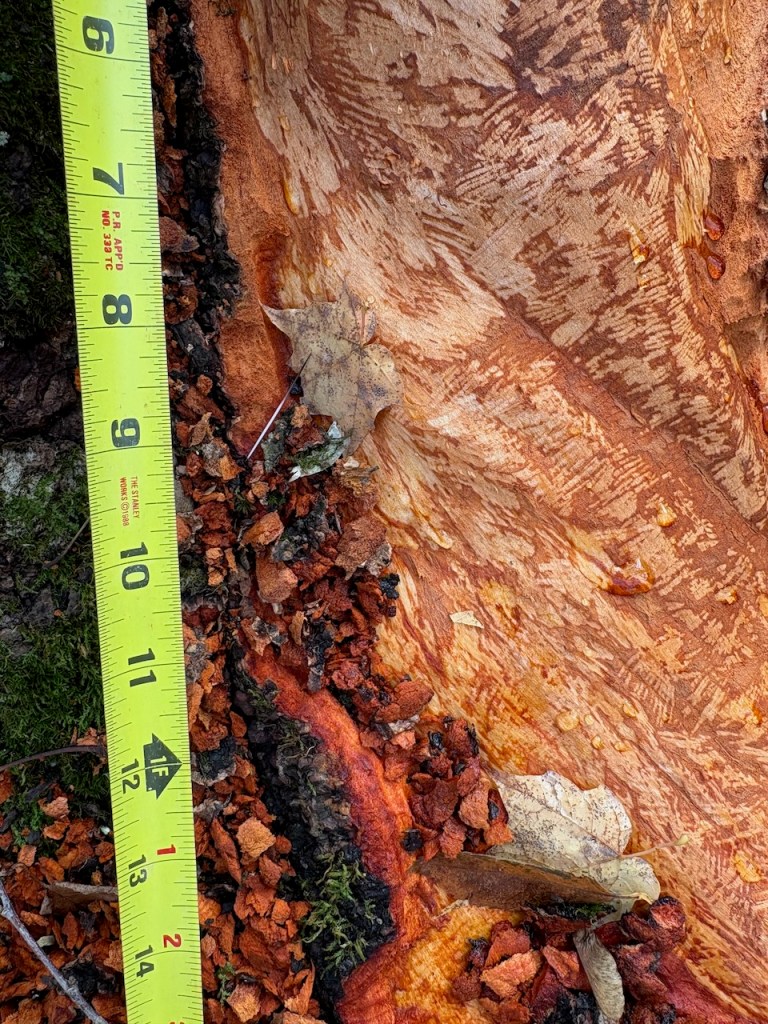
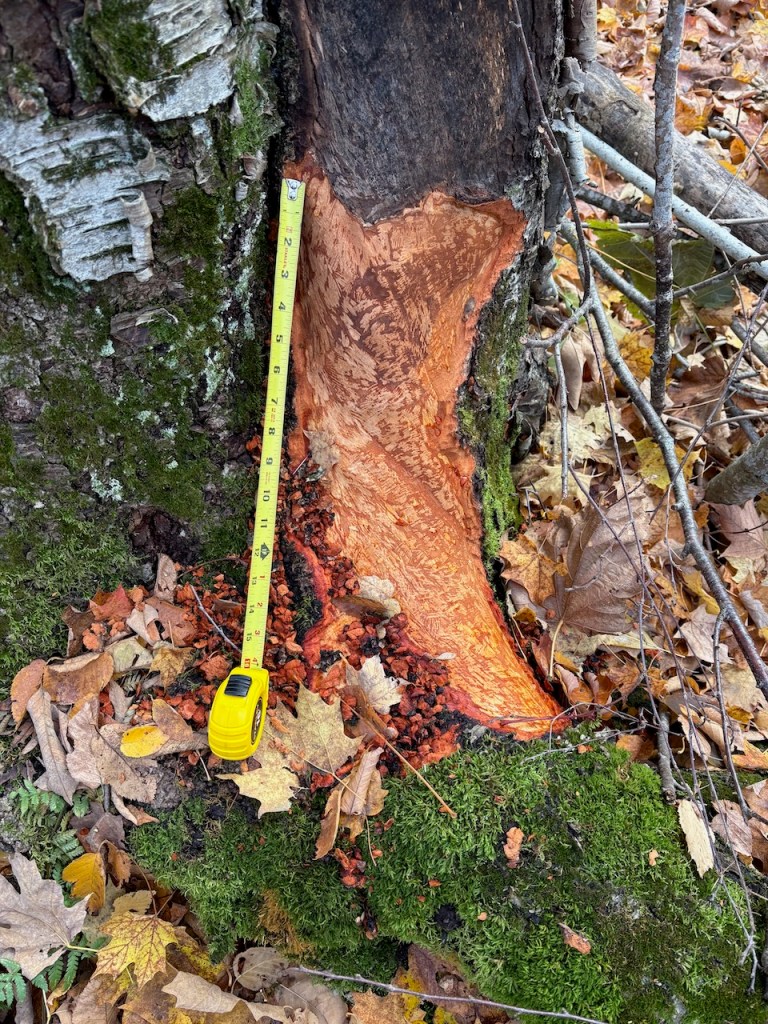
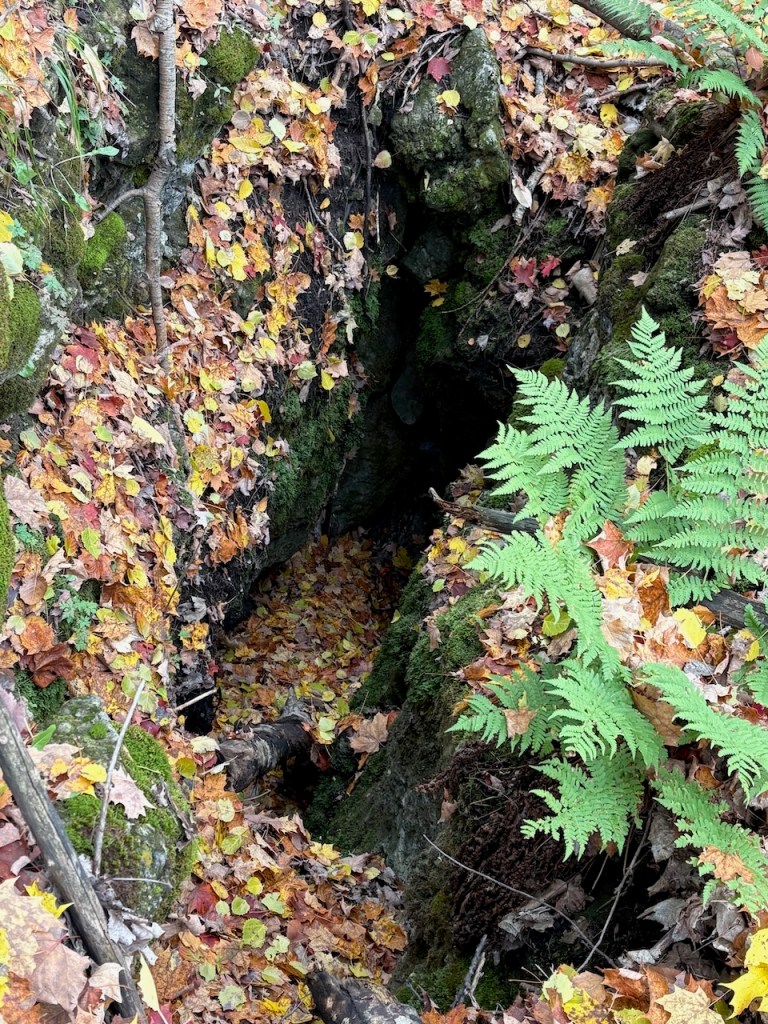
The porcupines were likely overwintering in the many holes we found along the escarpment edge, from which warm air was escaping.
I also found a rotting tree hollow with ‘frass’ coming out of it – a combination of saw-dust and insect dropping. Based on another post I made recently I think this is probably due to carpenter ants burrowing in the rotting wood.
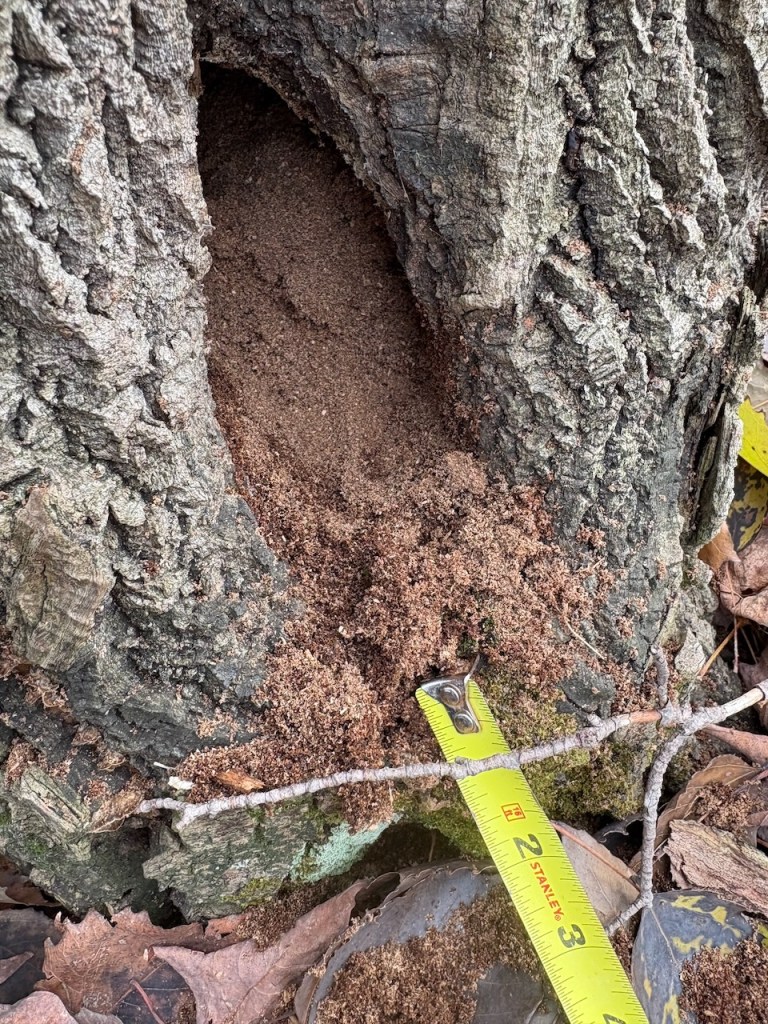
This hypothesis is supported by the pileated woodpecker sign in the bark of this tree above the hole.
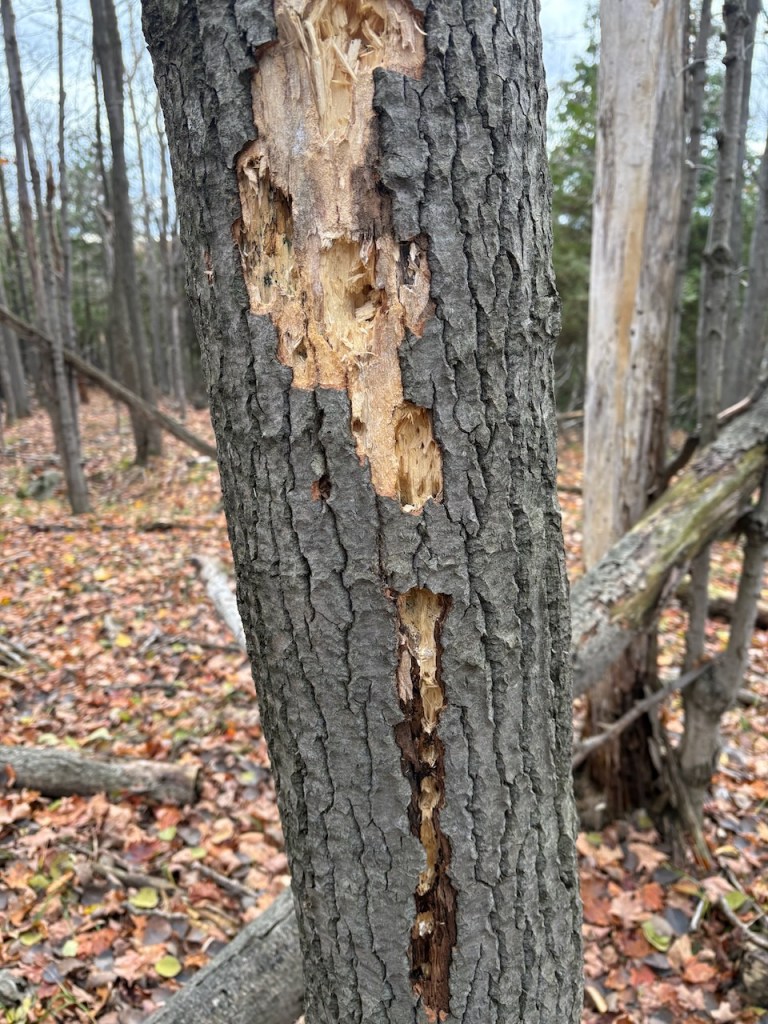
This is because the Pileated Woodpecker’s primary food is carpenter ants (see https://www.allaboutbirds.org/guide/Pileated_Woodpecker/lifehistory).
Another interesting observation was acorn feeding sign. A wide variety of animals will eat acorns, but Alexis showed us acorns that had been eaten by deer. Deer crush acorns with their teeth which separates the nut from its shell, leaving a characteristic twisted and crushed shell shape.
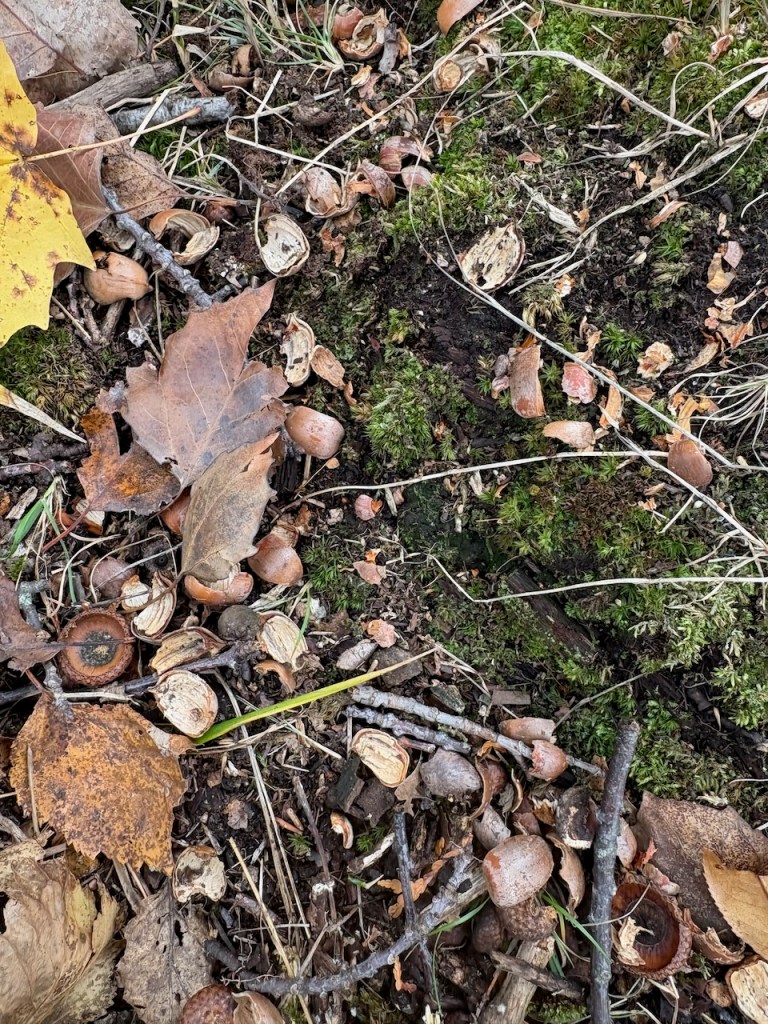
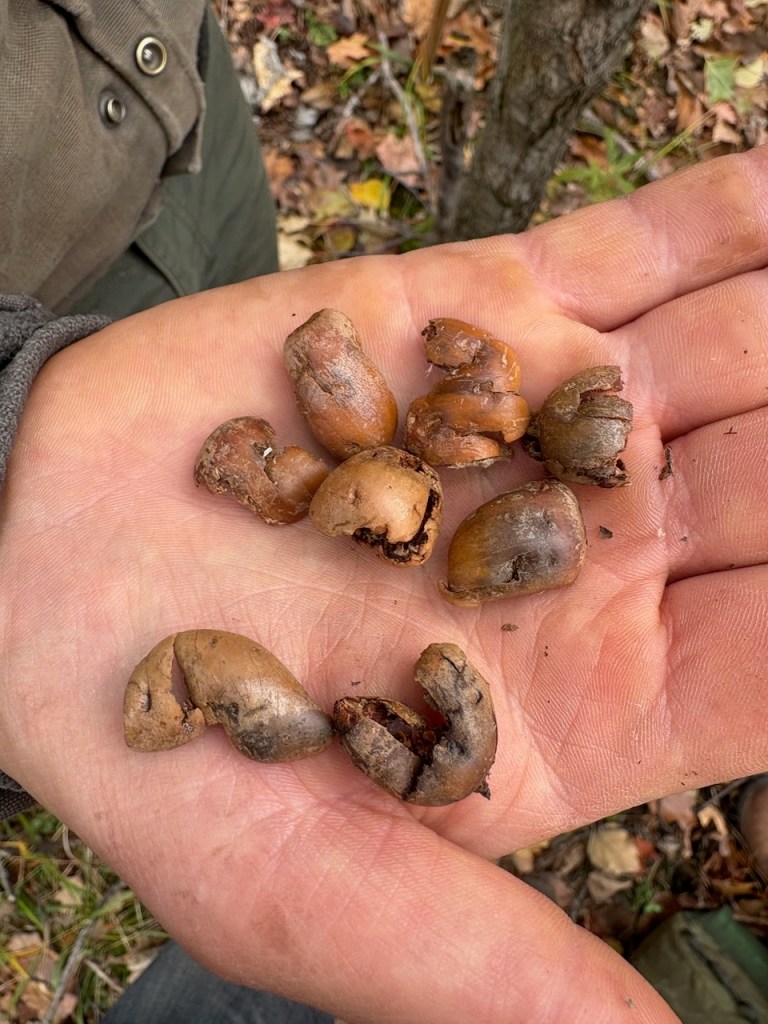
This is also shown on page 655 of Elbroch for white-tailed eating acorns of the red oak.
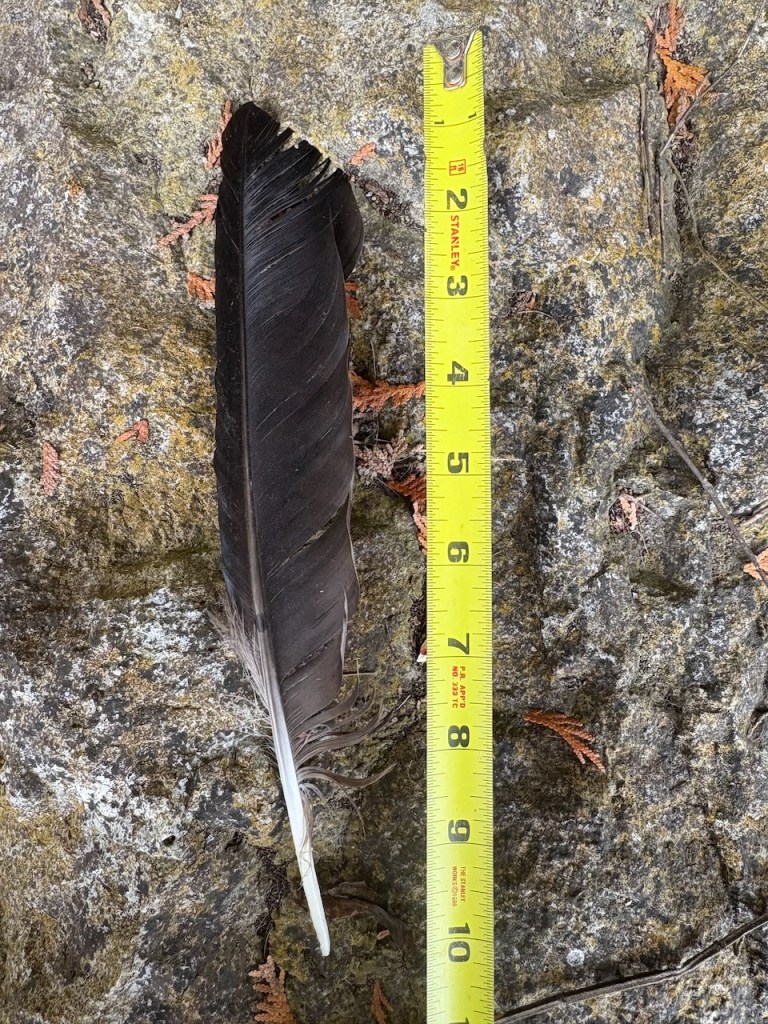
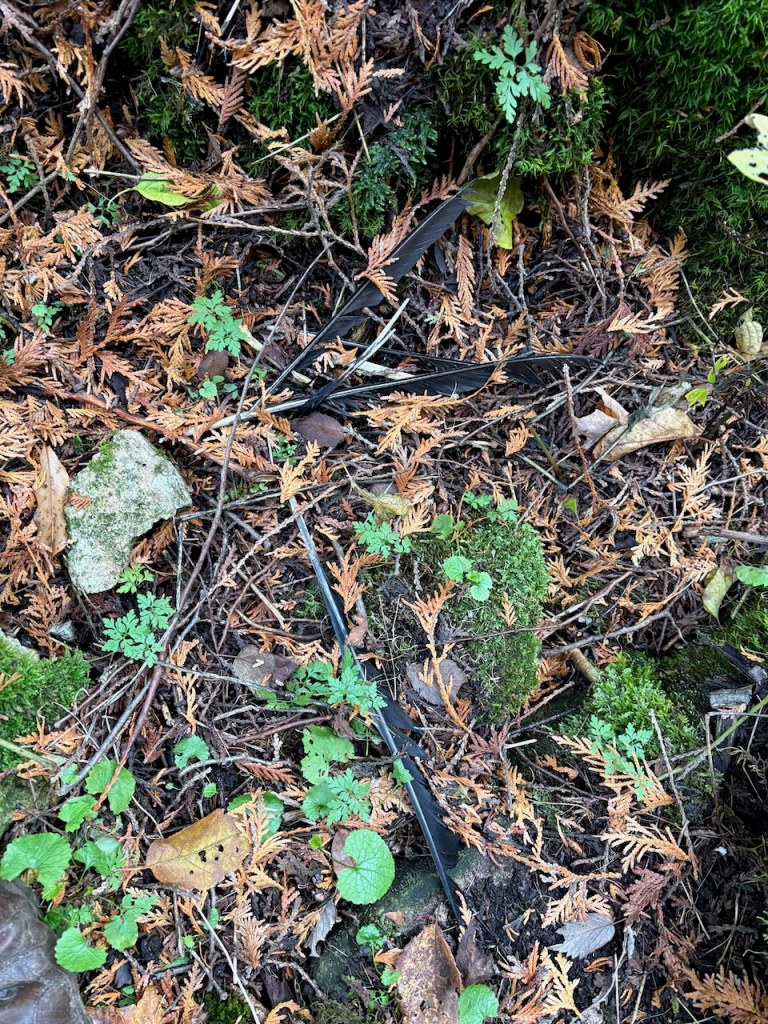
I saw and heard quite a few ravens flying above us. I wonder if the black feathers I found at the base of a cliff on the escarpment are from ravens?
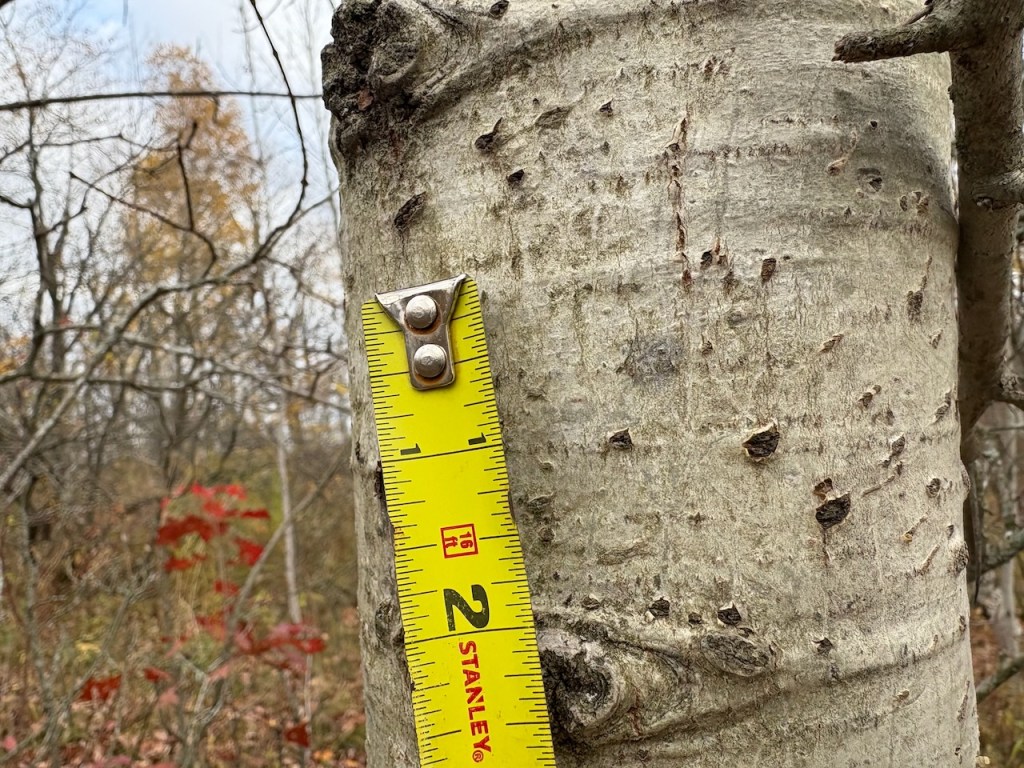
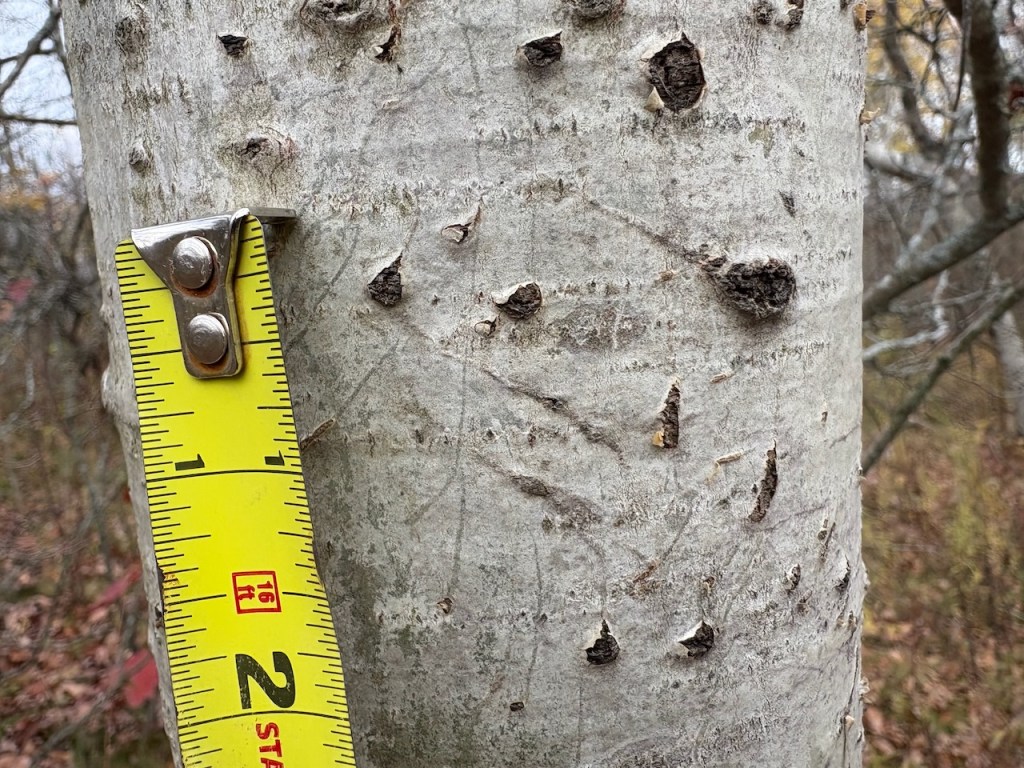
My final set of signs are scratches on aspen trees. I found these difficult to interpret – partly because my eyesight isn’t great.
Finally, although not an animal sign, it was interesting to see a rich covering of the walking fern (Asplenium rhizophyllum) on a boulder:
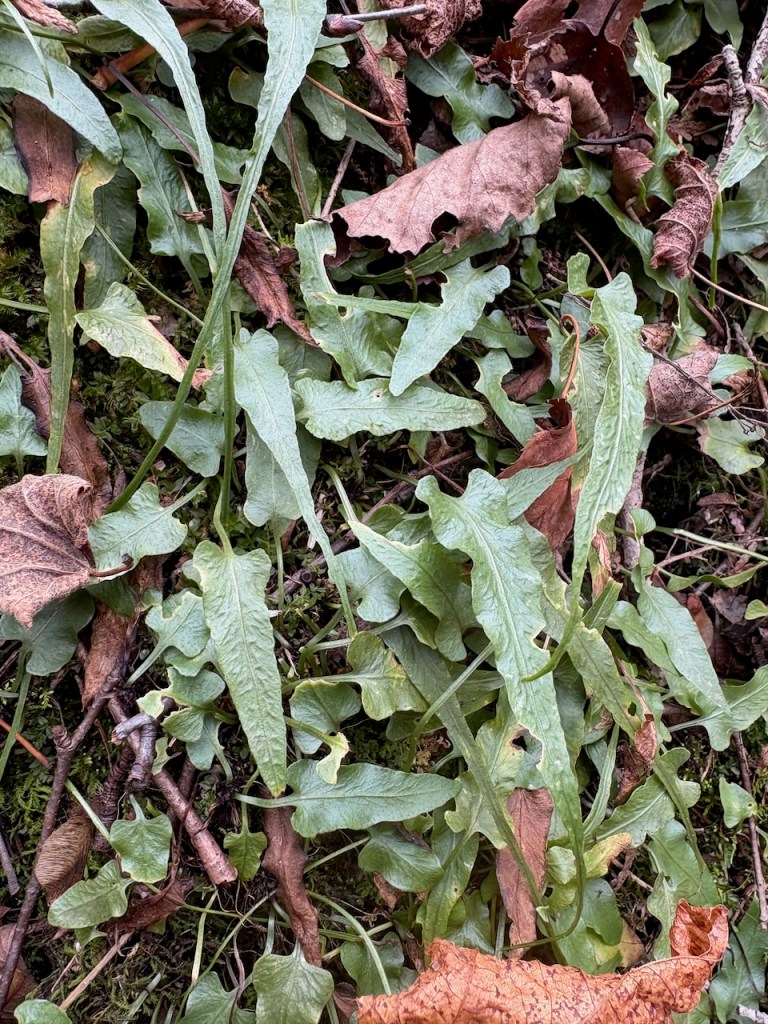
This fern is a native evergreen species found in southern and eastern Ontario, especially along the Niagara Escarpment and in the Ottawa area. It is remarkable for its unusual method of vegetative propagation as new plants sprout from the tips of its arching leaves when they touch the ground, giving the impression that the fern is “walking” across the surface – see
https://en.wikipedia.org/wiki/Asplenium_rhizophyllum#cite_note-FOOTNOTEClute1901267-39.
Final thoughts:
It was a rewarding but exhausting day as we climbed up and down many ravines along the escarpment. I learned a great deal about how white-tailed deer spread scent and how they use it to communicate.

 Field Notes of a Tracker
Leave a comment