Date/time: October 31, 2025 (noon to about 1:45pm)
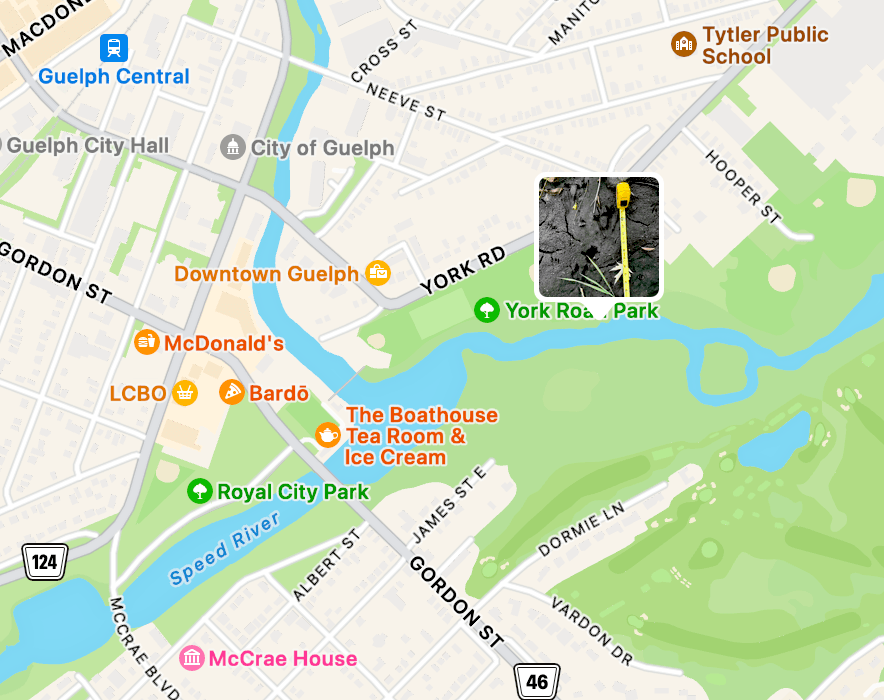
Place: Eramosa River near the Boathouse in Guelph – see the map below.
References:
- ‘Mammal Tracks & Sign: A Guide to North American Species’, Mark Elbroch and Eleanor Marks, First Edit., Stackpole Books
- ‘Tracking & the Art of Seeing’, Paul Rezendes, 1999, A Firefly Book
- ‘The Tracker’s Field Guide: A Comprehensive Manual for Animal Tracking’, James C. Lowery, Second Edit., Falcon Guide
- ‘Animal Tracks & Signs of the Northwest’, J. Duane Sept, 2012, Calypso Publishing
- ‘A Field Guide to Mammal Tracking of North America’, James Halfpenny & Elizabeth Biesiot, 1986, Johnson Books
The reason I delved into so many different books is because I found each author had something different, but relevant to say about beavers.
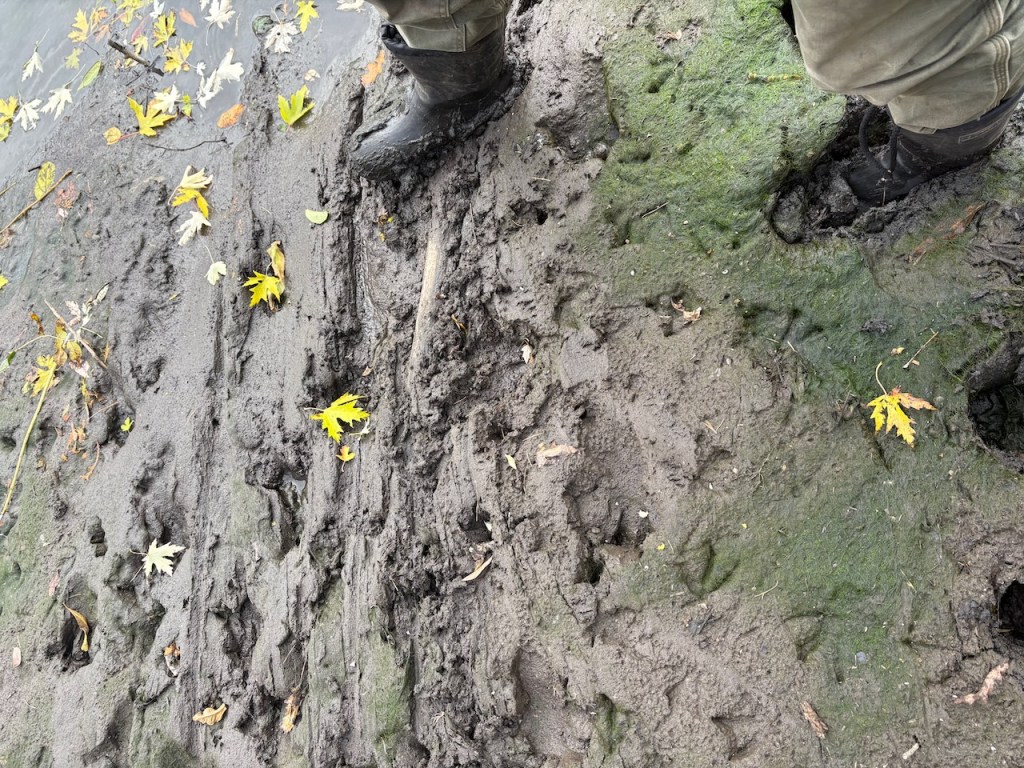
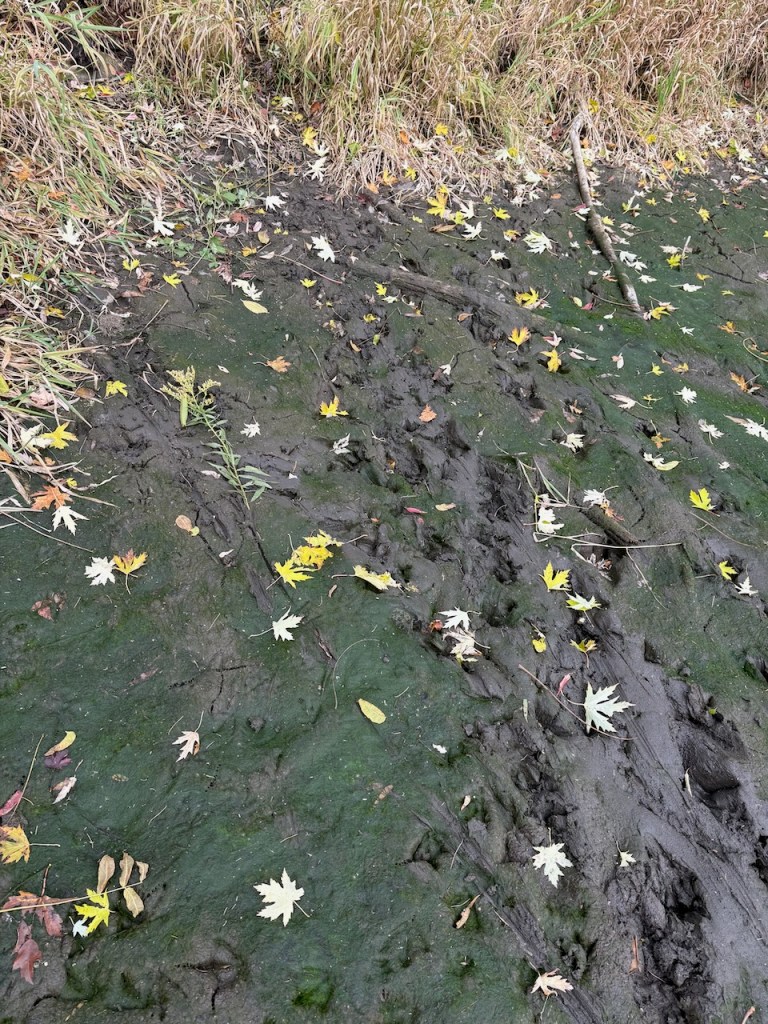
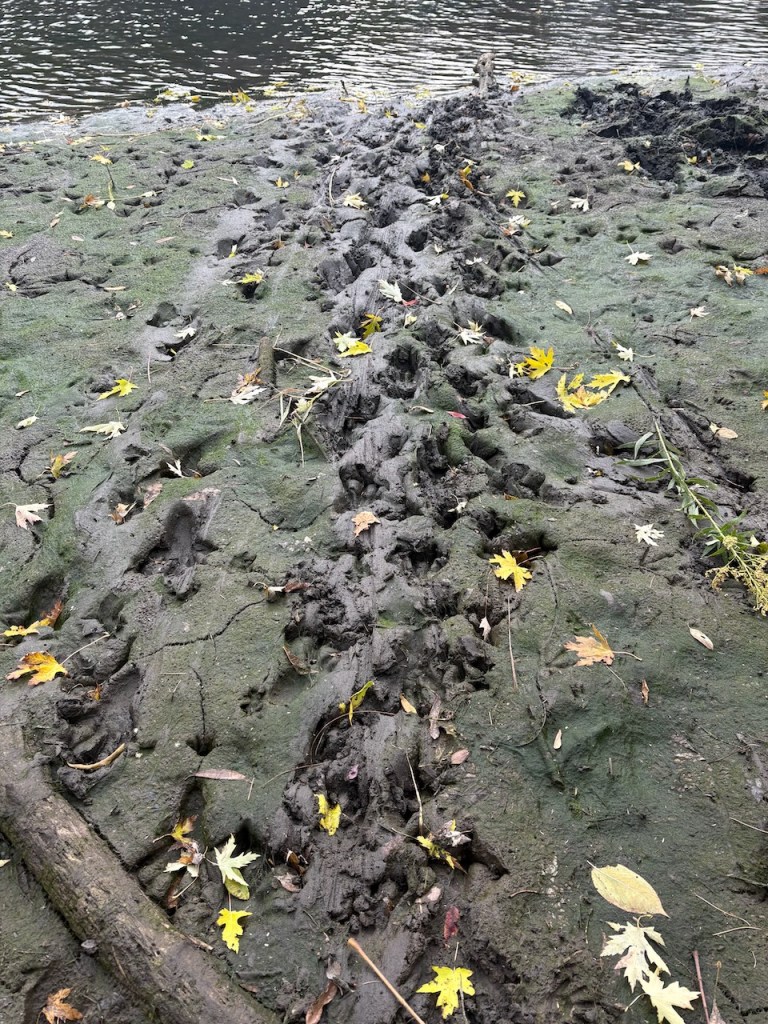
Discussion: Byron Murray invited me to track along the river’s edge, where the water level was very low. We were fortunate to find an area with heavy beaver activity with clear evidence that the beavers had been dragging branches from the banks into the river.
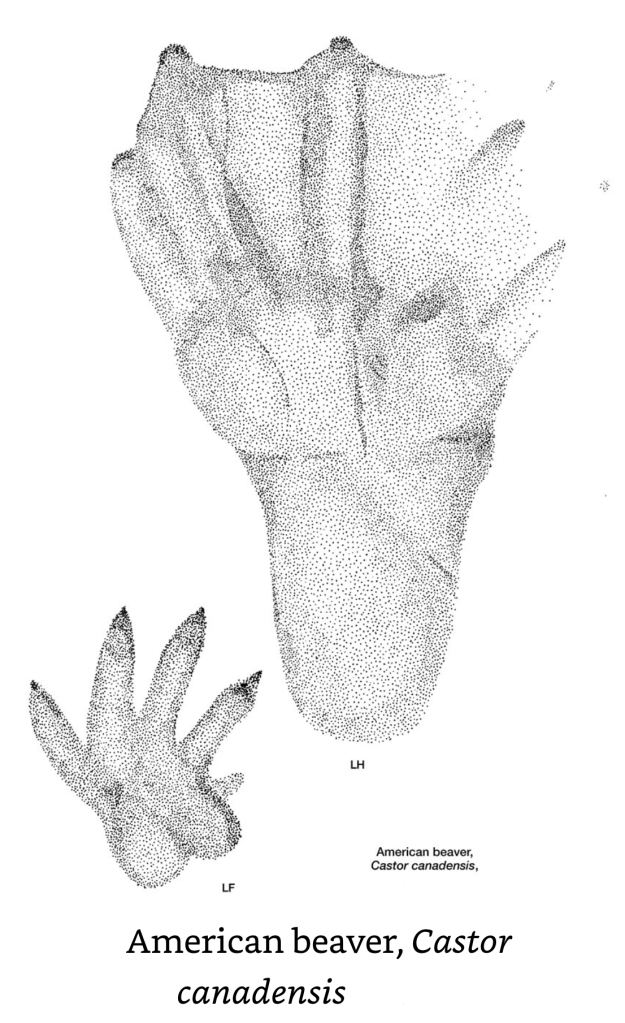
Since I’m not very familiar with beaver tracks, I began by reviewing their characteristics. Beavers are the largest rodents in North America, and unlike most other rodents, they have five toes on both the front and hund feet, though often only three or four toes are visible in their tracks. It seems that the 5th toe in the front track is seldom seen. The larger hind tracks sometimes show the webbing if the toes are sufficiently spread. Nails are often present. When both tracks are visible the front tracks tend to be “pigeon-toed”. Here are the best drawings of front and hind tracks I could find (Elbroch):
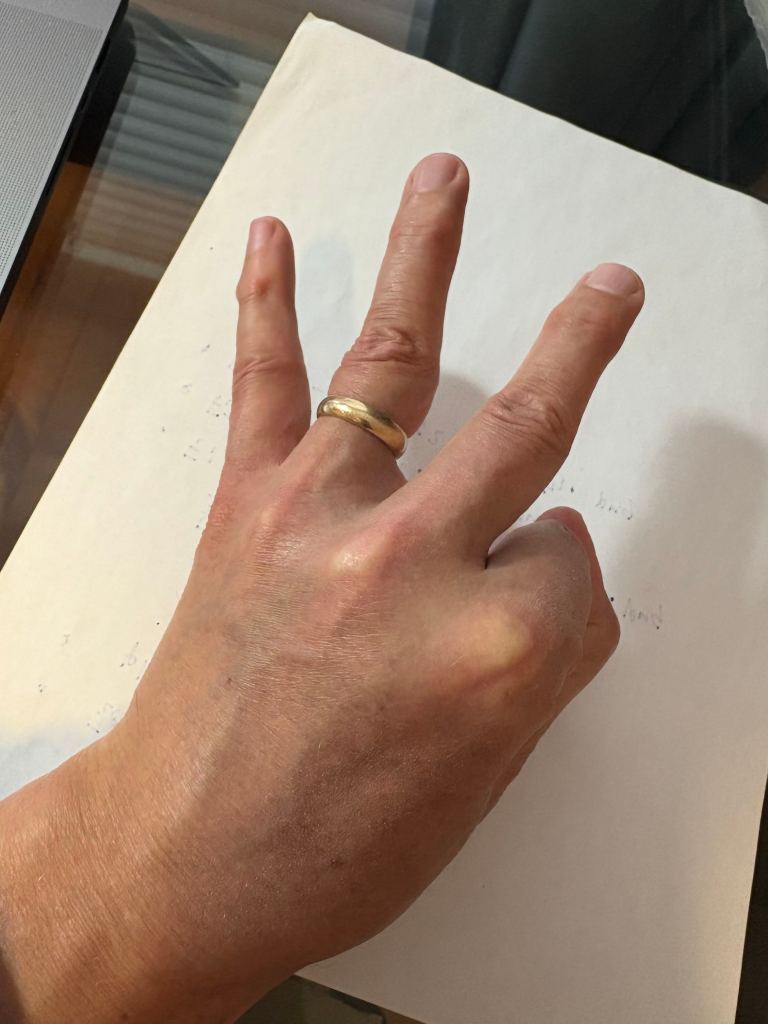
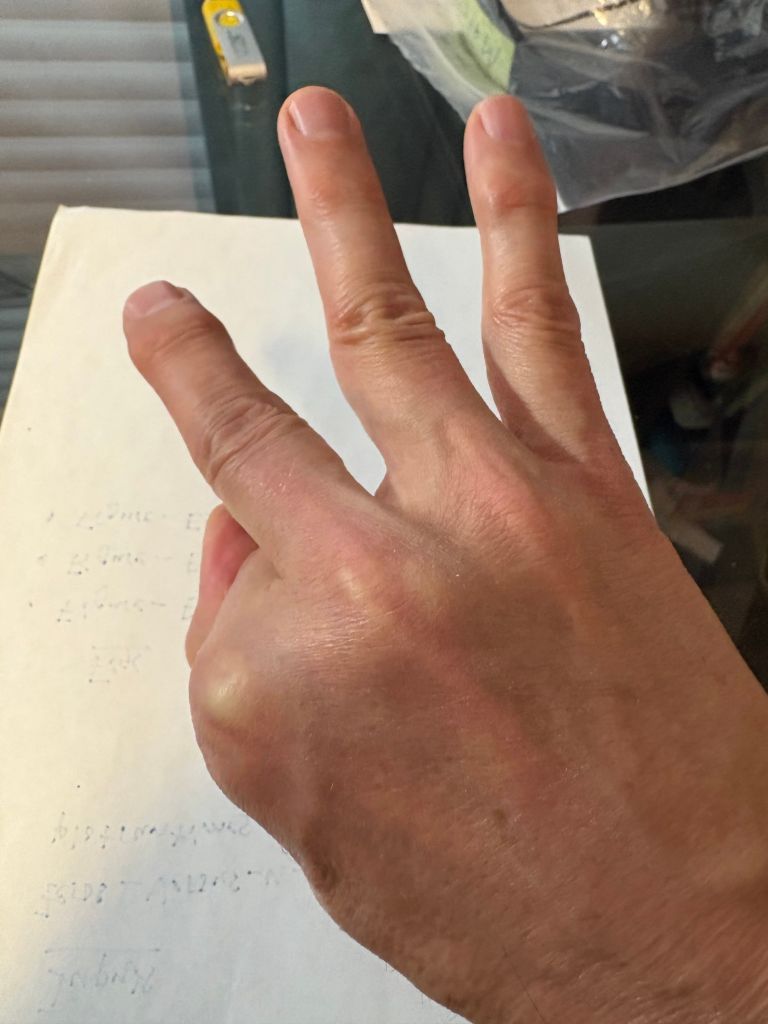
Byron pointed out a neat pattern for the hind feet which often only show three toes clearly. If I hide the thumb and index finger of both hands, these shows the basic pattern of the left and right hind tracks.
According to Halfpenny:
“Claw marks will often be present except on the second inside toe of the hind foot. The nail on this toe is modified so that it can be used as a comb to spread the castor (an oily substance produced by glands near the tail of the beaver) on the hair of the beaver. This process serves to oil the fur and make it waterproof.
Apparently (Sept) Beaver create scent mounds by bringing up mud and debris from below the water surface, and depositing castor (aka castoreum) on these mounds.
Here is a typical track pattern (modified from Elbroch), moving left to right:
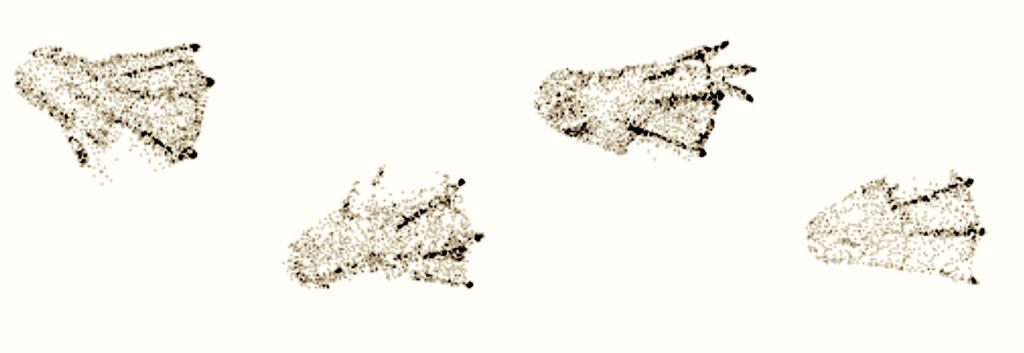
When a beaver walks, its hind tracks tend to obliterate the front tracks. Also, the dragging of its large flat tail can obliterate tracks.
Here are some photos I took:
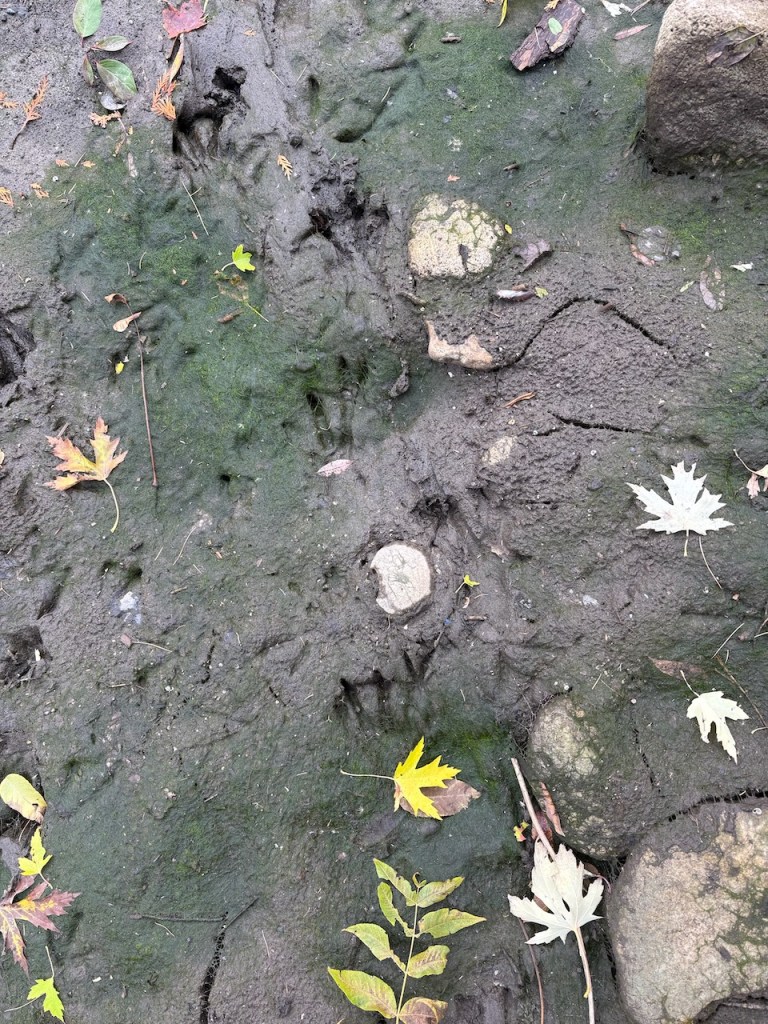
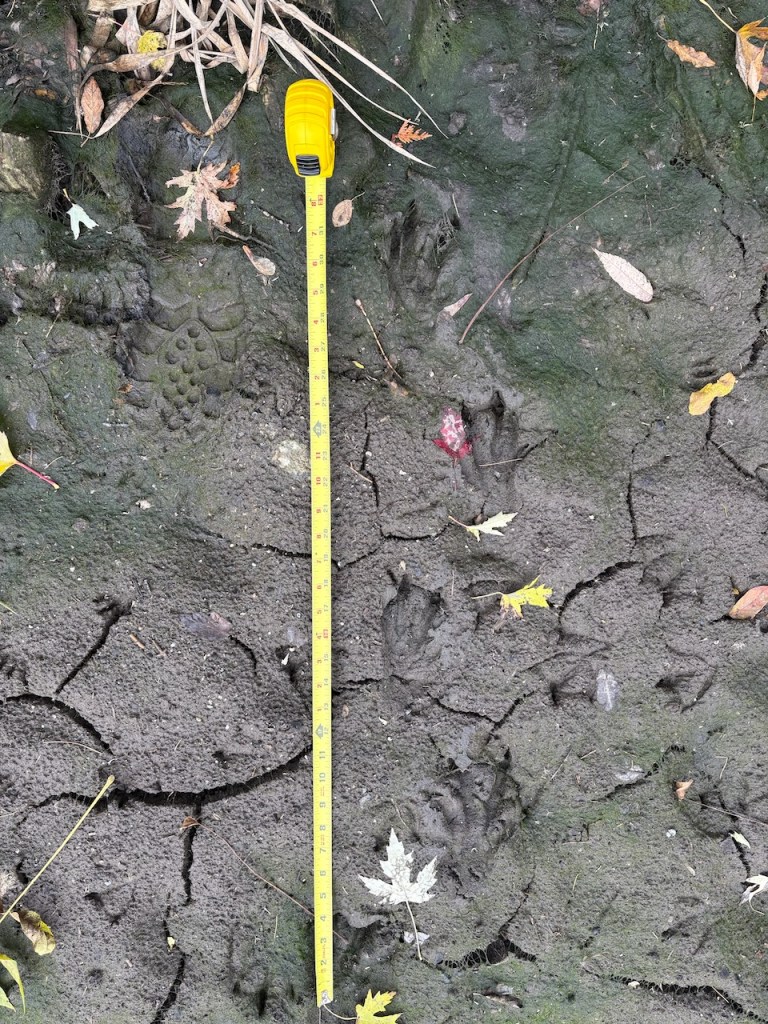
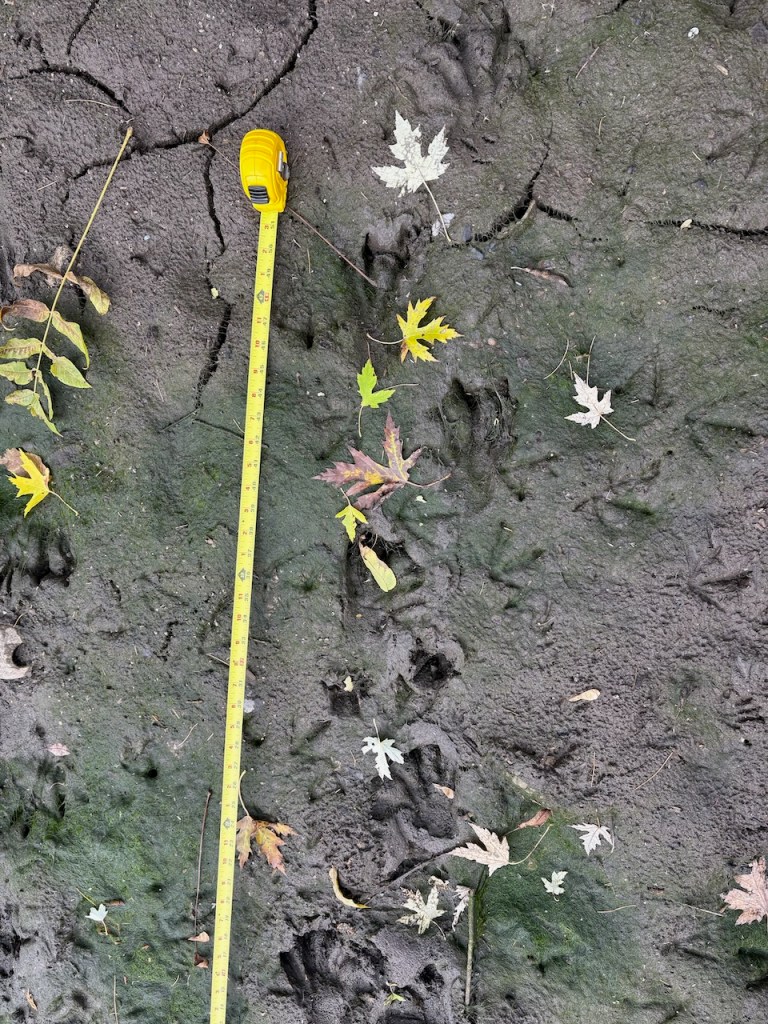
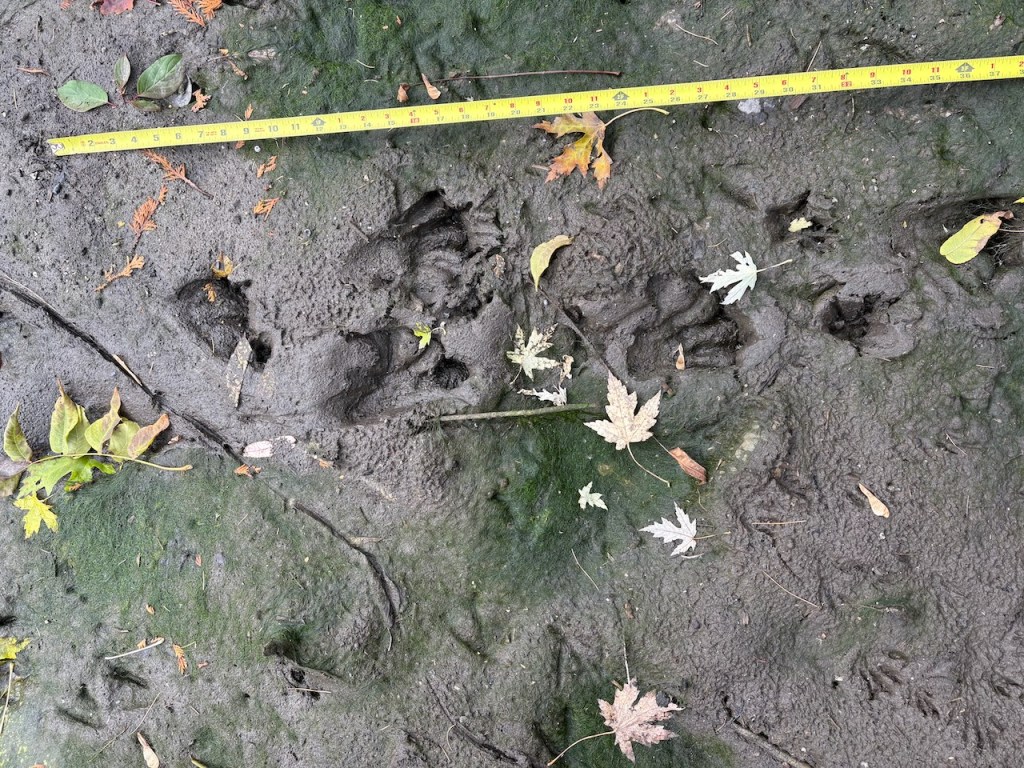
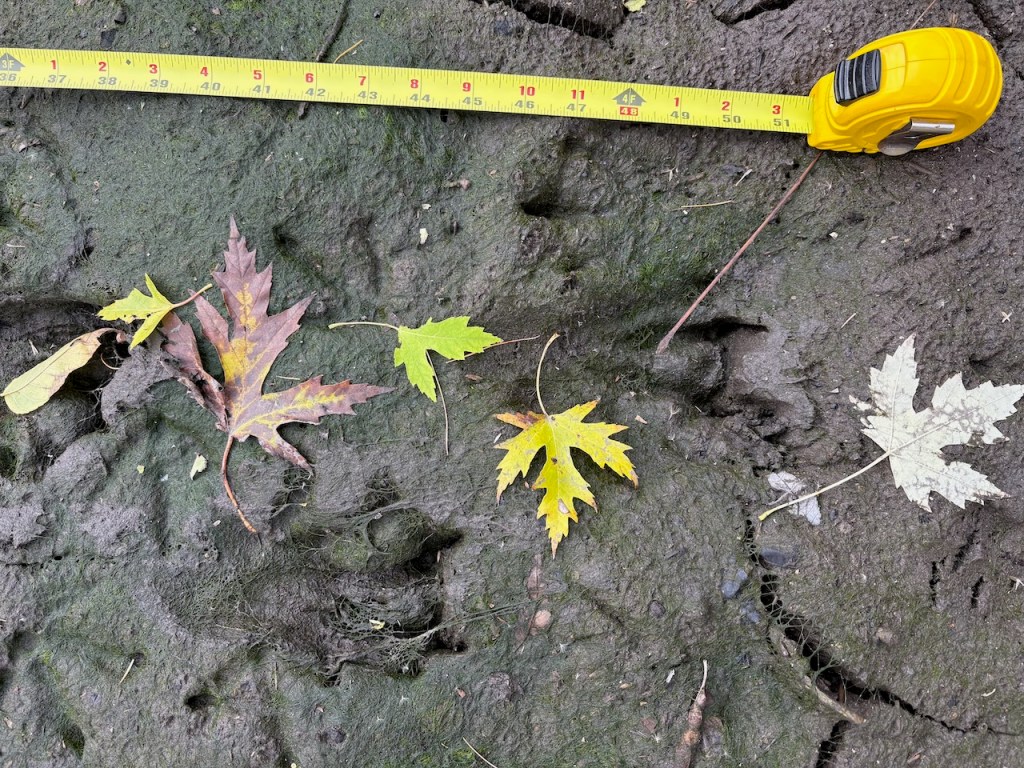
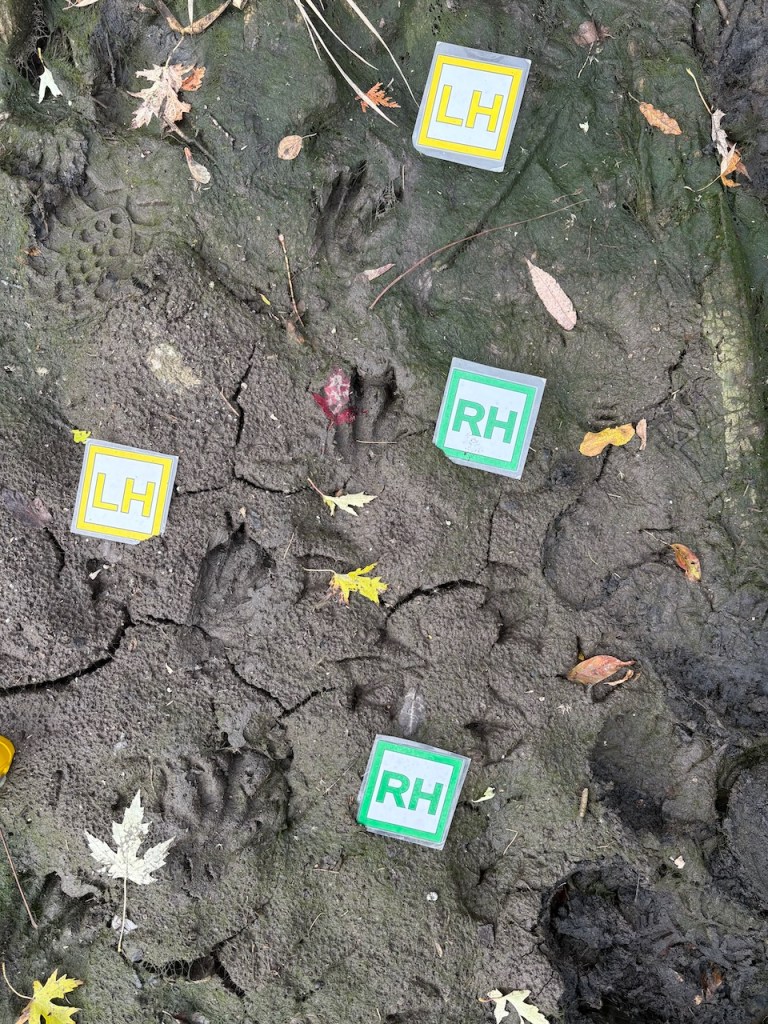
I think the general pattern is pretty clear. We also saw extensive drag marks from where the beaver is dragging trees and branches from the shore into the water:
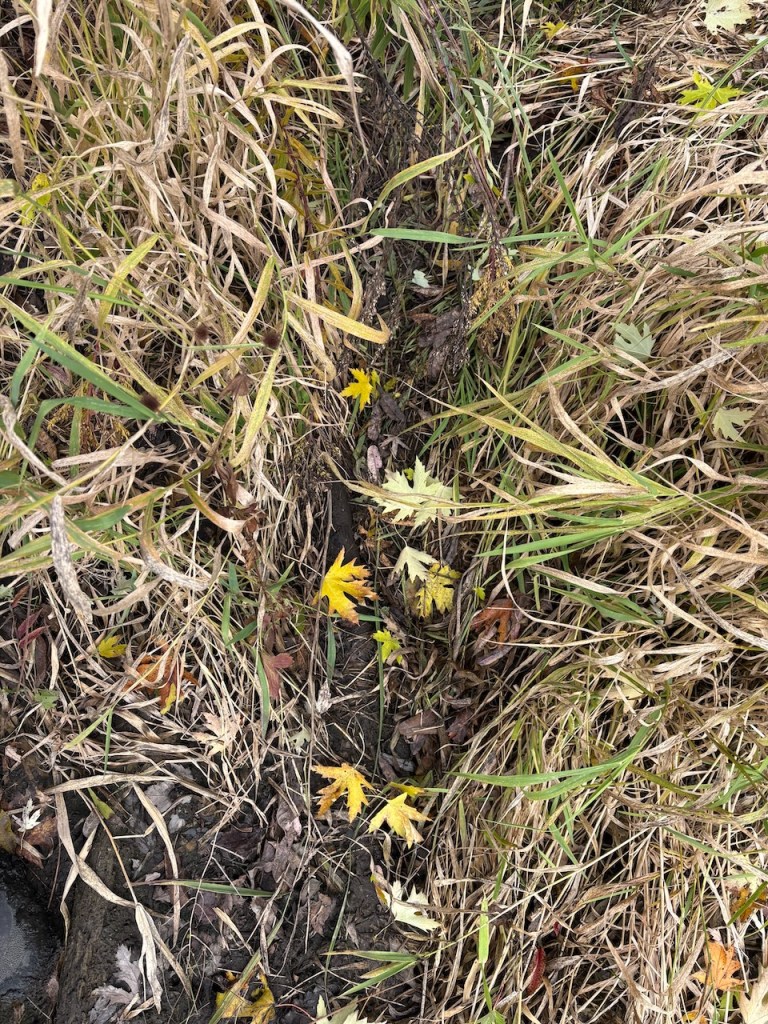
Here you can see the trail coming from the river bank:
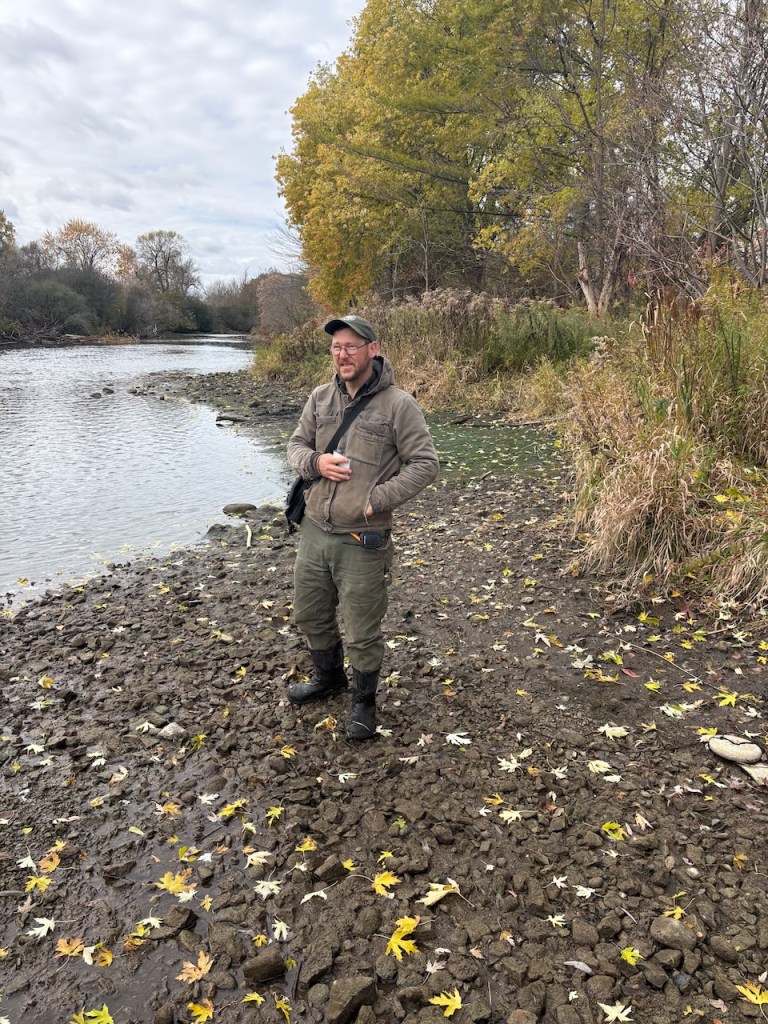
Here is Byron at the site:
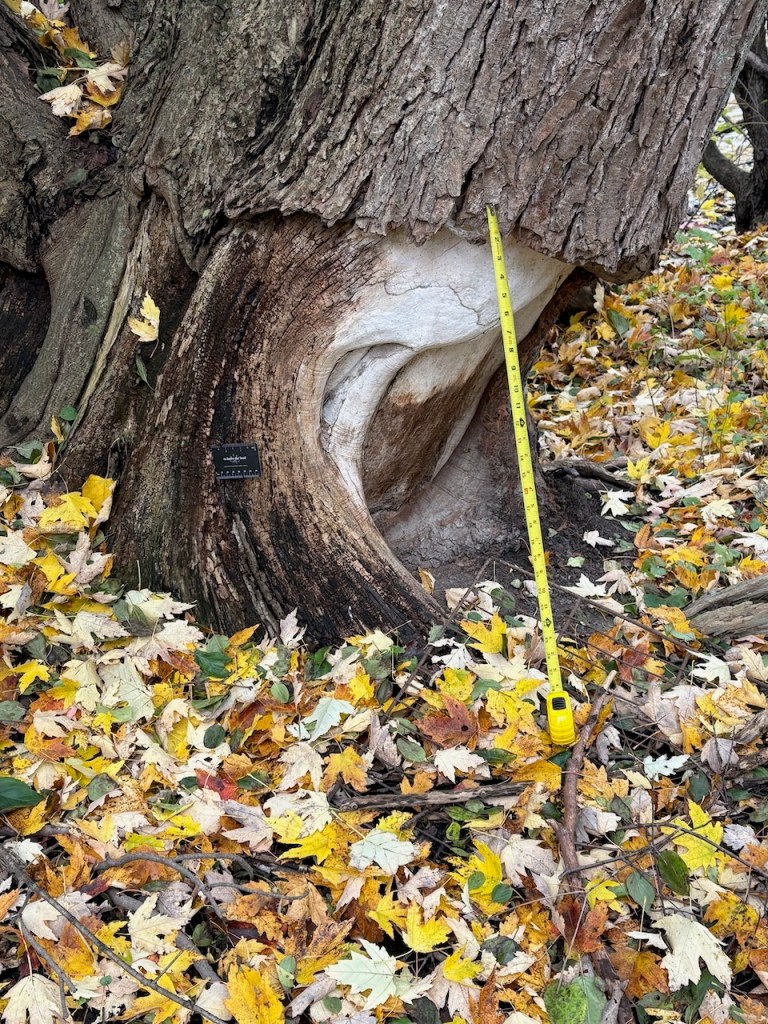
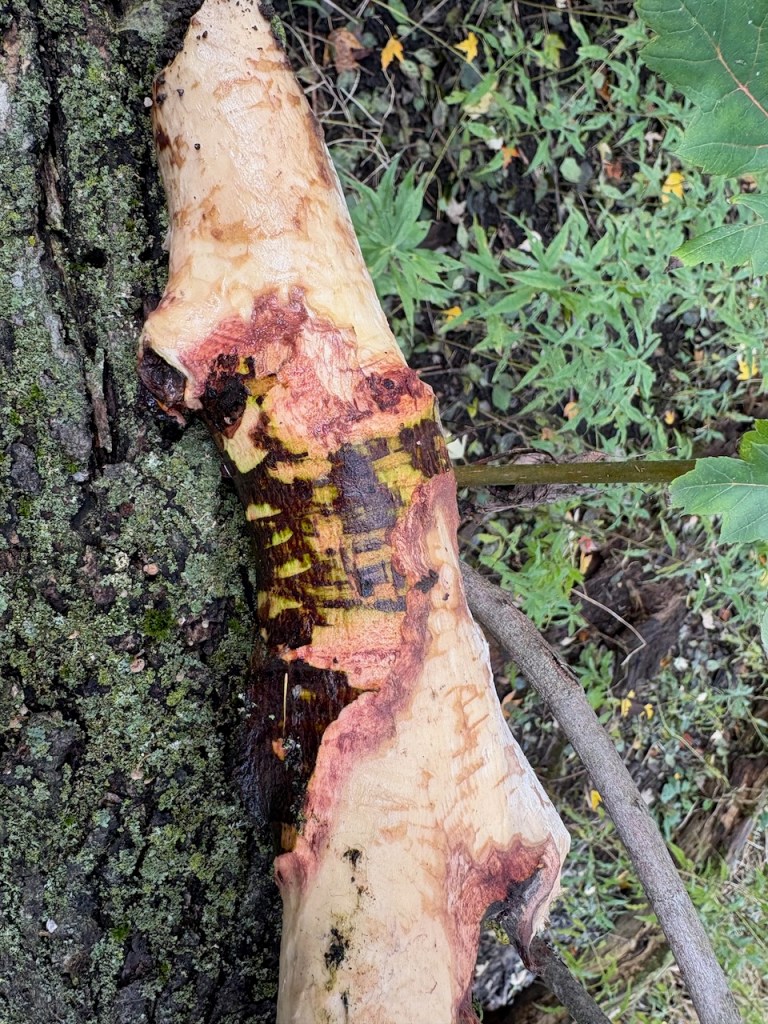
Of course there were many beaver chews on the banks of the river. Here is a fresh one and an old one:
Byron challenged me to learn more about beaver behaviour at this time of year. According to Rezendes, beavers feed on the cambium layer of trees such as alder, willow, aspen, and cottonwood, along with their leaves, buds, and twigs. When gathering branches on land, beavers drag them to the water’s edge, where they can feed in relative safety. The increased activity I observed may also reflect their preparation for winter – collecting and storing branches near the lodge as a food cache for the colder months. It also makes sense that beavers would be repairing and reinforcing their lodges before freezing temperatures and strong water flows arrive, and that they would be eating more to build up fat reserves for winter, as most mammals in cold climates do.
I had wondered why I don’t often see beaver lodges along the river, but Rezendes explains that some beavers prefer to excavate bank burrows instead. In some cases, they even build a lodge over the burrow, using it as an underwater entrance. I suspect I may have seen an example of this along the Eramosa River near the bridge at Victoria Road, something I’ll need to investigate further.
Final thoughts:
I’ve learned a great deal about beavers and now feel much more confident in recognizing their tracks and other signs of activity.
 Field Notes of a Tracker
Leave a comment