Date: Oct 29, 2025
Place: Guelph, Ontario.
References:
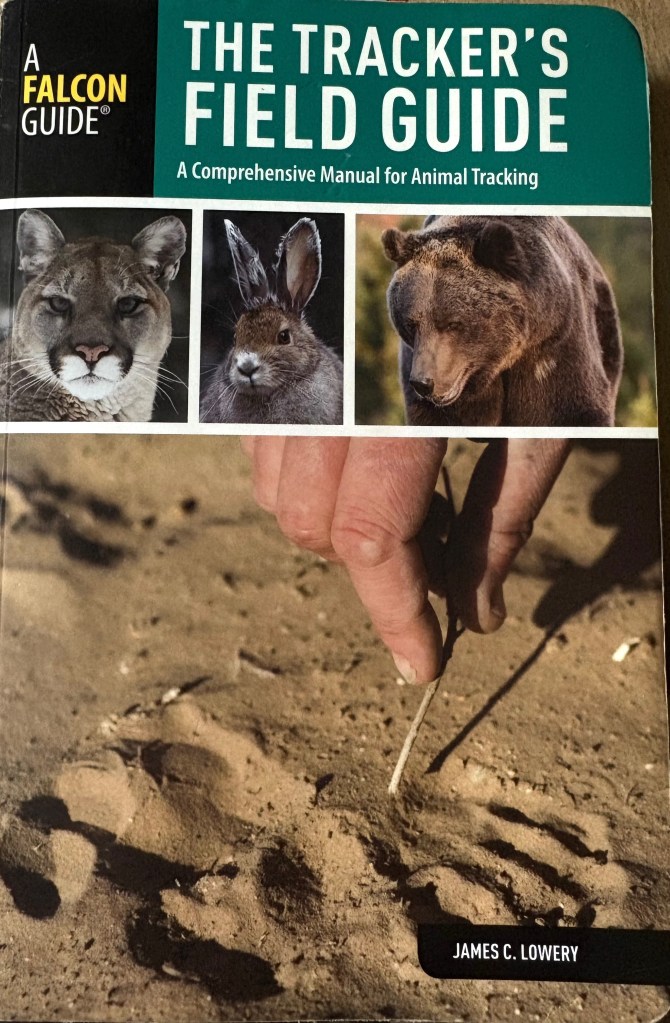

Also, the Wikipedia site for Northern short-tailed shrew:
https://en.wikipedia.org/wiki/Northern_short-tailed_shrew
Description:
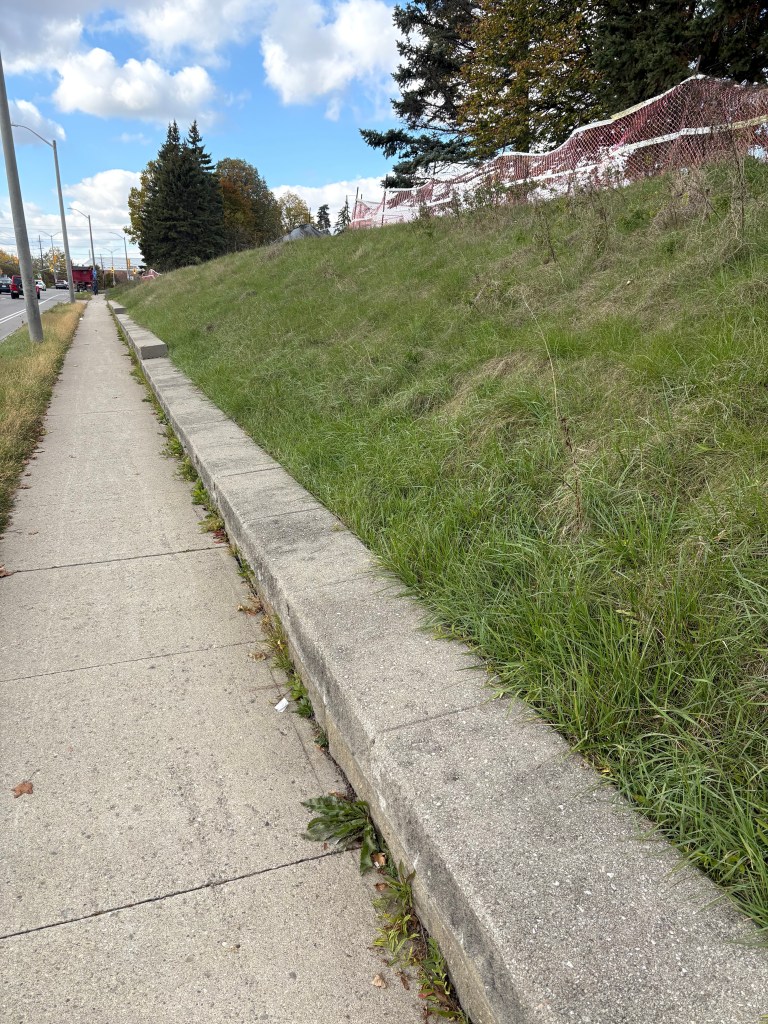
I found a dead shrew on the edge of the road near the University of Guelph. It was on the concrete wall that separates the sidewalk from a grass verge:
Here are some photos of the shrew:
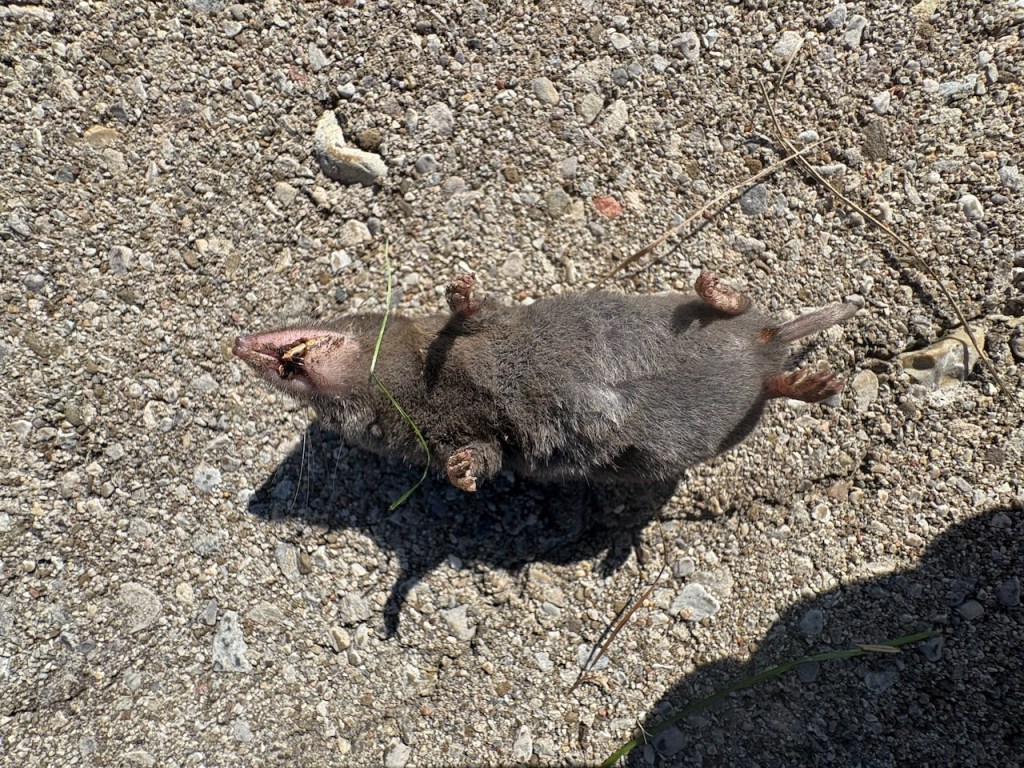
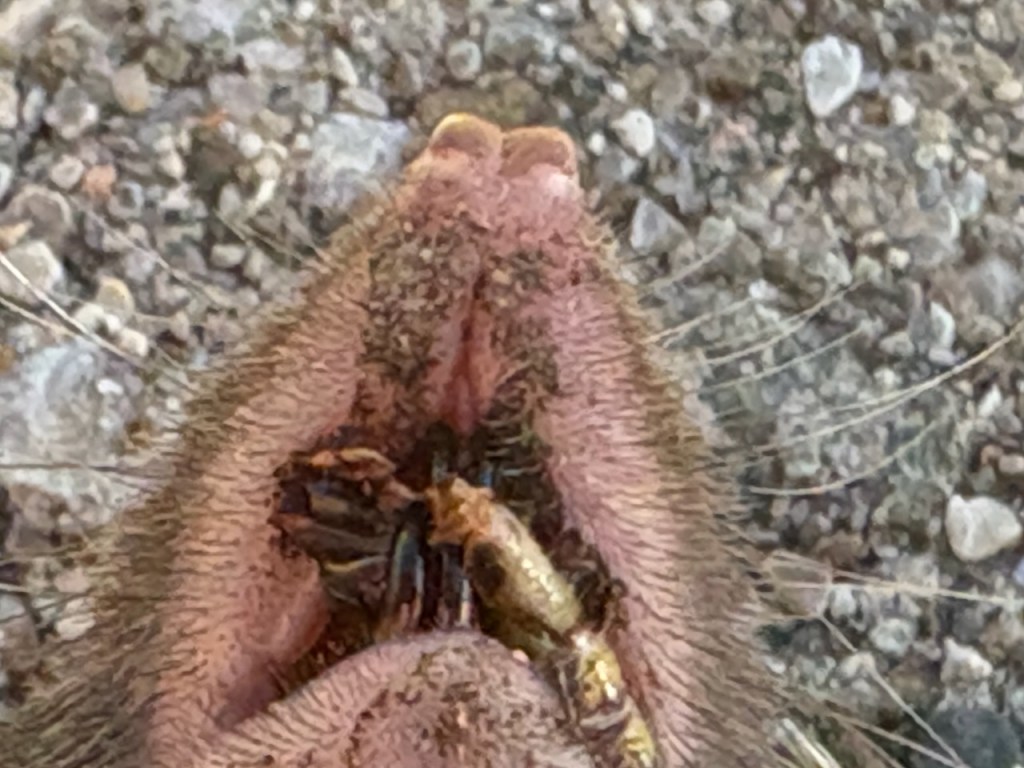
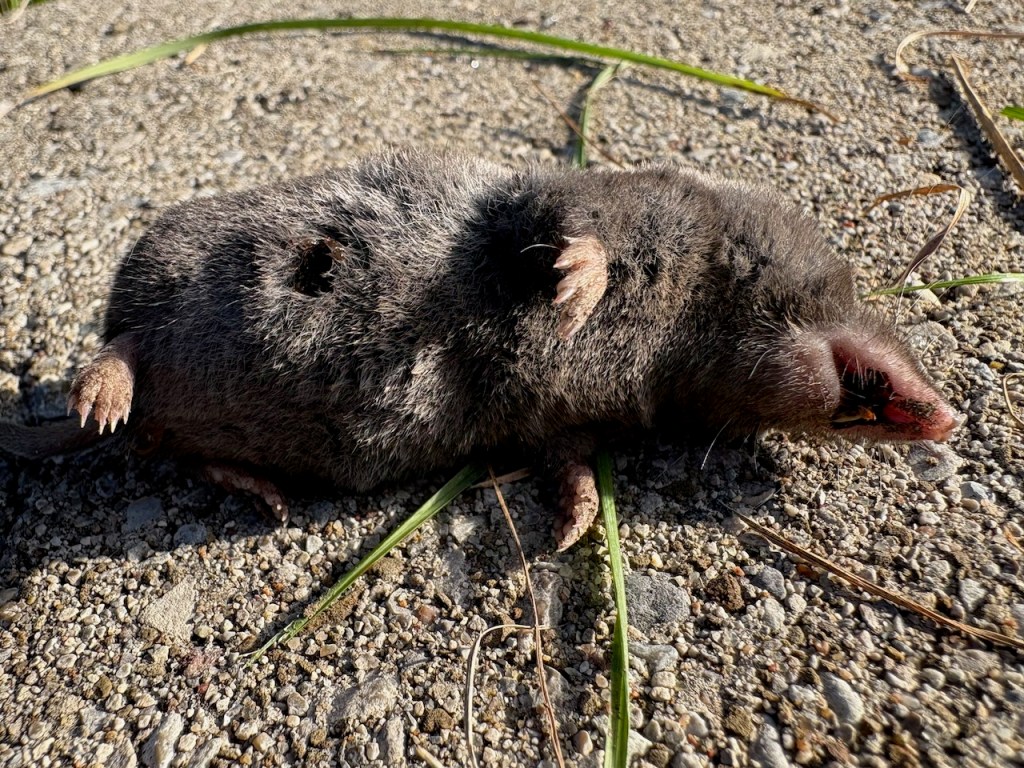
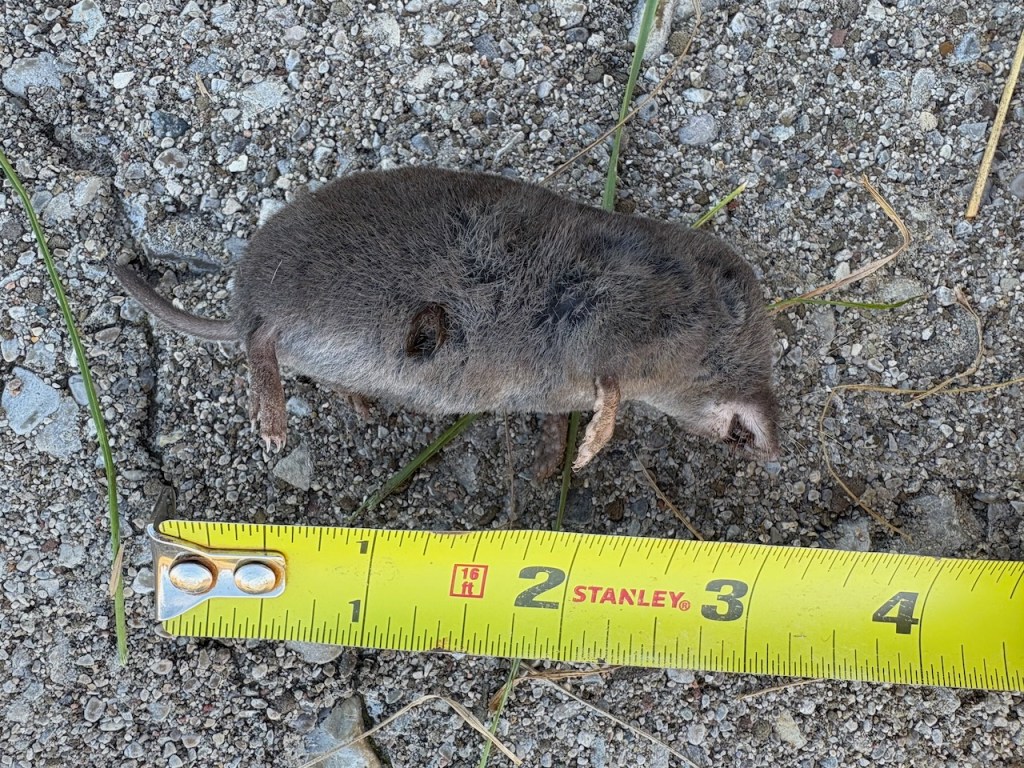
Based on this shrews robust body, uniform lead gray colour, and relatively short tail, I believe this is a Northern Short-tailed Shrew. One of the first things I noticed was a single puncture mark in the shrews side. There may be more – I can’t be sure. Are these produced by a birds’ talon? This is the 2nd Short-tailed Shrew I have seen recently that is uneaten. Here is the one Byron Murray found while we were near Starkey Hill (near Arkell).
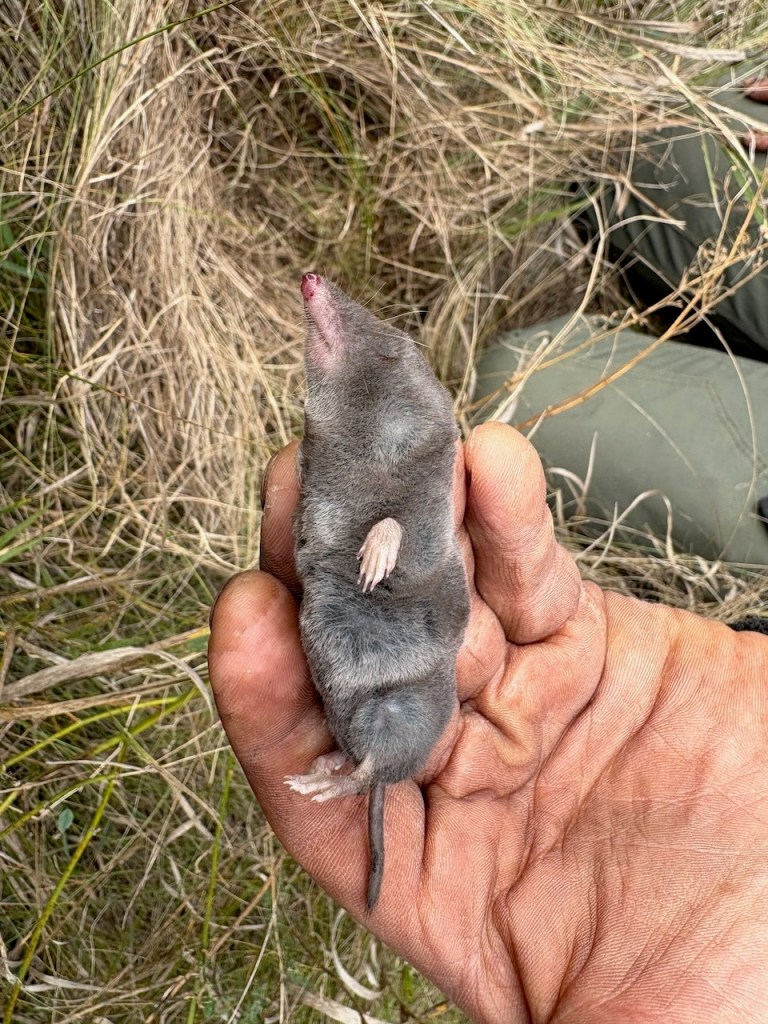
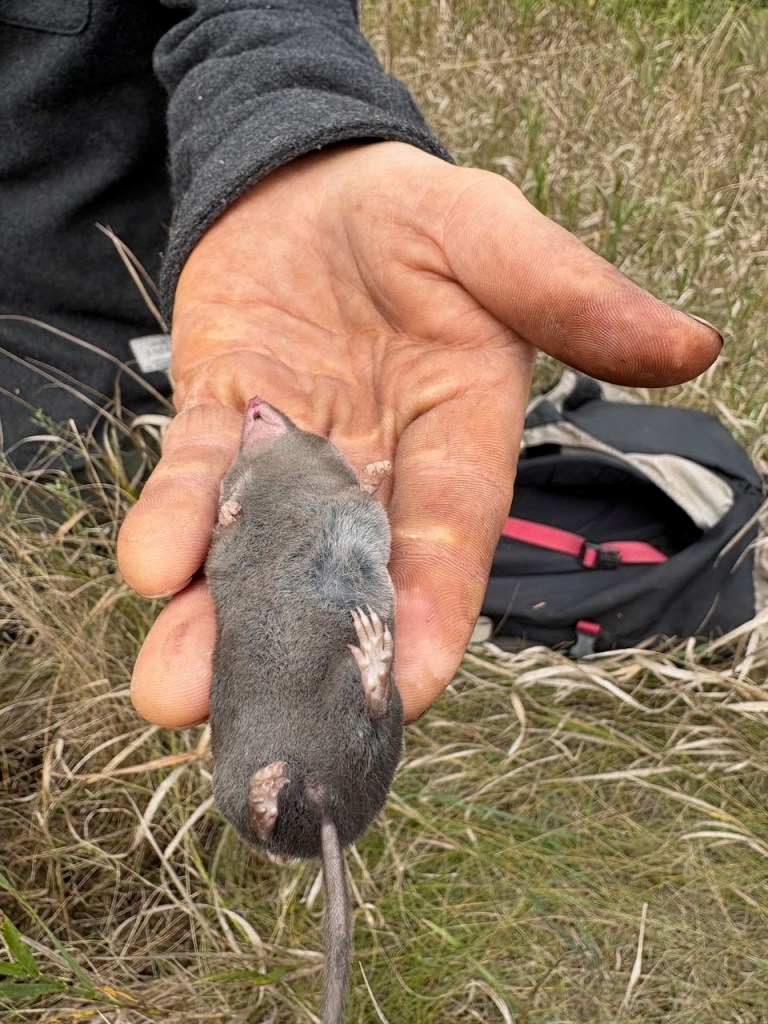
I seem to recall that there were puncture marks on this shrew as well. Byron explained that these shrews have pungent glands on their body which might explain why the shrew was killed but not eaten (because maybe this makes them taste bad!). The Wikipedia site gives a reference for this. Another super interesting thing about this shrew is that it has a venomous saliva that is used to subdue its prey. According to Wikipedia:
“It eats small quantities of subterranean fungi and seeds, though it is mostly carnivorous. It prefers insects, earthworms, voles, snails, and other shrews for the bulk of its diet, though salamanders and mice are also eaten.”
Furthermore,
“It is probably the most common shrew in the Great Lakes region.”
As a tracker, I am particularly interested in the tracks of the shrews. Unlike mice and voles which have four toes on the front feet and five toes on the hind feet, shrews have five toes on the front and hind. Here are the hind feet:
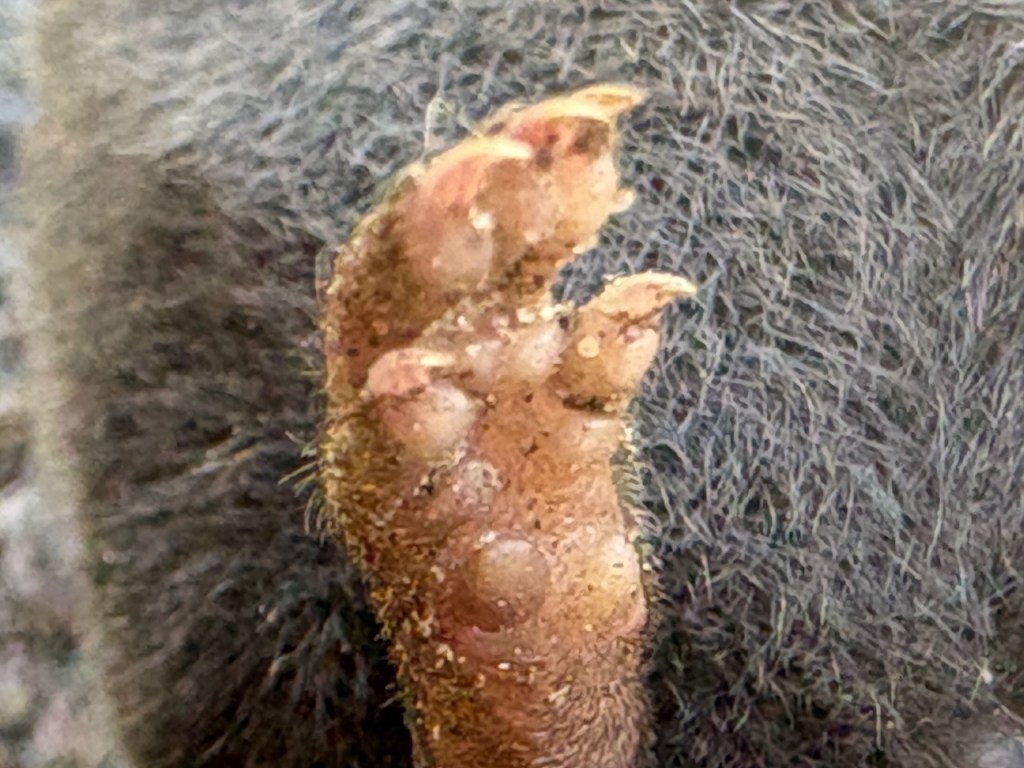
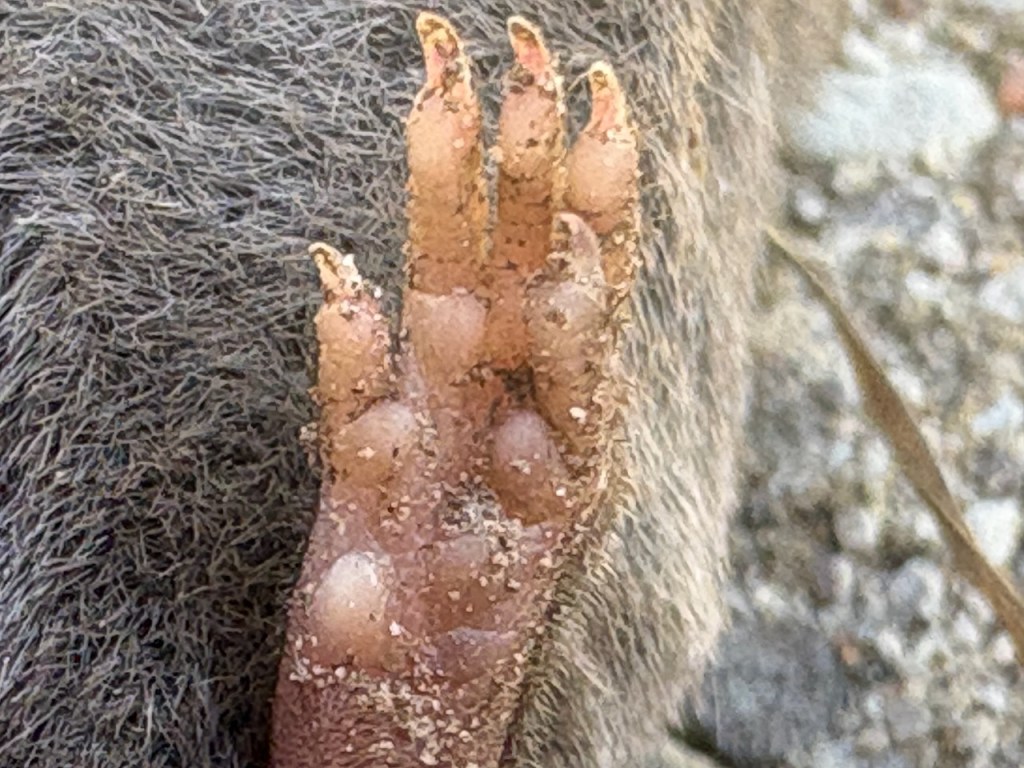
What I notice is the sharp claws. Here are some pictures of the front feet:
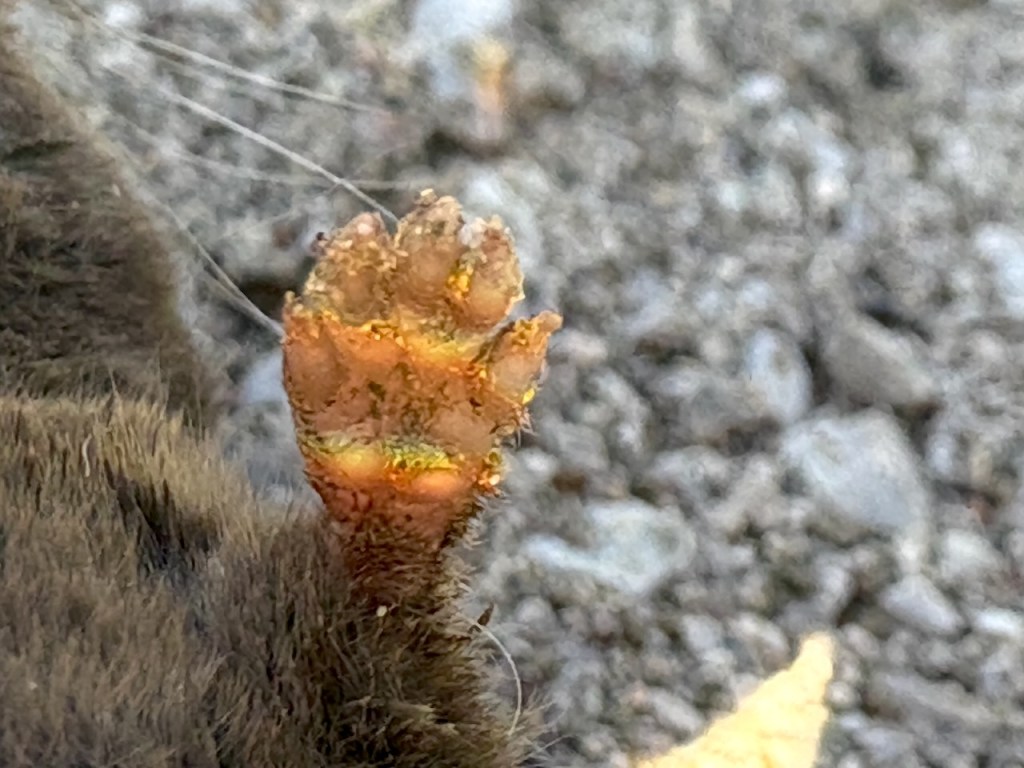
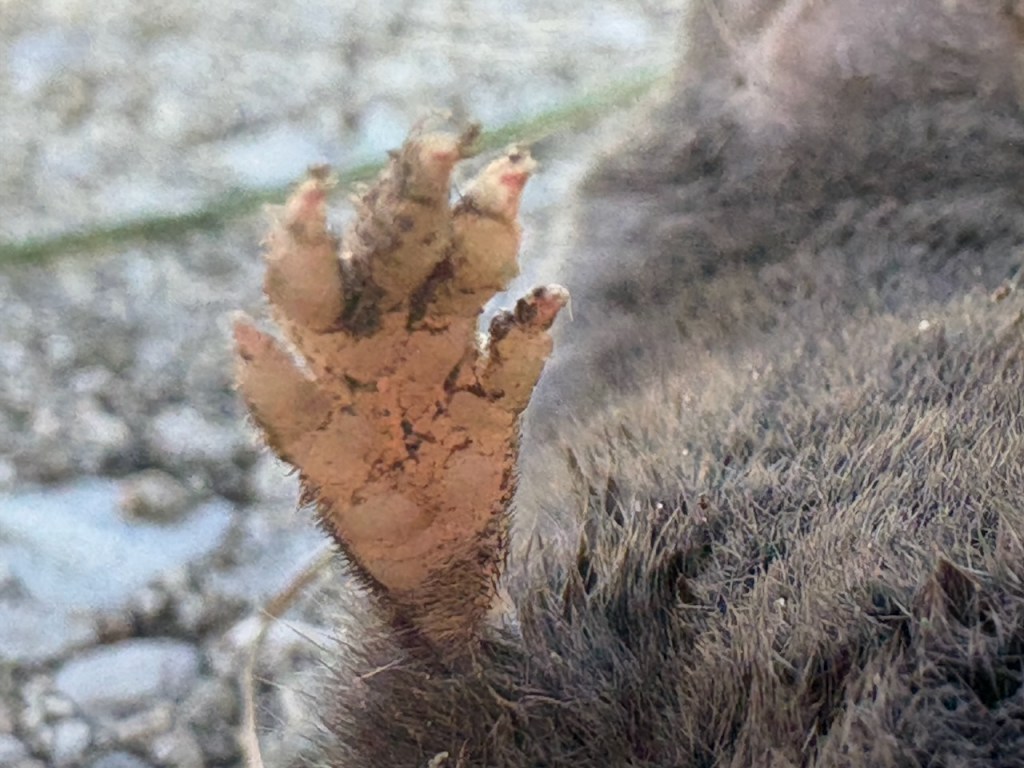
Here are some drawings of shrew tracks from Lowery:
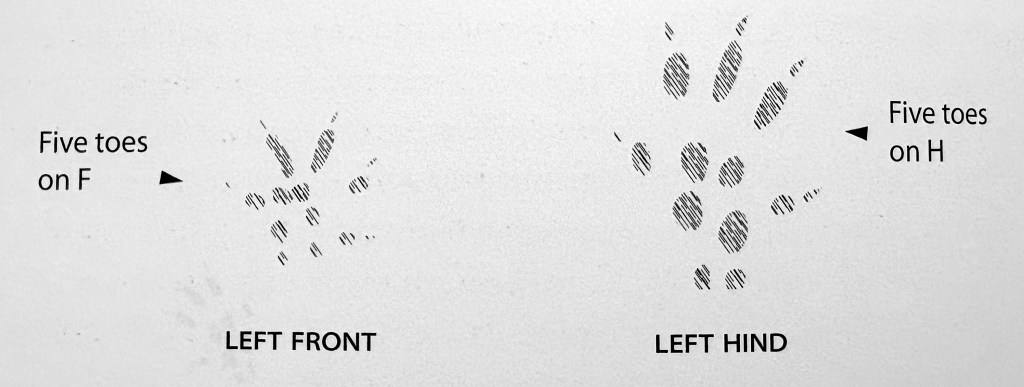
These tracks are tiny, and the trail width of the trot or walk is very narrow (about a fingers width).
 Field Notes of a Tracker
Leave a comment