Date: October 22, 2025
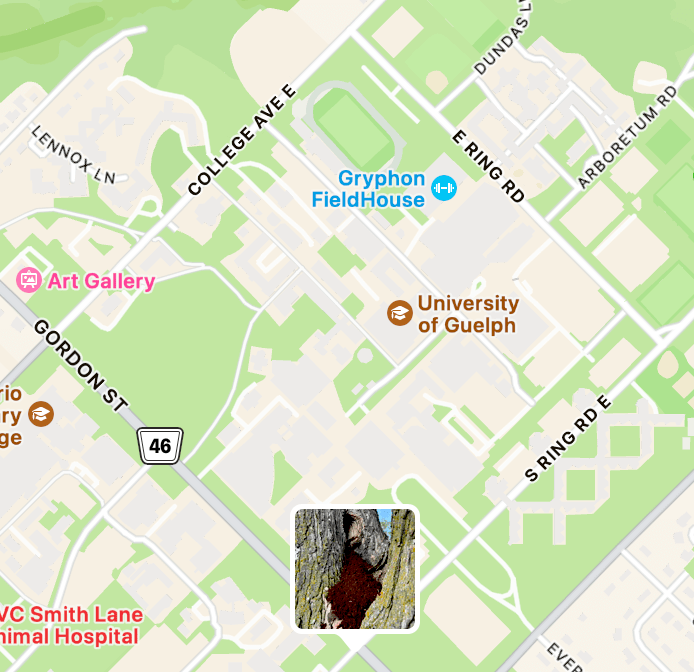
Place: University of Guelph campus, near the intersection of Gordon St and Stone Rd. The map is given below which shows that the location of the observation is completely surrounded by roads.
Context: I noticed a large quantity of coffee grinds like material (“frass”) coming out of a hole in a Silver Maple tree. The hole is about 2 inches by 3 inches.
References: iNaturalist, Google, Youtube, and the facebook group “Animals Don’t Cover Their Tracks: Animal Track Identification Help Group”.
Investigation:
I was walking along Gordon St. and noticed what looked like brown coffee grinds coming out of a tree. I recognized that the tree was a Silver Maple. Here are some pictures of what I observed:
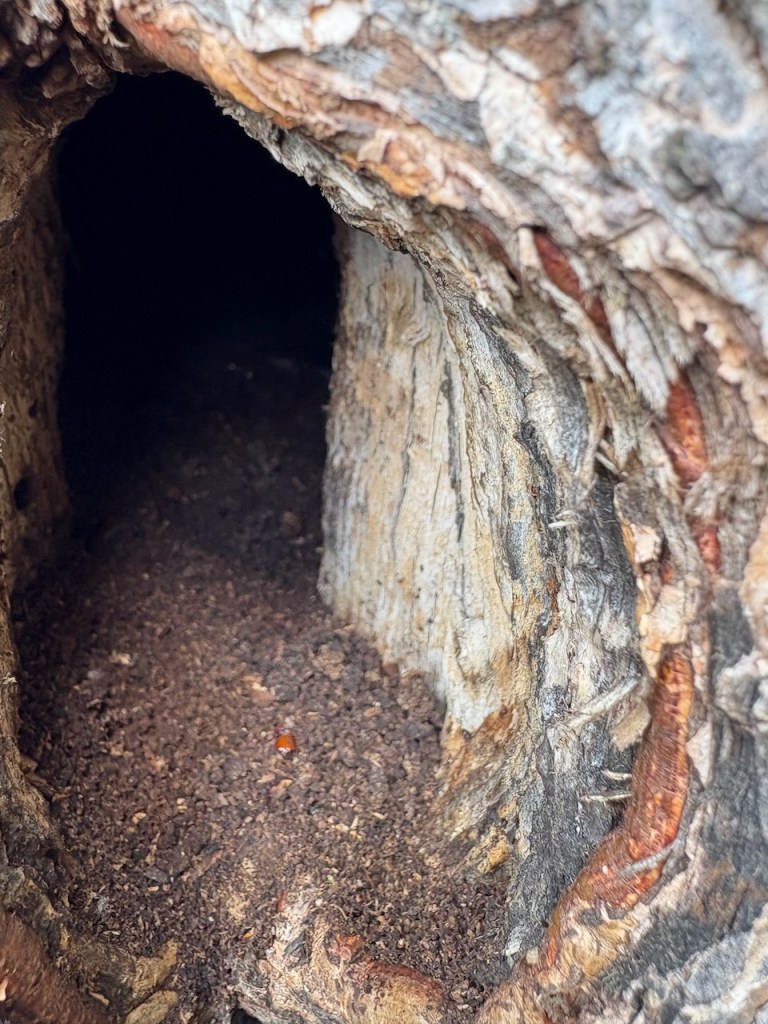
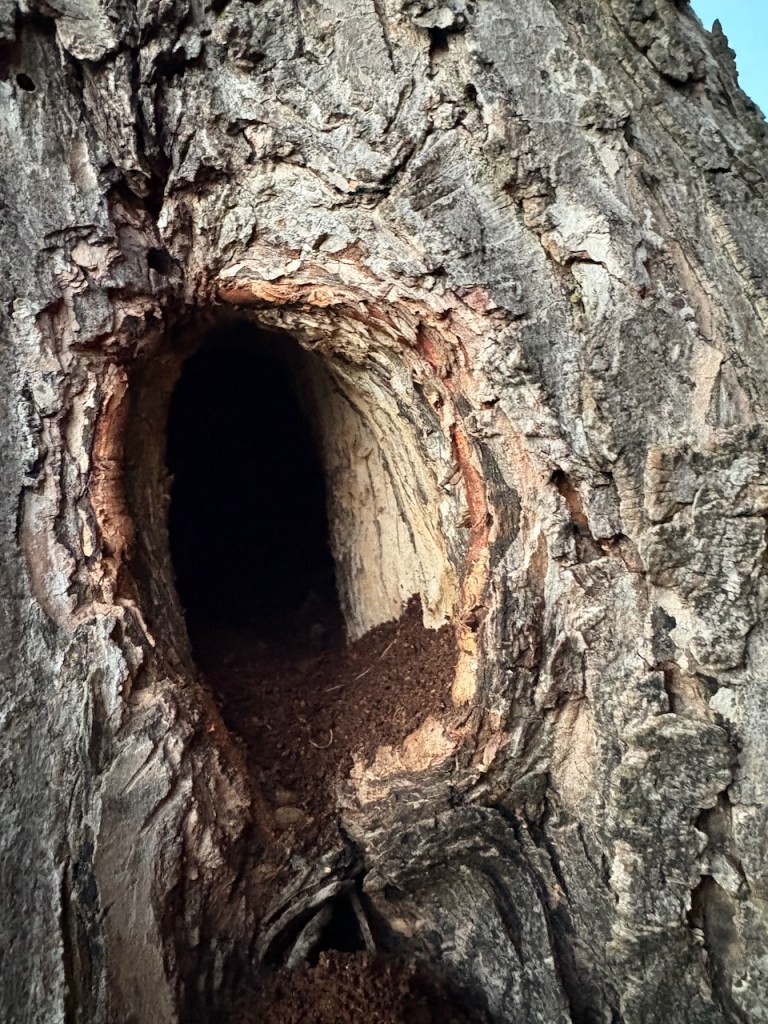
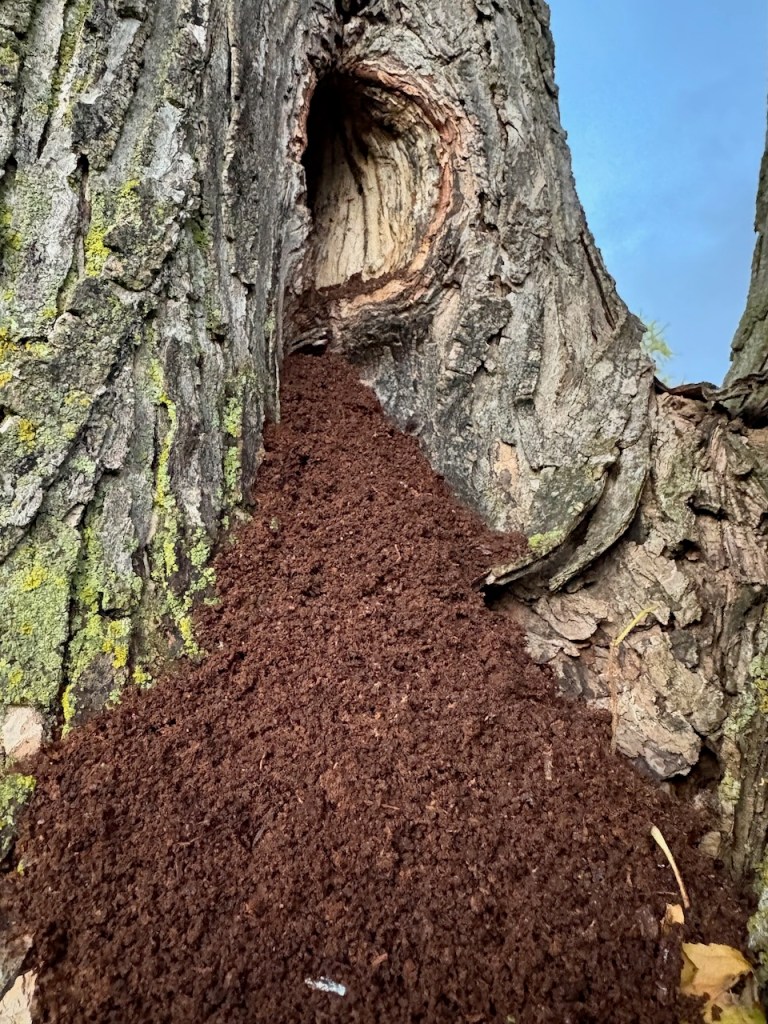
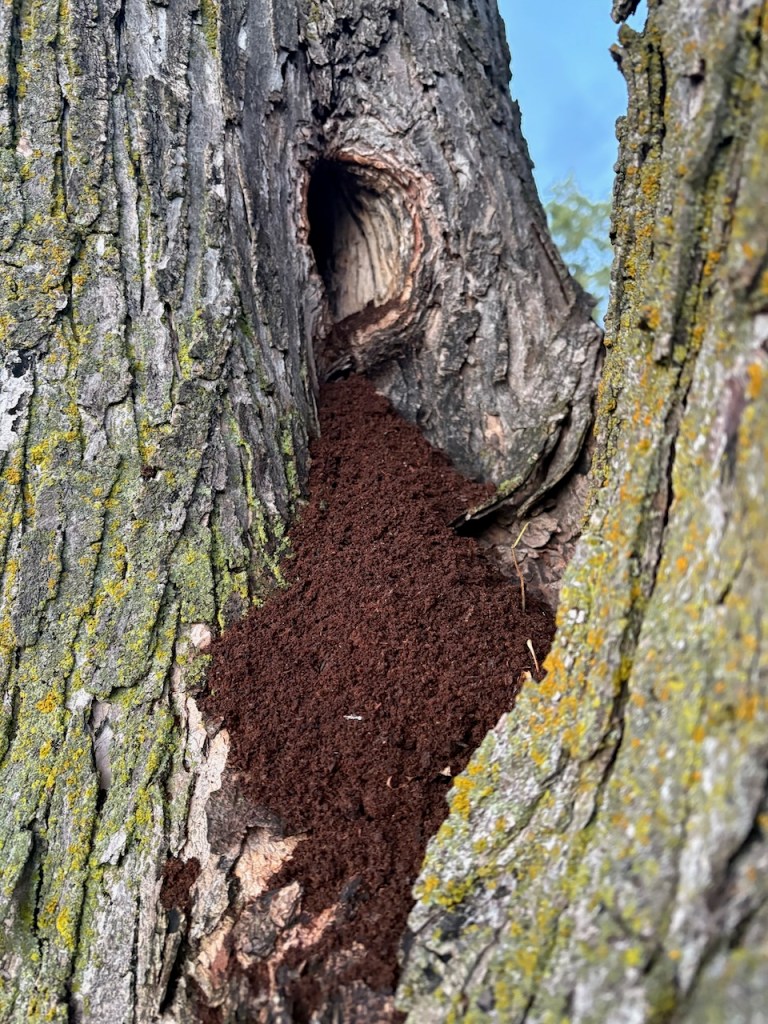
I was in a bit of a hurry so initially I just took a few pictures and later uploaded them to the facebook group “Animals Don’t Cover Their Tracks”. This led to quite a lively discussion about caused this. People made a variety of suggestions, including:
- porcupine
- bees
- carpenter ants
- insects
What I see is clearly not from a porcupine (no scat, the hole is too small, no pee smell, and the location in an urban area makes this unlikely).
I decided to return to investigate the frass more closely. By the way, some people use the term ‘frass’ synonymously with saw-dust, but this term more accurately represents a combination of saw-dust and the droppings of the insects that caused them.
I collected a large ziplock bag of the frass and used my iphone to have a closer look. Initially, all I saw was what looked like saw-dust.
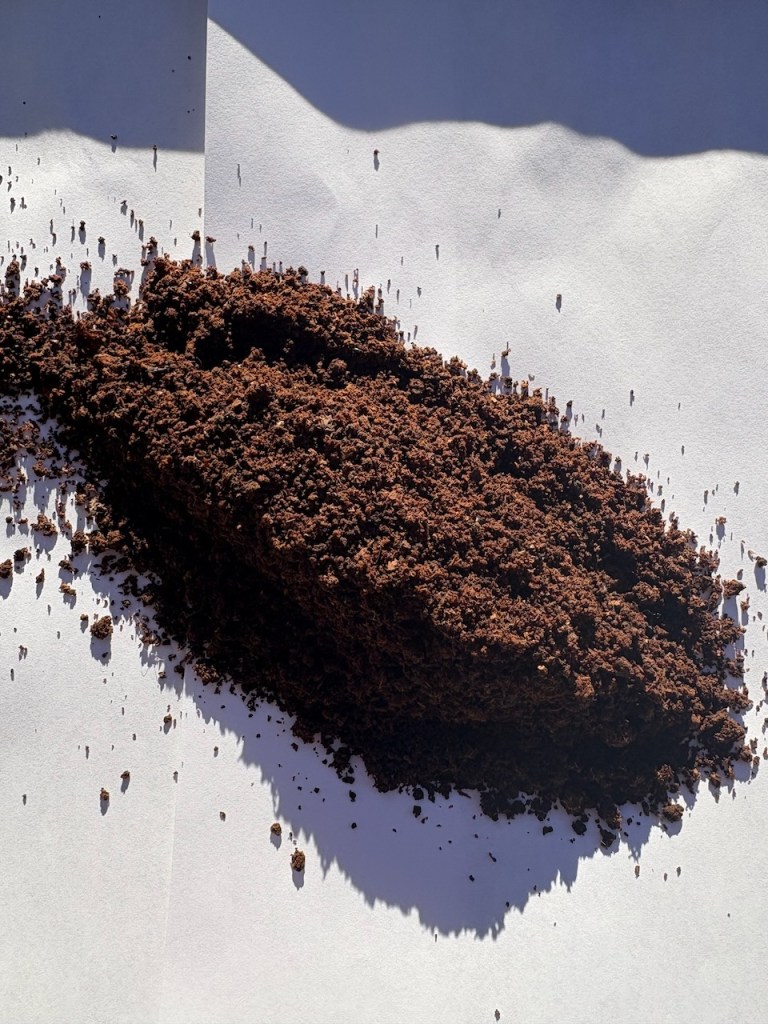
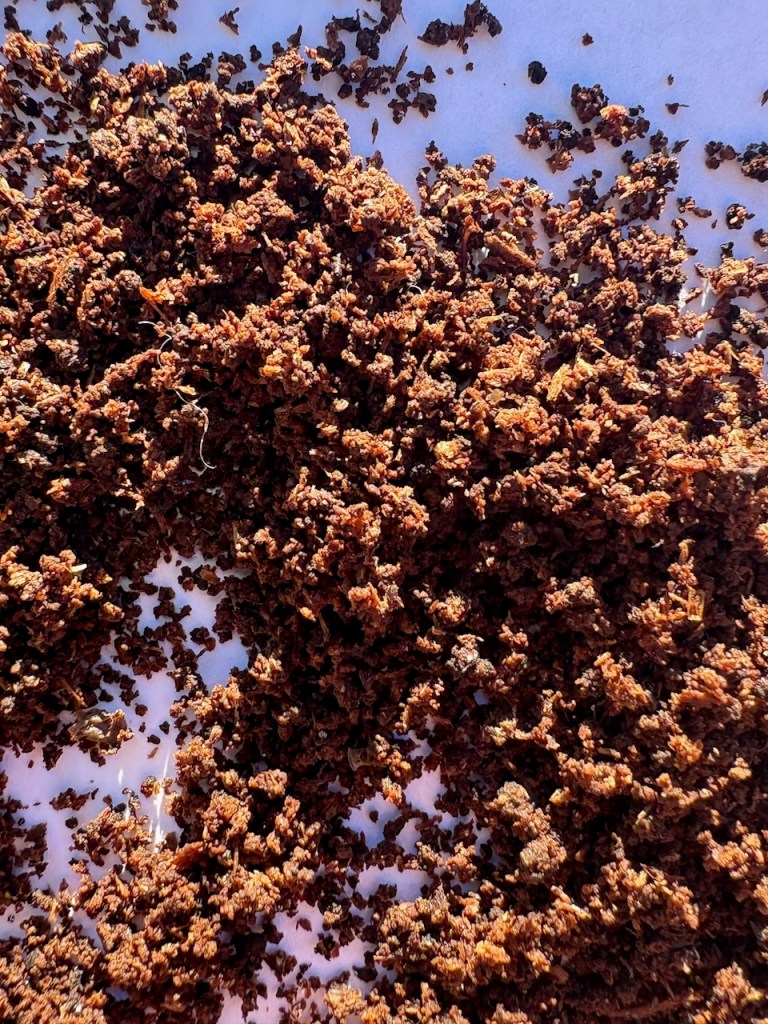
I could however see small particles that sparkled in the sunlight, so I used my iphone to zoom in more carefully. I could see what looked like beetle pupal cases?
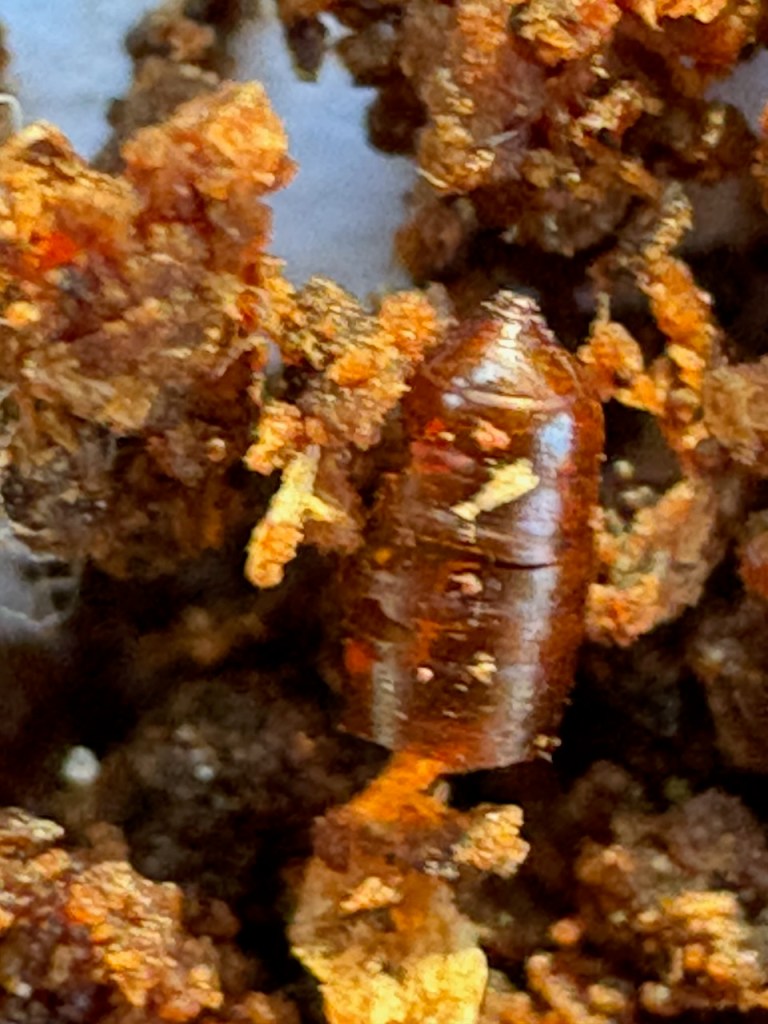
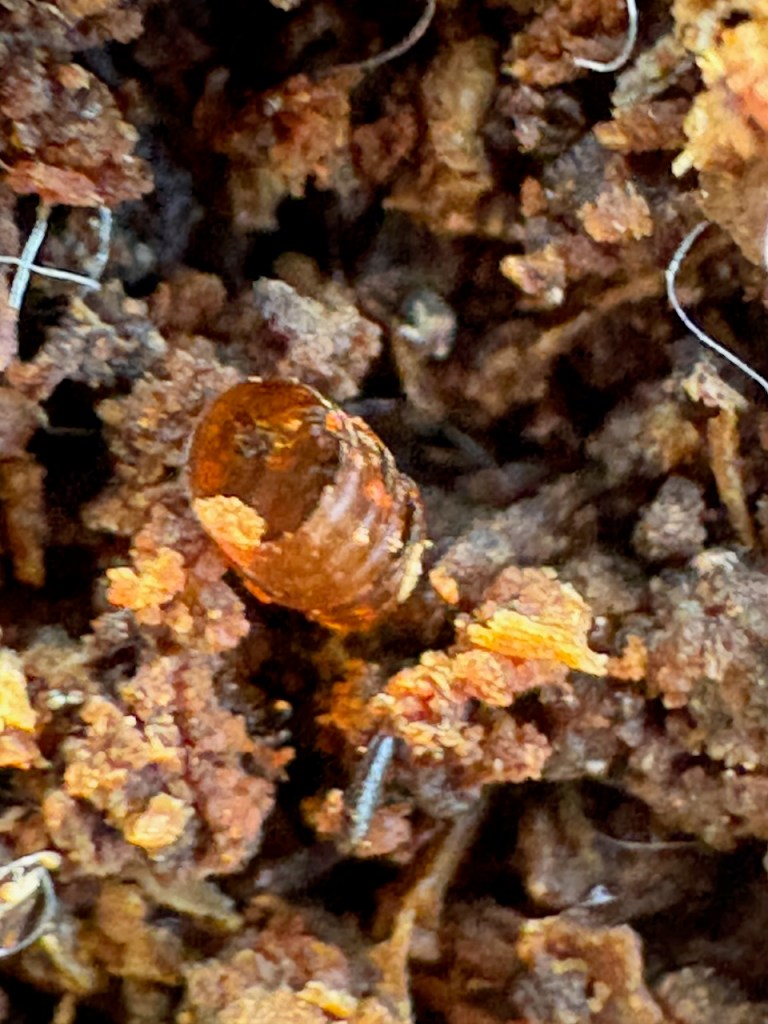
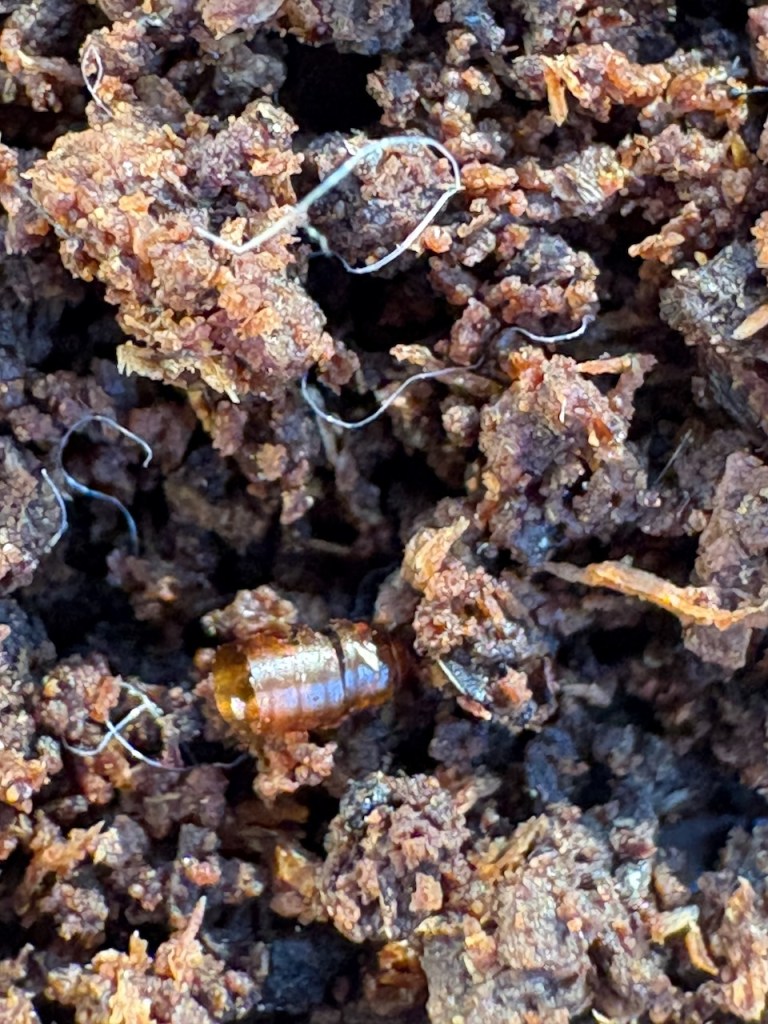
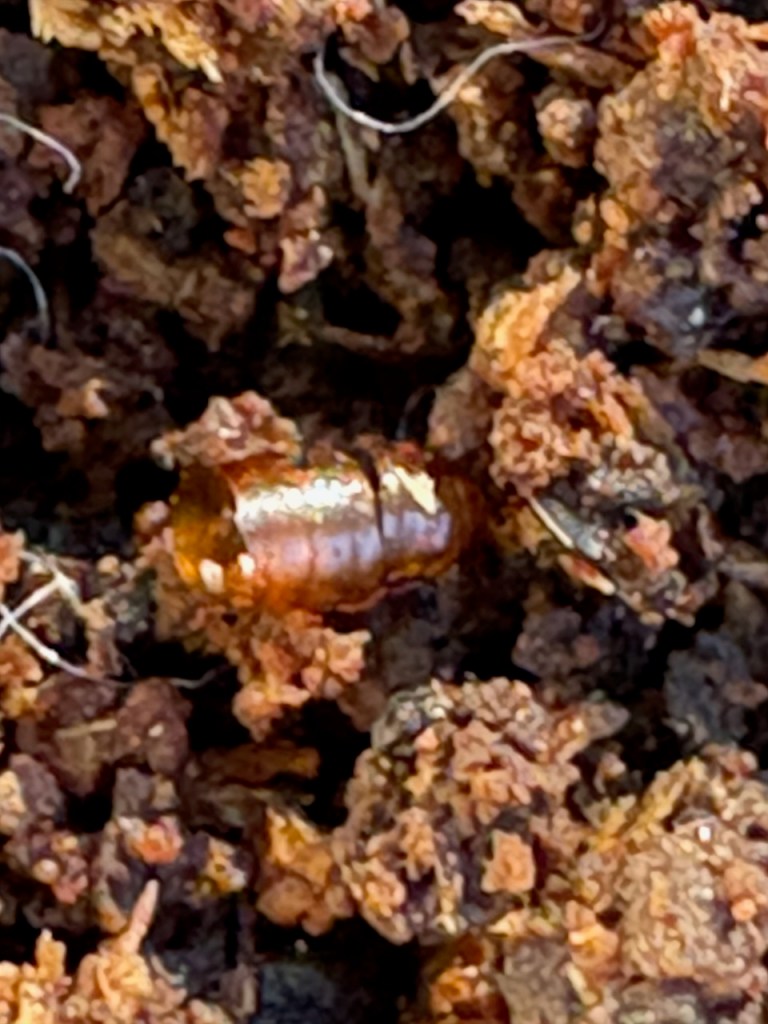
I could also see what looked like beetle pieces (e.g., the carapace), and some other things that have a mottled appearance – are these egg casings? They are only about 1 – 2 mm wide.
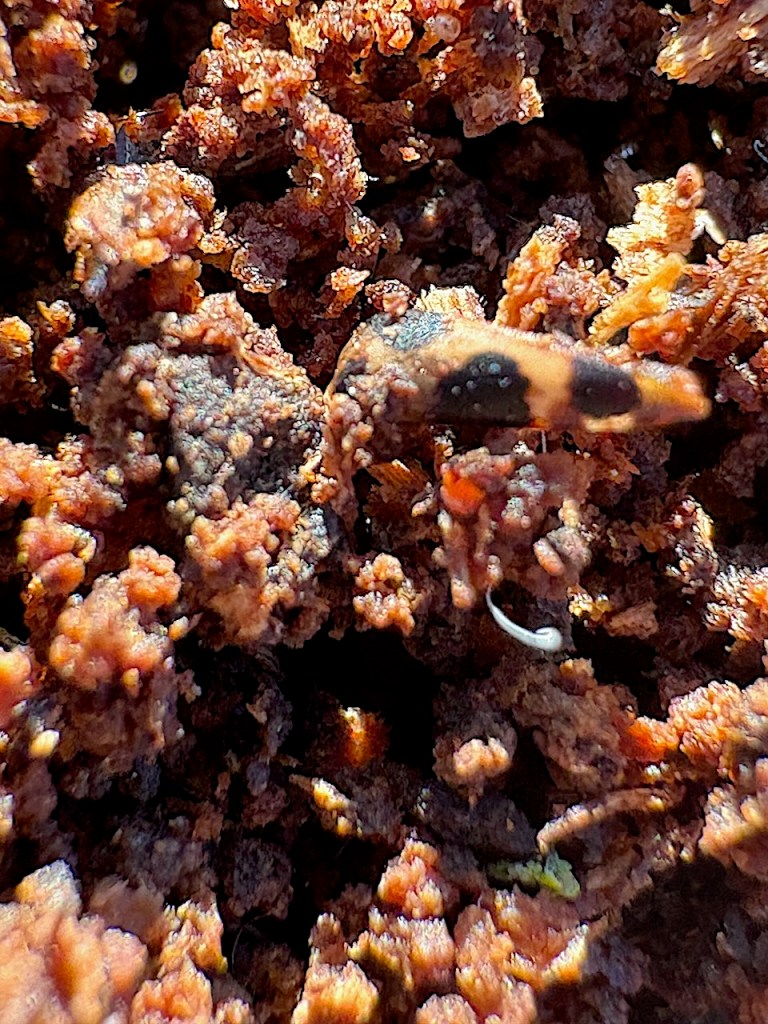
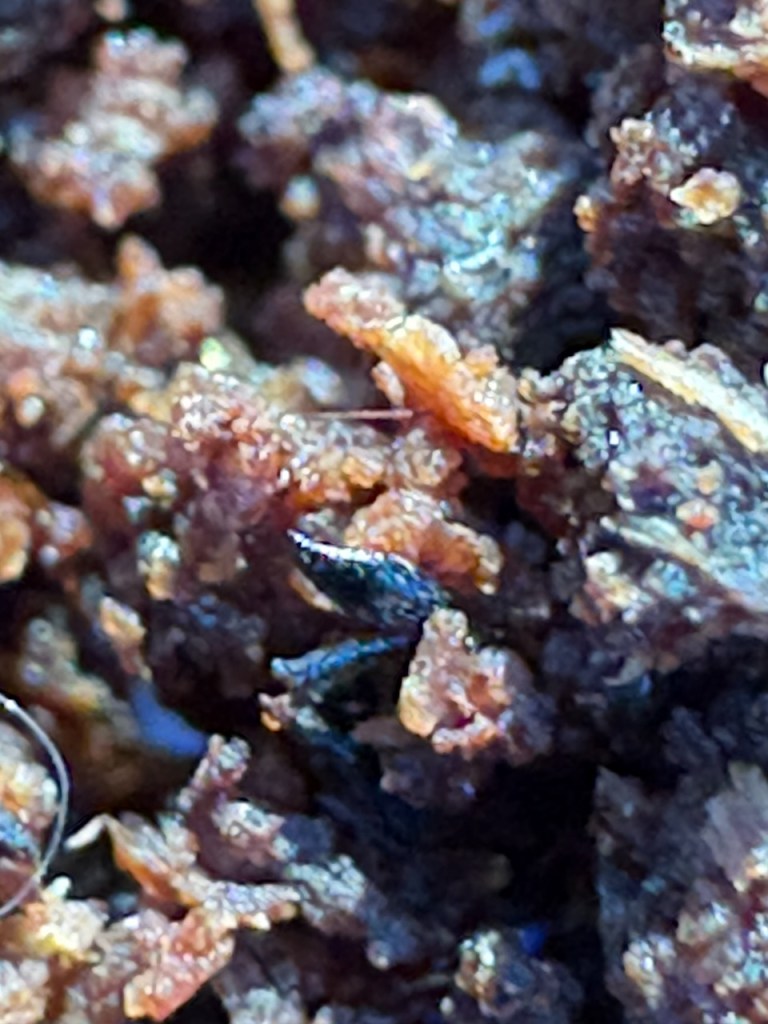
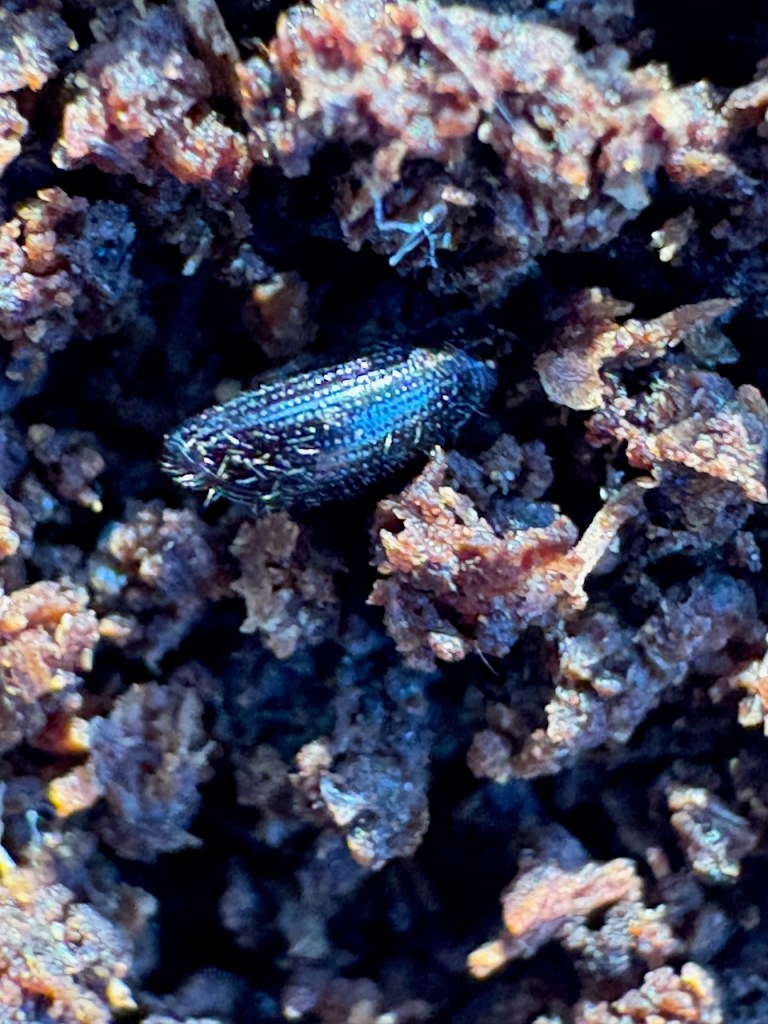
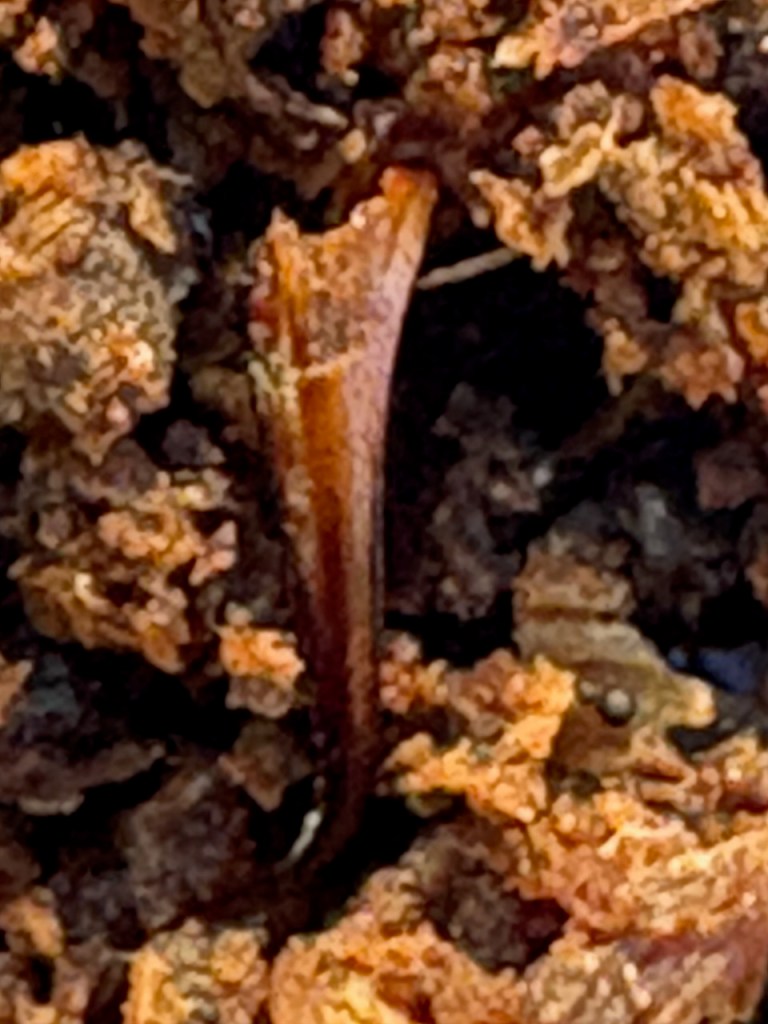
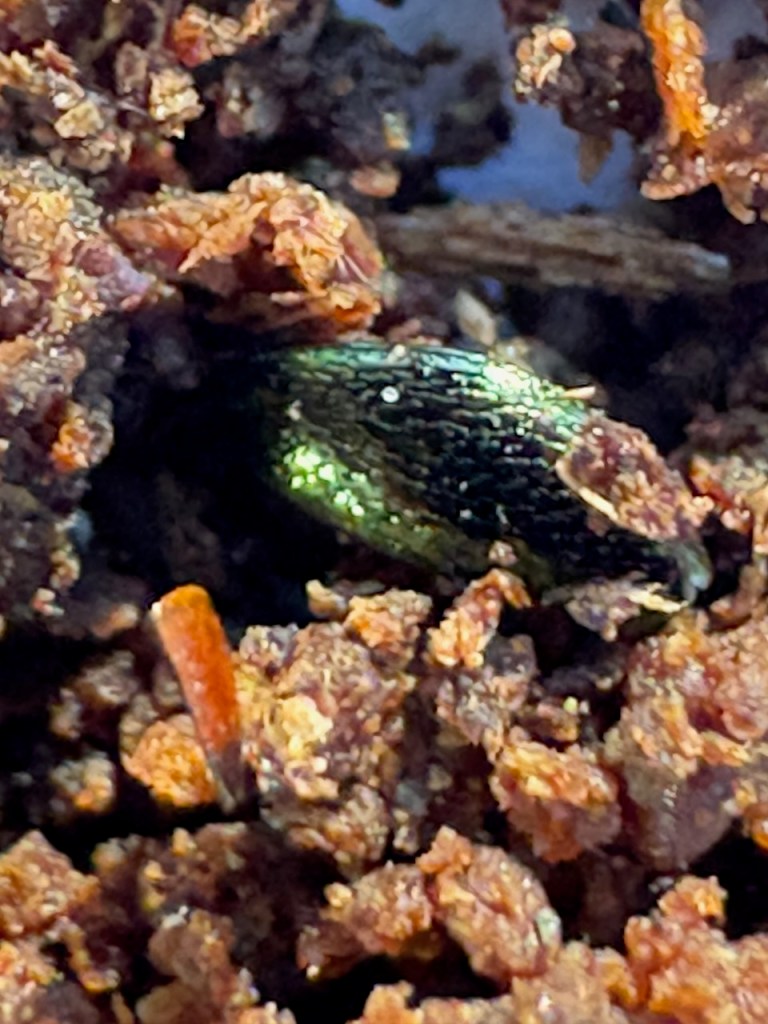
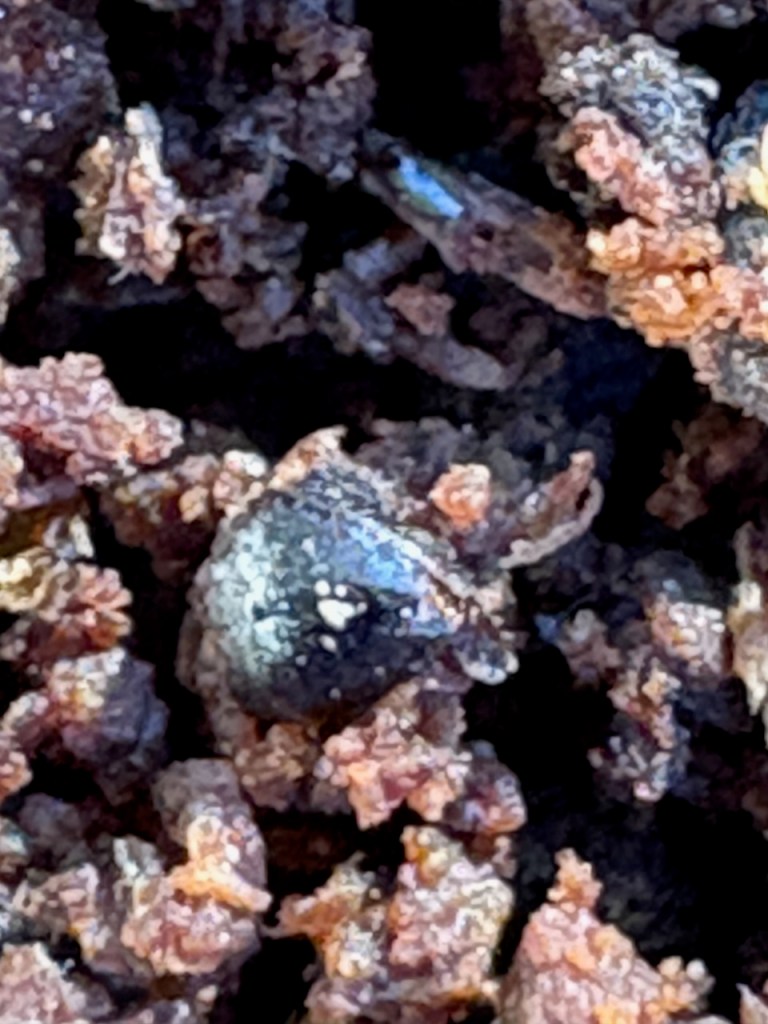
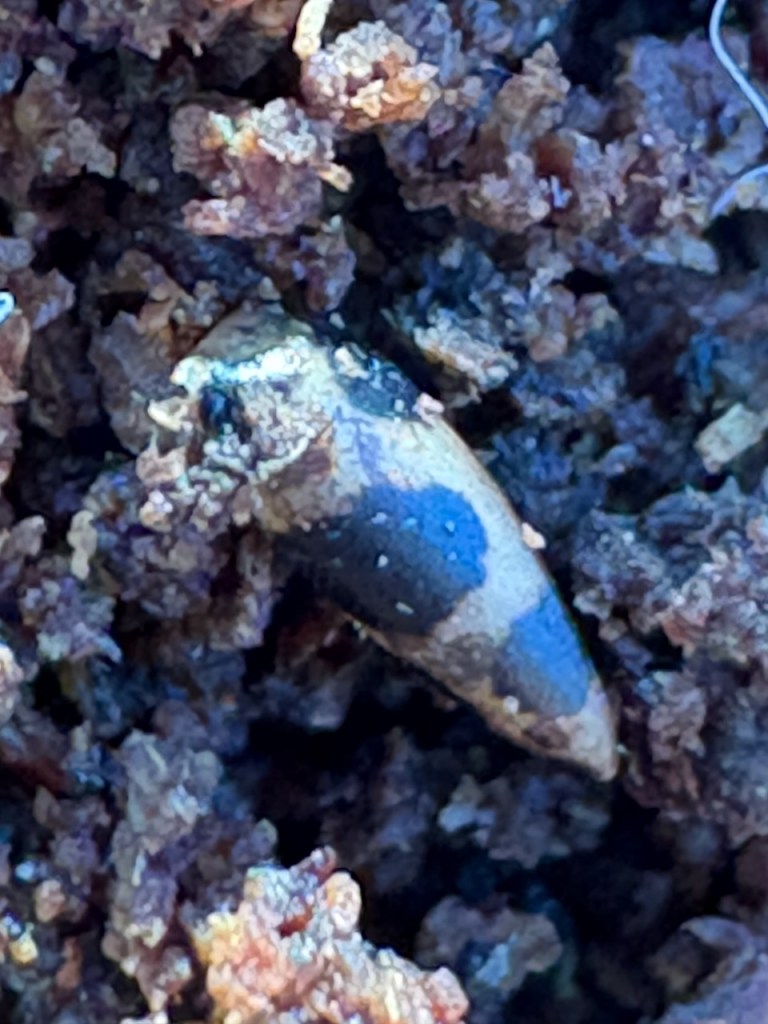
Finally, I saw what iNaturalist identifies as the larval stage of a darkling beetle. I can’t know for sure, but it looks similar to pictures I see on the internet, e.g. see
https://www.joelsartore.com/ins002-00297/
The animal was moving quite quickly. Here are some pictures:
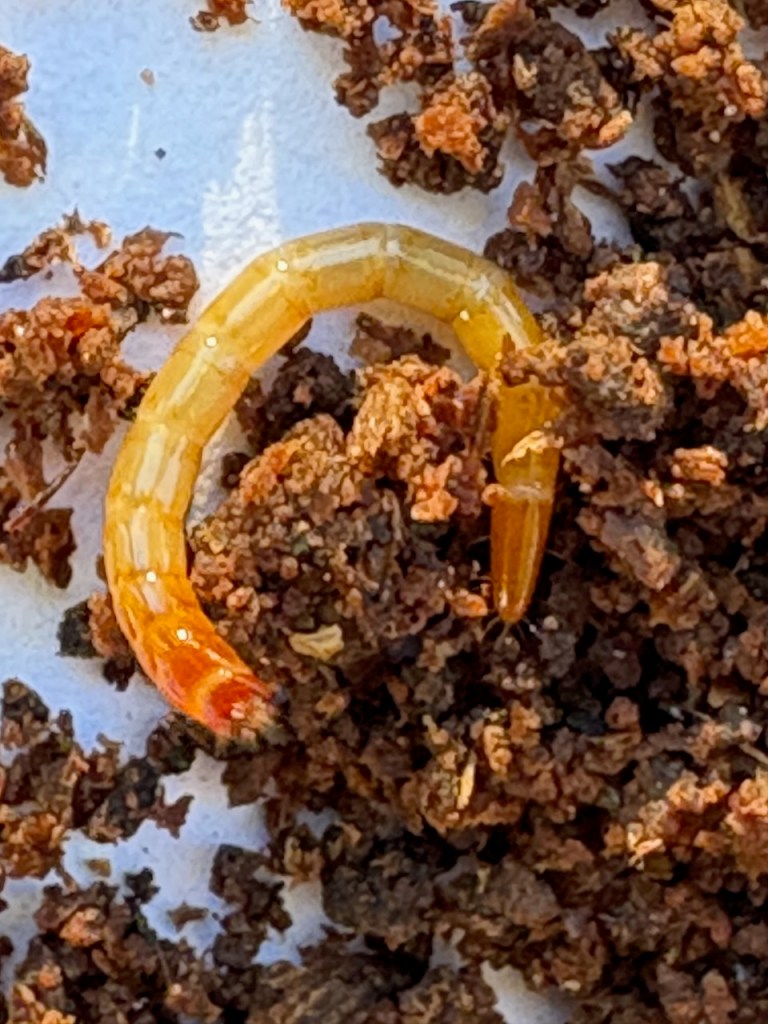
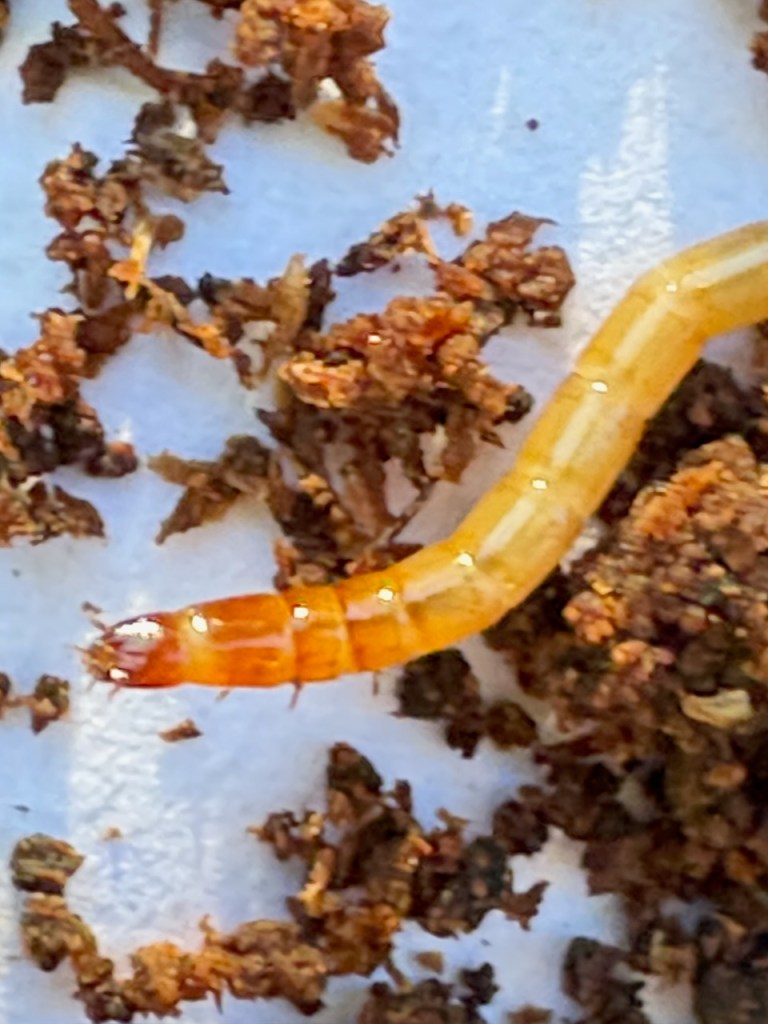
I was beginning to realize that there is probably an entire ecosystem living in this hole!
I started searching online for pictures of frass coming out of trees that looked similar to what I saw, but without success. For example, ambrosia beetles and pine beetles both produce frass, but usually on dead trees. There was also the fact of the shear volume of frass that was coming out of the maple tree, which didn’t seem to fit with what I was seeing online. Finally, after looking at literally hundreds of images online I came to the conclusion that it is likely that the frass I saw was caused by carpenter ants. The reason I’m not seeing any carpenter ants is because it is late in the season and maybe most ants are now dead. According to
https://oldislandpestcontrol.com/carpenter-ants-on-vancouver-island/
“Carpenter ants leave piles of sawdust in their wake as they create a maze of tunnels towards their centralized nest, where they live and lay their eggs. They like to keep their tunnels and nests very clean and consistently sweep all the sawdust and other debris out creating conspicuous piles. The sawdust piles also often contain ant droppings called frass and the bodies of small insects that the carpenter ants feed on …”
There is a picture at this site that is similar to mine, and also at the YouTube video:
https://www.youtube.com/watch?v=5eGwQLaLZIg
Final thoughts:
What started out as a ‘simple’ tracking exercise turned into a zoology lesson! I think this post illustrates an important fact: to be a good tracker we also have to understand the ecology of the land we are tracking on.
 Field Notes of a Tracker
Leave a comment