Date: October, 2025 (various days)
Place: Guelph, Ontario
Goal: collect some nuts that have been harvested by squirrels (and other rodents?) and figure out which species were responsible. Also, collect evidence of other feeding behaviour.
Context: During one of the classes with Alexis Burnet he showed us a black walnut that had been opened and asked us whether this was done by a red squirrel or a gray squirrel. I recall that I got the question wrong, although I cannot remember the details. This seems like a typical question that I could be asked during a tracking eval, so I don’t want to get this wrong! To look for nuts that had been eaten by squirrels I looked in my yard, the university campus, and the Arboretum. Many of the black walnut trees had already been stripped, and the nuts eaten, buried, or taken away.
Reference:
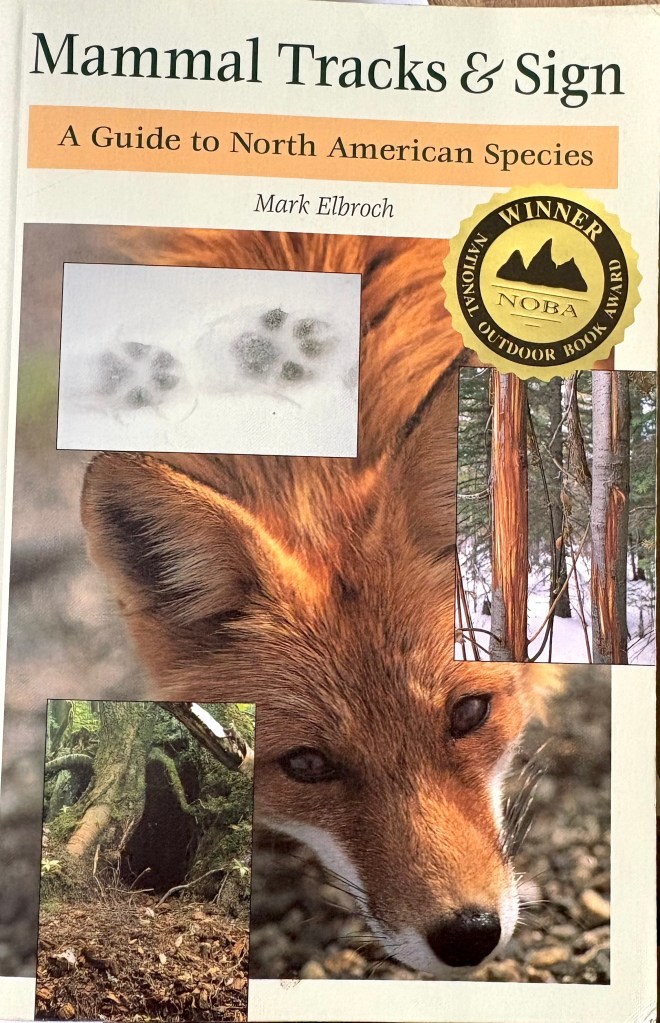
Elbroch shows mainly how squirrels and other rodents open hickory nuts, but only makes a mention (p. 661) of this activity on walnuts – saying “these tough shells show more clearly than other mast crops the characteristic signs of the mammals that opened them.” I’m guessing that his descriptions for the hickory nuts are also relevant for walnuts. I believe the nuts I found are the Eastern Black Walnut (Juglans nigra).
Red Squirrel walnut remains
The pictures below show the typical nut remains of a red squirrel, where the rodent attacks both sides. The gnaw marks from the incisors are clearly visible.
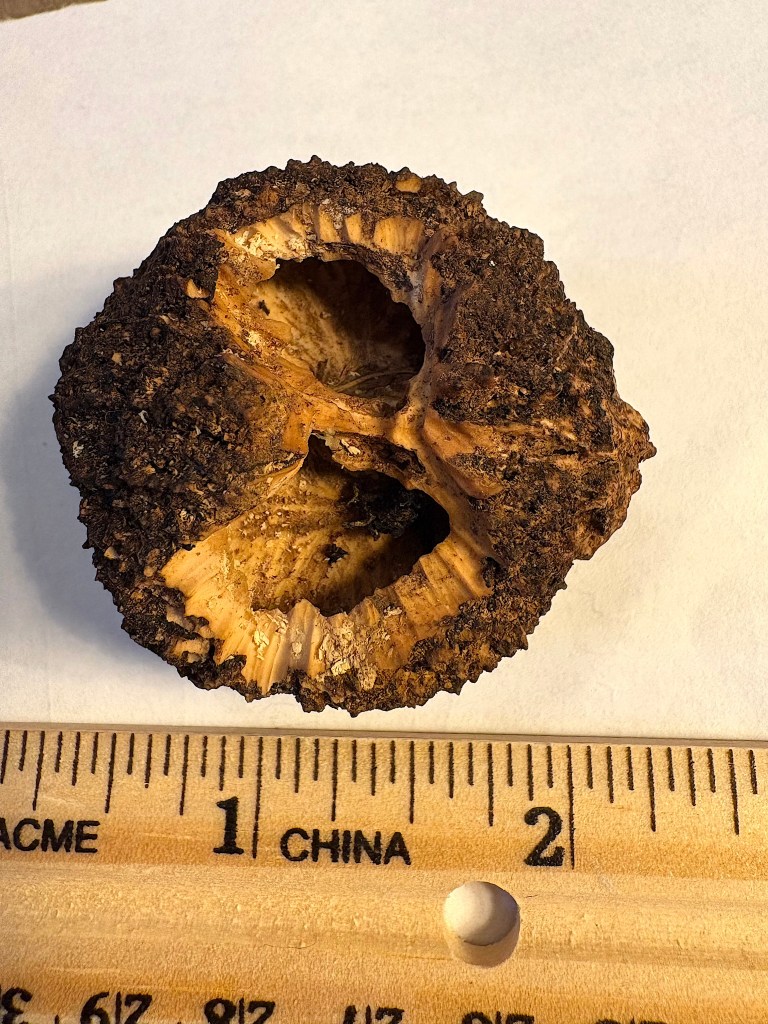
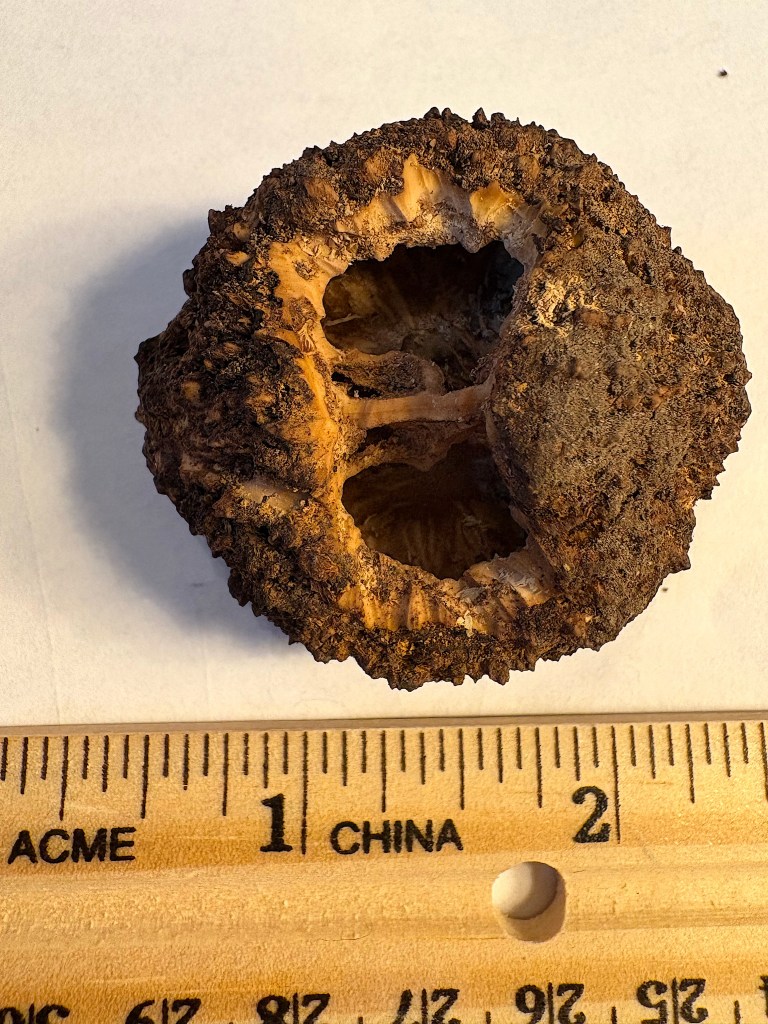
There were many walnuts attacked in the same lying on red squirrel middens:
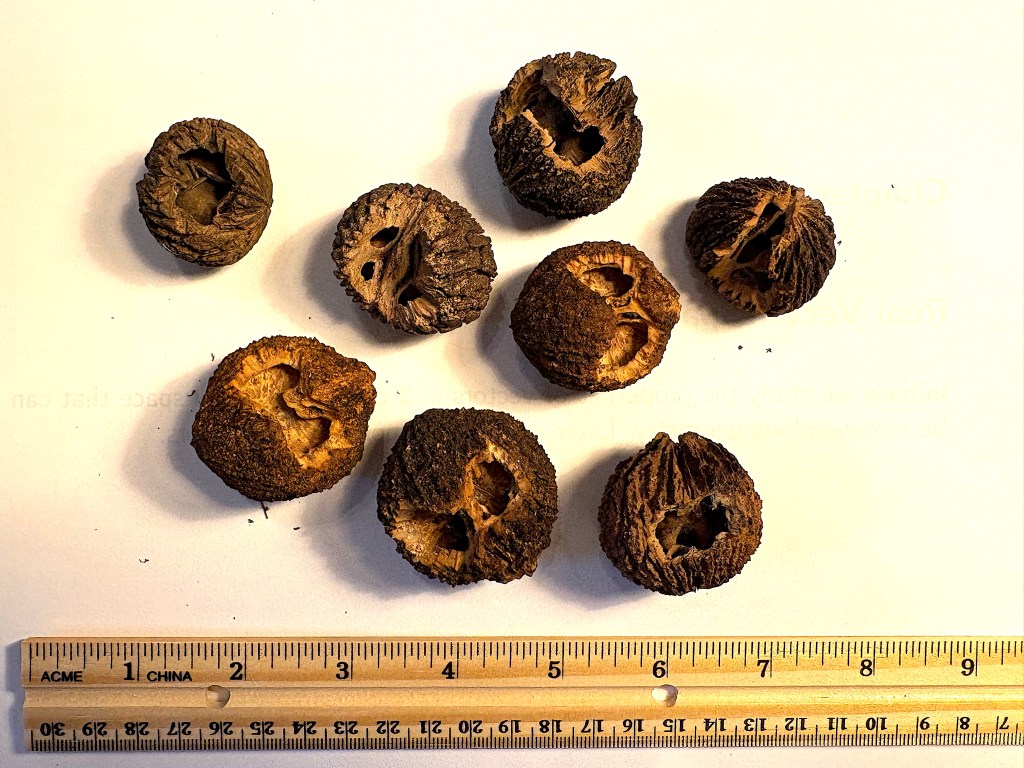
Elbroch says that this is the main way red squirrels attack hickory nuts. So I am guessing that this is also the case for walnuts (p. 656). He also says that the 2nd main way that red squirrels attack hickory nuts is to chew a groove around the entire nut until it splits into 2 equal halves. Maybe this is what I’m seeing below?
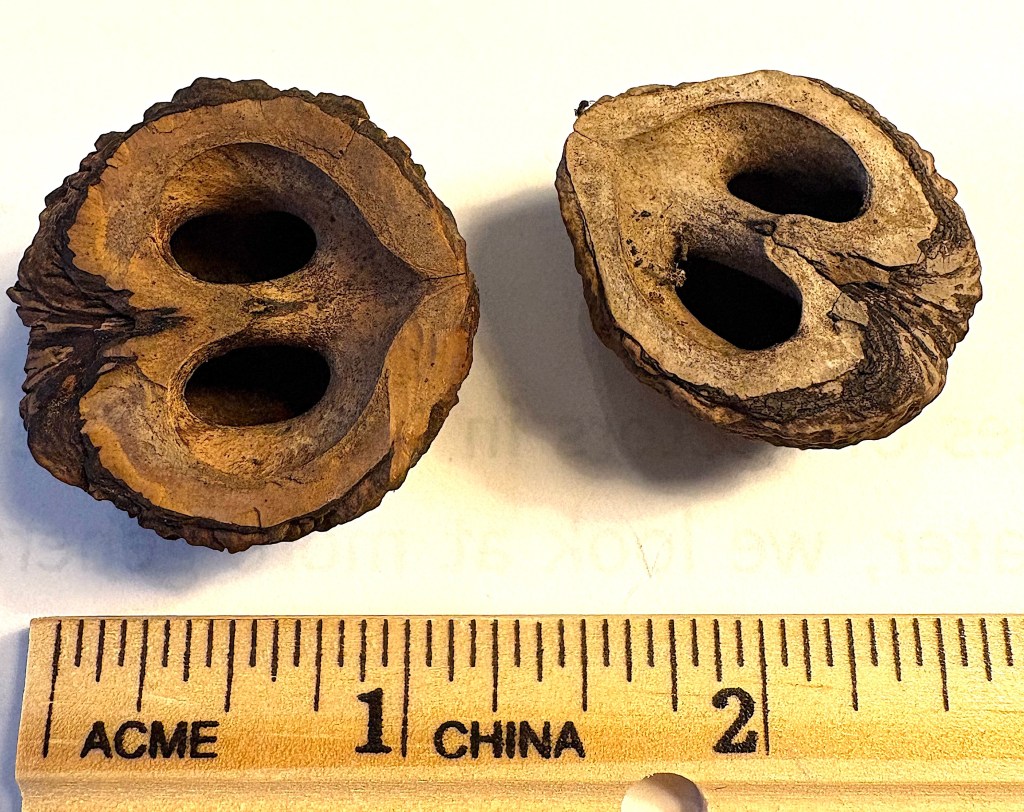
I think I can see some gnaw marks, but I’m having a hard time seeing exactly how this was done.
Whenever we find animal signs it is best if we can see who made them. Although I didn’t see the red squirrels making the above signs, under one of the trees where I collected the walnuts a red squirrel was scolding me loudly!
Gray Squirrel walnut remains:
Based on the pictures in Elbroch (p. 659) my best guess is that the walnut fragments shown below are from gray squirrels.
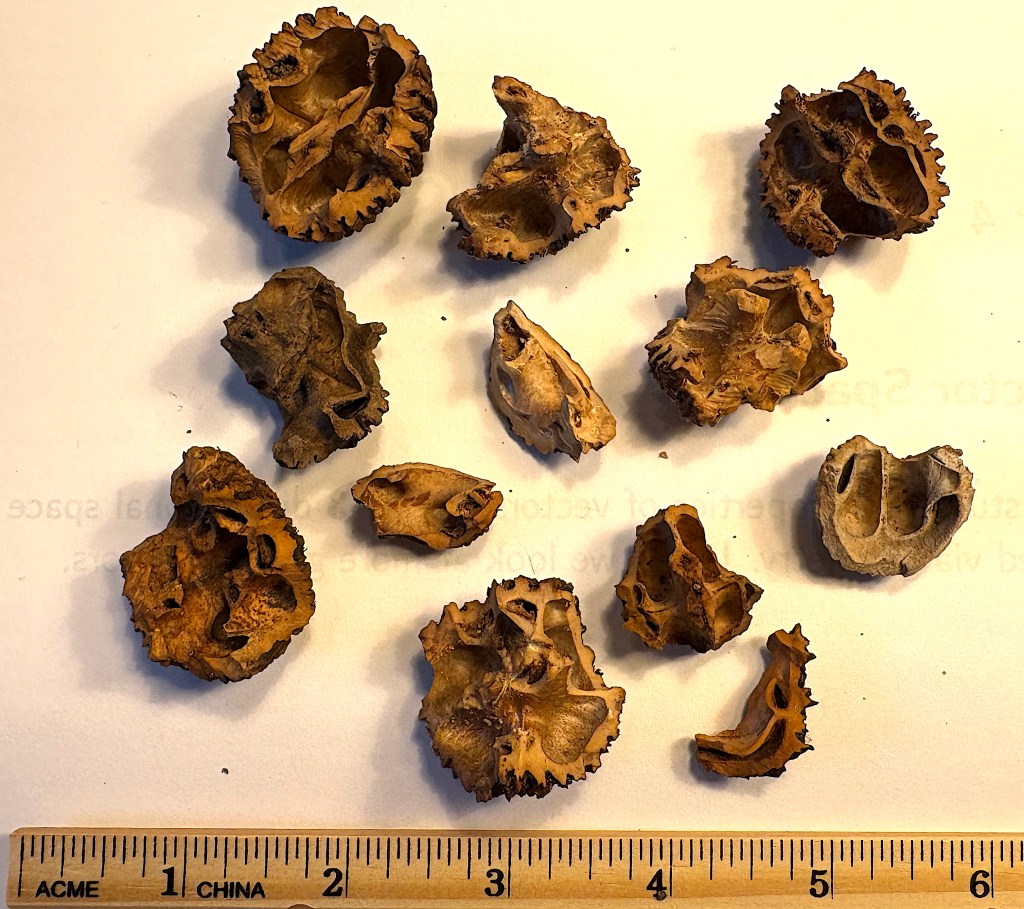
These pieces were found in my yard and under some walnut trees with numerous gray squirrels actively harvesting nuts in the tree. If I zoom close up to these nuts I don’t see the characteristic gnaw marks I saw with the red squirrels – the edges seem more ‘bevelled’.
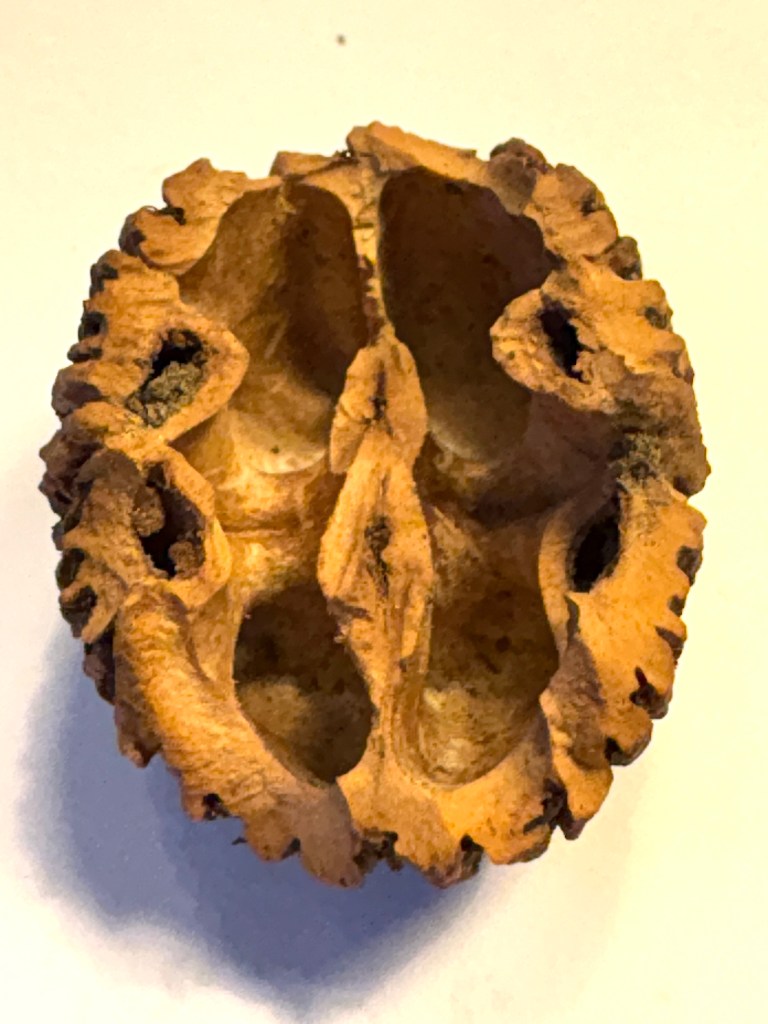
This treatment of how squirrels attack walnuts is very incomplete. There is also the question of how to differentiate feeding signs from those made by flying squirrel and chipmunk. Also, the treatment in Elbroch seems incomplete!
Acorn feeding sign:
Reading Elbroch, the interpretation of acorn feeding signs is complicated. So many animals eat acorns, including birds. Do the acorns below look like they were opened by birds, e.g., a nuthatch? These appear to have been opened when the nut was wet. I cannot see any obvious gnaw marks.
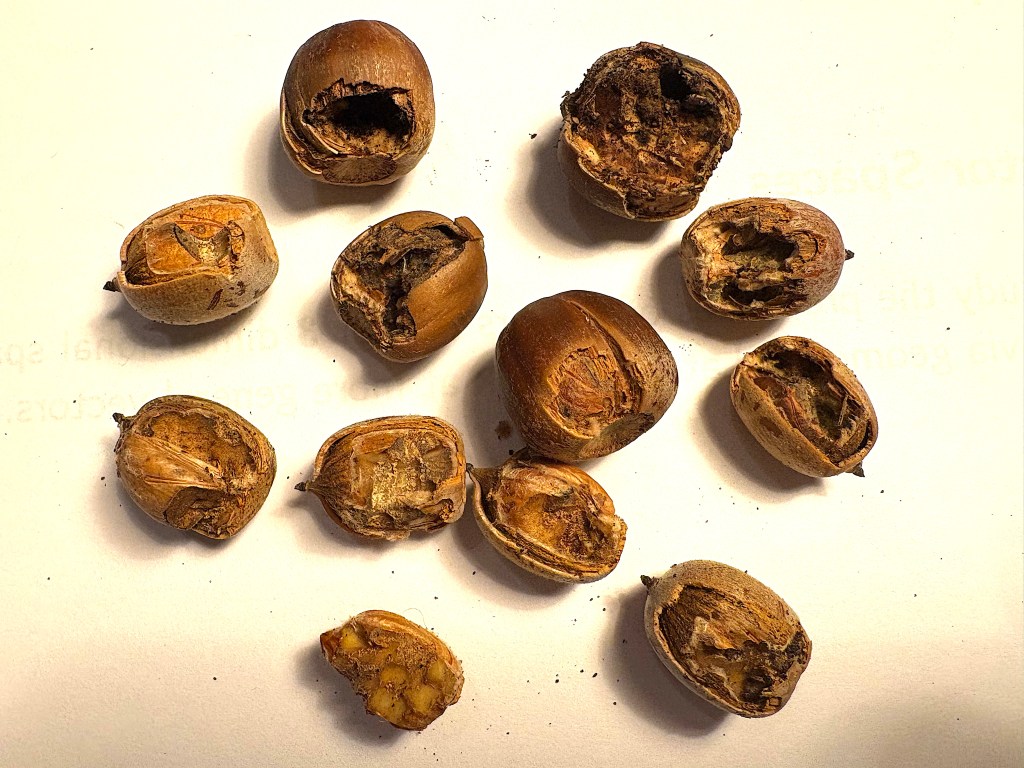
They were found in the green ‘island’ in the middle of a car park in the Arboretum.
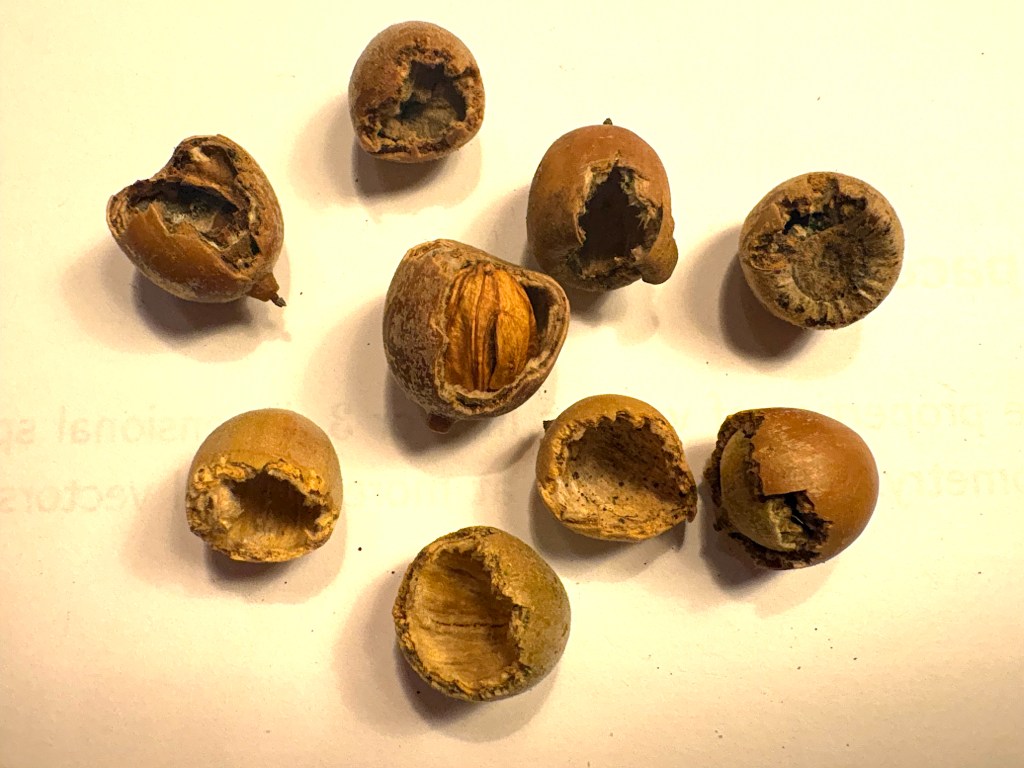
The acorn pieces below were found in a separate location, and I think I see gnaw marks. Chipmunk? Red squirrel? Mice? These acorns seem to have been opened from the top instead of the sides as in the previous case.
Other signs:
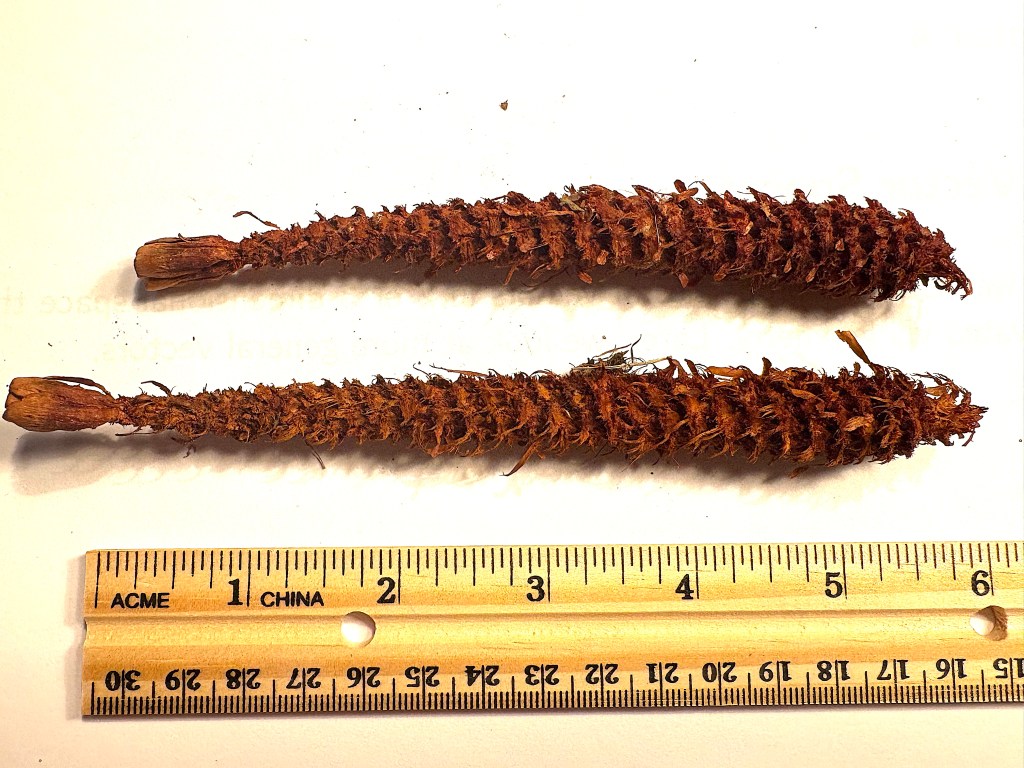
These (Eastern White Pine?) cone ‘stalks’ were found on a red squirrel midden.
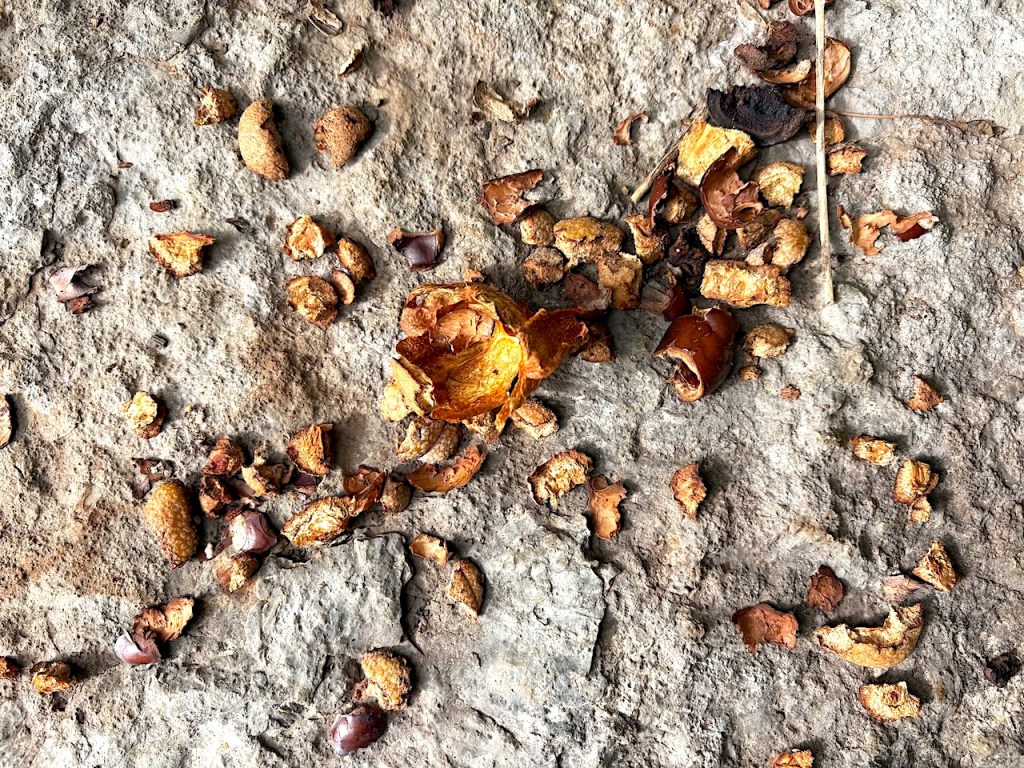
In Fall the piles of the outer husks that squirrels have removed from the walnuts are everywhere – often on a prominent spot like a log, boulder or wall, or just in piles on the grass.
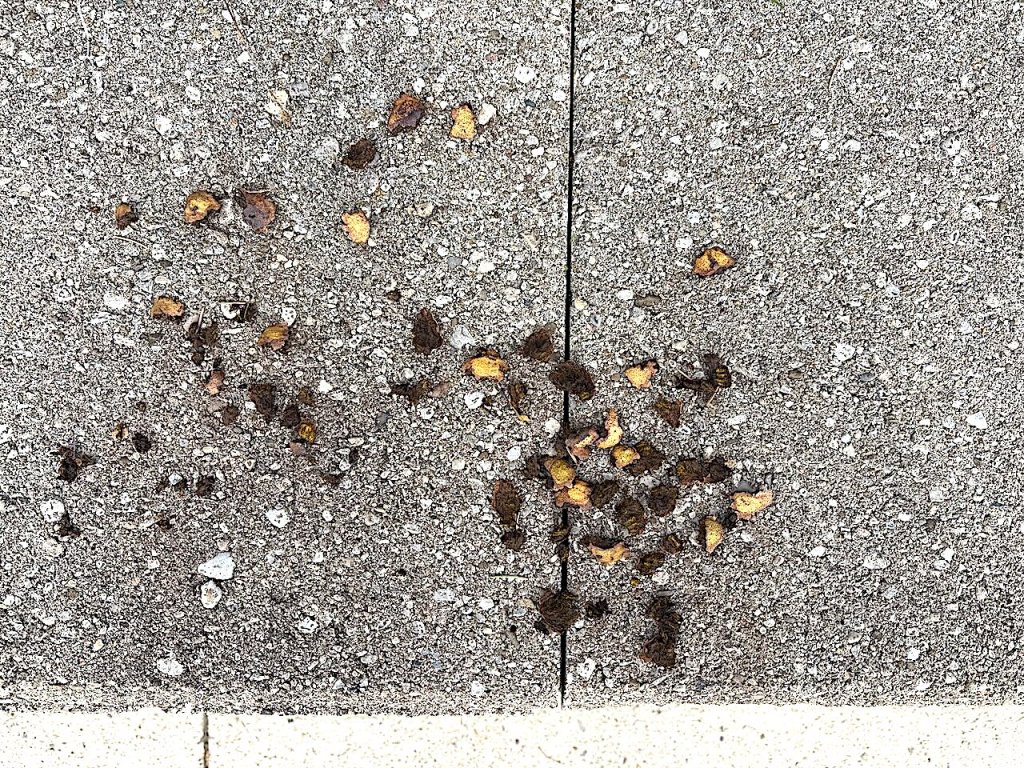
Squirrels also seem to eat horse chestnuts, which are poisonous to humans.
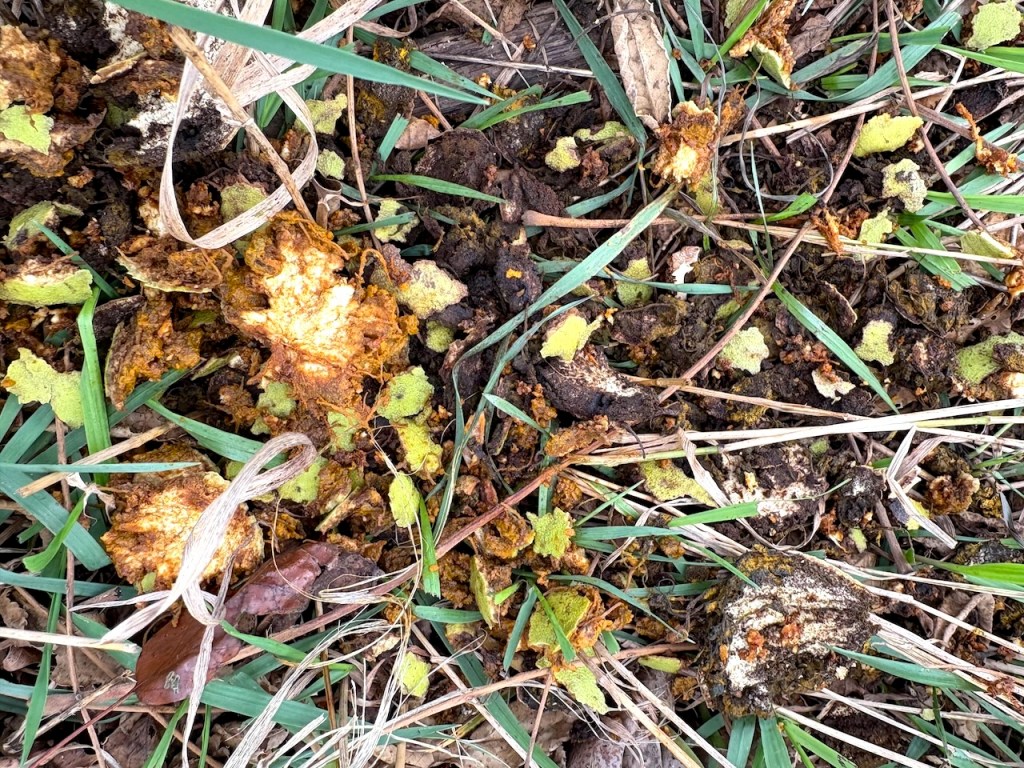
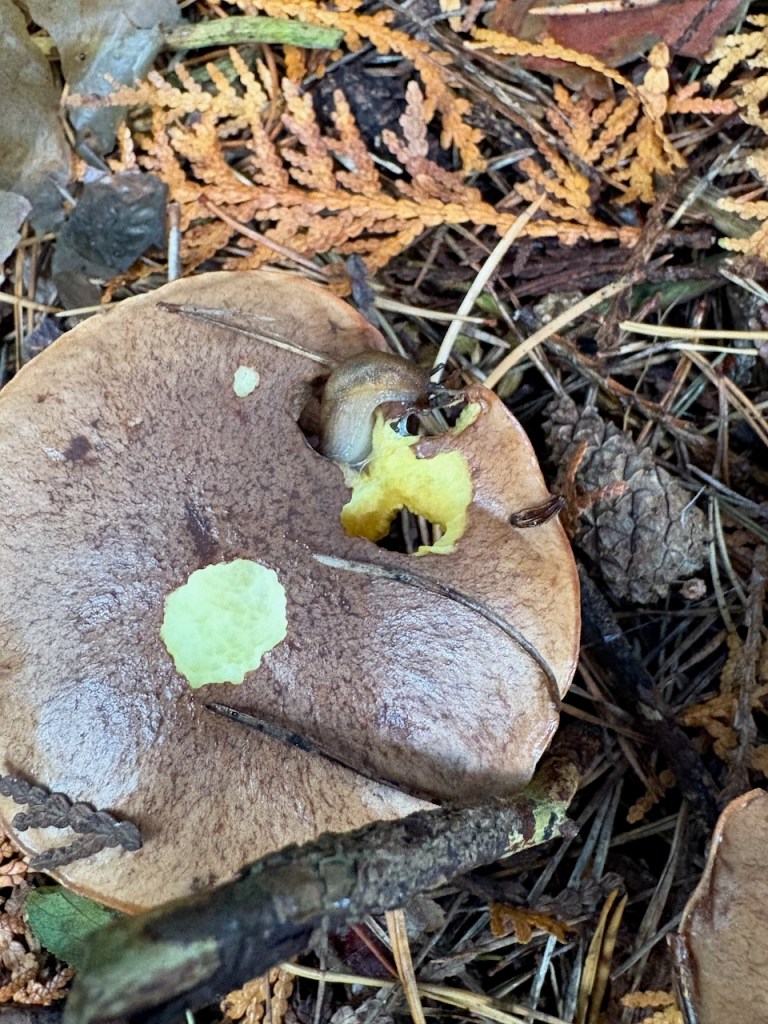
Below are mushroom feeding sign by slugs:
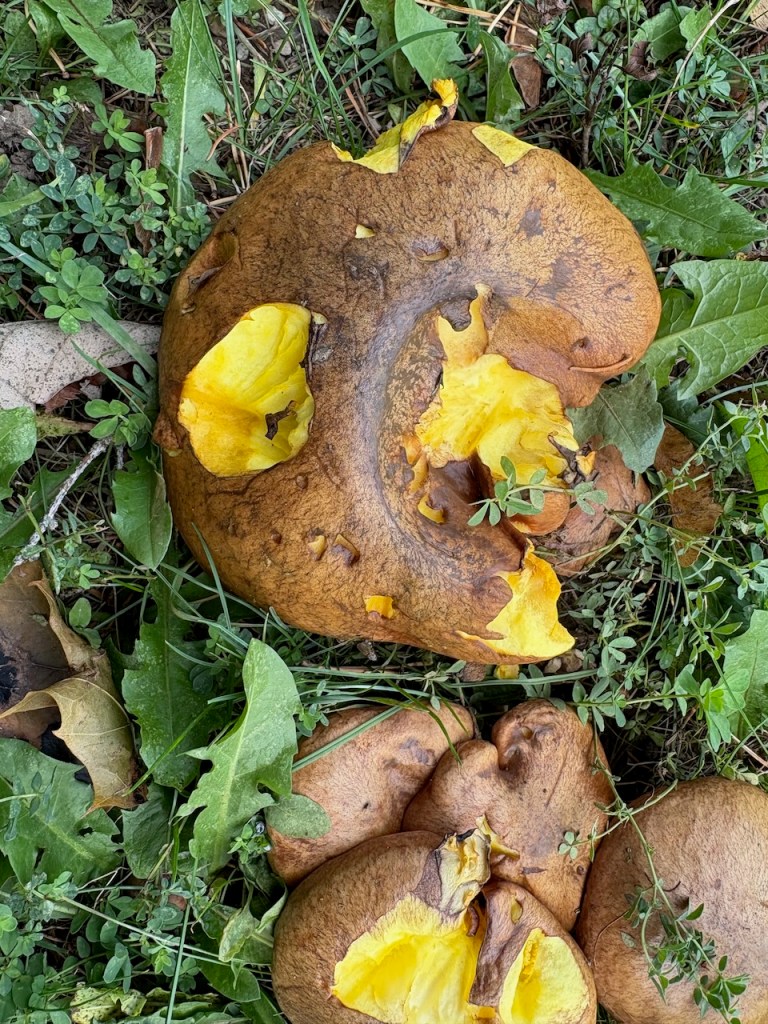
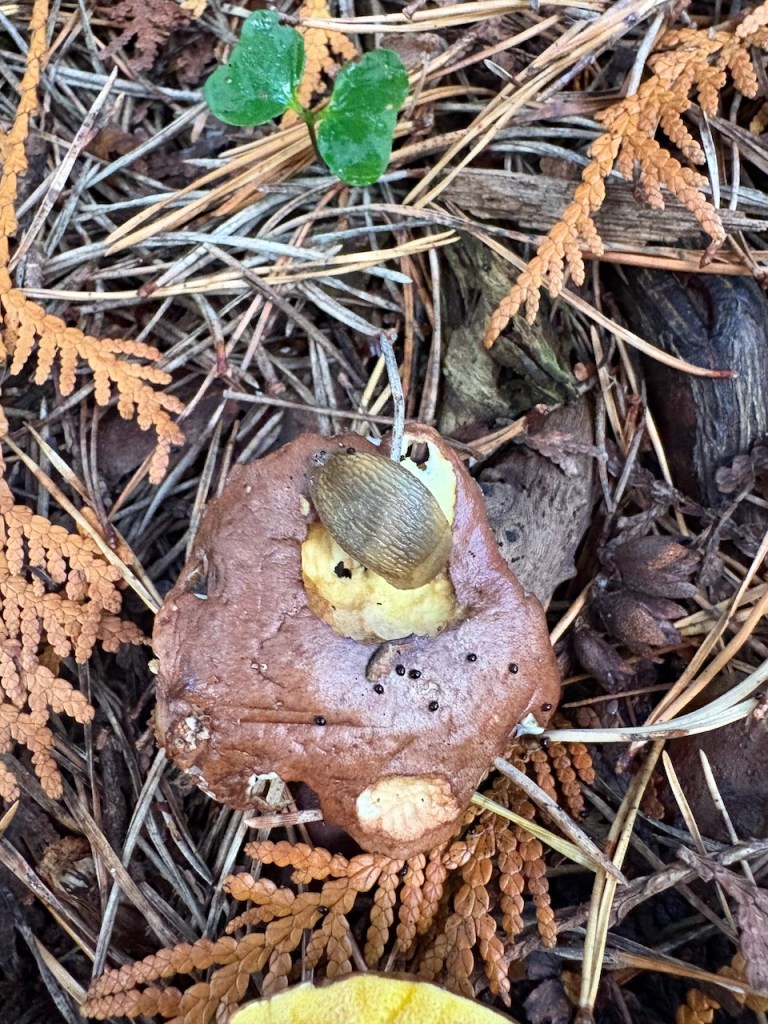
And mushroom feeding sign by some mammal:
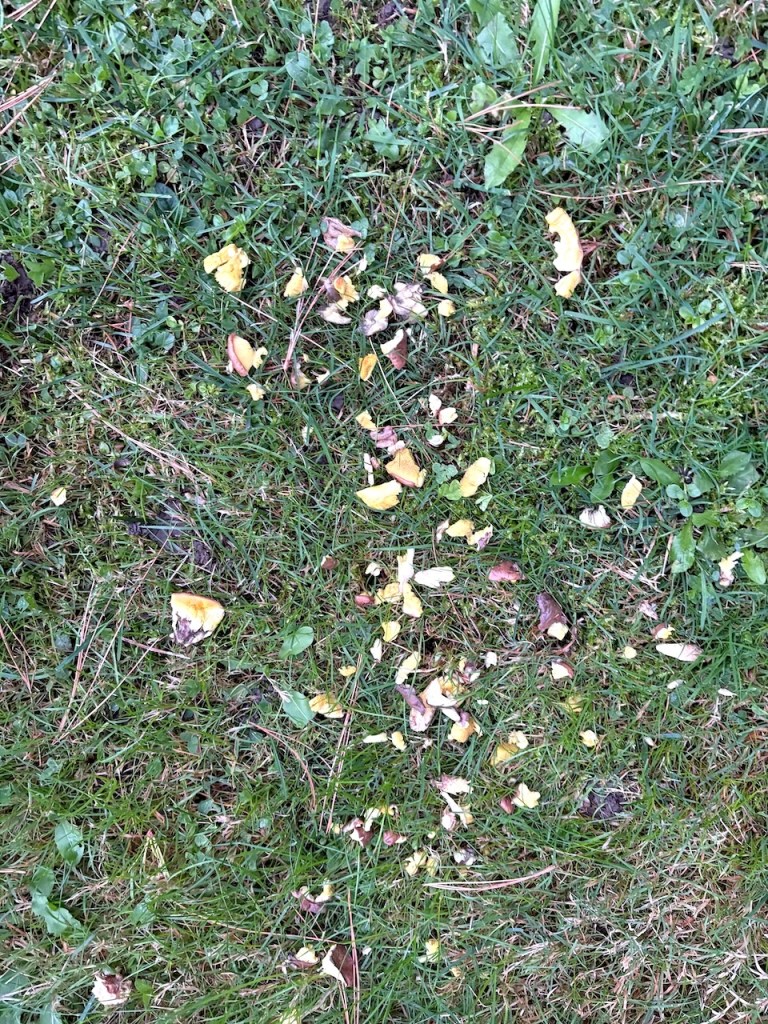
This looks like the feeding sign of a rodent to me.
Reflections:
There are more questions here than answers. I realize that I’ve only just begun to explore the art of interpreting the signs animals leave behind when they feed. I was watching a video introduction to wildlife tracking by Bob Metcalfe (American Outdoor School), and he mentioned that over the years, whenever he saw a squirrel or another rodent eating a nut, he would collect that nut so he could know for certain which animal had made the feeding sign. He kept them organized in a box – like a tackle box for fishing gear – with each compartment labeled according to the animal that made the mark. It must have taken him years to build such a collection! This really highlights the importance of gaining ‘dirt time’.
 Field Notes of a Tracker
Leave a comment