Date: November 5, 2022
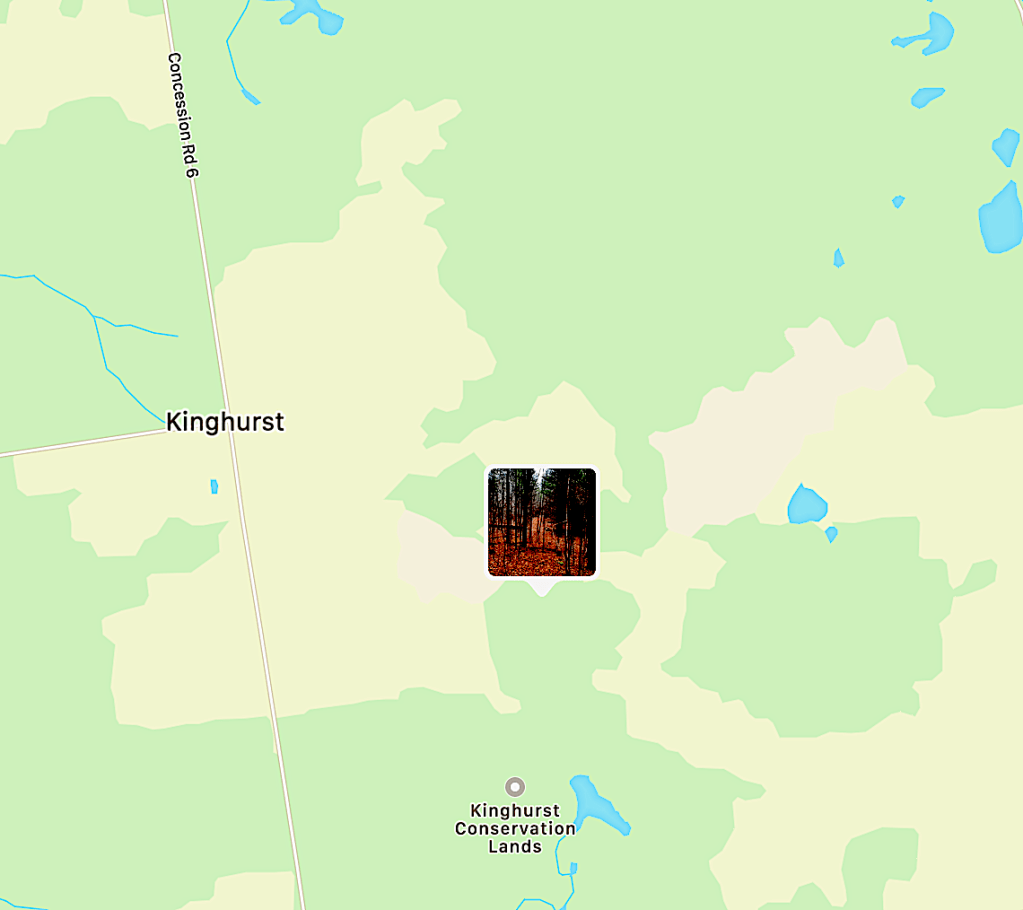
Place: Tracking post – Kinghurst Forest Nature Reserve, ON, a 913-acre nature reserve in Grey County.
Time: 10:00am – 4:00pm (approx.)
Main references:
‘The Tracker’s Field Guide: A Comprehensive Manual for Animal Tracking’, James C. Lowery, Second Edit., A Falcon Guide
‘Bird Feathers, A Guide to North American Species’, S. David Scott and Casey McFarland, Stackpole Books (2010)
‘Tracks & Signs of Insects and Other Invertebrates: A Guide to North American species’, Charles Eiseman and Noah Charney, Stackpole Books (2010)
INaturalist Phone app
Weather: Windy and warm (for the time of year)
Dominant vegetation: consists largely of upland forest dominated by sugar maple, with patches of beech and hemlock throughout.
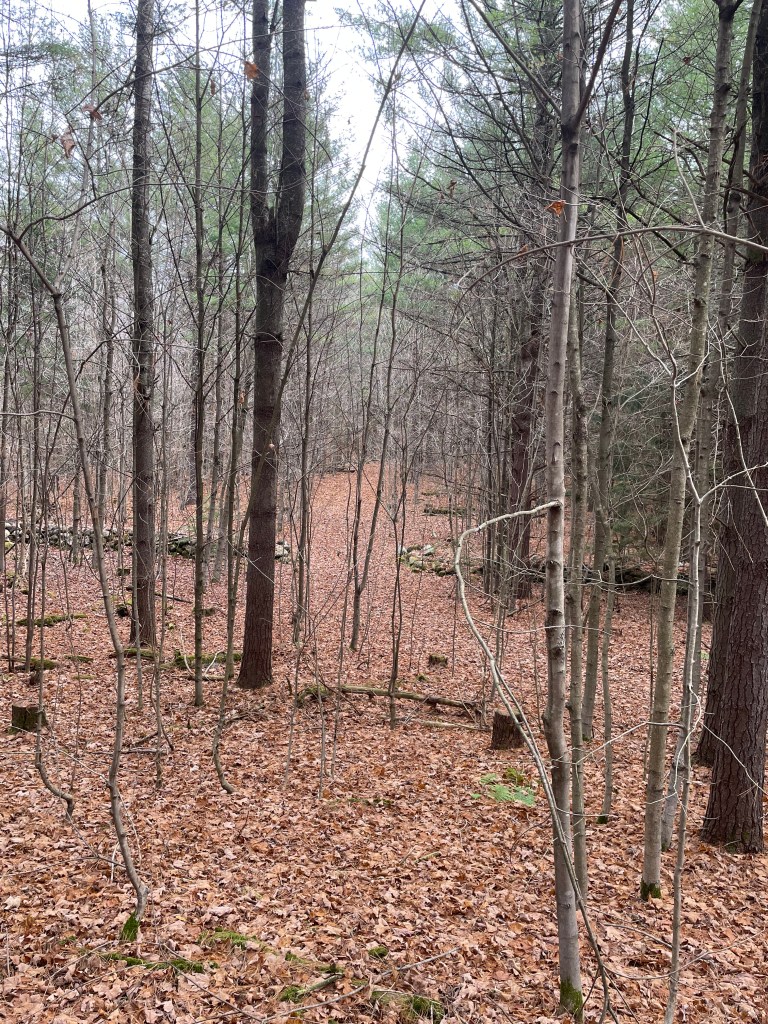
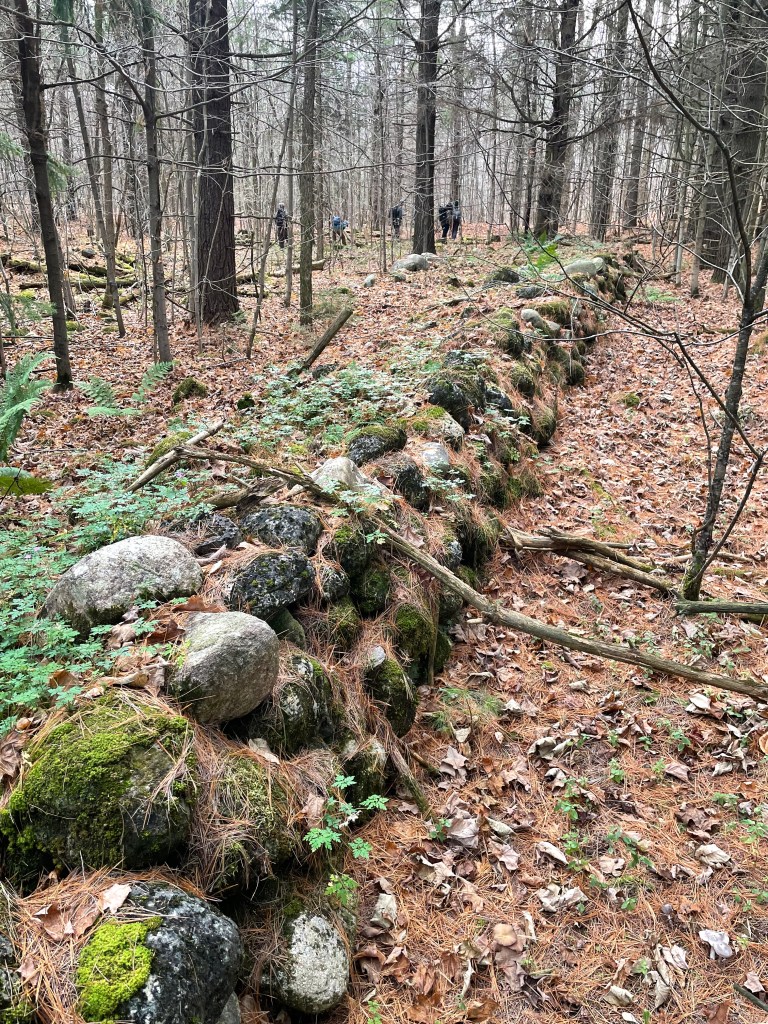
Intentions: As deer hunting season was starting in a couple of days we wanted to see if we could find deer. We walked in a large clock-wise circle, taking care to keep downwind of any deer. Deer were remarkably scarce (we didn’t see any). Perhaps they knew that hunting season was soon and so were hiding?
Deer sign: We saw tracks, deer browse, deer scapes, bedding areas, and an almost complete skeleton.
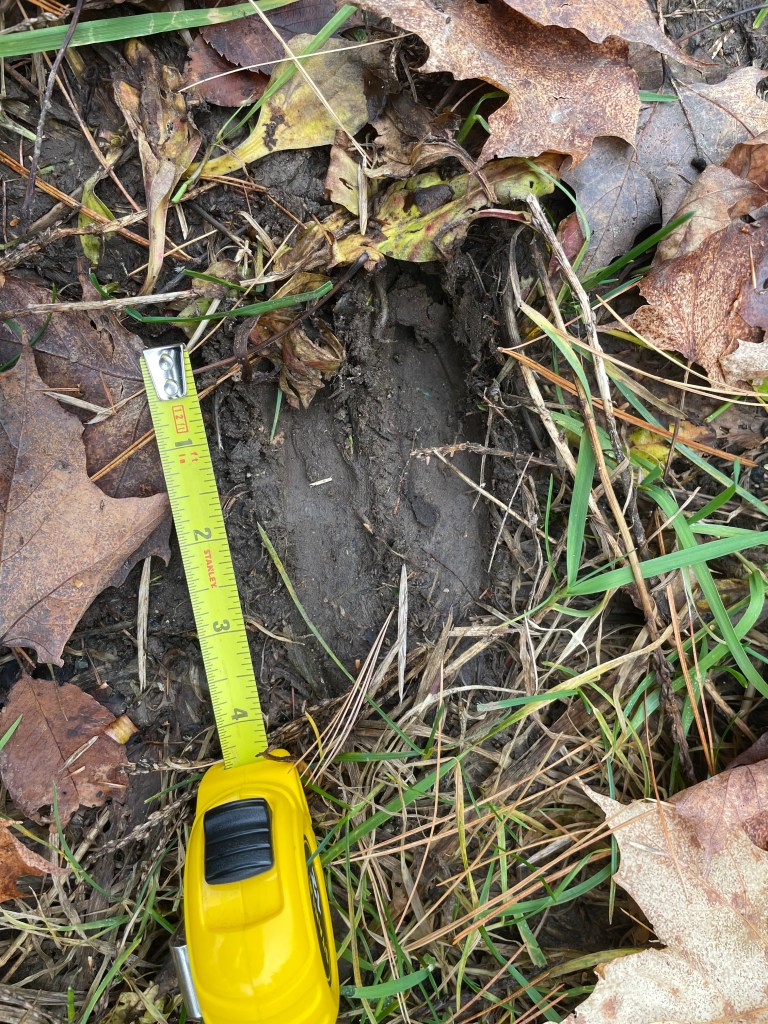
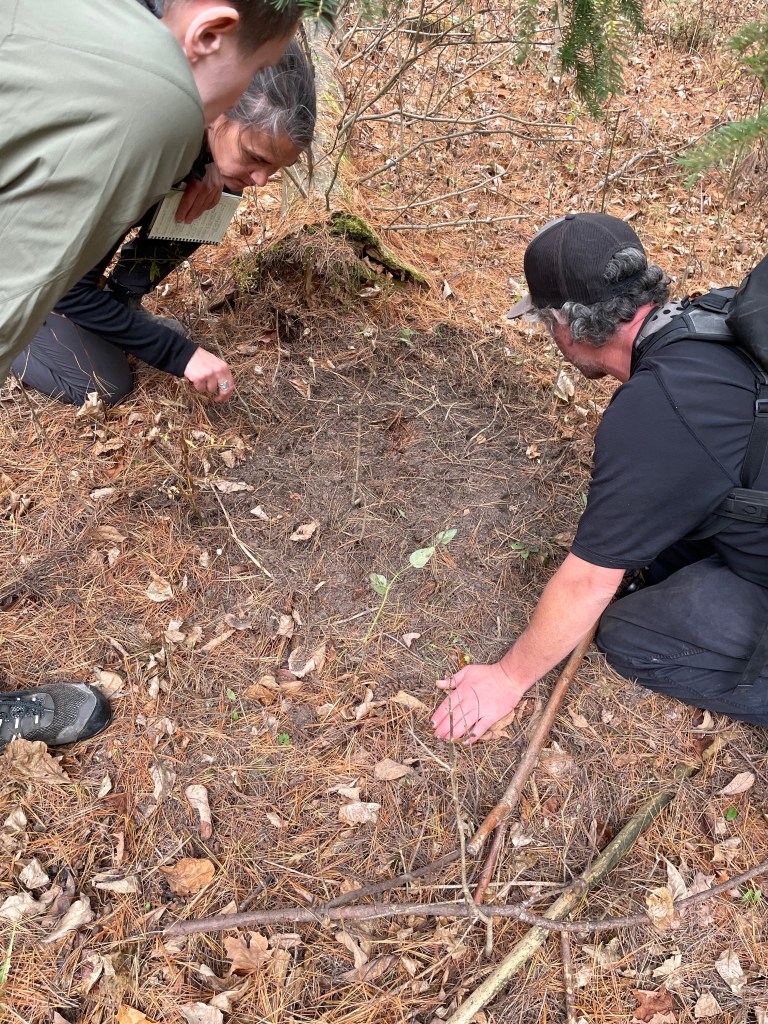
As bucks enter the rut (November and December) there is increasingly more signs, for example, scraping of the ground and antler rubbing on trees. My guess is that it was still early in the rut.
Late in the afternoon we found much of the skeleton of an eight-point buck. Alexis explained how the ‘points’ of the antlers are usually symmetrical, but not always. I thought the deer toes were particularly interesting:
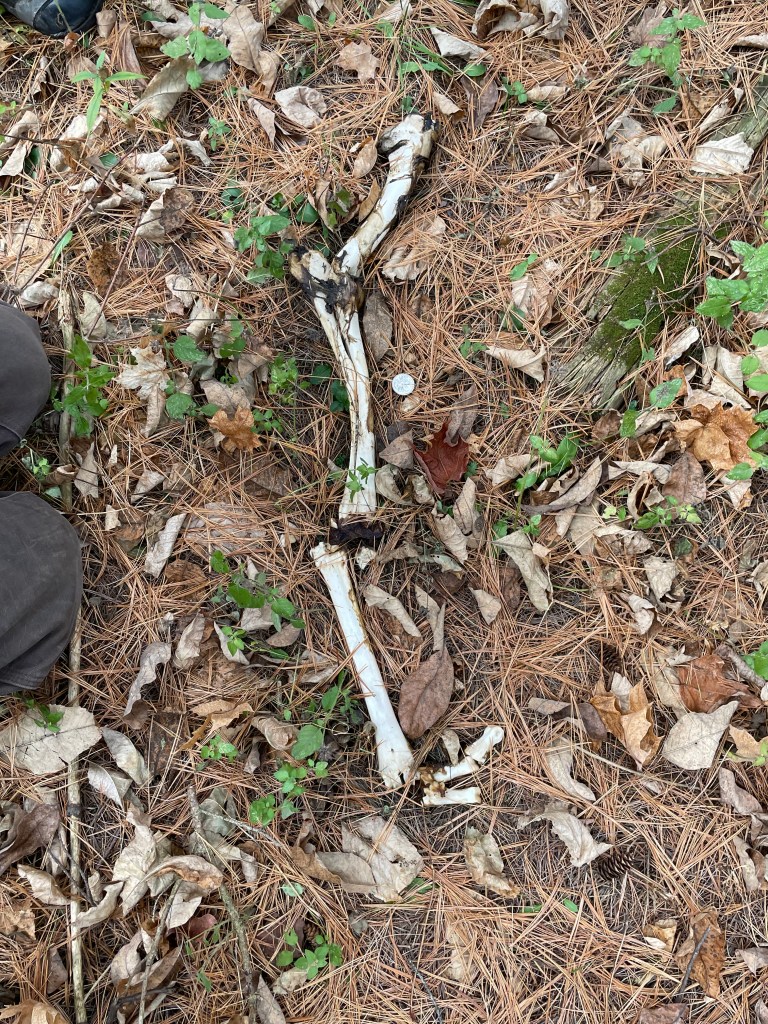
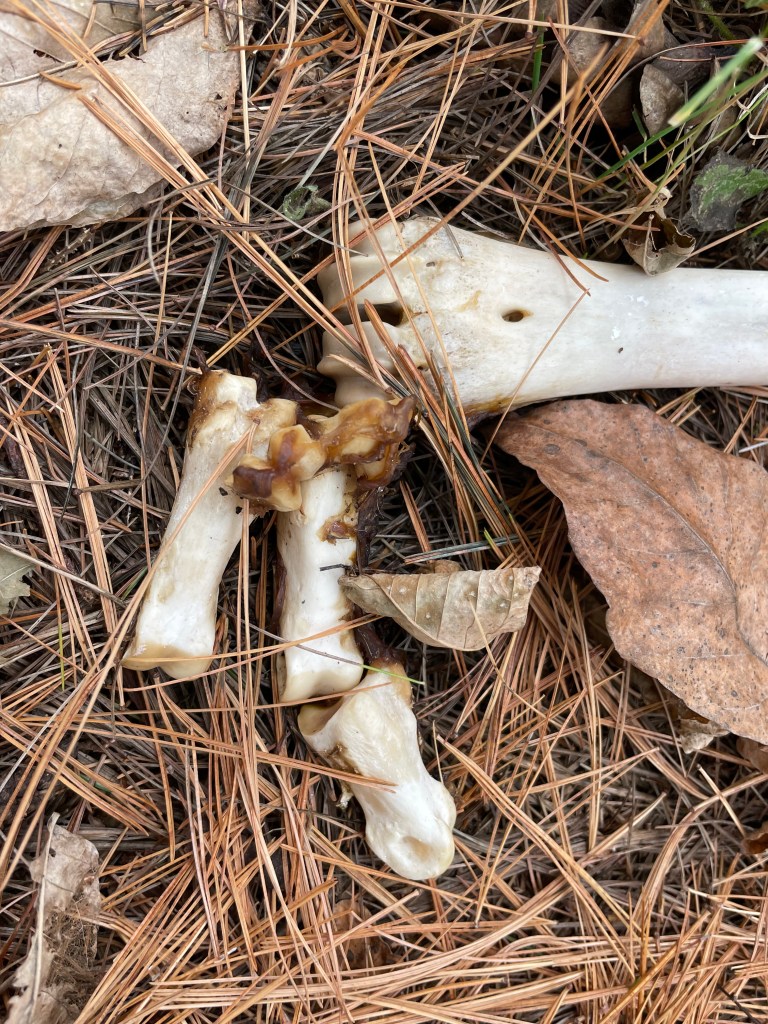
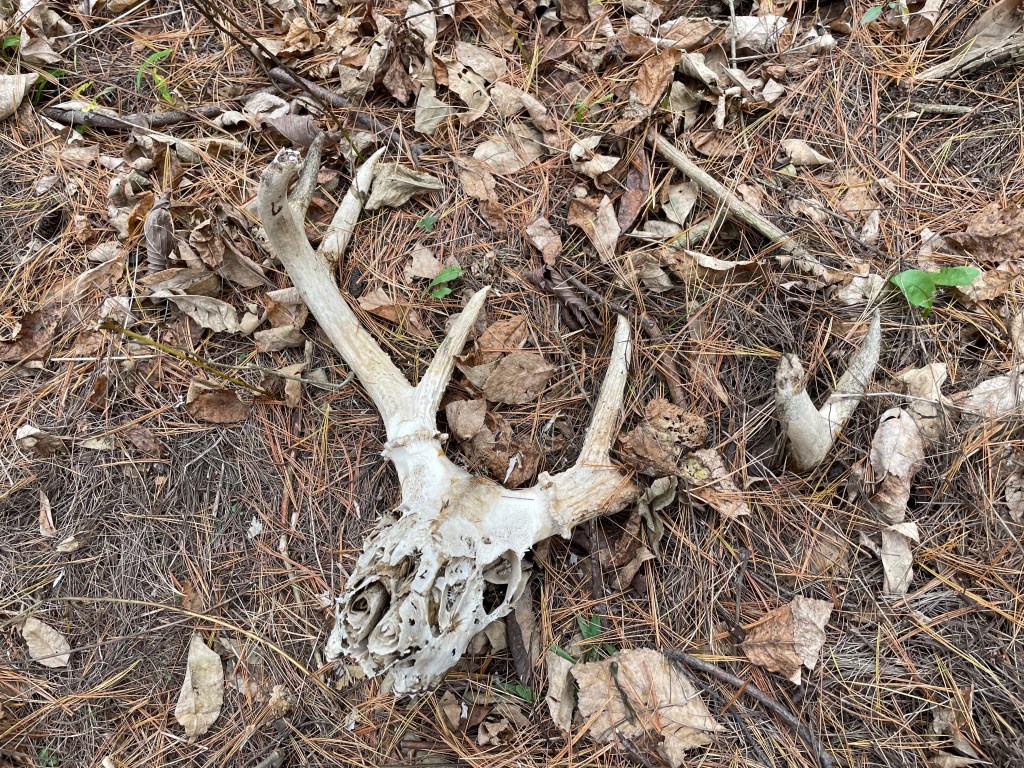
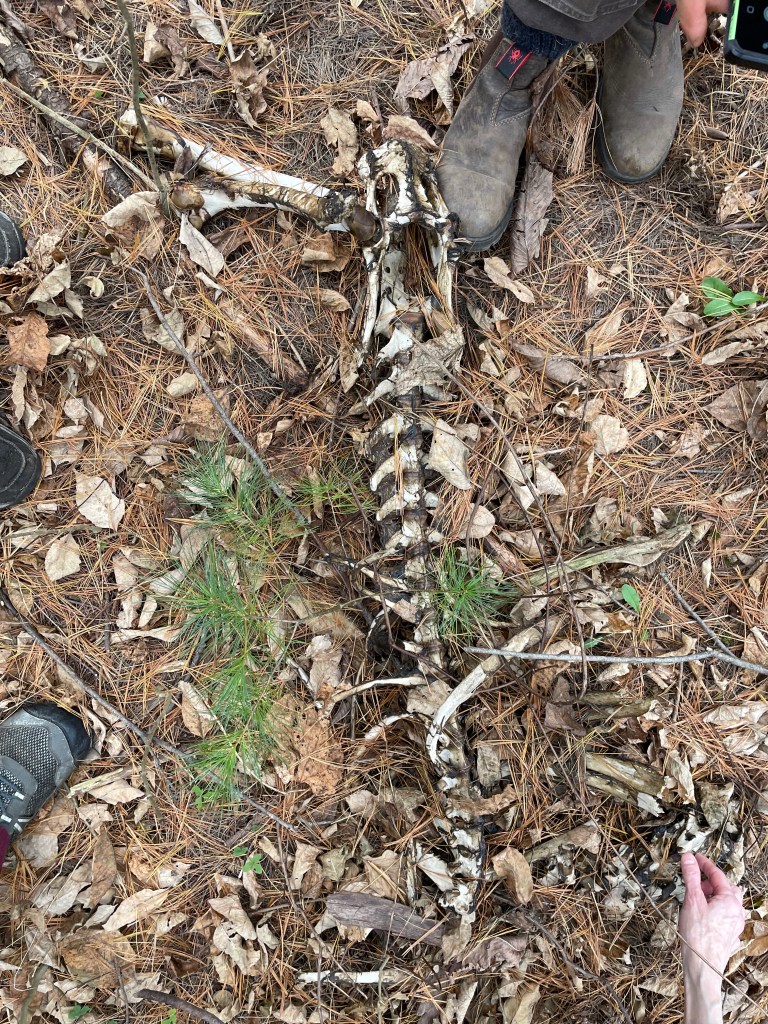
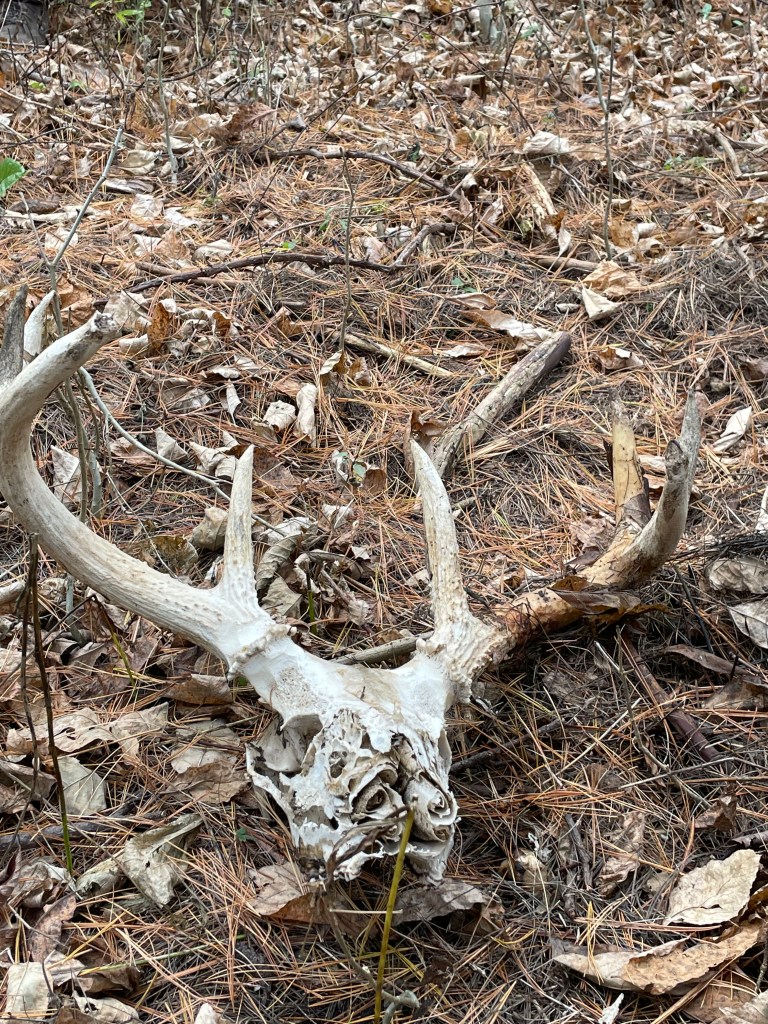
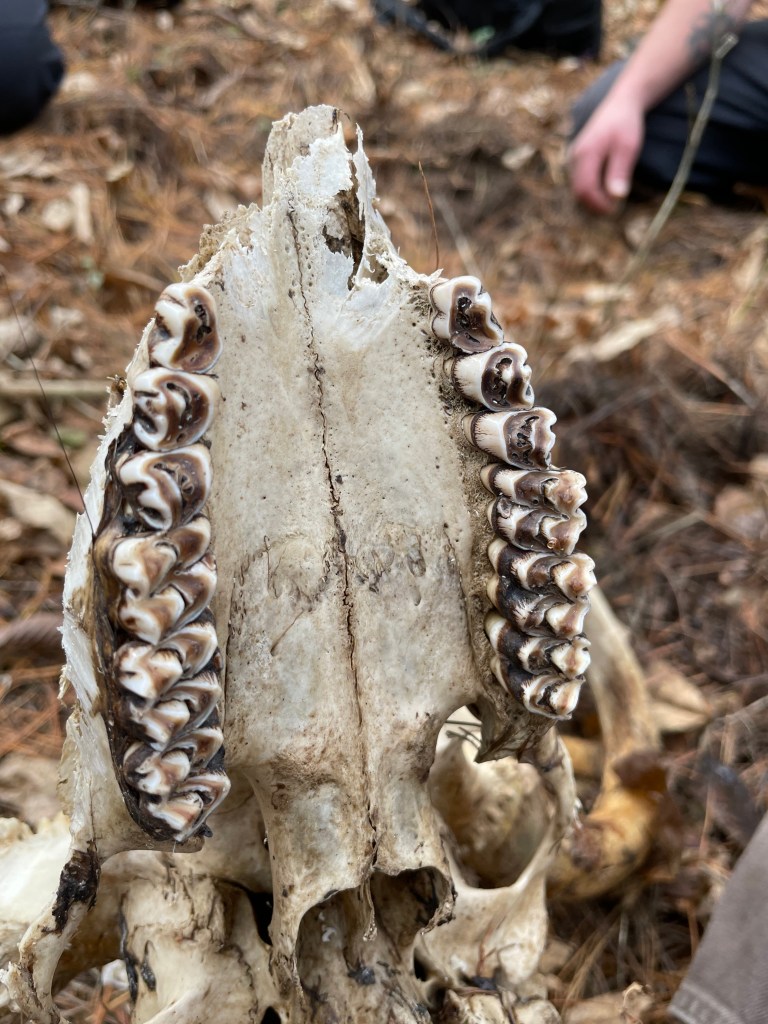
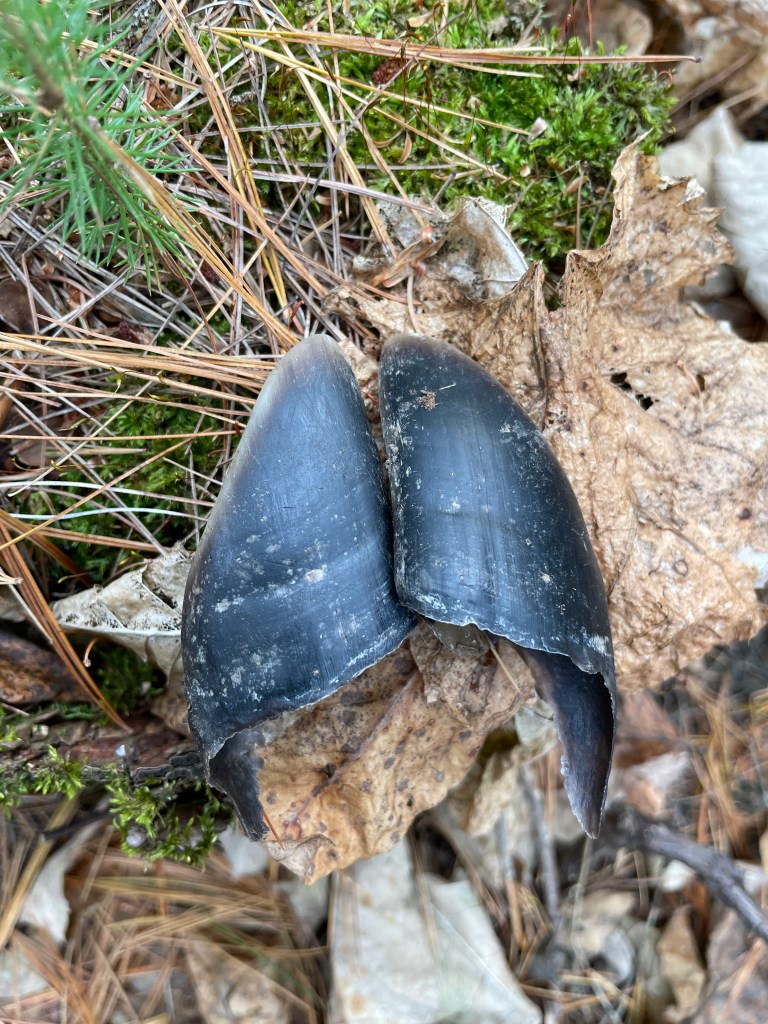
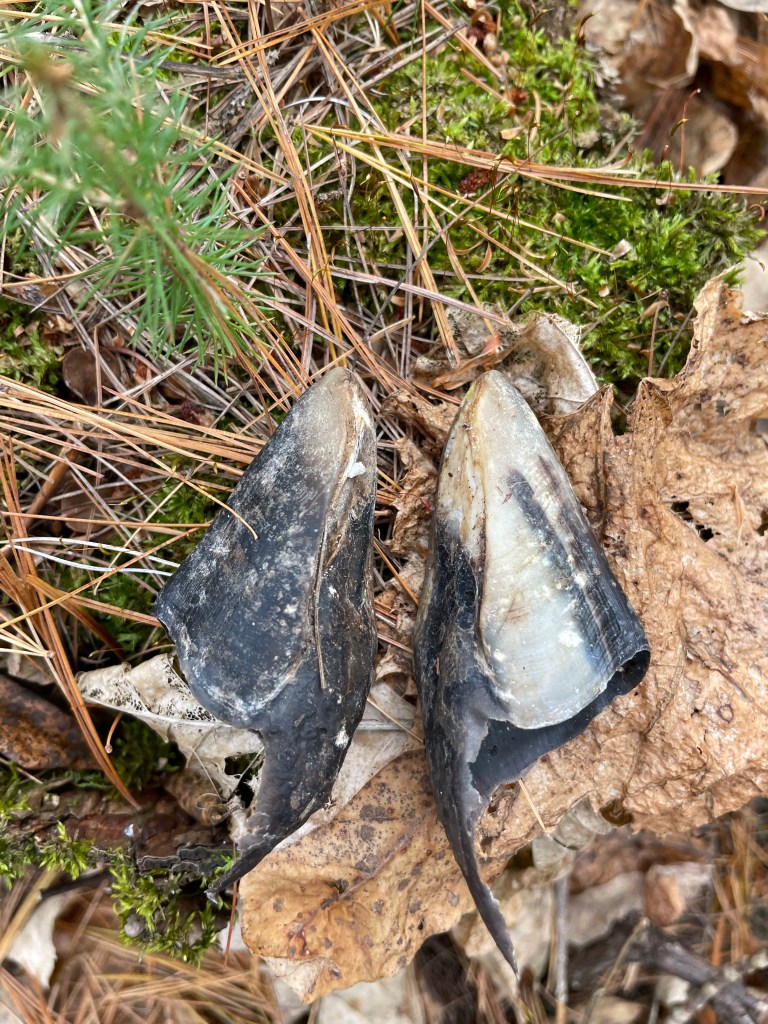
The group had a lively discussion concerning various anatomical features of the bones, for example, whether the leg bone was from the front or back leg.
Marsh area: we came to a medium-sized wetland (marsh) dominated by sedges.
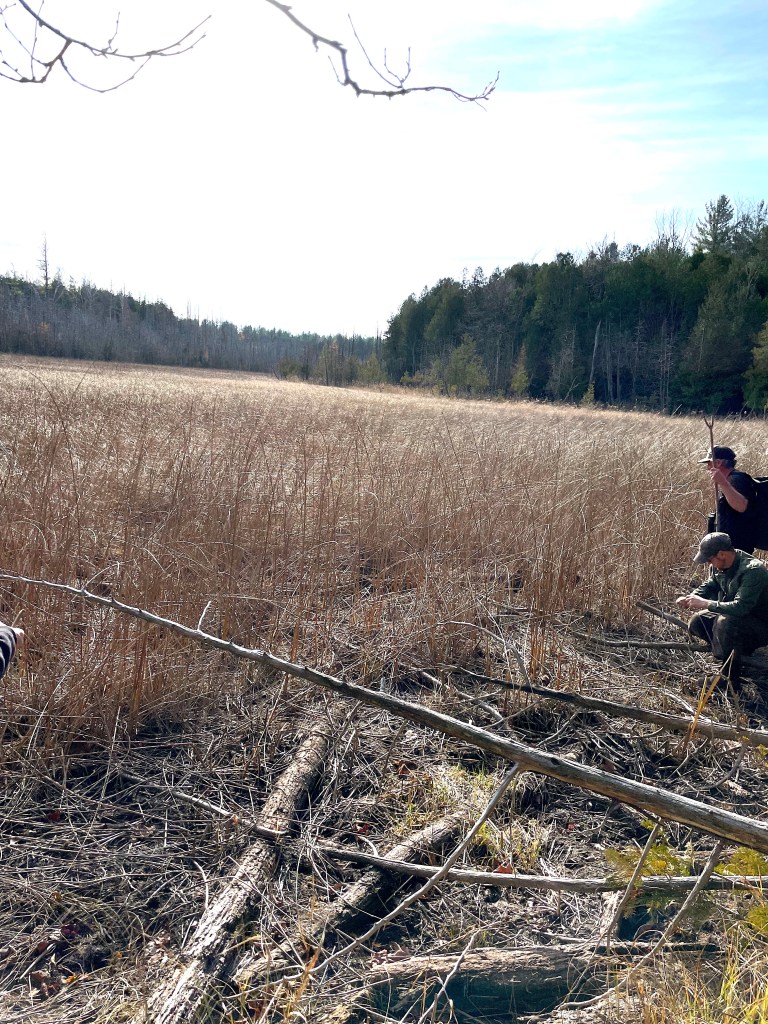
This area was unusually dry. We investigated the muddy channel where water used to flow and found many tracks, shown below:
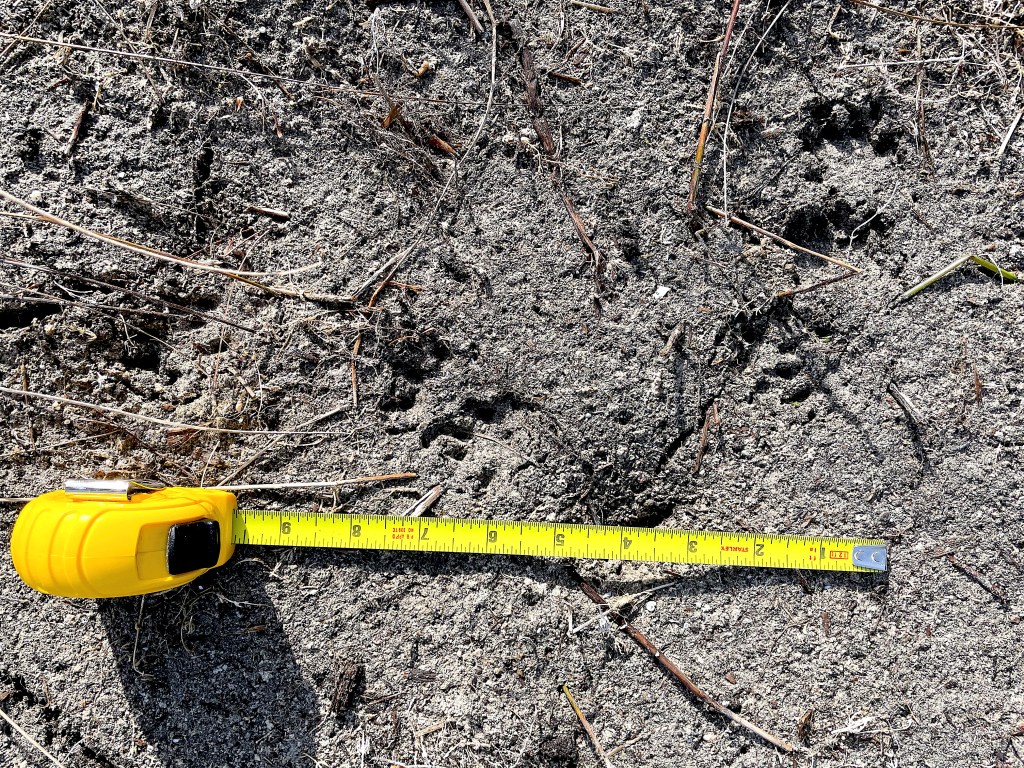
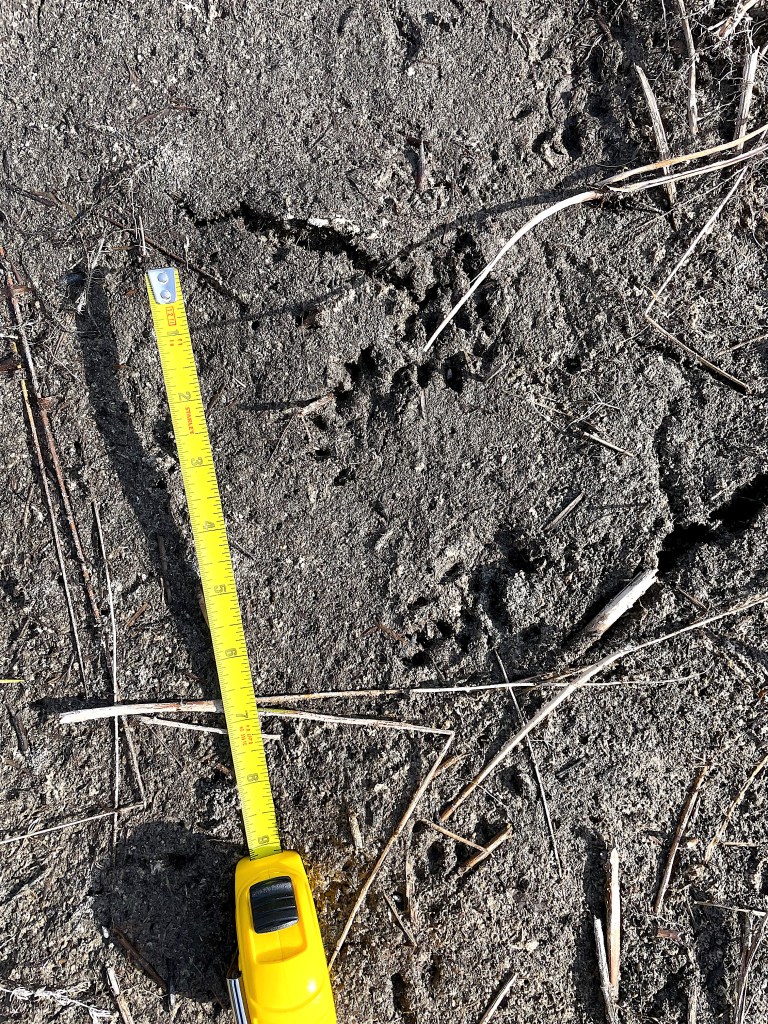
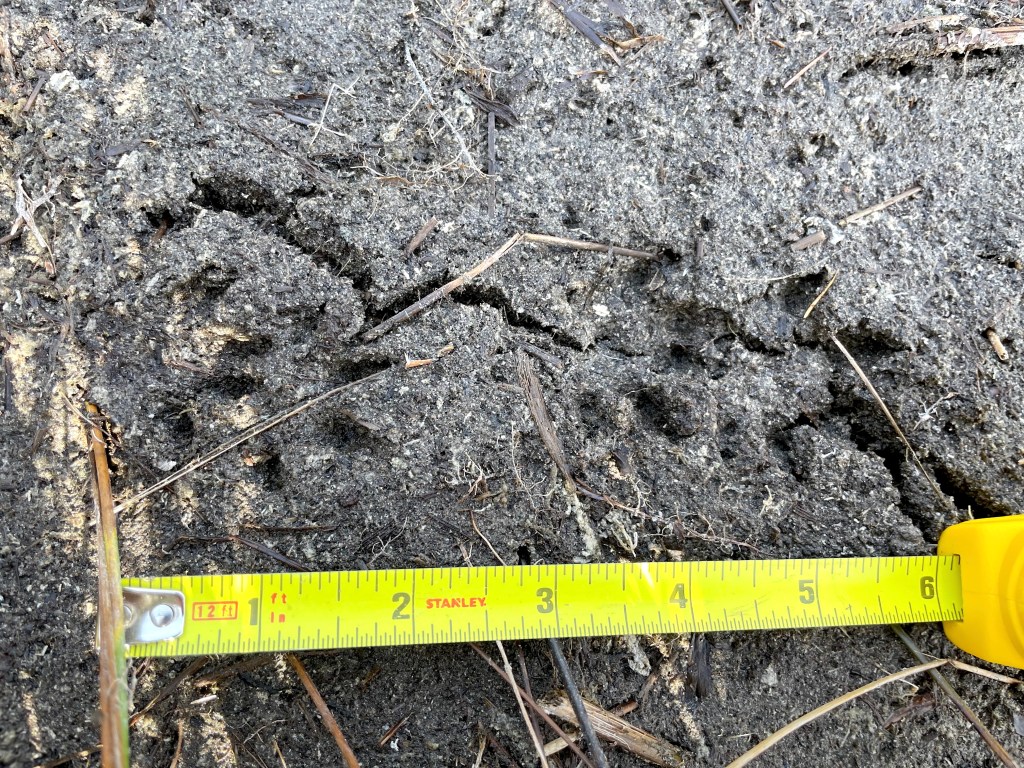
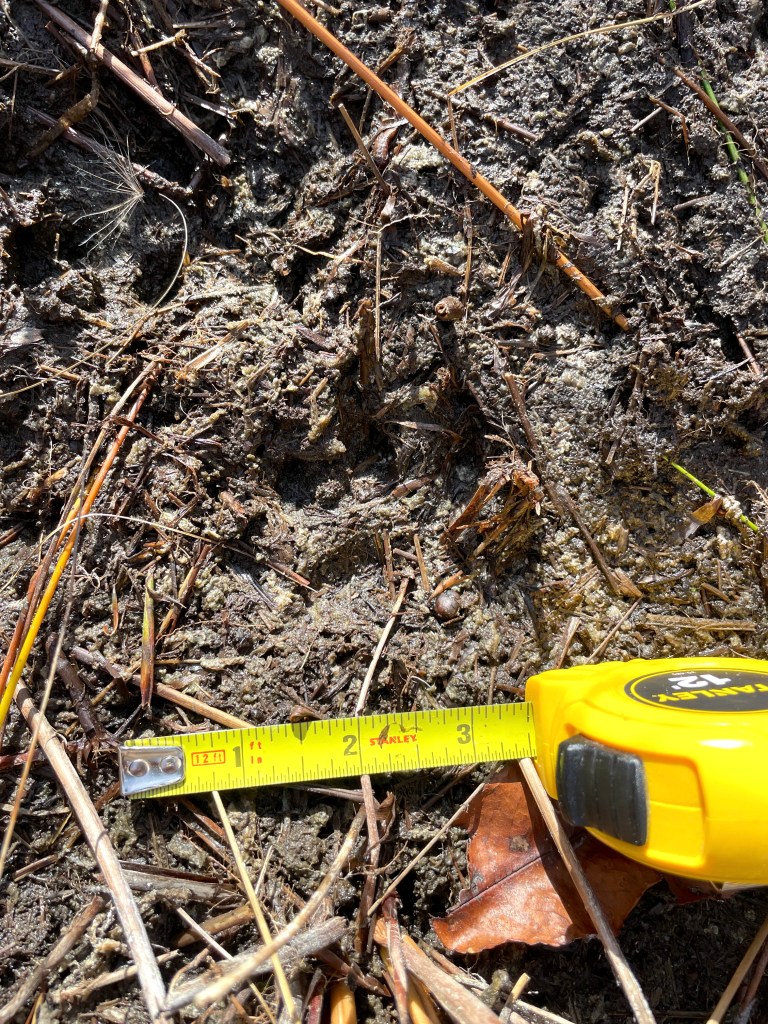
At first I thought these tracks were made by a Muskrat. Then Alexis pointed out that that the front and hind tracks of a Muskrat are very different in size (the front tracks are much smaller). We did not observe this difference in track sizes. Also, the heal pad is clearly visible in the last photo. Our best guess was that a Fisher made these tracks. There were also many small dead fish in the mud and so we wondered if the Fisher was eating them. It is instructive to compare the size of Fisher tracks with those of Mink (measurements from Lowery):
Mink (average):
- Front width: 1 3/16 in
- Front length: 1 1/4 in
- Hind width: 1 3/8 in
- Hind length: 1 1/4 in
- Trail width: 2 3/8 in
- Stride: 9 – 30 in
Fisher (range):
- Front width: 2 – 3 1/4 in
- Front length: 2 1/8 – 3 7/8 in
- Hind width: 2 – 3 1/2 in
- Hind length: 2 1/8 – 3 in
- Trail width: 3 – 5 1/2 in
- Stride: 7 – 14 in
It’s hard for me to judge track sizes in the 1st three photos. They do seem a little large for Mink. I am more confident with the last photo though that it is Fisher. We also saw Porcupine tracks at this spot (not photographed).
Frogs: Back in the woods we saw an abundance of frogs, namely, Spring Peepers, Leopard Frogs, and Green Frogs:
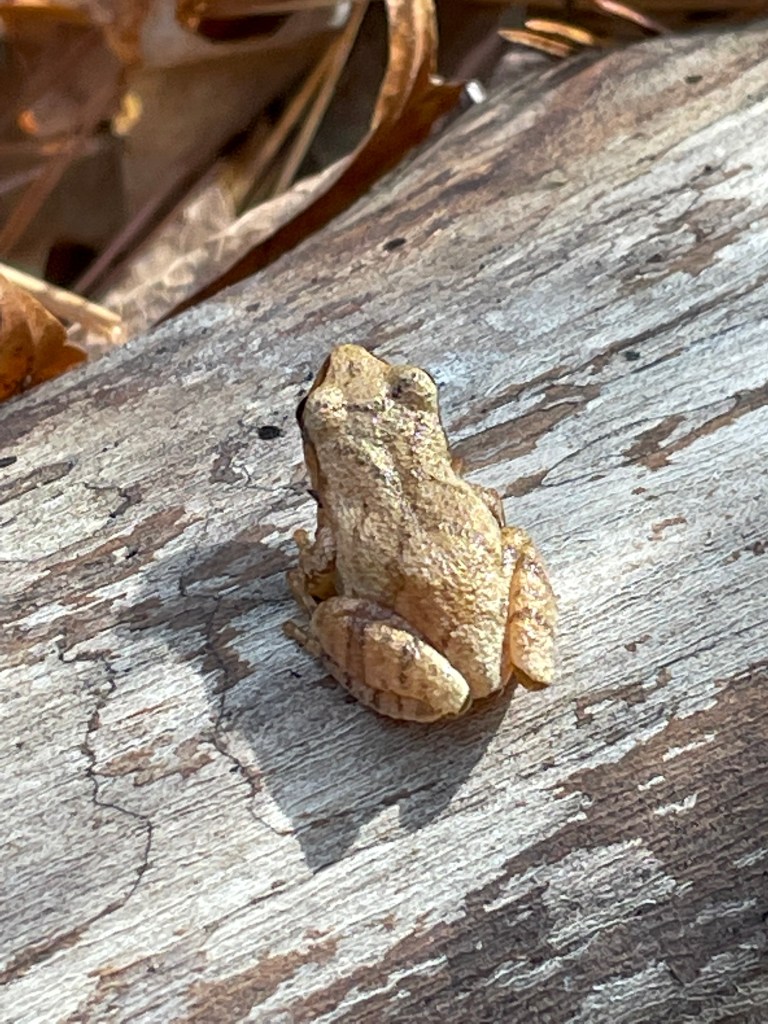
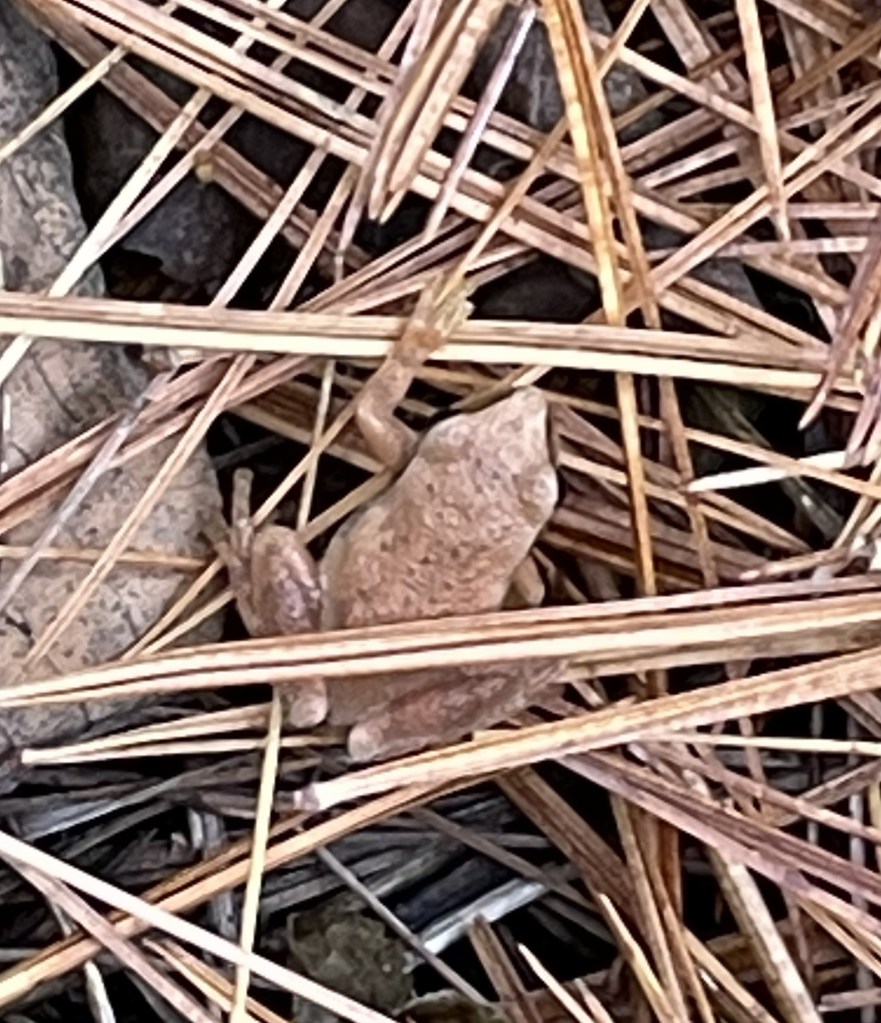
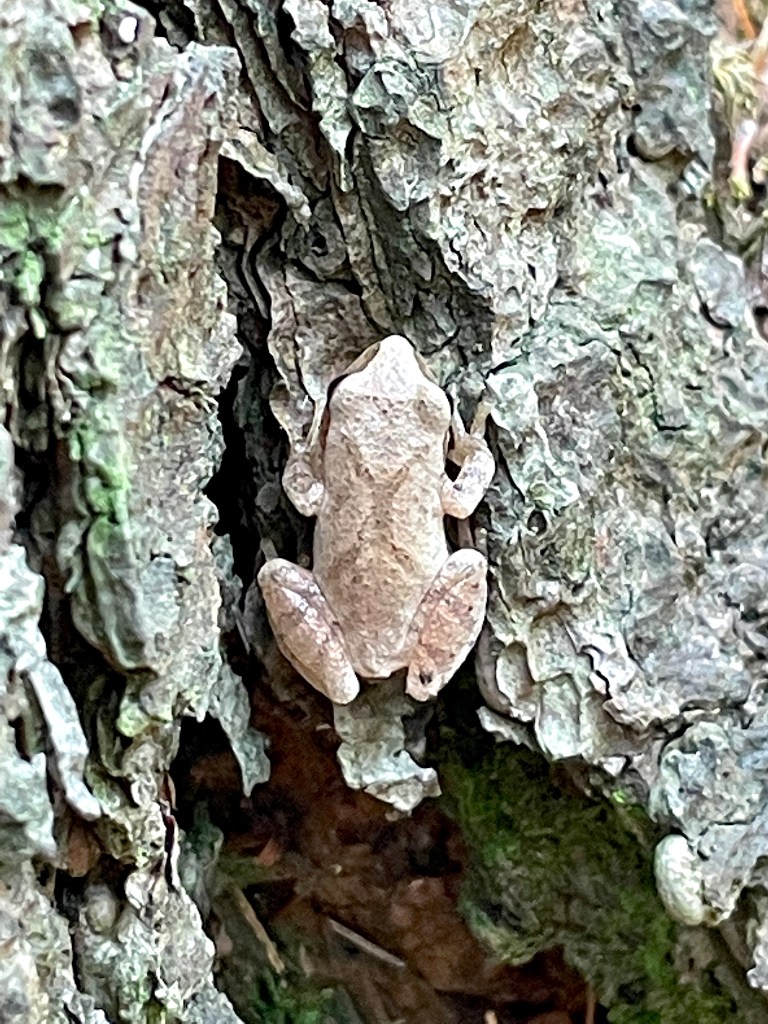
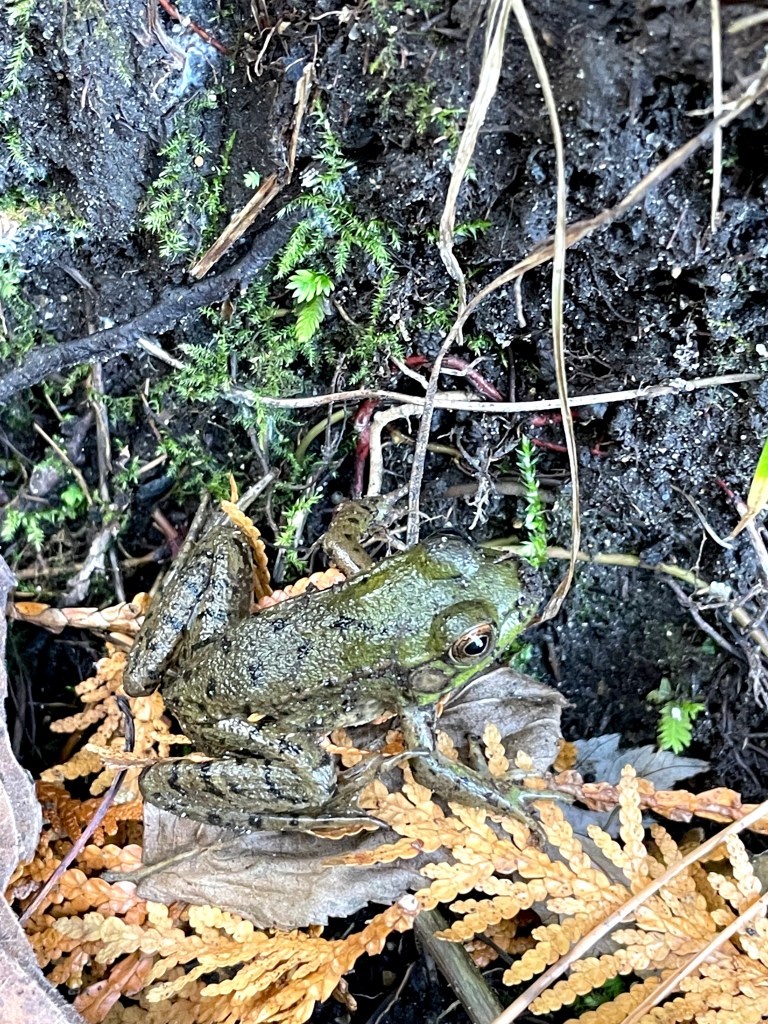
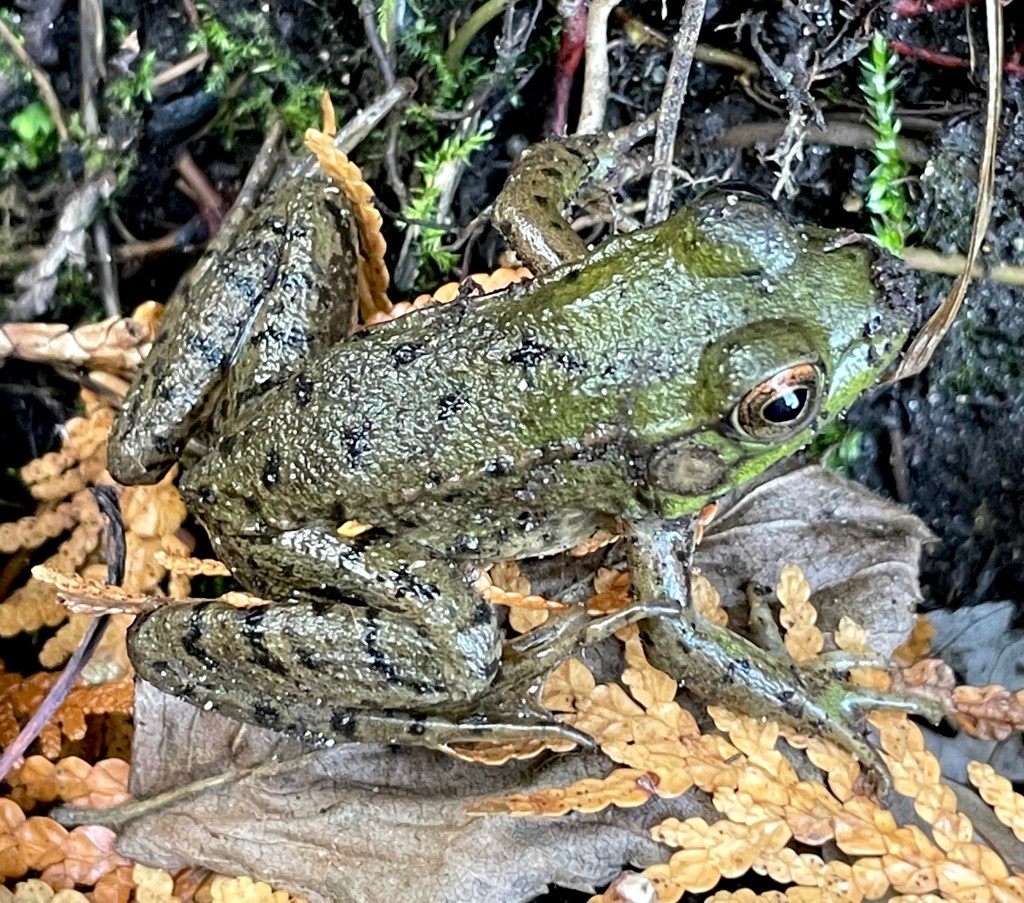
It was interesting to see the different colour variations of the Spring Peepers, and also the degree to which the ‘X’ pattern showed or didn’t show. Was it a coincidence that the peeper that we found in the pine needles was almost exactly the same colour as the pine needles? We also heard some Spring Peepers, and Alexis explained that they also call in the Fall, but not in such numbers. We wondered if it was the male or female peepers that were calling.
Porcupines: We saw numerous signs of porcupines in addition to the tracks at the marsh. For example, porcupine chews:
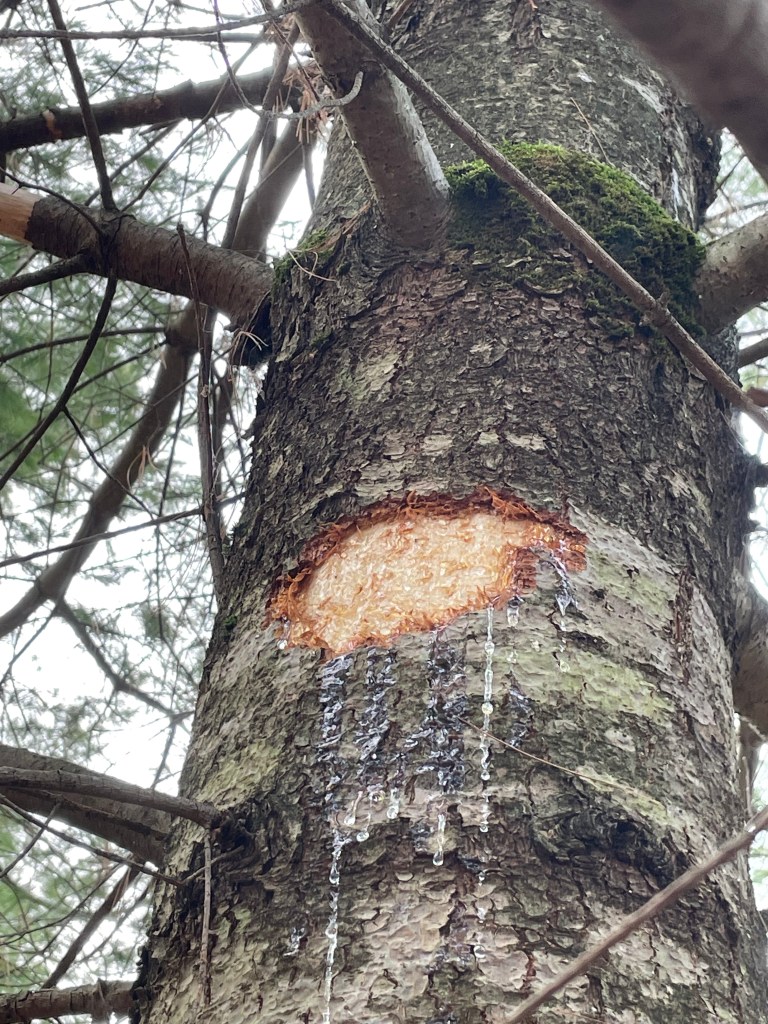
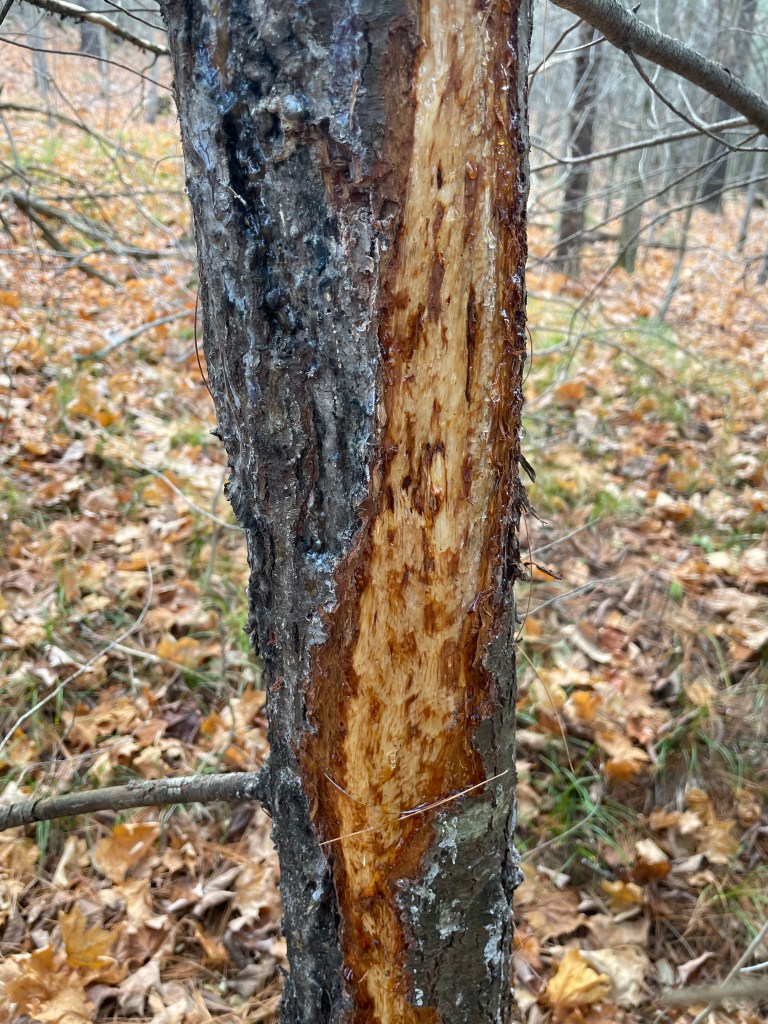
During our lunch break we also finally saw a porcupine up a tree.
Ruffed Grouse: later in the afternoon we found several piles of feathers on a path in the woods. The pattern on these feathers were very striking:
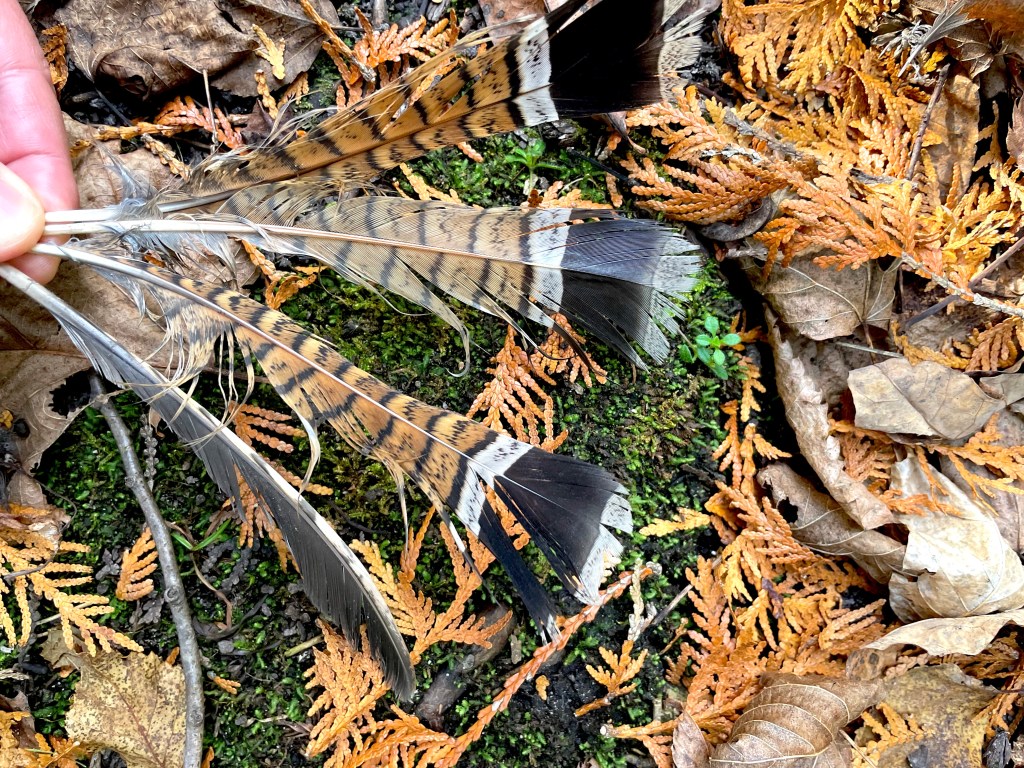
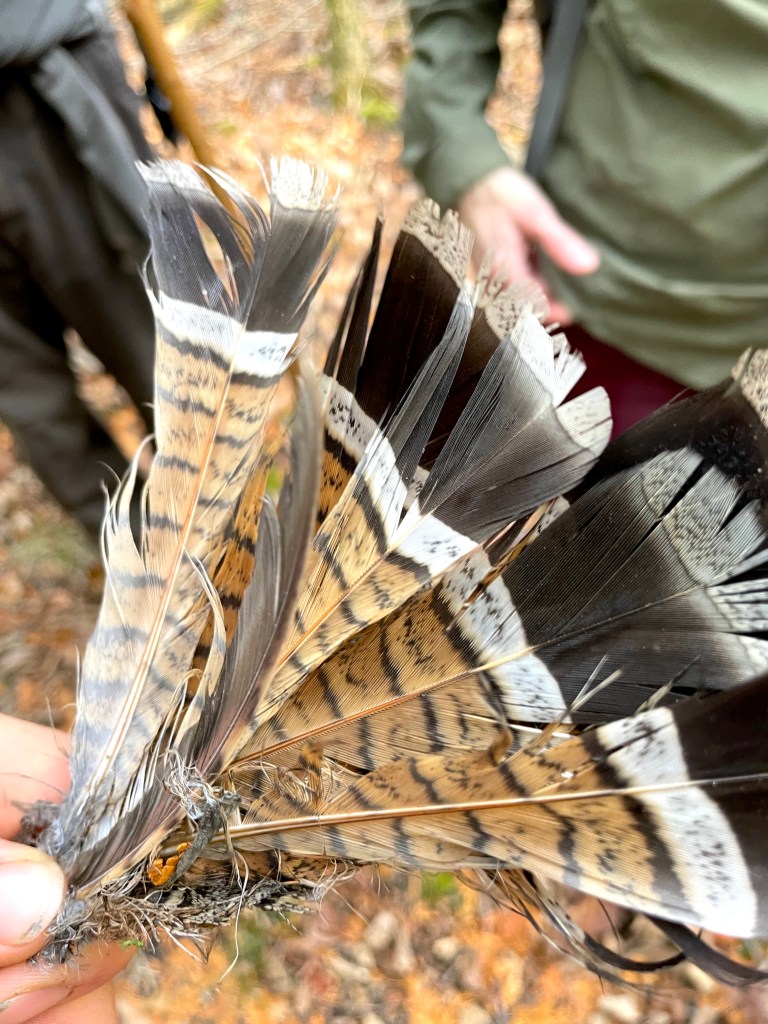
Byron recognized the feathers as belonging to a Ruffed Grouse. Looking at page 94 of ‘Bird Feathers’ we can see that these feathers are clearly tail feathers (feathers 7 – 9 in the first plate).
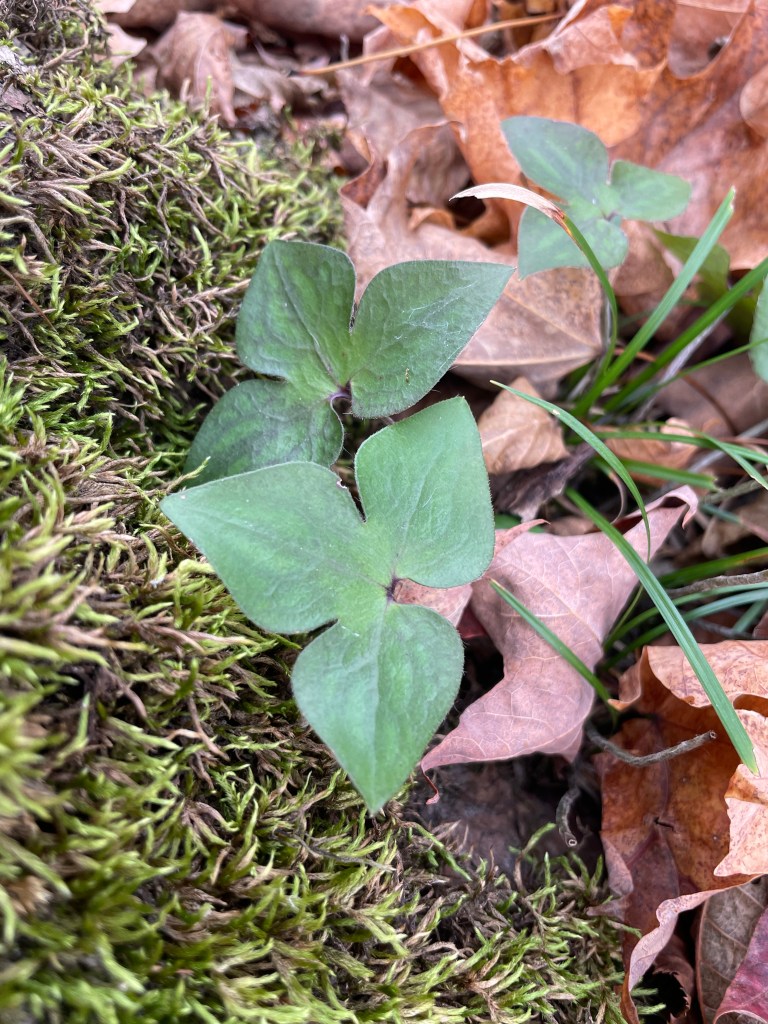
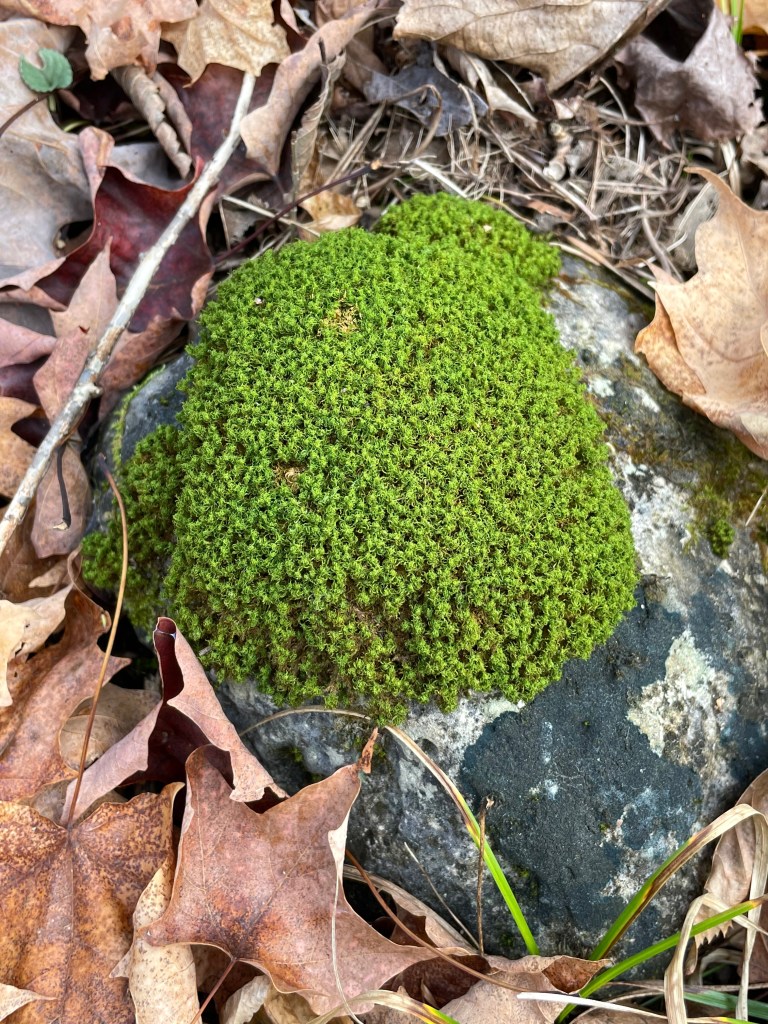
Miscellaneous observations: there was a rich flora and fauna in Kinghurst Forest. Grey mushrooms were everywhere (Byron, do you know the species?). Some miscellaneous photos are shown below:
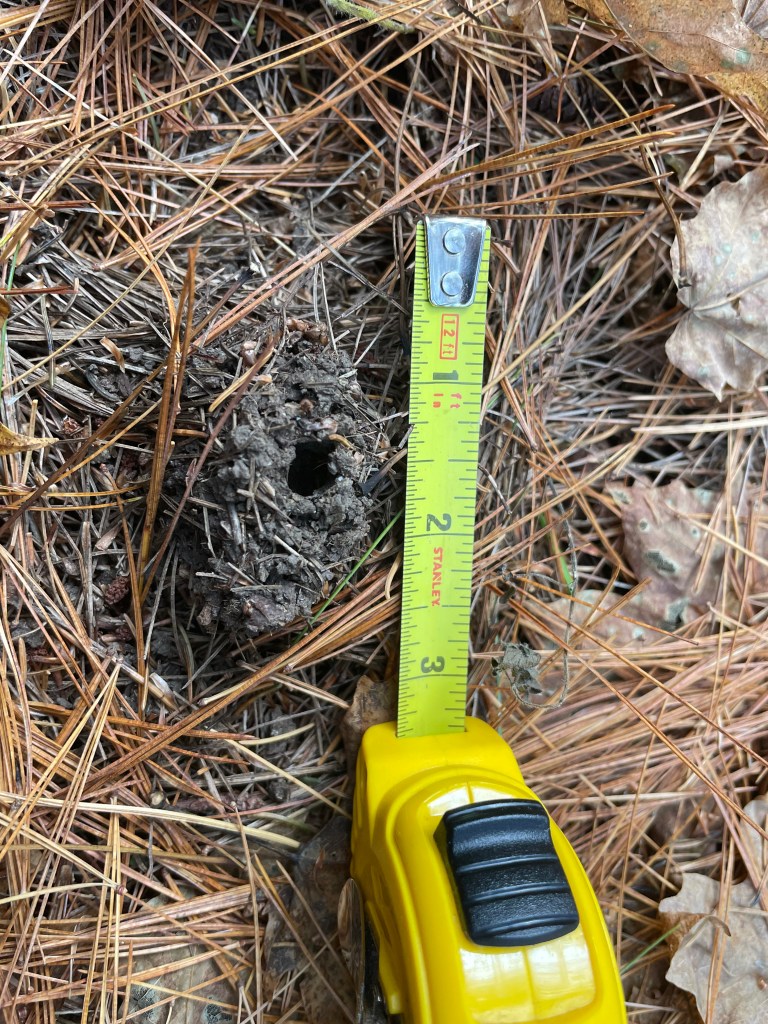
The above picture shows what is presumably a burrow of some insect. Our first guess was that a wasp made it. I could not find a good match in the ‘Tracks & Sign of Insects’ book. The other possibility is that it is a burrow made by a Periodical Cicada (see page 474 of the ‘Tracks & Sign of Insects’ book).
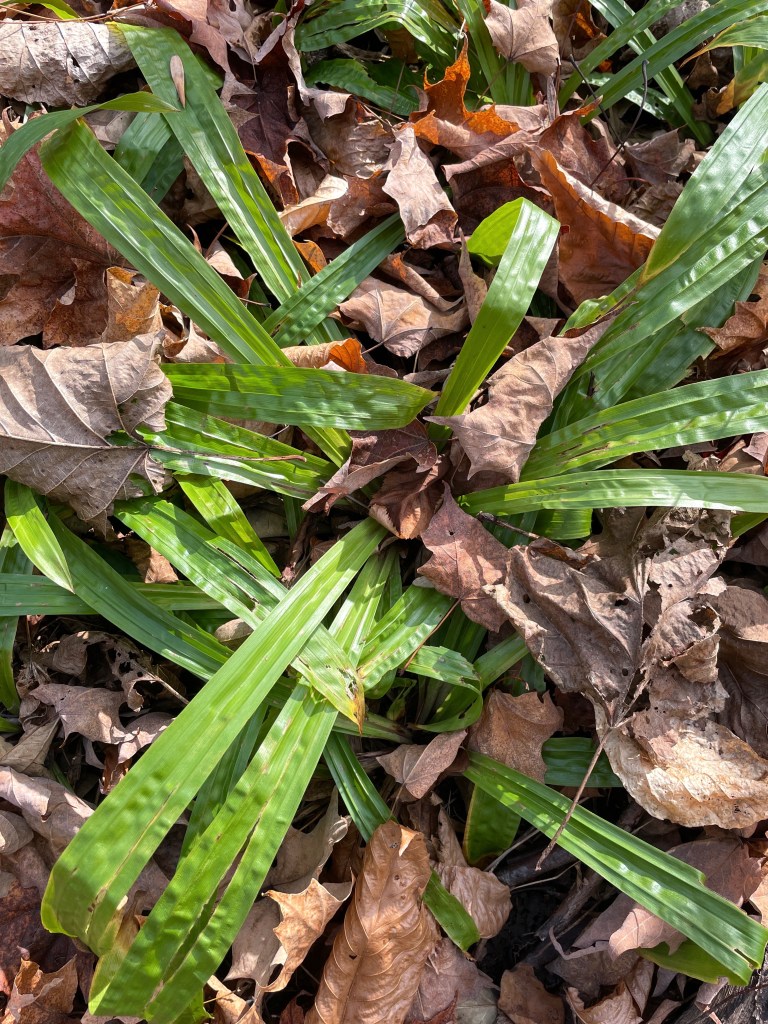
At first I thought this plant was plantain, but then noticed the lack of hairs on the leaves and no stems. Also, the leaves are too big and the wrong shape. Eventually I found the remains of the main stem in the centre of the leaves which was triangular in cross-section, confirming it was a sedge.
 Field Notes of a Tracker
Leave a comment