Date: Aug 7, 2022
Place: Near Woodstock, very close to Innerkip, ON.
Time: approx. 4pm
Main reference:
(an online database for skull and bone identification)
Weather: hot and humid.
Context:
I had briefly seen a coyote den in a farmers’ field a few weeks earlier, but because of the large number of biting flies I had not stayed long to investigate. It looked very fresh with recent dug earth. I wanted to see how things had changed.
Tracking area:
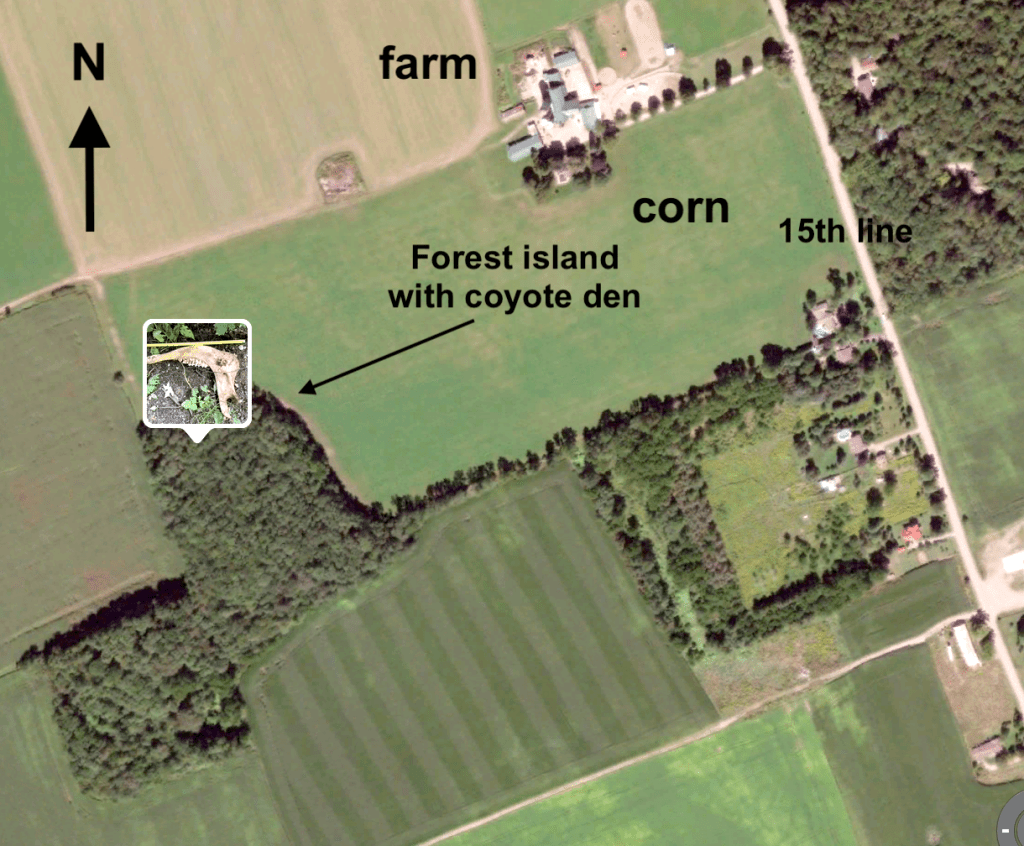
The coyote den is in a small ‘island’ of forest in the middle of farmers fields. It is close to the edge of the forest along an old dirt track leading into the forest. The substrate is sandy mud. A map is shown below:
Coyote Den:
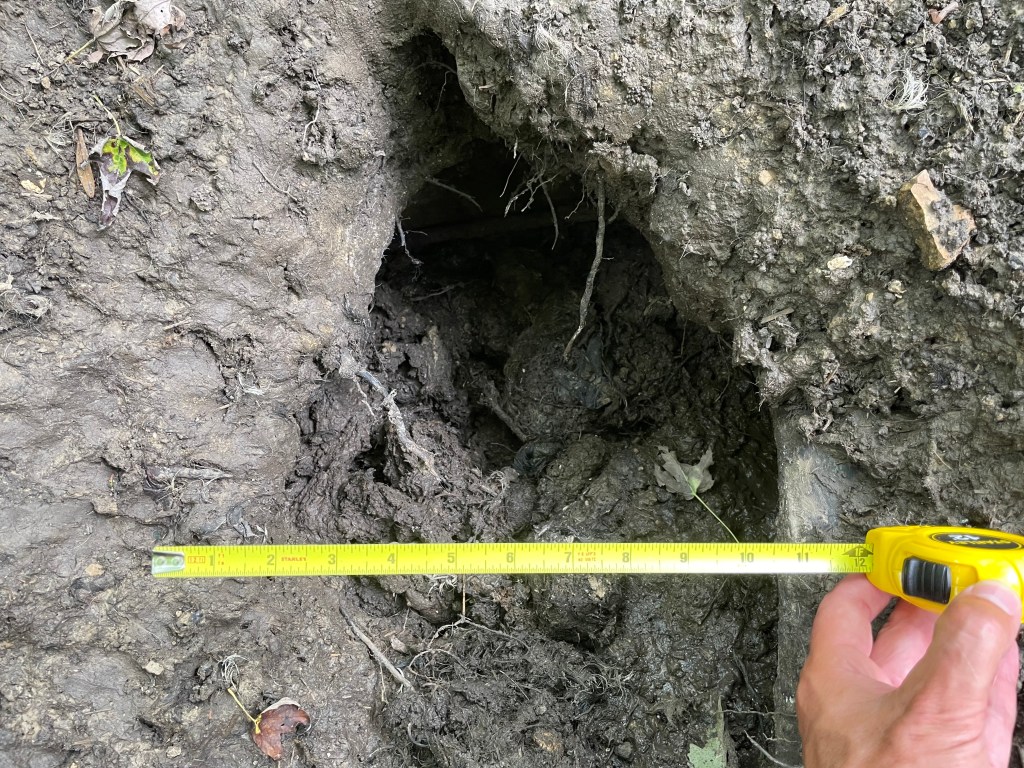
The first time I saw the den a view weeks earlier it looked fresh. Now the den looked abandoned, as the entrance was partially collapsed and obstructed with fallen dirt. My first impression was a smell of a dead animal. There were many flies near the den entrance. See below:
Some tracks near the entrance:
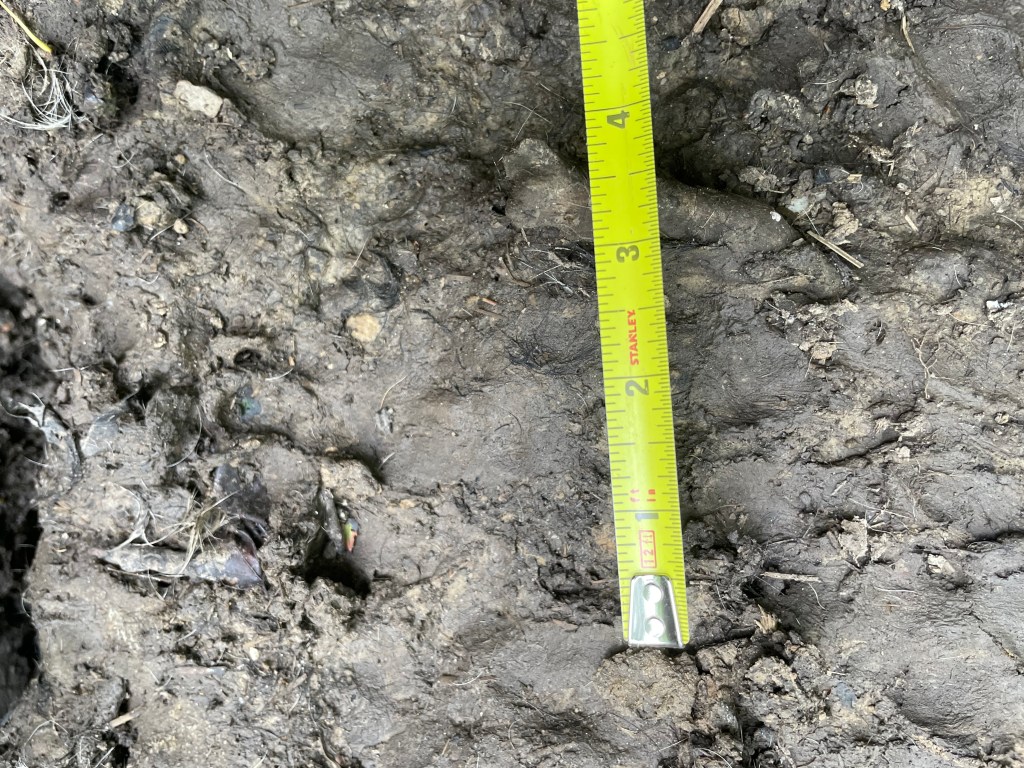
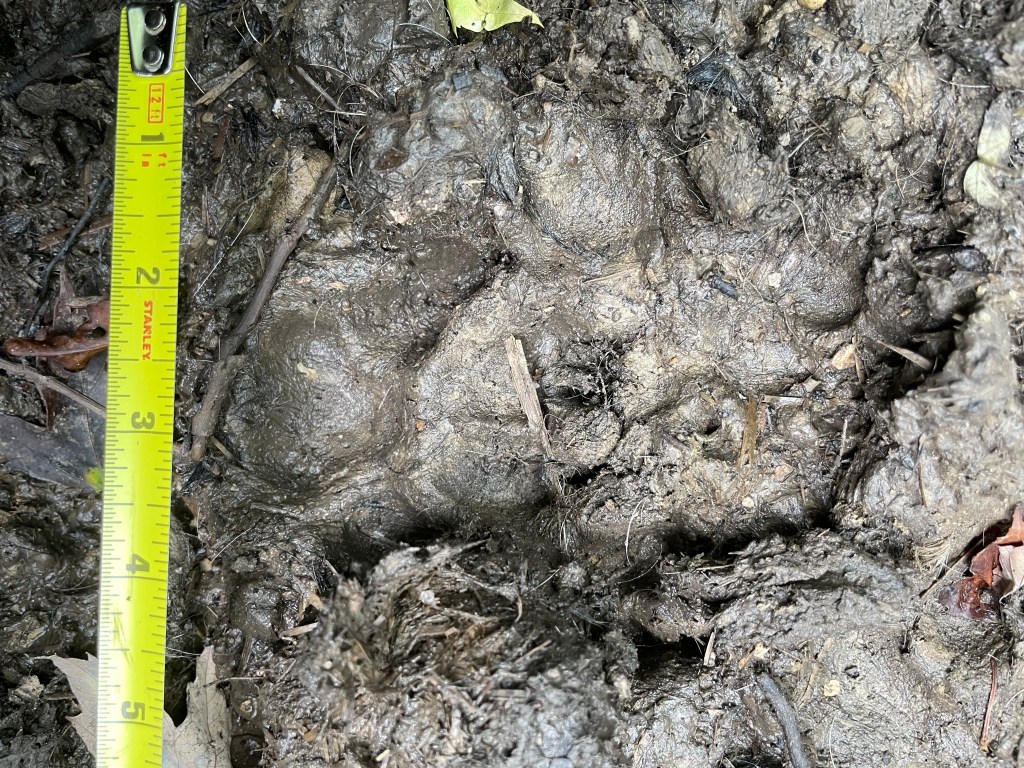
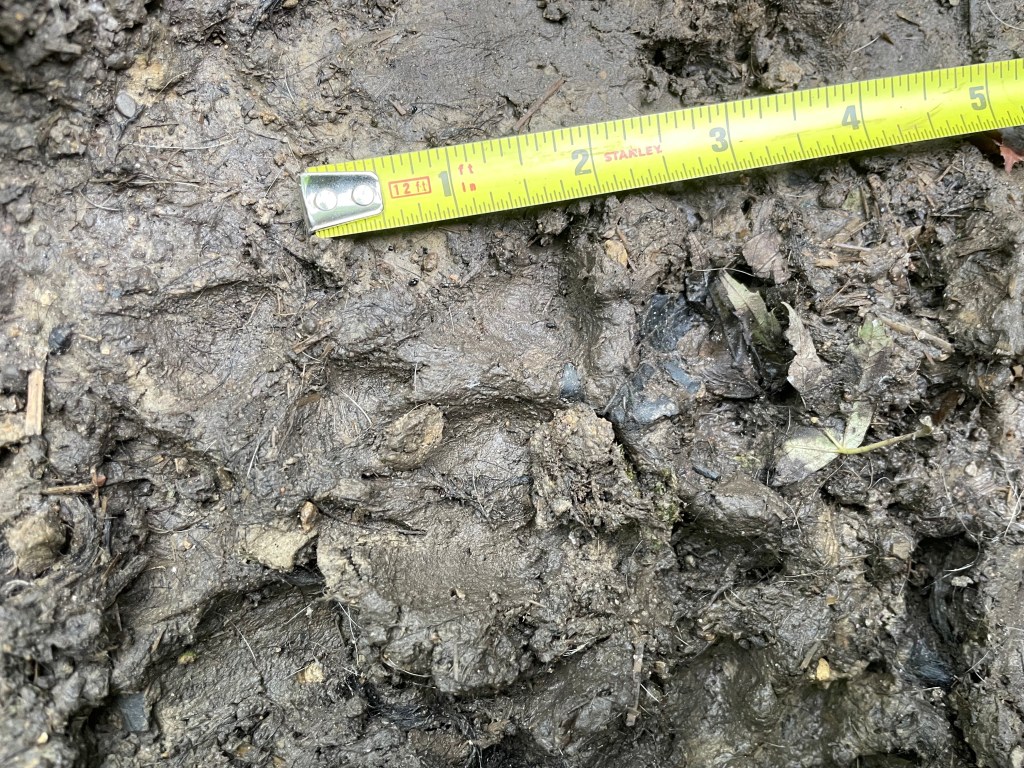
There were some clear coyote tracks near the den entrance, although for some reason they don’t show up so well on the photos:
Jaw bones:
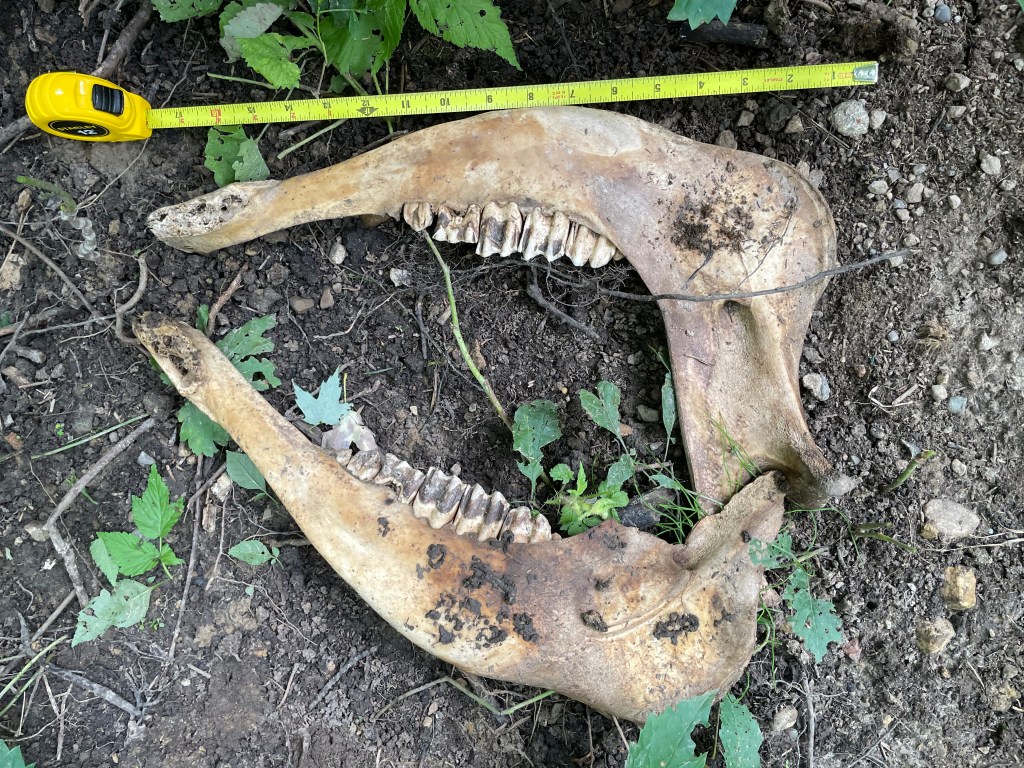
I found the upper and lower jaw bones of a herbivore near the den entrance. At first I thought they were deer bones. Then when I measured them I realized they could not be deer bones as they were too big (there are other reasons – see below). I did not have a book on skulls, but I did have an online reference (http://www.boneid.net), which gave examples of White-tailed deer mandibles (approx. 8 in) and cow mandibles (approx. 14 in). The latter is closer to the size of the jaw bones I found. Without knowing anything about skulls, the shape and positioning of the teeth also look more like the online pictures of a cow jaw bone. Here is my photo:
Animal skin:
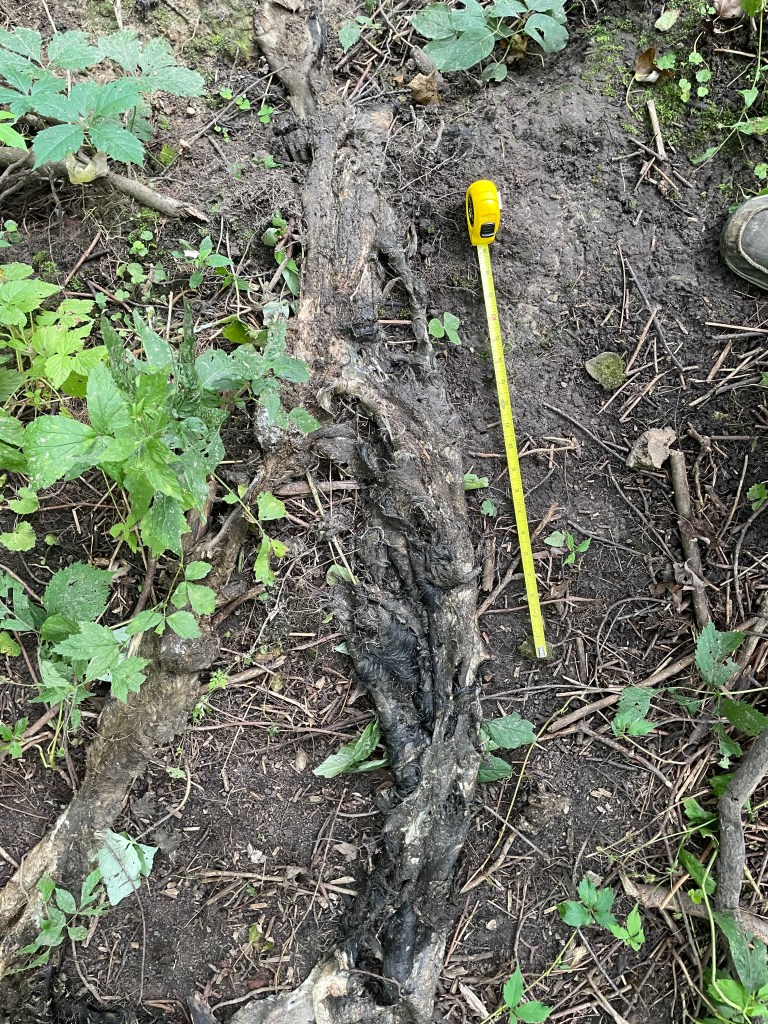
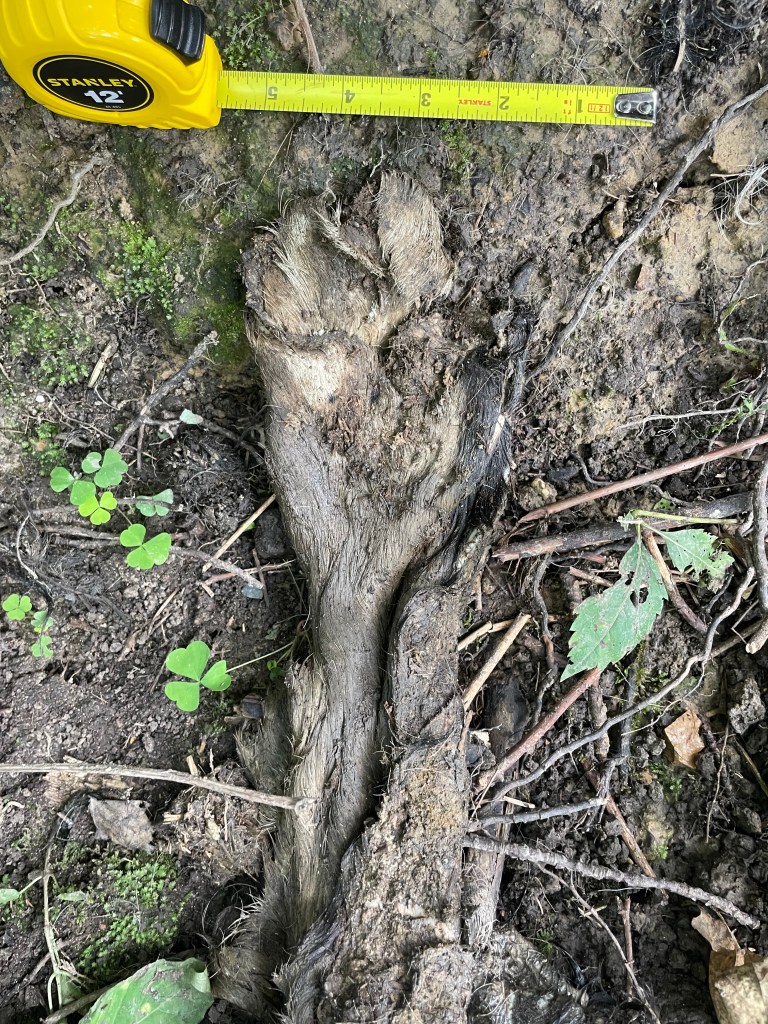
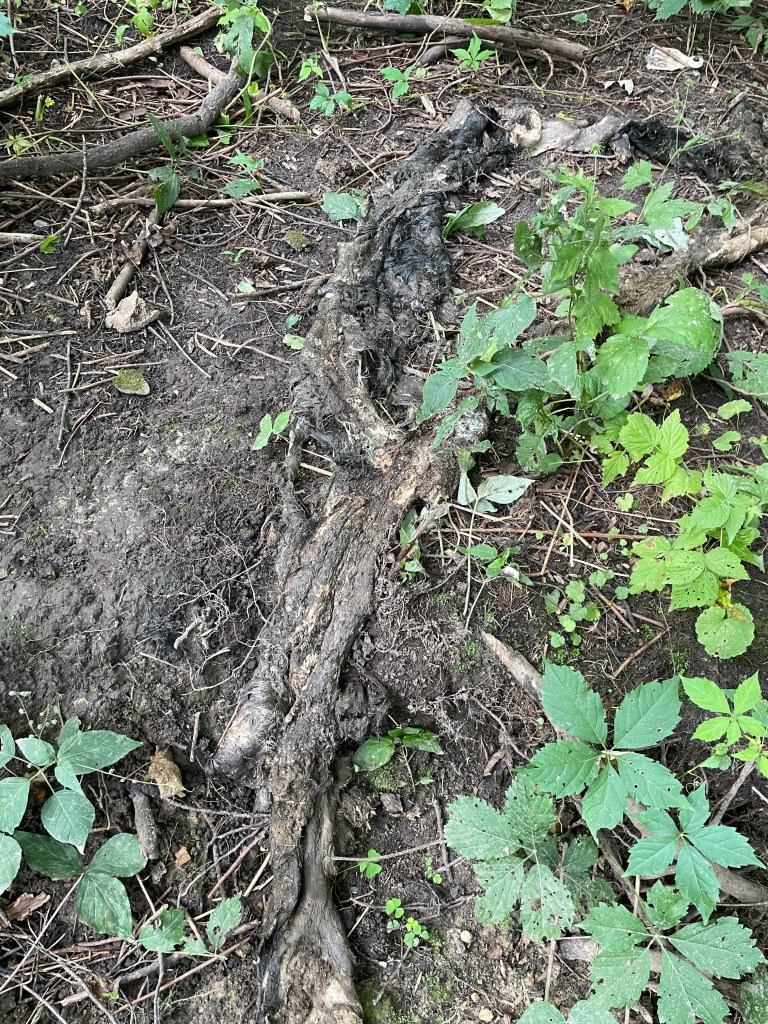
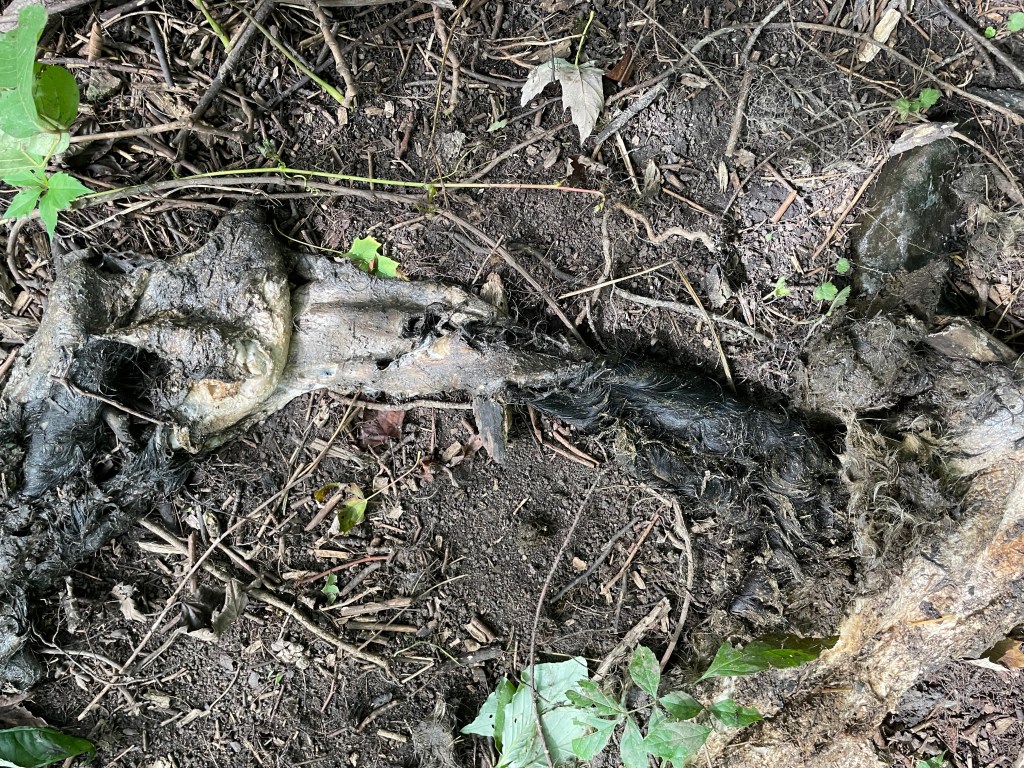
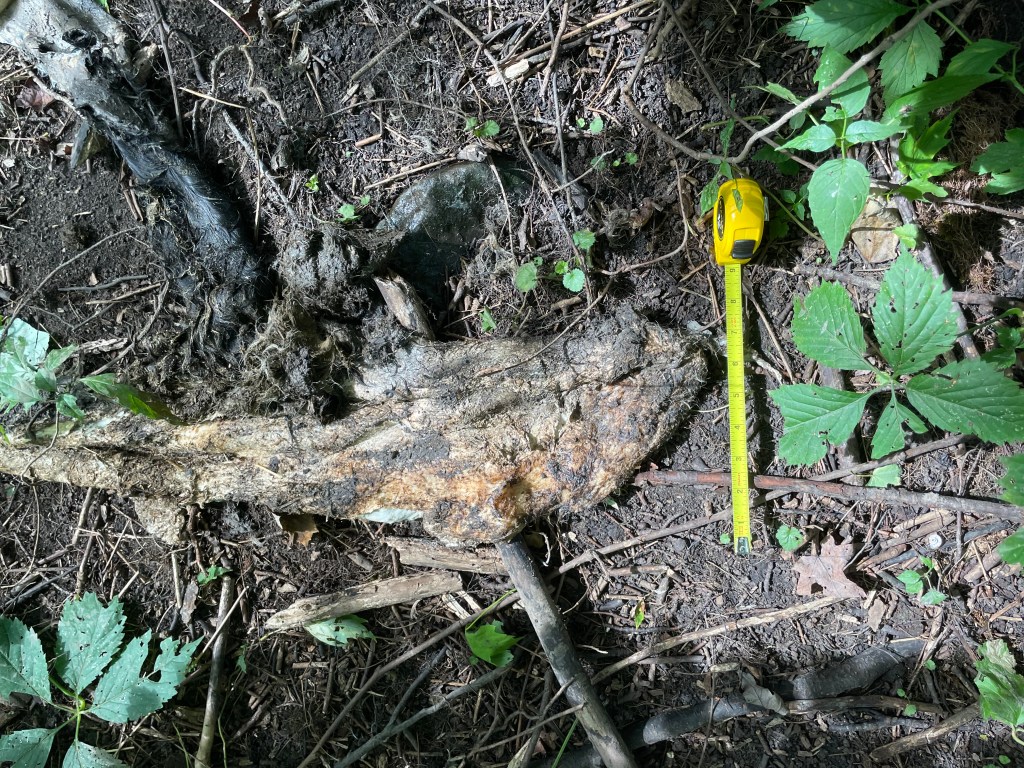
Off to one side of the den were the remains of a very large animal skin, with a fair amount of decomposition. At first I was confused by what this could be, but then both the size and the colour (patches of black and white) made me realize that this was probably from a cow.
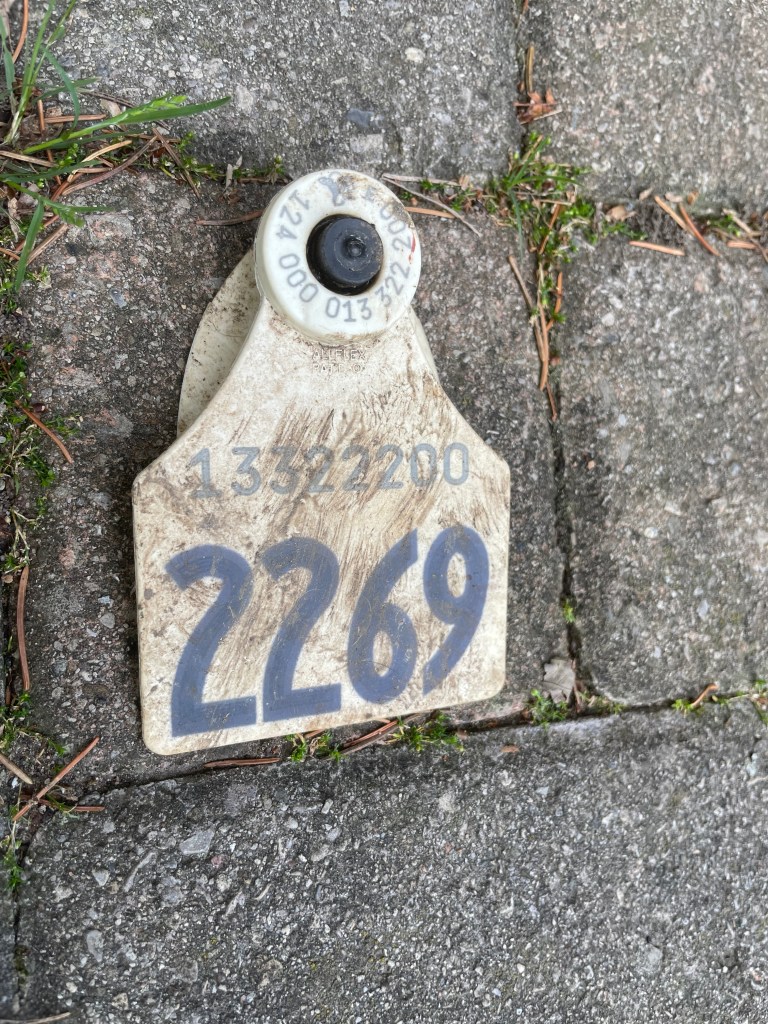
Ear tag:
The final piece of the puzzle came together when I found next to the animal skin an ear tag. I double checked with a local retired farmer that it was from a cow.
Discussion with a retired dairy farmer:
I asked a retired local dairy farmer about my find. He said that most likely the cow had died before been eaten by the coyotes. He also mentioned that some of the modern farmers don’t even bother to bury cattle when they die and possibly just dump the body. What surprises me is that even if the animal died in a field it must have been very heavy for the coyotes to drag to the entrance of their burrow.
Questions:
- How did the cow die?
- Was it full grown, or a calf?
- Where had the coyotes gone?
- How long does it take for coyote pups to grow up and leave their parents?
- Do both the male and female coyotes rear their young?
- When do we expect coyotes to be rearing their young and when do we expect them to have finished and no longer need the den?
- The farmers fields for miles around are dotted with these ‘forest islands’. This makes me wonder if the coyote populations in such a habitat constitute a metapopulation (a metapopulation consists of a group of spatially separated populations of the same species which interact at some level, e.g. via migration between the subpopulations).
 Field Notes of a Tracker
Leave a comment