Date: June 28, 2022
Place: Southgate Dr., Guelph ON (South end of the Industrial Park).
Time: 5pm – 6pm
Main references:
‘The Tracker’s Field Guide: A Comprehensive Manual for Animal Tracking’, James C. Lowery, Second Edit., Falcon Guide
‘Mammal Tracks & Sign: A Guide to North American Species’, Mark Elbroch and Eleanor Marks, First Edit., Stackpole Books
‘Bird Tracks & Sign: A Guide to North American Species’, Mark Elbroch and Eleanor Marks, First Edit., Stackpole Books
Weather: 25 C, sunny, sunny. Last rain 3 days ago (light rain).
Some additional observations: I heard much bird song in the long surrounding grasses and vegetation, including the Field Sparrow.
Dominant vegetation: Typical secondary succession vegetation for southern Ontario
Description of the area:
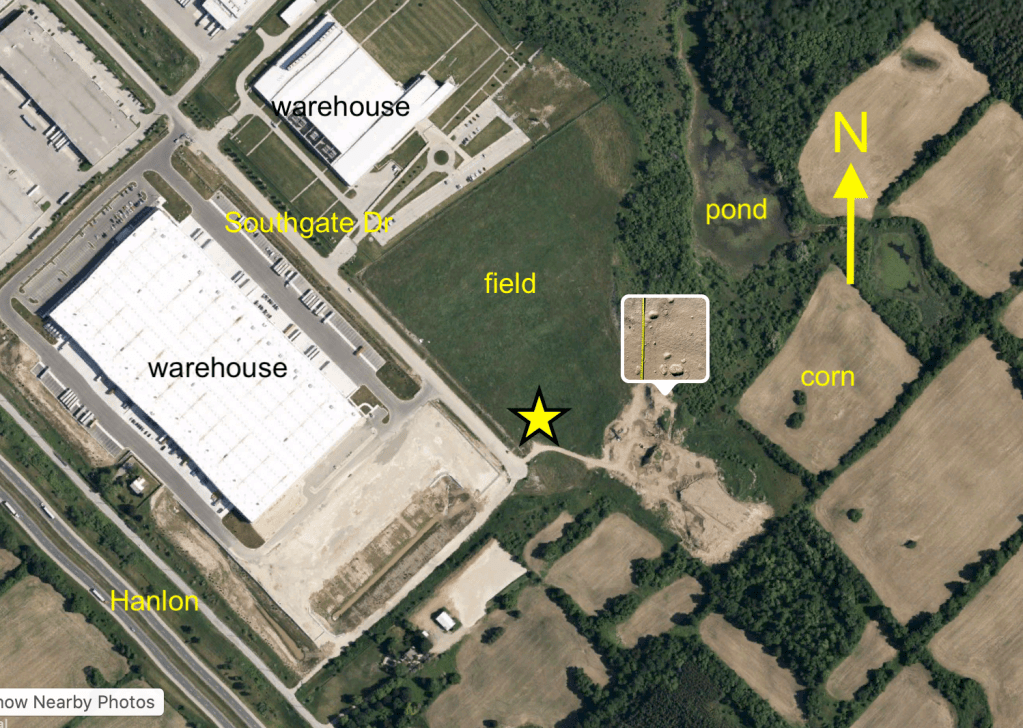
The tracking area was a dirt road on the southern extreme side of the Hanlon Industrial Park. The whole area was recently bulldozed (again) to make room for warehouses. A map is shown below. The dirt road is marked with a yellow star.
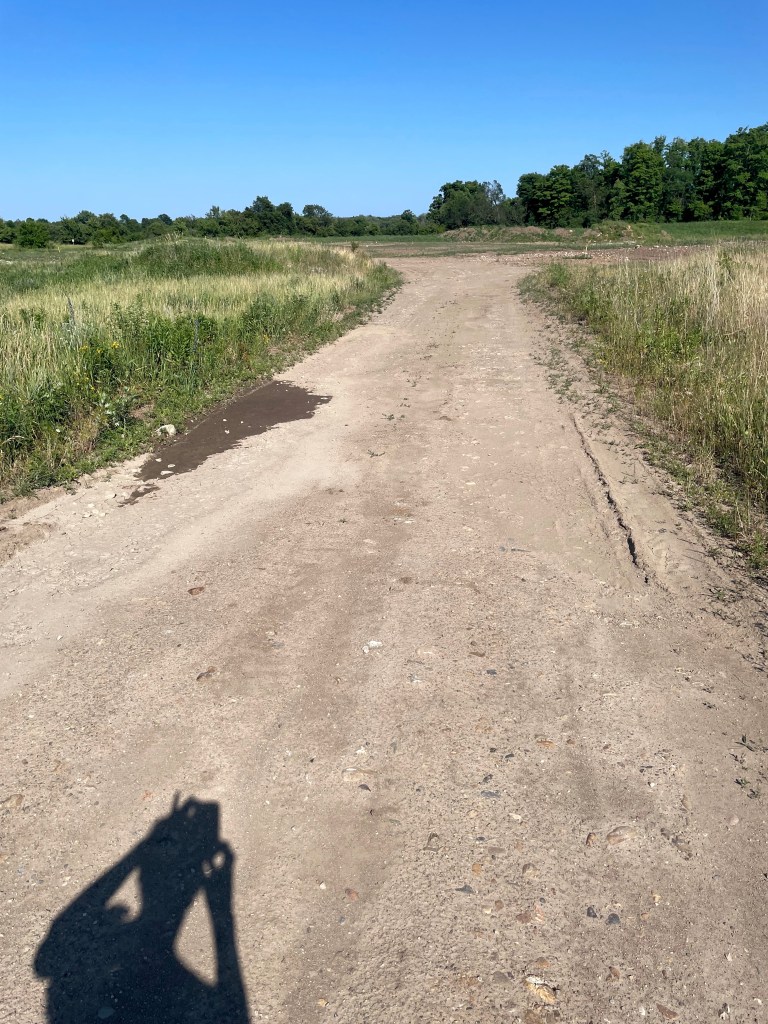
Here is the dirt path I tracked on:
Chipmunk tracks:
The first thing I noticed at the start of the dirt road in the dried up mud of a puddle were small rodent tracks. The sediment must have been very fine as it registered a lot of small details:
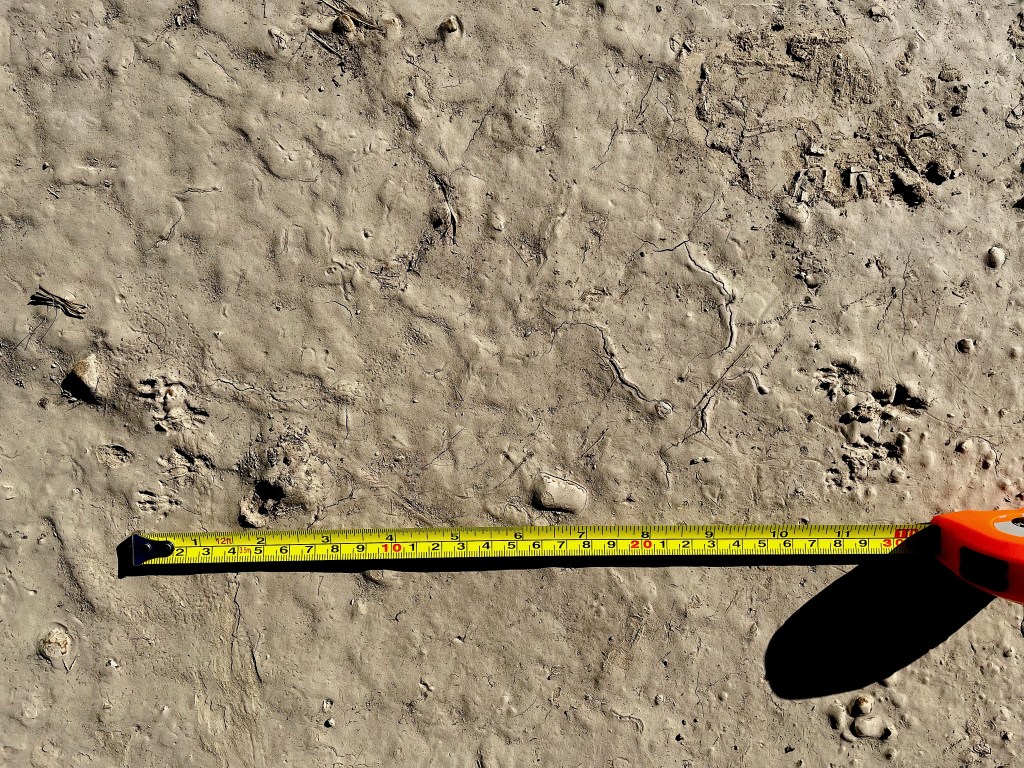
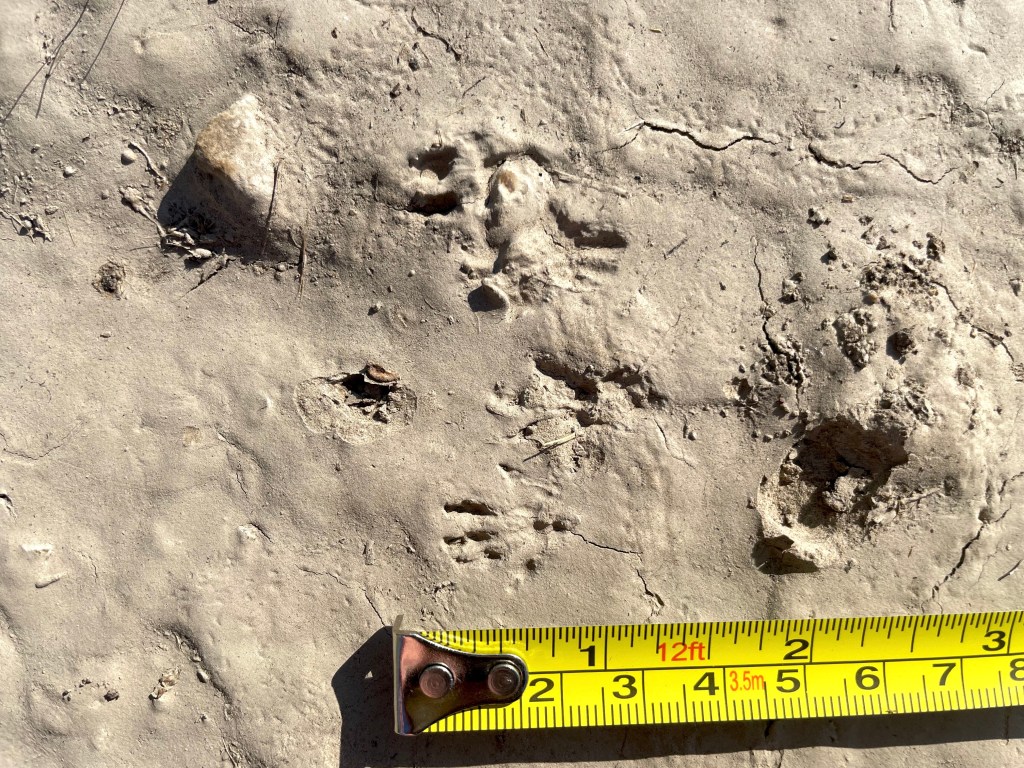
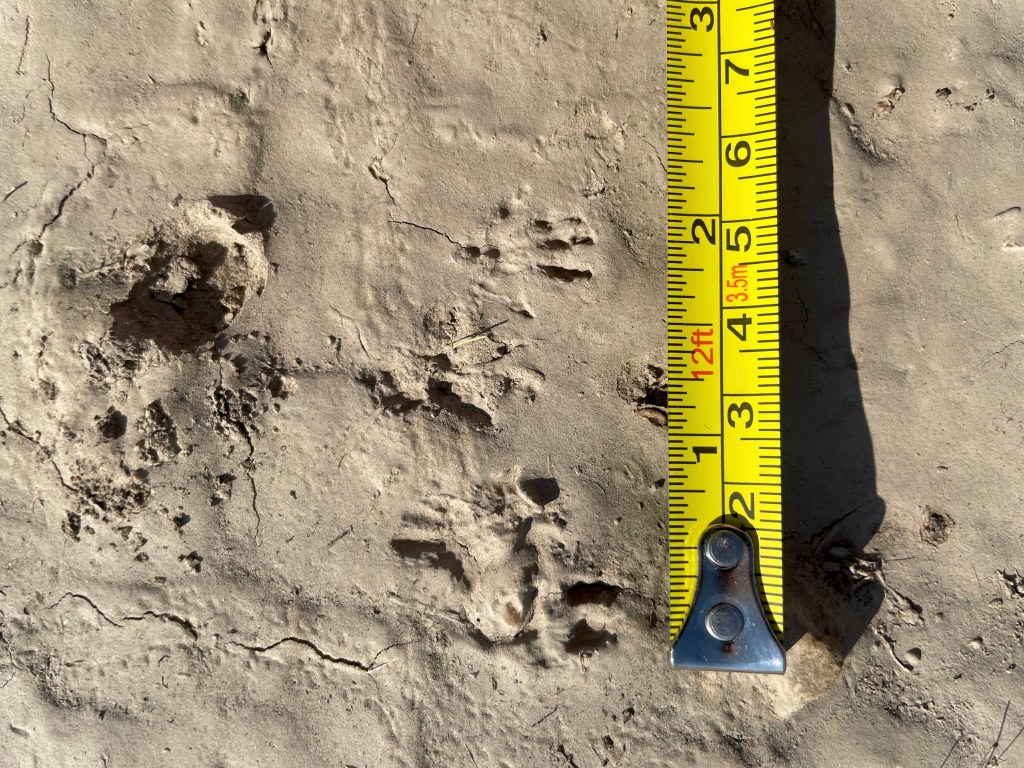
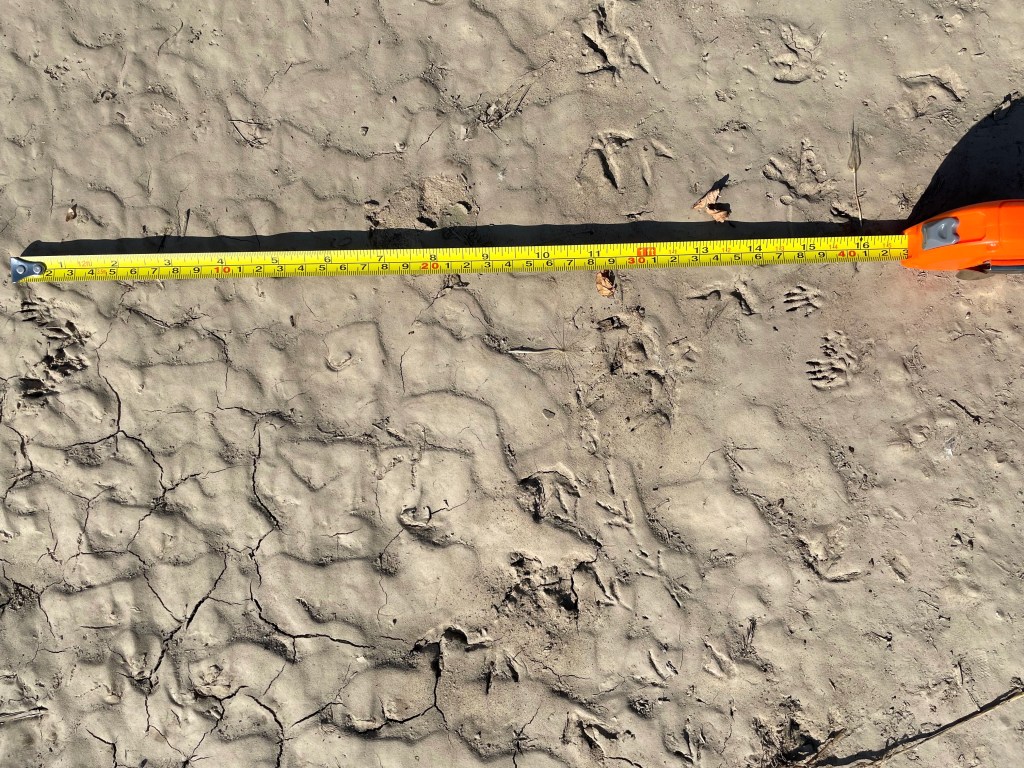
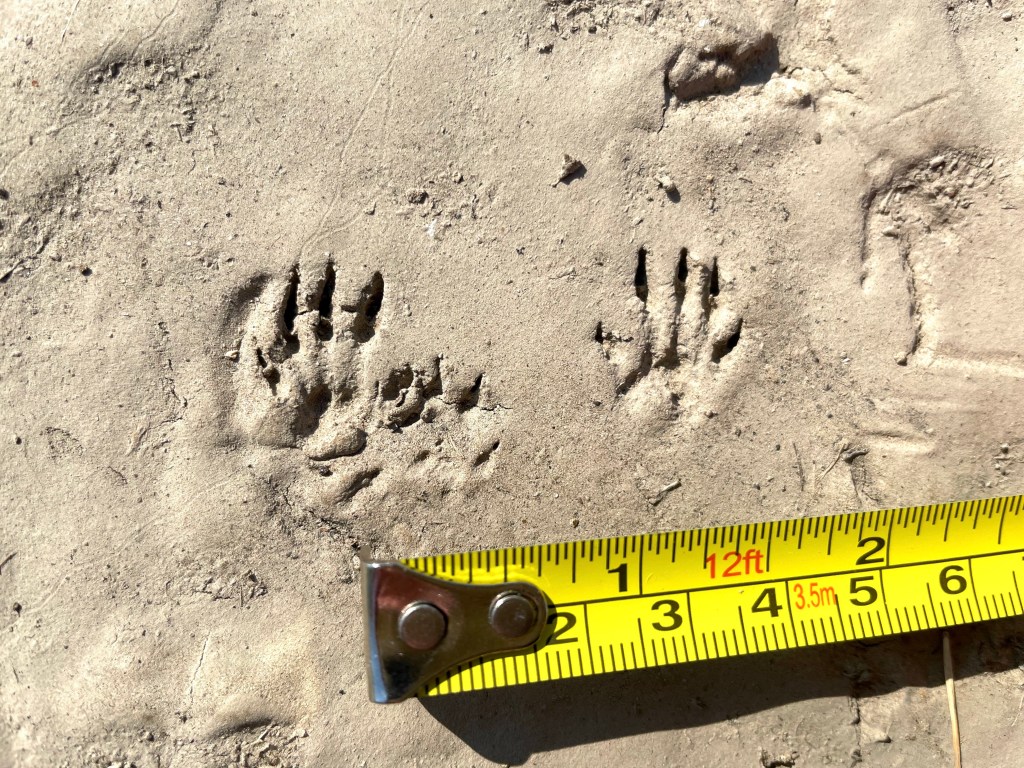
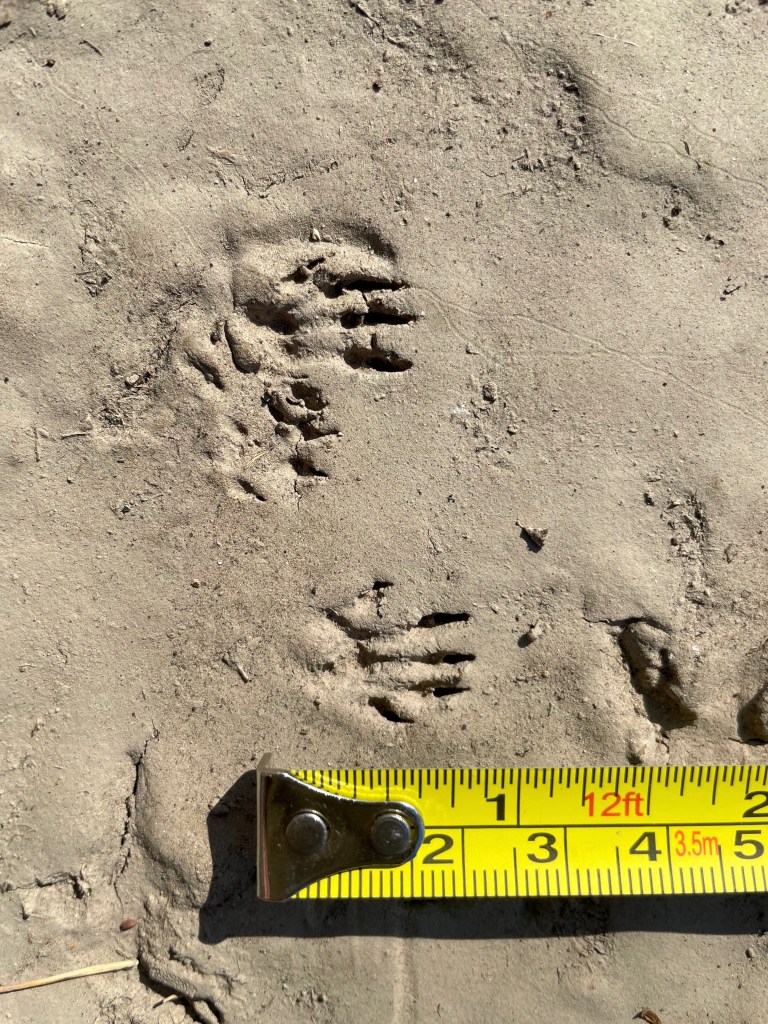
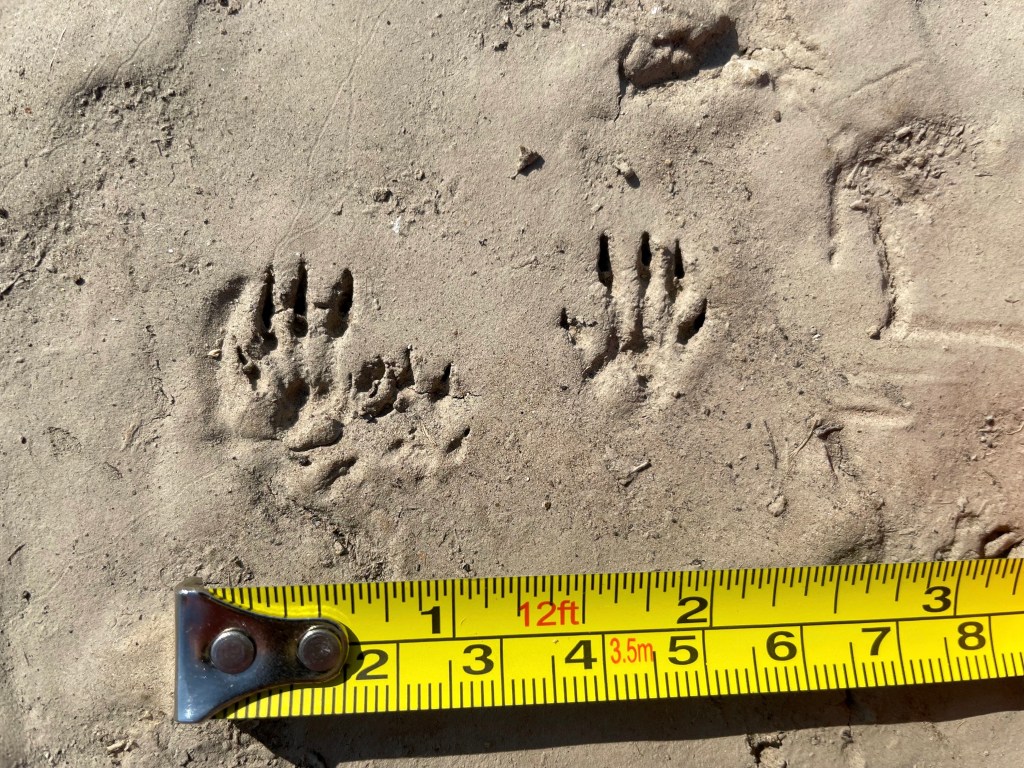
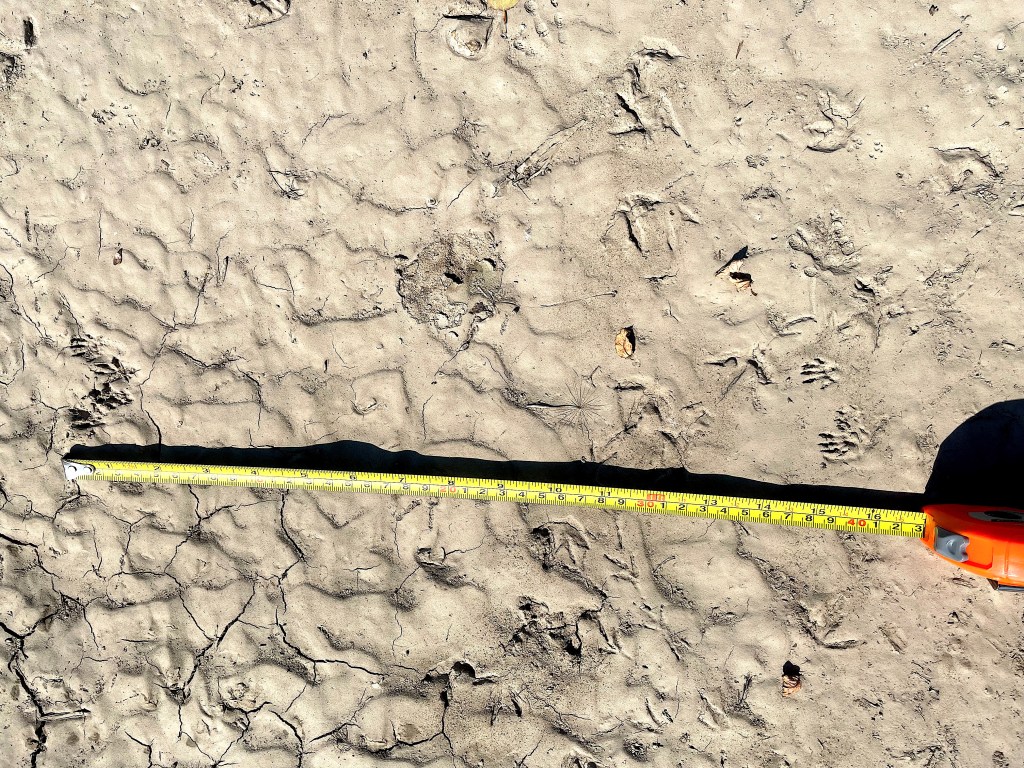
(Click on the individual tracks for more detail.)
Looking at the trail width I immediately suspected that these tracks were made by a chipmunk. I thought that as a chipmunk is a rodent the front feet would have 4 toes and the hind feet have 5 toes. To all intents and purposes this is true, however apparently (Elbroch, page 257) a chipmunk has 5 toes on the front feet, and in the notes of the ITrack Pro app for chipmunk they say for the front feet:
”4 toes register reliably. Foot has 5 toes, but the inside toe (toe 1) is much reduced and registers only as a small dot near the heel pad.”
Lowery (page 140) appears to show 5 long toes for a front foot, but I wonder if they are mistakingly showing a hind foot!
I also heard the alarm call (‘cheep!’) of a chipmunk within 20 feet of where I was. Let’s remind ourselves of the measurements for a chipmunk from Elbroch (page 257 – 258):
- FL: 3/4 – 1 in
- FW: 7/16 – 7/8 in
- HL: 1/2 – 7/8 in
- HW: 5/8 – 15/16 in
- trail width: 1 3/4 – 2 7/8 in
- stride (bound): 4 – 23 in
- group length: 2 – 5 in
Here are my measurements:
- FL: 3/4 in
- FW: 7/16 – 7/8 in
- HL: 11/16, 3/4 in
- HW: 5/8 in
- trail width: 1 7/8 in
- stride (bound): 11, 14 1/2 in
- group length: 1, 1 13/16 in
These all fall very nicely within the measurements given by Elbroch, except for group length. I don’t know why that is the case.
Bird tracks series 1:
The whole area near the dried up puddles was rich with bird tracks. Here are some photos from the first set that I recorded:
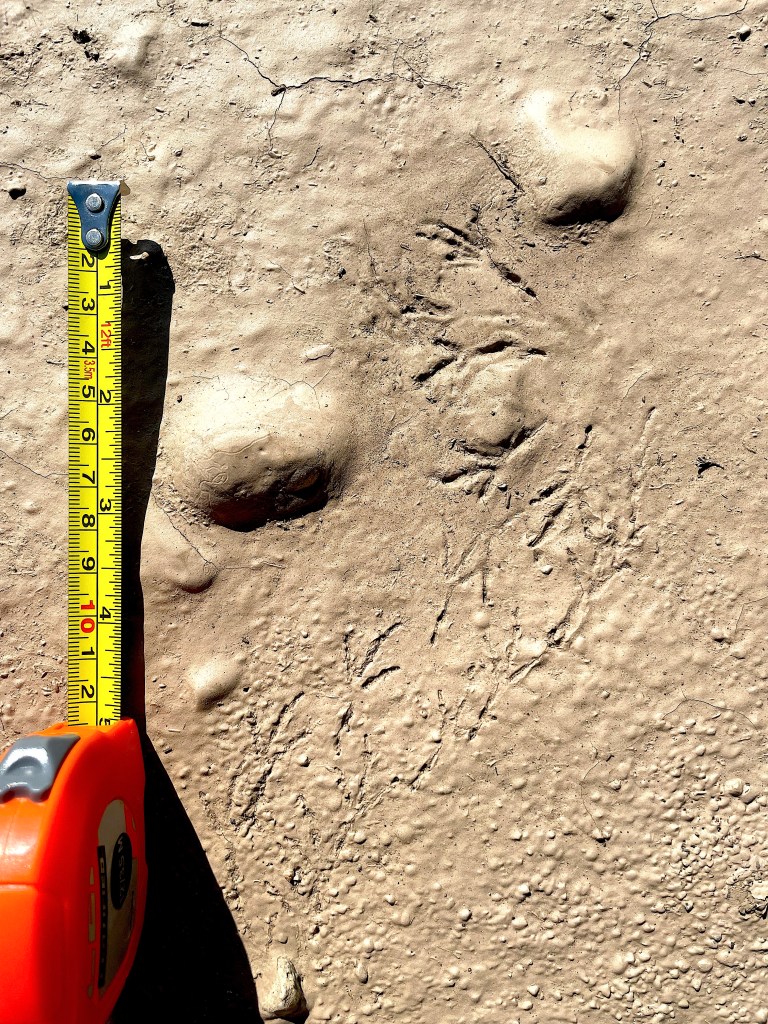
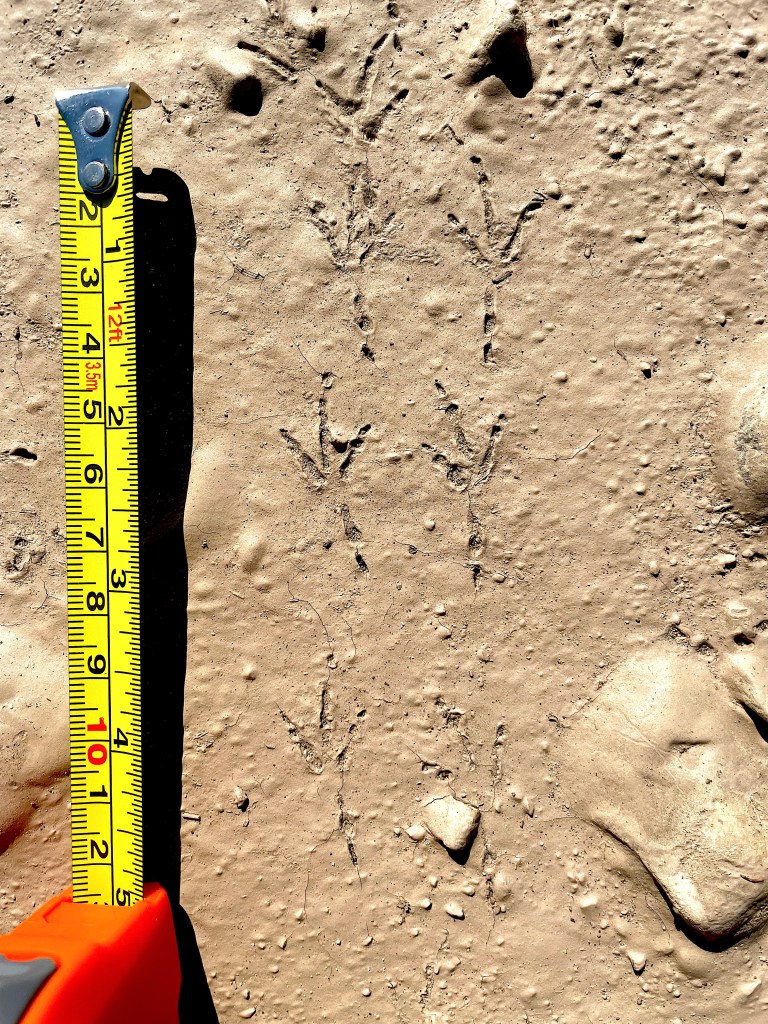
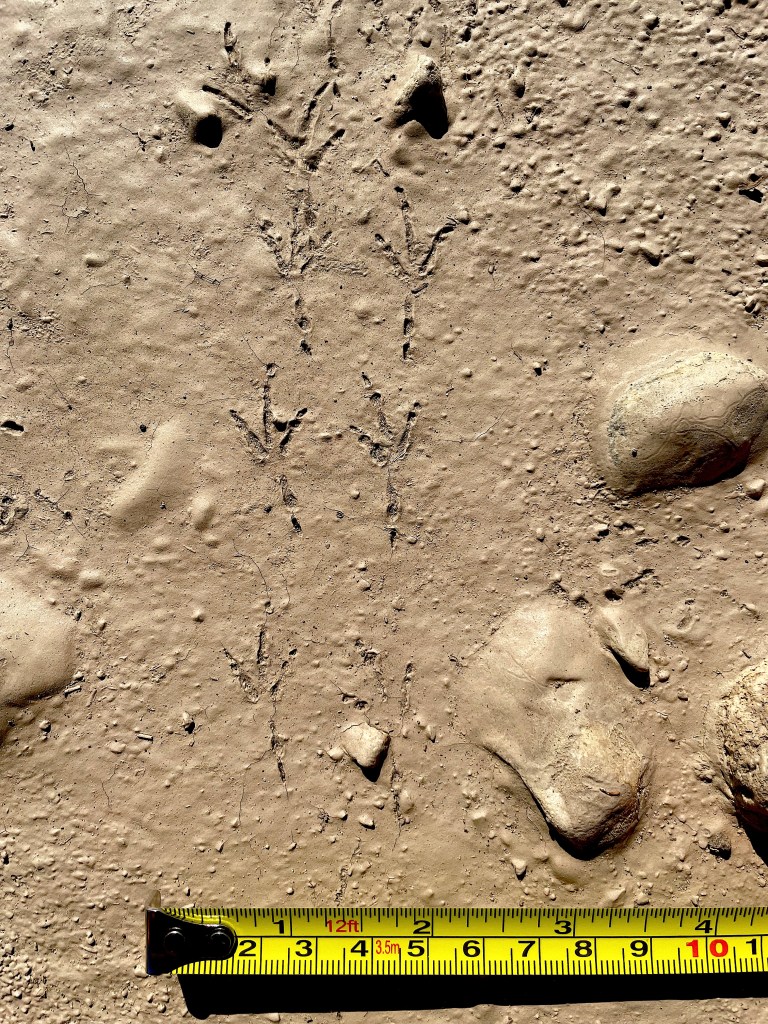
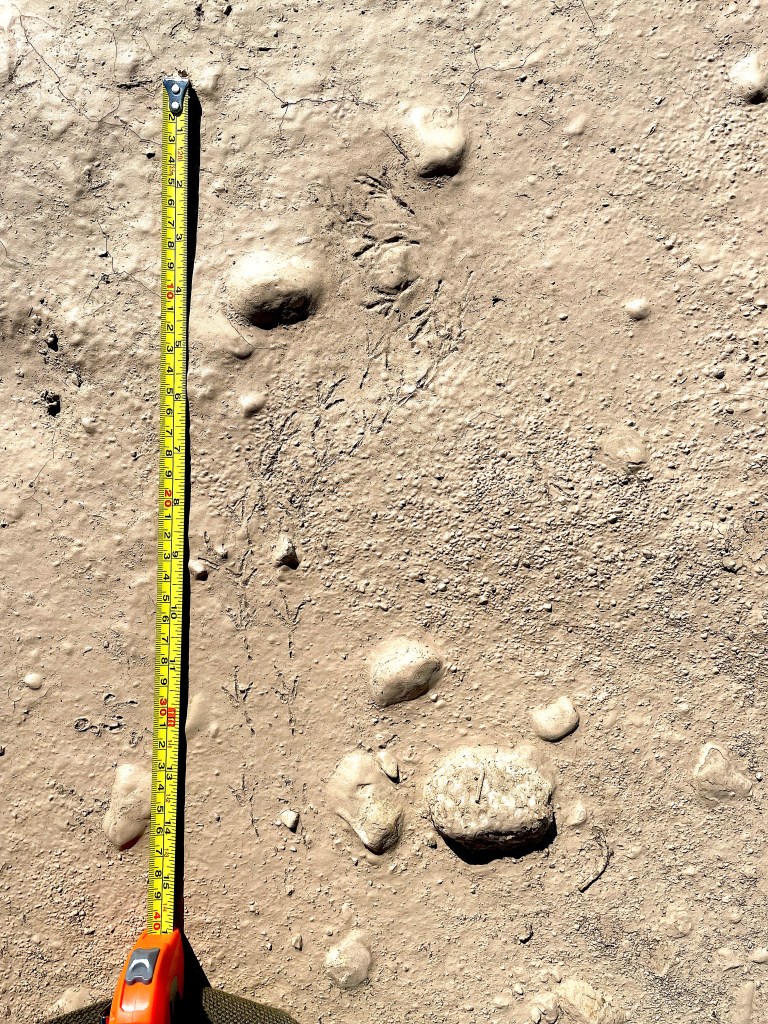
(Click on the individual tracks for more detail.)
In the last photo we see all the tracks together. The tracks start at the bottom of the photo and head to the top where it appears the bird turned around. I’m assuming the bird landed at the bottom of the photo and took off at the top, although I cannot see any wing marks in the photo.
We notice that these tracks are Classic Tracks (also called anisodactyl), with 3 toes pointing forward and one long toe pointing backward. Here is a close-up of a single foot:
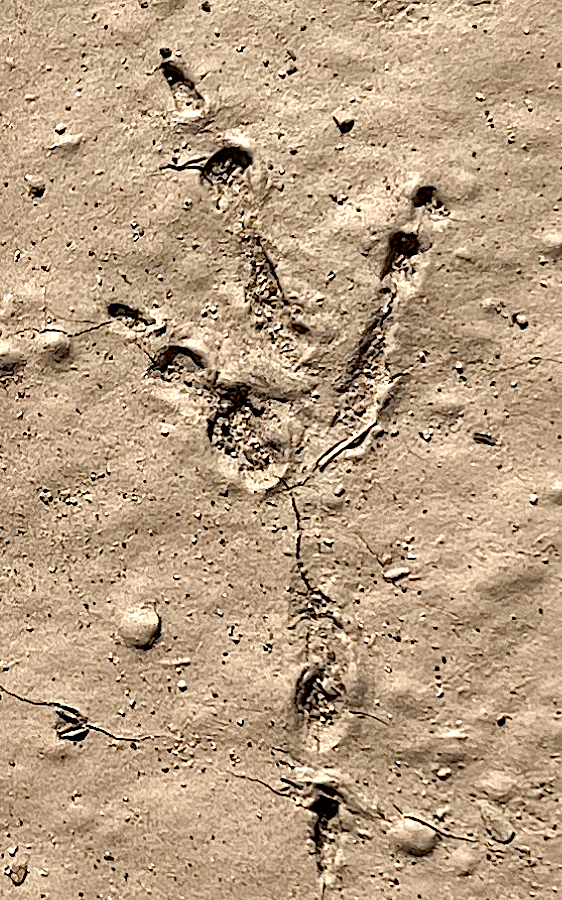
The claw marks are clearly visible. It appears that the bird is hopping. Here are my measurements for the tracks:
- Length: 1 1/4 in
- Width: 9/16 in
- trail width: 1 3/8 in
- stride (hopping): 1 3/8 in
I don’t know exactly which bird this is. Looking in the Classic Bird Tracks section of Elbroch my tracks are very similar (in measurement and pictures) to some of the sparrow tracks. Elbroch does not give measurements for all the sparrows (for example, the Field Sparrow, which I heard).
PS: Because of the bulbous toe pad (see page 70 of Elbroch) I now think this bird is possibly an American Robin!
Bird tracks series 2:
Here are some photos from the second set of bird tracks that I recorded:
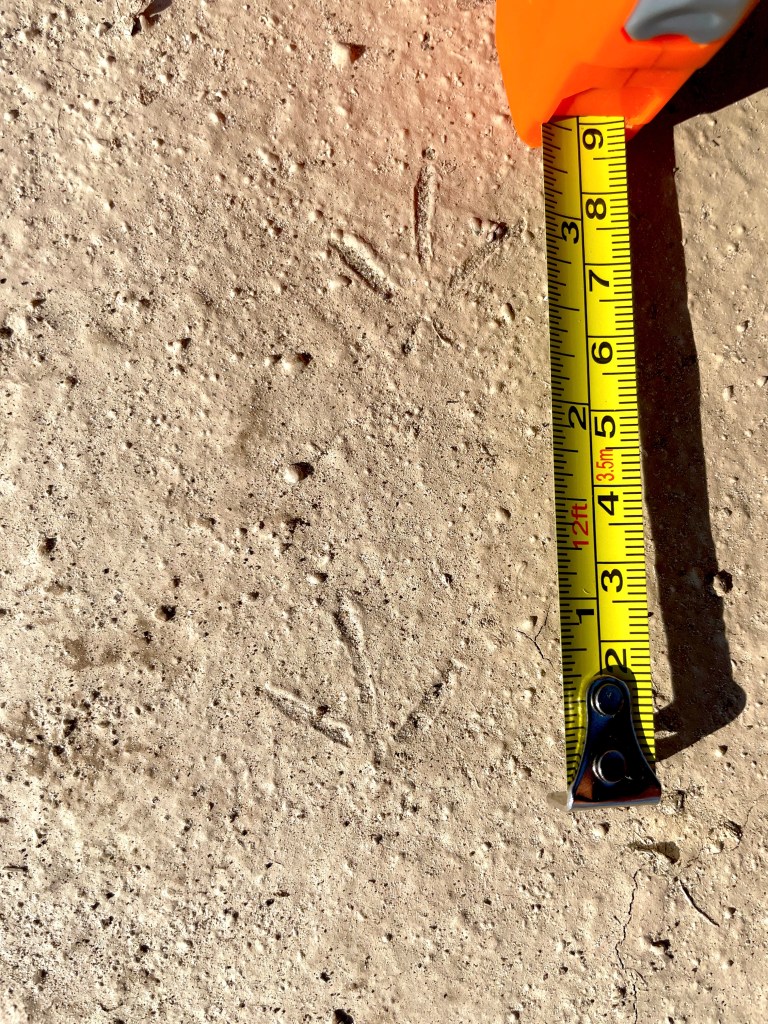
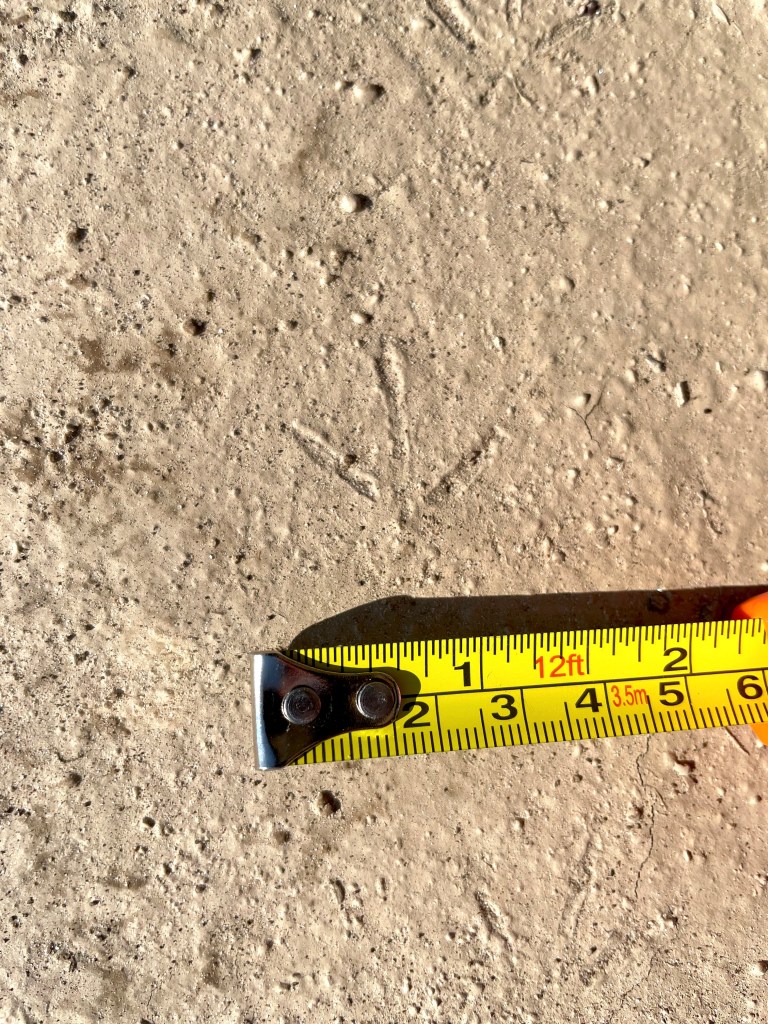
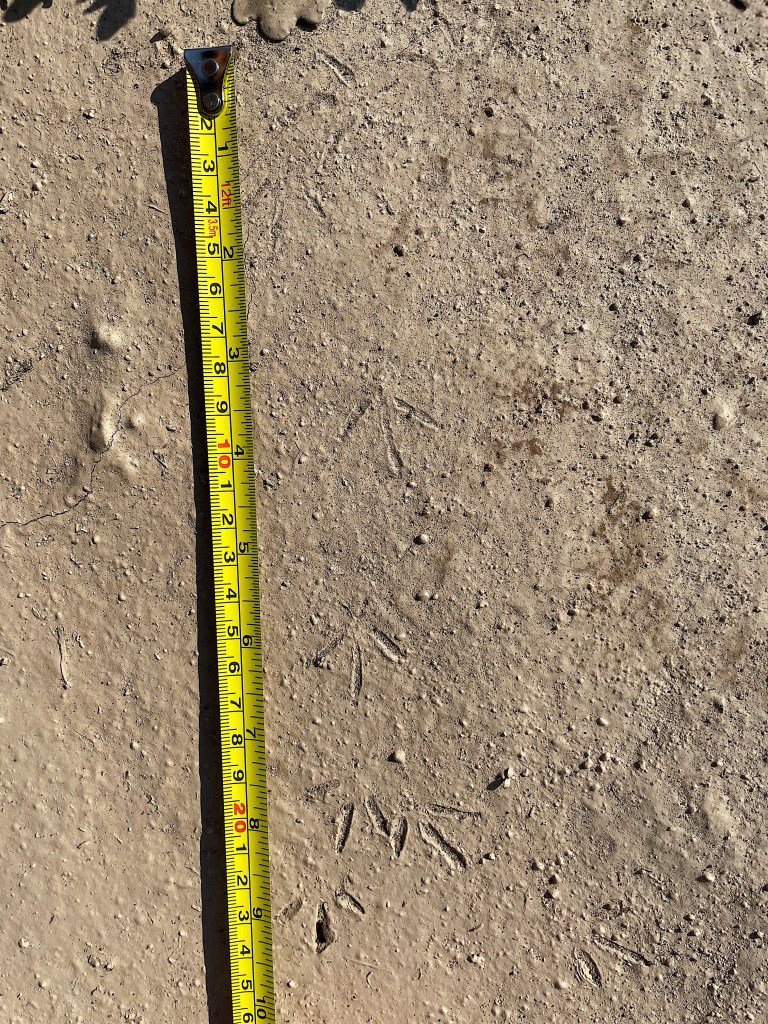
(Click on the individual tracks for more detail.)
We notice that these tracks are Game Bird Tracks (incumbent), as toe 1 (the hallux) is greatly reduced or absent. In our photos some of the photos show toe 1 clearly and some claws. As in Elbroch (page 25) we measure such tracks from the tip of the claw of toe 3 to the metatarsal pad because toe 1 doesn’t reliably show up in tracks. Here are my measurements:
- Length: 1 in, 7/8 in
- Width: 1 in, 1 in
- Stride (walk): 2 5/16 in, 2 3/8 in
Comparing the pictures and measurements in Elbroch (page 104 – ) with my own my best guess is that this is a species of sandpiper.
Bird track series 3:
Here are some photos from the third set of bird tracks that I recorded:
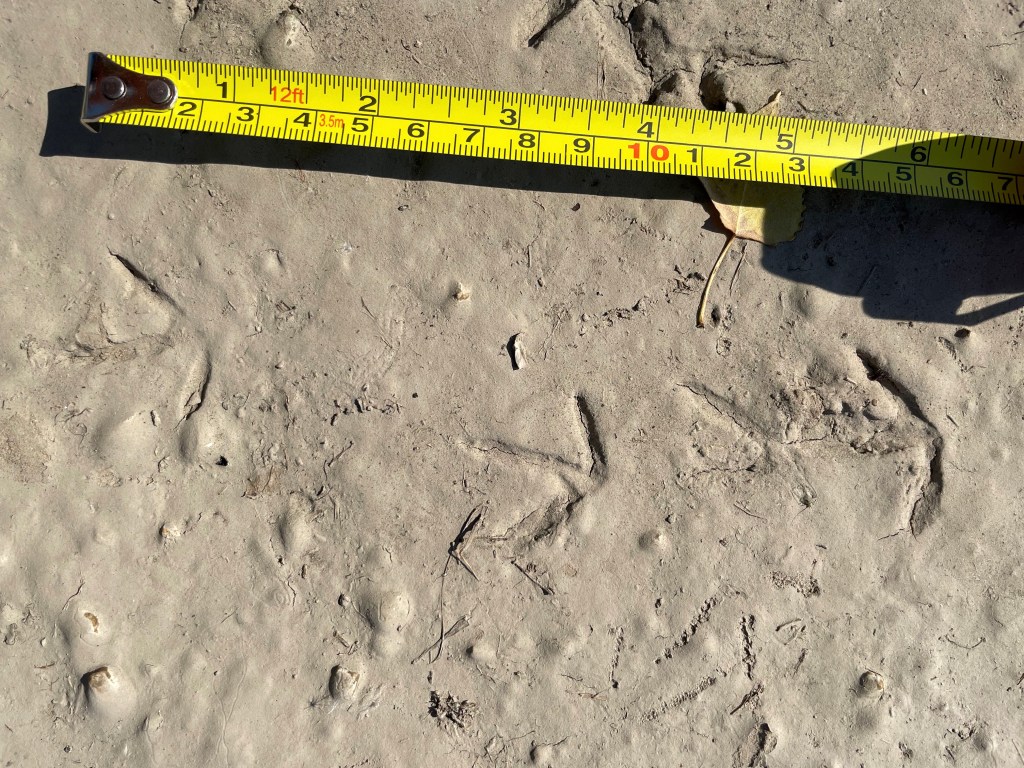
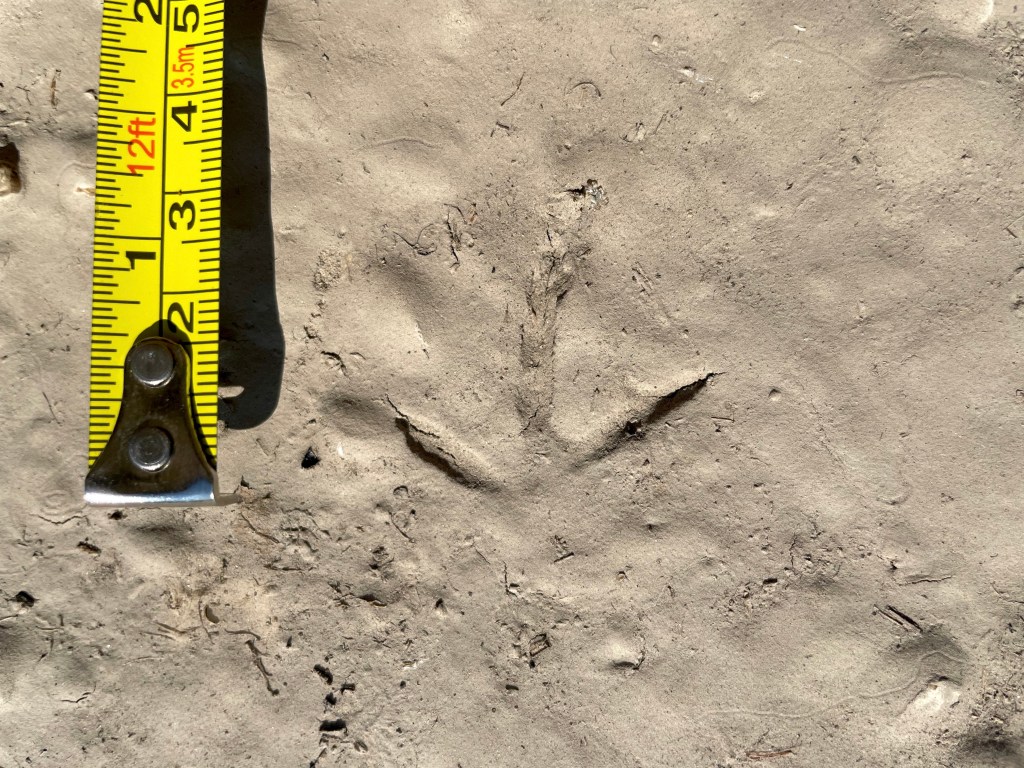
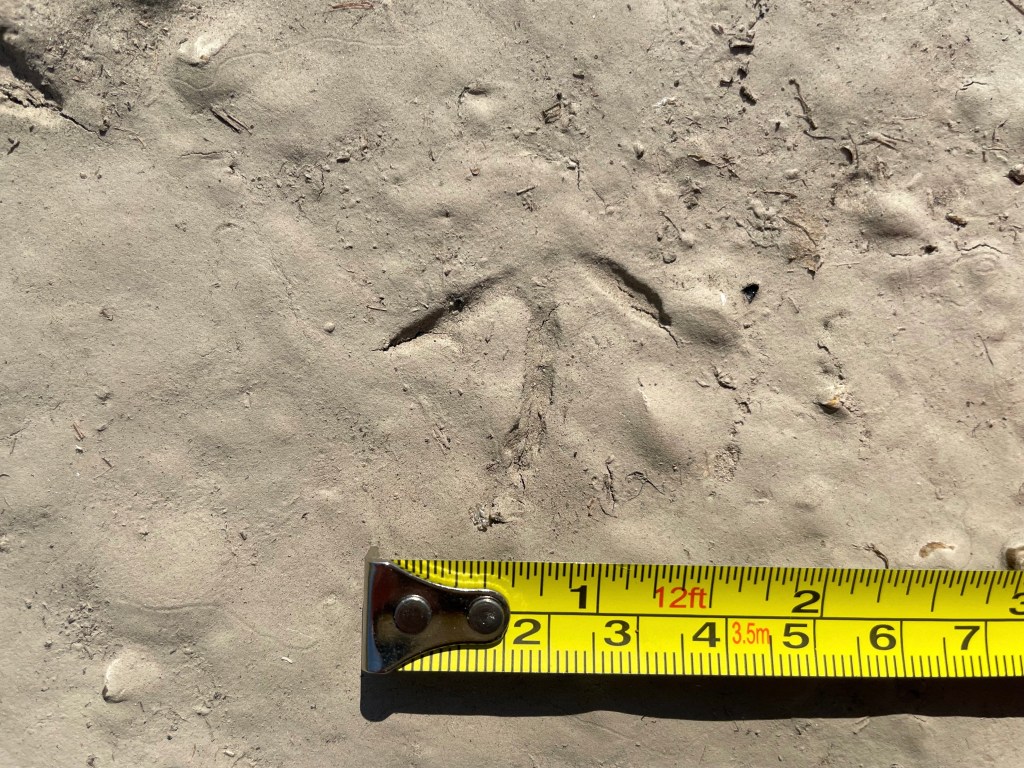
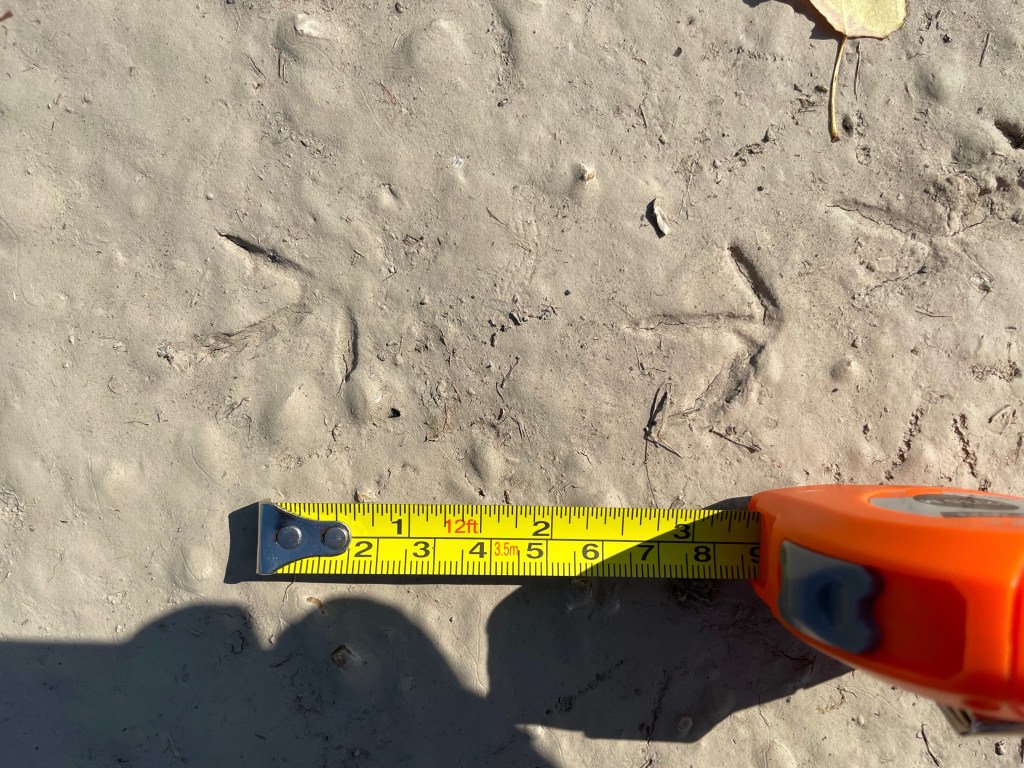
(Click on the individual tracks for more detail.)
We notice that these tracks are again Game Bird Tracks (incumbent), and that toe 1 is completely absent. We also clearly see webbing between toes 3 & 4 (even though toe 1 is absent I think it is still counted). My measurements are as follows:
- Length: 1 1/16 in
- Width: 1 1/4 in
- Stride (walk): 4 in
The measurements in Elbroch for Killdeer are
- Length: 1 – 1 3/16 in
Width: 1 1/8 – 1 7/16 in
Stride (walk): 2 – 7 in
which is is a very good match.
Bird tracks series 4:
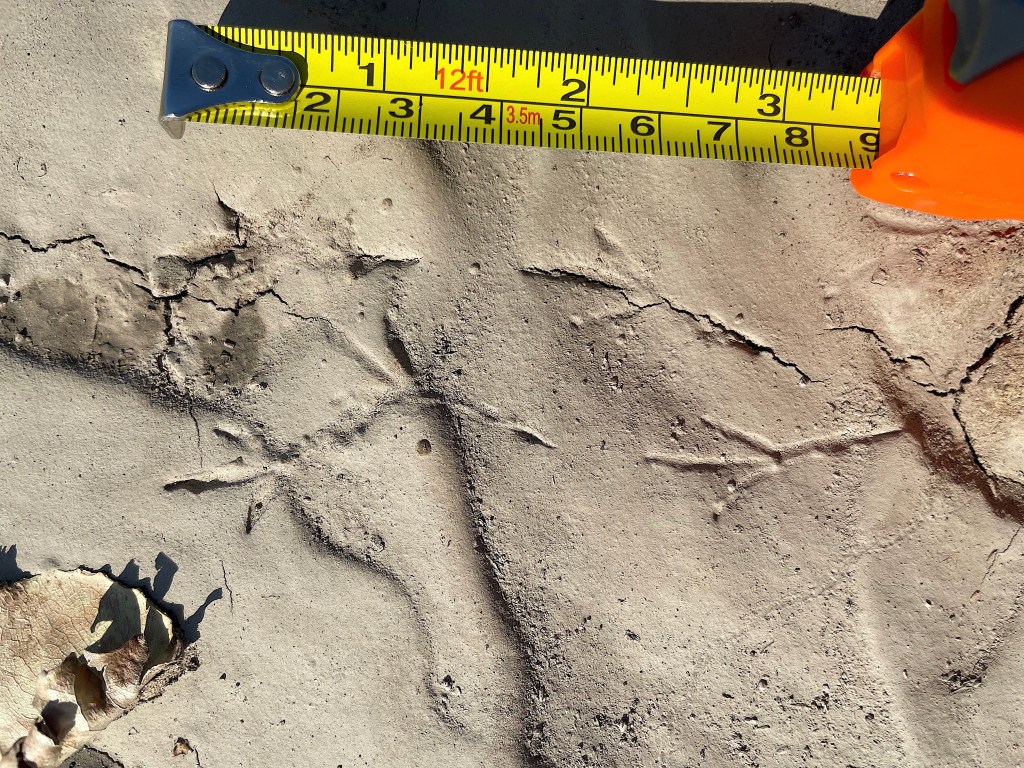
Here are some more Classic Tracks (also called anisodactyl):
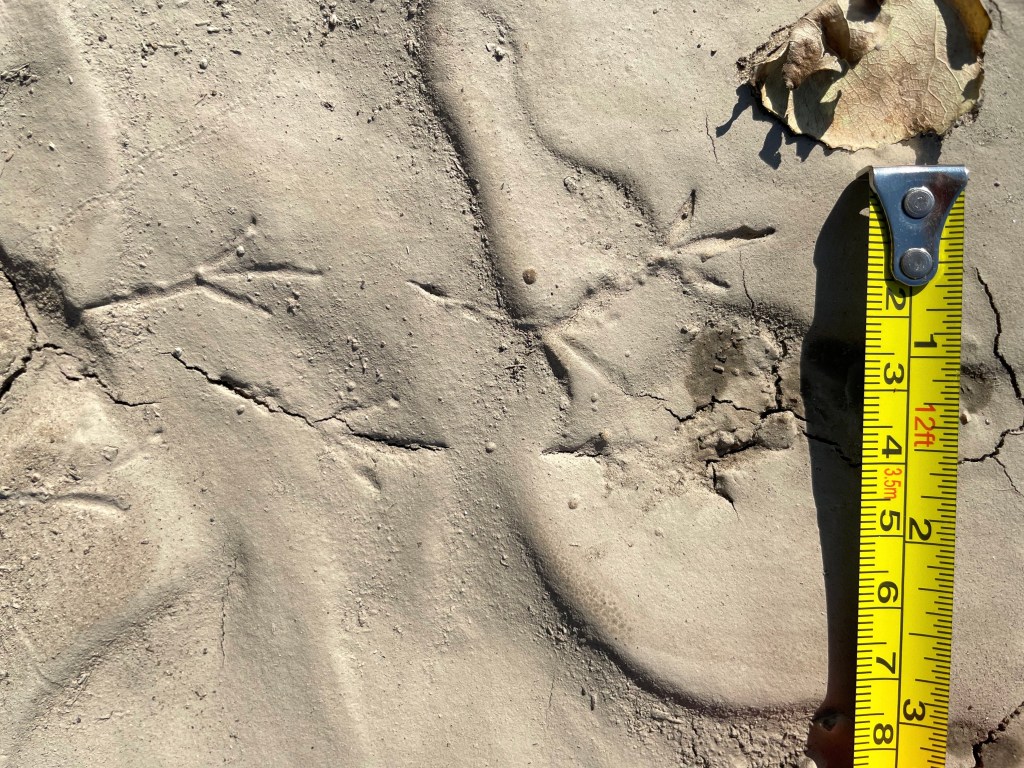
(Click on the individual tracks for more detail.)
Unlike in the series 1 tracks the bird is walking. My measurements are:
- Length: 1 1/4 in
- Width: 9/16 in
- Stride: 9/16 in, 15/16 in
These measurements are very similar to the series 1 tracks (however, the stride is smaller because the bird is walking, not hopping).
Crow tracks:
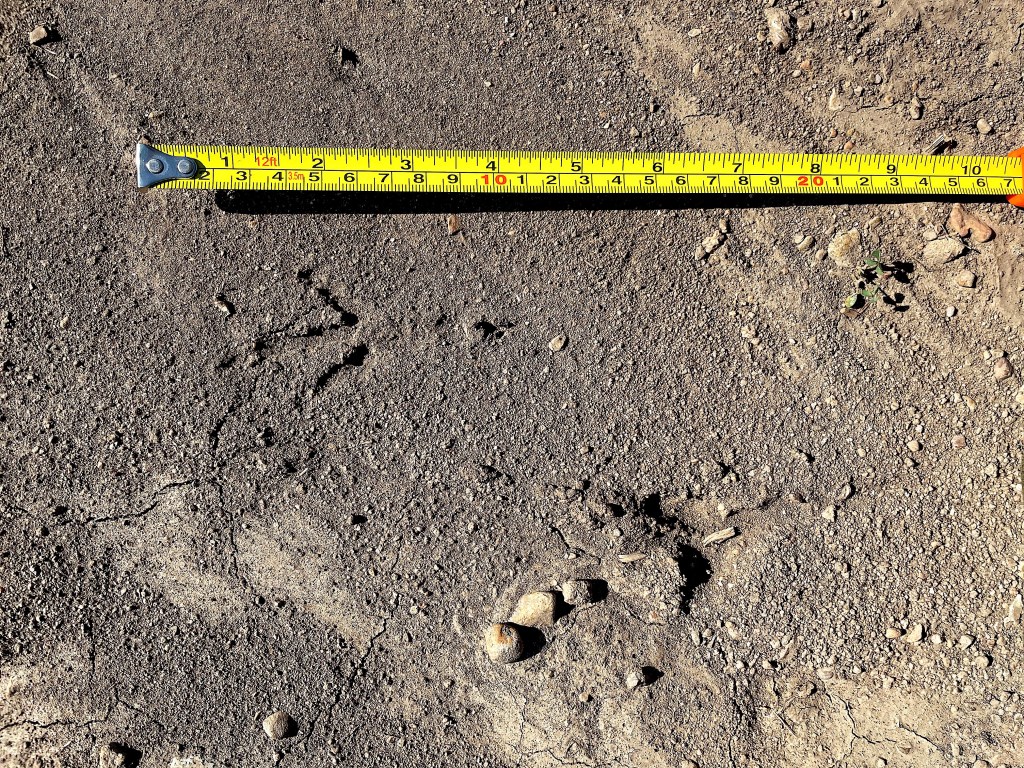
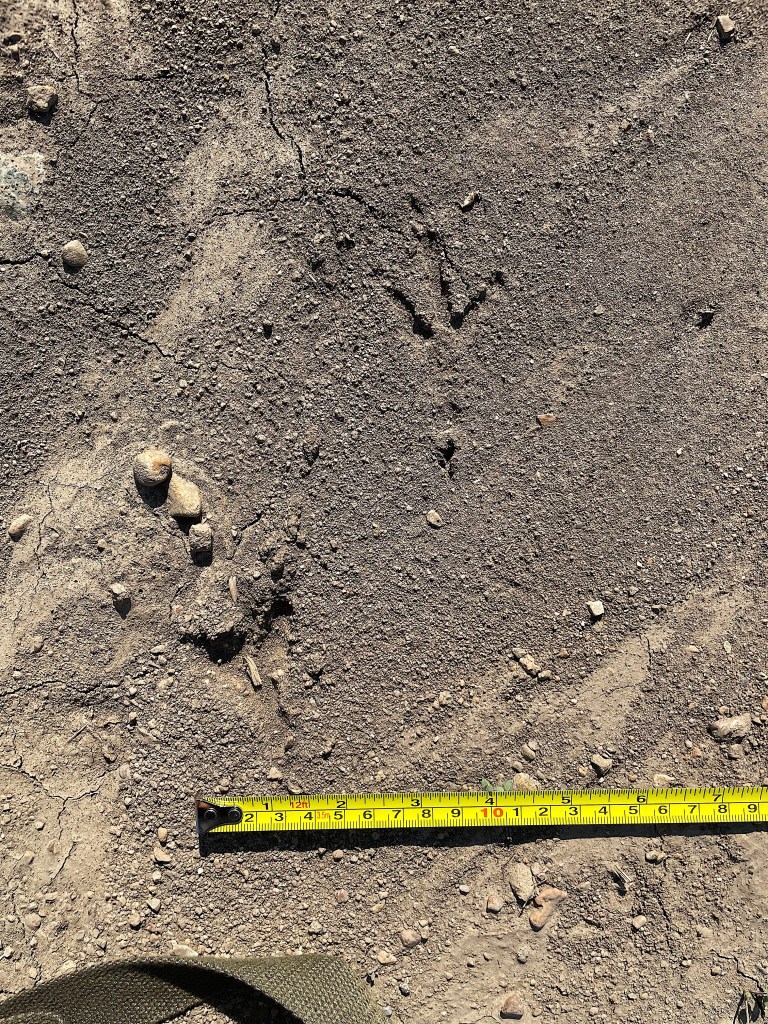
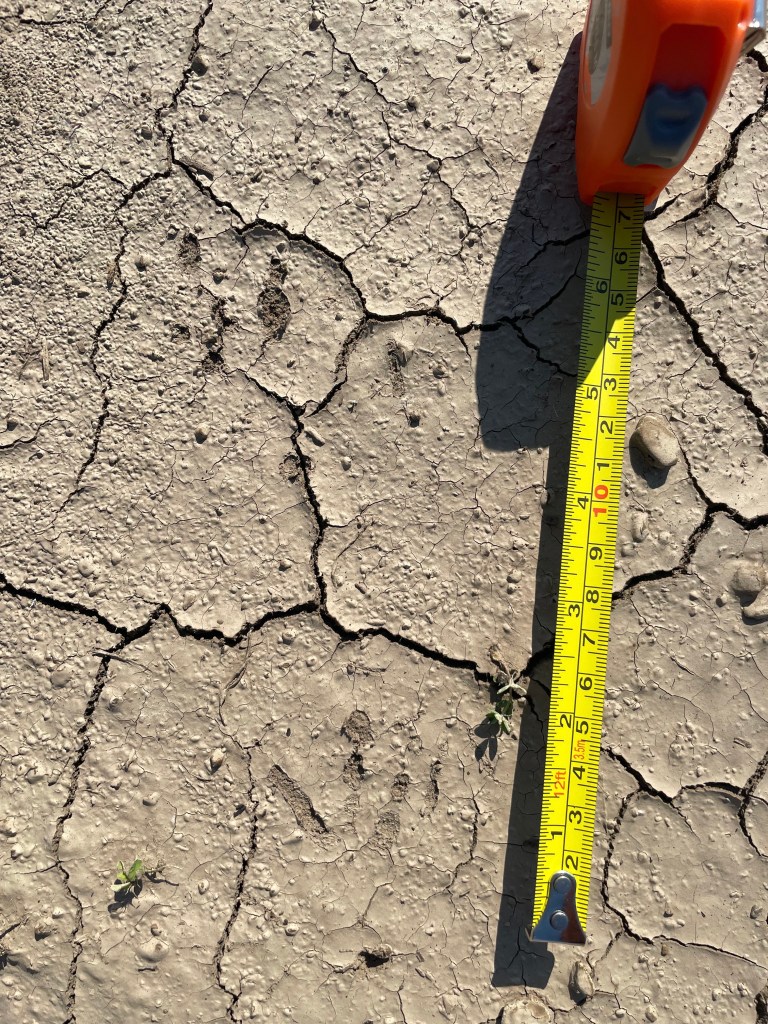
There were some nice crow tracks in different substrates:
(Click on the individual tracks for more detail.)
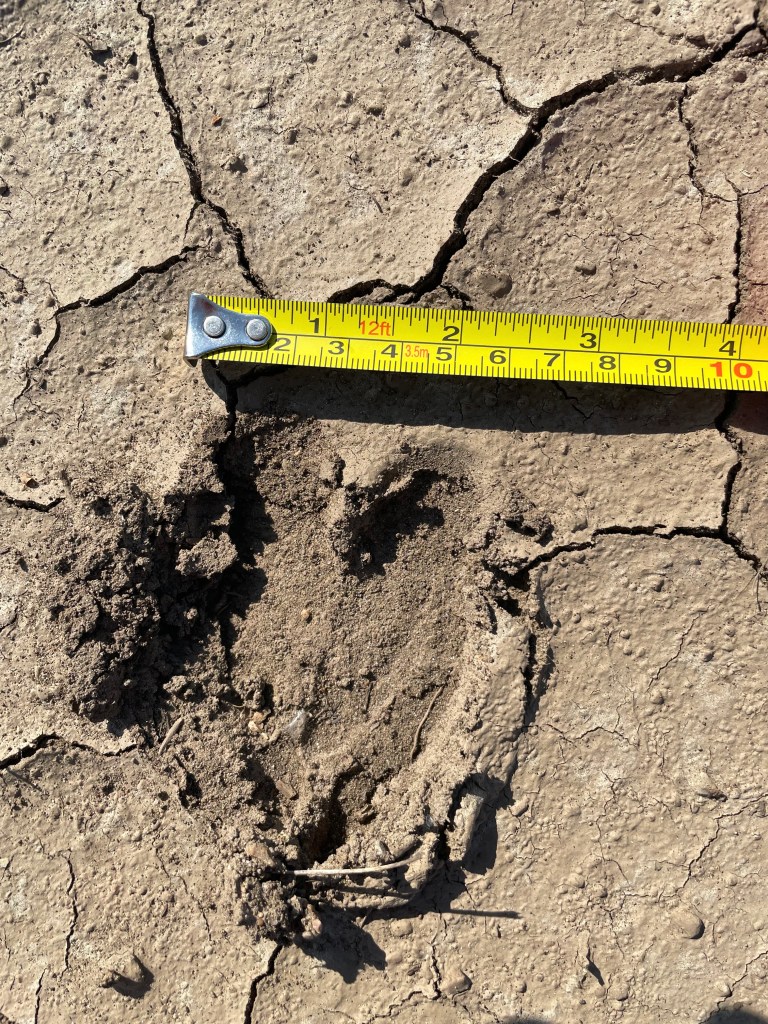
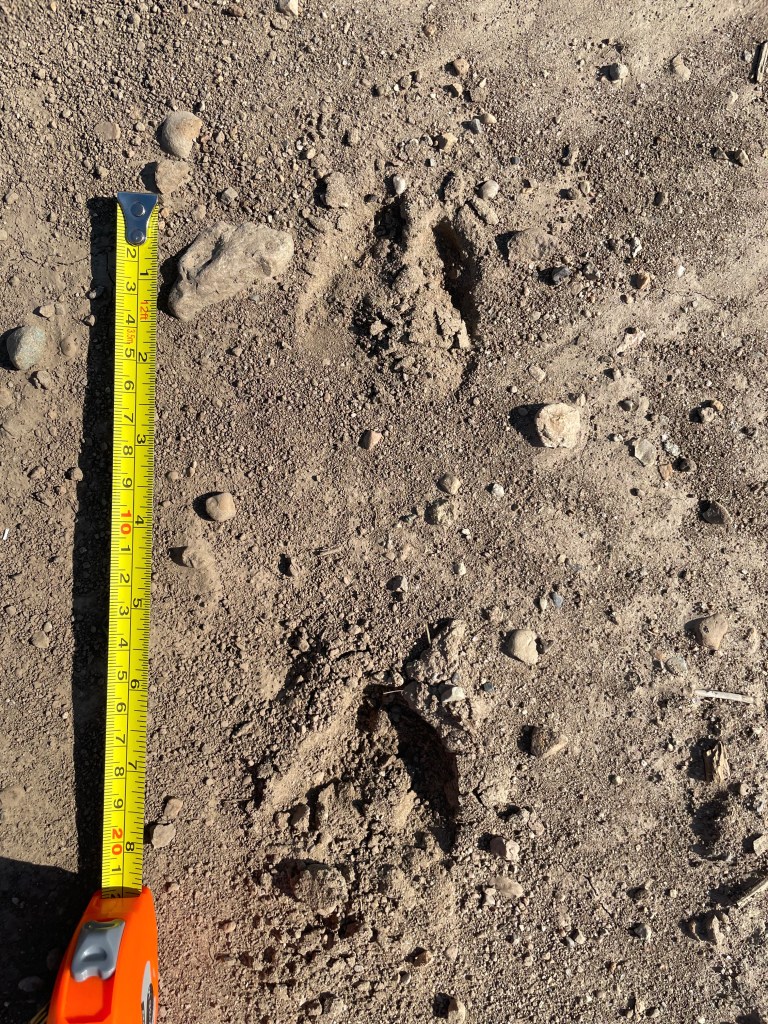
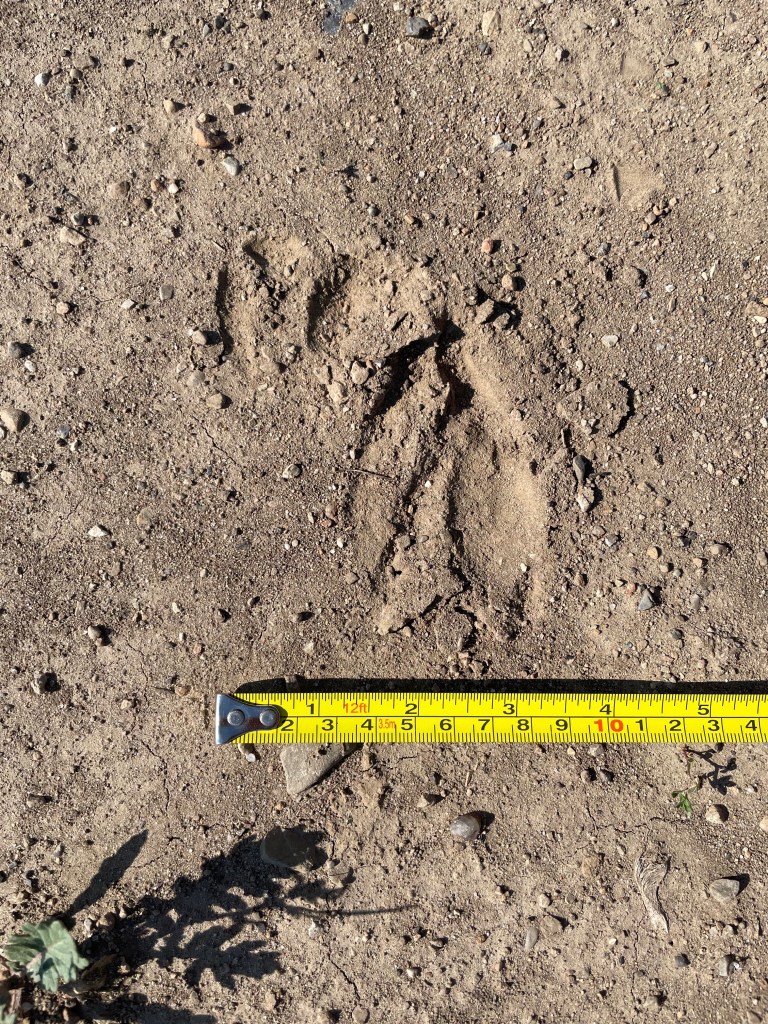
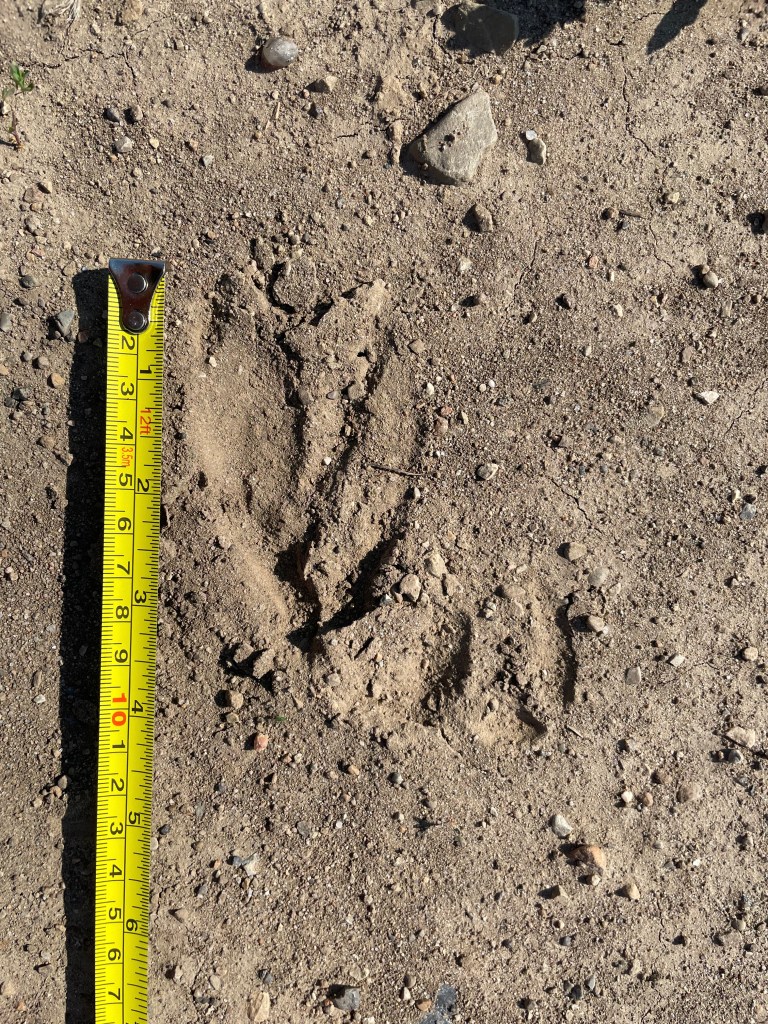
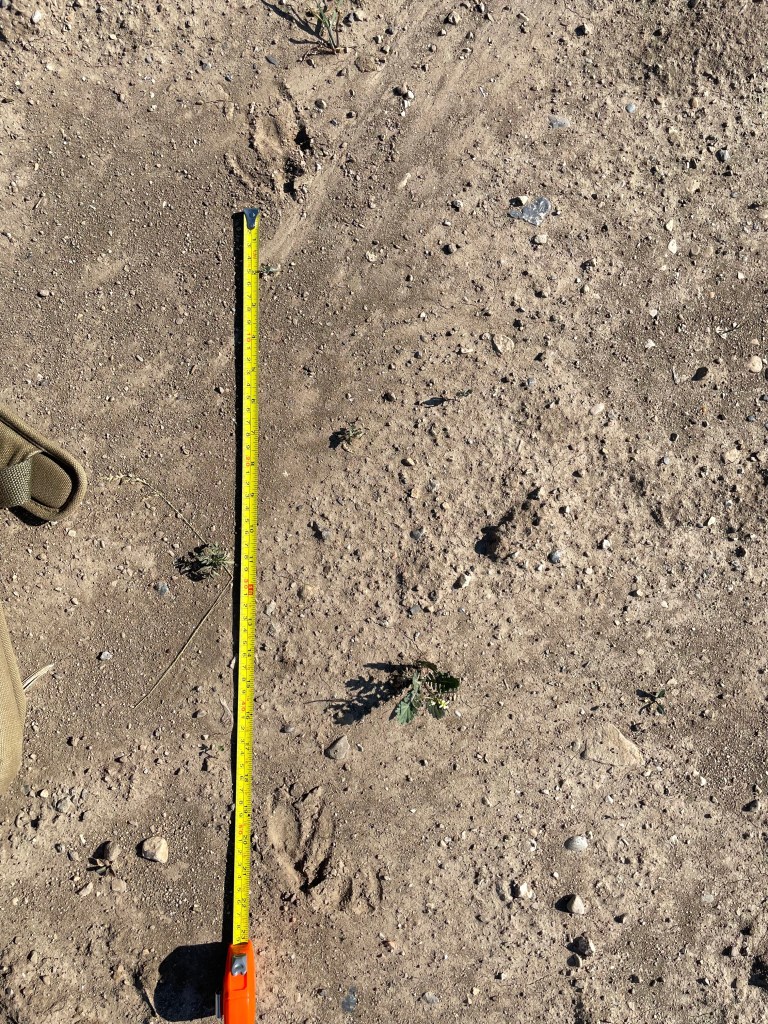
Deer tracks:
These were everywhere:
Reflections:
This was my first introduction to the different types of bird feet (foot morphology). I like the way that Elbroch divides up the bird tracks according to foot morphology. I would have liked to sketch some tracks but as I was trespassing and I have often seen the police patrolling the area I didn’t want to stay too long! I find it sad that some of my best tracks so far have to be found in an area of such destruction. I guess in time I will learn to track effectively on less than ideal surfaces.
 Field Notes of a Tracker
Leave a comment