Date: June 25, 2022
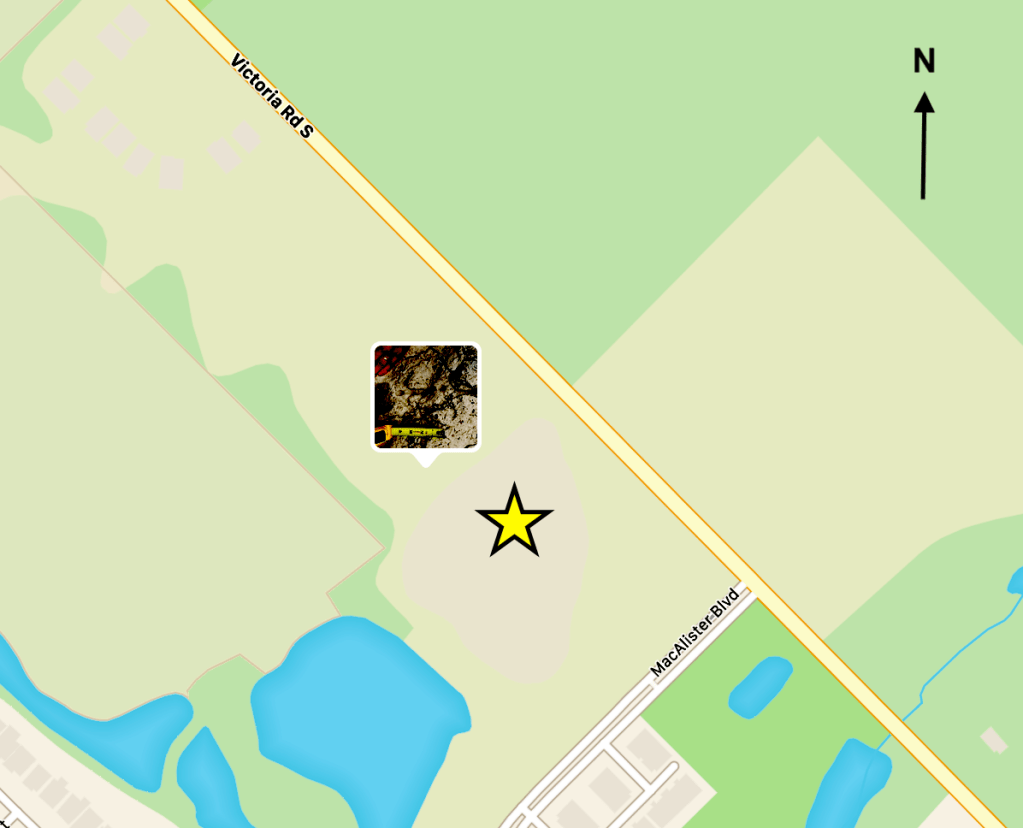
Place: Intersection of MacAlister Blvd and Victorio Rd, Guelph On.
Time: 11:20am – 2:30pm
Main references:
‘Bird Tracks & Sign: A Guide to North American Species’, Mark Elbroch and Eleanor Marks, First Edit., Stackpole Books
‘The Tracker’s Field Guide: A Comprehensive Manual for Animal Tracking’, James C. Lowery, Second Edit., Falcon Guide
Animal Tracks’, Olaus J. Murie and Mark Elbroch, Third Edit., Peterson Field Guides, Houghton Mifflin Company
Weather: approx. 21 C. It had rained lightly earlier in the day.
Geology: According to http://www.geologyontario.mndmf.gov.on.ca/mndmfiles/pub/data/imaging/R061/R061.pdf
”The Guelph area, northwest of the west end of Lake Ontario, is under
lain by Silurian dolomites of the Guelph and Amabel formations.” The Silurian period was roughly 430 MYA. According to Wikipedia ”Dolomite (also known as dolomite rock, dolostone or dolomitic rock) is a sedimentary carbonate rock that contains a high percentage of the mineral dolomite.”
Description of the area: The dirt road where we found the tracks is on a piece of land that was recently developed for a new housing complex that borders the non-public part of the University of Guelph’s Arboretum (corner of Victoria Road and Stone Rd. The entry point is actually at the intersection of MacAlister Blvd and Victorio Rd. See the ‘star’ on the map below :
Turkey tracks:
There were some wild turkey tracks with unusually fine detail of the toes and foot pad. They were preserved in a muddy puddle that had dried up:
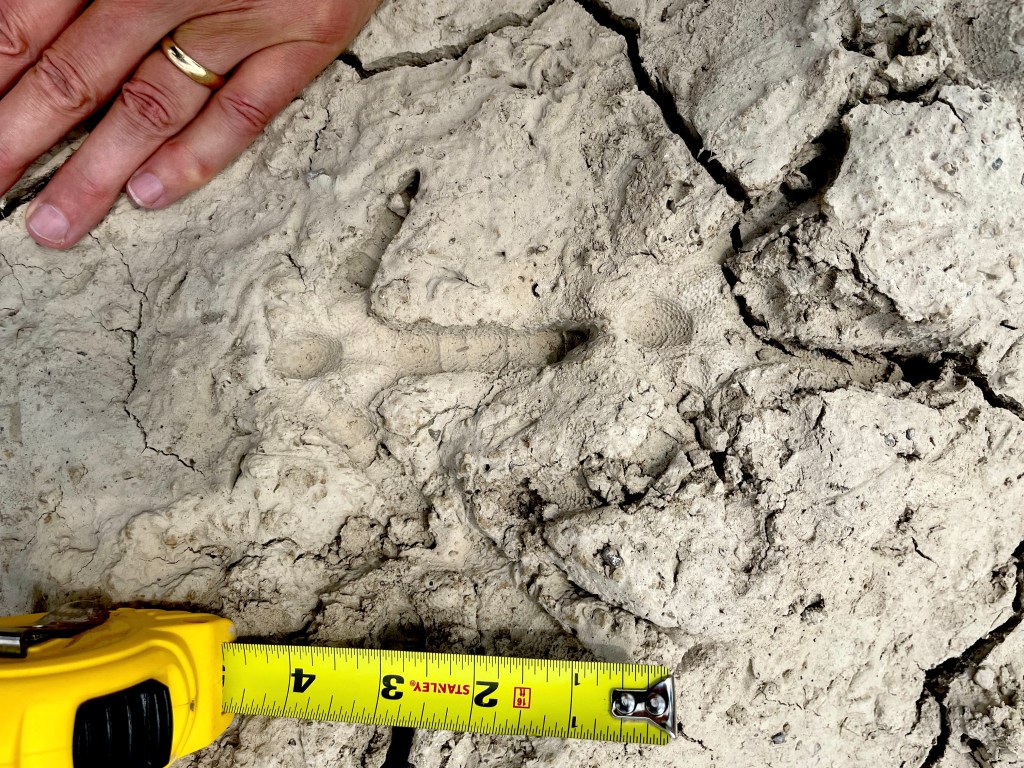
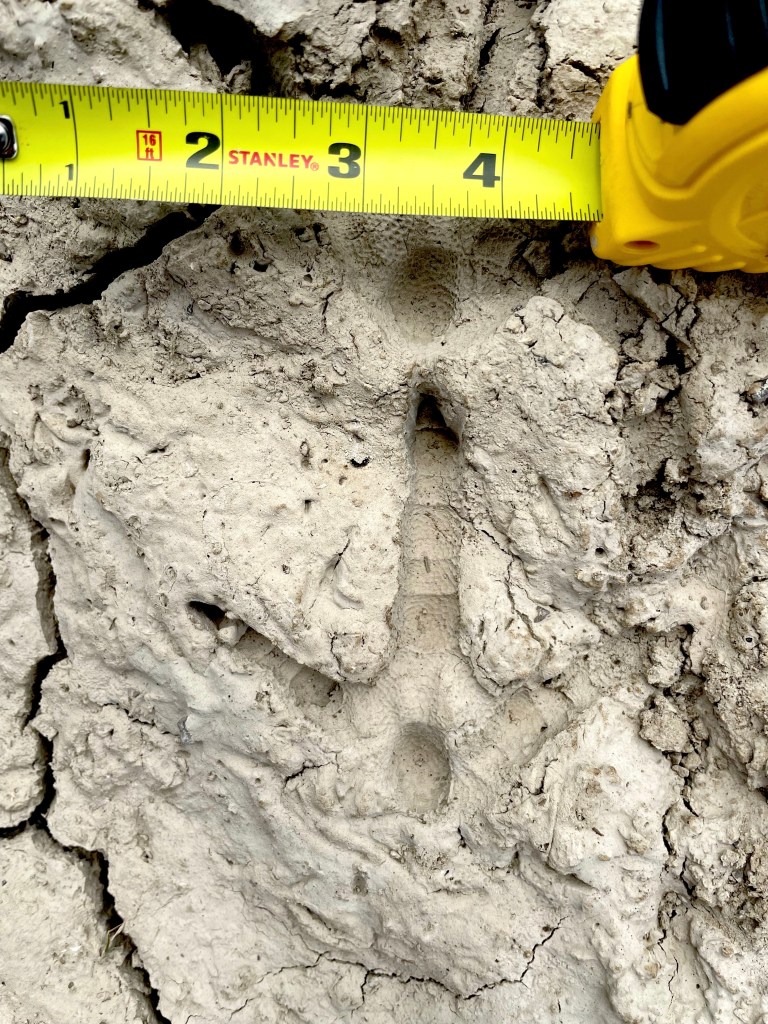
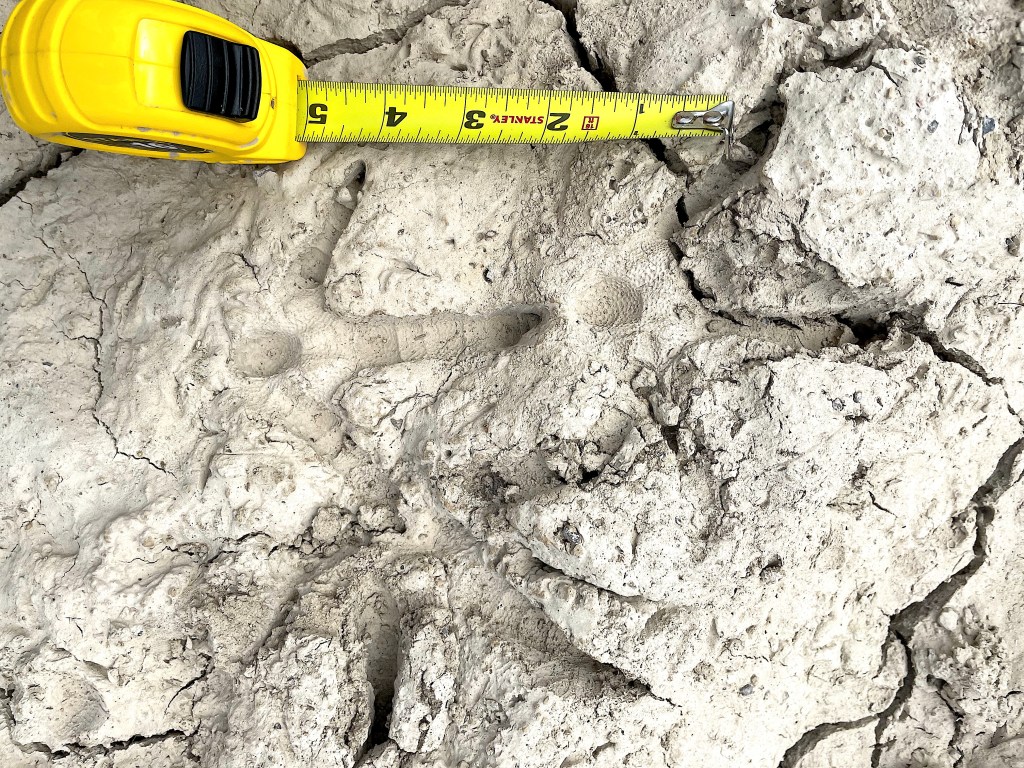
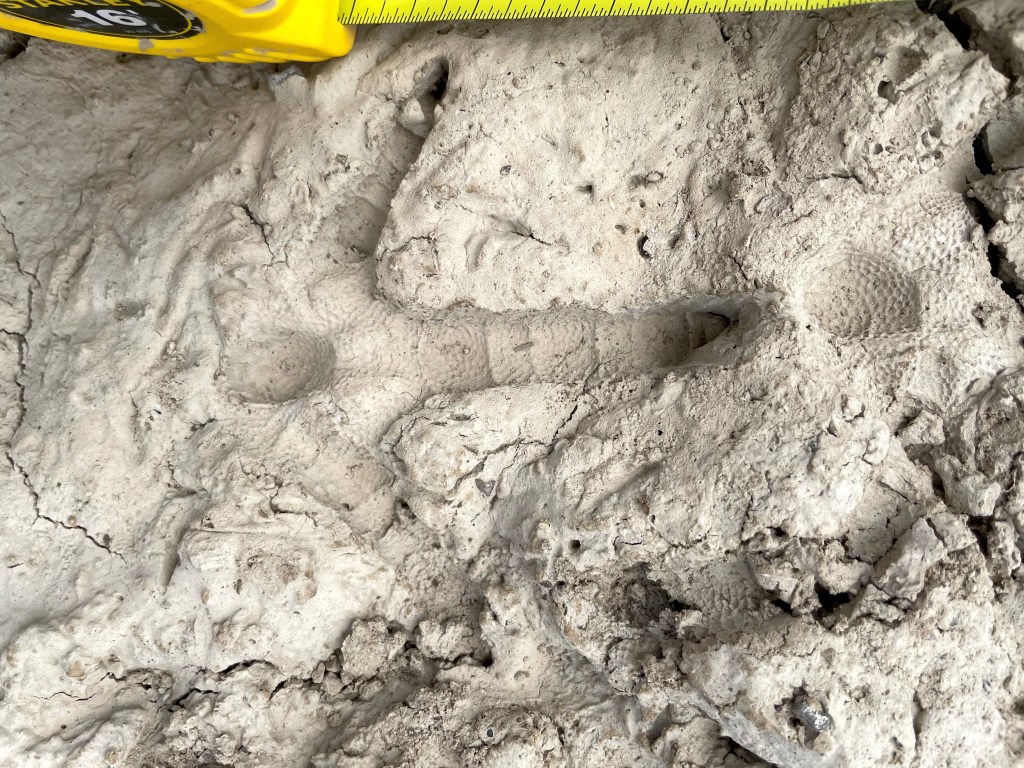
(Click on individual tracks for more detail.)
These tracks are very similar to some tracks on INaturalist, see
https://www.bear-tracker.com/turkey.html
where they state
”This wild turkey track shows the detail of the pattern on the toes very well. The pebbly texture of the toes is similar to that found on porcupine and raven tracks. It is hard to see unless you find the track in good mud or fine soil. Three toes point forward. The round imprint where the three toes come together does not always show in the tracks. This is the metatarsal pad. Claw marks are visible on several toes in this picture. Turkeys have a fourth toe, which faces backward. But this does not always show in the tracks because they don’t always place the foot entirely flat on the ground. Sometimes there will be a mark from the claw.”
This is a perfect description for my tracks. The only thing missing from my track is toe 1 (the hallux). I found another lesser quality turkey track that does show the hallux:
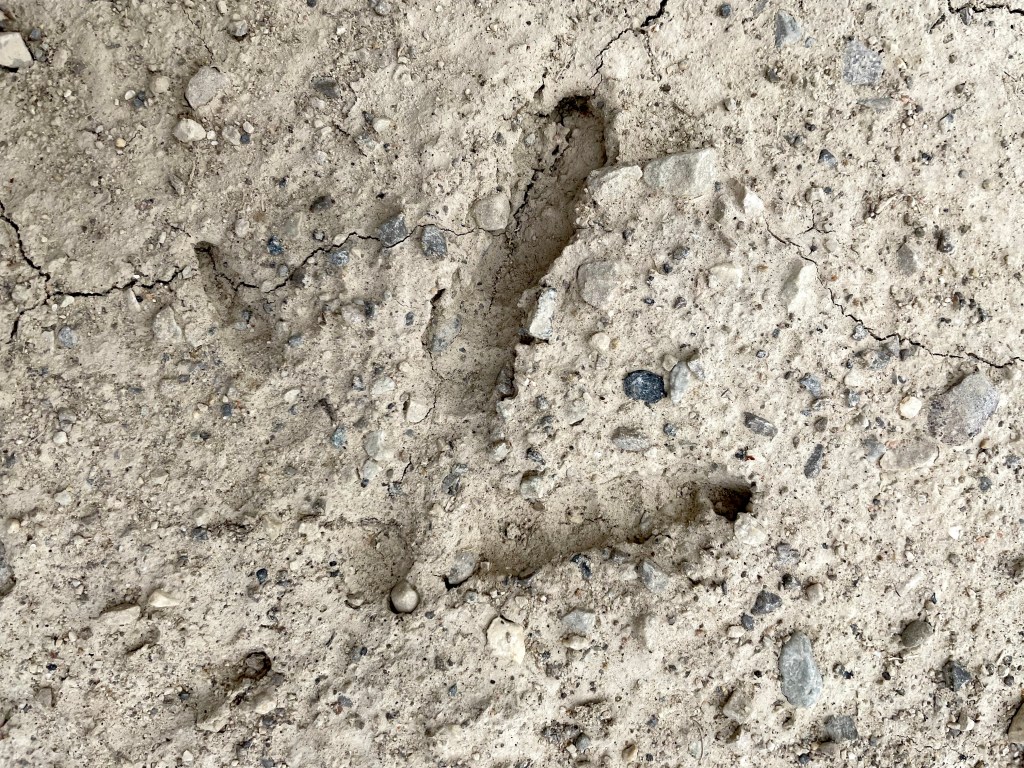
Because toe 1 pointing left I believe this is the right foot (in the left foot toe 1 would point right). (See the illustration on page 137 of Elbroch.)
I also did made some quick observations of a series of tracks that display less detail:
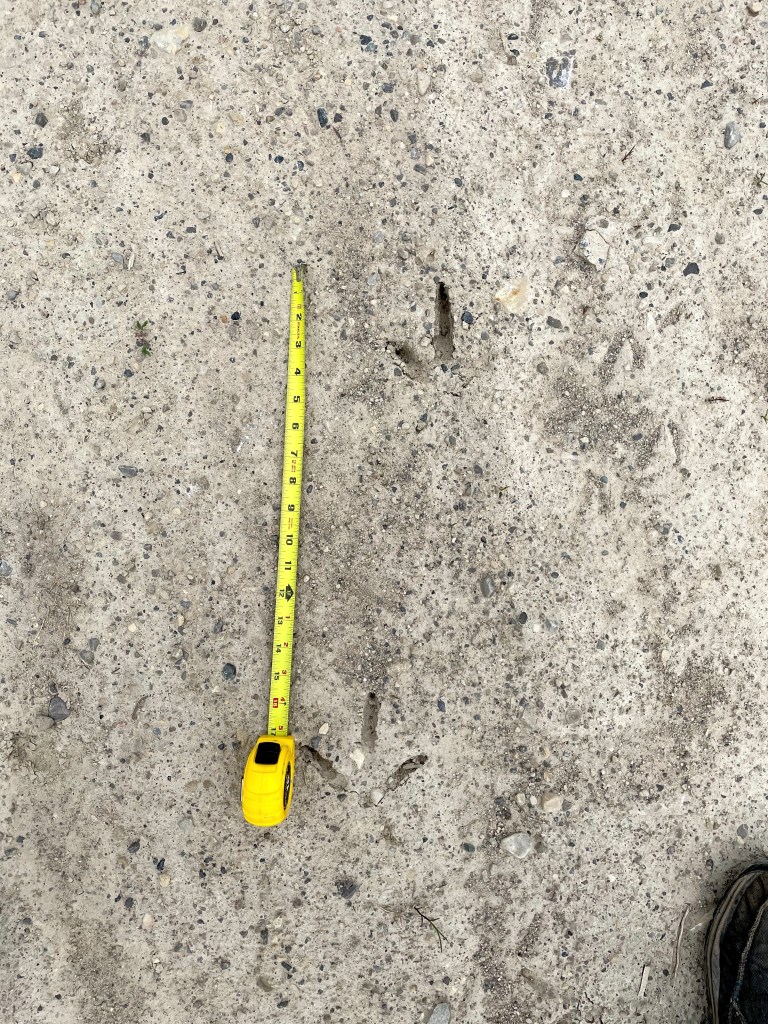
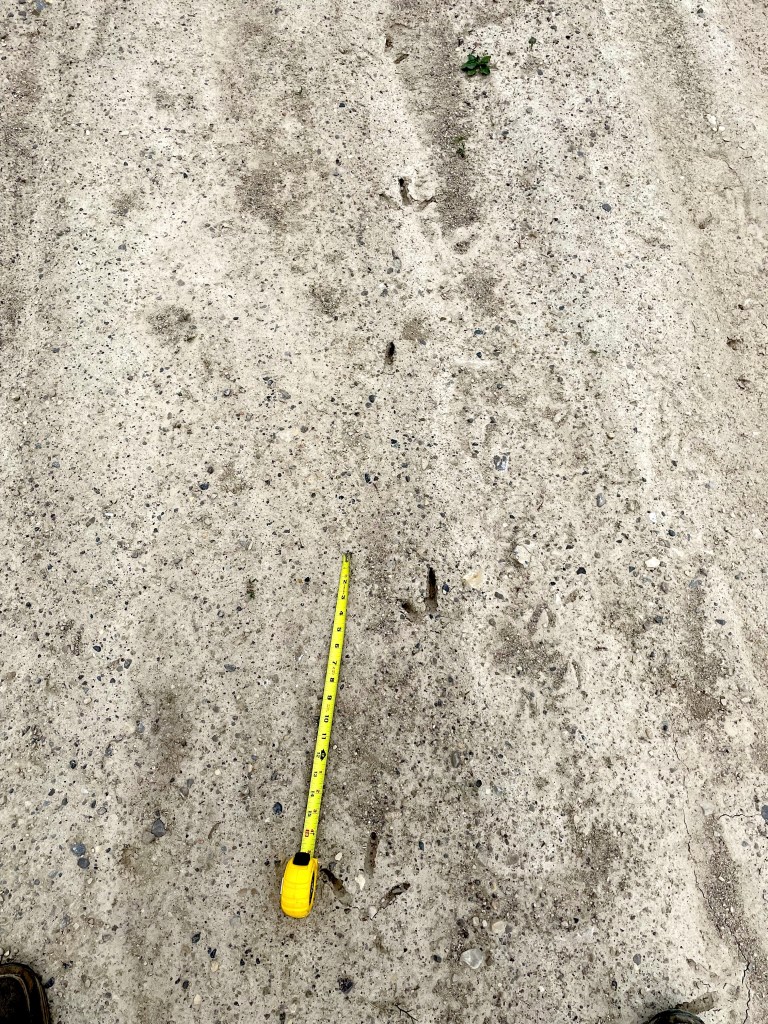
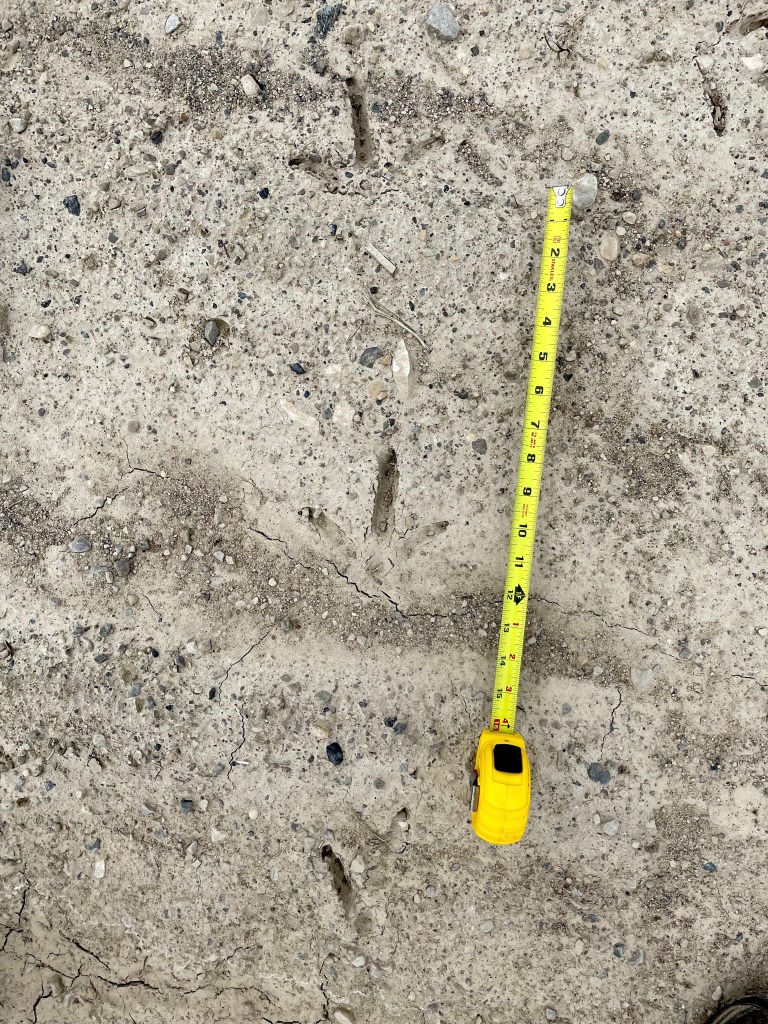
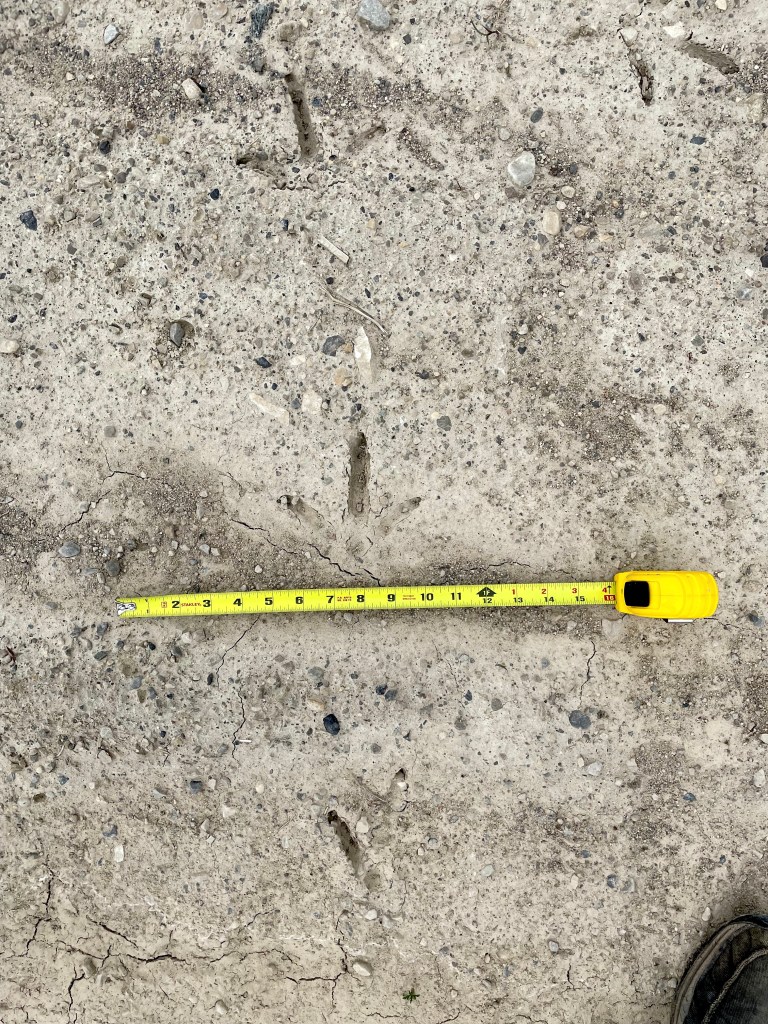
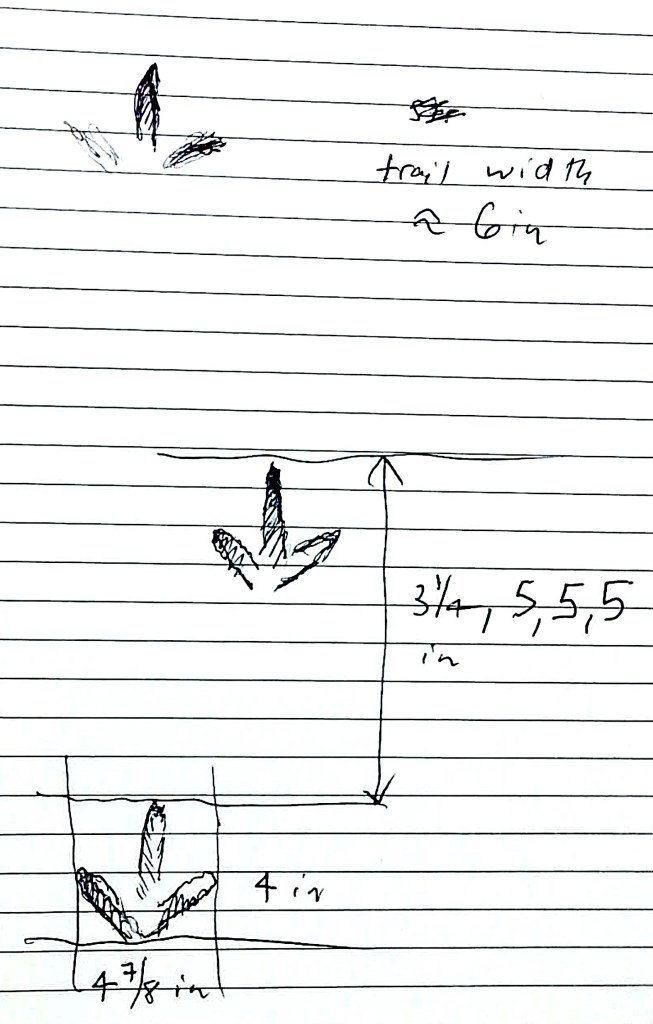
It is helpful to compare these with the measurements quoted in Elbroch:
- Length: 3 3/4 – 5 in
- Width: 4 – 5 1/4 in
- Stride (walk): 5 – 13 in
If we compare these with the measurements I made in the sketch below they seem about right:
I also found what I assume to be turkey scat:
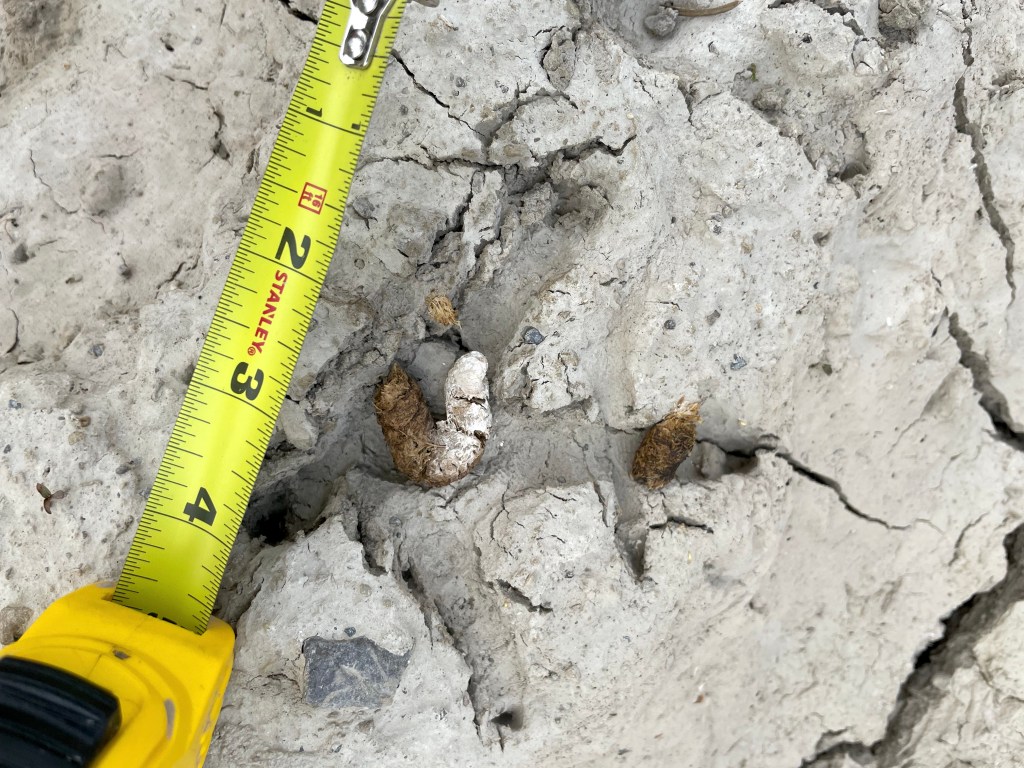
According to Elbroch (p. 204):
”Male scat tends to be straighter or J-shaped, while female scat tends toward tight, twisted clumps”
(see the illustration on p. 208 of Elbroch.) Thus my guess is that these are male turkey droppings.
Cottontail tracks:
There were also some racks of a cottontail. I’m more used to seeing them in snow, so it was nice to see them in dirt:
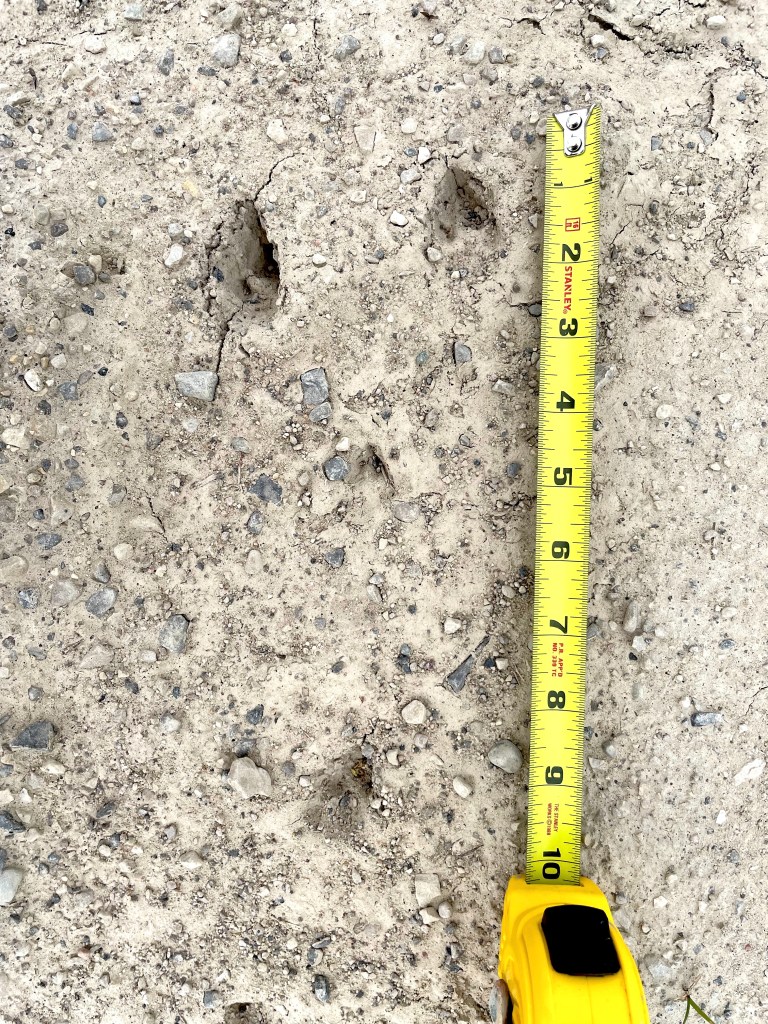
Much of the tracks are missing so I could not measure track lengths and widths accurately:
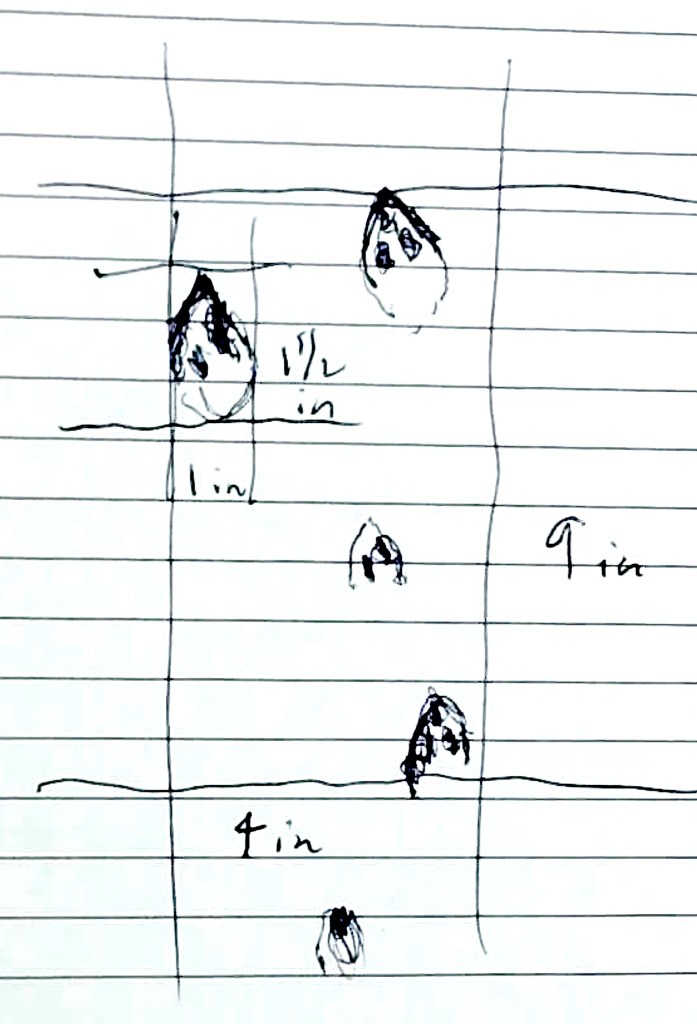
However, the pattern and overall size of the tracks tells us that this was made by a cottontail. I also note that in an illustration by Murie (p. 39) the group of four tracks is 9 1/2 inches long, and Lowery (p. 108) gives the average trail width to be 3 1/2 inches, both close to my measurements.
Miscellaneous photos:
There were deer tracks everywhere:
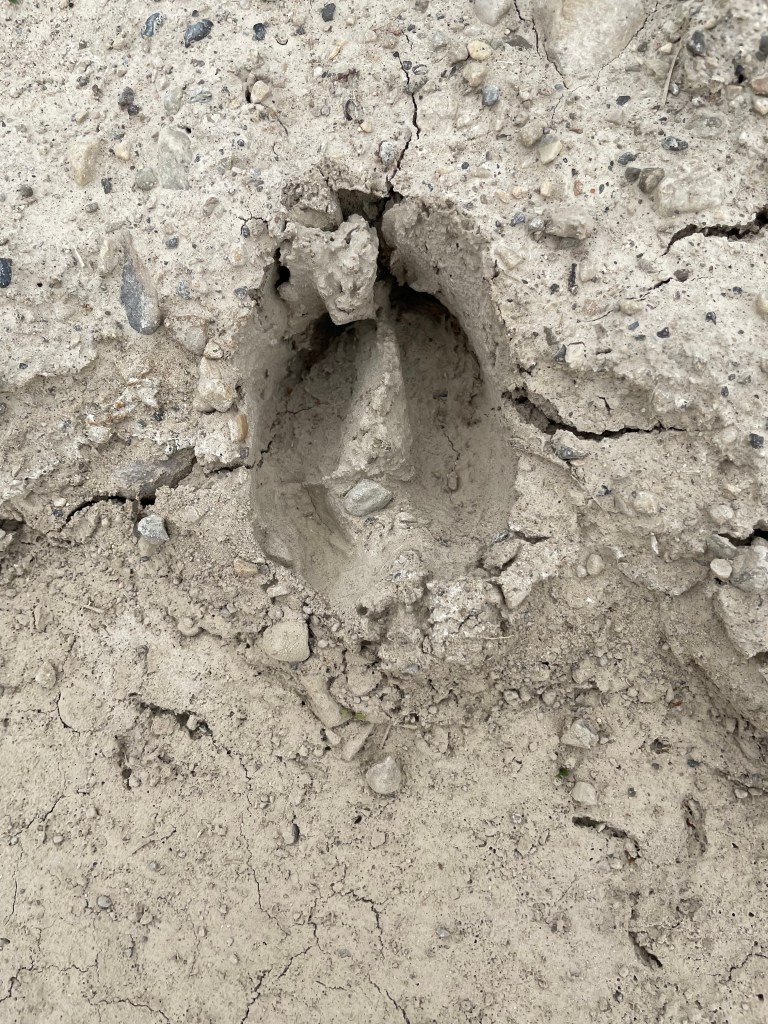
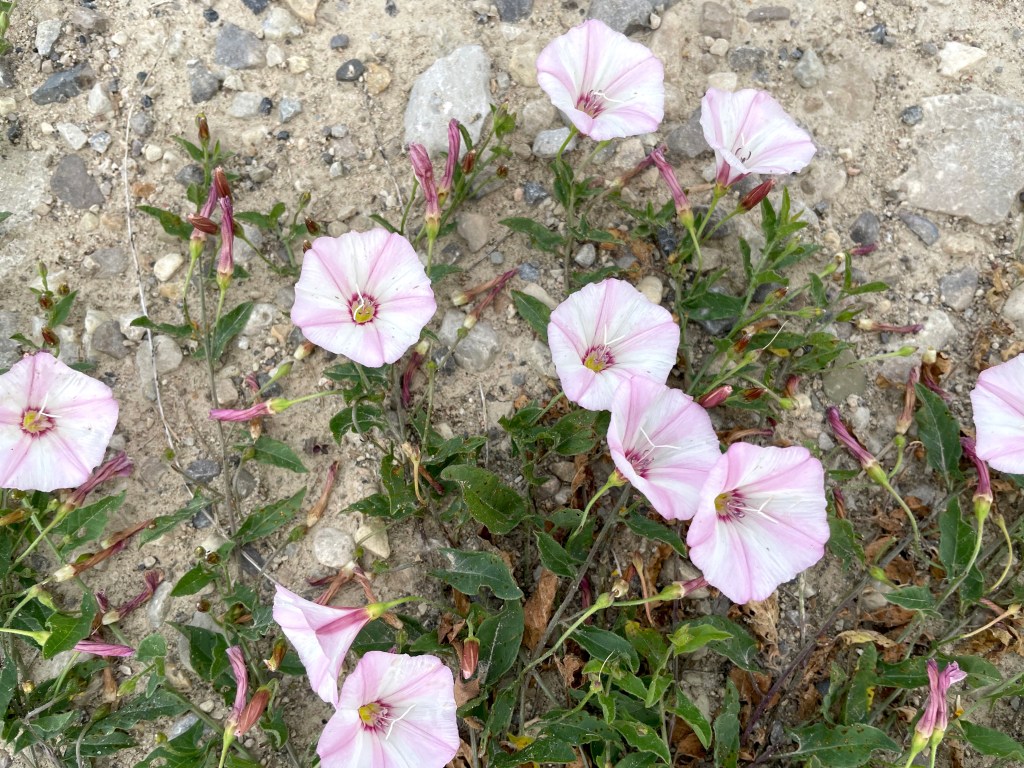
And some beautiful patches of Field Bindweed:
Reflections:
It was really exciting to see the turkey tracks with so much detail. One question I have is, when does toe 1 show and when does it not show? My tracks in the softer mud didn’t show the hallux, so maybe it depends on how they are walking? It would be helpful to see a picture of an actual wild turkey foot which might shed light on this question.
 Field Notes of a Tracker
Leave a comment