Date: June 13, 2022
Place: Little Brazos River, Brazos County, Texas.
Time: 1:45pm – 2:30pm
Main references:
‘The Tracker’s Field Guide: A Comprehensive Manual for Animal Tracking’, James C. Lowery, Second Edit., Falcon Guide
‘Bird Tracks & Sign: A Guide to North American Species’, Mark Elbroch and Eleanor Marks, First Edit., Stackpole Books
Weather: Approx. 38 C, sunny, very humid. Last rained approx. two weeks ago.
Geology: Stone City Formation, Eocene. Shale-like.
Some additional observations: shoreline dominated by willow, ragweed, grasses, and many other tall ‘weeds’. Further away from the shore there was forest – mainly oak?
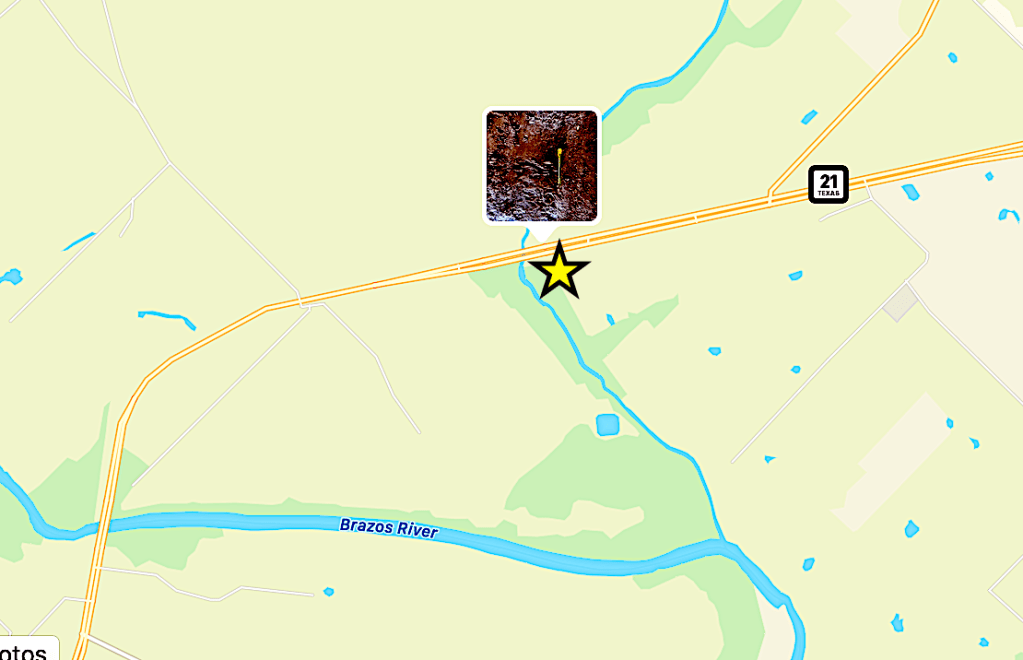
Description of the area: The Little Brazos River is a stream that enters the Brazos River. A map of the location is given below (indicated with a star). Most of the tracks (the opossum, swallow and pig tracks) were in the soft mud under the overpass:
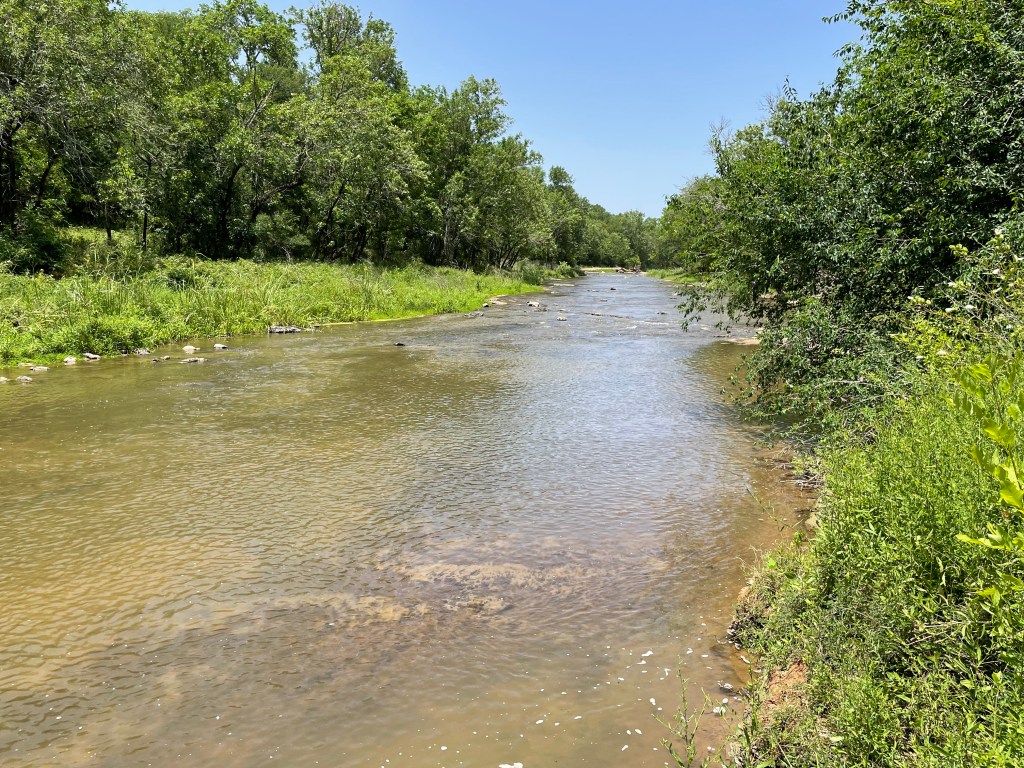
Here is a picture of the Little Brazos, which was shallow enough to wade in:
Opossum:
There were many opossum tracks in the mud under the overpass:
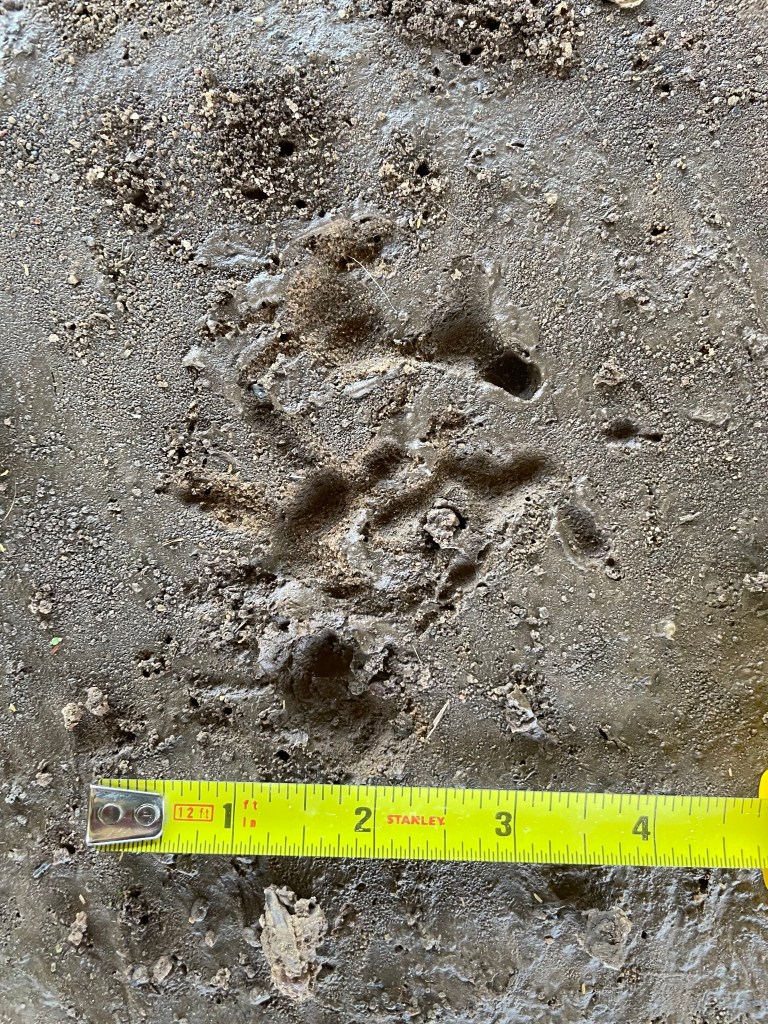
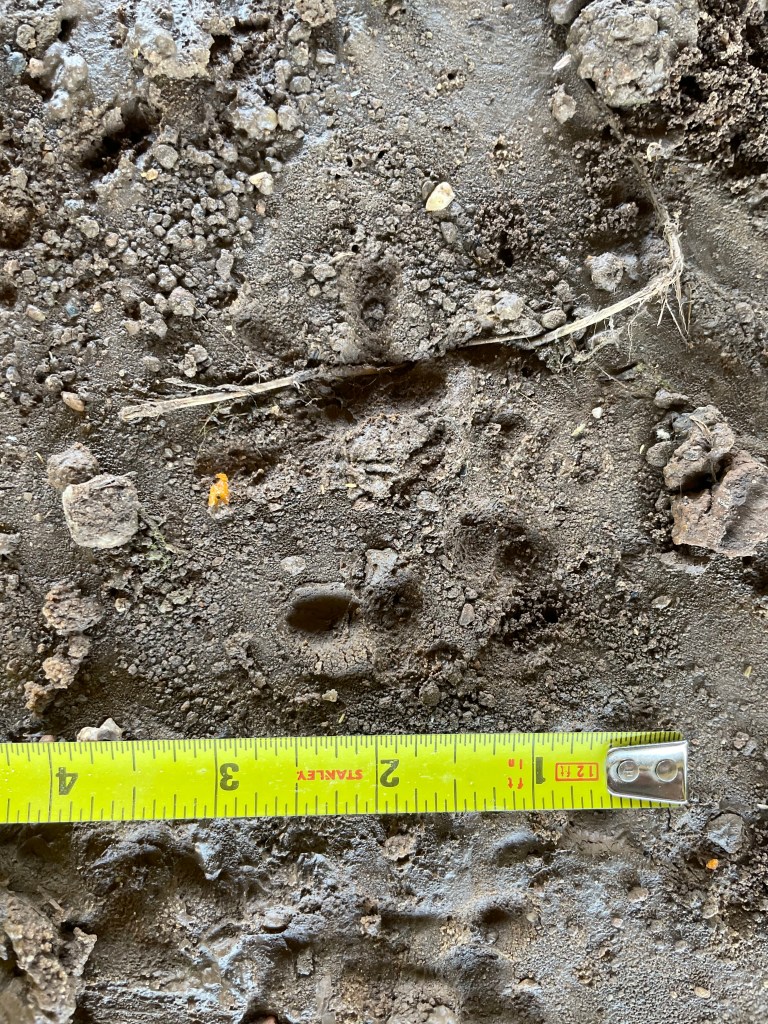
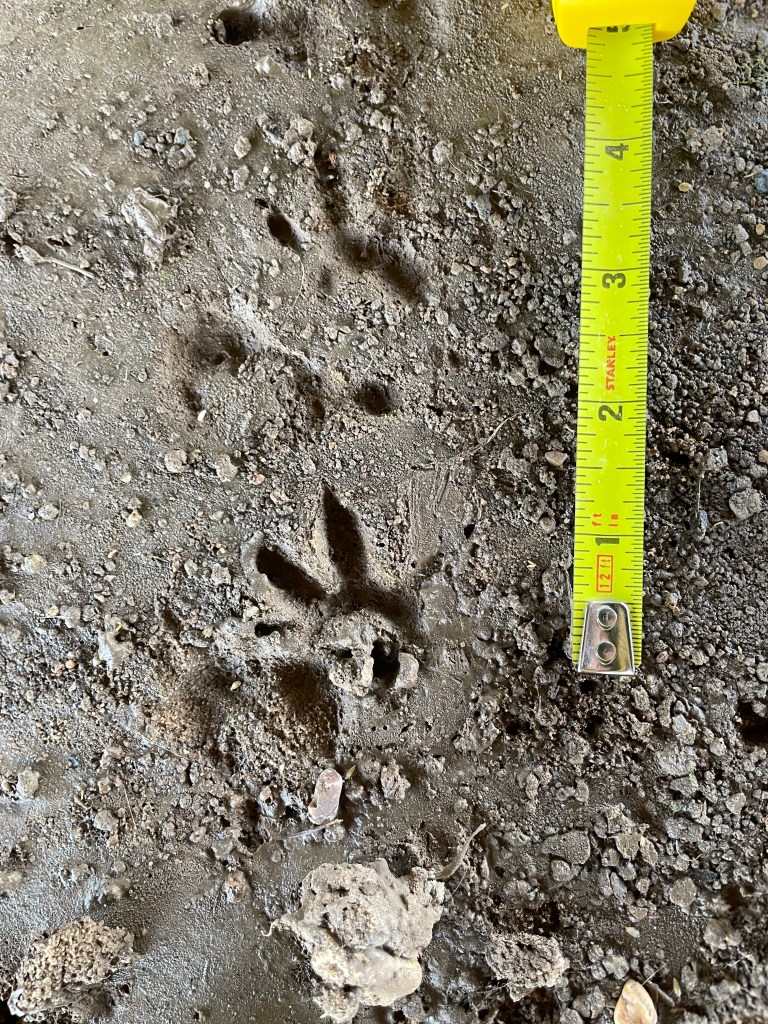
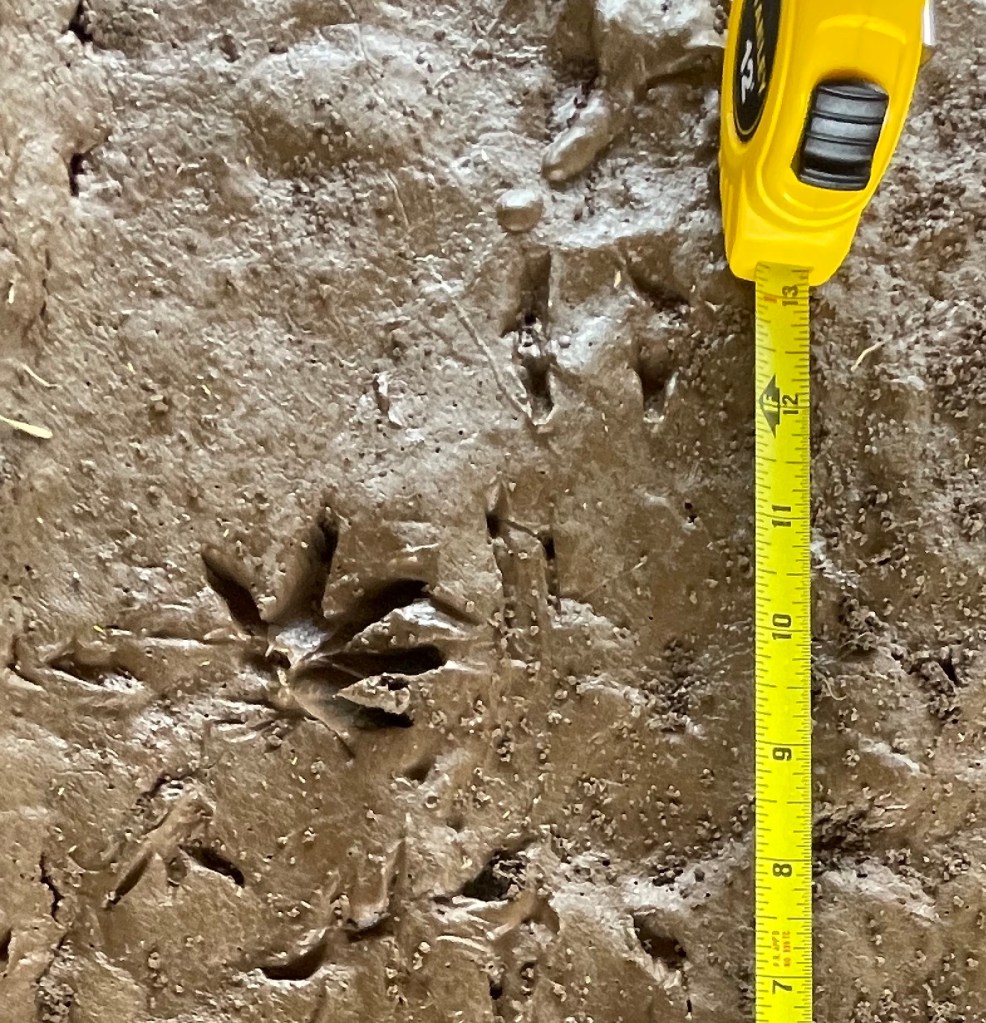
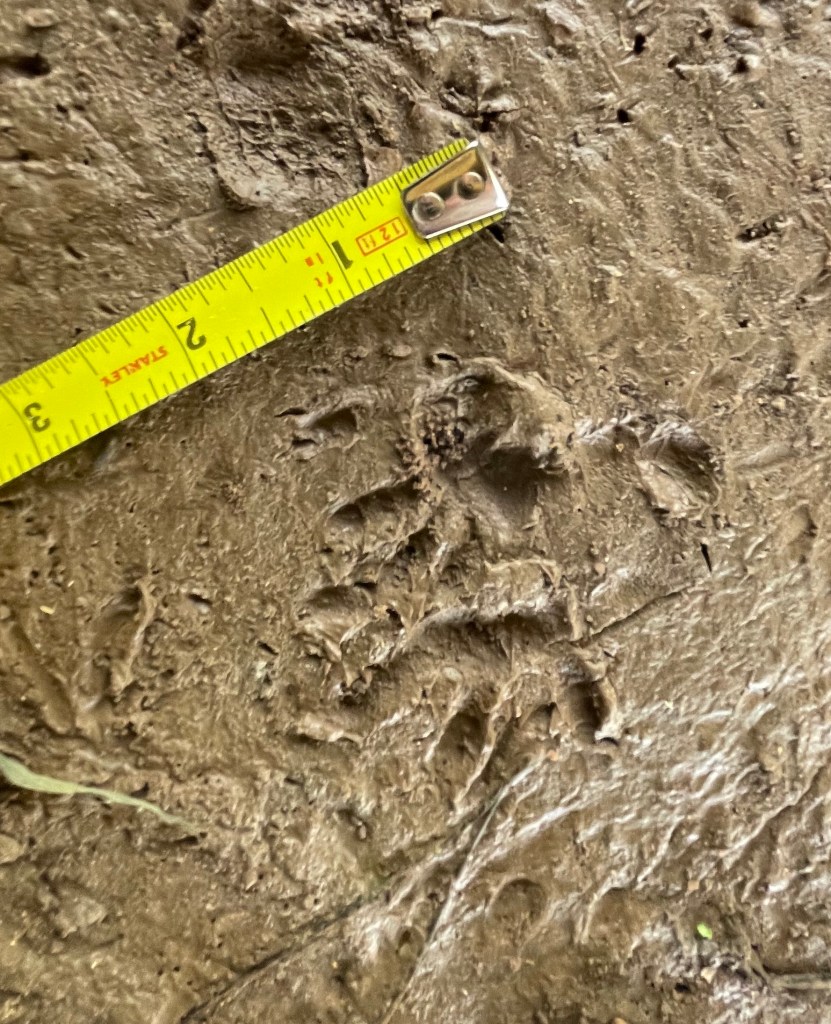
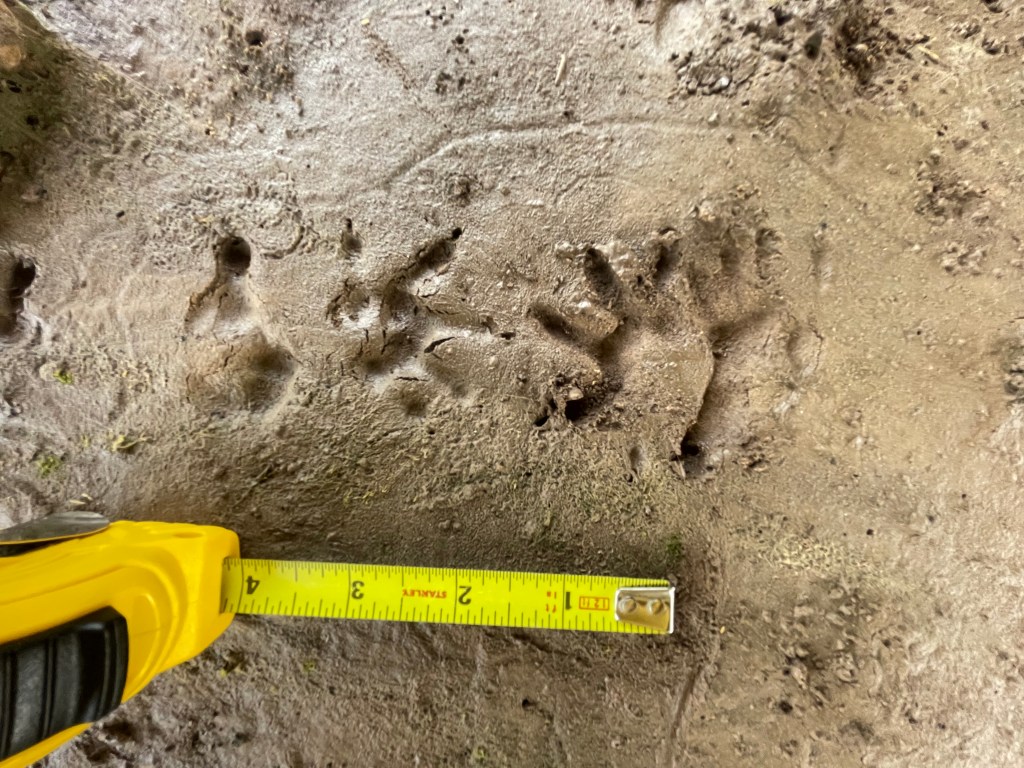
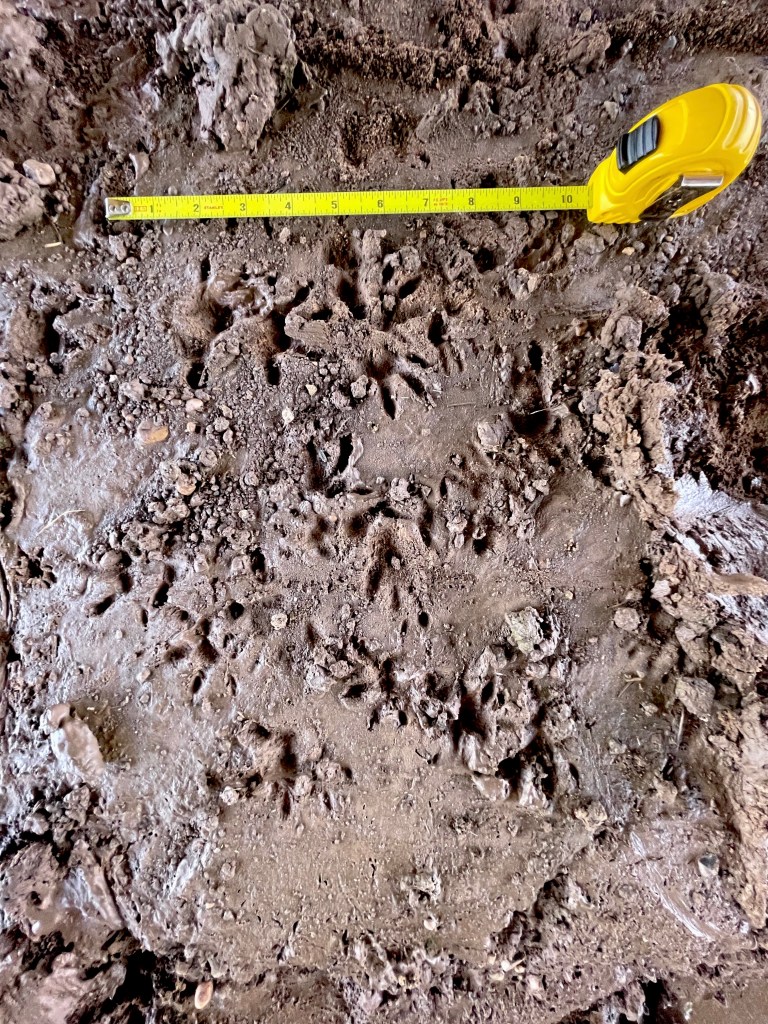
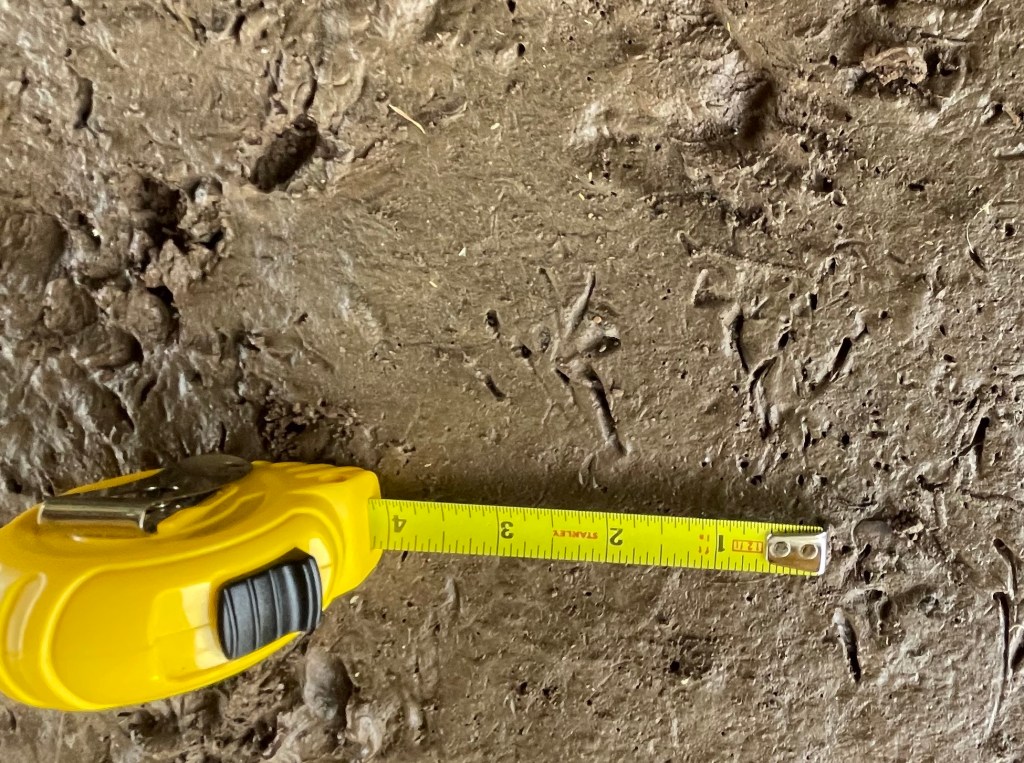
In spite of the many tracks I could not find a perfect set. The tracks look superficially like raccoon tracks, but the opossum stride is much shorter and as stated in Lowery “The hind track shows a unique opposable thumb pointing inward”. I also notice that the tracks are often a double print where the hind and front tracks overlap. The measurements in Lowery are:
- FW: 1 1/2 – 2 1/2 in
- FL: 1 7/8 – 2 1/4 in
- HW: 1 – 1 3/4 in
- HL: 1 5/8 – 2 5/8 in
- trail width: 2 1/4 – 5 3/4 in
- stride (diagonal walk): 5 3/4 – 13 in
These seem about right, although the hind width (HW) seems a bit big in the photos I took. I’m assuming length and width refer to the track with respect to direction of travel?
Feral pig:
In the same soft mud under the overpass I found the tracks of an animal that had walked through a muddy puddle. At first I assumed this was the opossum, until I looked carefully at the photo!
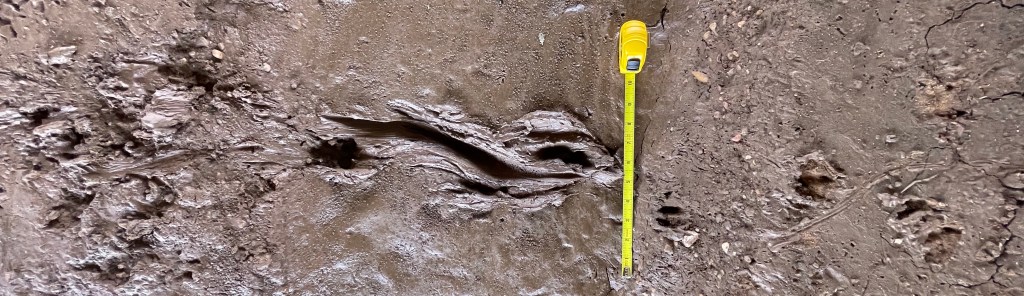
If you look to the right of the photo you will see the tracks of a hoofed animal that look light Feral Pig (see my previous post). If you look carefully these can also be seen where the animal emerges from the mud on the left hand side of the photo.
Antlion:
Further down towards the river under the overpass there were some soft sandy areas with what I believe to be Antlion nests:
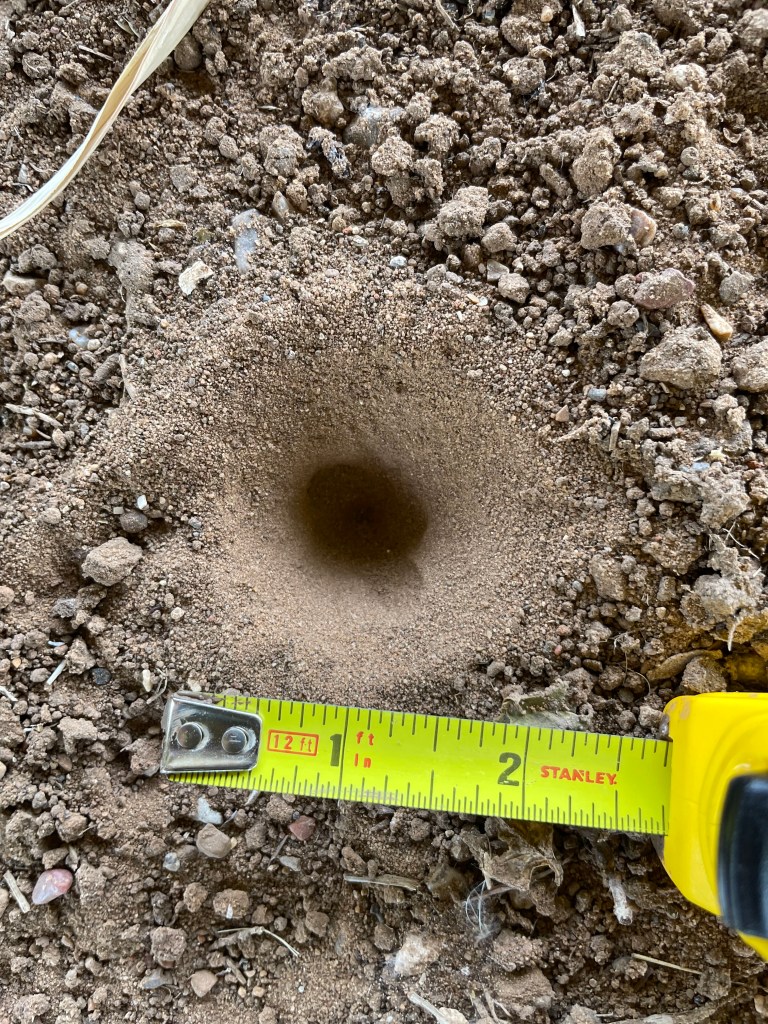
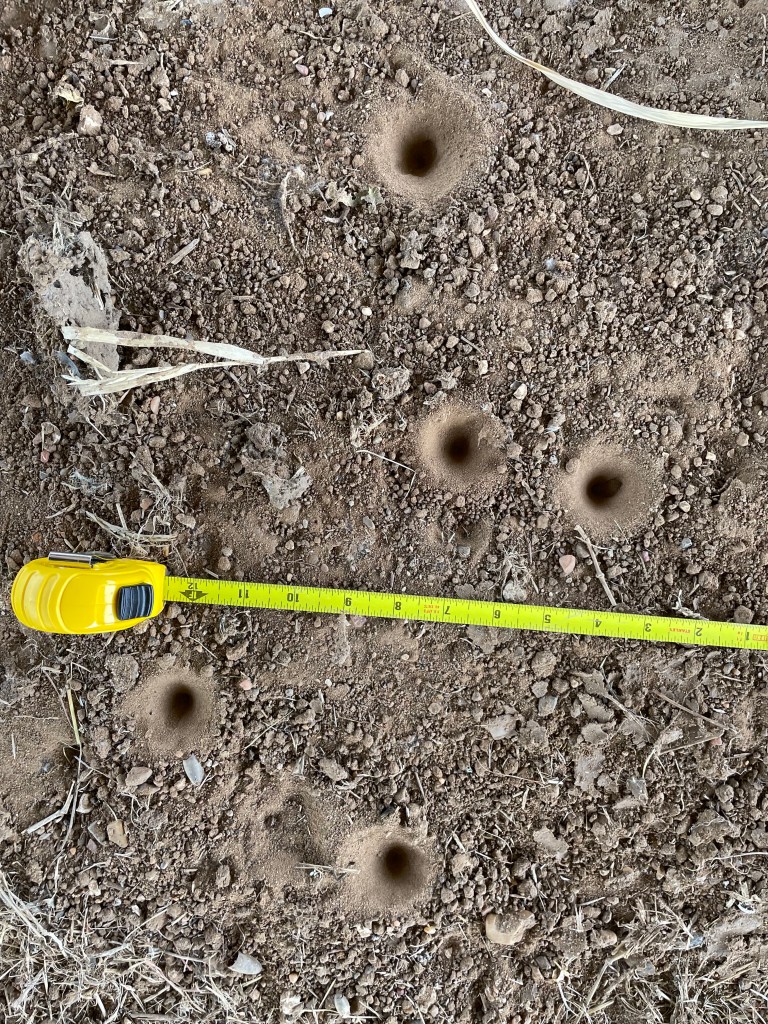
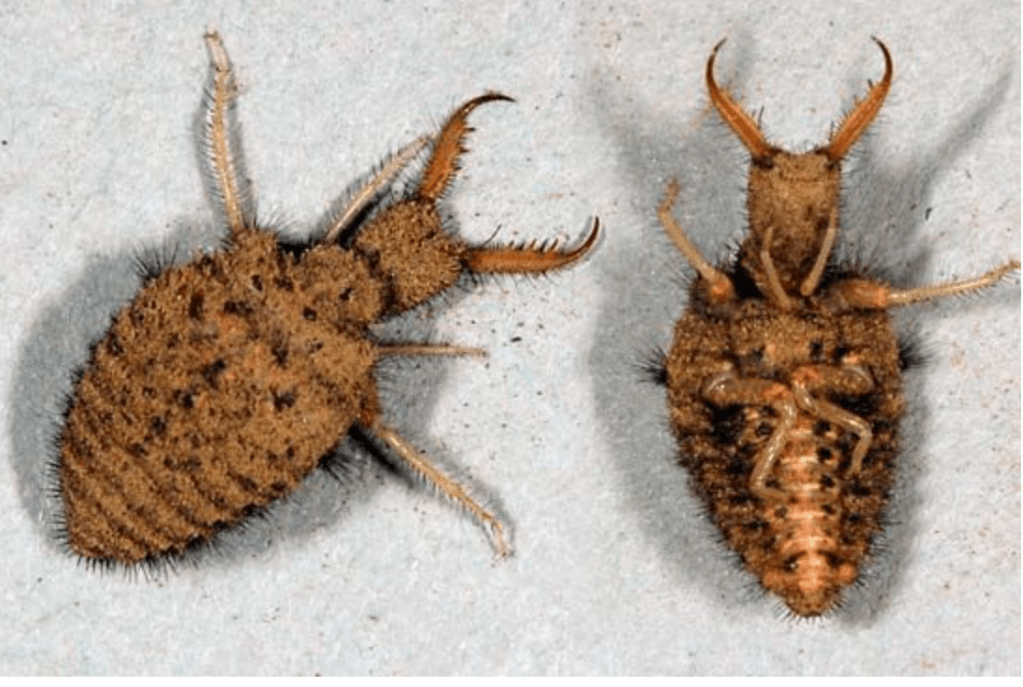
I remember playing with these as a child. I would disturb the edges of these nests so that some sand fell in the hole. The creature would then flick sand up, presumably to cause an ant to fall within its jaws. According to Wikipedia, the Antlion is a large group of predatory insects that are the larvae stage of the antlion lacewings. Here is a picture of an Antlion from the internet:
Bird roost:
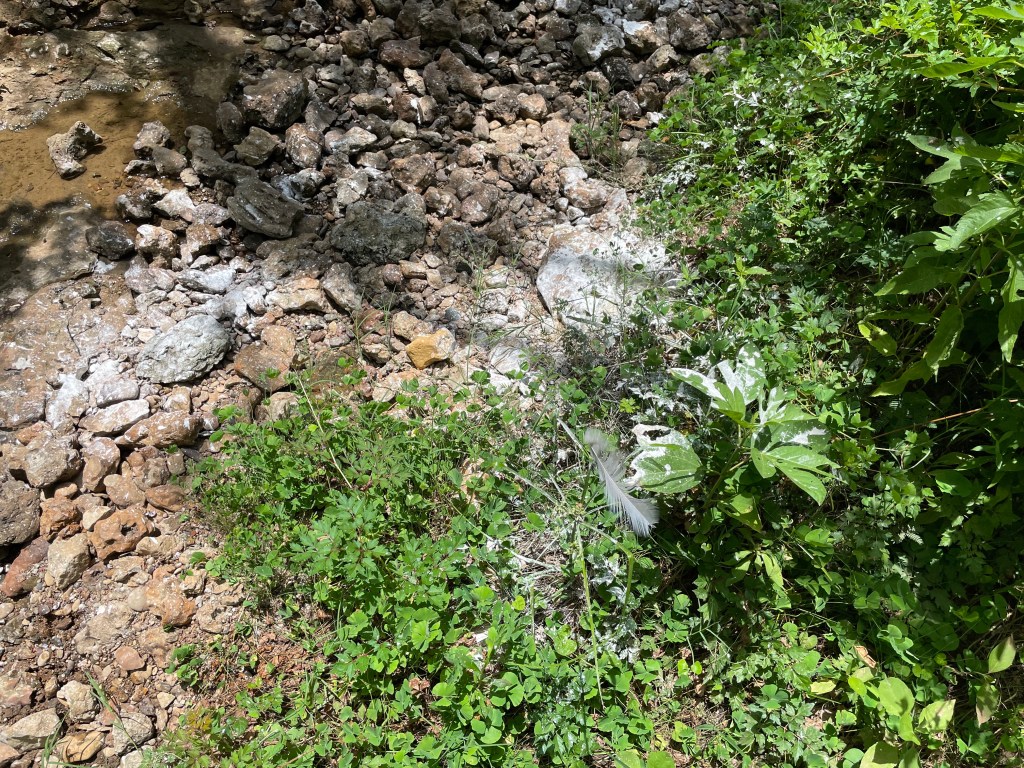
Walking down the river I found what is clearly a bird roost area because of the large amount of splat under a tree branch:
Of course this made me look up and the roost was obvious:
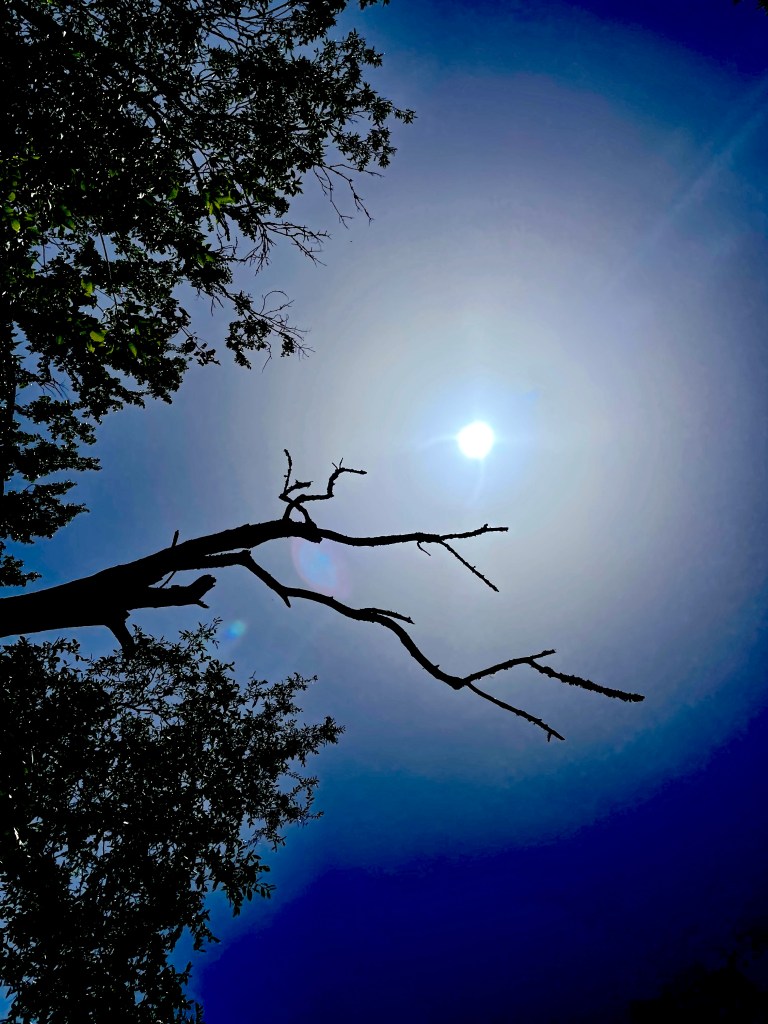
This made me look for clues regarding the type of bird. From the amount of splat the bird must be large. I found the following large feather:
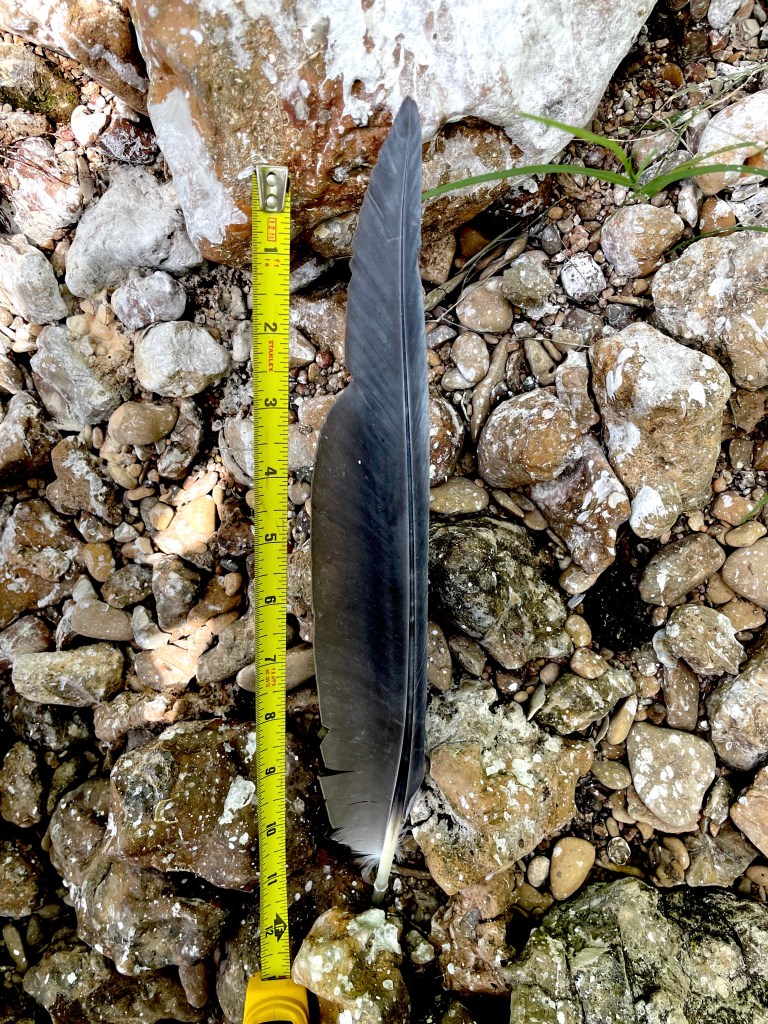
Looking in Elbroch my best guess is either vulture (Turkey or Black) or Bald Eagle.
Swallow nests:
There were many swallow nests made in the overpass structure itself, e.g.:
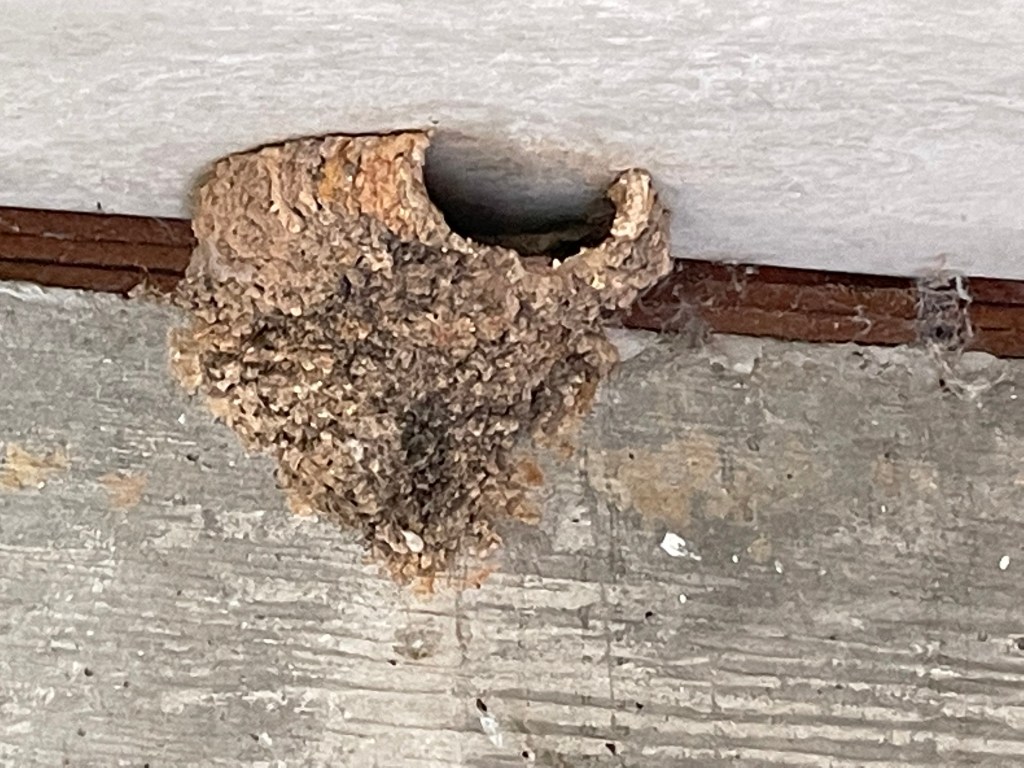
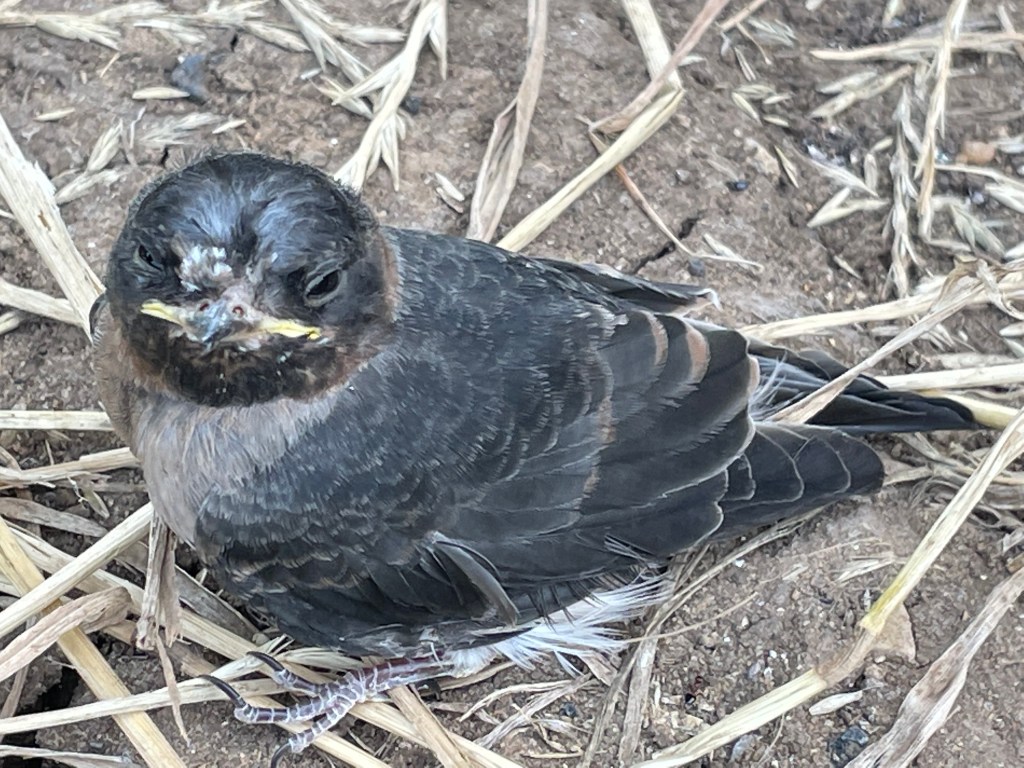
The small dark swallows were flying everywhere. I don’t know what species these are although I did find a juvenile bird that had fallen out of its nest:
Miscellaneous photos:
Reflections:
There was much wildlife along the river, although the only place where I could do much tracking was under the overpass (there were no banks of soft sediment along the stream – mainly flat rock). I was nice to find so many Opossum tracks, but frustrating because I could not find a perfect set. I was also frustrated in my attempts to find decent tracking substrate along the stream. It was however a beautiful location.
 Field Notes of a Tracker
Leave a comment