Date: June 13, 2022
Place: Brazos River, Burleson County, Texas.
Time: 11am – 1pm
Main references:
‘The Tracker’s Field Guide: A Comprehensive Manual for Animal Tracking’, James C. Lowery, Second Edit., Falcon Guide
‘Bird Tracks & Sign: A Guide to North American Species’, Mark Elbroch and Eleanor Marks, First Edit., Stackpole Books
‘Animal Tracks’, Olaus J. Murie and Mark Elbroch, Third Edit., Peterson Field Guides, Houghton Mifflin Company
‘Scats and Tracks of North America’, James C. Halfpenny, Falcon Guides
Weather: 33 C rising to 38 C, sunny, very humid. Last rained approx. two weeks ago.
Geology: Stone City Formation, Eocene. Shale-like.
Some additional observations: shoreline dominated by willow, ragweed, grasses, and many other tall ‘weeds’. Further away from the shore there was forest – mainly oak?
Description of the area: The Brazos is a large river with miles of muddy shoreline and sandy areas. Very dry. A map is shown below. We parked beside the bridge and hiked to the area indicated by a star.
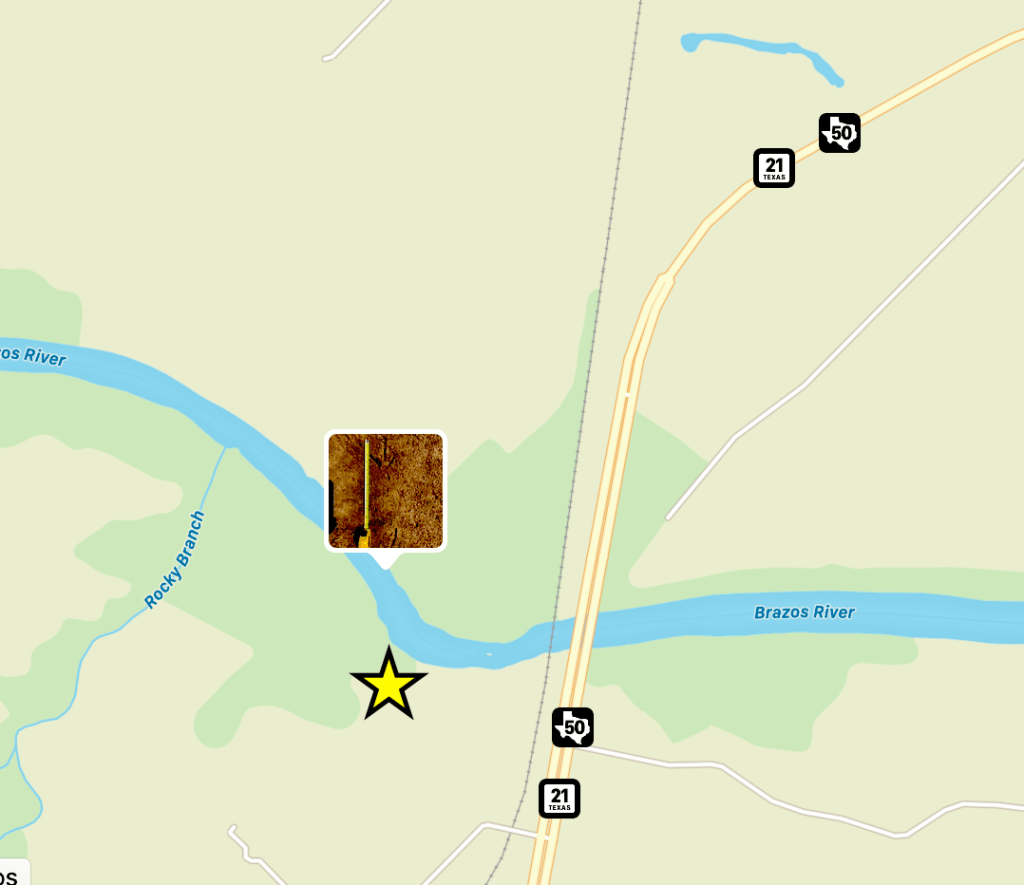
According to an internet resource, “The Brazos River begins in north-central Texas and flows to the Gulf of Mexico. The river, which empties near the town of Freeport, is the longest river in Texas”. Our starting point is shown below:
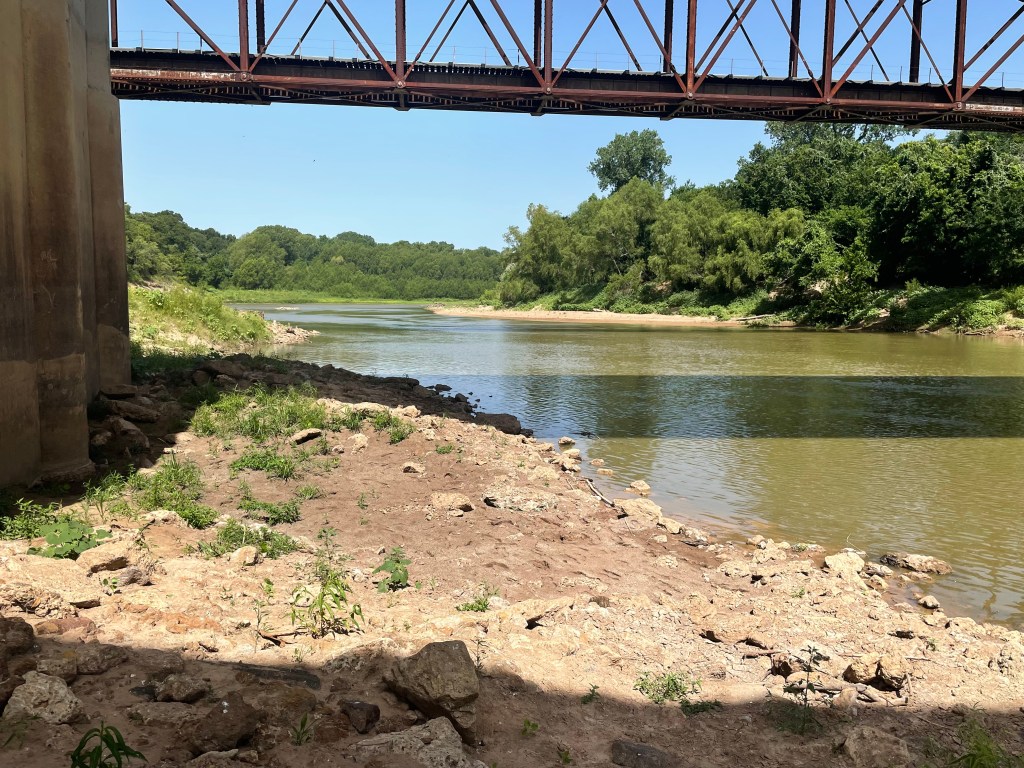
The typical tracking substrate:
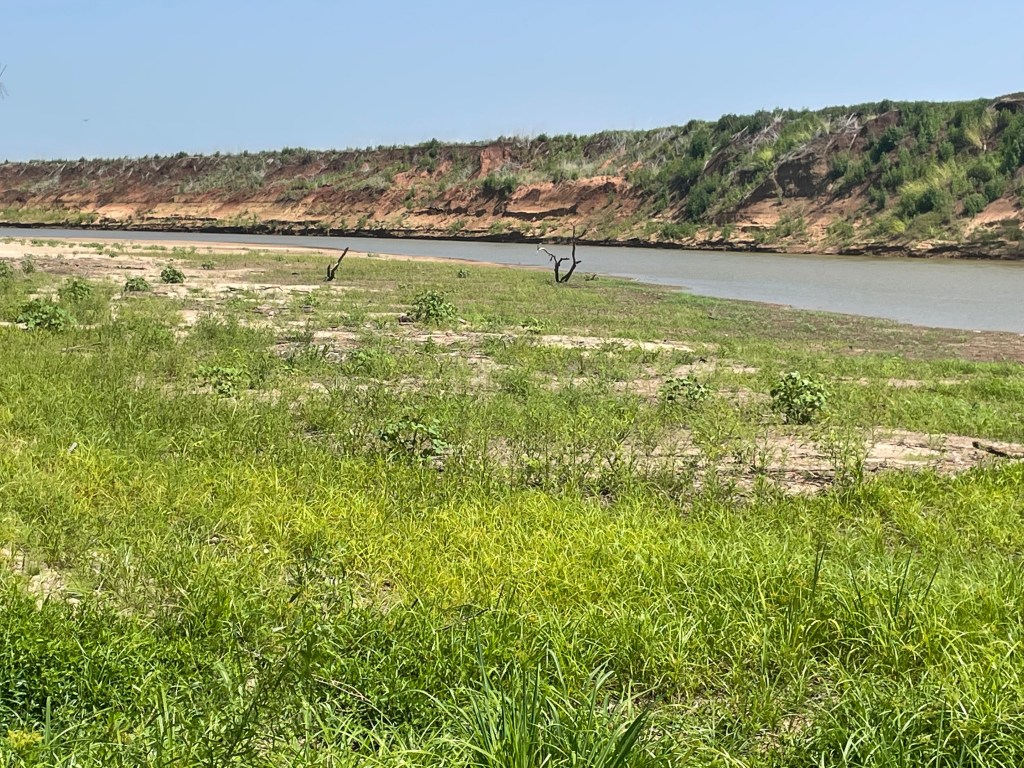
Turtles:
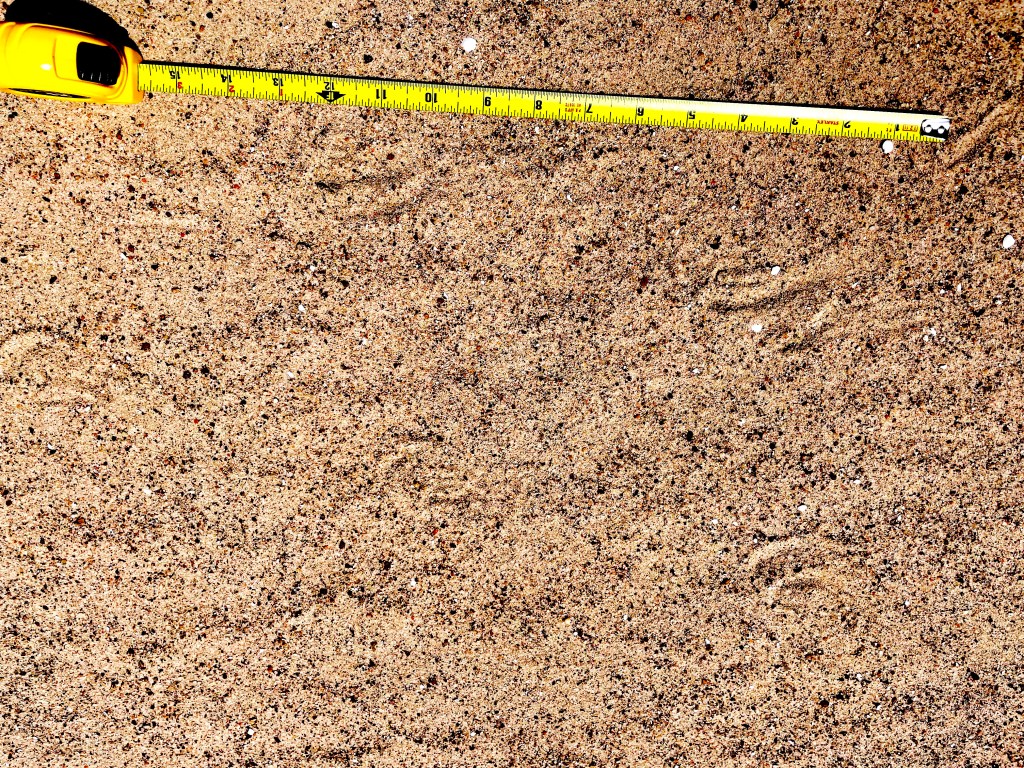
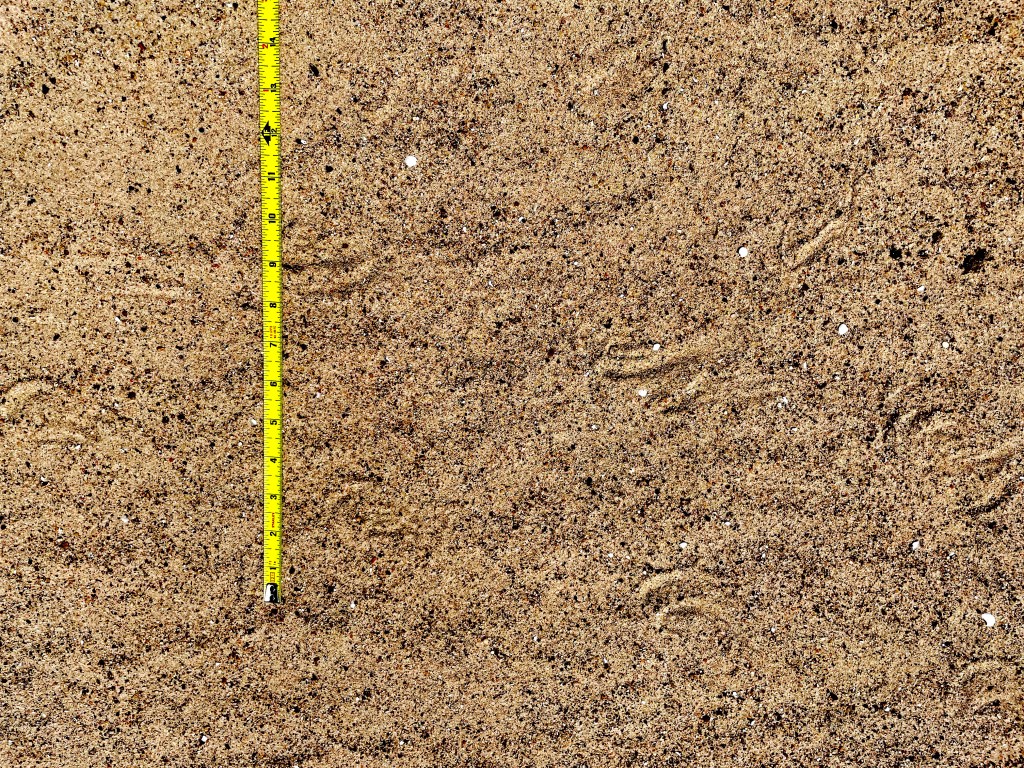
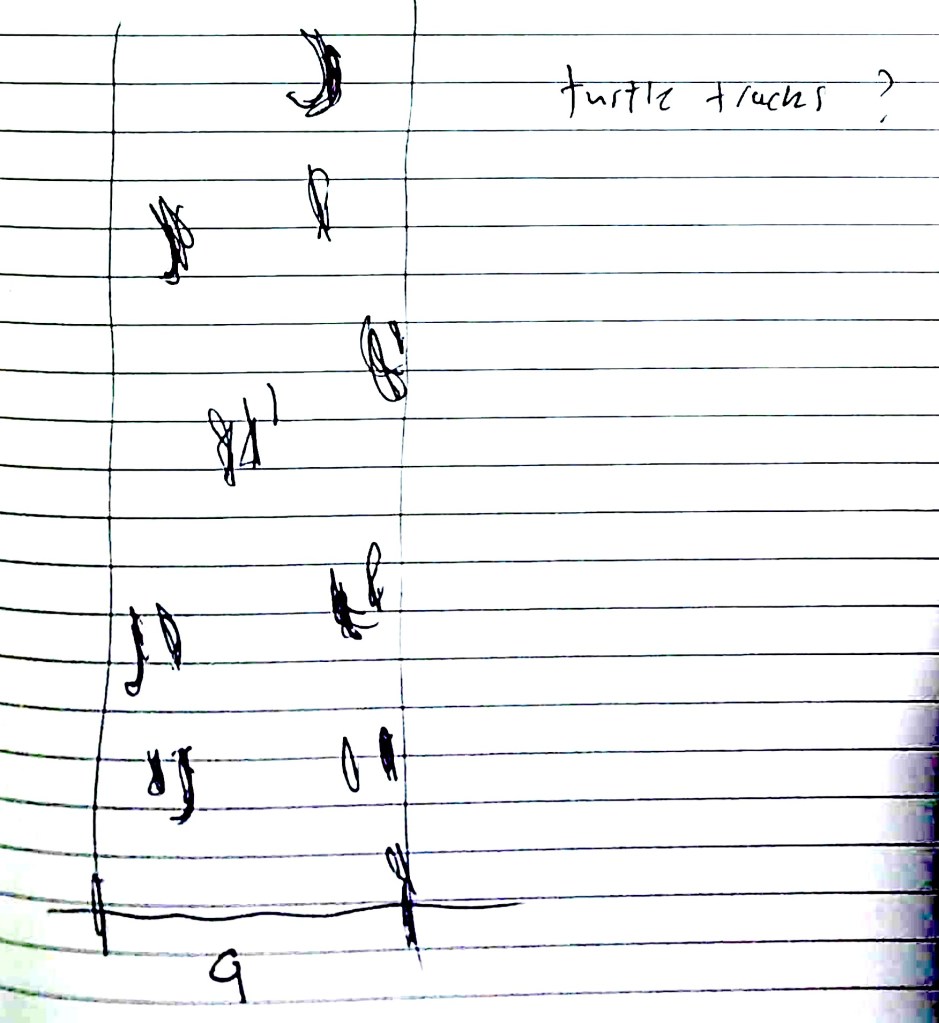
Once I got to some large sandy open washes alongside the river edge there were many tracks that I think must be from turtles (either going to or from the water). I’m guessing the turtles were leaving the water to lay their eggs on land. The tracks were hard to photograph because the sun was almost overhead, so casting very little shadow. The first set:
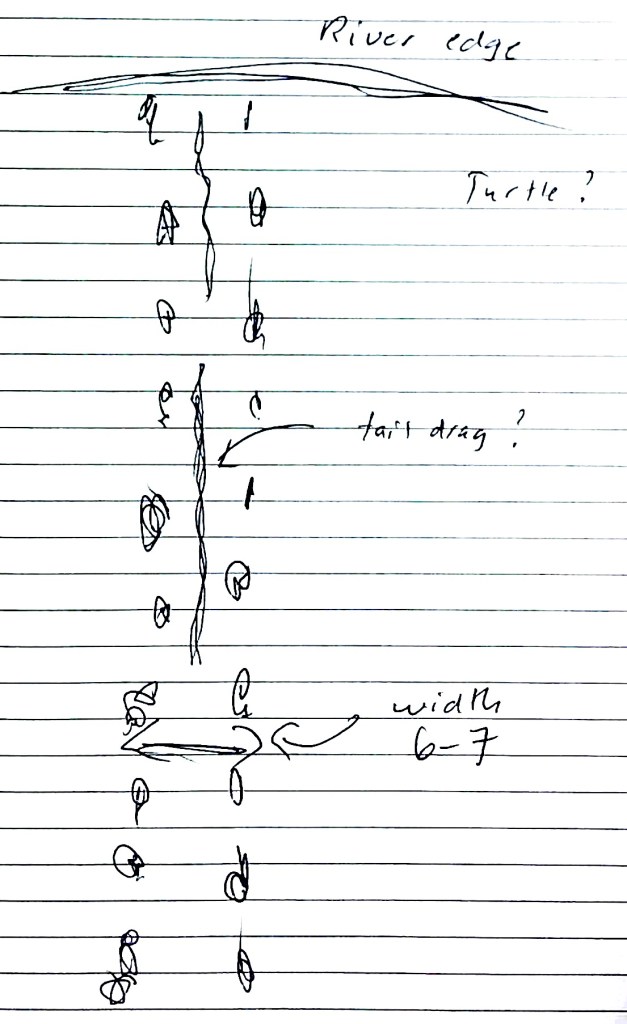
And my attempt at a sketch:
Here is another set:
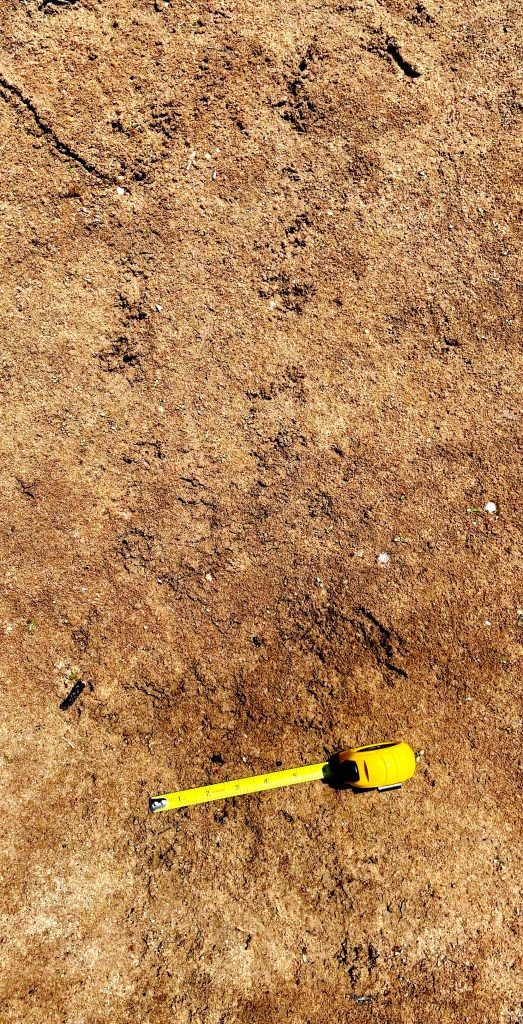
This is maybe a little clearer:
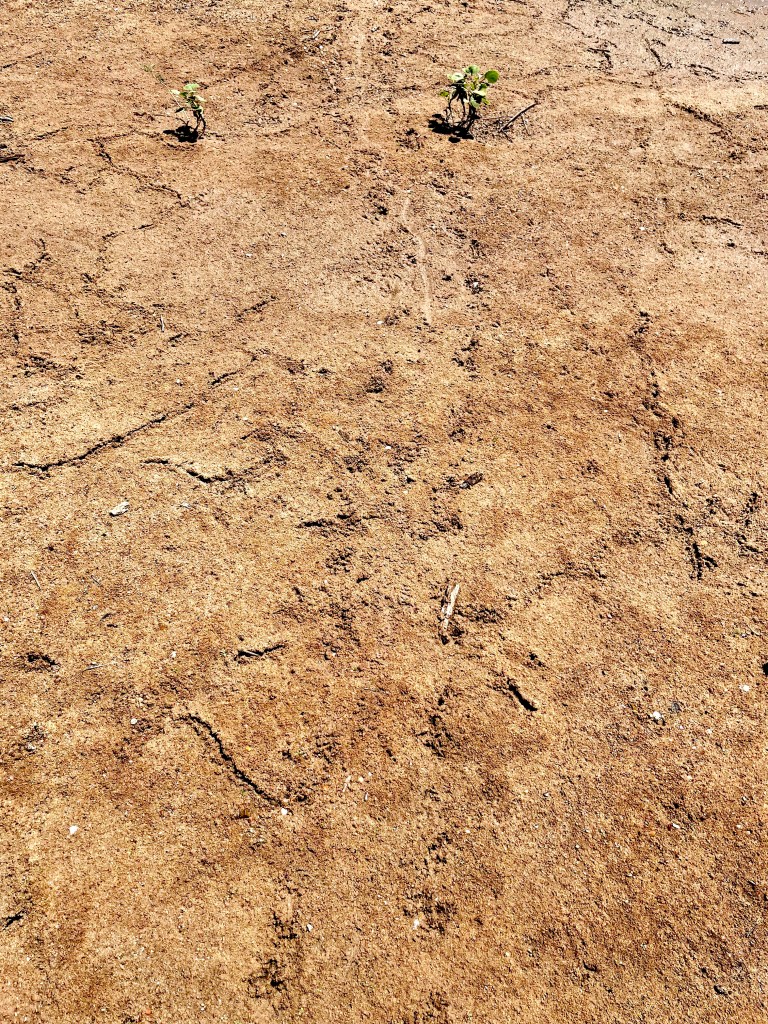
And a quick sketch:
Here I can see the tracks entering or leaving the waters edge:
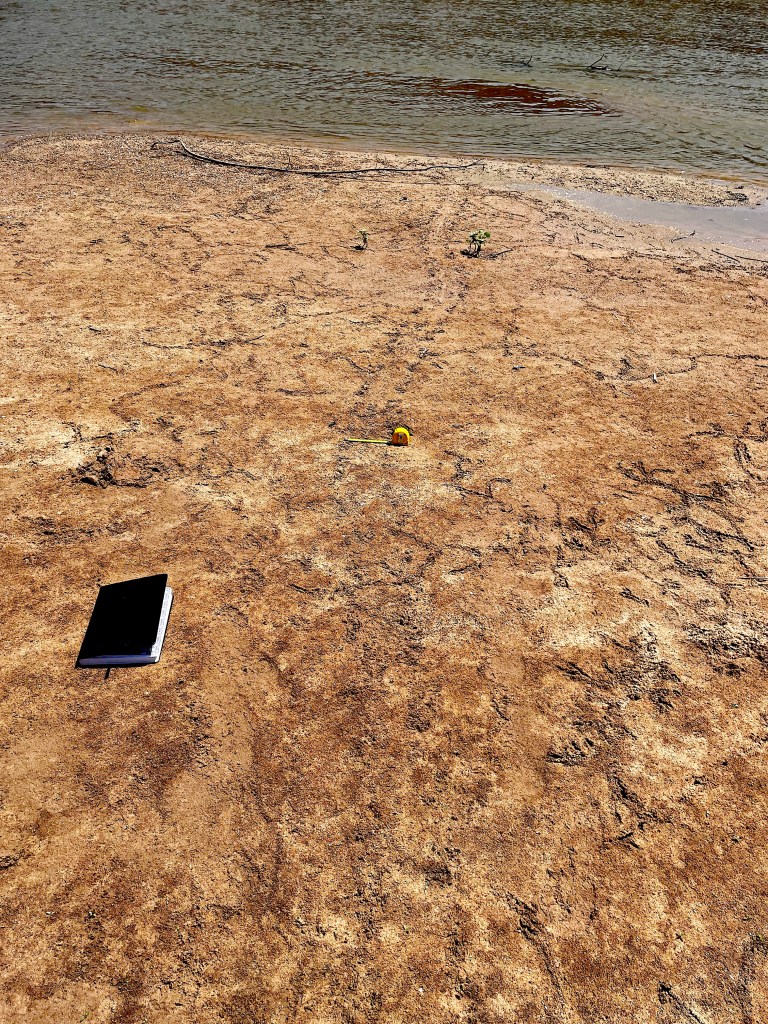
I didn’t have the time to try and guess what type of turtles made these tracks. Apparently there are some 27 species of turtles in Texas, including: Red-eared slider, Texas river cooter, Alligator snapping turtle, Common snapping turtle, Texas map turtle, Texas spiny softshell, Common musk turtle, and the Eastern mud turtle.
Snakes:
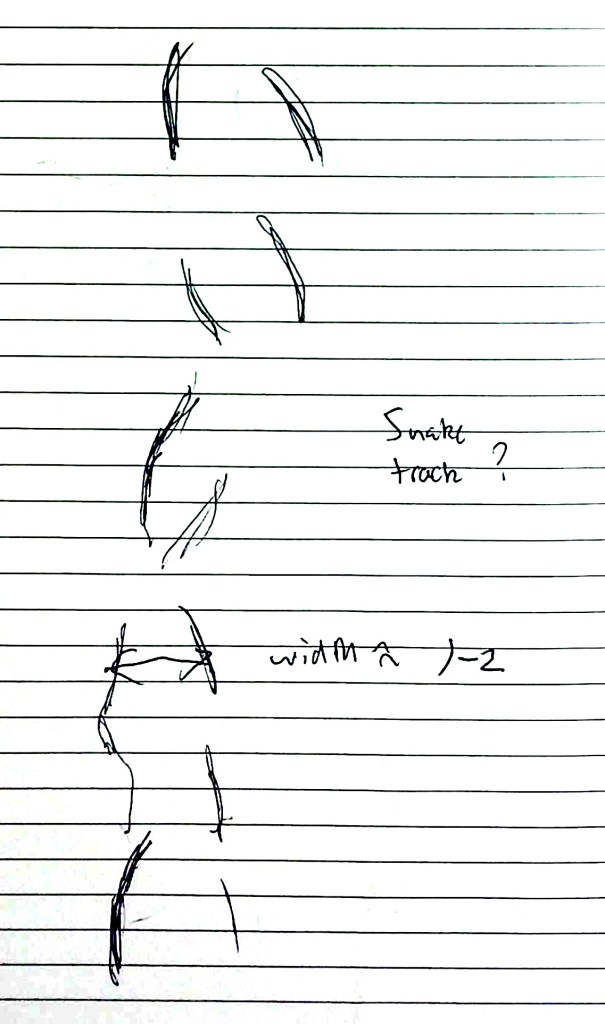
There were several tracks that I am assuming were made by snakes, again travelling to or from the river edge. Here are a few:
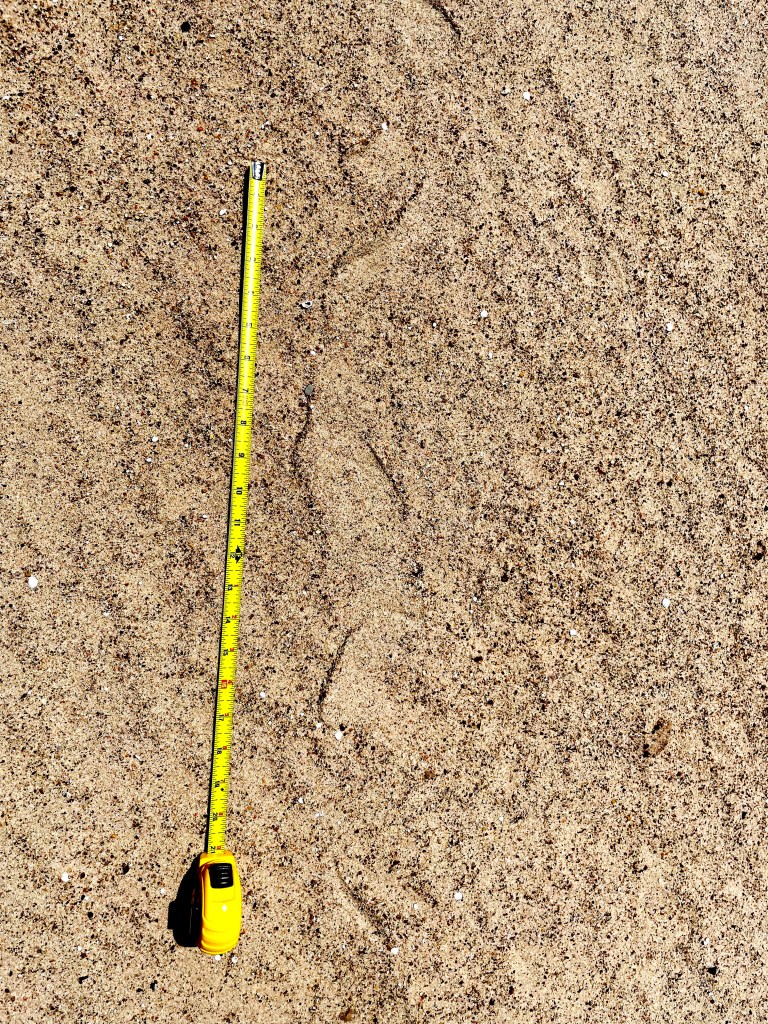
And my quick sketch:
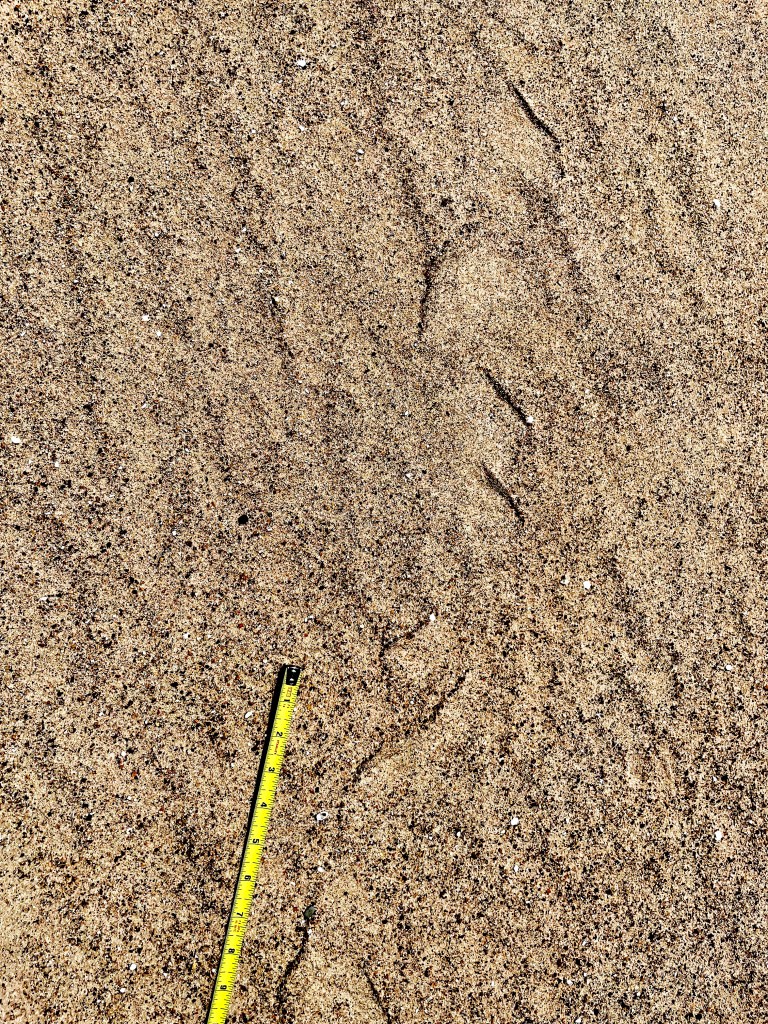
These are maybe a bit easier to see:
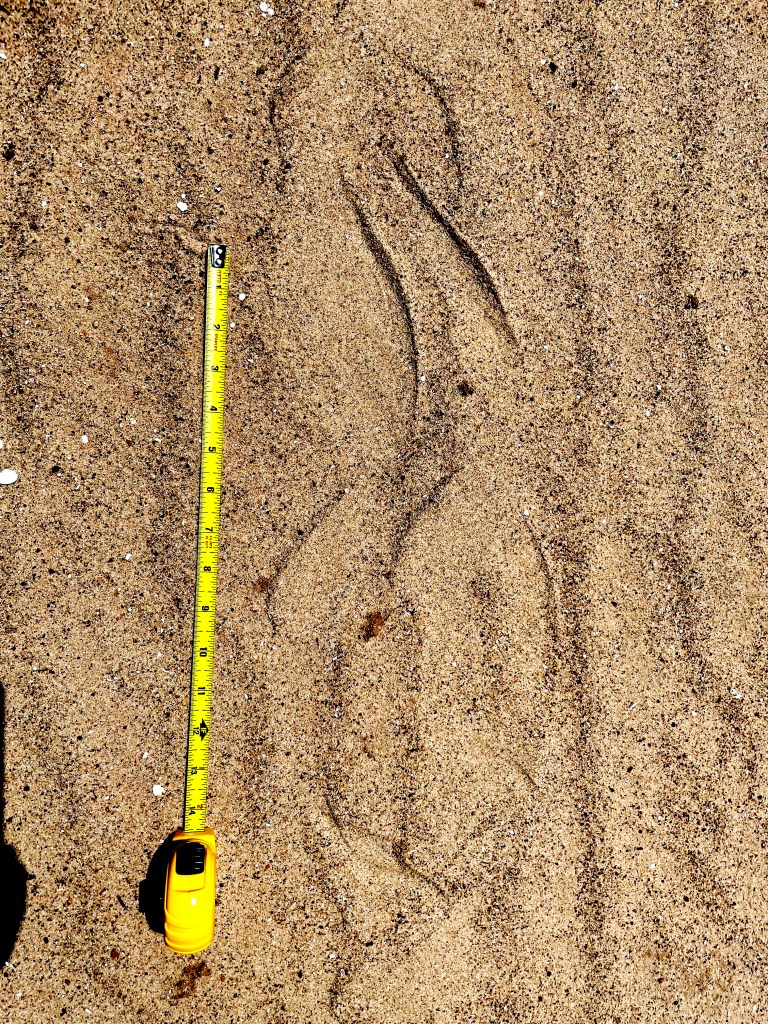
And the clearest tracks, but also a bit older:
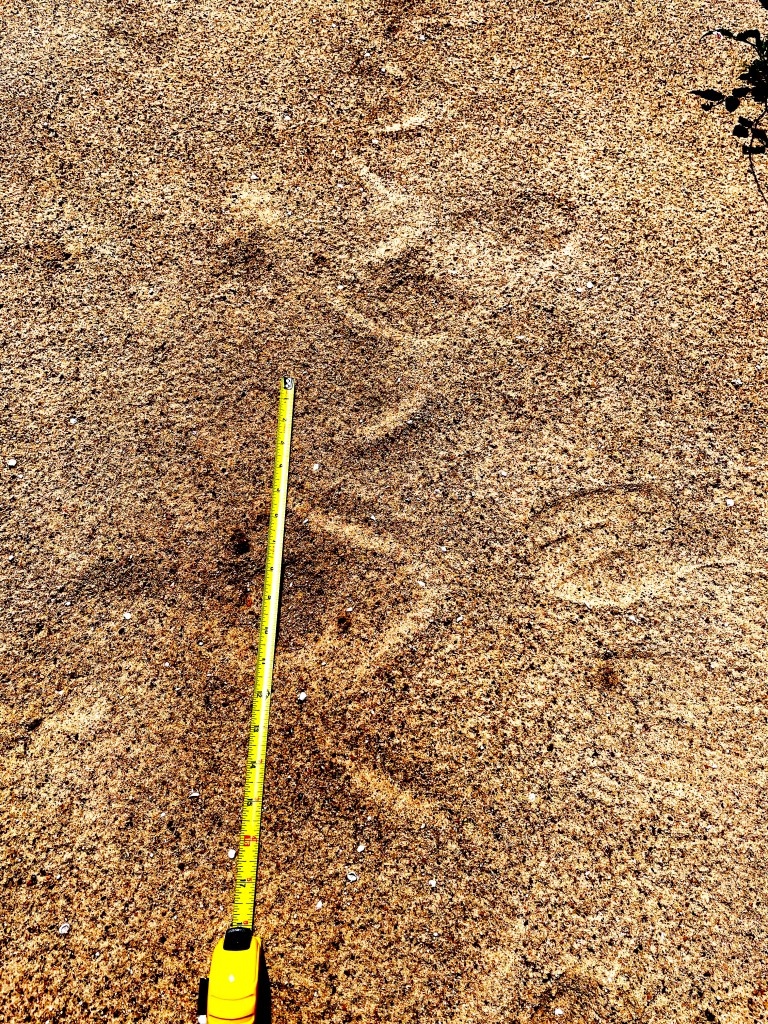
And a corresponding sketch:
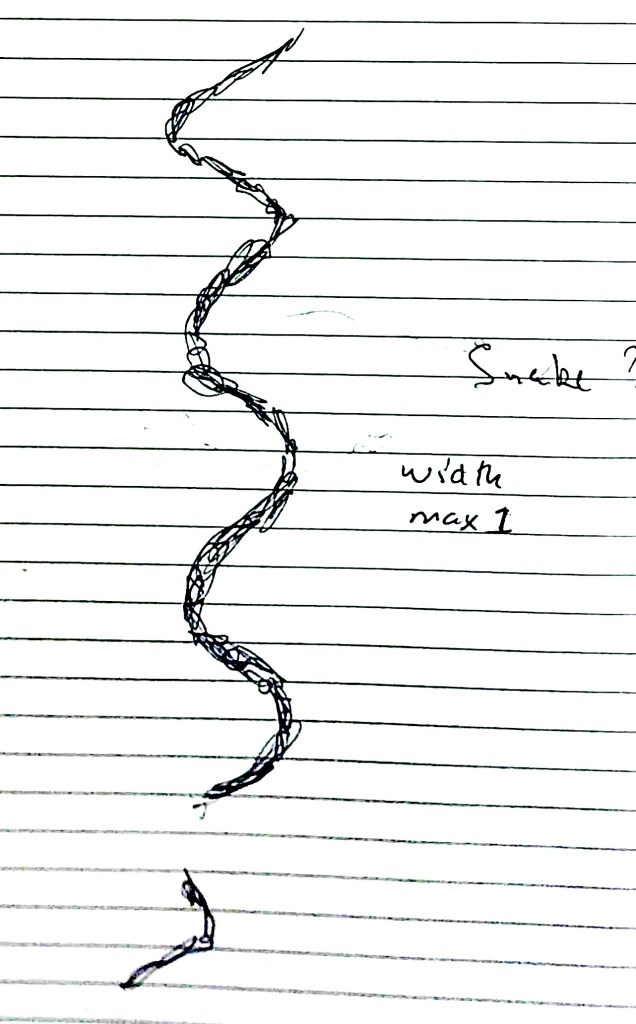
As with the turtles there are many species of snake that live in the Texas rivers. An internet resource lists: Cottonmouth, Green Water Snake, Southern Water Snake, Brazos Water Snake, Plain-Bellied Water Snake, Concho Water Snake, Diamondback Water Snake, Common Water Snake, Texas Indigo Snake, Texas Rat Snake, and the Texas Garter Snake.
Lizards?:
Some of the tracks I saw in soft sand looked like lizard tracks to me:
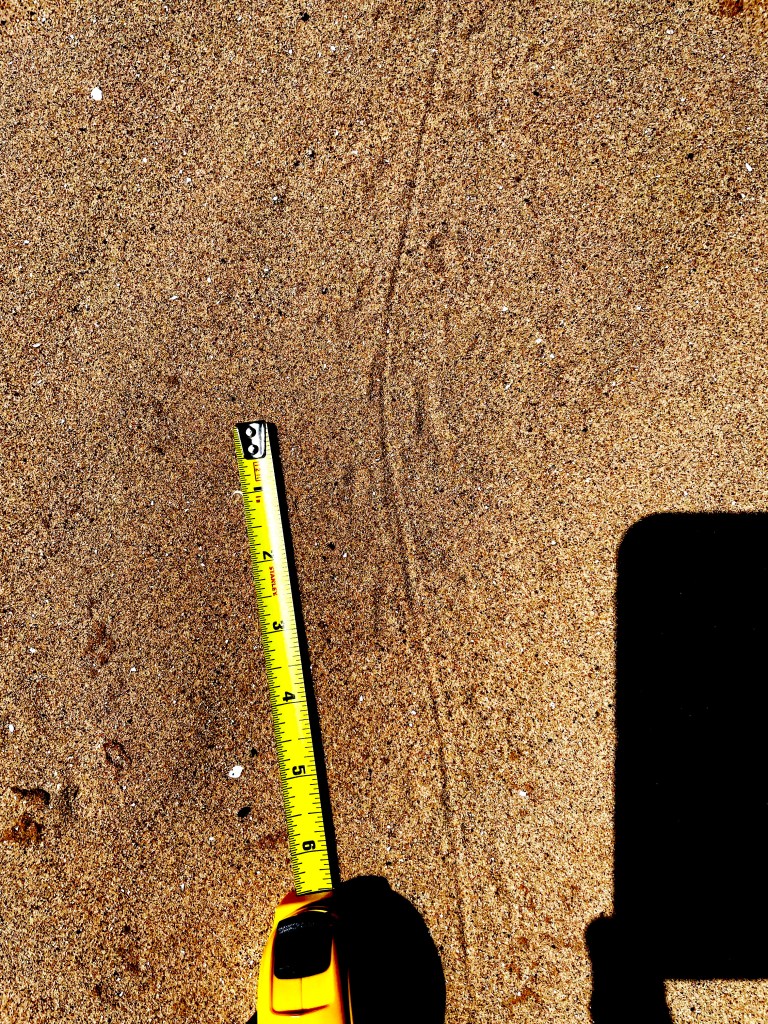
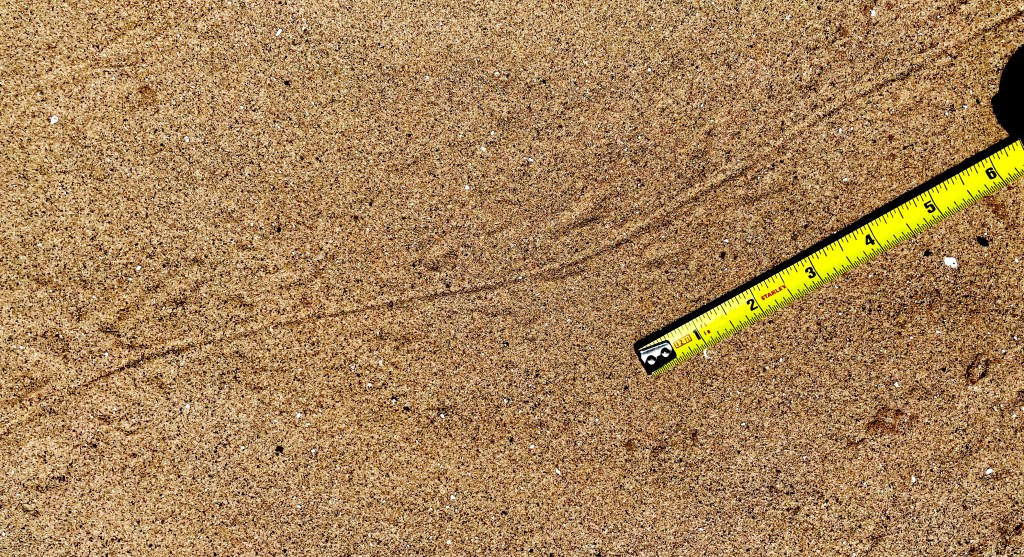
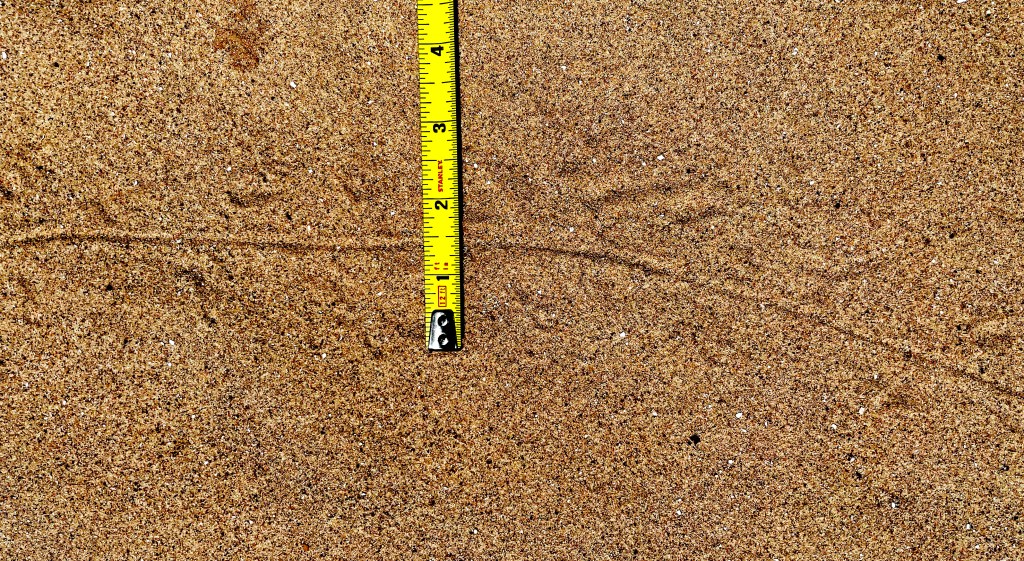
These tracks show impressions of feet and a clear tail drag, although I’m not sure of the direction of travel. The impressions were very faint and as the sun was almost overhead the tracks were very hard to photograph and I enhanced the contrast of the photos afterwards. Apparently there are 45 species of lizard in Texas. I’m sure I could narrow this down if I researched which ones live along the Brazos.
Wild Turkey ?:
There were large bird tracks along the rivers edge which I think were made by wild turkeys:
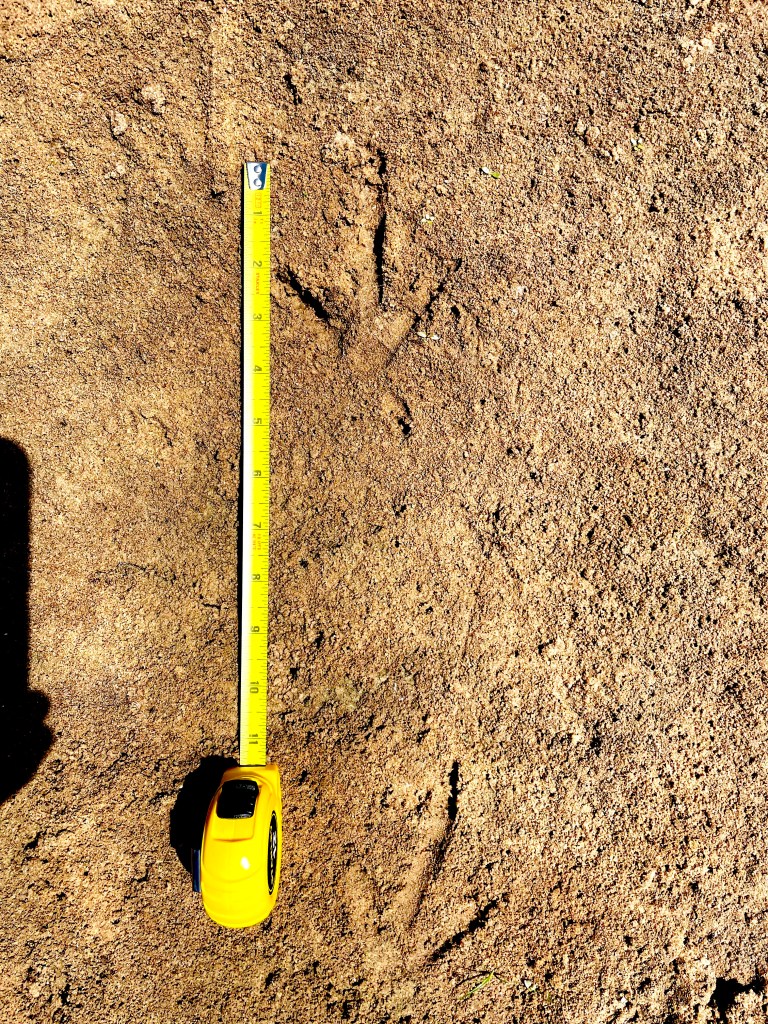
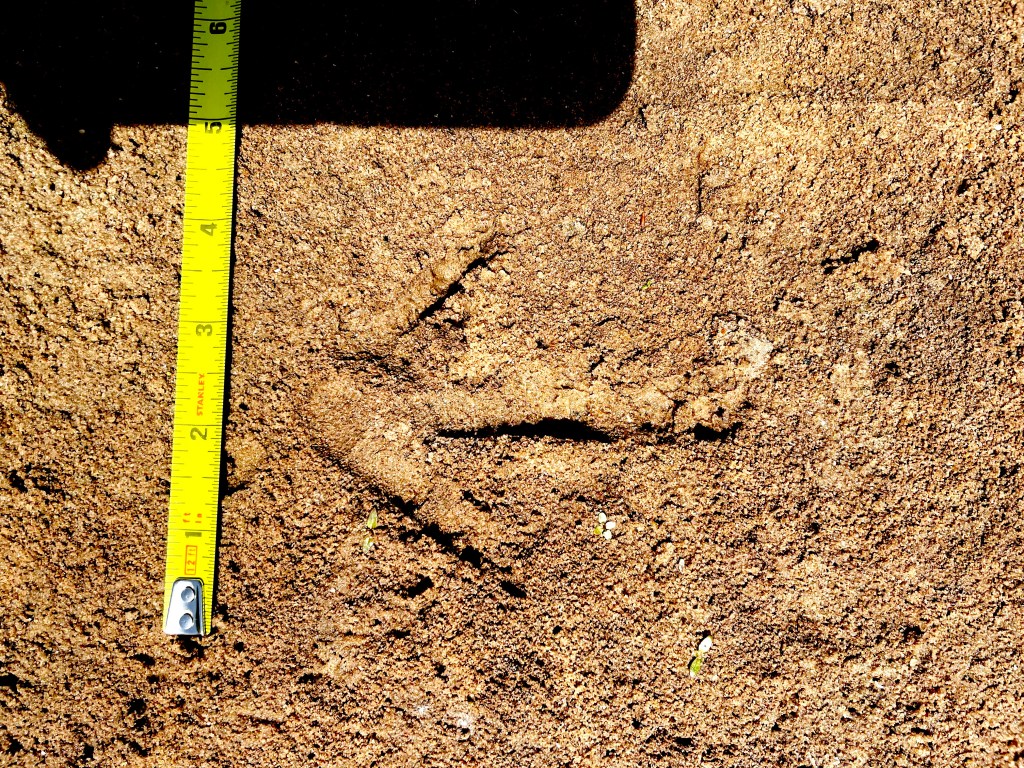
The measurements for wild turkey tracks given by Elbroch are:
- Length: 3 3/4 – 5 in
- Width: 4 – 5 1/4 in
- Stride (walk): 5 – 13 in
- Stride (run): up to 33 in
- Notes: bulbous toe pads, toe 1 usually registers
The measurements don’t exactly fit, but they are too small for the Sandhill Crane which is also found in the area.
Feral Pig:
Feral pigs have become a big problem in Texas. In the Smithsonian Magazine, see
https://www.smithsonianmag.com/science-nature/a-plague-of-pigs-in-texas-73769069/
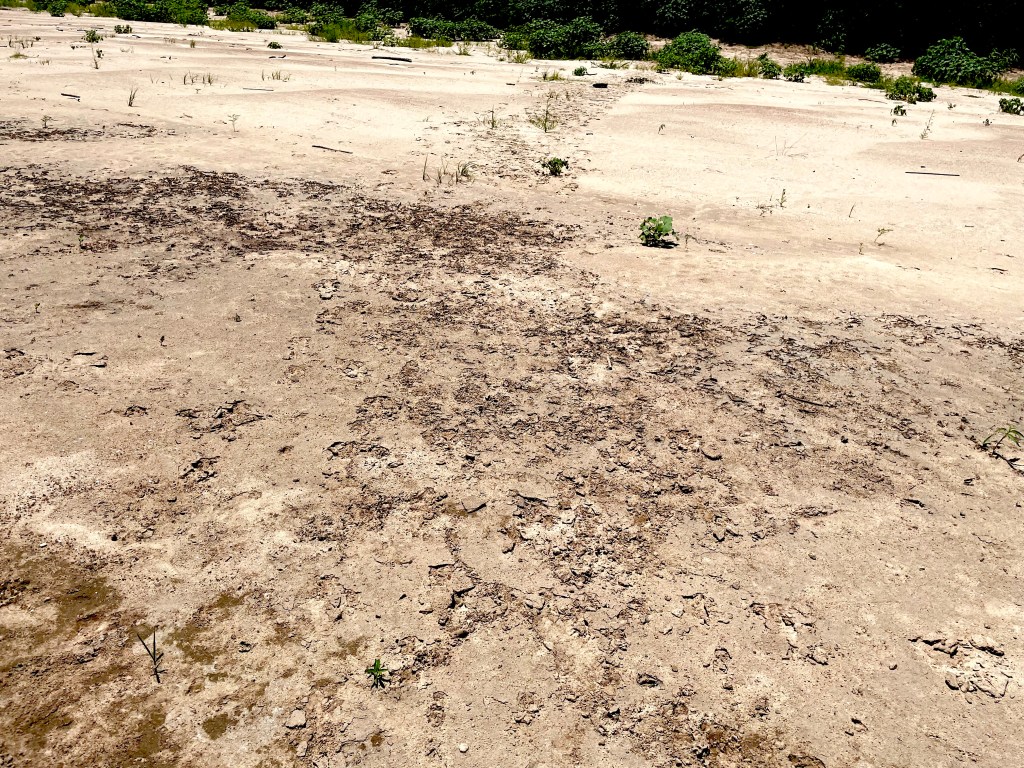
they state “Now numbering in the millions, these shockingly destructive and invasive wild hogs wreak havoc across the southern United States”. I have seen the damage before that these free-ranging introduced ungulates do. I found several areas along the Brazos river edge where these pigs were active. The main area was along a dried up stream bed that enters the river:
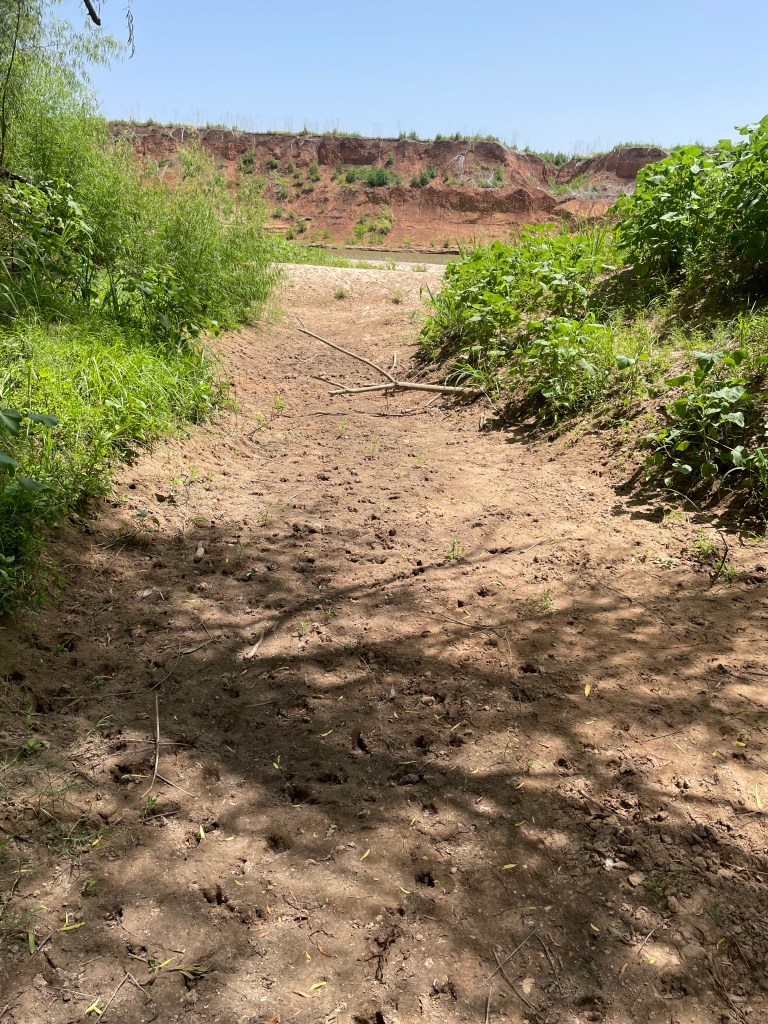
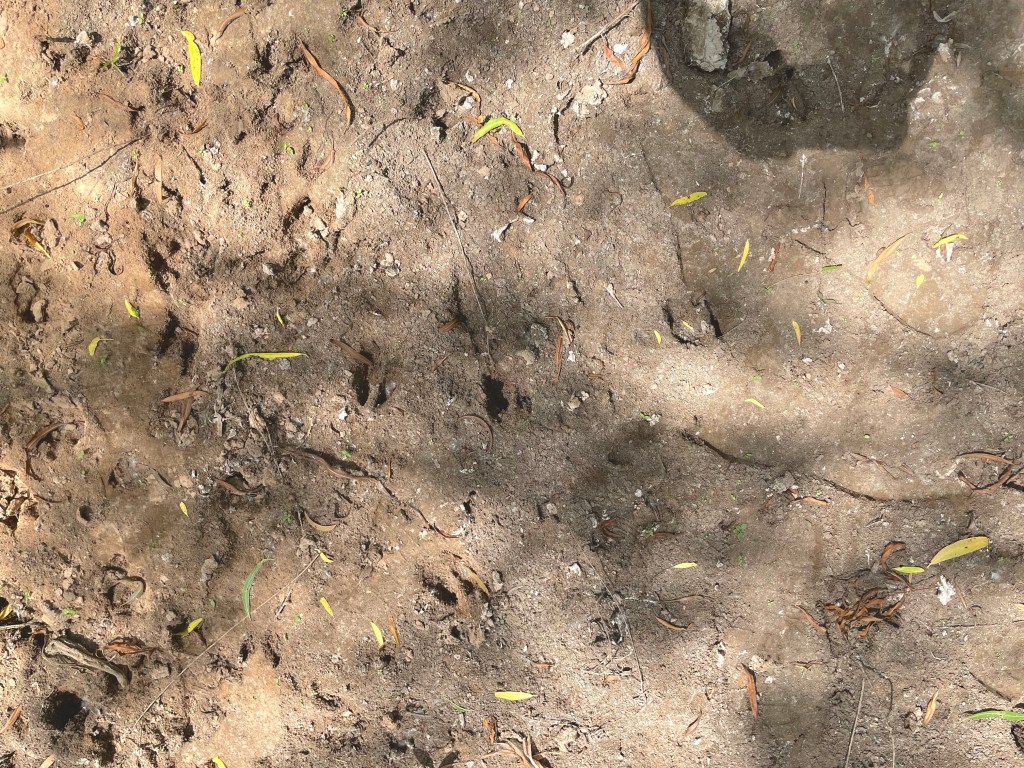
The ground had many tracks which had churned up the mud:
The trail then goes across the sandy banks of the river until it reaches the water:
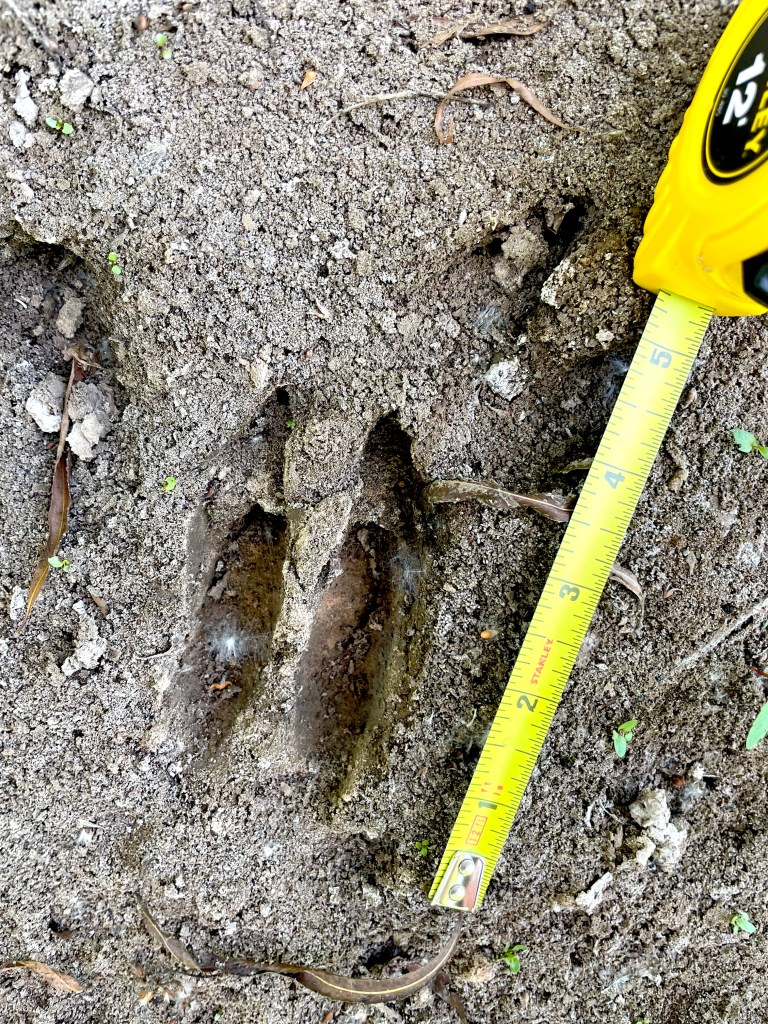
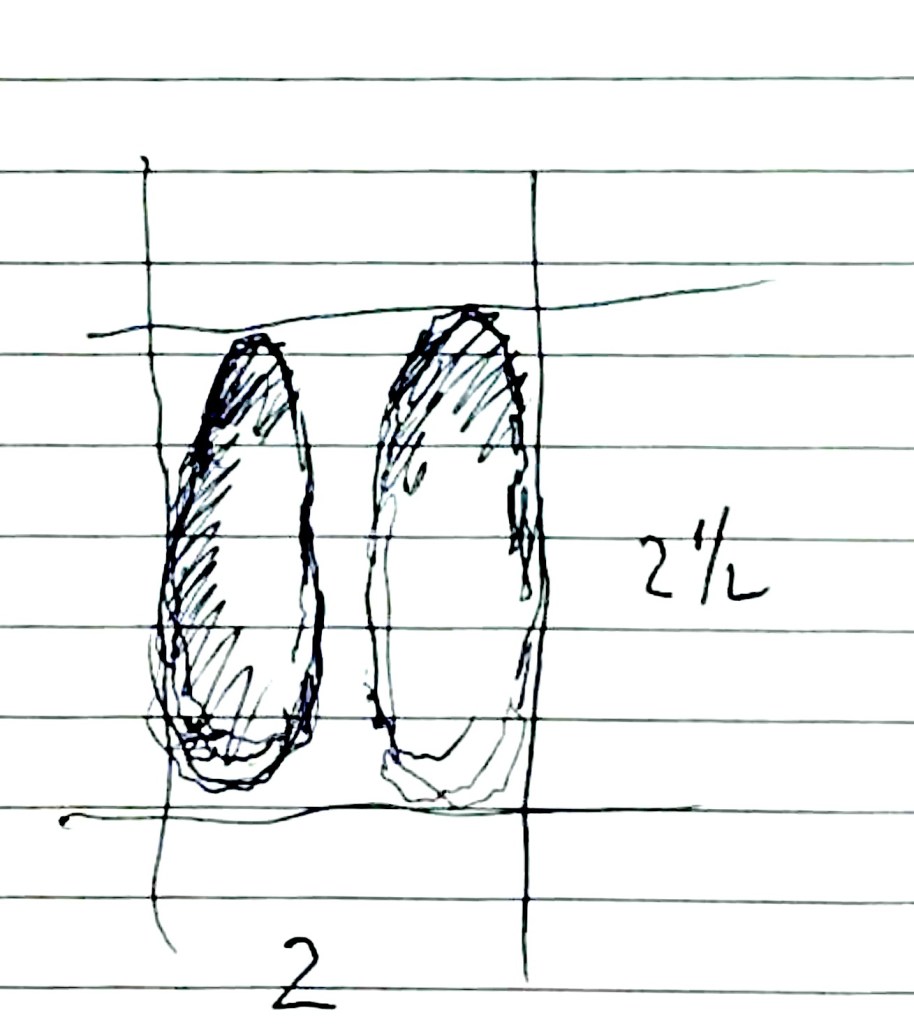
Here are some close ups of tracks:
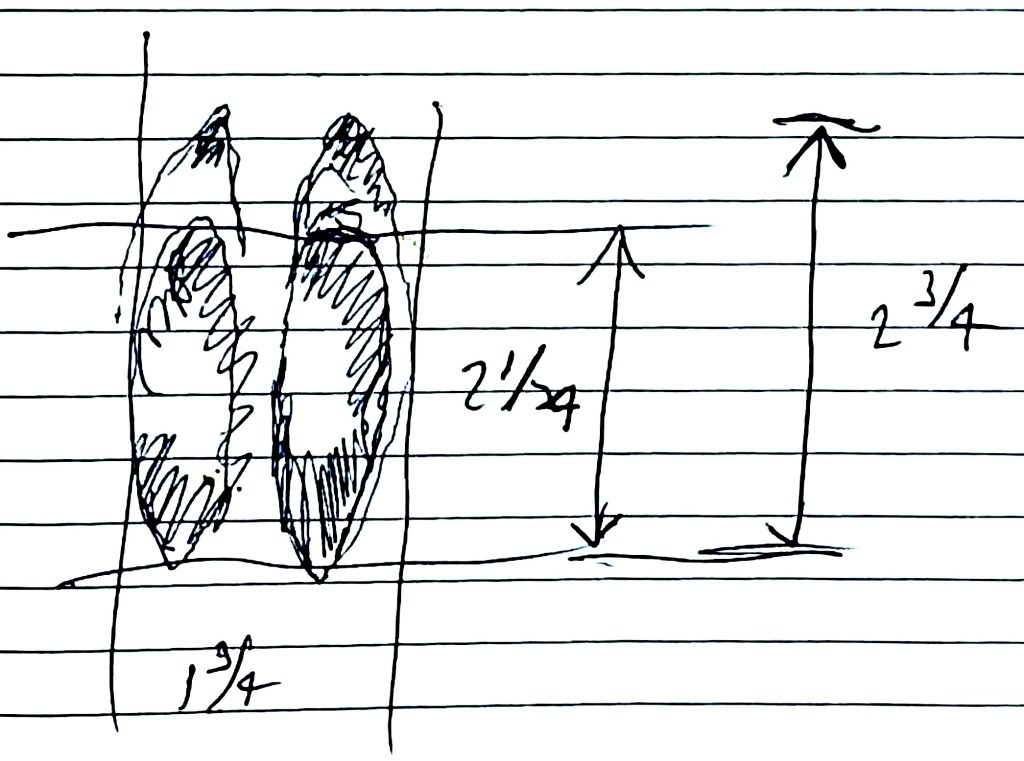
And the corresponding sketch:
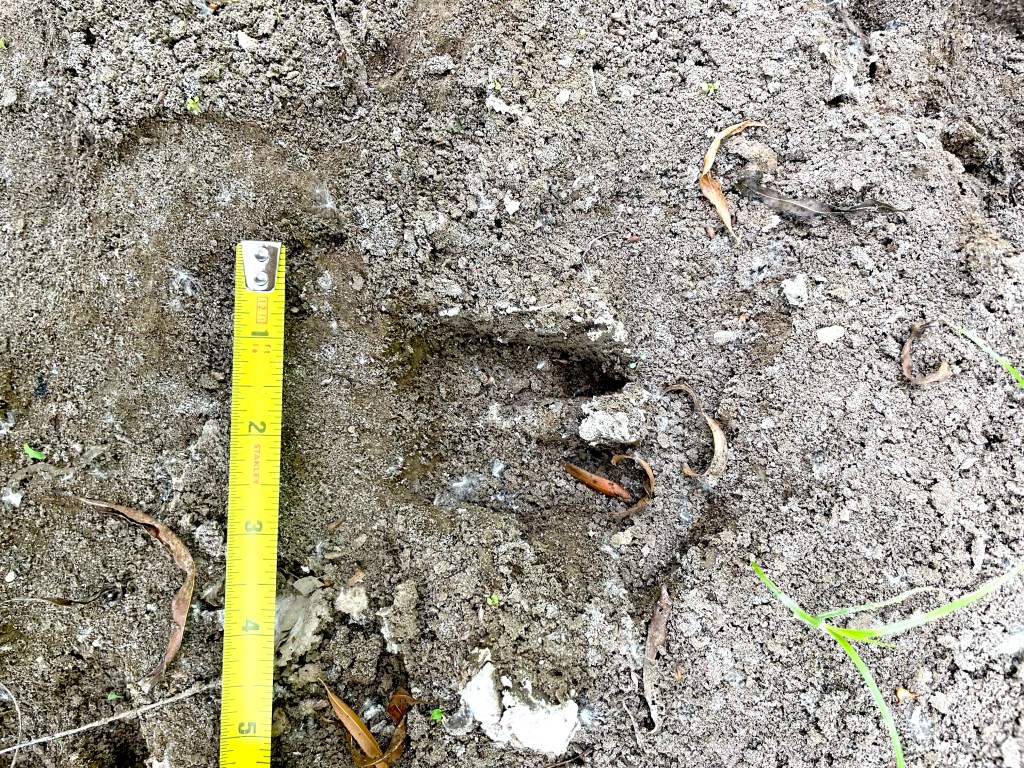
And the corresponding sketch:
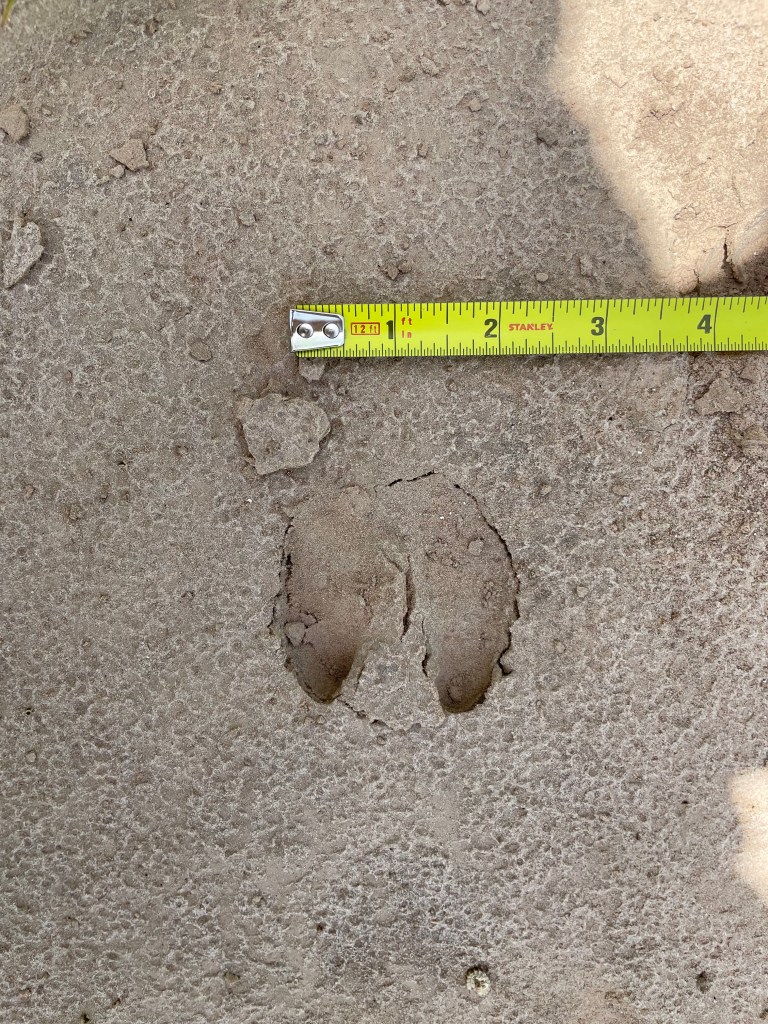
A really clear print:
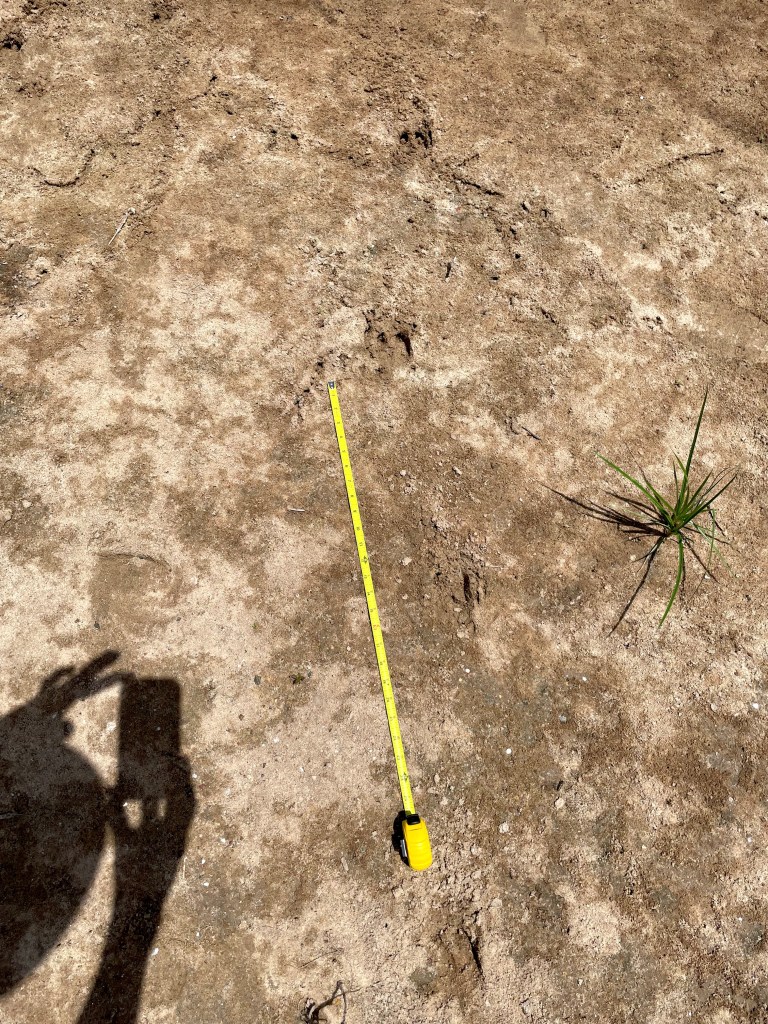
The next photo will give us an estimate of the stride (approx 15 1/2 inches):
Let’s check that the measurements correspond to what Lowery quotes:
- FW: 2 1/4 – 3 in
- FL: 2 1/2 – 3 in
- HW: 2 – 3+ in
- HL: 2 – 3+ in
- Trail width: 5 – 7 in
- Stride (diagonal walk): 13 – 15 in
Mostly they do. It’s helpful to read Lowery who points out that “pig tracks are rounder and more separated than deer tracks … “, and “the walking stride of a feral pig is much shorter than a deer’s because of the pig’s short legs” (the walking stride of a White-tailed Deer is 15 1/8 – 26 inches). Apparently “a pig’s dewclaws are prominent in soft soil”, but I didn’t really see that.
Canid:
There was plenty of coyote scat, so I knew these animals were present:
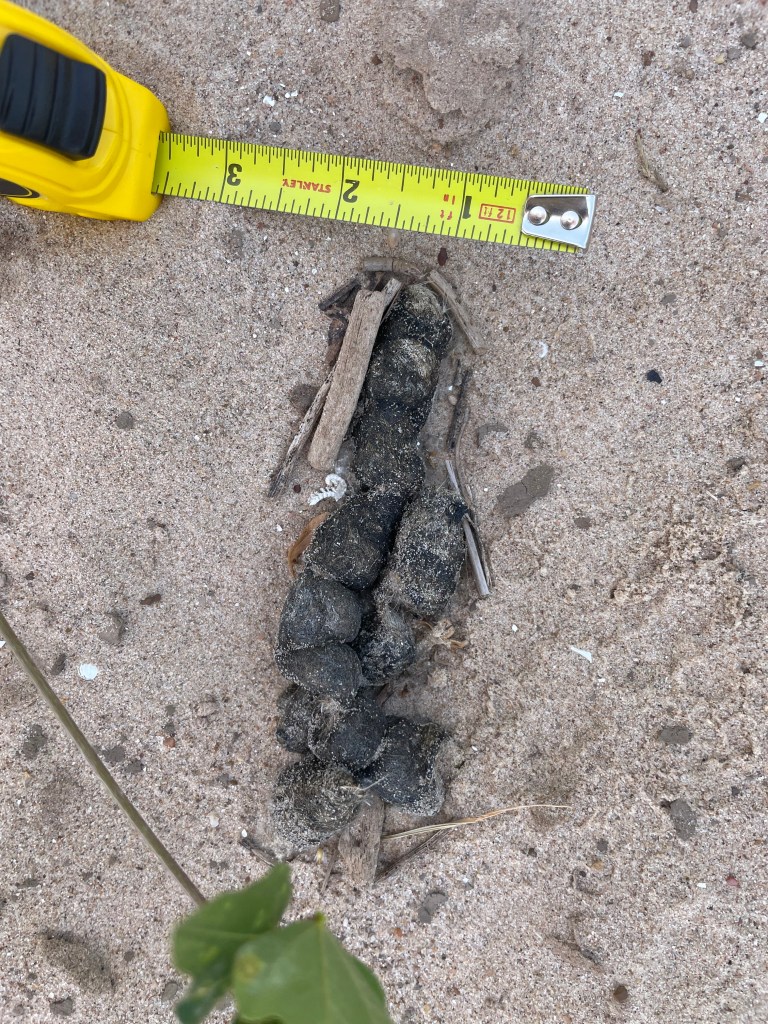
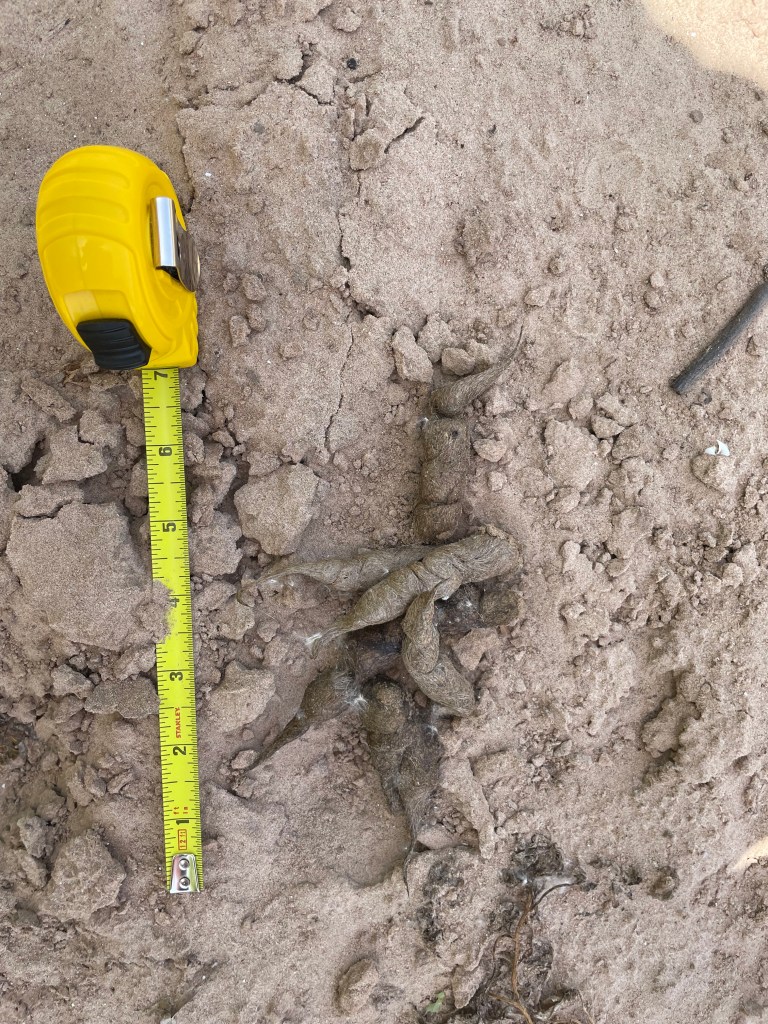
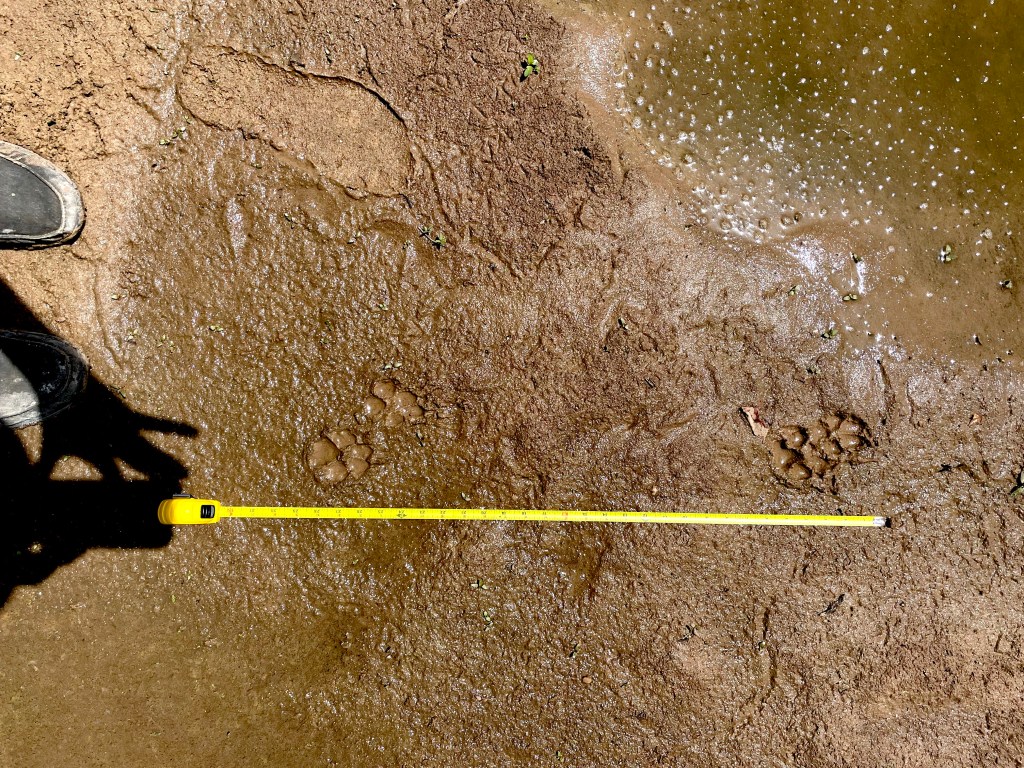
I think these scats are too large for fox and there are no wolves in the area of the Brazos river, so I think these scat are from coyotes. There were some clear Canid tracks. These show a classic Canine trot (Lowery):
I simply had to include this track as it’s so perfect:
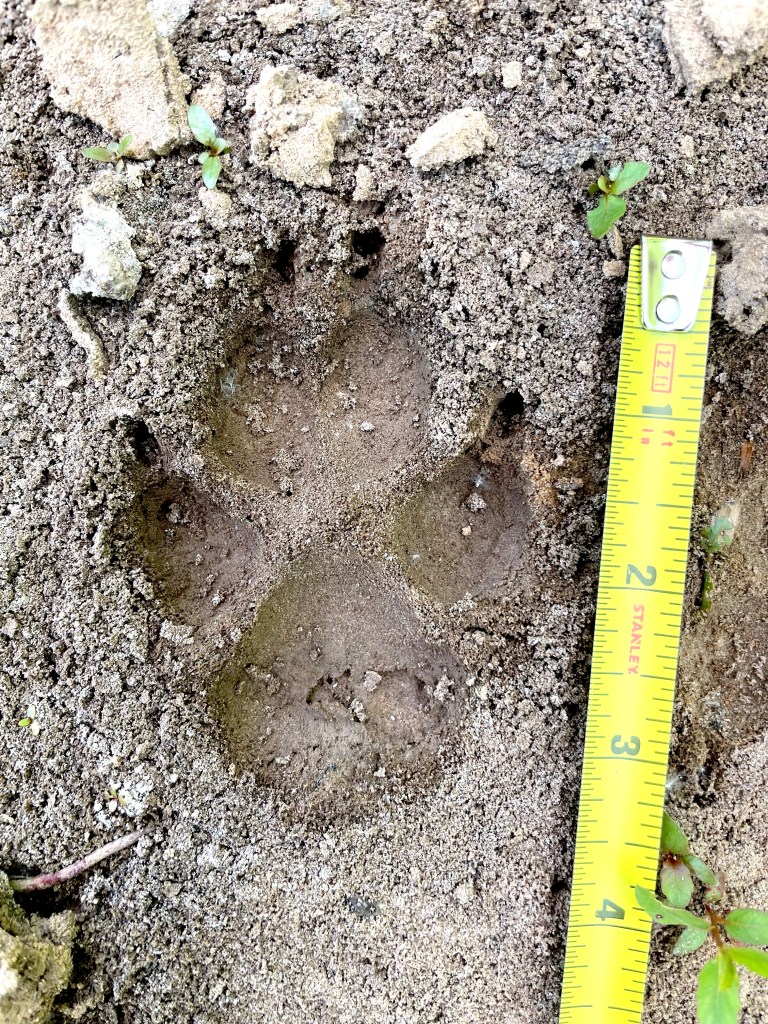
Is this a front right track? The negative space makes a beautiful ‘X’ shape, which is indicative of coyote (see the illustrations on page 38 of Elbroch).
Miscellaneous tracks:
There were numerous hollow burrows on the surface of the mud near the waters edge:
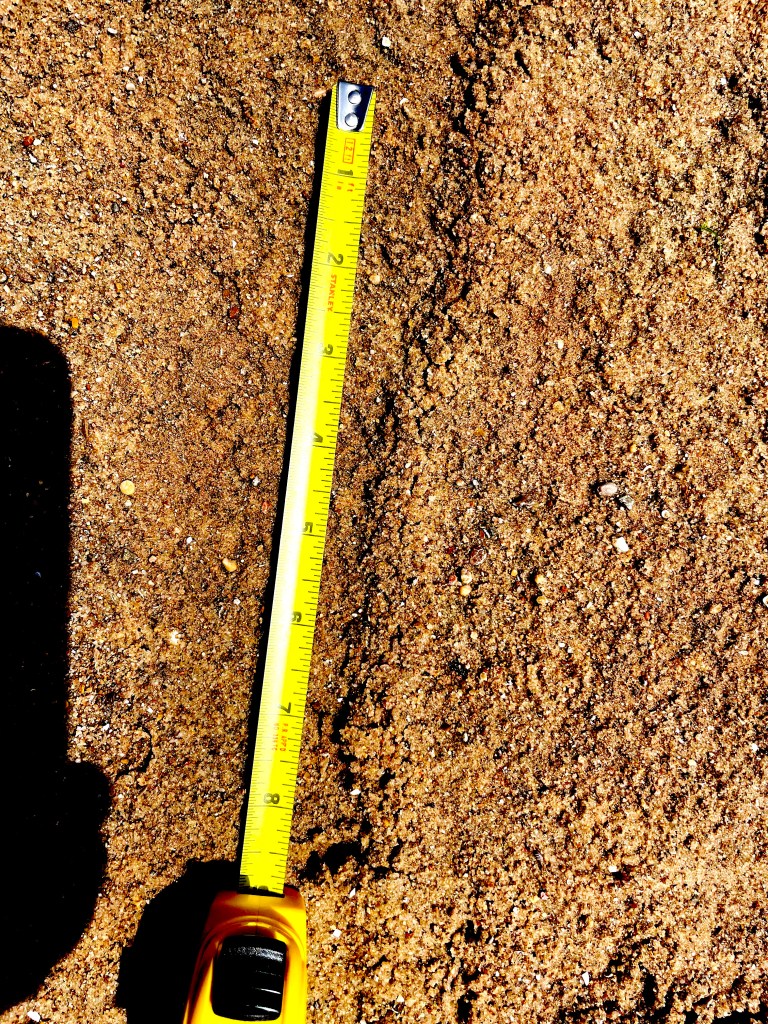
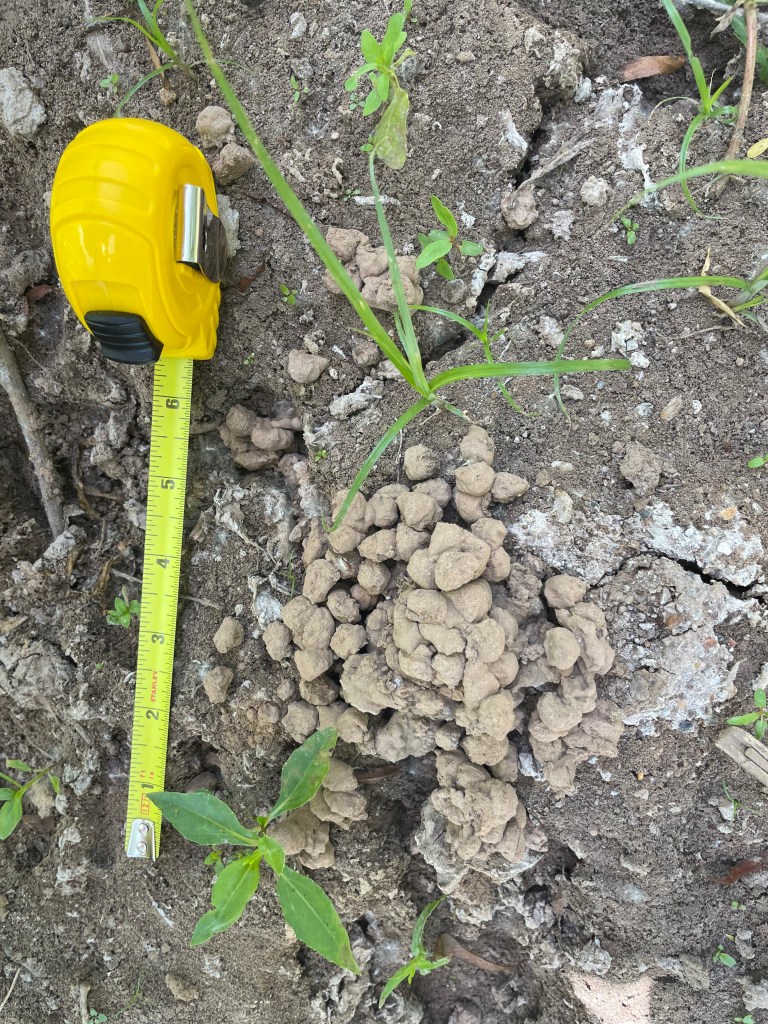
Although I dug up a few of these I don’t know what caused them. There was also a pile of mud that looked a bit like a crayfish mound, but with no exit hole in the middle:
Reflections:
This was a challenging tracking trip. The high temperature and humidity made it difficult to collect observations. It’s hard to sketch when you are dripping sweat on the page! Another thing that made things difficult was that the sun was almost directly overhead, so there were very few shadows. This made photographing the turtle, snake, and lizard tracks very difficult. I compensated for this a little bit by colour enhancing the photos afterwards. I had a relatively short amount of time to make many observations. Thus I feel that my observations were at times a little superficial. For example, I would like to have figured out the direction of travel of the turtle tracks. I would also have liked to have find a clear set of tracks for the feral pig so that I could differentiate between front and hind tracks. I should have also tried to follow the turtle tracks to search for nest sites, possibly into the forested undergrowth areas along-side the river. However, the extreme heat, chiggers, ticks, fire-ants etc. dissuaded me from this.
 Field Notes of a Tracker
Leave a comment