Date: June 12, 2022
Place: San Gabriel River (North Fork), near Liberty Hill, Williamson County (near Austin, Texas). Just northwest of Leander.
Time: 7am – 8:30am
Main references:
‘The Tracker’s Field Guide: A Comprehensive Manual for Animal Tracking’, James C. Lowery, Second Edit., Falcon Guide
‘Animal Tracks’, Olaus J. Murie and Mark Elbroch, Third Edit., Peterson Field Guides, Houghton Mifflin Company
‘Scats and Tracks of North America’, James C. Halfpenny, Falcon Guides
Weather: 24 C, sunny. Last rained approx. one and a half weeks ago.
Geology: limestone and gravel wash. Lower Cretaceous period (Albion stage).
Some additional observations: Carolina Wren, Cardinal, Grackles, woodpeckers (calls), rabbits, large ants.
Dominant vegetation: Ashe Juniper, Scrub Oak, tall grasses
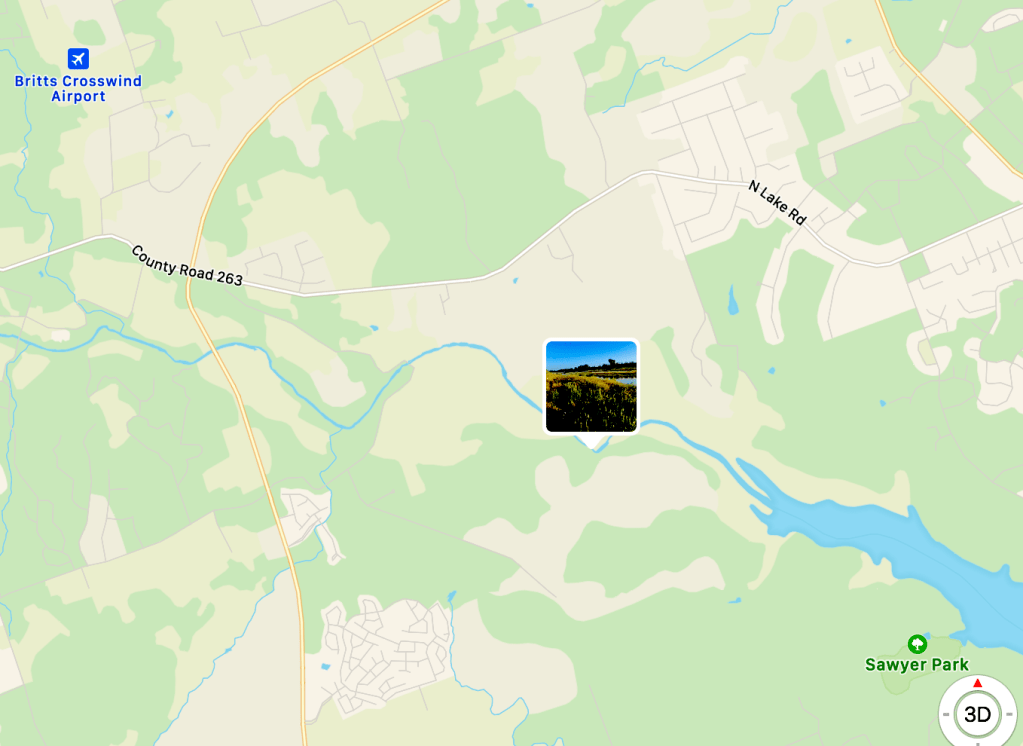
Description of the area: medium sized river that is mostly dried up revealing a flat limestone bed. Sand and gravel washes. However, unlike my previous tracking trip along the San Gabriel River, this time I was hiking the trails up above and along-side the river. There were some beautifully fine sand-like material (dust-like) that could show tracks very well. A map is shown below.
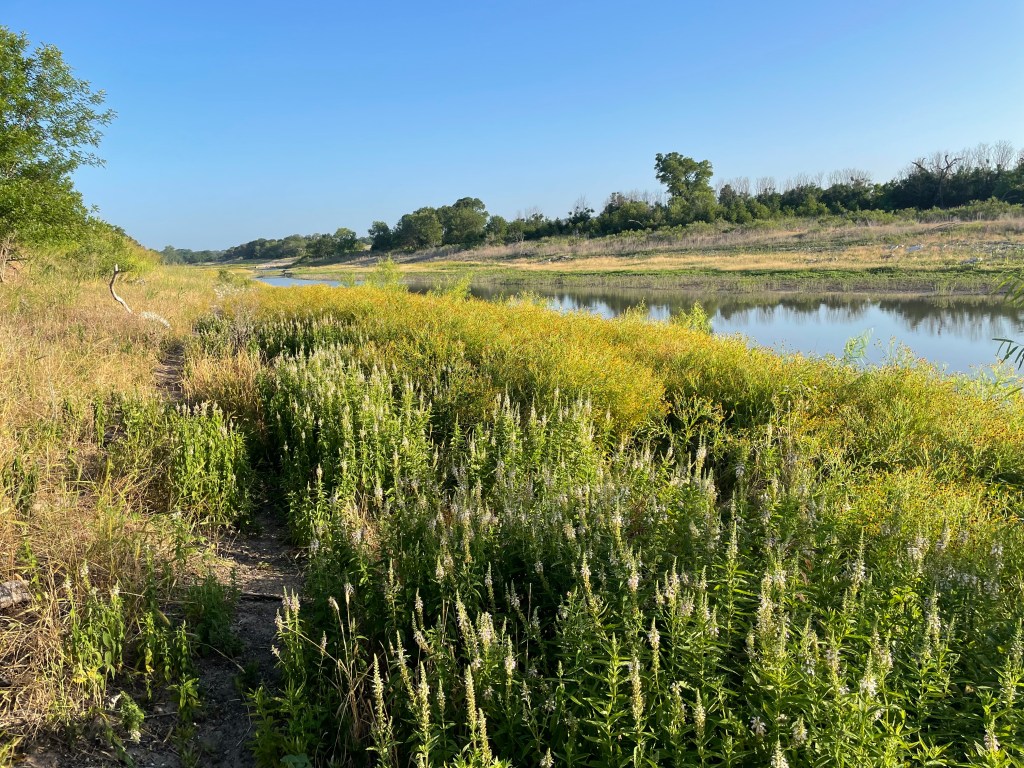
Much of the trail however was covered in dense vegetation:
Armadillo:
One of the first set of tracks I saw was from an Armadillo. The tracks are quite unique and difficult to confuse with any other species. I was really pleased to find these tracks as we do not have this species in Ontario. I did not have time to sketch them, but some photos are shown below:
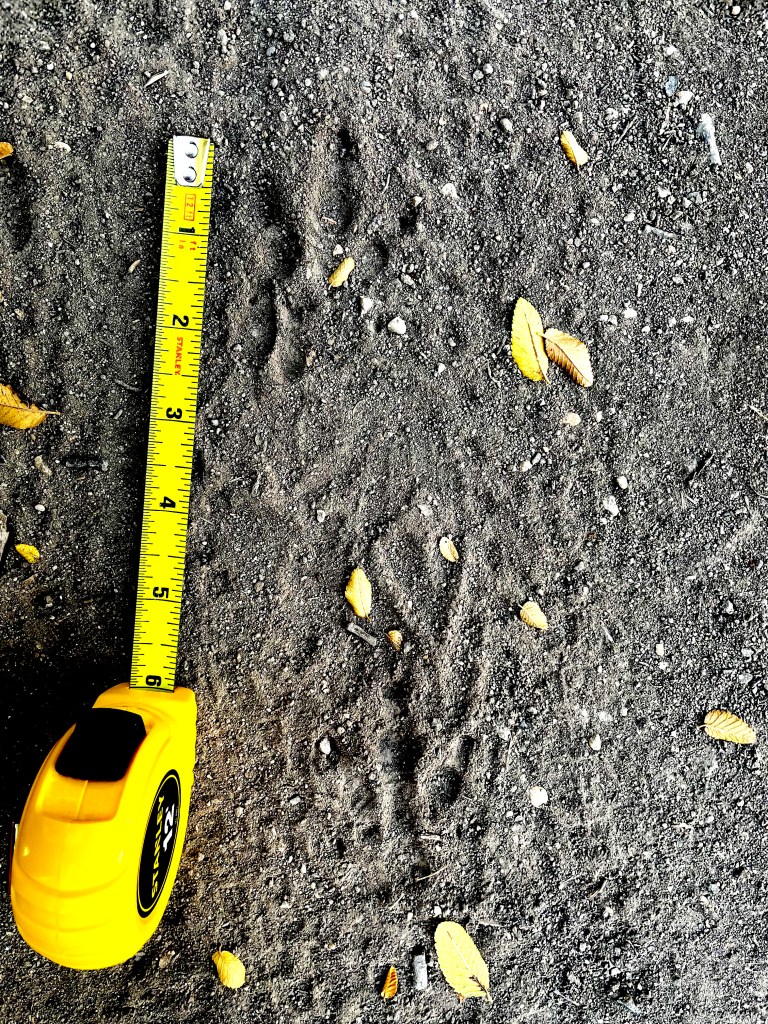
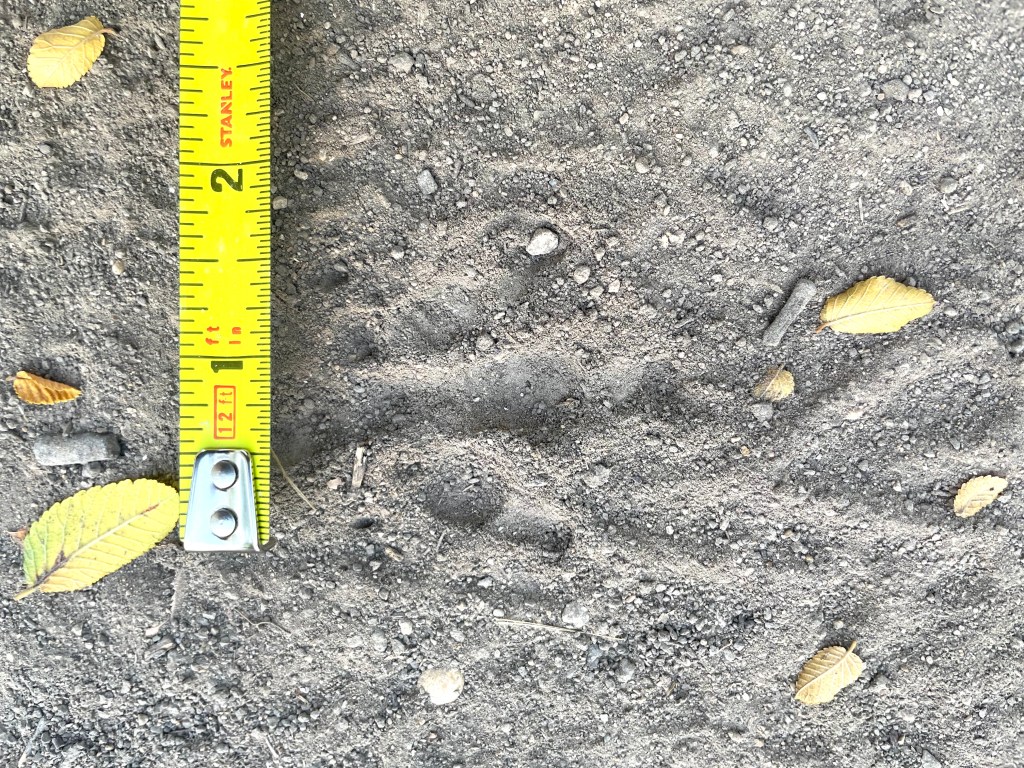
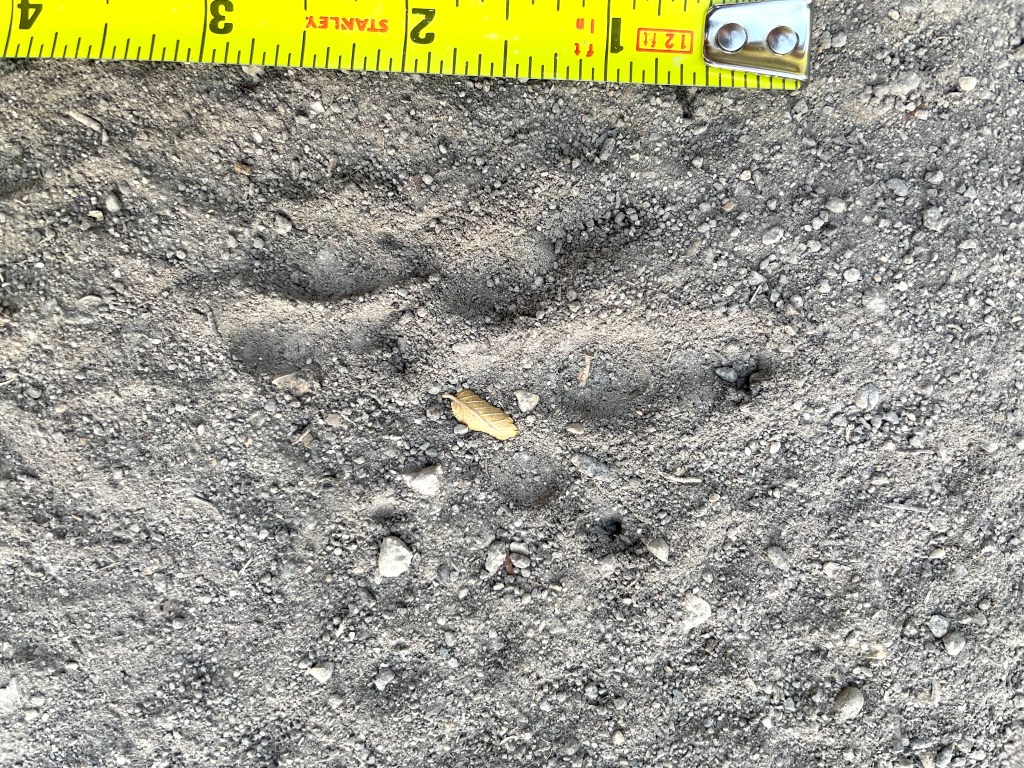
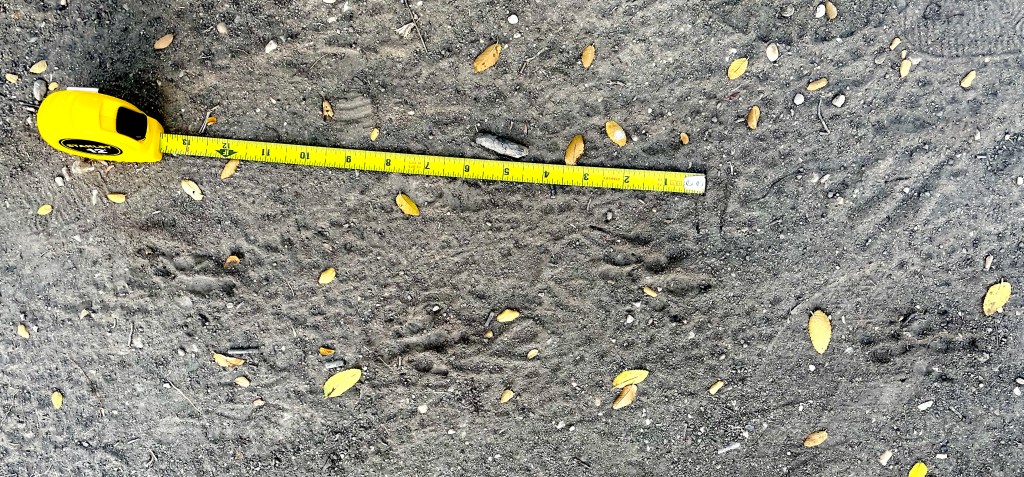
Now if you are not familiar with these tracks you would be forgiven for thinking that each grouping of tracks was a single print with 5 toes! Below is a scanned sketch of Armadillo tracks from Halfpenny with all the toes showing:
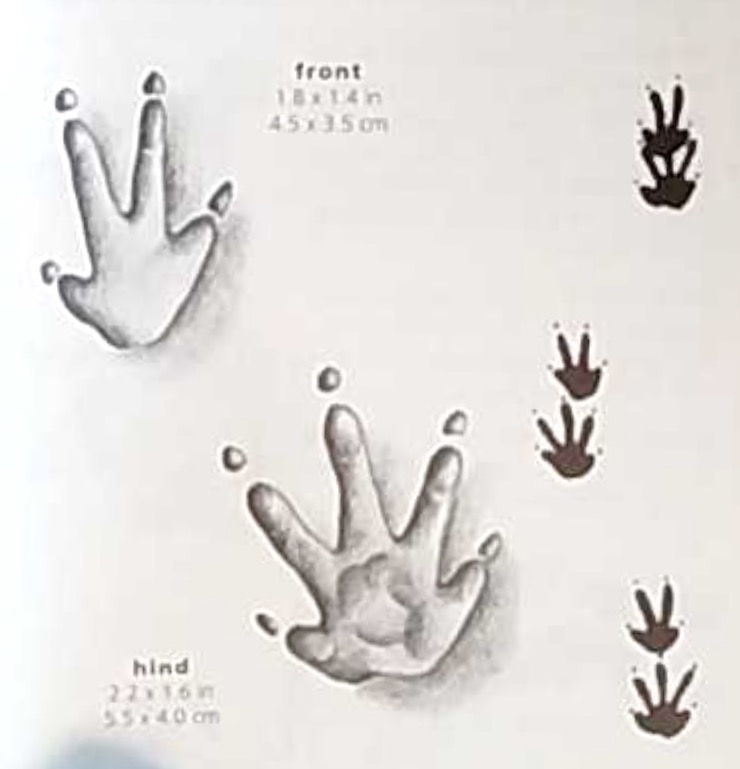
With my set of tracks, in each track group the hind foot is slightly ahead of the fore foot, which is the reverse of what Halfpenny shows. He calls this a slow walk, so I guess in my tracks the Armadillo is doing a fast walk? Elbroch (page 118) calls this an overstep walk. Another thing to notice with my tracks is that the front and hind tracks are not registering the ‘outer’ toes. Measurements (for an overstep walk) are as follows (Elbroch):
- FW: 1 3/8 – 1 5/8 in
- FL: 1 1/2 – 2 in
- HW: 1 1/2 – 2 3/8 in
- HL: 2 – 3 1/4 in
- trail width: 3 – 4 in
- stride: 5 – 9 in
Looking at the photos, these numbers appear to be in the right ball park. In future (if I have more time) I should take more accurate measurements from several sets and average.
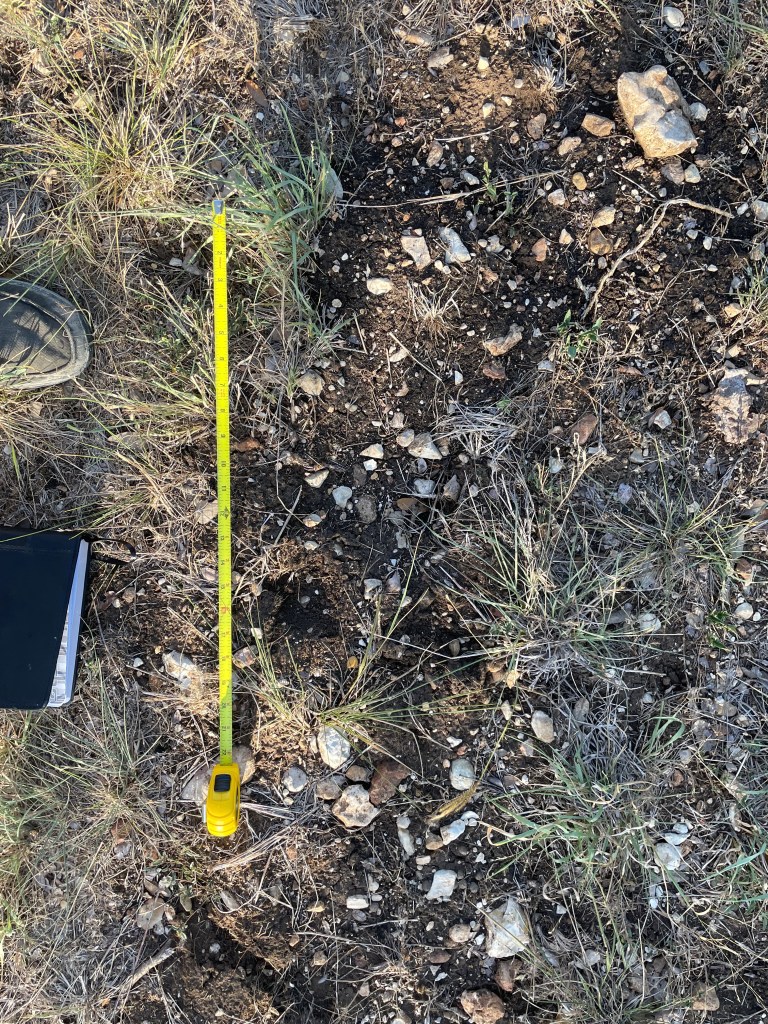
I spoke to a local person who pointed out numerous dig areas that they said were from Armadillo, e.g.:
Cottontail:
There were several clear Cottontail tracks in the soft sand:
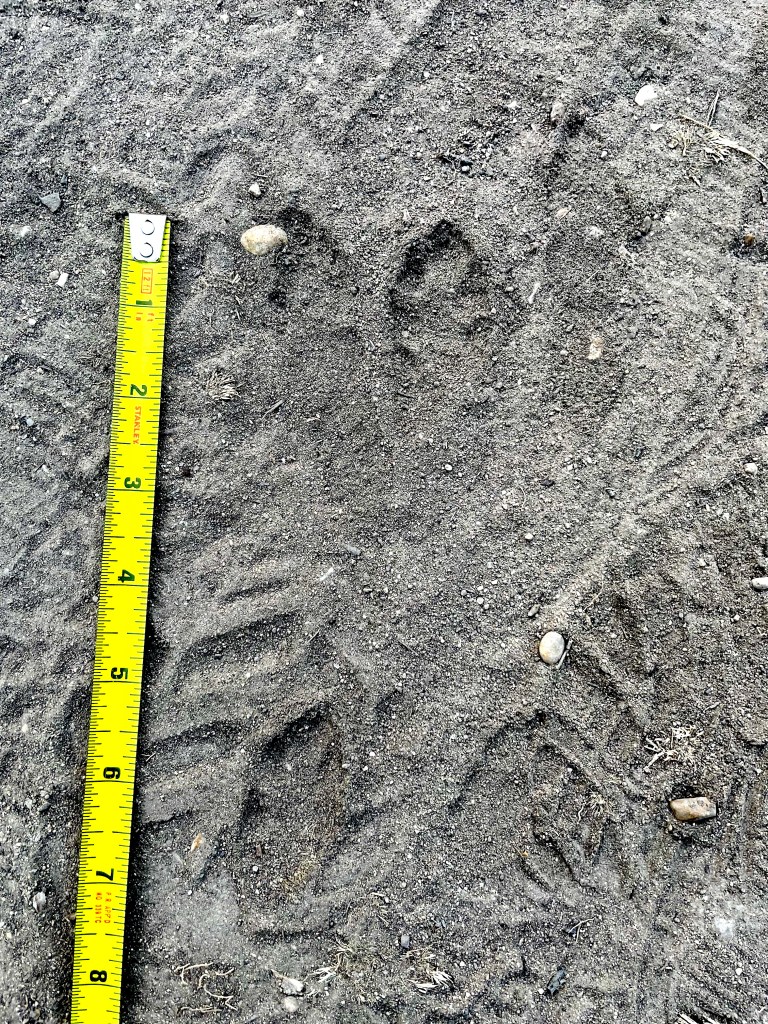
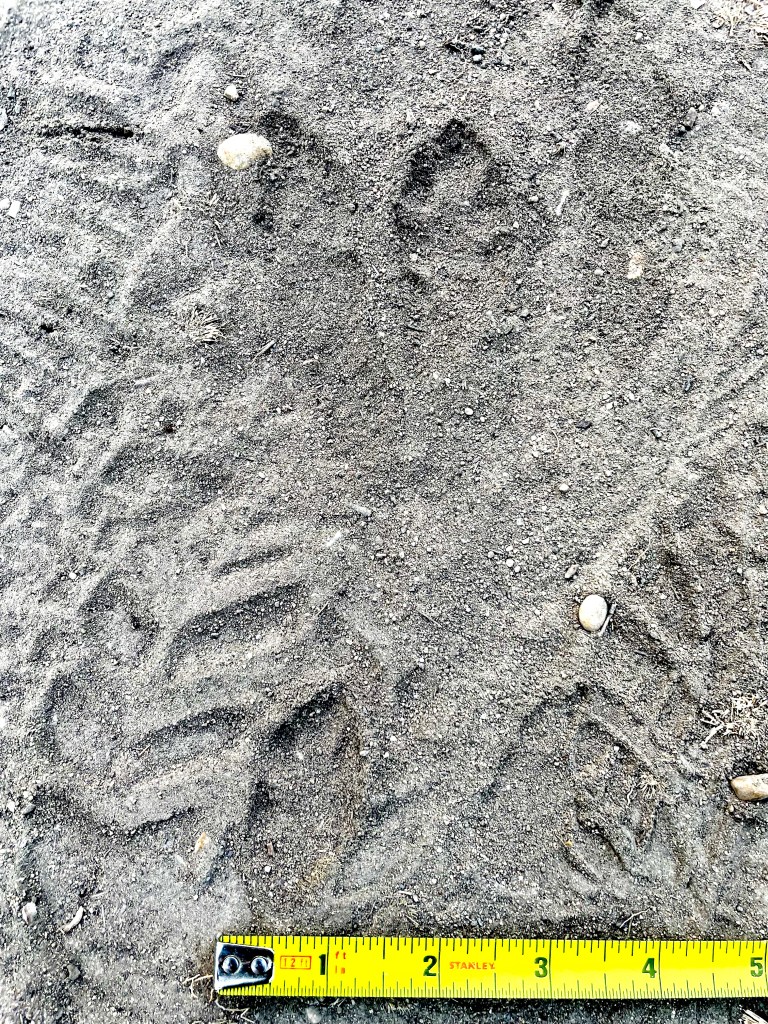
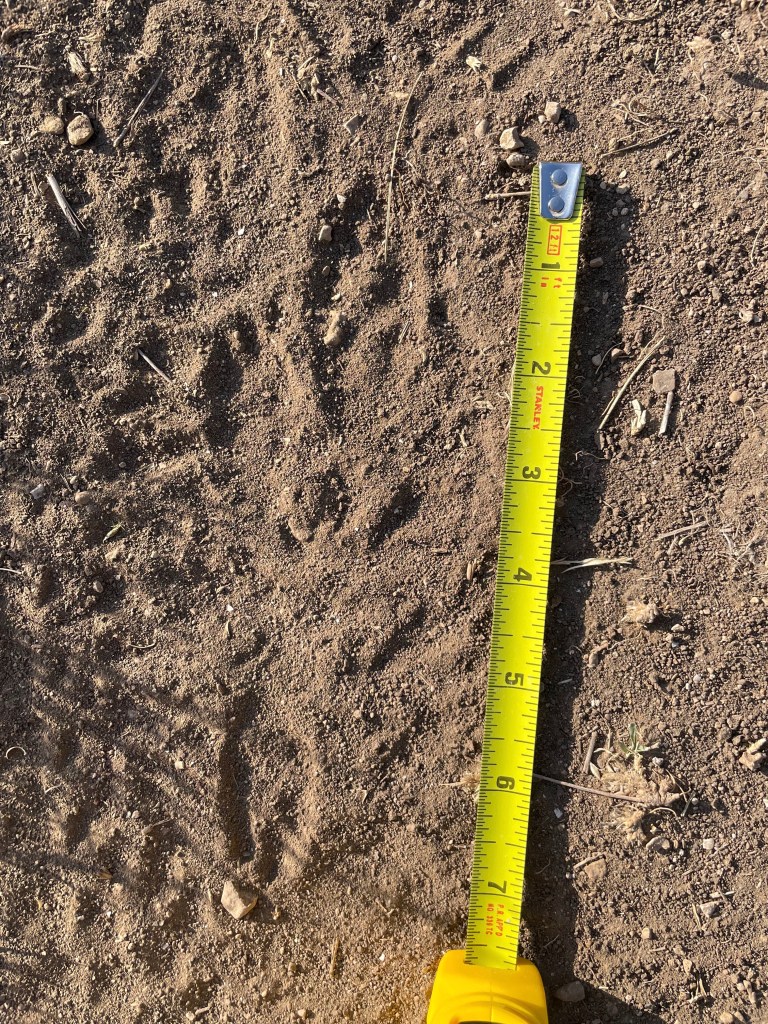
Measurements from Lowery:
- FW: 9/16 – 1 5/16 in
- FL: 15/16 – 2 1/8 in
- HW: 11/16 – 1 1/2 in
- HL: 1 1/4 – 3 1/2 in
- trail width: 2 3/8 – 5 in
- stride (gallop): 9 1/2 – 48 in
Next time I would like to find the tracks of a Black-tailed jackrabbit which are much bigger.
Canid:
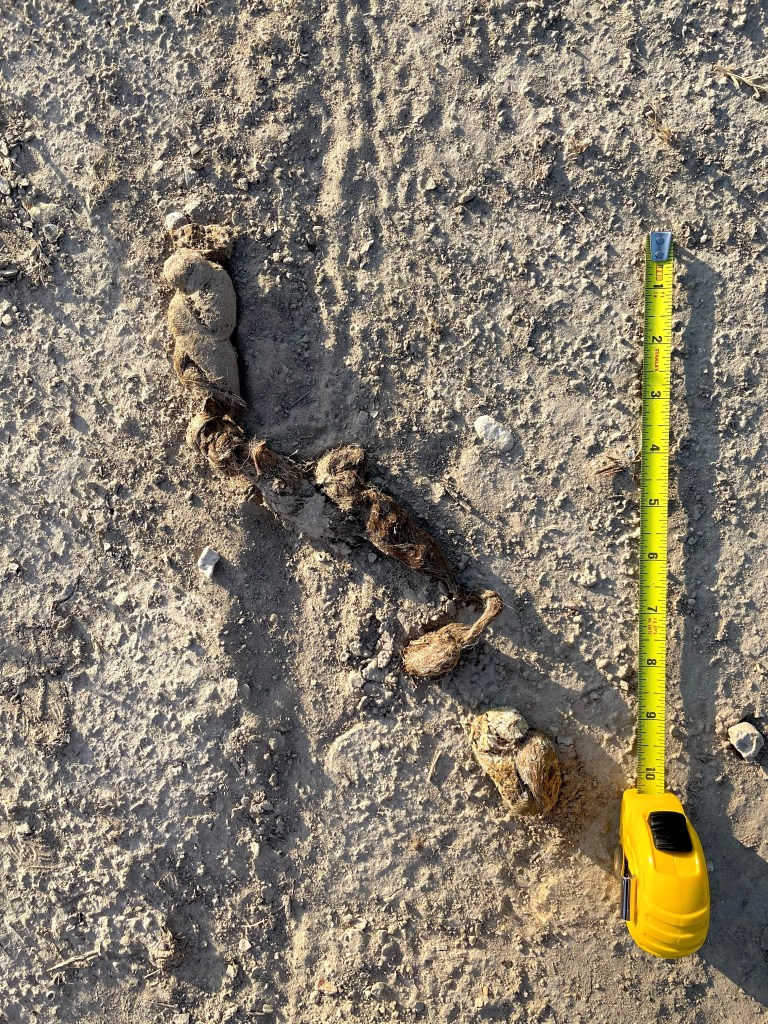
There were numerous Canid (dog family) tracks along the river and I was having trouble deciding whether they were domestic dog or coyote. I new there were coyotes present because of the large dog-like scat around full of hair:
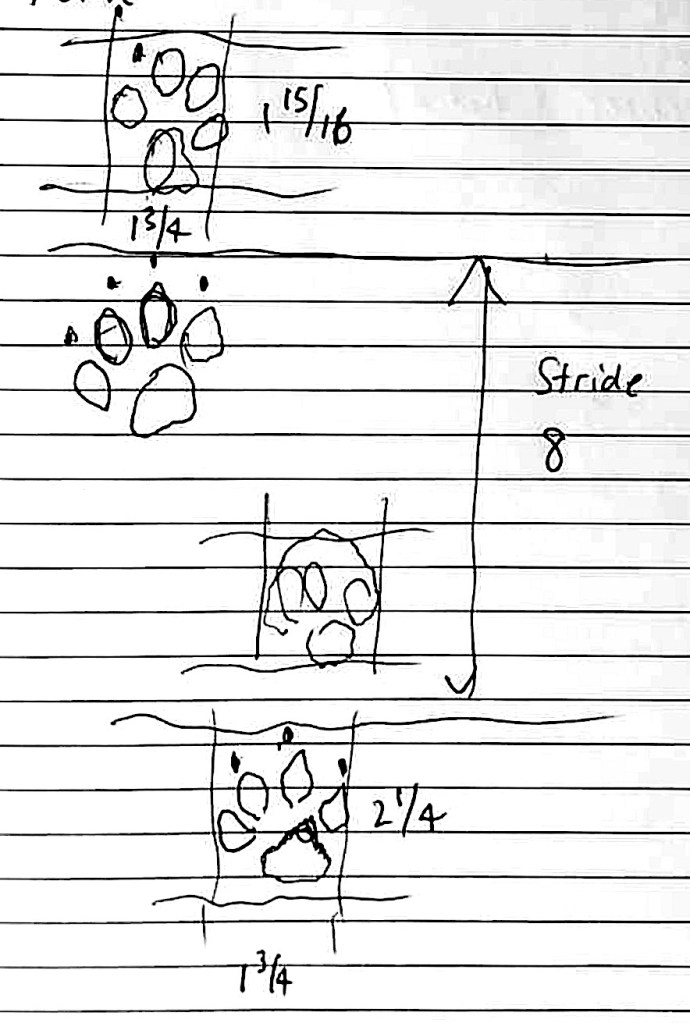
Here is my quick sketch of some tracks:
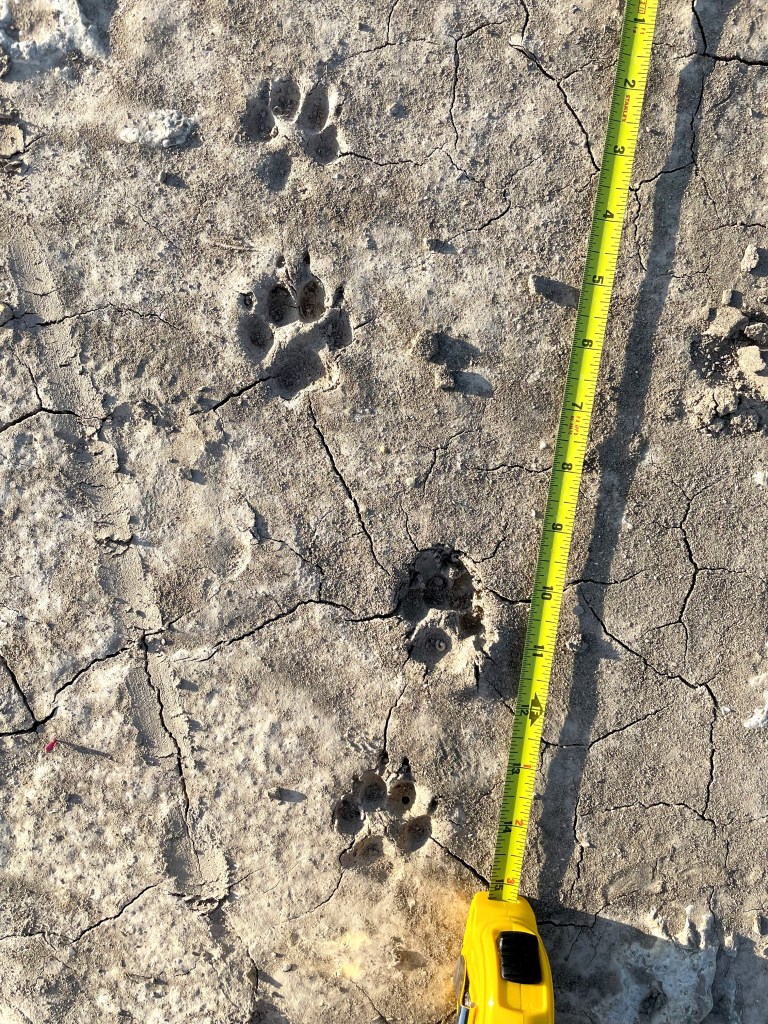
And the corresponding photo:
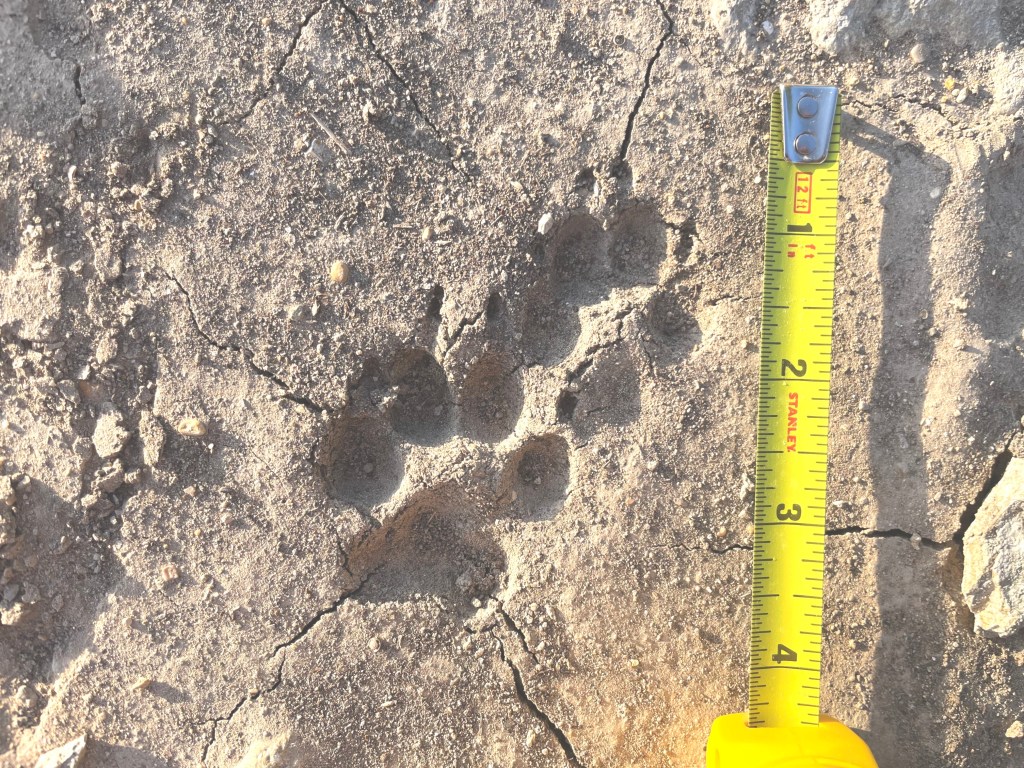
Here is also a close-up of some tracks (FL below, HR above – so overstep):
Let’s remind ourselves of the measurements for coyote (Lowery):
- FW: 1 1/2 – 2 7/8 in
- FL: 1 3/4 – 3 1/4 in
- HW: 1 3/8 – 2 3/8 in
- HL: 1 5/8 – 2 1/8 in
- trail width: 2 5/8 – 5 1/2 in
- stride: 11 – 21 3/4 in
Comparing these measurements with the ones I made, mine seem a little small. This made me think that maybe I was seeing the tracks of a fox. In the Austin area they have both the Red Fox and the Gray Fox. In the Austin area the Red Fox is only just within its range and it usually walks in direct register, and has a chevron-shaped heel pad (Lowery), so I don’t think it’s a Red Fox. The range of the Gray Fox easily covers the Austin area, but this fox has semi-retractile claws so the claws rarely show (Lowery), which seems to also exclude this fox. Thus by a process of elimination my best guess is that this is a domestic dog.
Wasp?
I found some insect tracks closer to the waters edge where there was some mud:
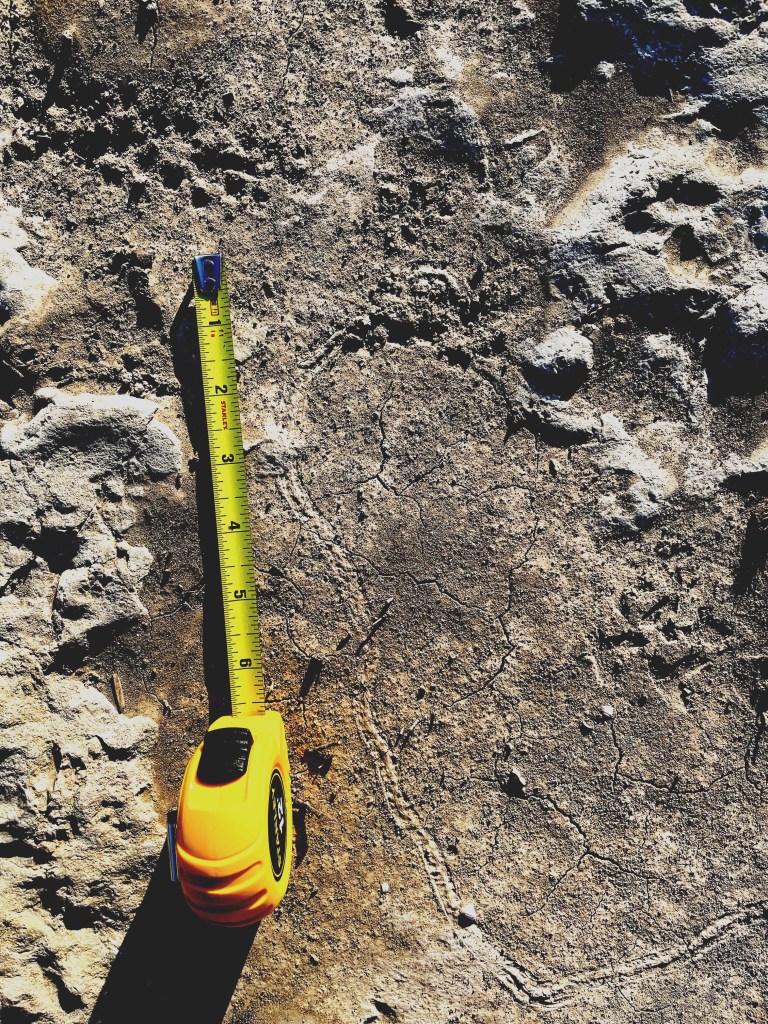
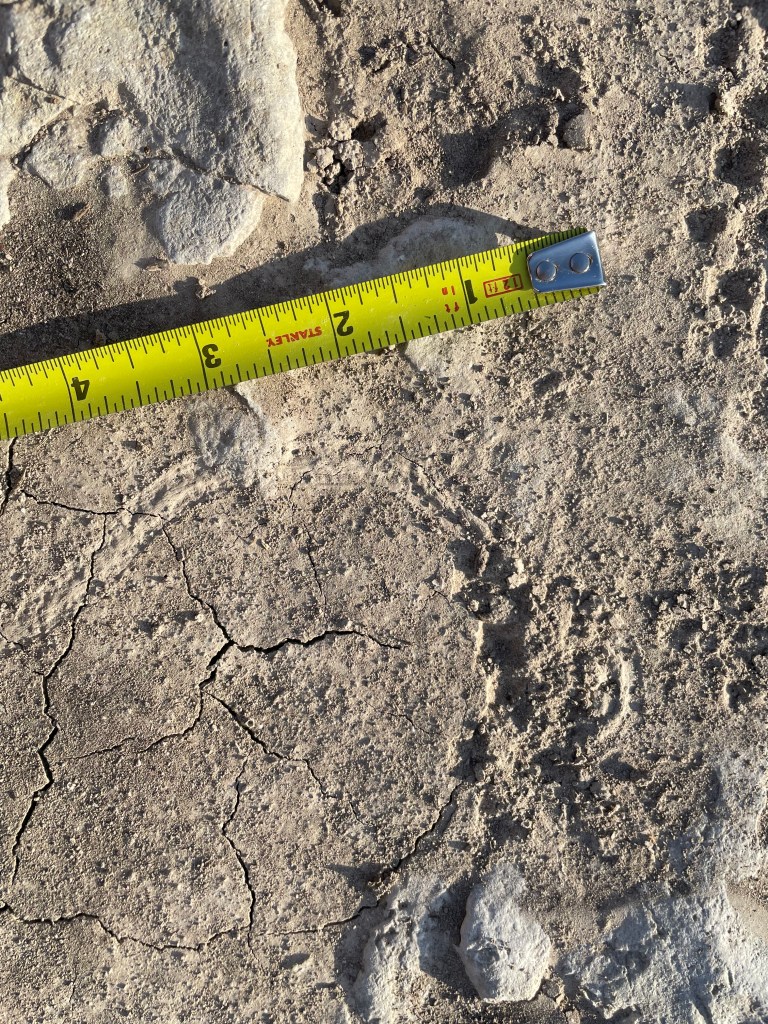
It looks as if something crawled through the mud and then collected some of the mud. My best guess is that this is is a wasp or Mud Dauber. The trail is about 5/16 of an inch across. I’ve ordered the book ‘Tracks & Sign of Insects’ which should help with the identification of these tracks.
Deer:
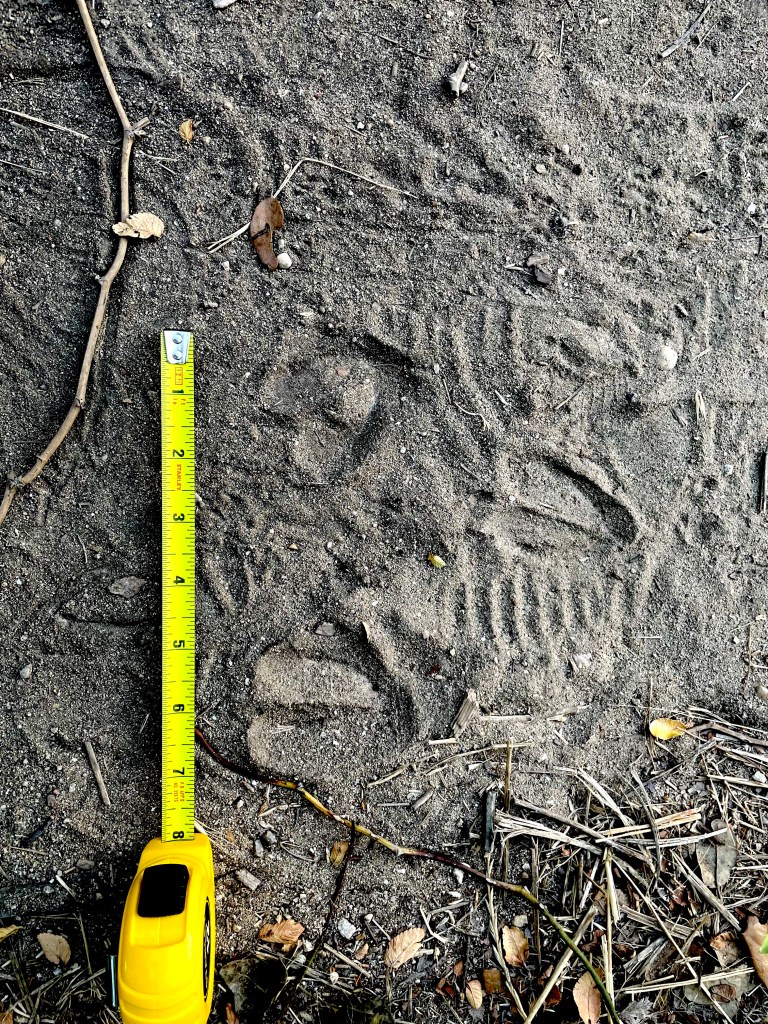
Here are some tracks of White-tailed Deer that show how the fine dust-like sand can capture tracks. It looks like the deer tracks are over a hikers foot track:
Ants:
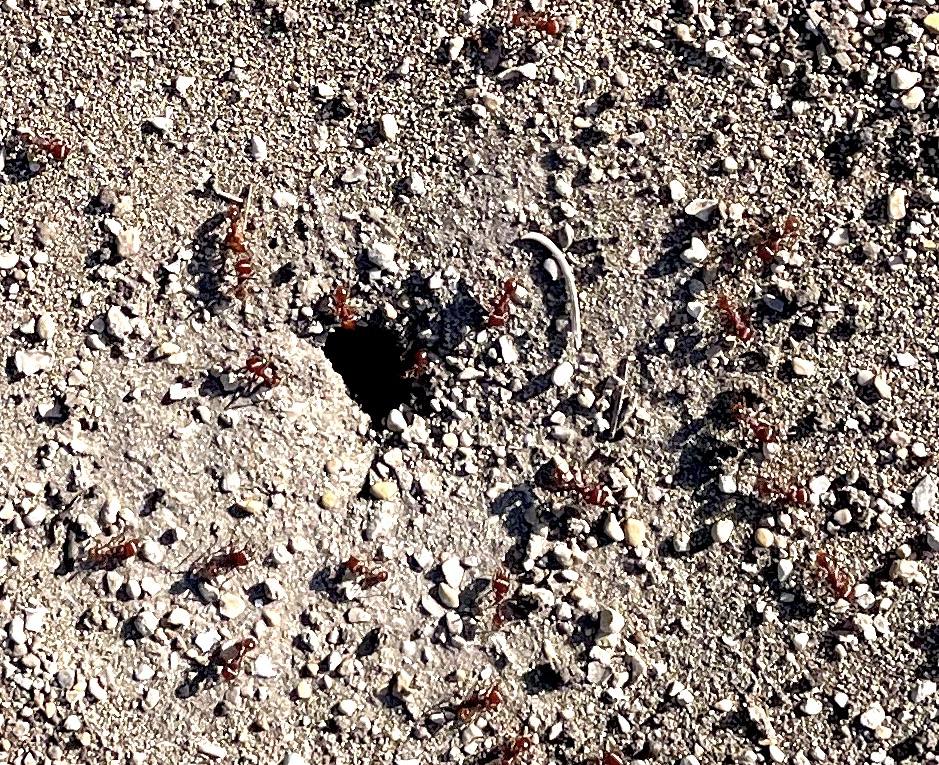
My father who lives in the area says this ant pile in the path has been there for 20 years!
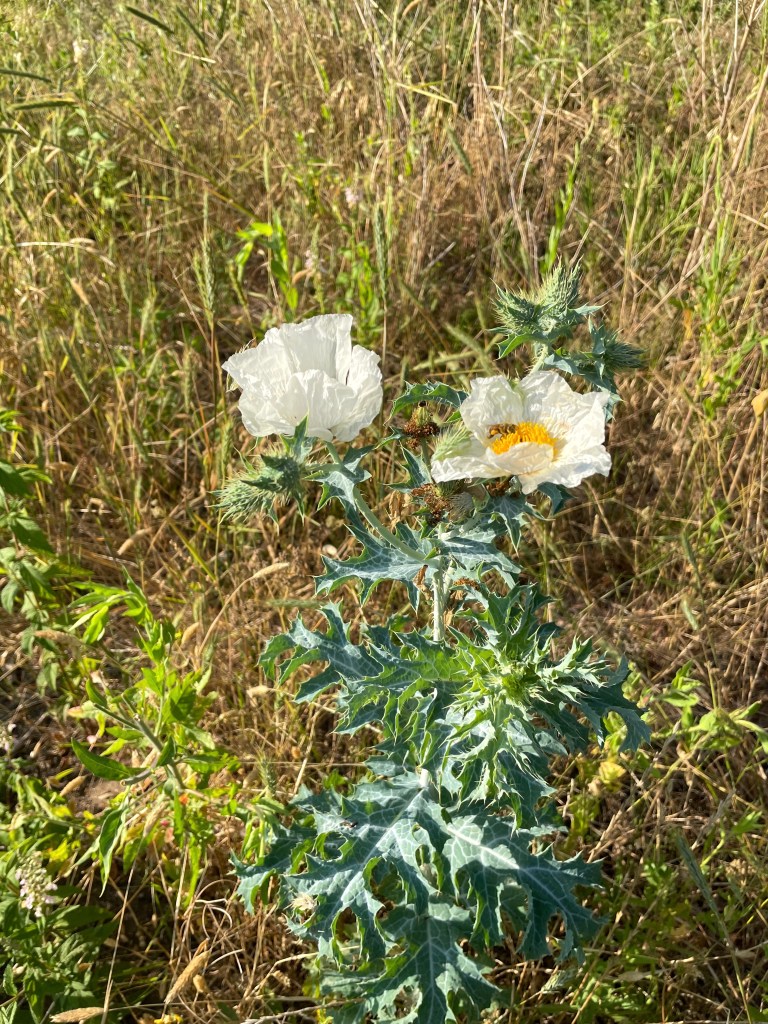
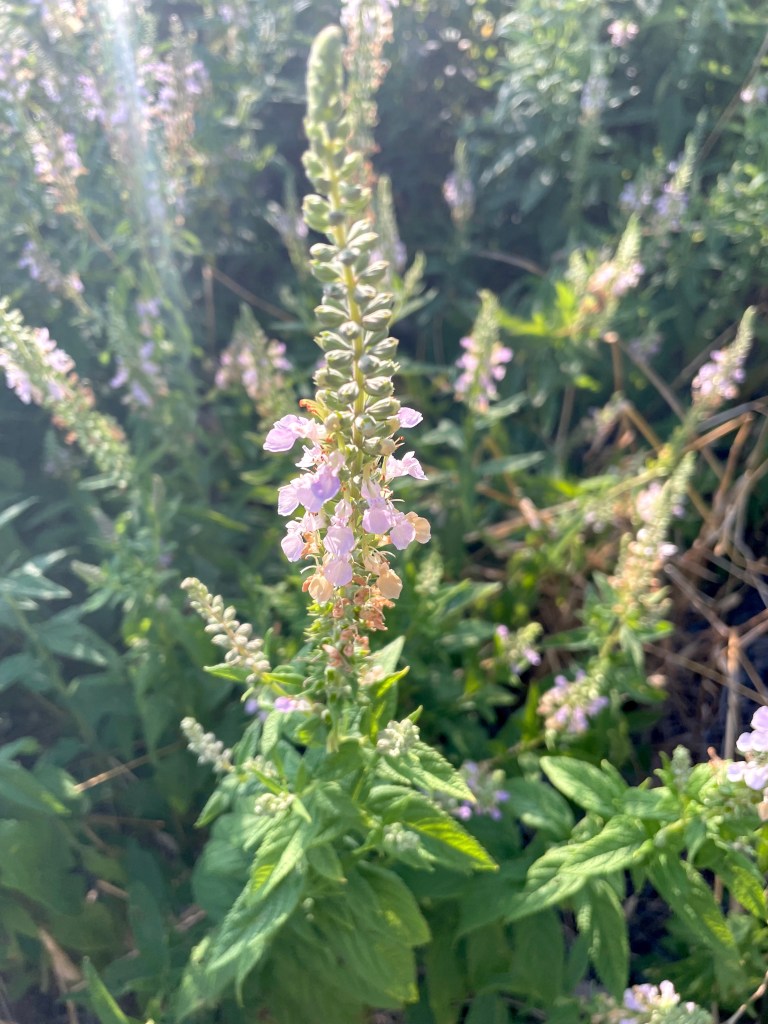
Some flowers:
It was very dry in the area, but there were still some nice flowers:
Reflections:
It was so much easier tracking early in the morning when it was cooler! The light was also better as shadows show much easier when the sun is low on the horizon. As in my last walk I had to collect observations quickly as I was hiking with my dad. I loved the quality of the patches of soft dust-like sand for tracking.
 Field Notes of a Tracker
Leave a comment